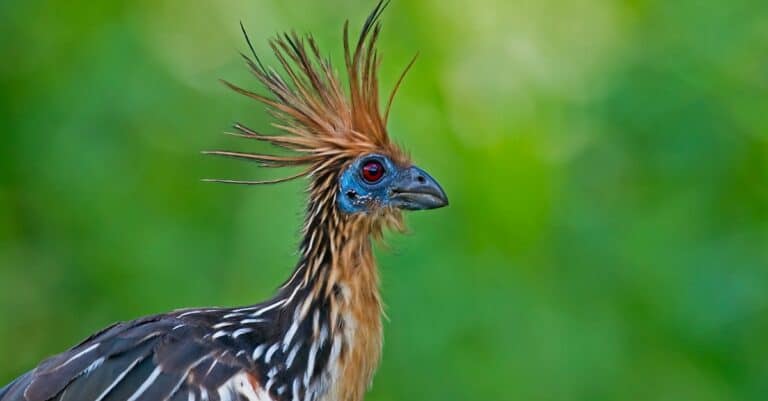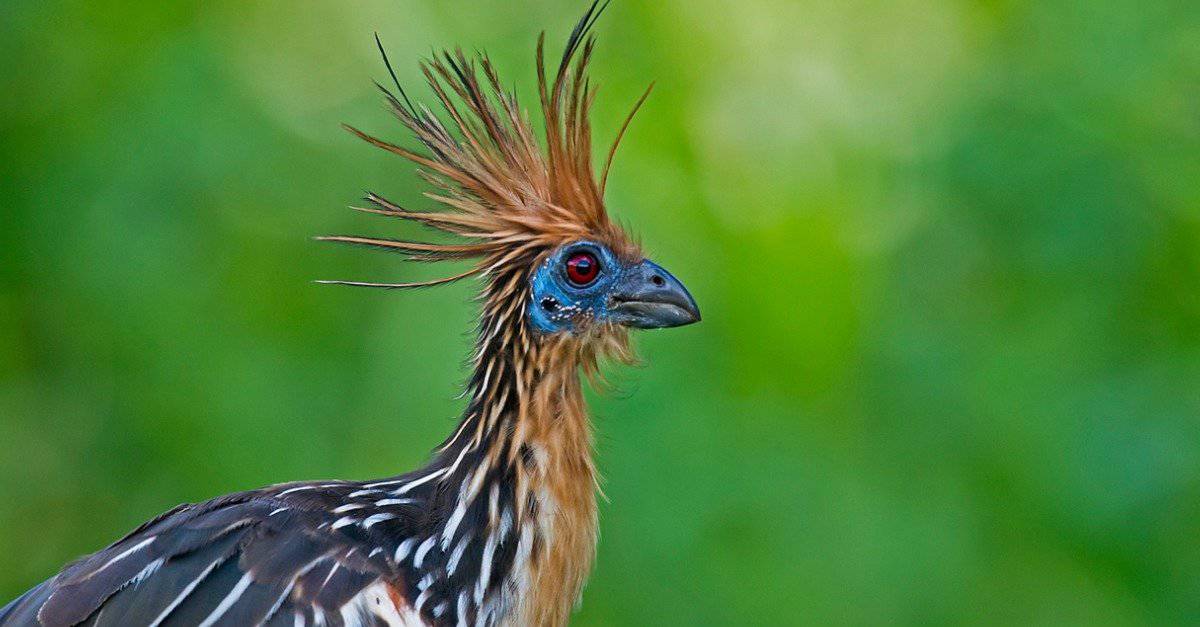

Have you ever heard of the smelly bird that has claws on its wings? Yes, such an animal does exist—and it’s called the hoatzin. This bird is known for its rotten scent, thanks to its hardworking digestive system. Here’s everything you should—but might not want to—know about the smelly hoatzin.
What is a Hoatzin?
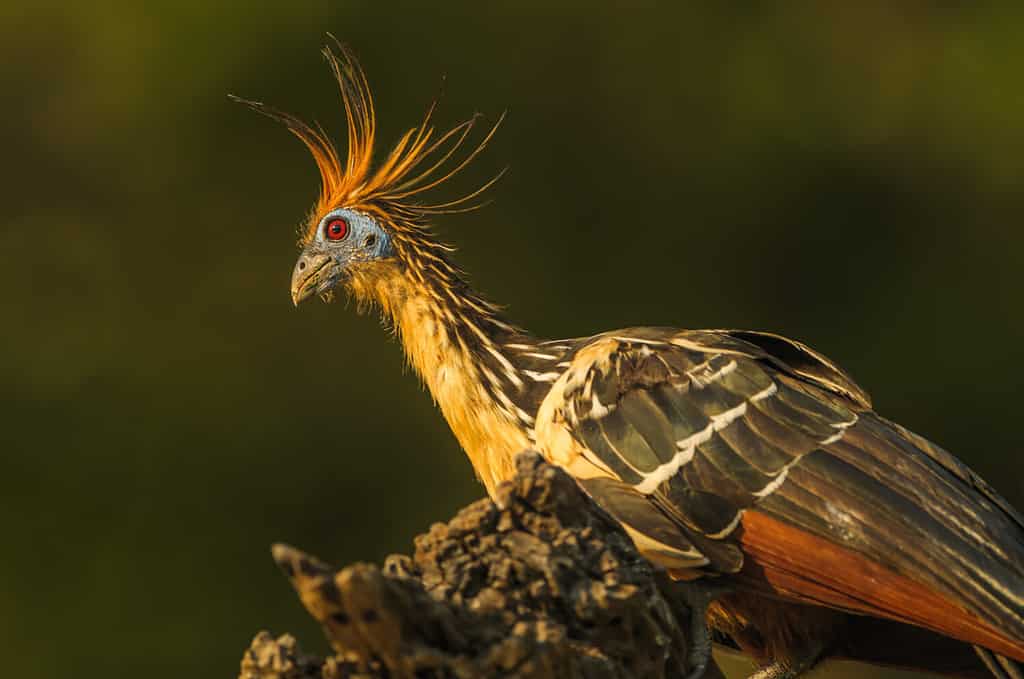
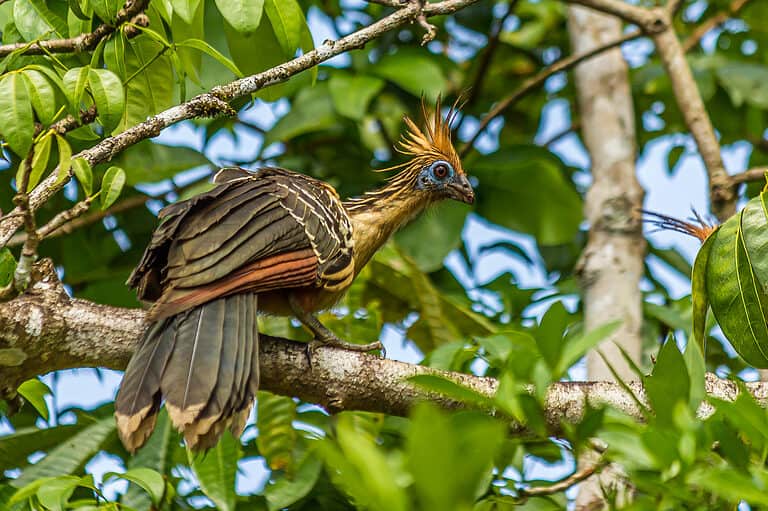
Hoatzins have a unique digestive process, aiding in their smelly nature.
©Marcos Amend/Shutterstock.com
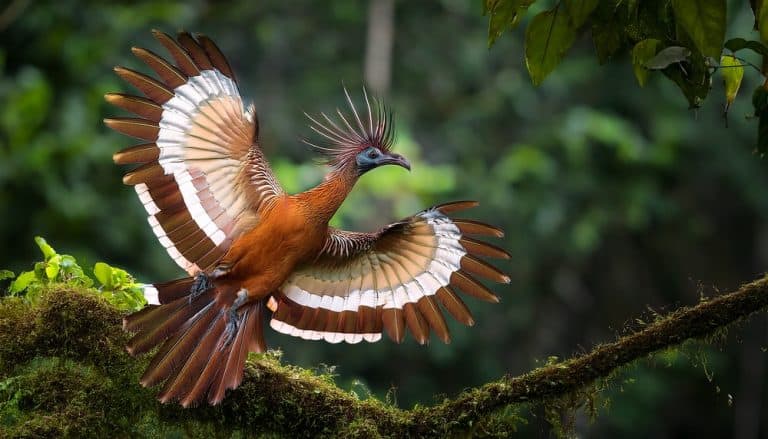
A hoatzin, often referred to as a stinkbird, is a neotropical bird. It most commonly resides across habitats like swamps, lowland tropical forests, river basins, and mangroves in South America.
“They are found in the steaming swamps of the Amazon and Orinoco basins in South America, and as for where it fits in the grand bird family tree? Taxonomists have been passing the buck on this one for decades,” says Dr. Bobby Fokidis, Professor of Biology at Rollins College. “Some say it’s like a pheasant, some say more of a cuckoo, and most have settled on it being the last living member from a distant lineage that split from the rest of the birds around 65 million years ago.”
Perhaps the most riveting part about the bird, however, is its awful scent. Many describe it as manure-like smell—one you wouldn’t want to spend much time around.
“When I look at a hoatzin, what I see is a prehistoric jungle weirdo that looks like a punk-rock pheasant, smells like a compost bin, and digests food like a cow,” says Fokidis. “Unlike cows, however, which have four specialized digestive chambers (often mistaken as ‘the four stomachs’ of a cow), the hoatzin instead has an enlarged crop.”
While you might think the hoatzin must eat a ton of disgusting food for it reek the way it does, it actually primarily consumes leaves.
“That last part is especially important: It eats leaves,” Fokidis continues. “And to break down all that cellulose, it ferments them in a gut that basically functions like a fermentation vat.”
Why Do Hoatzins Smell?
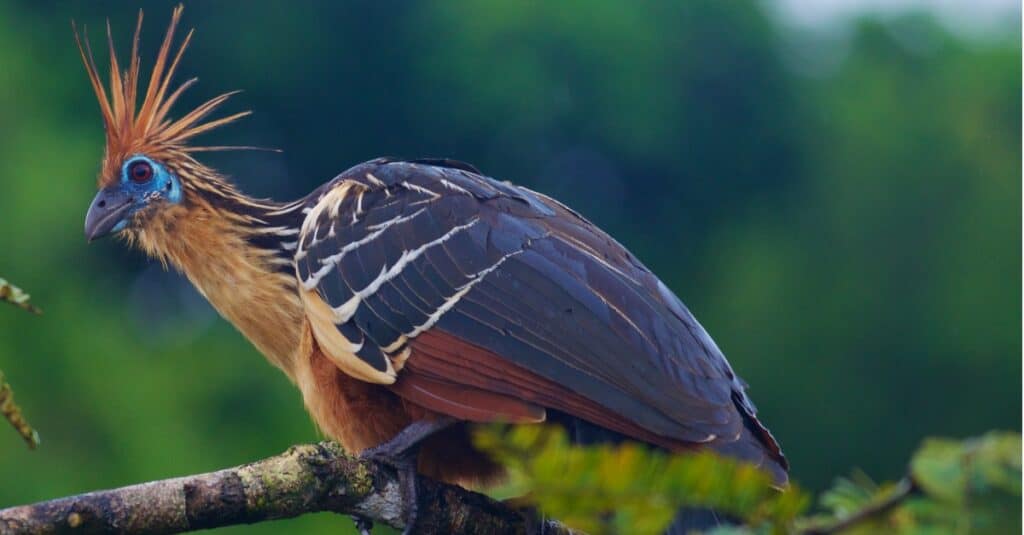
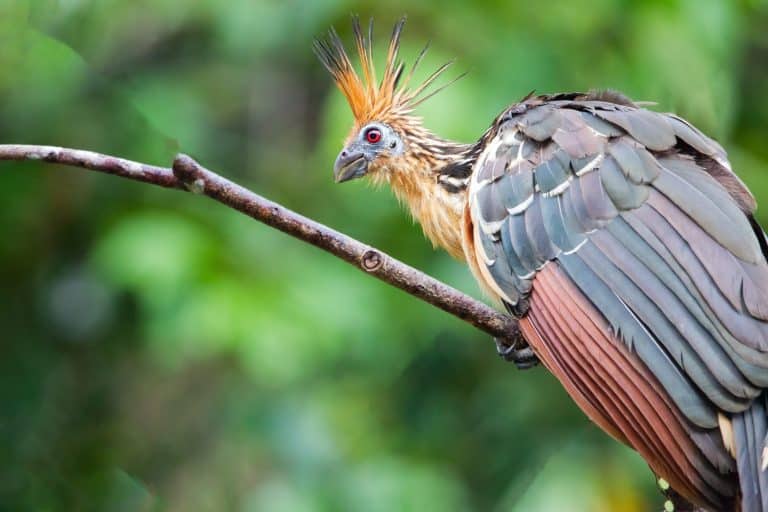
The Hoatzin is known to be one of the smelliest animals in the world.
©iStock.com/Gaardman
The only reason hoatzins stink is because of their digestive system. However, there’s really no known benefit to their scent. For example, it’s not meant to scare off predators or achieve any sort of goal. They merely reek as a result of poor internal plumbing, earning the nickname “stinkbird.”
“Locals call it the ‘stinkbird’ because they smell bad, since their digestive system is working overtime to break down the foliage no self-respecting bird should be eating in the first place,” Fokidis explains. “They are not fragrant because it helps them. They smell because they are a walking fart factory in feather form.”
“If the odor happens to keep a few predators away, great, but don’t romanticize it,” Fokidis adds. “This isn’t perfume. Instead, it is the gaseous byproduct of an evolutionary bad decision, baked in the Amazonian sun. Evolution didn’t make this bird stink for a reason; it just could not be bothered to make it stop.”]
Baby hoatzins hatch with literal claws on their wings. No metaphor here, hatchlings have actual, Jurassic Park raptor-style, grab-on-and-don’t-let-go claws.
Dr. Bobby Fokidis, Professor of Biology at Rollins College
Why Do Hoatzins Have Wing Claws?
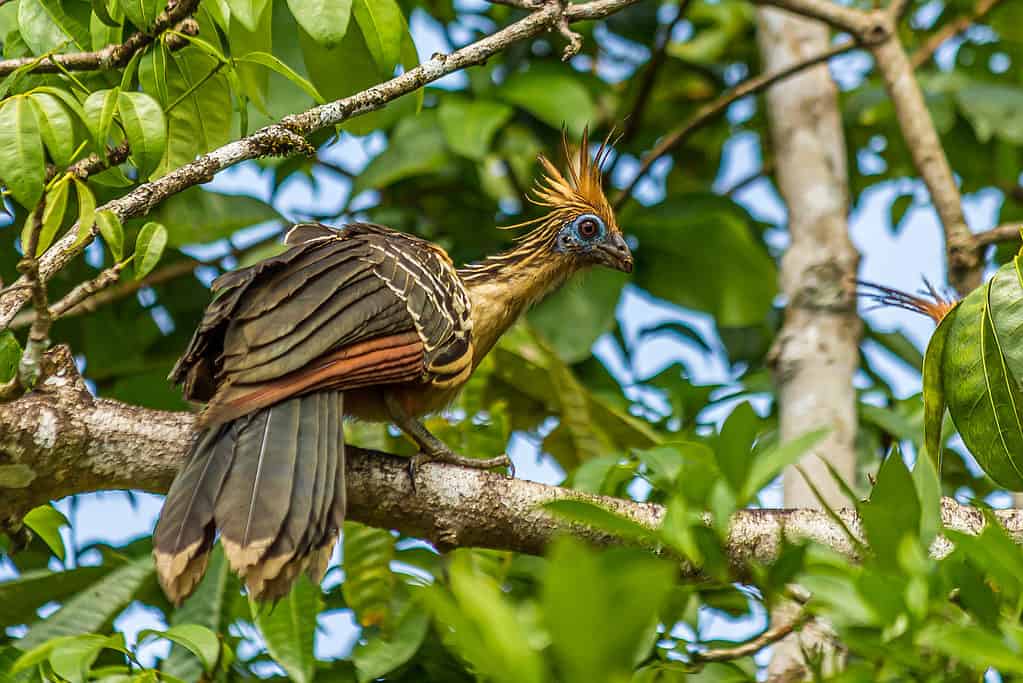
Hoatzins are born with claws on their wings, but they eventually lose them as they mature.
©Dmitrii Kash/Shutterstock.com
Young hoatzins are born with claws, which they use for a variety of reasons. Ironically enough, they’re located on the longest parts of the bird’s wings.
“Here is where things get interesting, evolutionarily speaking,” Fokidis says. “Baby hoatzins hatch with literal claws on their wings. No metaphor here, hatchlings have actual, Jurassic Park raptor-style, grab-on-and-don’t-let-go claws. Thus, when scientists see them, they don’t see a living bird; they see a faded shadow of the Archaeopteryx, that feathered dinosaur first discovered in Germany, and you may have seen in a Natural History Museum somewhere.”
Essentially, these claws allow the baby hoatzins to defend themselves from predators and climb to higher heights as a form of escape. Additionally, oftentimes, a baby hoatzin will fall from its nest and need to make its way back up the tree where the nest is located.
“When trouble shows up in the Amazon, like a predator, the chicks don’t wait around the nest, they drop like spoiled fruit into the swamp, then claw their way back up trees using those tiny dinosaur hands,” Fokidis says. “It’s desperate, primal.”
As hoatzins mature, the wing claws become less prominent and are no longer functional, effectively disappearing as the wings develop
“As they grow up, the claws fade away, replaced by wings that are barely adequate for flight,” Fokidis says. “But for a few glorious weeks, they are tiny, prehistoric beasts crawling through the forest, flipping the bird to 65 million years of bird evolution.”