Quick Take
- Introducing a natural predator to wipe out an invasive pest sounds like a clean solution, but that changes when it works too well. Explore the biocontrol debate →
- Fiji's government spent nearly 50 years throwing every tool it had at the Levuana moth, and every single approach failed. See every failed attempt →
- Scientists declared one of the fly's collateral victims extinct, but they later had to walk back that declaration. Read about the collateral victims →
- Not every scientist agrees the Levuana moth is actually gone, and their reasoning might change how you think about extinction declarations. See the extinction debate →
For centuries, coconuts have played a vital role in the development and sustenance of Fijian society. The coconut tree is so special to Fijians, in fact, that it is sometimes called the “tree of life.” Coconuts provide refreshing water and coconut meat. Fijians have also historically repurposed the leaves and shells of coconut palms for traditional medicine, building materials, and baskets. As you might imagine, the coconut industry in Fiji has also been highly profitable, providing economic benefits and employment to citizens. However, in the late 19th century, Fiji’s coconut industry on its largest island of Viti Levu took a severe hit thanks to the Levuana moth (Levuana iridescens).
Starting in approximately 1877, the Levuana moth began wreaking havoc on Viti Levu. The moths’ larvae ravaged the undersides of coconut palm leaves. Their destruction of these trees also led to more difficulty producing copra, or dried coconut meat, which was often used to make coconut oil. The Levuana moth had no real predators at the time, so its population growth went unchecked. But entomologists had an idea. They introduced a parasitic fly species to Fiji, a move that changed the Levuana moth’s entire trajectory.
What Was the Levuana Moth?
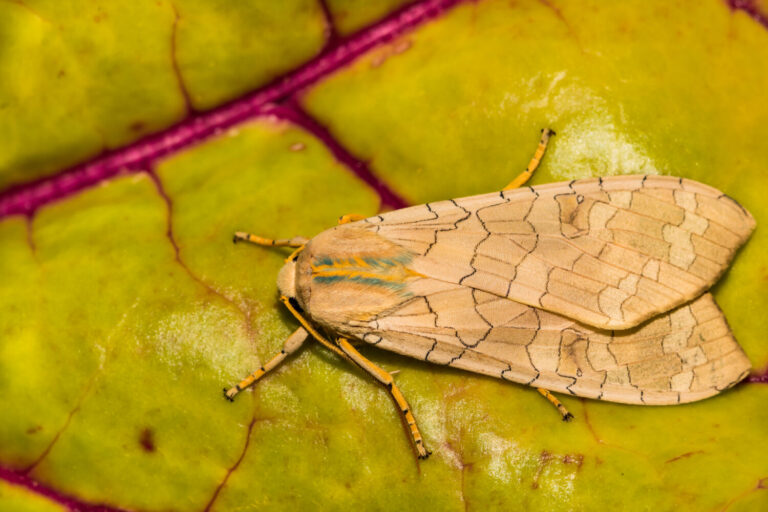
Despite its original outbreak in 1877, the Levuana moth was not officially named until 29 years later in 1906, when it was described by entomologist George Thomas Bethune-Baker. The Levuana moth was small, with a wingspan of approximately 16 mm (0.6 inches). In terms of its appearance, these moths had a steely blue head and thorax, with a yellowish-brown abdomen and legs.
At first, scientists wondered whether the Levuana moth was widespread. However, a study published in PLoS One in 2019, which extracted historical DNA from Levuana moth museum specimens, suggests the moth was endemic to Fiji.
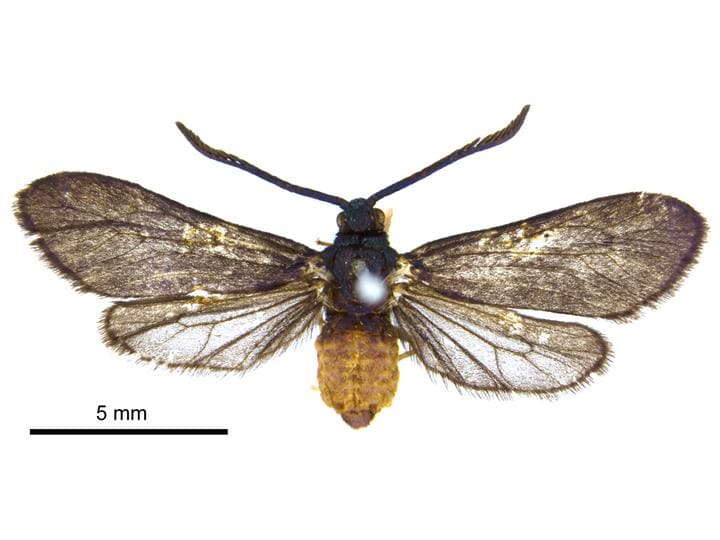
Levuana moths first burrowed into the leaves of tall palm trees, decimating them before moving to smaller palm trees.
The First Attempts to Stop Moth Damage
Between 1877 and the early 1920s, the Fijian government tried everything in its power to stop the Levuana moths’ destruction. Since the moths are diurnal, or only active during the day, they thought light traps might be helpful. However, those were ineffective. Spraying was also ineffectual. Entomologist Vazrick Nazari wrote, in an overview of the moths’ history, “Spraying chemicals on the tall palms proved too costly, unhealthy for the environment, and often impossible due to presence of permanent winds on the island.”
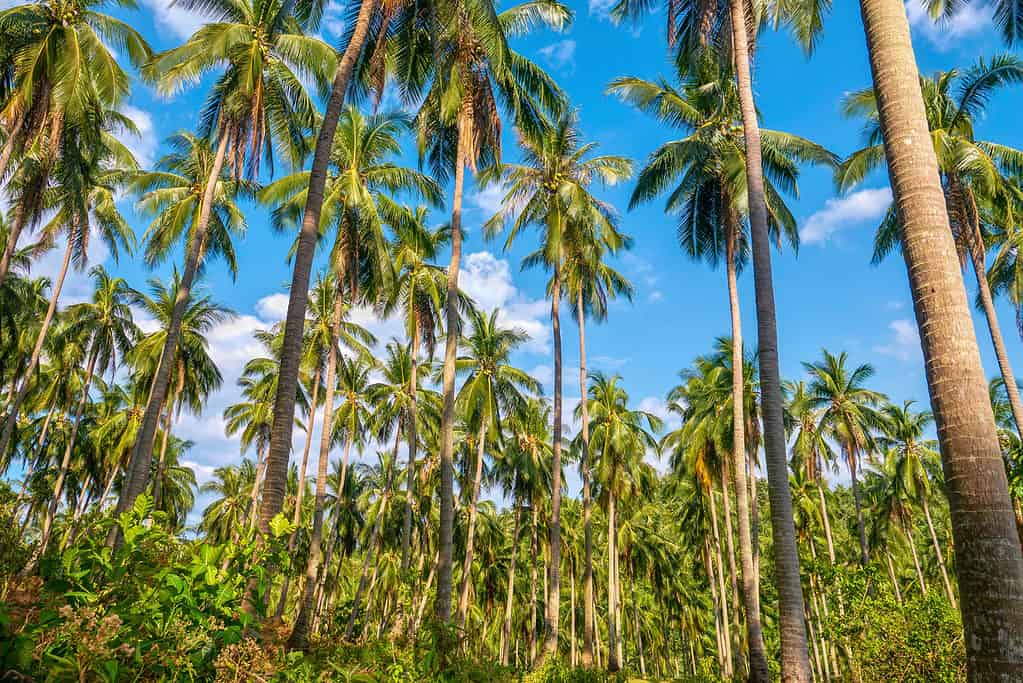
Without coconut palms, Fijian citizens were losing valuable money, food, building materials, and resources.
©iStock.com/Cheryl Ramalho
The community also tried fumigation and later imported coconut palm trees that were supposedly resistant to Levuana moths (which turned out not to be true). Inspecting palm tree exports was unhelpful since the packaging material was often infested with Levuana moth eggs. The government even hired workers to tear vulu (fibrous coconut palm hair) off the leaves to prevent the moths from laying eggs. Unfortunately, the workers could tear vulu off the lower parts of the trees but could not reach the higher leaves. Their efforts, like the others’, did not pan out.
Panic set in as the moths continued to ravage the island. If nothing changed soon, Fijians did not know how they would recover from the agricultural and economic harm.
Introducing a New Biological Control Program
In 1925, however, scientists had a new idea: a biological control program, also called biocontrol. The U.S. Department of Agriculture explains, “Biological control (biocontrol) involves the reduction of pest populations through the use of natural enemies such as parasitoids, predators, pathogens, antagonists, or competitors to suppress pest populations.”
If you search online, you’ll see many debates on the ethics of biocontrol. Some people ask whether environmental or cultural protection is more important than species protection. Others grapple with the negative implications for other creatures. After all, if a parasitoid or other means of biocontrol harms non-targeted native species, is it really protective?
Regardless, Fijians decided to forge ahead. Entomologist John Douglas Tothill and two teammates believed Bessa remota, a parasitic fly from Malaya, was a potential solution. Likely, they chose B. remota since the fly had already been used to control Artona catoxantha (also referred to in literature as Palmartona catoxantha), another moth associated with coconut palm destruction.
In 1925, the team tested whether B. remota would parasitize Levuana moths. Their tests were a success. After raising adult parasitic flies, the team released the flies on Viti Levu.
An Overly Effective Approach
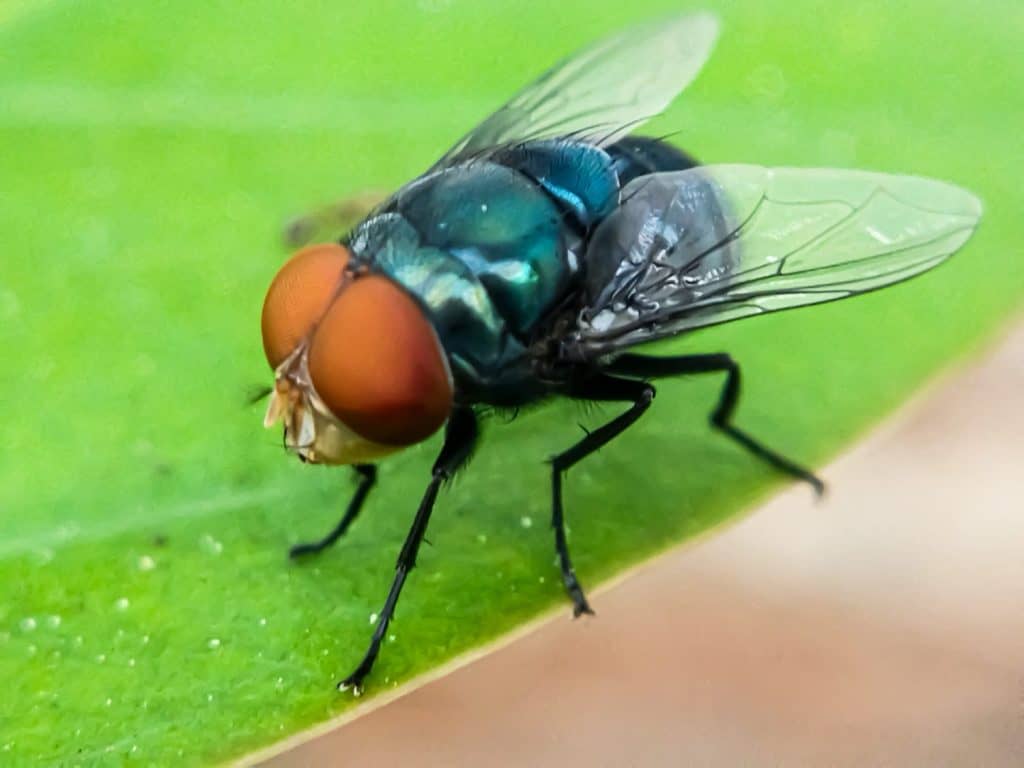
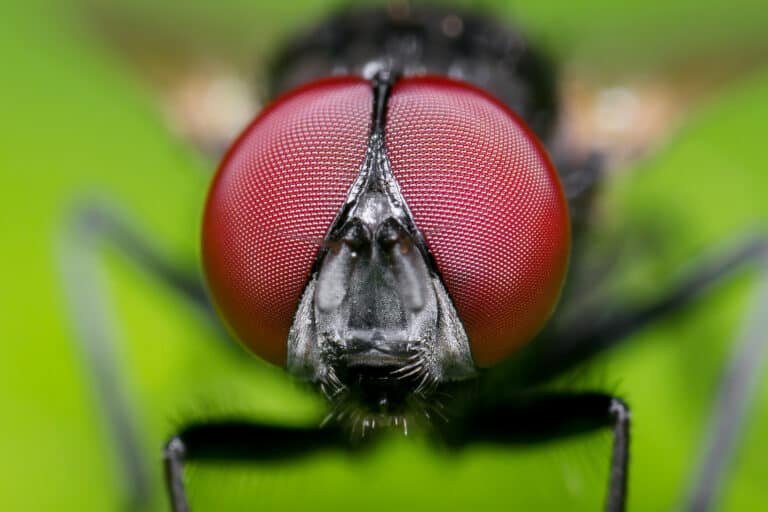
Parasitic flies like B. remota or the New World screw-worm fly (pictured here) feed on their hosts’ tissues, causing extreme injury or death.
©Lidya Elfa Sari/Shutterstock.com
As it turns out, B. remota was incredibly effective at parasitizing and killing Levuana moths. In fact, these parasitic flies were too effective. Six months after the flies were released, the Levuana moth population had been nearly completely eradicated.
As far as scientists can tell, the last confirmed Levuana moth specimen was collected in 1941. However, some possible observations were reported as late as 1956, though the moths have not been officially seen since then. In fact, per the IUCN Red List, Levuana moths were officially declared extinct as of 1996. Some entomologists also believed B. remota was responsible for killing off the dark palm moth (Heteropan dolens) in Fiji around the same time, leading to its extinction.
However, we now know that H. dolens is not extinct. In fact, specimens were rediscovered in Fiji in 1963. The species was later also rediscovered on Aneityum Island in Vanuatu. Despite the IUCN declaring the Levuana moth extinct, not every scientist agrees.
Why? First, Levuana moth sightings were reported in areas of Fiji, such as Taulevu and Vunindawa, until as late as 1956, with the last formally collected specimens deposited in December 1953 at Taulevu, just under 30 years before the species was considered extinct.
Furthermore, as Mark Hoddle of the Center for Invasive Species Research writes, “Zygaenids that are well regulated by natural enemies are known to exhibit long lag periods between outbreaks and this is a clearly known facet of their ecology. For example, Artona chorista was presumed to have gone extinct until an outbreak 100 years after.”
So, will there be a resurgence of Levuana moths? It’s improbable, but we’ll have to wait and see.