
Quick Take
- While often marketed as a “miracle pig,” the Mangalitsa is actually a heritage breed whose history is frequently misunderstood.
- To save the breed in the U.S., breeders have had to focus strictly on genetic diversity.
- Most U.S. breeders quit breeding because the pig’s 18-month growth cycle makes it too expensive to maintain.
- In an unexpected twist, Spanish ham producers played a key role in reviving international demand for the Mangalitsa, long after the breed had fallen out of favor for much of the world.
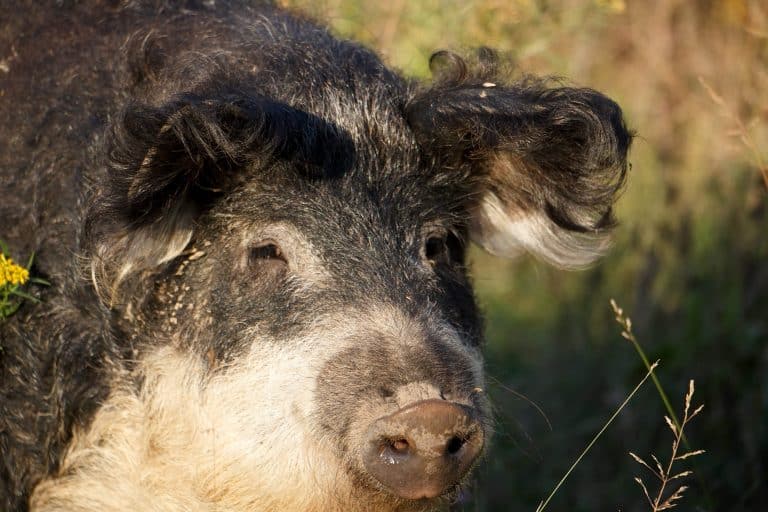
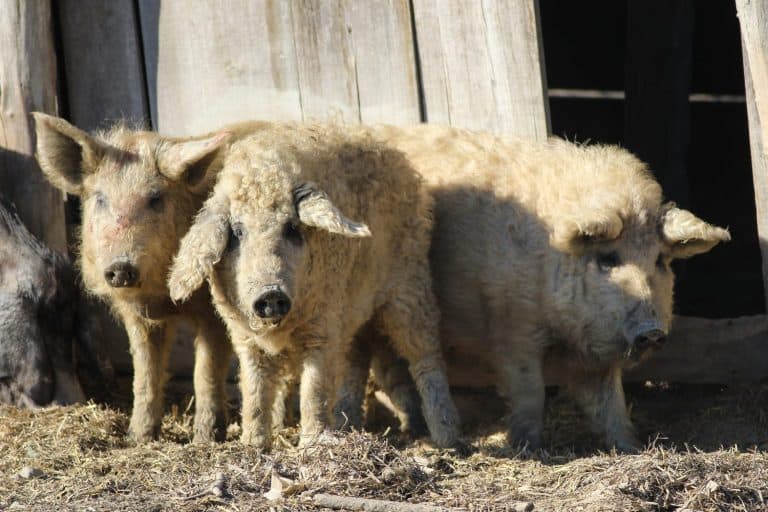
With its curly coat and sturdy build, the Mangalitsa pig looks like a cross between a sheep and a wild boar. This striking appearance has fueled fascination among chefs and farmers, but it has also led to several widespread myths.
Depending on where you look, the Mangalitsa (also spelled Mangalica) is described as a wild boar hybrid, a disease-proof “super pig,” or a nearly extinct miracle breed whose fat is somehow cholesterol-free. According to Barbara Meyer zu Altenschildesche of Royal Mangalitsa — expert breeder, importer, and the driving force behind the Mangalitsa Breed Organization and Registry (MBOAR) — nearly all of these claims are wrong.
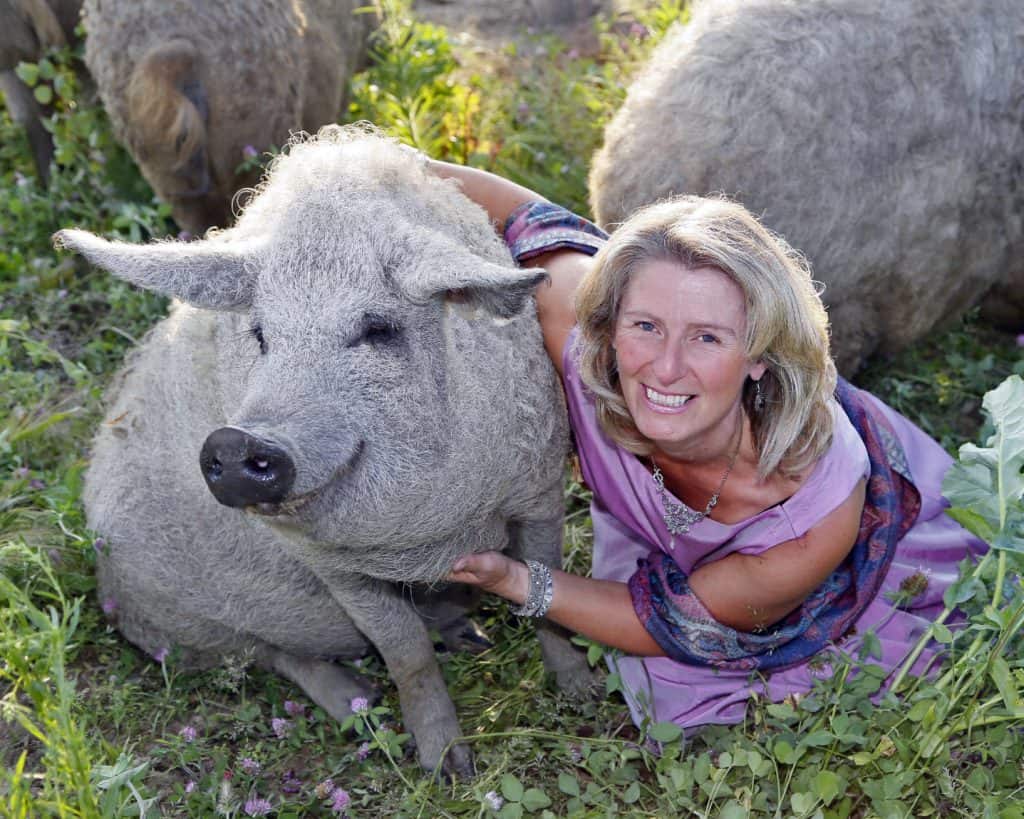
Barbara Meyer zu Altenschildesche is the founder of Royal Mangalitsa.
©Barbara Meyer zu Altenschildesche / ©Royal Mangalitsa USA
“People tell convincing stories, and sure, you hear these, and it’s a great story,” Barbara says. “I tell you a story, you tell somebody the story, and they tell somebody the story. After it’s told so many times, it’s a whole different story.”
Barbara has dedicated years to correcting those narratives. Working alongside her husband, Wilhelm Kohl, she travels across the globe educating others on the breed. Her focus is rigorous: baseline DNA testing, lineage verification, and a comprehensive genetic herd book system to protect the breed’s long-term genetic health in the United States.
For Barbara, preservation begins with accuracy, and that means separating romantic myth from historical and scientific fact.
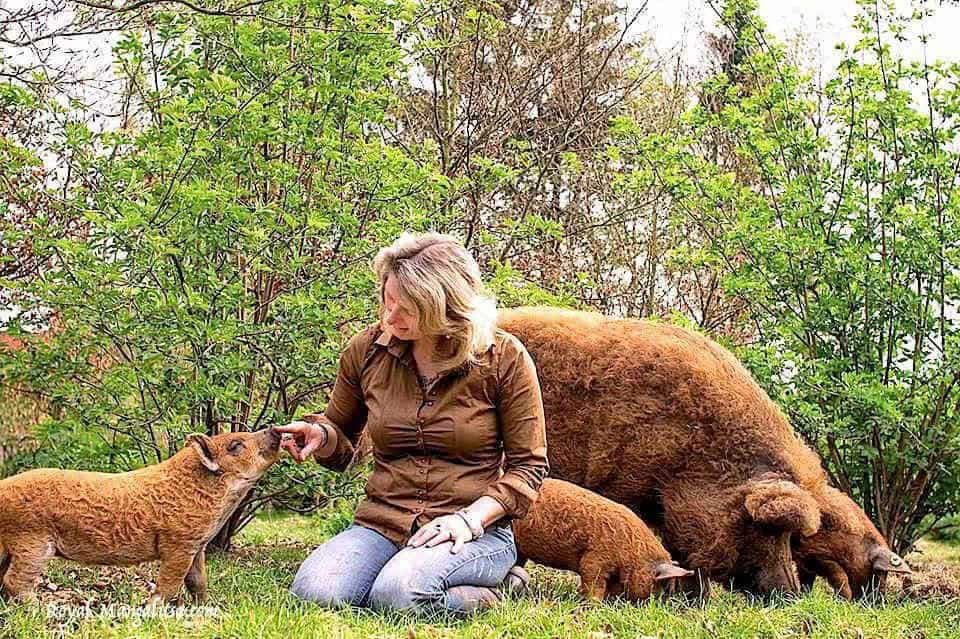
Barbara and her husband, Wilhelm W. Kohl, run Royal Mangalitsa and travel the world to advocate for the breed.
©Barbara Meyer zu Altenschildesche / ©Royal Mangalitsa USA
Not a Wild Boar Cross
One of the most persistent myths is that the Mangalitsa is a direct wild boar hybrid; it is not.
The breed was intentionally developed in the early 1800s within the Austro-Hungarian Empire by crossing established domestic pigs (including the Bakony and Szalonta) with the Serbian Šumadija. While very distant ancestors may trace back centuries (even as far back as 900 AD), that does not make the modern Mangalitsa a wild cross.
“That would be like saying a modern dog is a wolf hybrid because wolves are somewhere in its ancestry,” Barbara explains. “It’s historically meaningless at this point.”
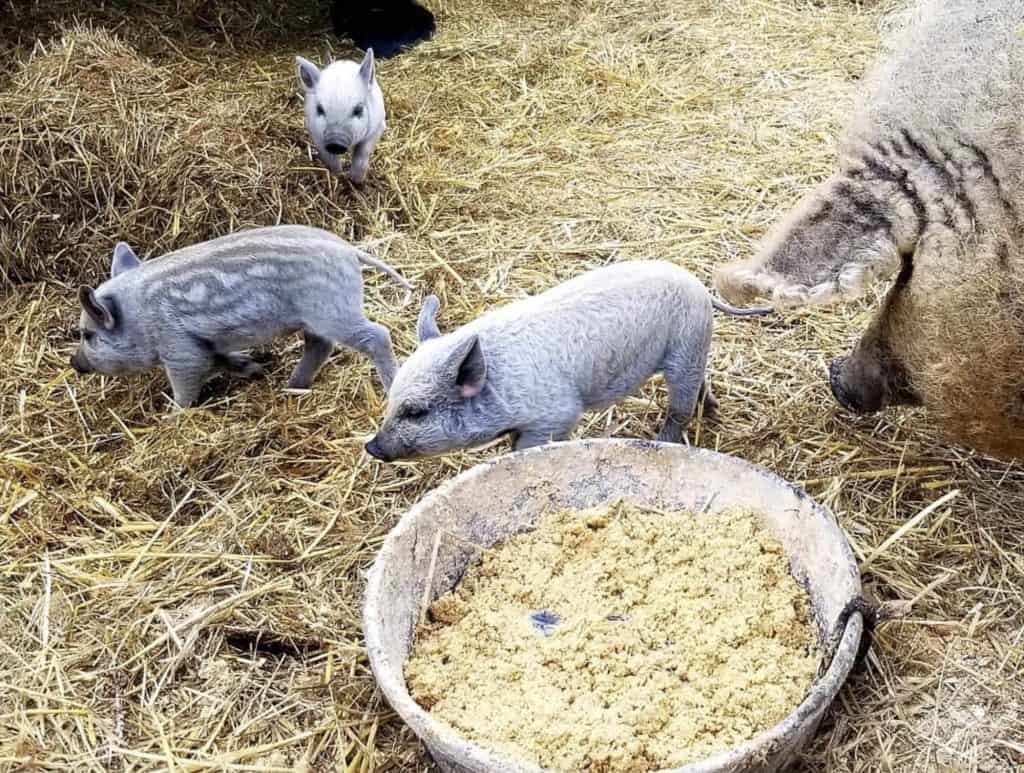
A single litter can have both striped and non-striped piglets.
©Barbara Meyer zu Altenschildesche / ©Royal Mangalitsa USA
Another misconception centers on striped piglets. In the United States, people often point to stripes as proof of “wild blood.” In reality, striping appears occasionally in several domestic pig breeds and is not required in official Austrian or Hungarian Mangalitsa breed standards. A purebred litter may include piglets with boldly striped coats, faintly marked coats, or no stripes at all.
Three Colors, One Complex Breed
Mangalitsas are categorized into three color varieties: Blonde, Red, and Swallow-belly. In Hungary, these populations were historically managed almost like separate breeds, each maintained with genetic depth.
“You have the original animals back in Hungary in the Hungarian Breed Book,” Barbara explains. “You have the Swallow-Belly, the Red, and the Blonde, and they are all unrelated when they are Pure Color.”
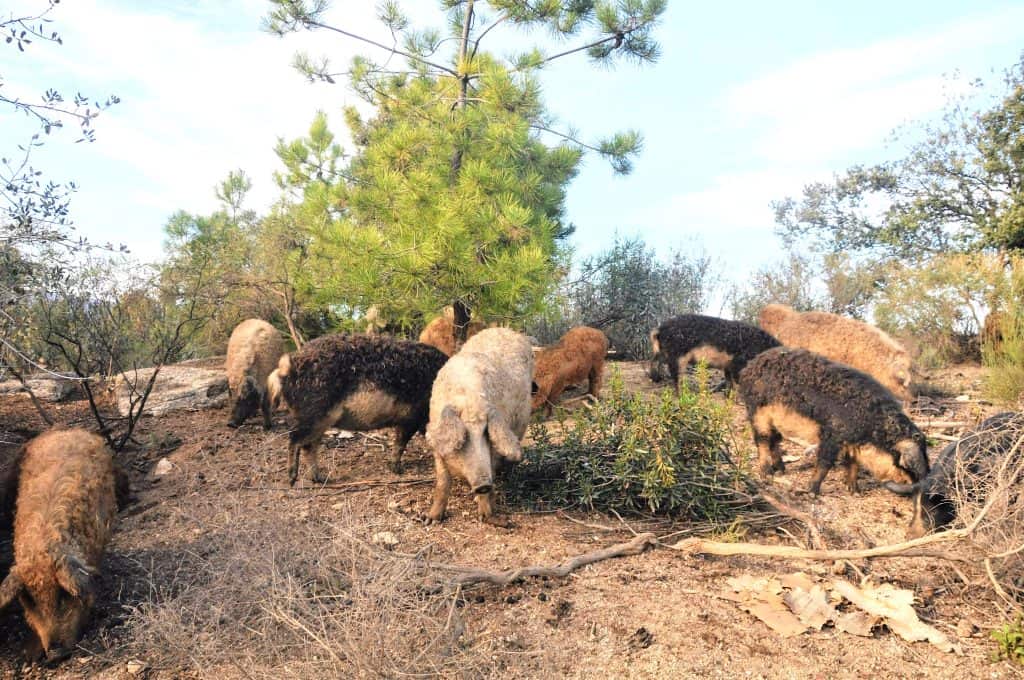
Quality in modern Mangalitsa is driven by individual genetics rather than coat color.
©Barbara Meyer zu Altenschildesche / ©Royal Mangalitsa USA
In Europe, these three color lines are preserved independently. In the United States, however, things are different. The American population began with only a handful of imported pigs. When breeders attempted to keep colors strictly separate, the gene pool became dangerously small. This resulted in reduced litter sizes and structural weaknesses.
Because of this, old European stereotypes — such as “Reds are meatier” or “Blondes carry more fat” — no longer reliably apply to Mangalitsas in the U.S. Today, quality depends on individual genetics, not coat color.
As a result, American Mangalitsas are less visually uniform than their European counterparts. Some pigs are curlier than others, and some shed more seasonally. Others do not lose their coats at all and remain fluffy year-round. Appearance alone cannot verify purity. “You can’t say, ‘Oh, it looks like a Mangalitsa, so it is a Mangalitsa,'” Barbara emphasizes. “It doesn’t work like that.”
Only documented lineage and genetic testing can do that, which is precisely why herd books matter.
Built for Fat, Not Fashion
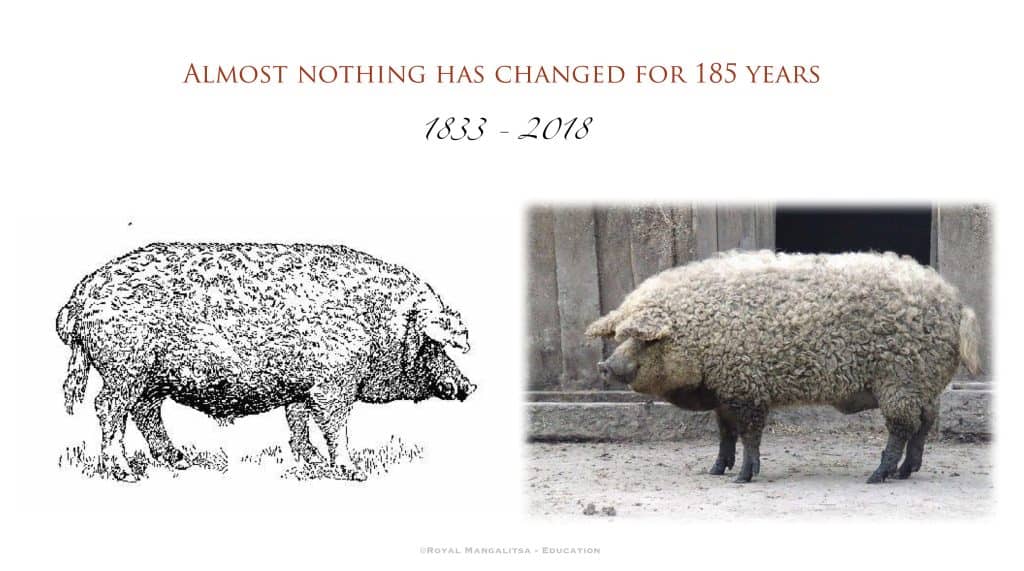
The Mangalitsa breed has changed very little in nearly two centuries.
©Barbara Meyer zu Altenschildesche / ©Royal Mangalitsa USA
To understand the Mangalitsa, you must understand its origins in 19th-century Central Europe. Before refrigeration, olive oil was scarce and butter was expensive. Fat wasn’t indulgent; it was essential. It was a vital resource — not just for cooking and baking, but for making soap, lubricating machinery, preserving meat, and powering laborers with the high-calorie energy they needed to work and survive. During this time, pigs were an indispensable source of the fat required to power and sustain a home.
The most valuable pig, then, was the one that produced the most lard. The Mangalitsa was specifically bred to meet that need.
In 1833, Archduke Joseph Anton helped establish the Mangalitsa breed by crossbreeding Serbian pigs with local Hungarian pigs, including the Bakonyi and Szalontai. Historical records and auction photos from the 1800s show pigs shaped like giant barrels, with tiny legs, small faces, and enormous fat reserves. In that world, meat was secondary; fat was king.
“The main reason why this breed became so popular,” Barbara says, “was that the pigs could put on fat faster and better than the others.”
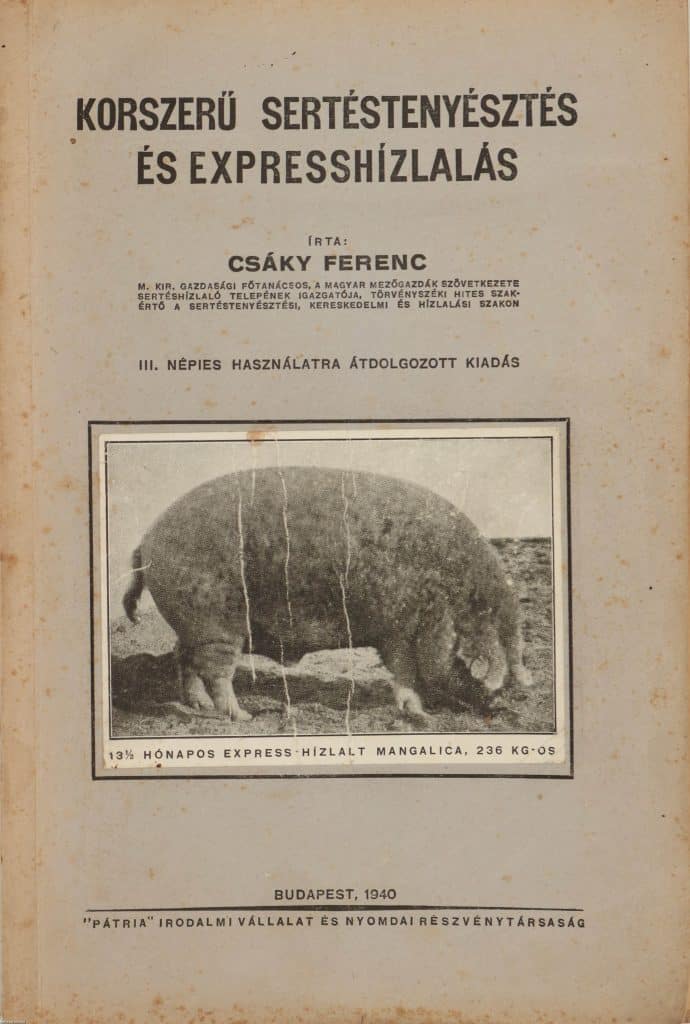
By 1940, the Mangalitsa was one of the dominant breeds in Hungary due to its high fat content.
©Barbara Meyer zu Altenschildesche / ©Royal Mangalitsa USA
But the 20th century changed everything.
The invention of refrigeration reduced the need for lard to preserve meat. Margarine marketing reframed animal fats as unhealthy and old-fashioned. Industrial agriculture prioritized “modern” pig breeds — lean, fast-growing pigs that produce large litters and can live in confined spaces.
Essentially, the Mangalitsa was the exact opposite of what the new agricultural industry wanted. Slow-growing, intelligent, fat-heavy, and unsuited to confinement, the Mangalitsa became economically obsolete. By the late 20th century, the breed had nearly disappeared, surviving mostly on small rural farms in Eastern Europe.
Saved by the Ham
As adorable as these curly-coated pigs are, the Mangalitsa wasn’t saved by sentimentality; it was revived because of its ham.
“It was not because the pig was so cute; it was because they wanted the ham,” Barbara explains. “It has to have a market. Without a market, there is no reproduction.”
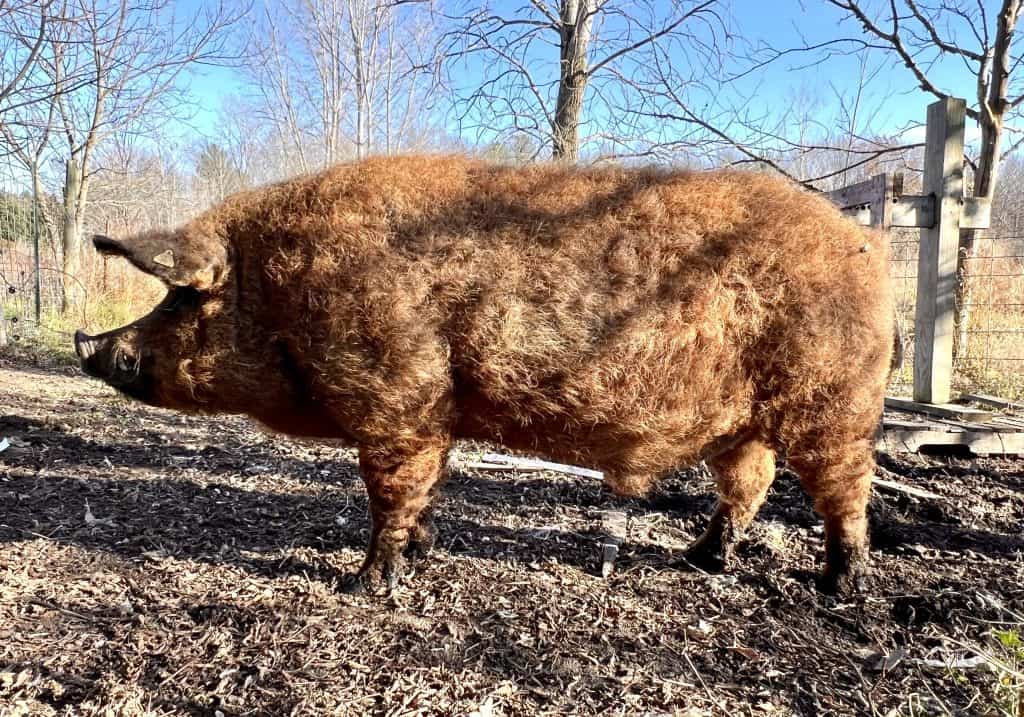
Genetic testing has confirmed that Mangalitsa pigs are not one single group, but three distinct populations: the Blonde, Swallow-Belly, and Red.
©Barbara Meyer zu Altenschildesche / ©Royal Mangalitsa USA
In the early 1990s, Spanish producers searching for alternatives to Iberico ham discovered Hungarian pork legs remarkably similar in fat quality and structure. After a lengthy search and testing multiple breeds, they identified the Mangalitsa as the mystery pig behind the tasty meat.
A small number of pigs were purchased from a Hungarian facility for export to Spain, a transaction that likely contributed to the myth that only 200 Mangalitsas remained. In reality, several still survived on small, rural farms, though many were undocumented by official records.
The renewed demand for high-end cured ham reignited Mangalitsa breeding programs across Hungary, Austria, and Serbia. The breed survived not because it was cute, but because its fat produced extraordinary ham.
The American Challenge
Bringing Mangalitsas to the United States was far more complicated than importing typical livestock. Because pigs carry a high risk of disease, they must undergo lengthy quarantines and are very expensive to transport.
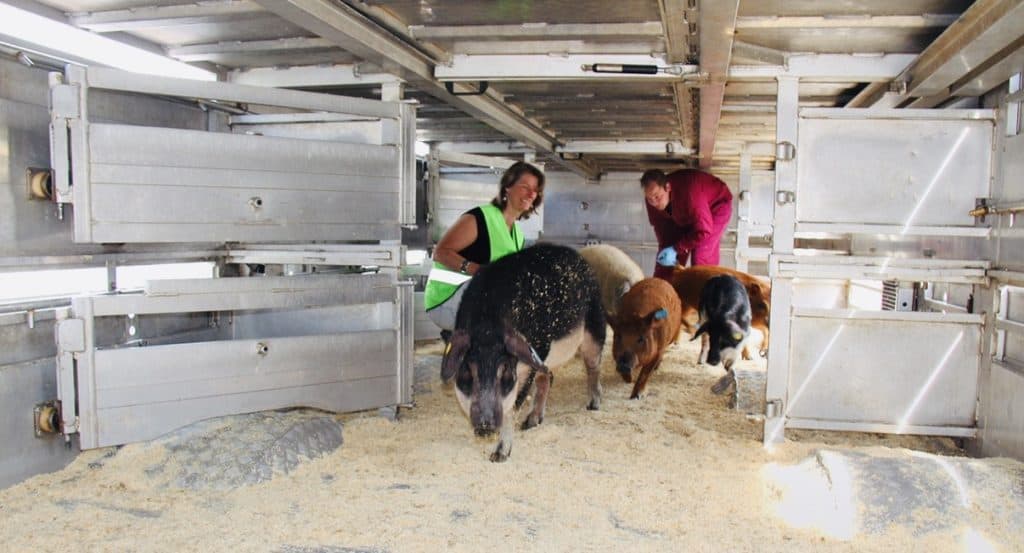
Barbara has exported Mangalitsas in many European countries, including Belgium, Portugal, Germany, France, and the UK.
©Barbara Meyer zu Altenschildesche / ©Royal Mangalitsa USA
The first imports arrived in the U.S. in 2007, when Heath Putnam brought the Swallow-Bellied variety over from Austria. This was followed in 2010 by Wilhelm Kohl’s import of Blondes from Austria. In 2011, Auburn University arranged a small import from Austria, for scientific research on obesity.
The Red variety made its debut in the States in 2014, an effort spearheaded by Barbara, who also oversaw a simultaneous import of Blondes. Both colors in the 2014 import were of Hungarian genetics. In 2016, Wilhelm oversaw the final arrival of Red and Swallow-Bellies, while Barbara coordinated the export of these combined (Hungarian/ Austrian/ Serbian) genetics sourced from the Netherlands.
Because so few pigs formed the original U.S. population, today’s American Mangalitsas descend from a narrow founder group. That limited base still shapes the breed’s variability and fuels exaggerated claims about size, temperament, and growth.
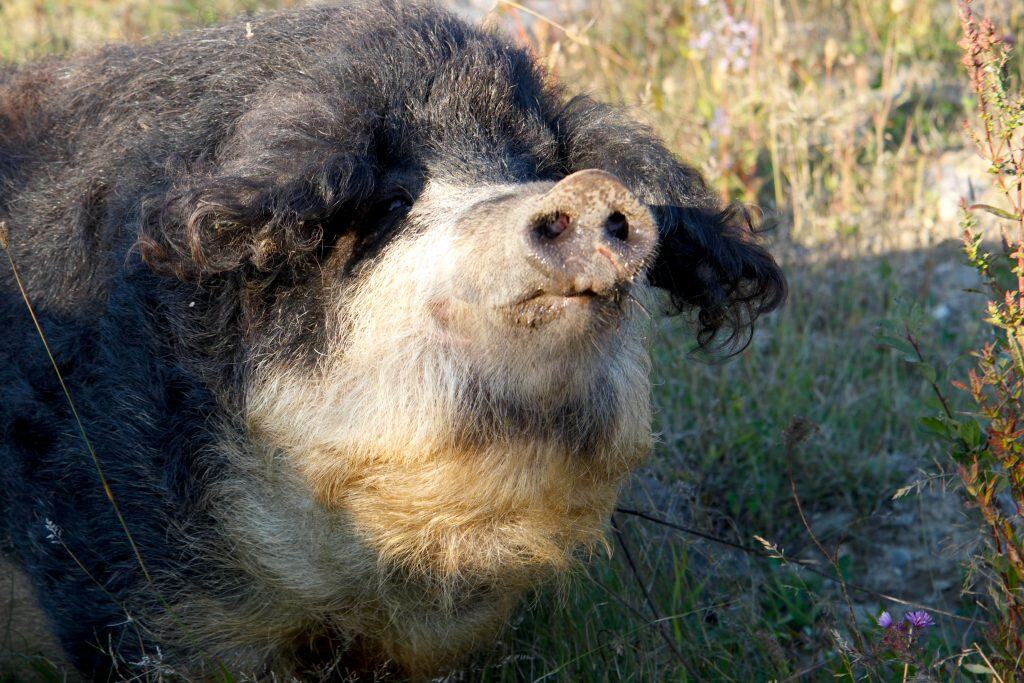
The quality of Mangalitsa products greatly depends on how the pigs are raised and what they eat.
©Barbara Meyer zu Altenschildesche / ©Royal Mangalitsa USA
Barbara frequently sees videos portraying massive, aggressive boars that “never stop growing”, a drama she says couldn’t be further from the truth. “People tell convincing stories,” she says. “That doesn’t make them true.”
In reality, the Mangalitsa is neither a monster hog nor a miracle pig. It is a traditional lard pig whose value depends on careful breeding, management, and honesty.
The main reason why this breed became so popular, was that the pigs could put on fat faster and better than the others.
Barbara Meyer zu Altenschildesche of Royal Mangalitsa, expert breeder and importer
What Makes the Mangalitsa So Special
When purebred and properly raised, Mangalitsas produce fat with an unusually low melting point. “It is soft like butter on your counter,” Barbara explains. “When you put it on your hands, it melts like oil.”
This low melting point makes the fat incredible for cooking; it performs beautifully at high frying temperatures and is naturally resistant to burning. “When they are pure of breed — not when they are a cross — they have a very high frying point, so you can fry potatoes, you can fry popcorn. It doesn’t burn, it doesn’t get black.”
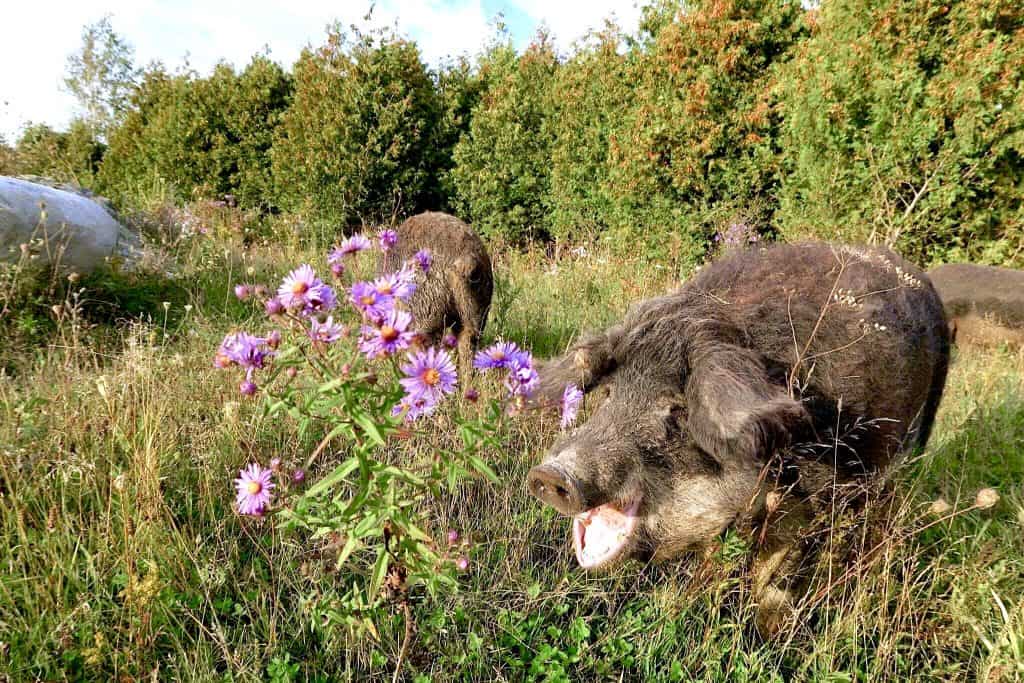
The first Swallow-Bellies came to the U.S. from Austria in 2007.
©Barbara Meyer zu Altenschildesche / ©Royal Mangalitsa USA
However, Barbara warns that this seemingly “magic’ quality is not exclusive to Mangalitsas. Similar high-quality fat is found in other heritage breeds with European roots, such as the Iberico and Ossabaw, provided they are raised in similar conditions. While genetics provide the potential, the pig’s environment, diet, age, and activity level determine the final quality.
Beyond the Frying Pan
If you think pig fat is just good for frying eggs, think again.
Across Central and Eastern Europe, seasoned Mangalitsa lard is spread thinly on bread and eaten like fine charcuterie. But the real magic is the texture: it’s softer and cleaner than butter, melting the moment it hits your mouth without leaving a greasy residue.
For Barbara, the fat’s versatility is what makes the breed truly extraordinary. “The meat is great,” she says. “But the fat is the most beautiful thing. You can make everything with it.”
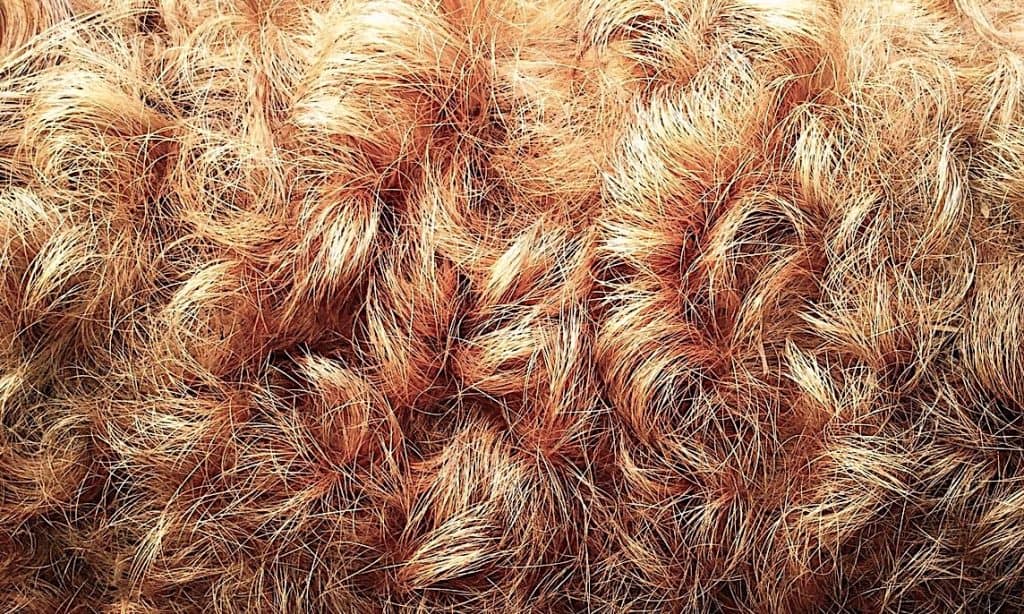
Mangalitsa pigs naturally shed their thick wooly coats during the summer months.
©Barbara Meyer zu Altenschildesche / ©Royal Mangalitsa USA
In her own kitchen, that means far more than roasted potatoes. She uses it as a base for chocolate mousse and even a homemade Nutella-style spread. Because the fat is clean, neutral, and smooth, it adapts easily to sweet applications, something modern consumers rarely associate with pig lard.
Its benefits and usefulness extend beyond food. Properly rendered Mangalitsa fat can be turned into gentle, hypoallergenic soap perfect for sensitive skin or even a baby’s bathwater.
The Myth of the “Miracle Pig”
The high-quality fat of the Mangalitsa also contributes to the marbling that many compare to Wagyu Beef. However, while Mangalitsa meat is indeed tastier — and healthier — than that of many modern breeds, this isn’t due to some magical genetic trait; again, it’s about the environment and how the pigs are raised.
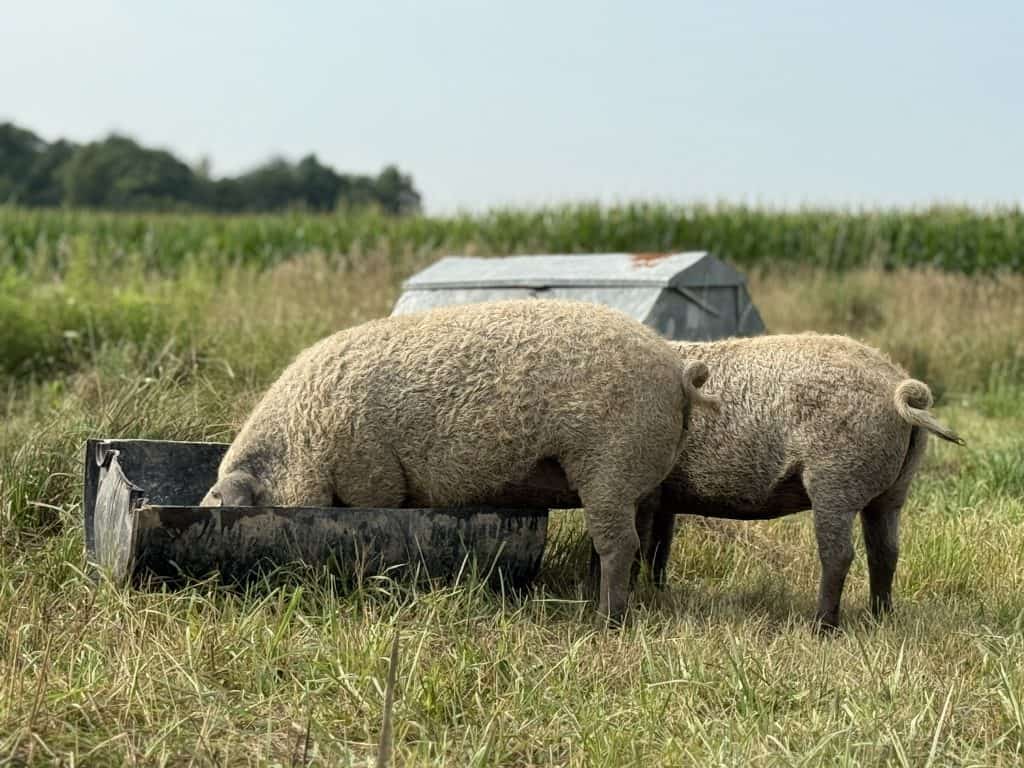
Although the Mangalitsa is a hardy breed, they struggle with the high humidity of North American summers.
©Barbara Meyer zu Altenschildesche / ©Royal Mangalitsa USA
Contrary to popular marketing claims, Mangalitsas are not cholesterol-free “miracle pigs.” As Barbara puts it, “An animal that has fat always has cholesterol.” It is also a myth that the breed contains three times more Omega-3s and 6s than other pigs, despite what some sellers suggest.
As Barbara explains, these animals spend their lives outdoors in the sun and are harvested at a much older age. Meat quality is a direct reflection of lifestyle: any animal that lives a longer, more active life outdoors will produce healthier meat than one raised in a confined, industrial setting.
Another common myth is that Mangalitsas are so resilient that they are immune to illness, a claim Barbara dismisses as “nonsense.” She compares the pig’s durability to the difference between a tractor and a Lamborghini: a tractor is built for tough conditions, but it isn’t indestructible. “The Mangalitsa is a hardy breed,” she notes. “But in a major outbreak, they get sick just like any other pig.”
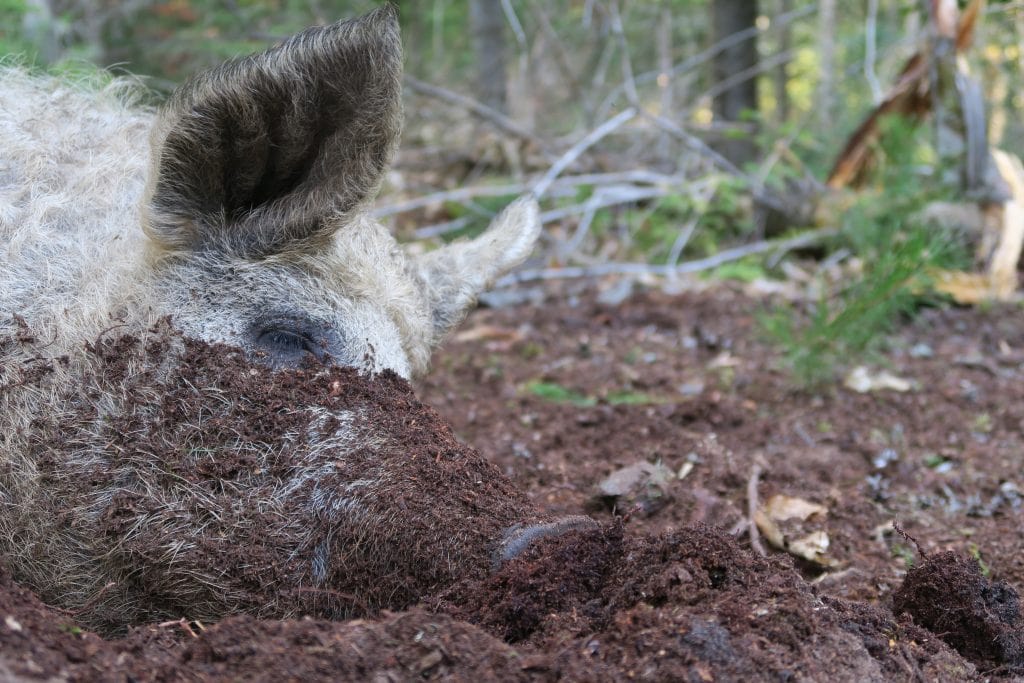
Like other pigs, Mangalitsa enjoy rooting in the dirt.
©Barbara Meyer zu Altenschildesche / ©Royal Mangalitsa USA
This means that proper shelter and balanced nutrition are not optional. As Barbara puts it, “They aren’t the ‘Superman’ of pigs; they are normal pigs, and you still have to take care of them.”
The Challenging Humidity of the United States
Appropriate husbandry is especially important for Mangalitsas raised in the United States. Provided their wooly coats remain dry and healthy, these fluffy pigs can withstand temperatures as low as 15 degrees Celsius (5 degrees Fahrenheit).
However, Mangalitsas struggle significantly with the heat and humidity of North American summers. While they can tolerate dry heat up to 40 degrees Celsius (104 degrees Fahrenheit), high humidity can be lethal; it prevents the pigs from effectively regulating their core temperature, putting them at serious risk.
The Reality of Raising Mangalitsa Pigs
Despite the romantic appeal of raising Mangalitsa pigs, most American breeders quit the practice after only a few years due to economics.
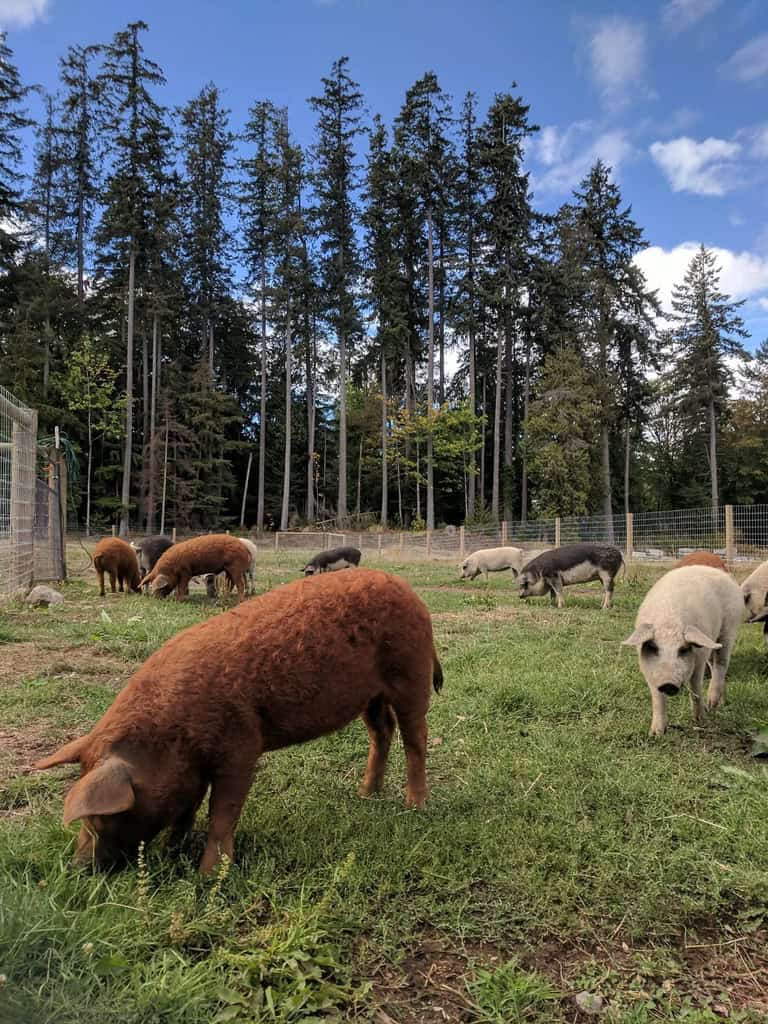
Mangalitsas must be monitored during the summer, as they can easily succumb to heat stroke.
©Barbara Meyer zu Altenschildesche / ©Royal Mangalitsa USA
Mangalitsas take 18 to 24 months to mature. They require secure fencing, quality feed, and often long-distance transport to slaughter facilities. The novelty of the breed often wears off once customers see the pigs’ small loins and fat-heavy chops come with a premium price tag. “It’s a niche market with a lot of challenges,” Barbara says. “The economics just don’t balance for most people.”
She envisions a more sustainable future for the breed in America. Rather than every small farmer struggling to manage their own breeding stock — which demands year-round feed, separate fencing, and social management — Barbara advocates for a collaborative model: dedicated breeders focus on genetics and herd books, while homesteaders purchase feeder pigs annually rather than maintaining breeding stock themselves.
Preservation of the Mangalitsa in America, she argues, requires collaboration, not competition.
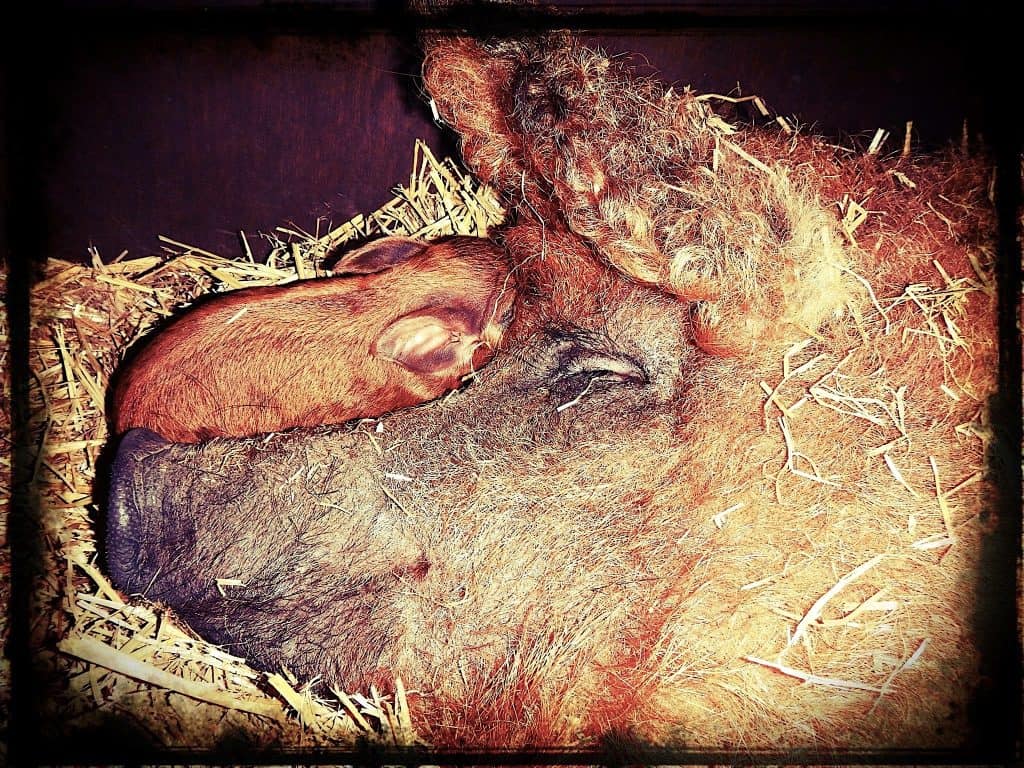
Female Mangalitsa are attentive mothers.
©Barbara Meyer zu Altenschildesche / ©Royal Mangalitsa USA
A Mission Rooted in Accuracy
Barbara’s journey began not as a business venture, but out of frustration. A graphic designer by trade, she hit a wall while researching the breed. “I tried to read as much as I could,” she recalls, “but I was so frustrated that there really was nothing to find.” To fix this, she built the resources herself, interviewing breeders and translating the information in German, English, and Dutch. By building international networks, she ensured that everyone, from scientists and butchers to everyday enthusiasts, could find reliable, research-based information.
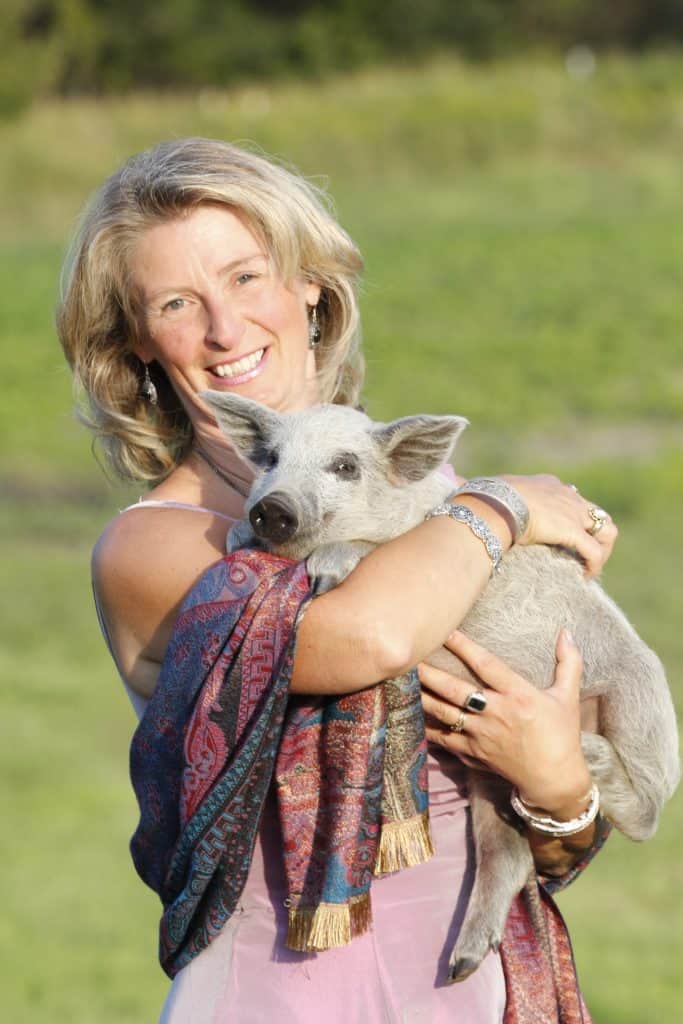
Barbara has been the driving force behind the Mangalitsa Breed Organization and Registry (MBOAR).
©Barbara Meyer zu Altenschildesche / ©Royal Mangalitsa USA
She also played a pivotal role in establishing official herd books to protect genetic integrity. “Maintaining a herd book is absolutely vital,” she explains. “It allows us to make the best breeding combinations.”
Her work, driven by passion rather than profit, is ultimately about safeguarding the breed’s identity.
Knowledge as Preservation
For Barbara, success isn’t about personal fame; it is about ensuring the Mangalitsa remains a healthy, authentic breed for future generations. This requires a radical commitment to shared knowledge. “It does the breed no good for a few people to have knowledge and keep it for themselves,” she says. “If that knowledge dies with me, it’s a tragedy.”
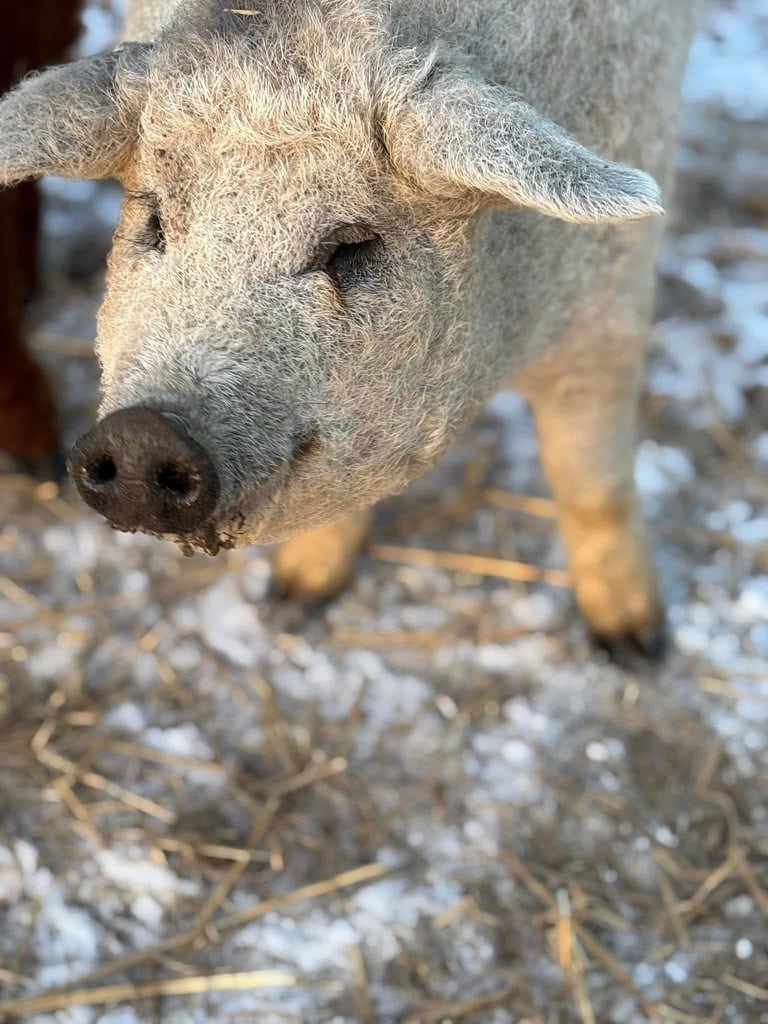
Mangalitsa pigs are not low-maintenance animals; they require a great deal of high-quality care.
©Barbara Meyer zu Altenschildesche / ©Royal Mangalitsa USA
Ultimately, Barbara believes preservation is rooted in education. “I can teach you how to identify a purebred animal,” she says. “As soon as you know that you can teach somebody else, too. That is what I want.” By stripping away the romanticized “miracle pig” myths, Barbara reveals a more grounded truth: not a novelty, but a living piece of history.
In an era of exaggerated marketing, looking past the hype and understanding the breed’s past and present realities is what will ensure its survival for generations to come.