
Quick Take
- Animal species focus on continuing their genetic line at any cost, which often means reproducing with multiple mates.
- Some animals have evolved to best survive through maintaining monogamous relationships.
- Social monogamy involves living in the same territory, raising young together, and working together to obtain resources.
- Genetic monogamy occurs when two individuals reproduce solely with each other.
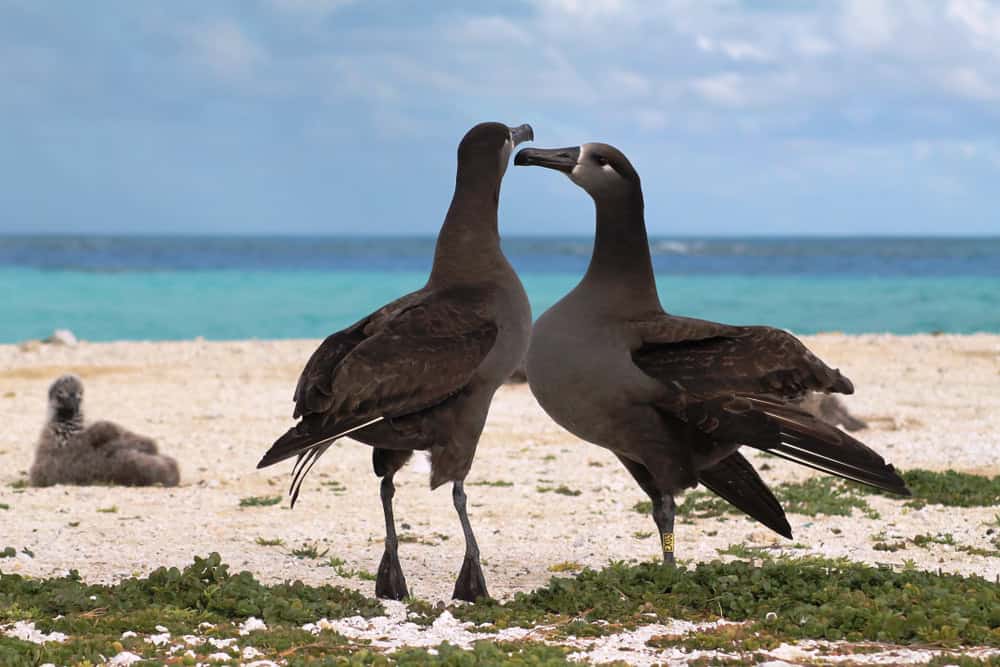
In the animal kingdom, relationships are often driven by survival and the chance to pass on their DNA. However, some species stand out for forming strong, lasting bonds with a single partner. While true lifelong monogamy is rare, many animals develop long-term relationships that can span multiple breeding seasons or even most of their lives. These special partnerships help certain animals raise offspring, defend territory, and improve their chances of survival in challenging environments.
These animals remind us that cooperation and consistency can be powerful evolutionary strategies. From birds that reunite year after year to mammals that form bond for decades, a tendency to return to the same partner reveals a fascinating level of social connection in the wild. Let’s take a closer look at the species known for forming these enduring relationships.
Social vs Sexual Monogamy
©olga_gl/iStock via Getty Images
There are two types of monogamy:
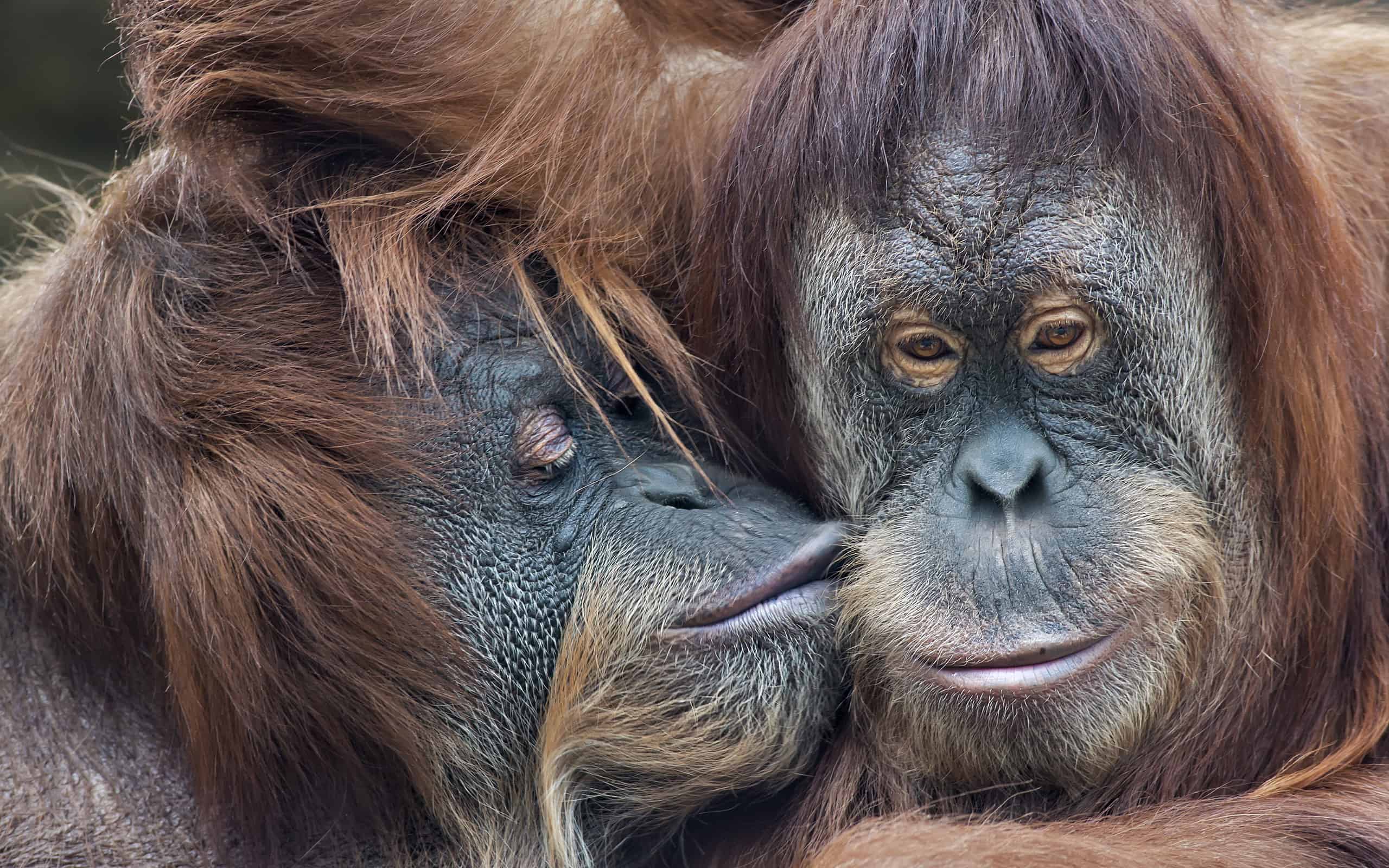
- Social monogamy describes the living arrangement of an animal. It can include living in the same territory, raising young together, and joining forces to obtain resources.
- Sexual/genetic monogamy describes two species individuals that only reproduce with each other.
While humans think of monogamy as both a relationship with one other individual and a long-term commitment, the animal world doesn’t place time limits on monogamous ties. Some animal monogamous relationships last for a lifetime, while others only last for a mating season.
1. Gray Wolves
©MedstockPhotos/Shutterstock.com
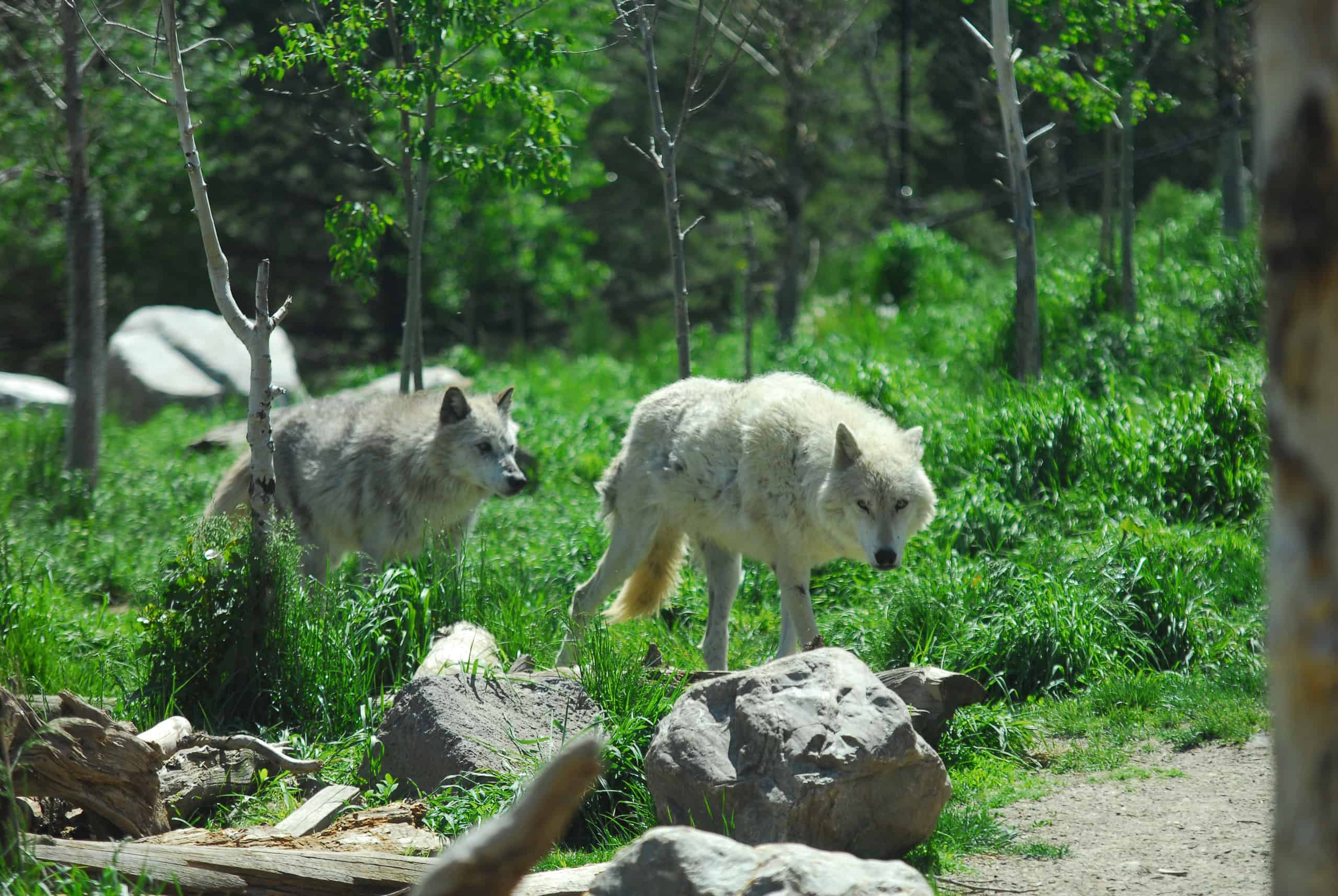
Leading the pack of monogamous animals is the gray wolf. This interesting mammal species bestows breeding rights on the alpha pair during mating season. Studies show these wolves bond for life, but after the death of one mate, the surviving partner will find a new mate quickly. In the wild, it’s exceedingly rare to find an unpaired gray wolf female.
2. Lovebirds

©Danita Delimont/Shutterstock.com
These birds come by their name honestly. Experts and scientists found that lovebirds not only feed each other and snuggle into their partner at night as a form of connection, but they also exhibit “erratic” behavior after separation. During periods apart, or if their mate dies, the remaining lovebird shows signs of stress or behavioral changes.
3. Eurasian Beavers

©iStock.com/TatianaMironenko
Similar to gray wolves, only one adult pair of Eurasian beavers breeds in a colony in a single season. The Eurasian beaver practices both social and genetic monogamy for several mating seasons, if not their entire lives. Conversely, the North American beaver is only socially monogamous.
4. Gibbons
©Edwin Butter/Shutterstock.com
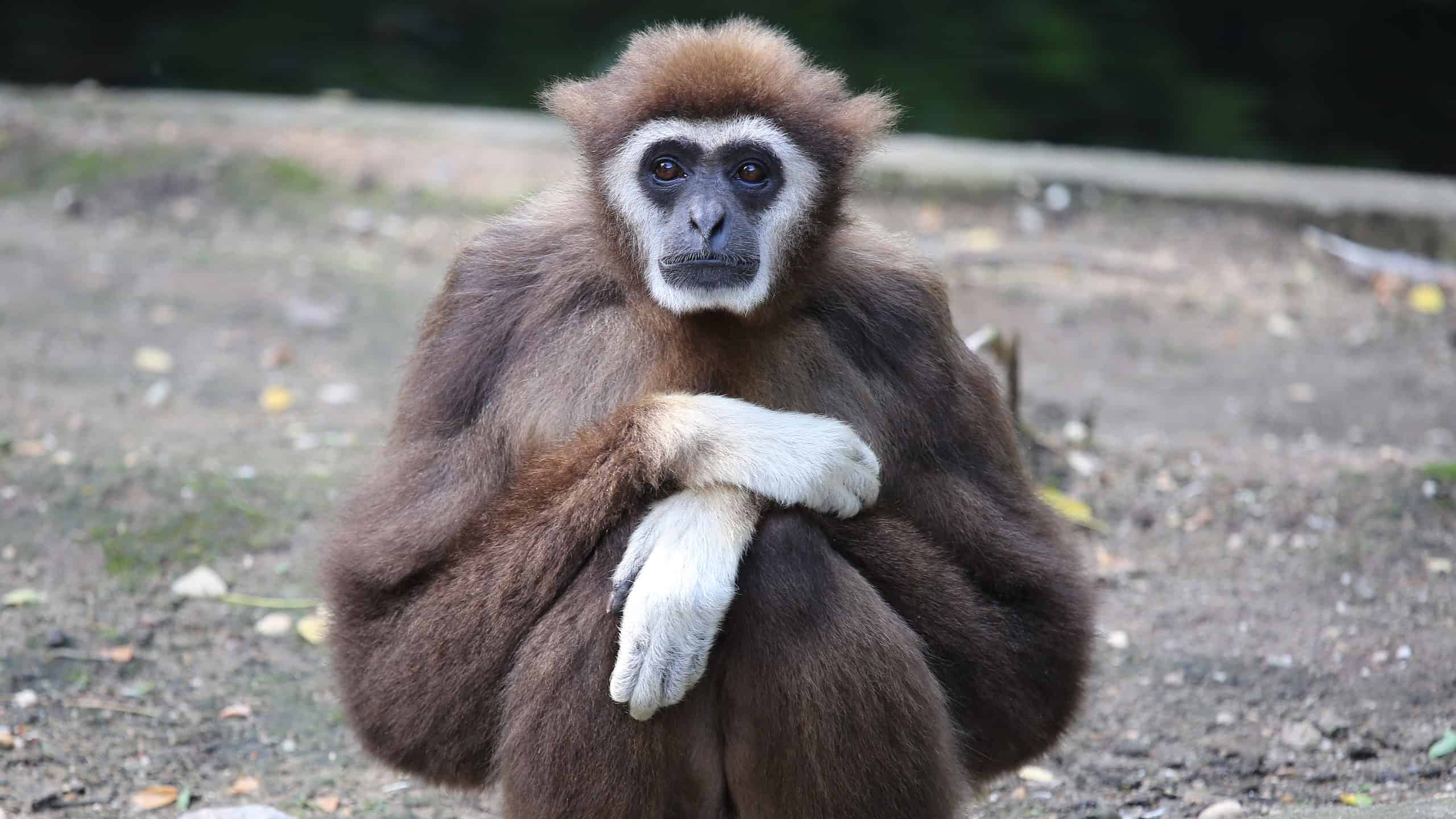
The anthropoid ape, the gibbon, tends to mate for life. Like the dik-dik (mentioned below), the gibbon male may pursue a secondary sexual partner. However, they bond to the primary partner, practicing social monogamy, and partake in a complex song-courting ritual. They even reinforce their bond by grooming each other.
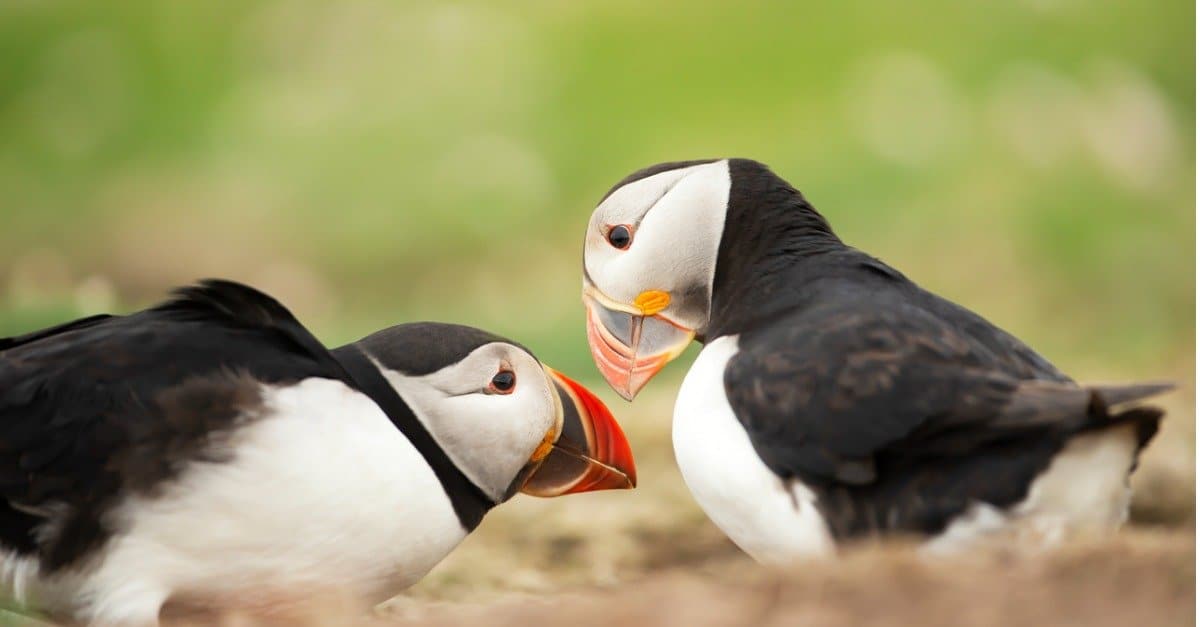
5. Atlantic Puffins
©Giedriius/Shutterstock.com
Experts and scientists widely believe that puffins mate for life. Puffins are generally socially monogamous and often return to the same mate each breeding season, though extra-pair mating can occur. Puffins migrate during the year, leaving the nest for winter and spending that season alone. During the spring, however, puffin couples reunite with each other and nest.
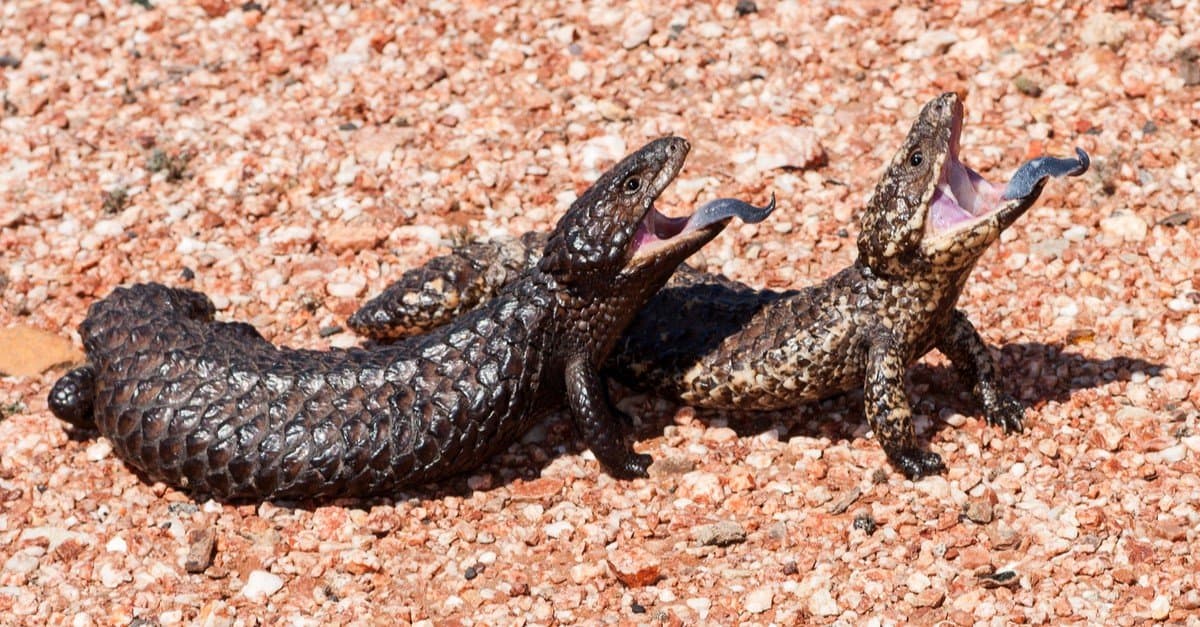
6. Shingleback Lizards
©Ken Griffiths/Shutterstock.com
Monogamy in reptiles is rarely seen and seldom researched. However, the shingleback lizard has provided enough evidence for scientists to believe they form short-term social and genetic monogamous relationships. Native to Australia, shingleback lizards, otherwise known as sleepy lizards, will choose partners during the September to November mating season and live as a pair. They tend to re-form these pairings year after year, spending the mating season together before venturing out for the rest of the year on their own.
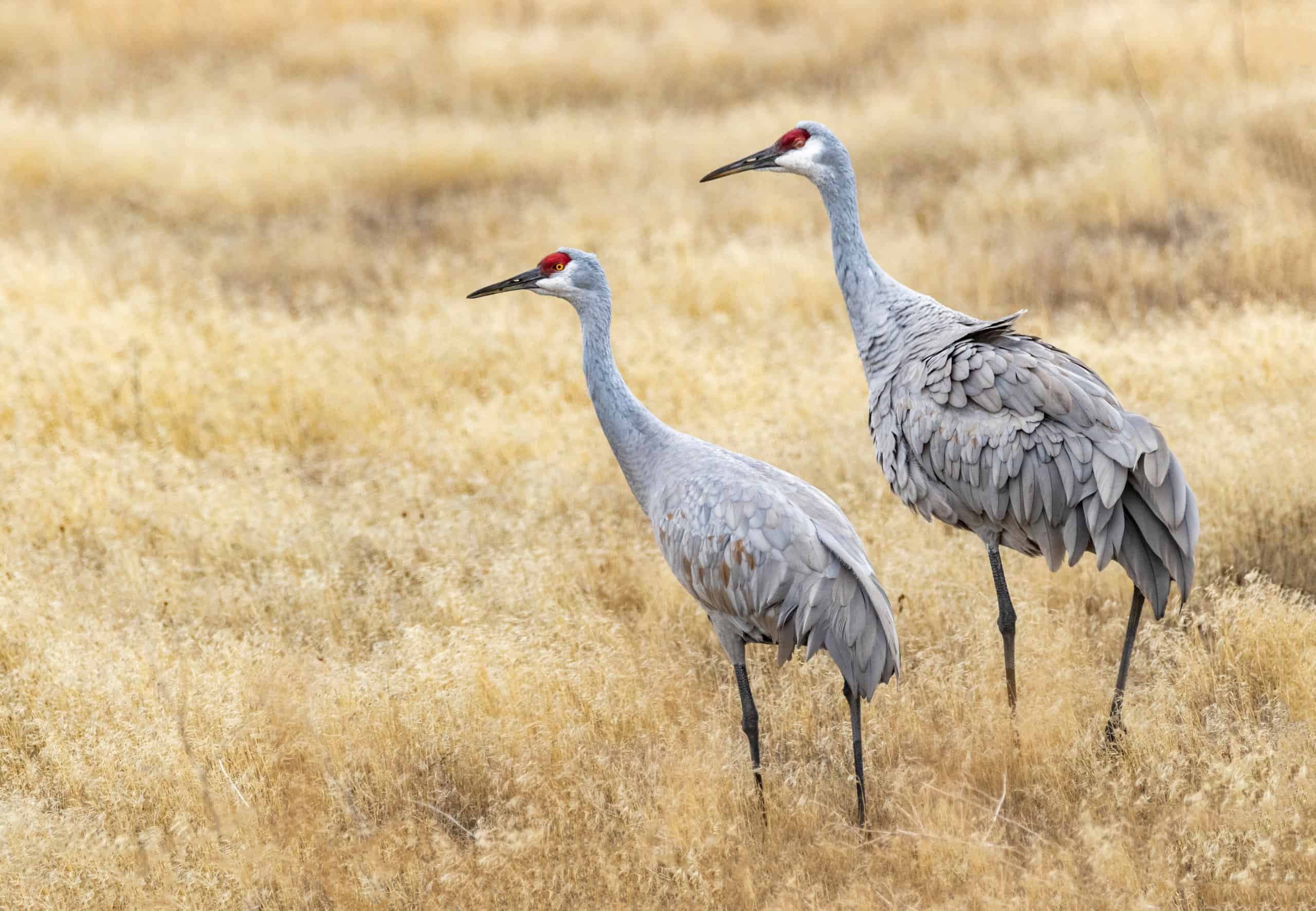
7. Sandhill Cranes
©Michael Chatt/Shutterstock.com
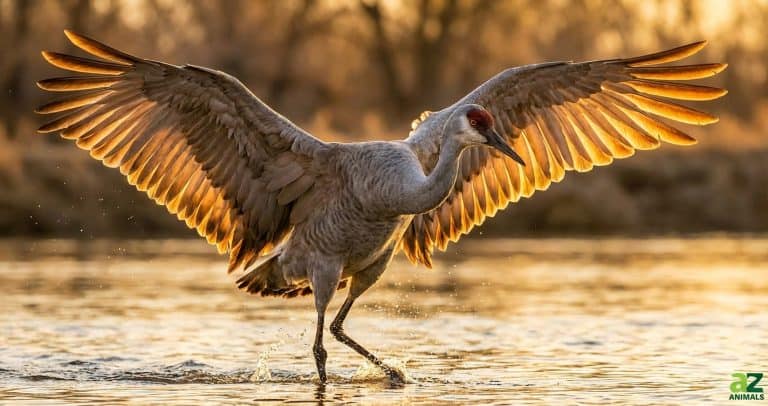
Ornithologists have a variety of species to study for monogamous relationships, one of which is the sandhill crane. Researchers describe these long-legged birds as “perennially monogamous,” which means the birds re-couple every year but do not spend their lives together. If one mate dies, cannot be found, or has chosen to leave, the remaining crane will find another mate after a “separation” period.
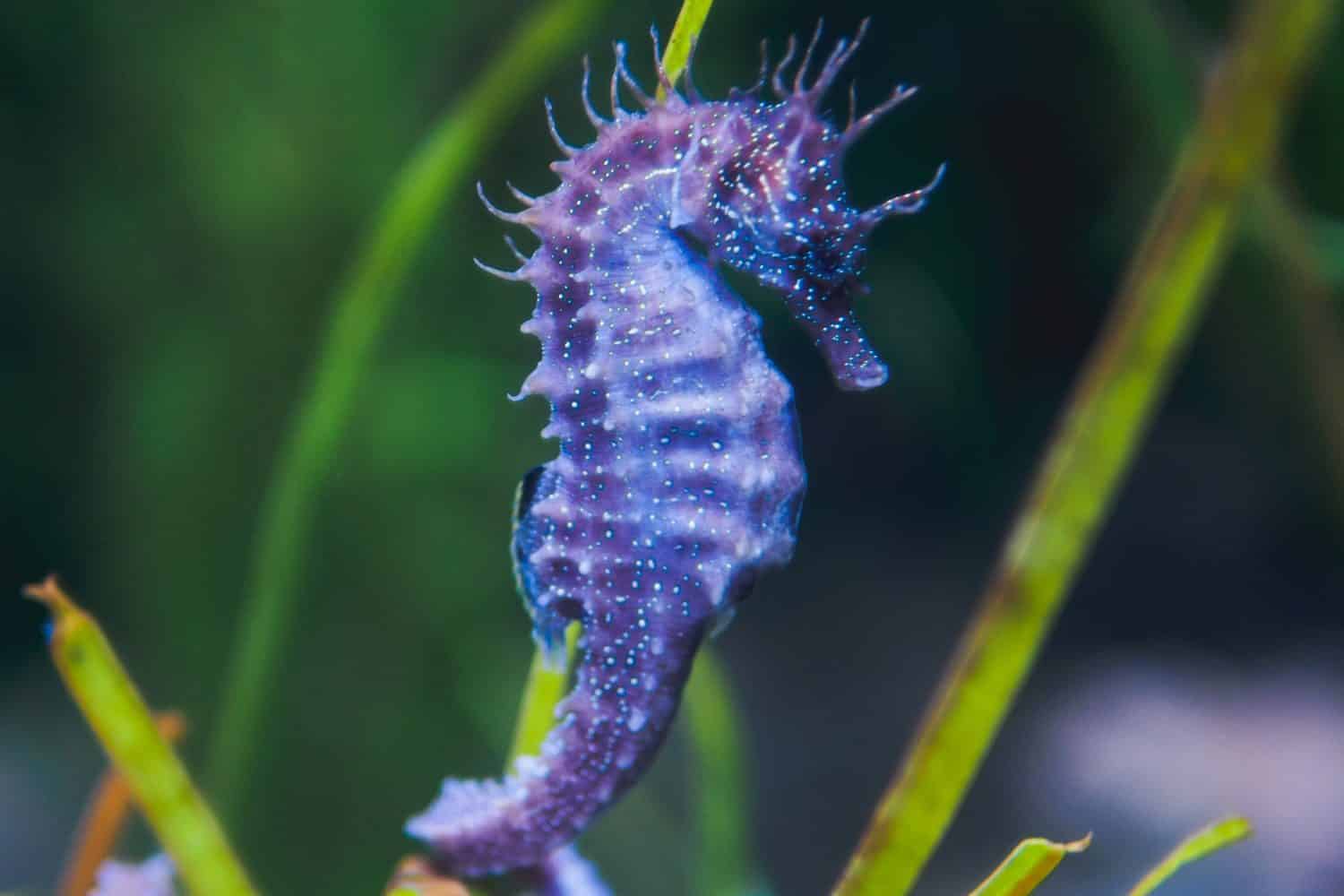
8. Seahorses
©paulzhuk/Shutterstock.com
Based on research, seahorses practice genetic monogamy but social polyamory. The closely related pipefish take multiple mates, but some seahorse species exhibit temporary or seasonal monogamy, often pairing with the same partner during a breeding cycle.
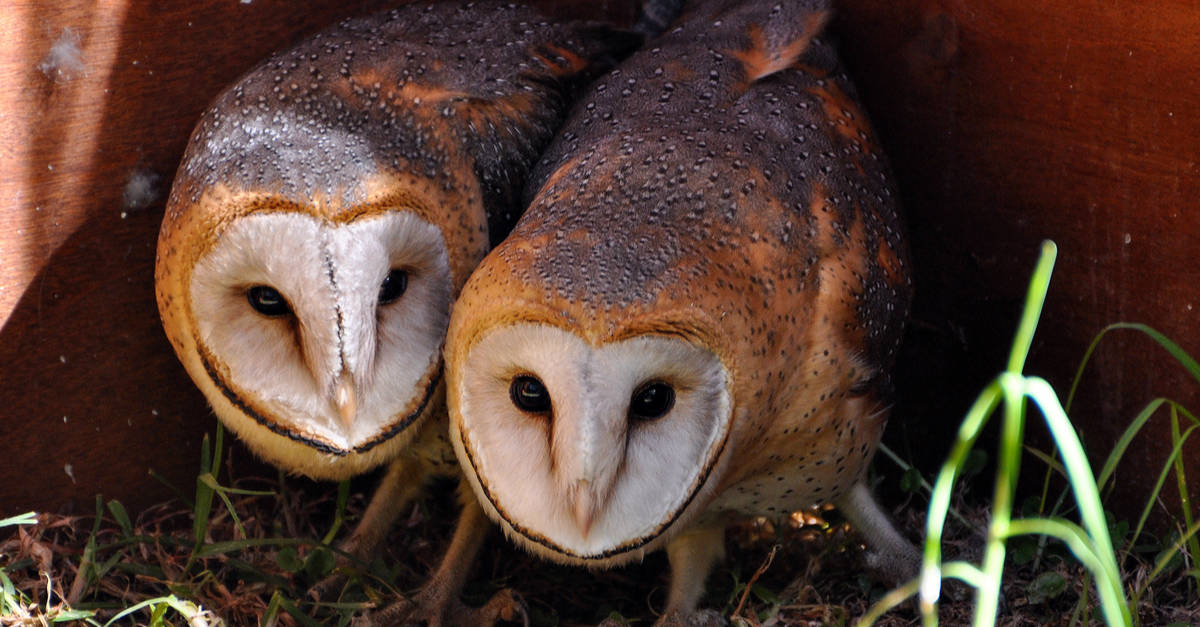
9. Barn Owl
©Mike Browne/Shutterstock.com
Another avian love story is the barn owl. Flashy and performative in their courting, barn owls will demonstrate calls, chase females, and “pretend fight” to prove their worth. Once coupled, barn owls remain genetically monogamous for the rest of their lives. Should one partner pass away, the other will likely find a new mate.
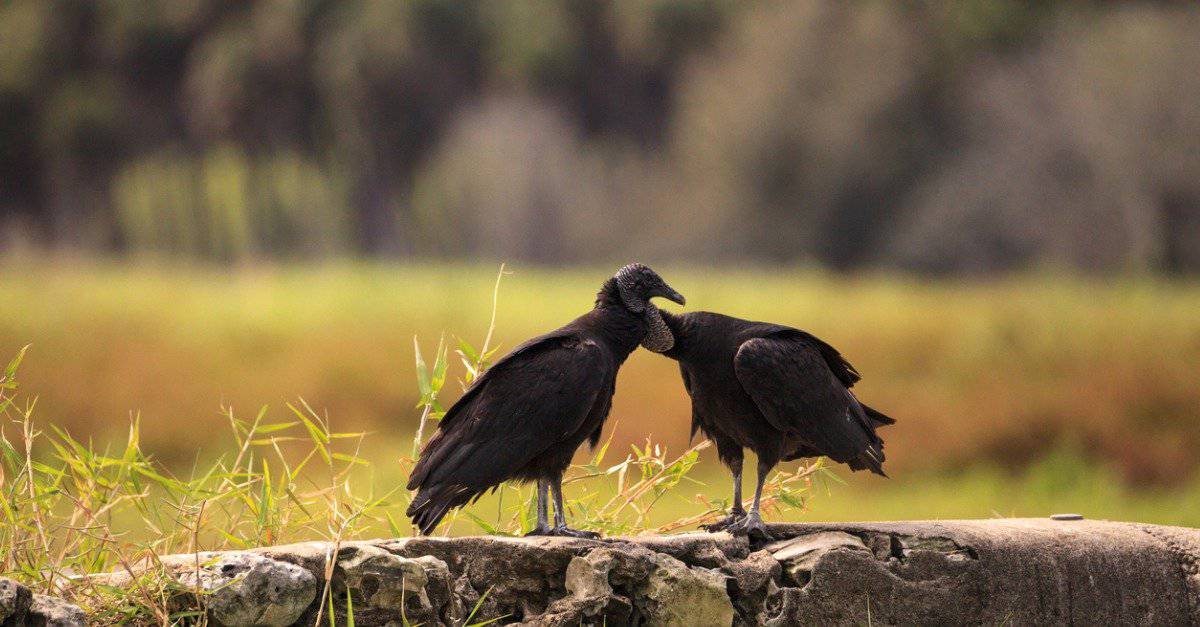
10. Black Vultures
©iStock.com/LagunaticPhoto
The ominous-looking black vulture may be a harbinger of death, but this bird still finds plenty of love. Scientists believe vultures mate for life, practicing genetic monogamy with their partner, and choose to spend more of their time with their families than other solitary individuals of the species. Vultures create a “happy family” of sorts, with juveniles maintaining contact with their parents even after they leave the nest, through foraging in social groups and attempting to return to the nest.
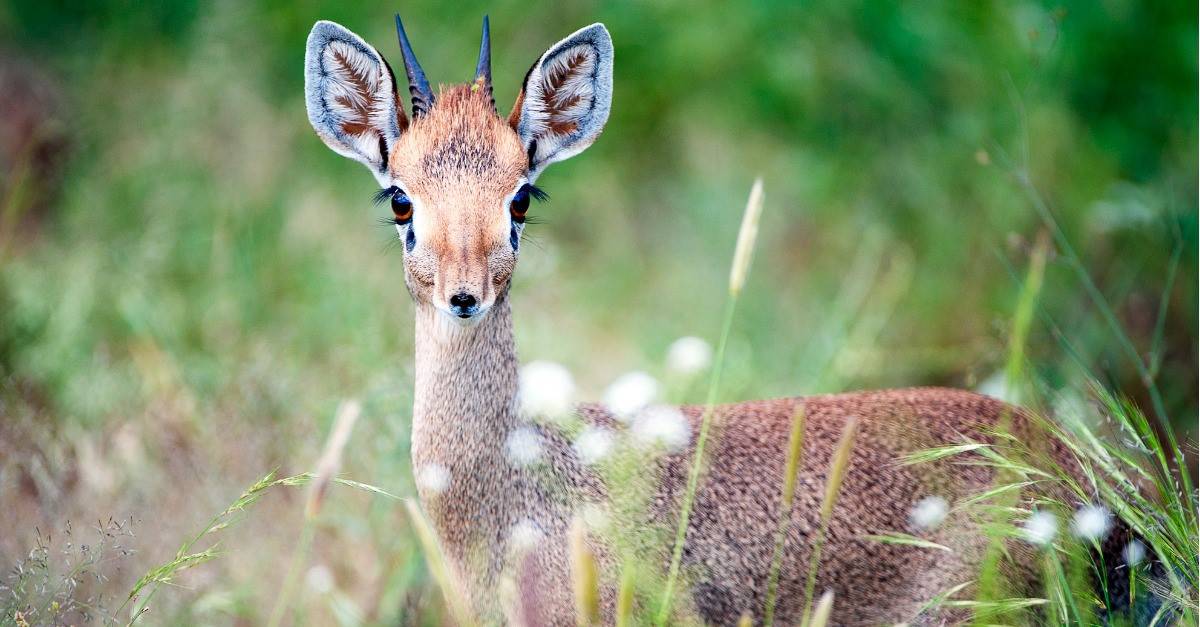
11. Dik-diks
©iStock.com/pilesasmiles
Though only a bit of research exists on dik-dik relationships, the strange-looking mammal appears to be socially monogamous, with the females of the species being genetically monogamous as well. Experts found that males, on the other hand, pursued options for extra-pair copulation (OPC) partners when the opportunity presented itself. However, in OPC relationships, the “father” figure does not offer his paternal help. His priority is his mate, and the secondary partner simply continues his genetic line.
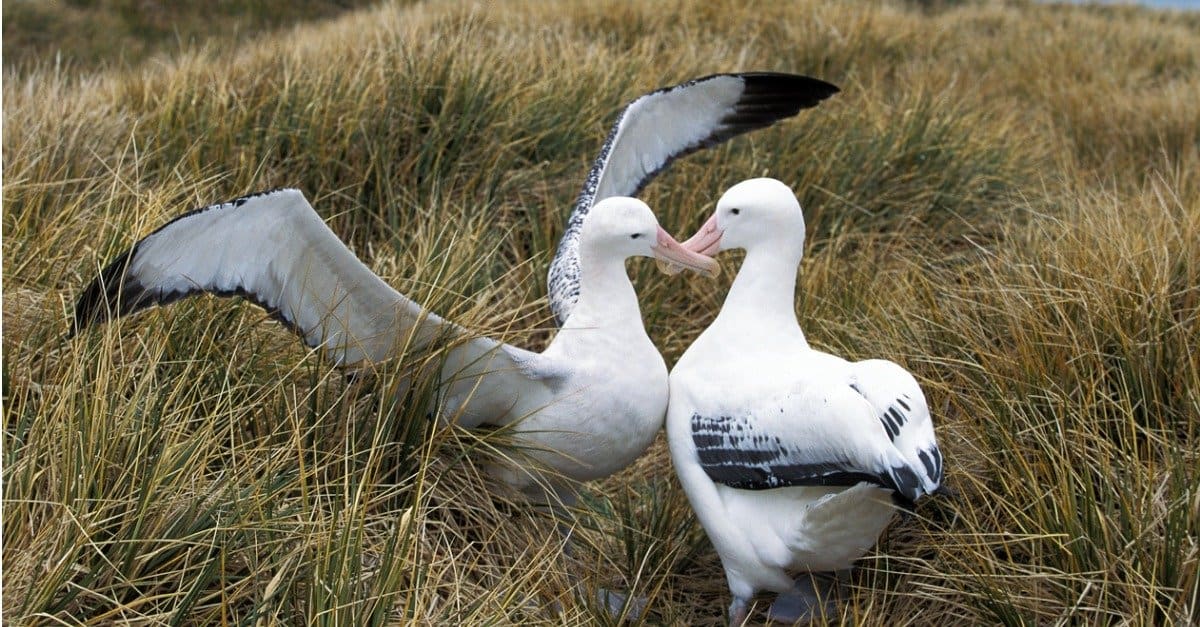
12. Albatrosses
©iStock.com/slowmotiongli
Albatrosses are well known for forming long-term pair bonds, often returning to the same mate year after year. These birds are socially monogamous and engage in elaborate courtship displays that help reinforce their connection over time. However, genetic studies have shown that extra-pair mating does occur, meaning they are not strictly genetically monogamous.
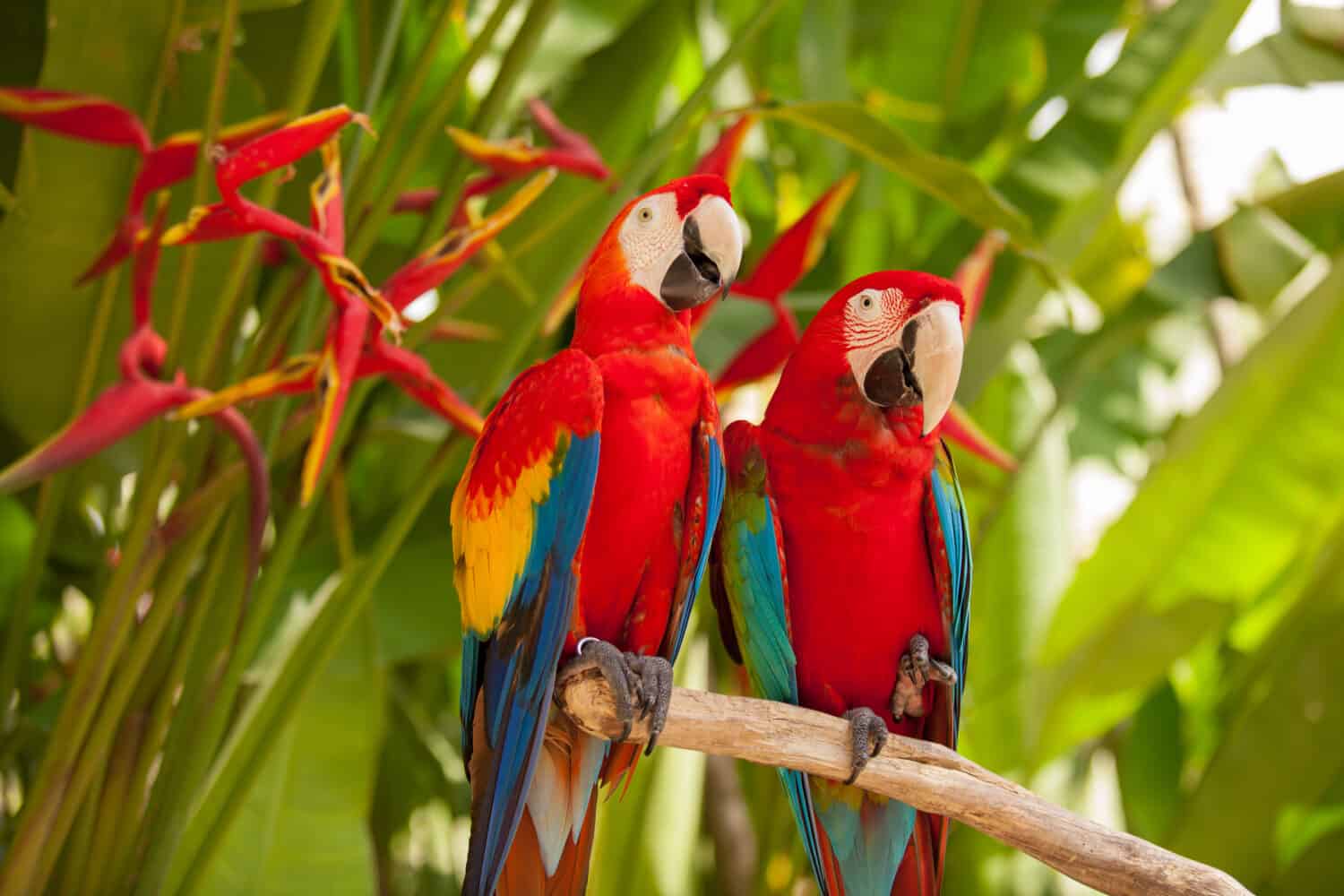
13. Scarlet Macaw
©Katia Titova/Shutterstock.com
Scarlet macaws typically form long-term pair bonds, though they are not strictly genetically monogamous. They flock together in a larger group and sleep together for safety, so they’re not strictly socially monogamous.
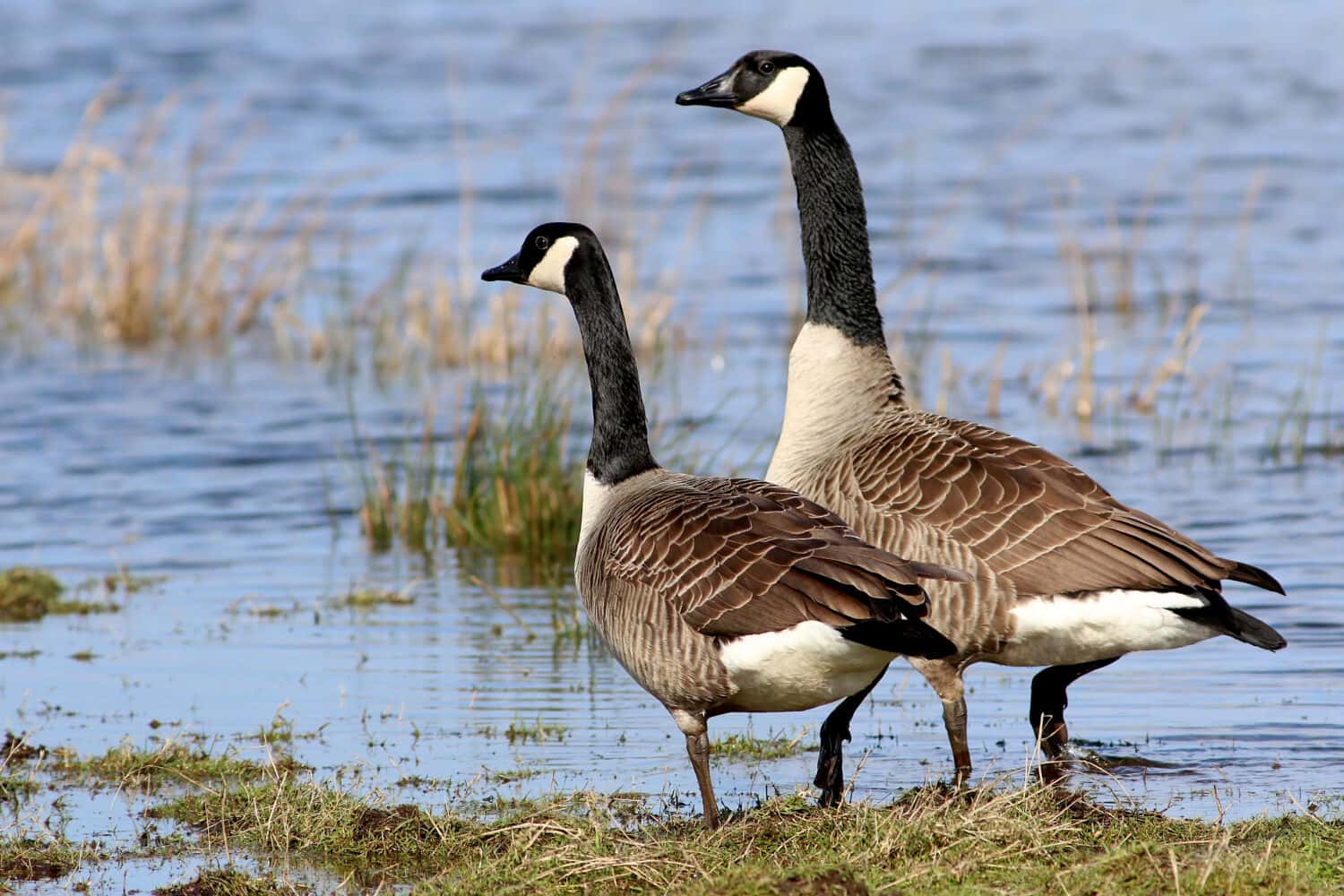
14. Geese
©Ger Bosma Photos/Shutterstock.com
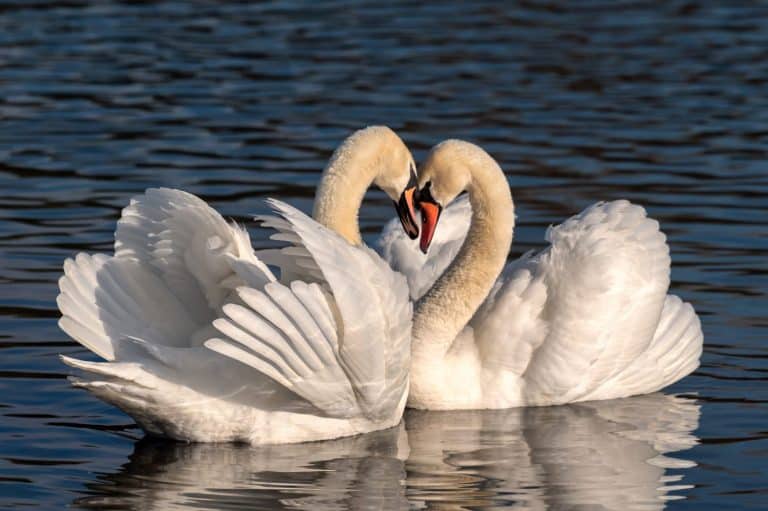
Geese (and closely related swans) are monogamous birds. Specifically, the barnacle goose, the Canada goose, and the snow goose all choose one mate for life and remain steadfastly loyal. Research even shows that geese will stay with their partner in dangerous situations if one becomes injured or sick.
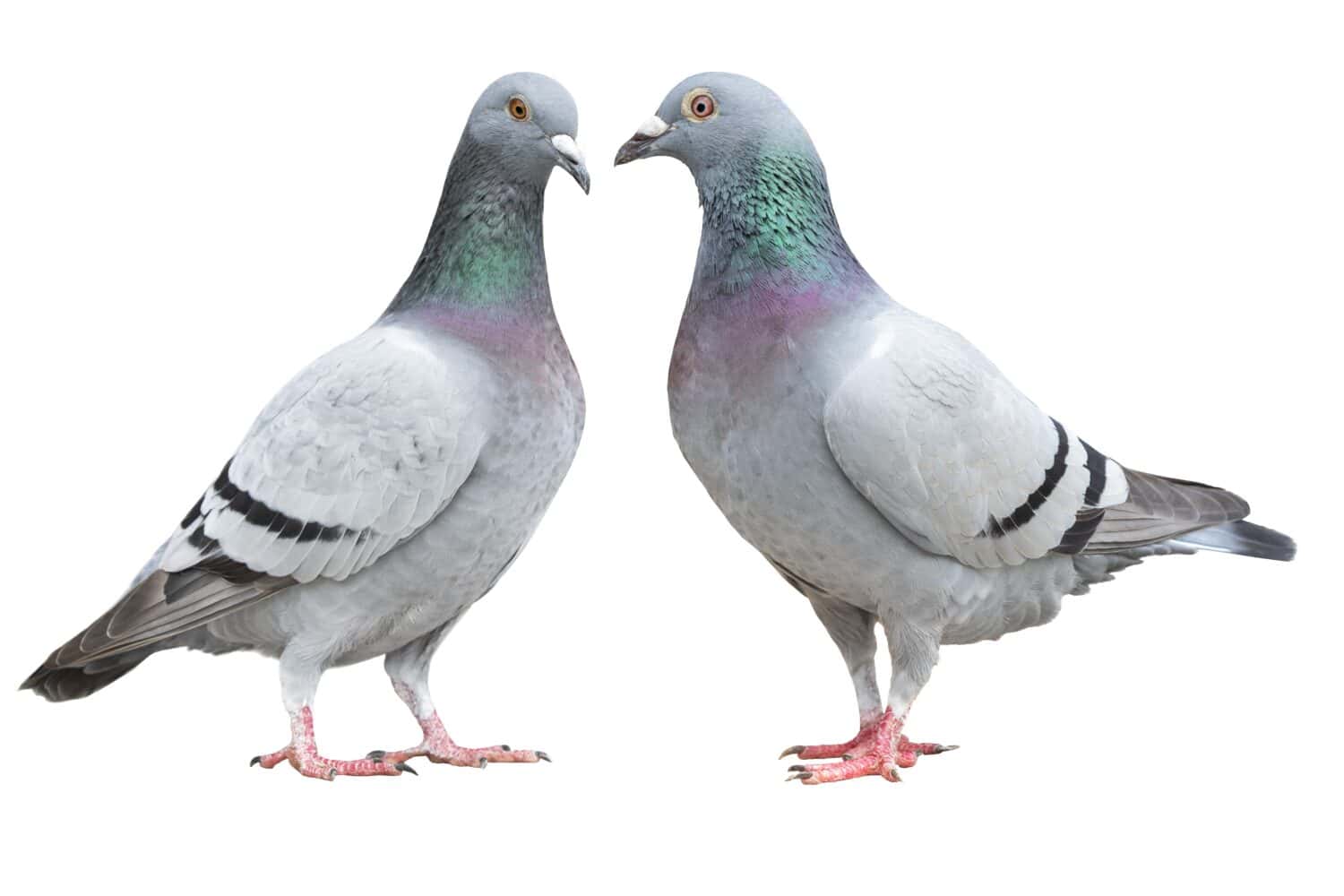
15. Pigeons
©stockphoto mania/Shutterstock.com
Pigeons practice both social and genetic monogamy. Unlike some of the other species on the list, the pigeon is slow to accept a new mate if their original one dies. Pigeons take an active role in dividing the parental responsibilities in their relationship; males gather resources and protect the nest, while females tend to the clutch.
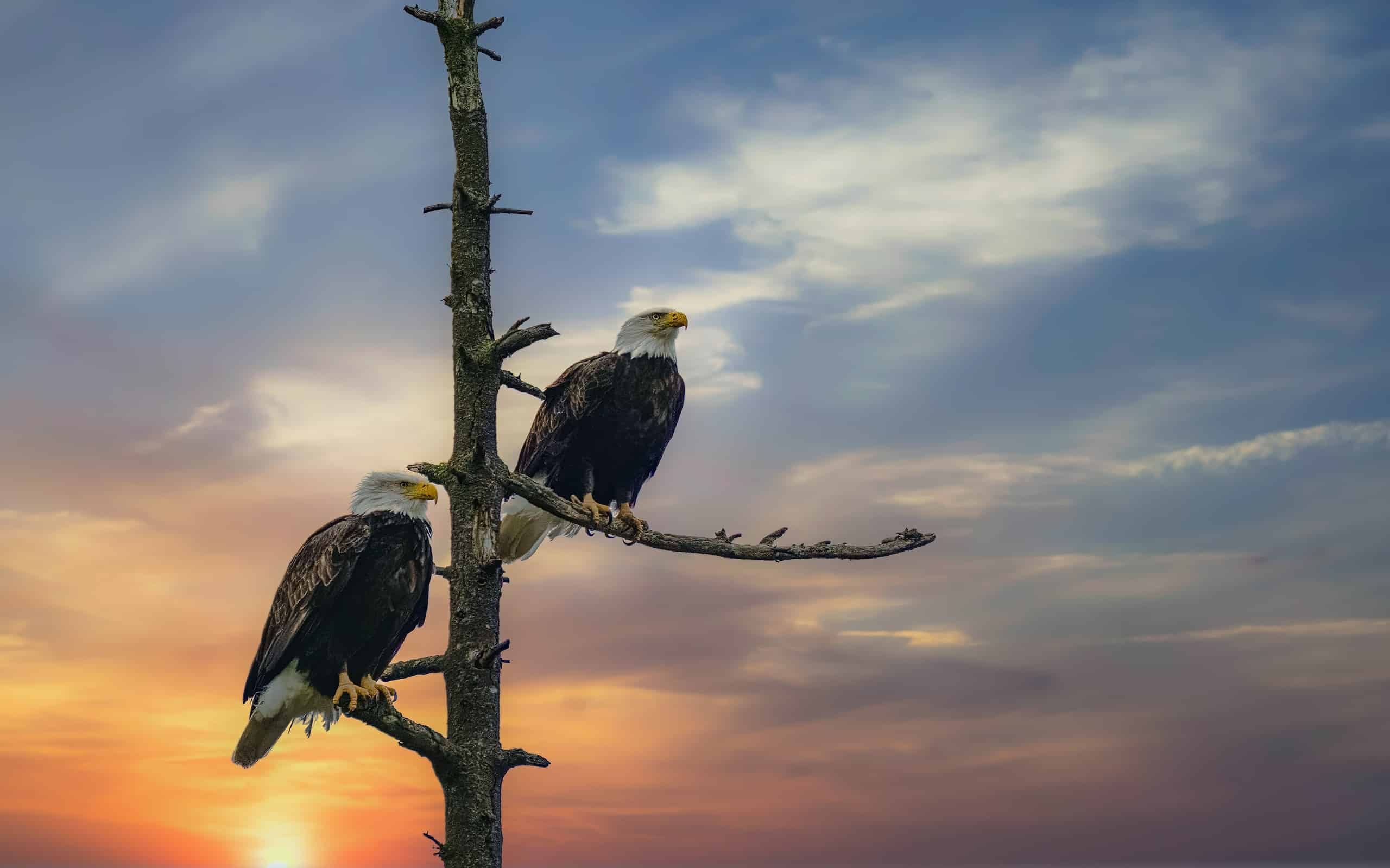
16. Bald Eagle
©Wirestock/ via Getty Images
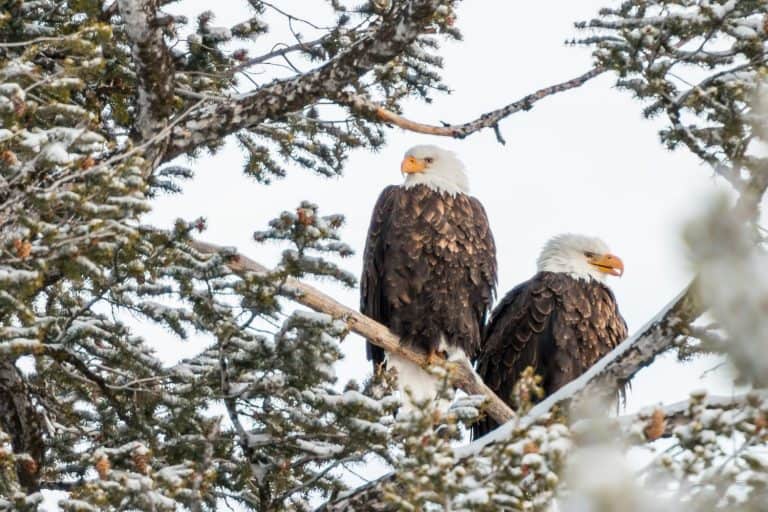
The cartwheel display of the regal bald eagle remains one of the most interesting coupling behaviors in nature. This iconic bird species mates for life, practicing social and genetic monogamy. However, if their mate dies, they will find another. These solitary birds migrate alone most of the year but return to the same nest during the breeding season.
17. California Condors
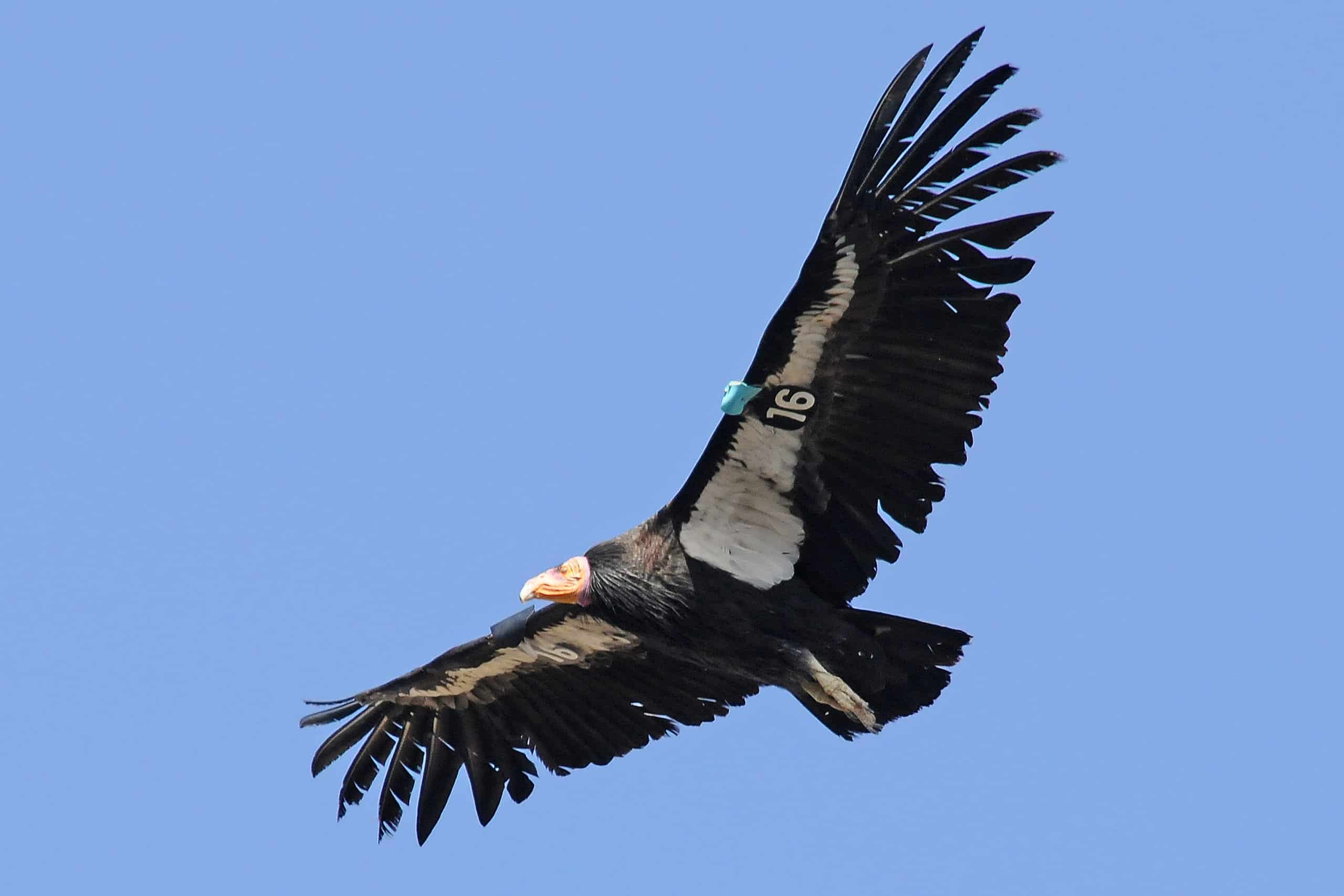
©Brian A Wolf/Shutterstock.com
Once these birds reach sexual maturity around six years old, they choose a mate to stay with for multiple years or life, depending on their region and needs. The pairs hunt for nest options together during their courtship, with the female ultimately selecting the nesting site.