
In the wake of World War II, the rise of industrial agriculture fundamentally changed the world of meat production. Large-scale operations prioritized a few specialized pig breeds, optimized for confined housing and high efficiency. While this system delivers affordable meat, it also severely compromises biodiversity, animal resilience, and overall quality — traits valued in the surviving heritage breed pigs. Raising these rare breeds not only connects us to our agricultural past but also promotes sustainable agriculture and biodiversity.
What Is a Heritage Breed?
Many heritage breed pigs, including the Gloucestershire Old Spots, are intelligent, gentle, and hardy.
©al clark/Shutterstock.com
Heritage breed pigs are defined by their older bloodlines, which have existed for many generations, often even hundreds of years. These breeds were the standard on small, local farms long before the rise of industrial agriculture. Unlike modern commercial pigs such as the Yorkshire (Large White) pig, breeders selected heritage breeds for hardiness and survival. Heritage breeds thrive in natural, outdoor environments where they forage for food. While heritage breeds grow much more slowly, modern commercial pigs develop in confined spaces and head to market just after five to six months.
While heritage breed pigs can be more costly and take longer to raise, people often prefer these breeds for their flavor, quality, and history. Their bloodlines and slower, more natural nurturing process result in pork that is significantly juicier and more flavorful, with darker red meat and better marbling. In contrast, commercialized breeds are optimized for fast growth and produce very lean, pale pink pork with a milder flavor that tends to dry out easily.
Why Heritage Breeds Matter
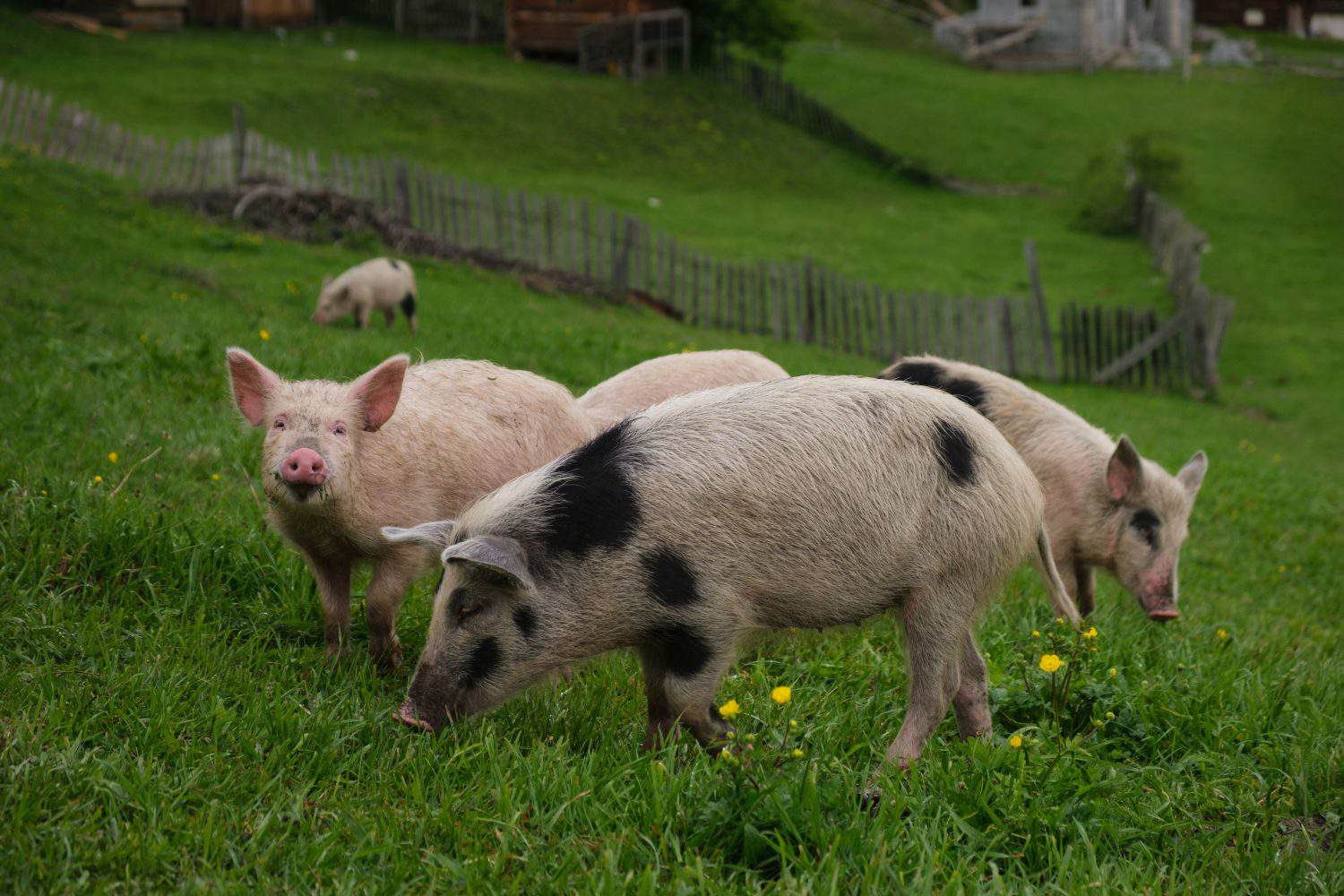
Heritage breed pigs often thrive in outdoor environments where they can roam.
©George Trumpeter/Shutterstock.com
The term “heritage” means that these pig breeds are a living part of agricultural history, valued for their genetic diversity, ability to live outdoors, and flavorful meat. Historically, these breeds were developed for a specific region and purpose — such as producing high-fat (lard-type) or leaner (bacon-type) meat. However, following World War II, the market shifted drastically. Most traditional bloodlines were abandoned in favor of a few commercial breeds produced for industrial efficiency, leaving many heritage pig breeds endangered. As many traditional breeds vanished, our food system became dependent on a dangerously narrow genetic pool, which has severely compromised animal resilience and overall biodiversity.
Heritage breed pigs are essential to modern agriculture as living reservoirs of genetic diversity and guardians of traditional, sustainable farming. Unlike commercial breeds engineered for rapid growth, uniformity, and confined living, heritage breeds thrive outdoors. They forage naturally, developing richer fat and marbling that creates a depth of flavor and texture rarely achieved by industrial systems. Raising heritage breed pigs also allows farmers to contribute to healthier soils, more balanced ecosystems, and sustainable food systems that respect both the animals and the land.
Today, organizations like The Livestock Conservancy work to protect the rare genetics of heritage pigs, including the remarkable breeds profiled below.
Berkshire
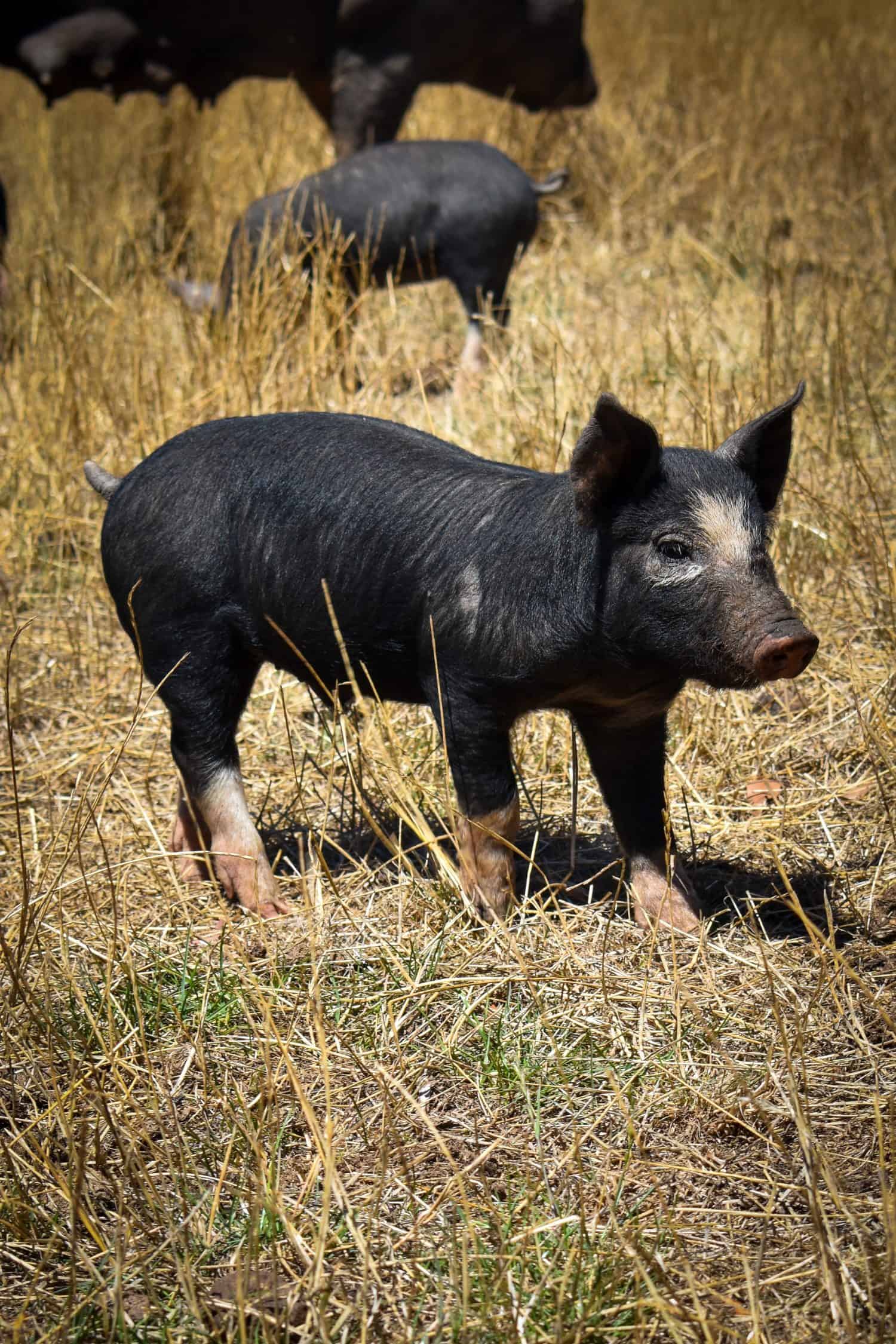
The first officially recorded Berkshire came from Queen Victoria’s herd, a boar named “Ace of Spades.”
©JWhitwell/Shutterstock.com
The Berkshire pig boasts a long, well-documented history, originating centuries ago in the English county of Berkshire. The breed quickly gained attention for its distinct appearance and impressive meat quality. The earliest Berkshires looked different from those we see today, but careful breeding established the breed’s trademark white points and sleek black bodies.
Berkshire pigs arrived in the United States in 1823, where they significantly improved the quality and efficiency of local livestock. The world’s first Swine Registry, the American Berkshire Association, was founded in 1875.
Gloucestershire Old Spots
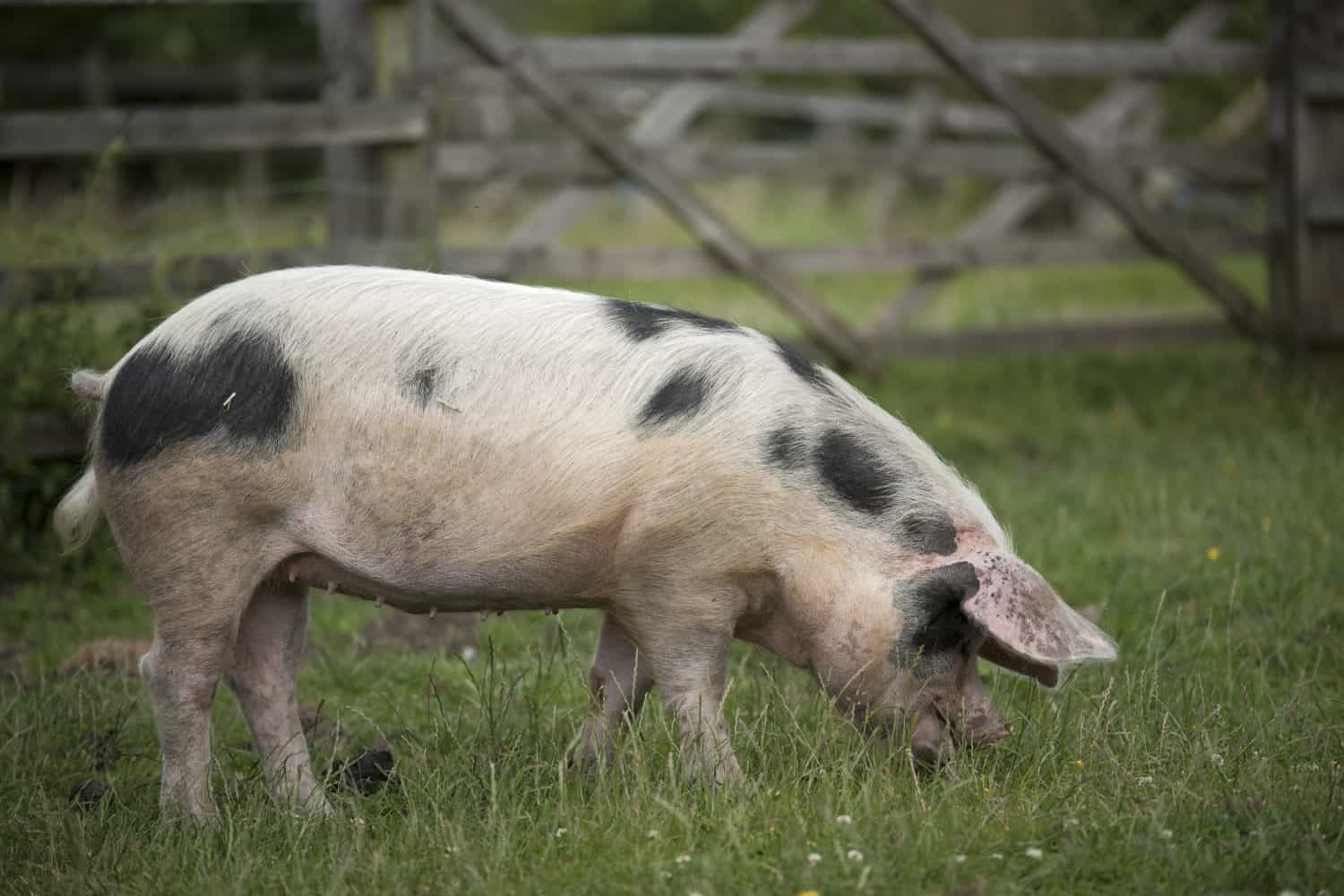
The breed’s natural foraging habits earned it charming nicknames like “orchard pig.”
©Edward Hasting-Evans/Shutterstock.com
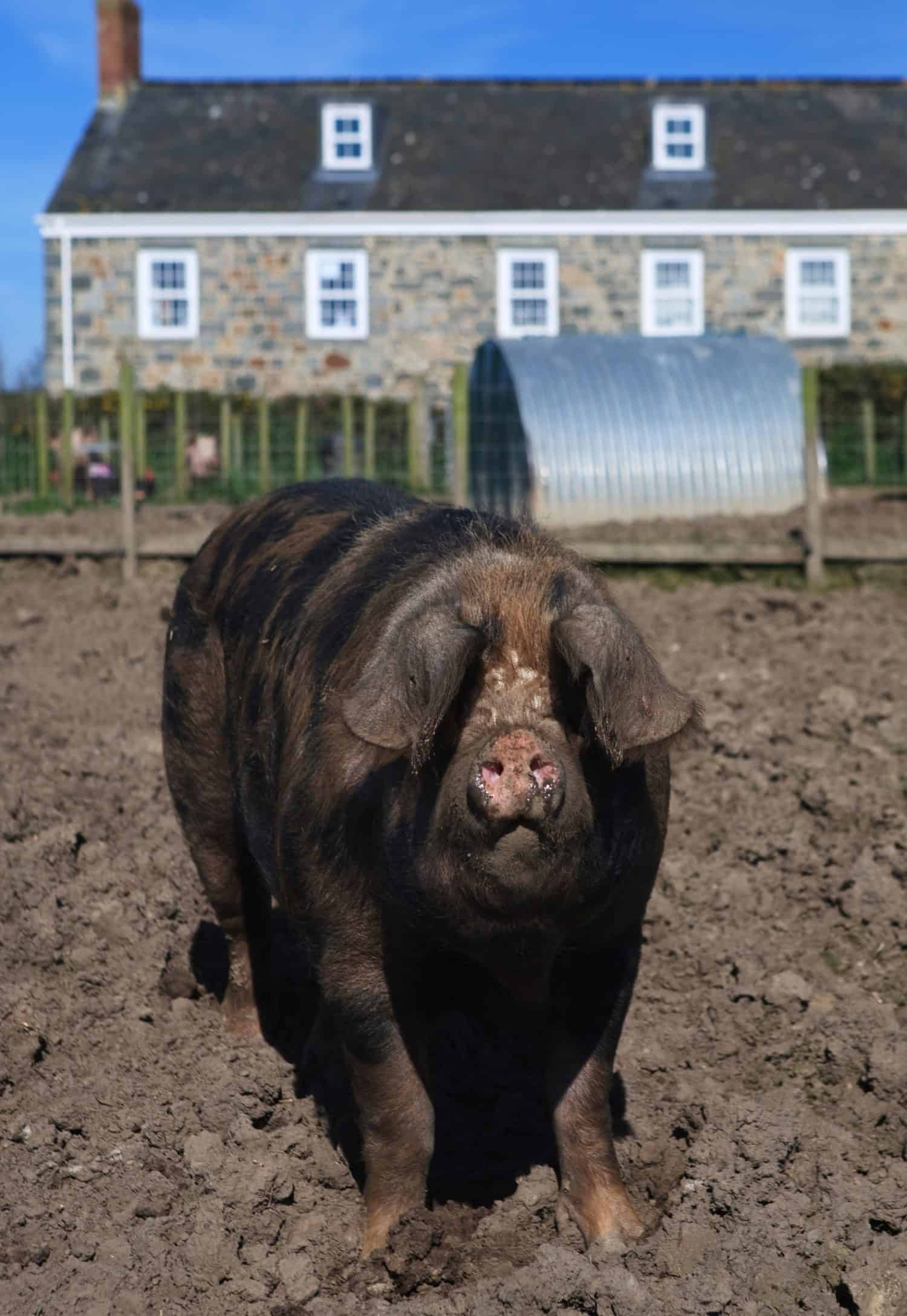
The Gloucestershire Old Spots (GOS) is one of the oldest pedigree spotted pig breeds. Developed in the Berkeley Vale of Gloucestershire, the breed’s exact ancestry is uncertain, but it likely descends from extinct regional pigs.
Despite its earlier popularity, the rise of industrial indoor farming after World War I and World War II pushed the GOS to the brink of near-extinction by the 1970s. Today, revival efforts in both the U.S. and the U.K. — including support from the British Royal Family — have helped renew interest. However, the GOS still remains listed as Threatened on the Livestock Conservancy’s Conservation Priority List.
Mangalitsa
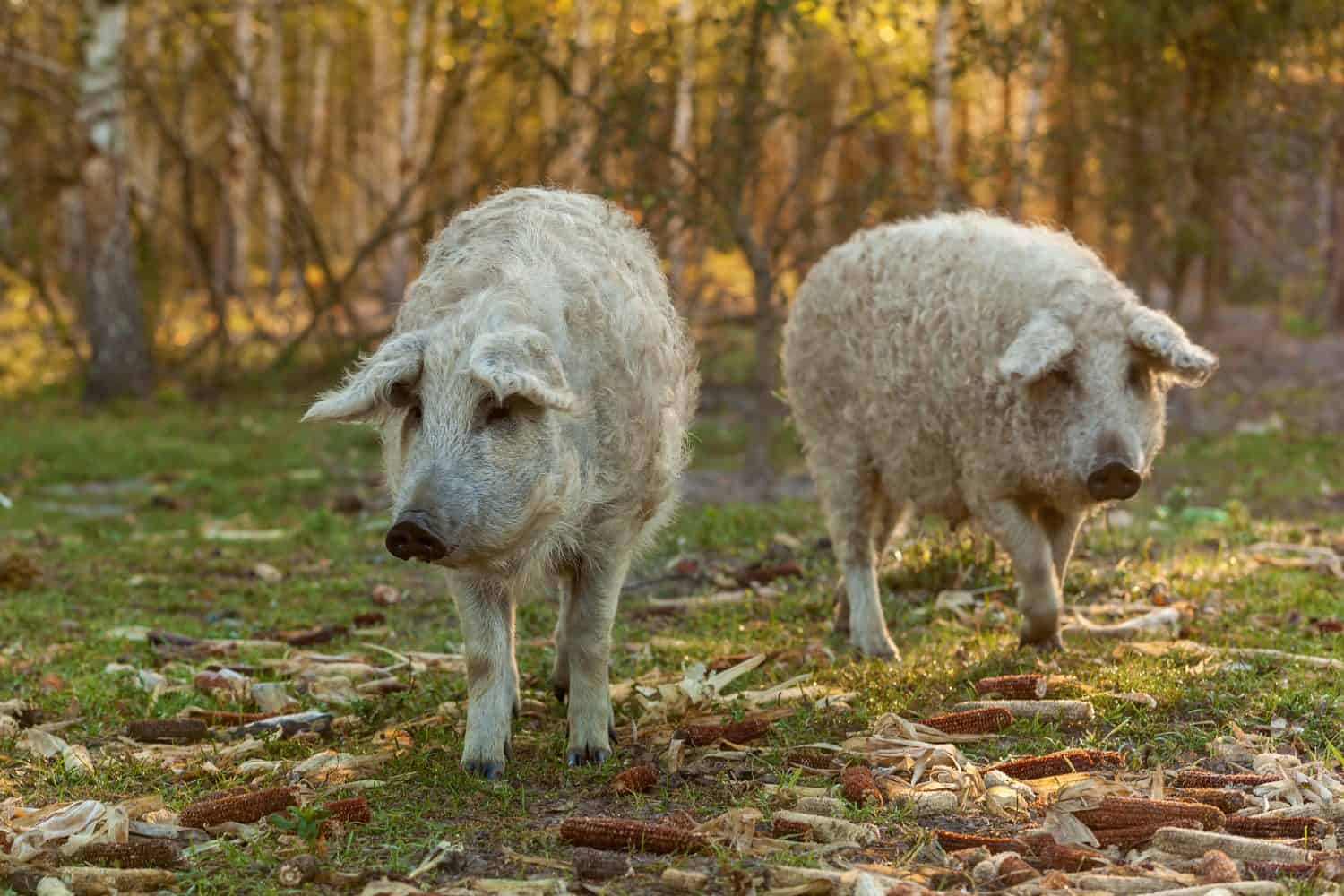
Some people call the Mangalista the Mangalica.
©Photosite/Shutterstock.com
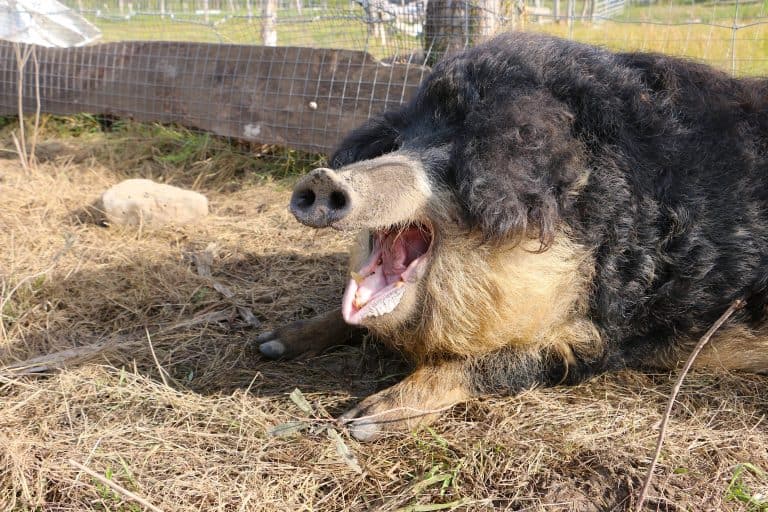
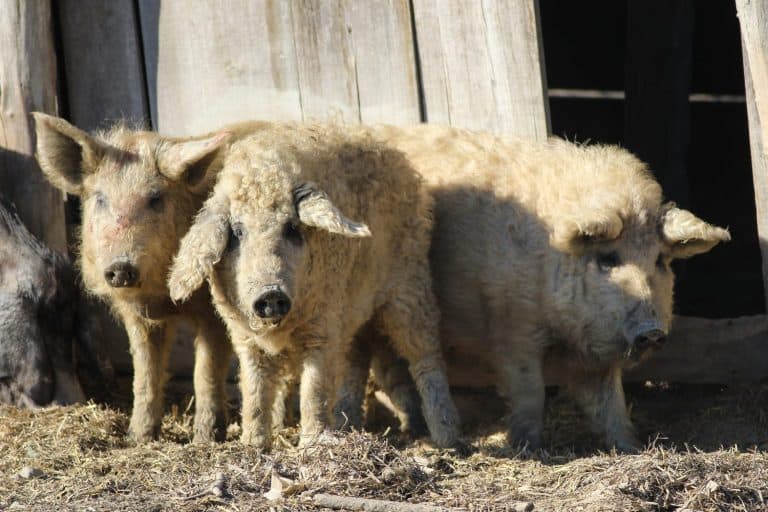
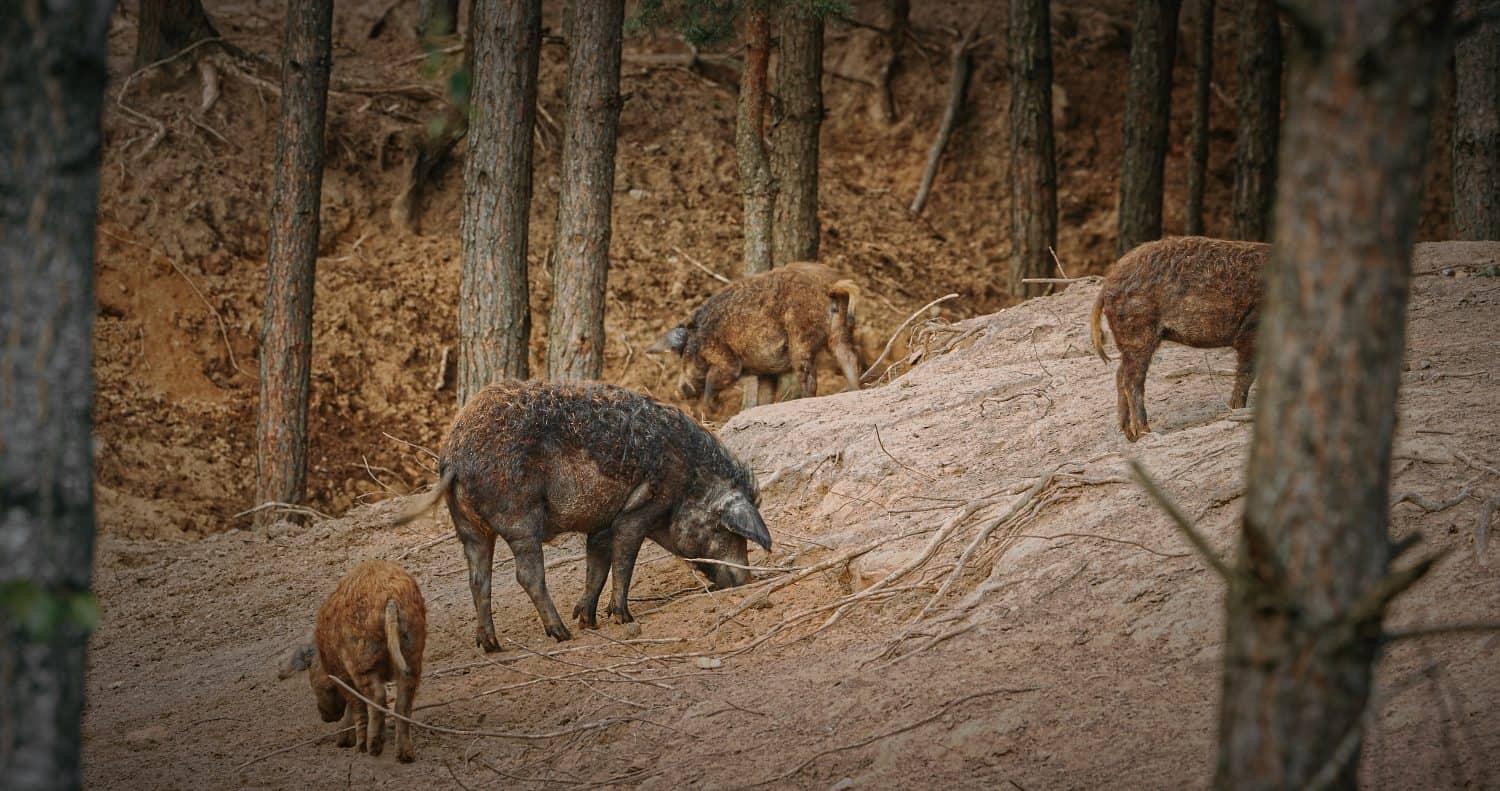
Mangalistas, affectionately known as “pig-sheep,” trace their origins to the 1830s in Hungary. Archduke Joseph Anton Johann created the breed by crossing gifted Serbian Šumadinka pigs with hardy Hungarian breeds like the Szalontai and the Bakonyi. The result was a resilient, curly-coated “lard-type” hog that thrived with minimal management.
The most unique feature of the Mangalitsa is its thick, woolly coat of surprisingly curly hair — the reason for its “pig-sheep” nickname. The pigs’ denser, fleece-like winter coat sheds to a shorter and straighter coat in warmer months. Mangalitsas come in blonde, swallow-bellied (dark hair on the back and sides with a pale underside), and red coats.
Tamworth
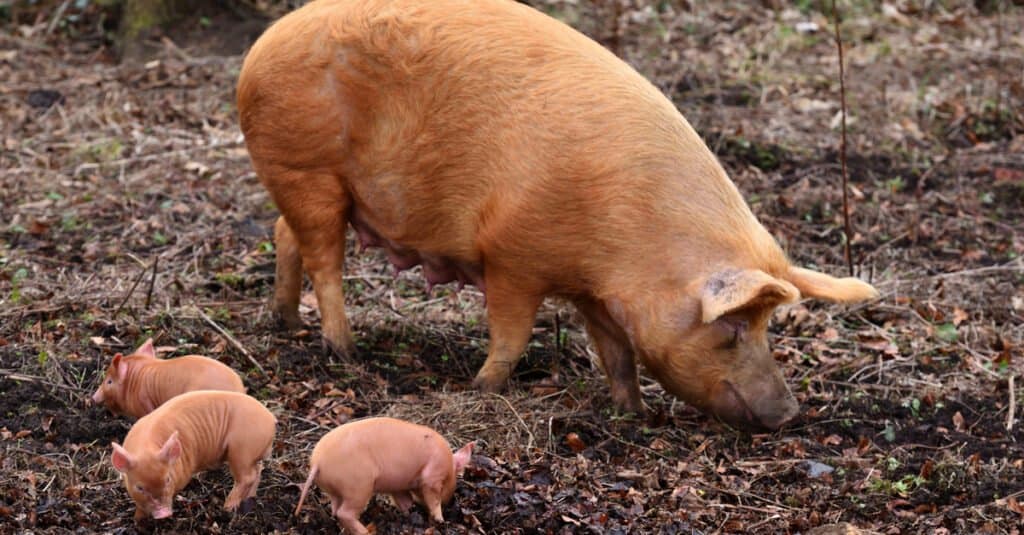
Tamworth pigs are excellent parents with very high piglet survival rates.
©Mike Russell/Shutterstock.com
The Tamworth heritage hog has a striking ginger coat and deep roots in Northern Europe. Currently listed as Recovering by the Livestock Conservancy, many consider it to be one of the closest living links to ancient forest-dwelling swine. Much of the breed’s modern identity traces back to early 19th-century England, where Sir Robert Peel blended Irish Grazers with local Midland pigs. This resulted in the uniformly red pigs we see today.
Built for an active life, these pigs have long, athletic bodies and sturdy legs. Their elongated snouts make them excellent foragers, helping them to thrive on rough terrain. They are good-natured, intelligent, and highly adaptable, making them a favorite among small-scale and beginner farmers.
Duroc
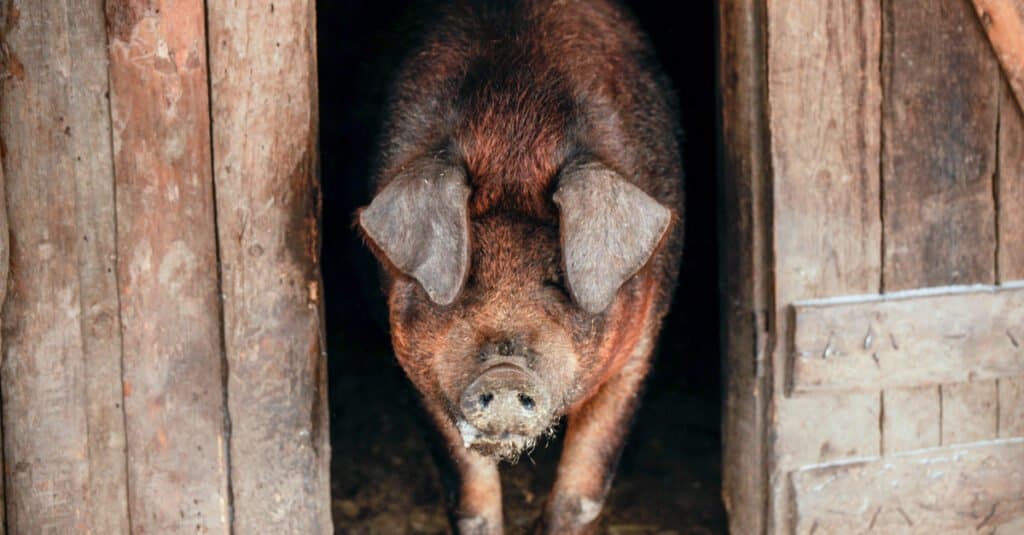
Durocs get their name from a famous stallion named Duroc, after whom the breed was named.
©galitsin/Shutterstock.com
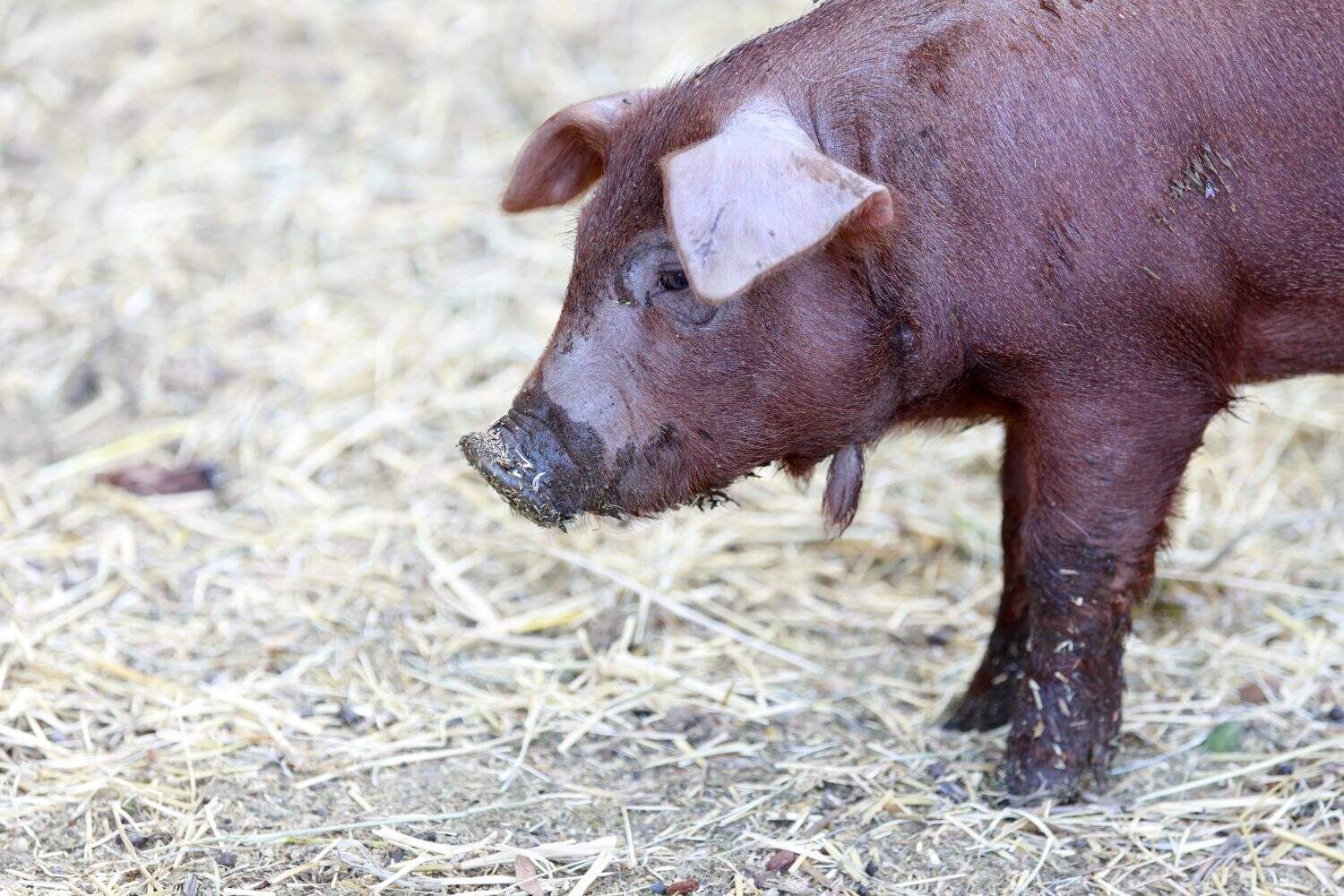
The Duroc is another classic red hog whose roots span the eastern U.S. and the Corn Belt, though much of its early development remains a mystery. Its foundation included various lines from Africa, Iberia, and old Berkshire stock, along with mid-19th-century imports from Spain and Portugal.
Durocs have a rich, uniform coloring — which ranges from light gold to deep mahogany hues — along with their signature drooping ears. These pigs are hardy, grow quickly, and are surprisingly quick on their feet.
Spanish Black Iberian
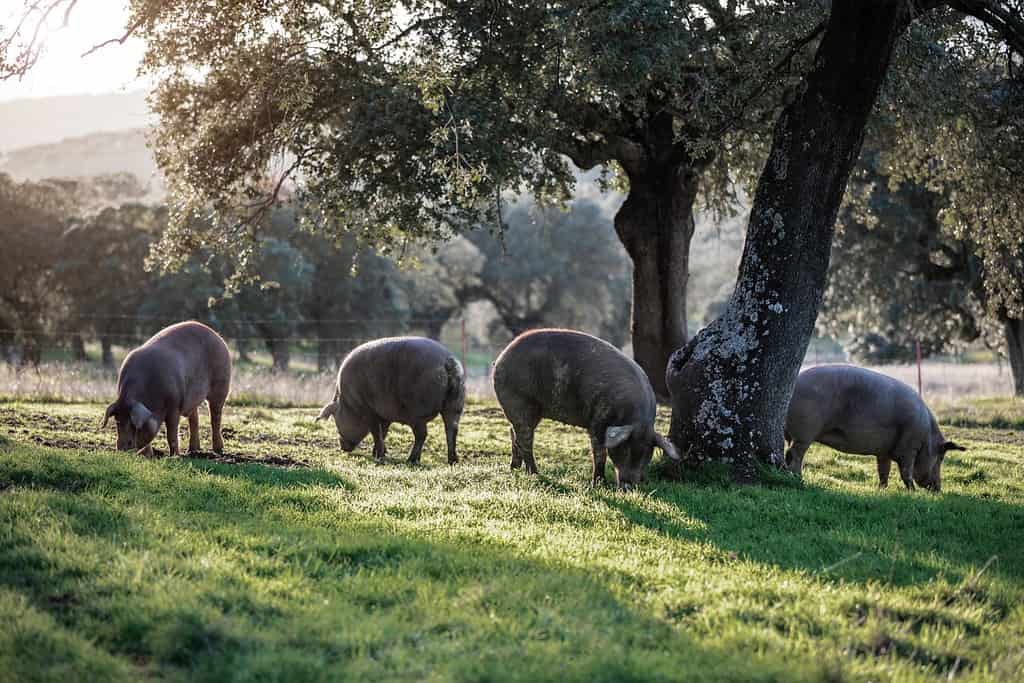
After a mid-20th-century decline, renewed interest in premium, traditionally produced meats is helping restore the breed’s population.
©sergio victor vega/Shutterstock.com
Native to western Spain, the semi-wild Spanish Black Iberian pig is often called pata negra (“black hoof”). These heritage pigs have an ancient lineage, tracing back to pigs introduced by the Phoenicians that interbred with native wild boar. They have long legs, lean bodies, elongated snouts, and distinctive floppy ears.
Naturally predisposed to store fat, these pigs are constantly on the move as they graze on acorns during the montanera season, which is what produces the Iberian ham’s signature flavor and texture. Raising Spanish Black Iberian pigs traditionally requires a vast space and a continuous supply of acorns from various oak species. This, in turn, helps preserve the dehesa ecosystem of their native habitats.
Large Black
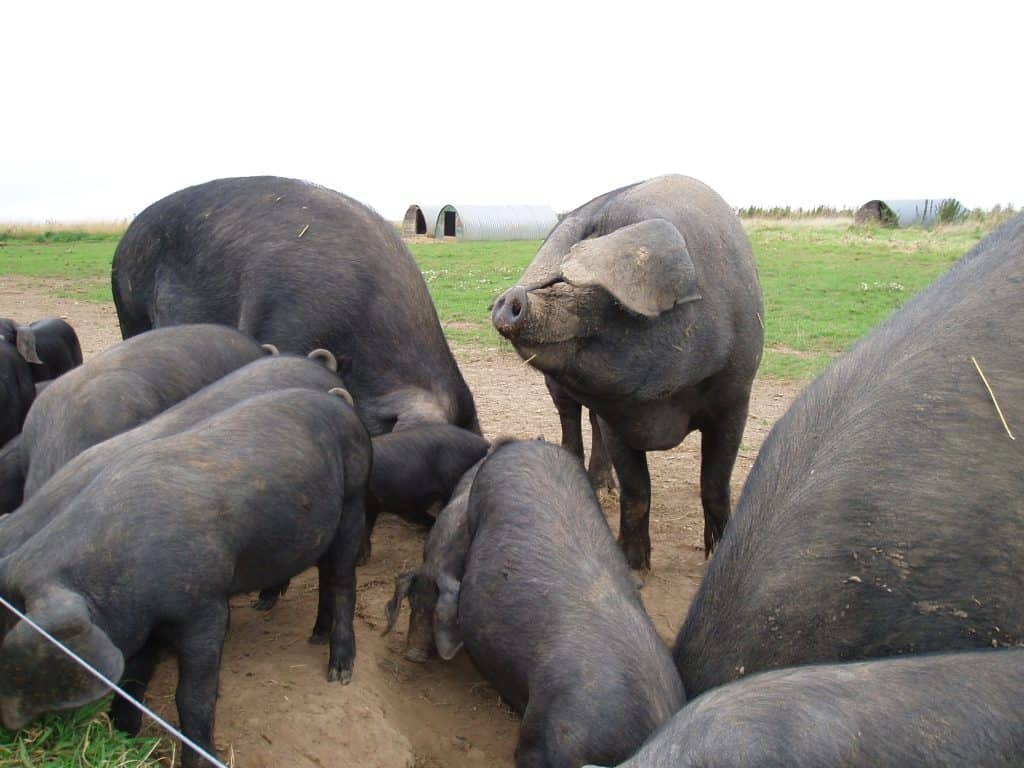
Large Black boars can weigh up to 800 pounds.
©Amanda Slater / CC BY-SA 2.0 / Wikimedia Commons – Original / License
Developed in the late 1800s in southwestern England, the Large Black (formerly the Lop-Eared Black) quickly became one of the country’s most common hogs by the early 20th century. However, the breed suffered a severe decline after World War II, as its efficiency on outdoor pasture conflicted with the industrial shift to indoor confinement systems. Today, the Large Black is listed as Critical on the Livestock Conservancy’s Conservation Priority List.
A big but docile breed, Large Black pigs have solid-black coats with built-in sunburn protection and forward-drooping ears. These ears shield the pigs’ eyes during foraging, but often block their view, so the pigs rely heavily on their excellent sense of smell and hearing.
Red Wattle
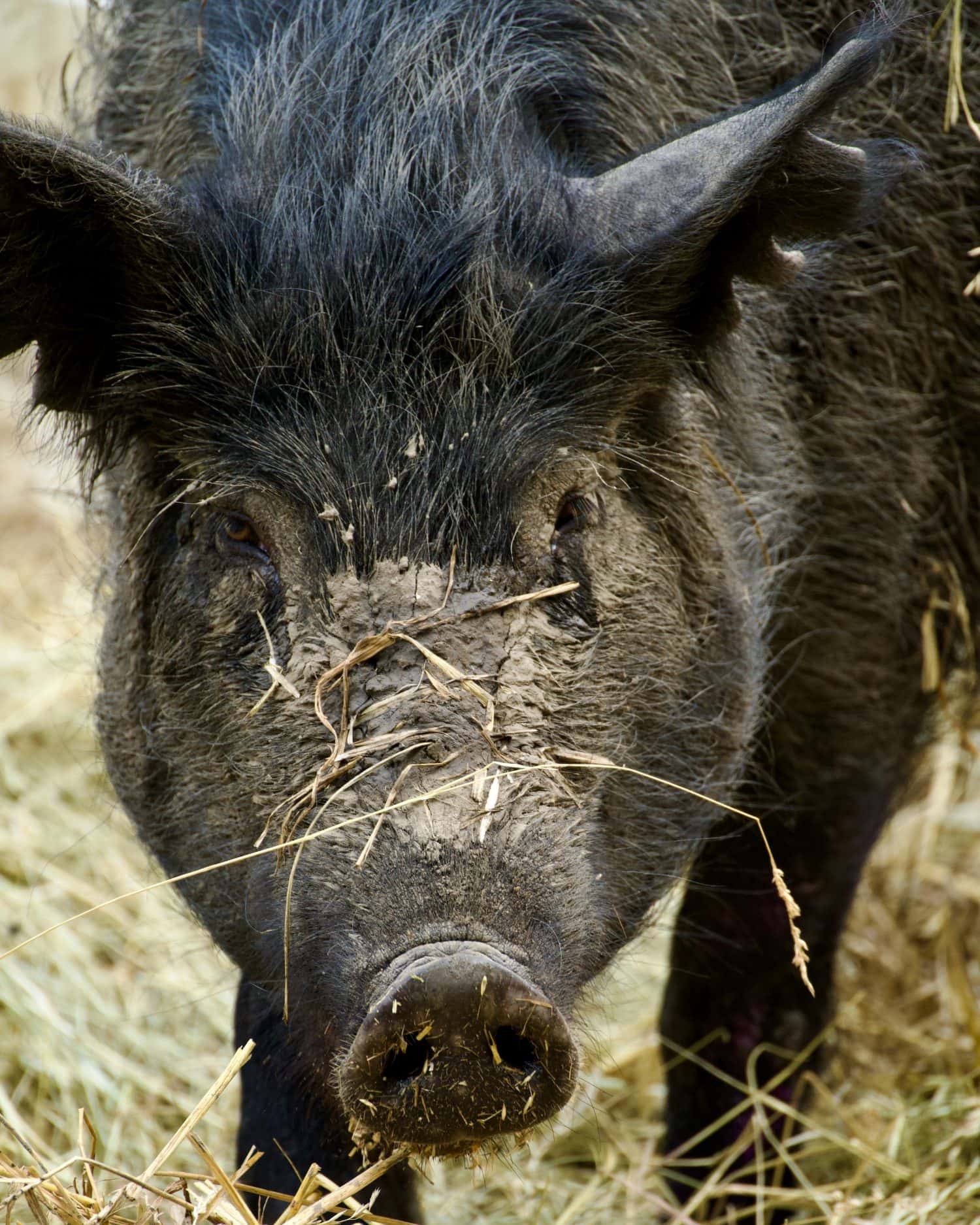
Red Wattle pigs can have sleek or wavy coats.
©yhelfman/Shutterstock.com
Though red, wattled hogs were recorded in the U.S. as early as the mid-1800s, the modern stock originates from 20th-century Texas. Easily recognized by the fleshy wattles hanging from each side of its neck, the Red Wattle ranges from pale blond to deep mahogany. These are large pigs, often weighing 600 to 800 pounds as adults, with some even reaching well over 1,000 pounds. Red Wattle pigs are hardy, calm, and well-suited to outdoor, pasture-based systems, actively foraging in various climates.
Although historically popular, the breed nearly went extinct by 1999. Conservation efforts began in 2001 with the formation of the Red Wattle Association to standardize the breed. Now listed as Threatened on the Conservancy Priority List, the breed is recovering due to sustained interest in its excellent meat quality.
Mulefoot
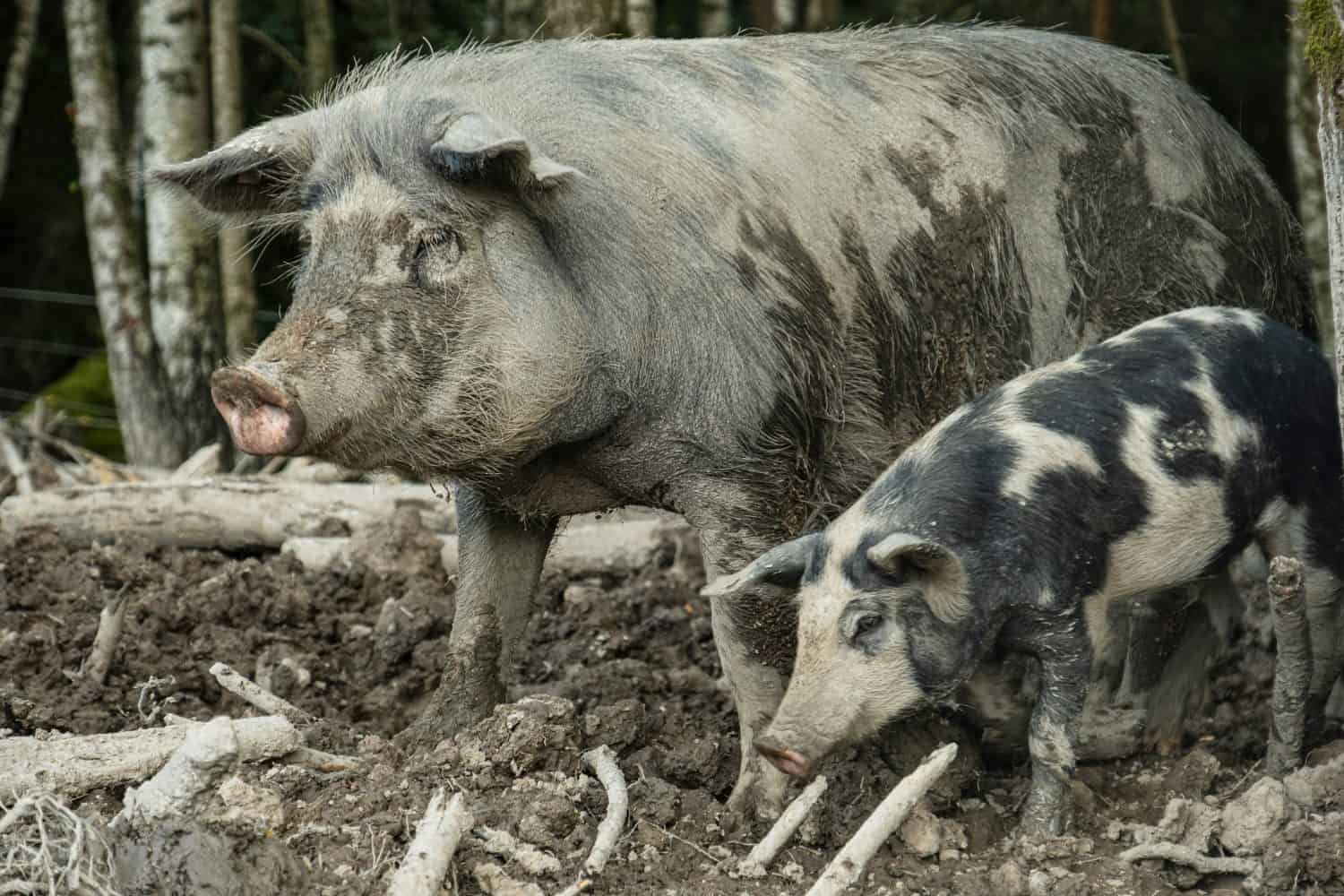
Mulefoot sows are calm, attentive mothers, usually producing five to six piglets.
©Dsuttinger/Shutterstock.com
The Mulefoot hog is America’s rarest heritage breed, best known for its single, uncloven hoof that resembles a mule’s. Likely descended from Spanish pigs introduced in the 1500s, the Mulefoot was once common across the Midwest. Today, however, the Mulefoot is listed as Critical on the Conservation Priority List, with fewer than 500 animals surviving worldwide.
Mulefoots are compact pigs with solid black bodies, typically weighing 400 to 600 pounds. They are hardy, adaptable, and highly successful foragers that thrive in outdoor systems. However, nearly all surviving animals descend from the historic Holliday herd in Missouri, so the genetic base is quite narrow.
Ossabaw Island Hog
Ossabaw Island Hogs are productive breeders and often raise two sizable litters each year.
©Hanneke Wetzer/Shutterstock.com
The Ossabaw Island Hog is one of the rarest heritage pig breeds in the U.S., currently listed as Critical for conservation due to its low numbers. The breed’s roots trace back to Spanish pigs from the 1500s that were left on Ossabaw Island off the Georgia coast. Trapped on the island, the breed’s genetics remained much the same. However, its physiology evolved and adapted to the poor resources of its isolated habitat.
Ossabaw Island pigs exhibit insular dwarfism and are smaller than other domestic hogs. Mature boars usually weigh 250 to 300 pounds, while sows range from 150 to 250 pounds. They can store large reserves of fat, and they can tolerate a high-salt diet. The original island population of pigs was removed in the early 2000s for disease control, but Ossabaw Island Hogs still thrive in conservation and farm programs.
Choctaw
Only a few hundred pigs of this rare heritage breed remain. Although conservation efforts are helping Choctaw pig populations to grow, the breed is still classified as Critical for conservation. The ancestors of the Choctaw hog arrived with Spanish explorers in the 1500s. However, the modern breed’s identity was forged during the forced relocation of the early 1800s. The hardy pigs that survived this journey with the Choctaw and other Native nations became the foundation for the pigs found today in southeastern Oklahoma.
Choctaw hogs are compact, typically weighing only 120 to 150 pounds. Their bodies are solid black, although some may have white markings. They have long legs and are naturally fast and athletic foragers. They can be assertive and wary when unmanaged, but with regular handling, they can become calm and cooperative. In traditional Oklahoma settings, Choctaw hogs roam freely on open range.
Meishan
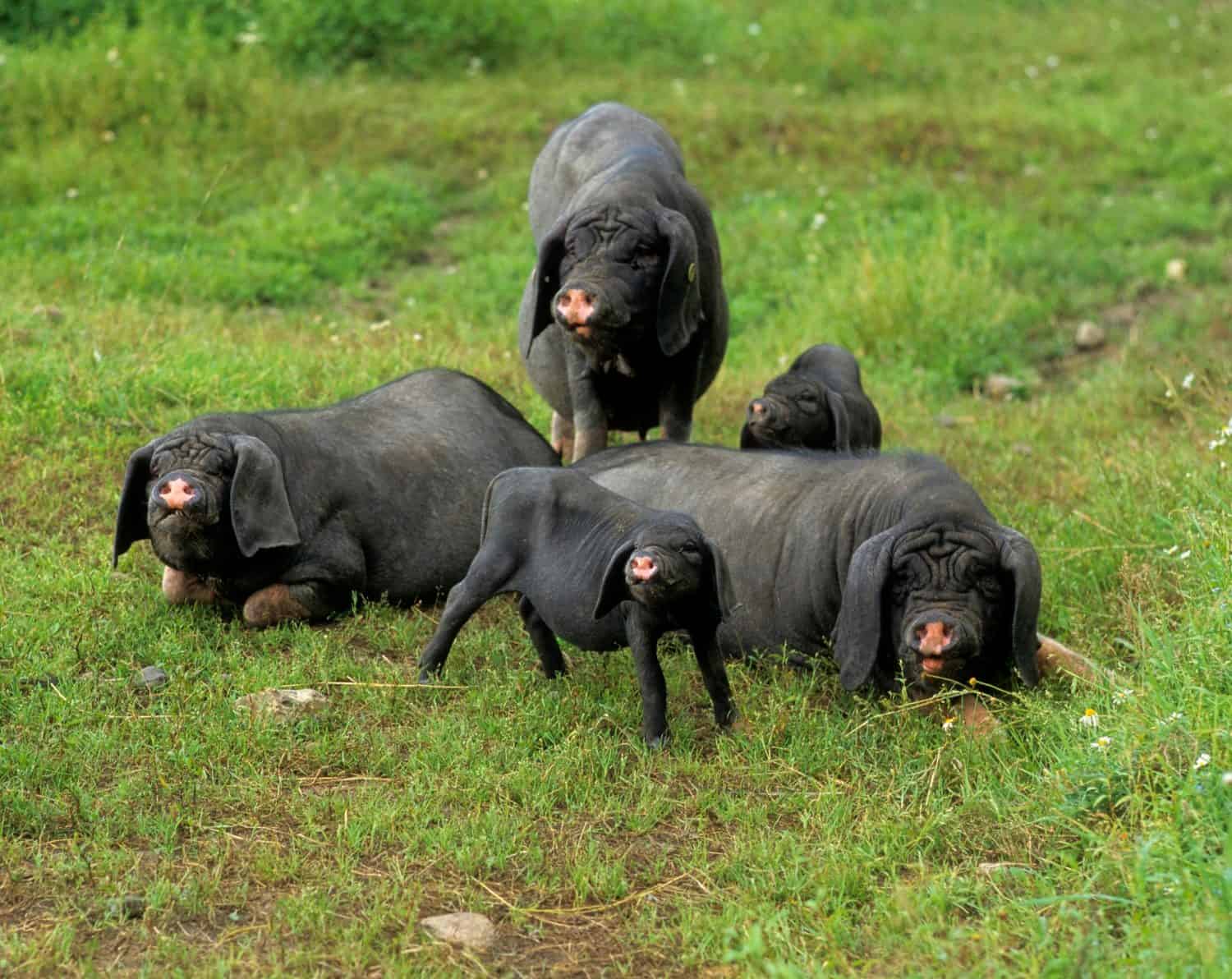
Meishan pigs have long ears that hang down either side of their uniquely wrinkled faces.
©imageBROKER.com/Shutterstock.com
The Meishan pig is one of the oldest domesticated pig breeds on record, with a history spanning more than five millennia in China. This ancient breed arrived in the U.S. only recently, in 1989, after much negotiation. All Meishan pigs in the U.S. descend from three distinct genetic lines. Males weigh 275 to 375 pounds, while females often reach 300 to 400 pounds.
Meishan pigs are calm, gentle, and quiet animals that spend much of their day resting. They rarely challenge fencing and adapt well to a variety of management systems. They are exceptionally prolific and routinely produce litters of 14 to 16 piglets by their third farrowing. Unlike many commercial breeds, Meishans excel on forage-based diets and thrive on pasture, making them a great fit for sustainable agriculture.
Hereford
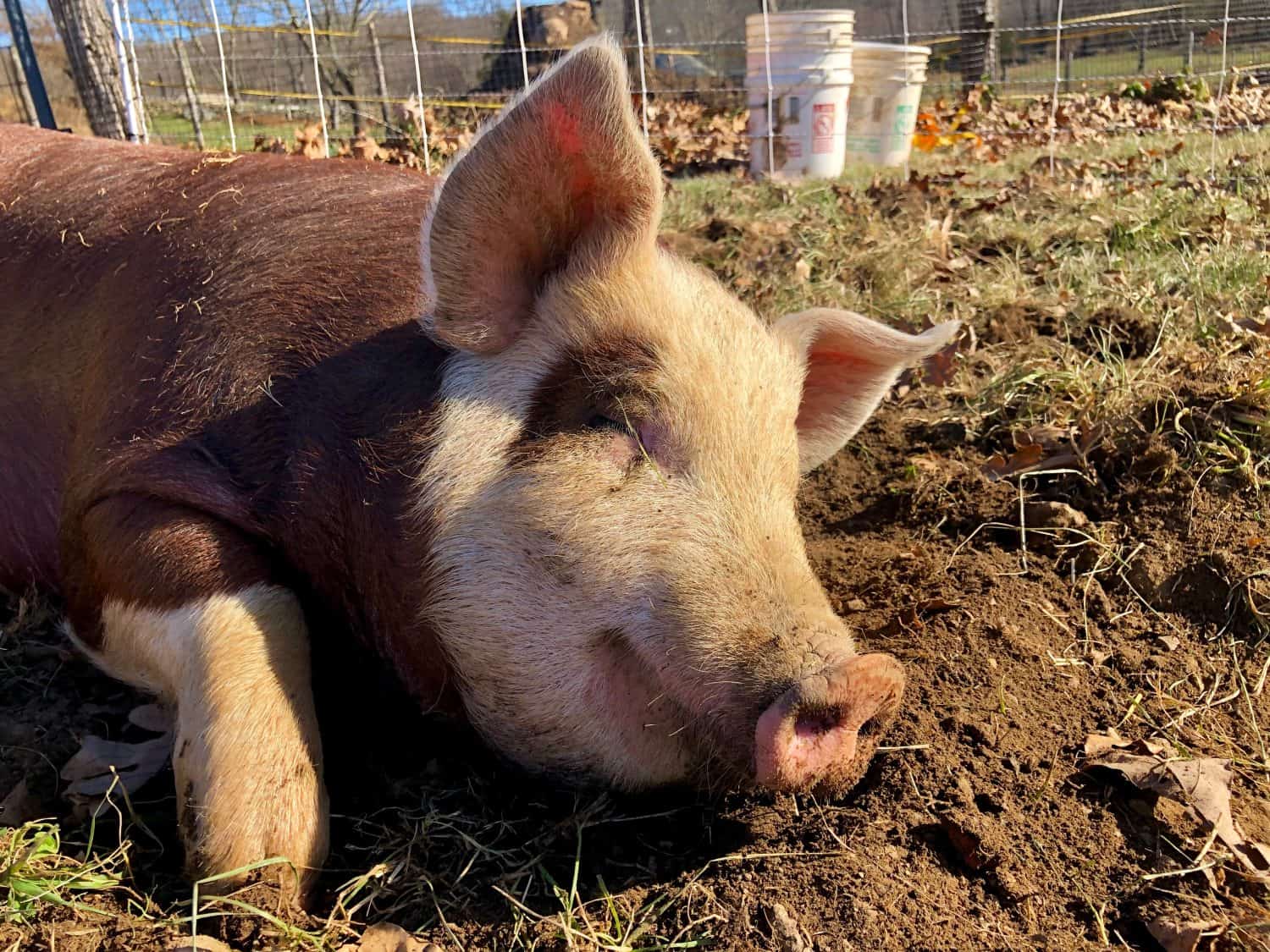
Hereford pigs have a similar appearance to Hereford cows.
©Tarek Ihaddaden/Shutterstock.com
Thanks to steady stewardship and conservation efforts, the Hereford breed was officially removed from The Livestock Conservancy’s priority list in 2024. Originating in the U.S. in the 1920s, it was born from a blend of Chester White, Duroc, and Poland China pigs. Hereford pigs have deep red coats accented with white markings on the face and legs. They are mild-mannered, despite weighing 600 to 800 pounds.
Herefords are extremely adaptable, thriving in both pasture-based systems and confinement settings. They are favored by new producers, homesteaders, and youth programs like 4-H. The largest populations of these heritage breed pigs currently reside in the Upper Midwest and Plains states.
American Guinea Hog
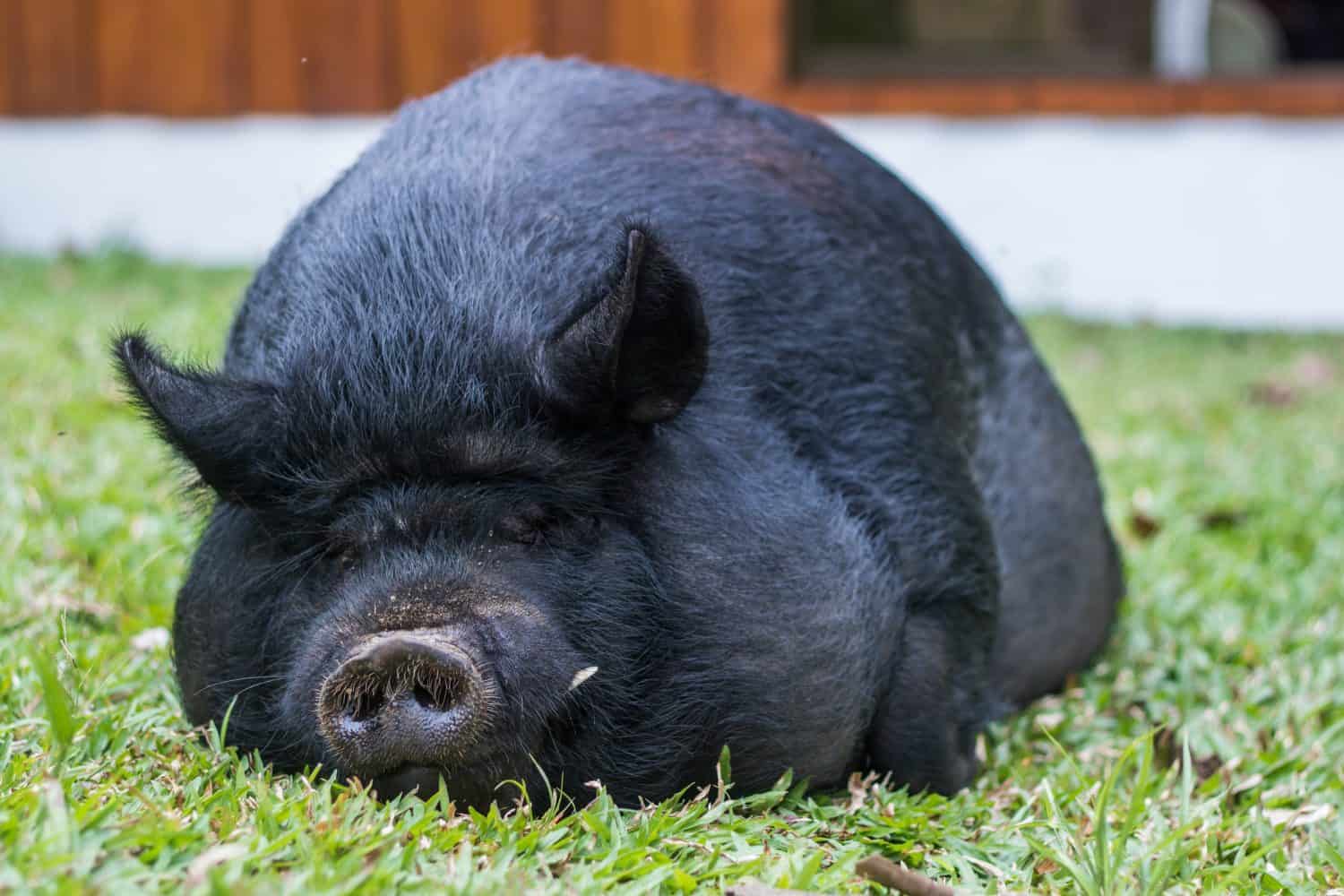
American Guinea Hogs store fat easily and can be prone to obesity.
©Joseph Jacobs/Shutterstock.com
The American Guinea Hog is a compact and easygoing animal known for its calm nature and exceptional foraging skills. This heritage pig breed is intelligent and has a gentle temperament. It is easy to train and simple to contain with basic fencing. Despite its long-standing popularity among homesteaders, small-scale farmers, and beginners, the breed is listed as Threatened. American guinea hogs are usually jet-black with occasional white or bluish markings. Their key feature is their small stature, as boars weigh 175 to 200 pounds while sows weigh between 85 and 150 pounds.
American Guinea Hogs have deep roots in the rural South, with records placing them in the region as early as the 1800s. Historically, they were often called the “poor man’s pig” because they were inexpensive to keep and could thrive on minimal resources. They happily consume roots, grasses, nuts, and pests, excelling at rooting and browsing.