
Quick Take
- The dodo didn't go extinct because it was stupid. The real cause is something most people never consider. See the real cause →
- Bones tell a very different story than the drawings that made the dodo famous. Discover what bones reveal →
- The dodo's trusting behavior wasn't foolishness. It was the logical result of a very specific evolutionary history. Explore its evolutionary history →
- A biotech firm thinks it can bring the dodo back, though there is a serious catch. Meet the de-extinction effort →
Many people first hear about the dodo bird when reading Lewis Carroll’s “Alice’s Adventures in Wonderland,” where a solemn yet silly dodo organizes a ridiculous race to help everyone dry off after a swim. The real dodo was discovered in the late 1590s and became completely extinct less than 100 years later. Over the years, the dodo has developed a reputation as being a large, flightless, and relatively dumb bird. Many have blamed the dodo’s foolish nature for its own demise. Though its very name has become slang for a stupid person, there is much more to the real story of this unfortunately maligned bird.
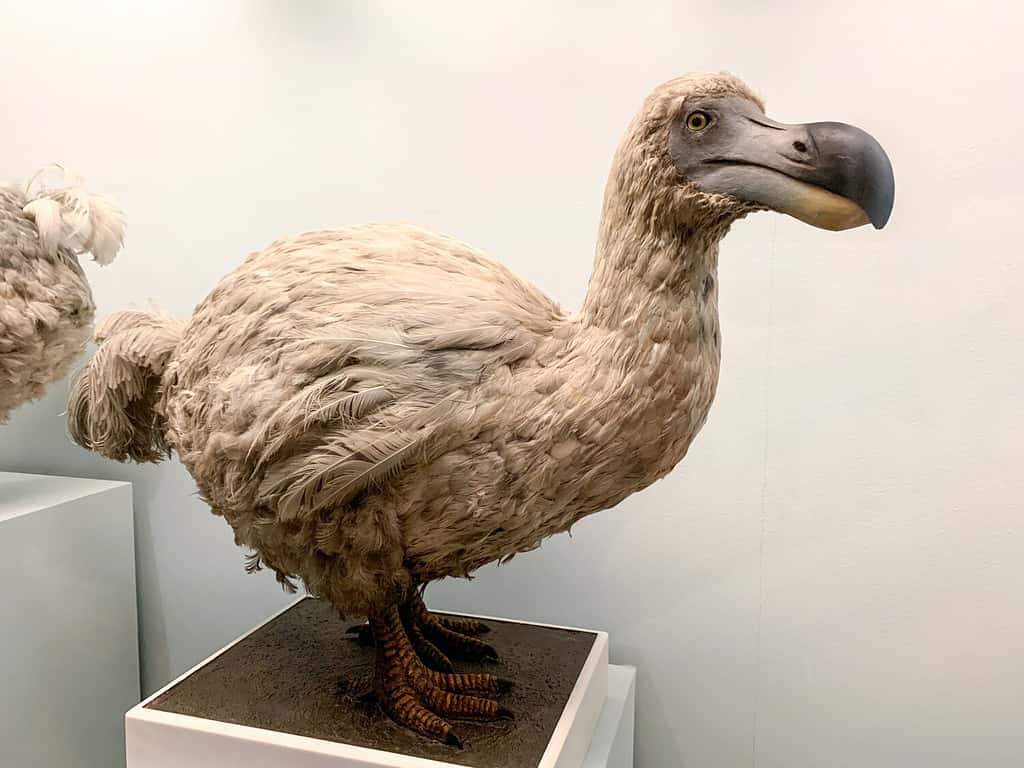
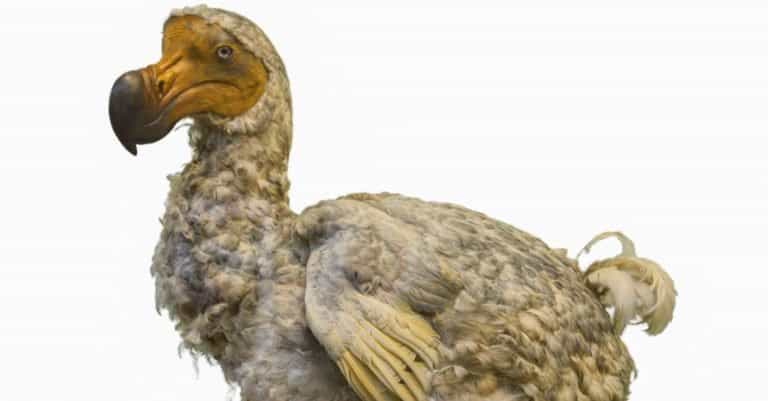
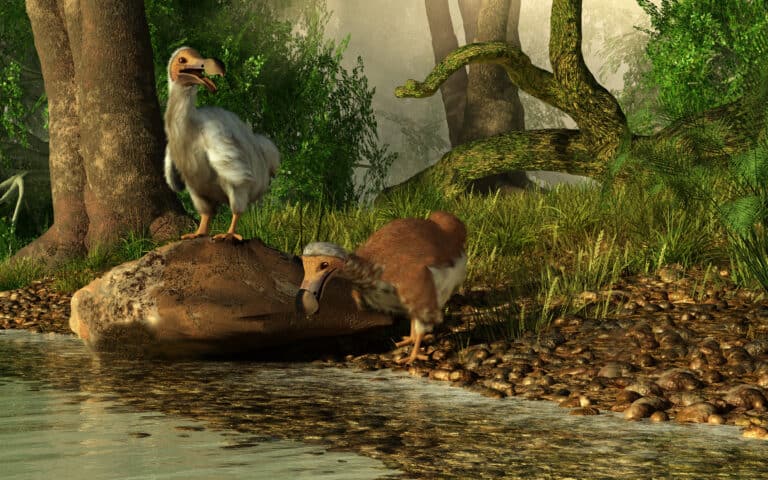
No complete taxidermied dodos exist; instead, museums display recreations.
©The Art of Pics/Shutterstock.com
Safe on Mauritius Island, the Dodo Thrived For Millions of Years
The first recorded sighting of the dodo (Raphus cucullatus) was in 1598 when Dutch sailors were exploring the Indian Ocean. When they arrived on the breathtakingly beautiful shores of Mauritius Island, they were greeted by diverse wildlife, some of which they had surely never seen before. One of these unique creatures was the flightless dodo bird.
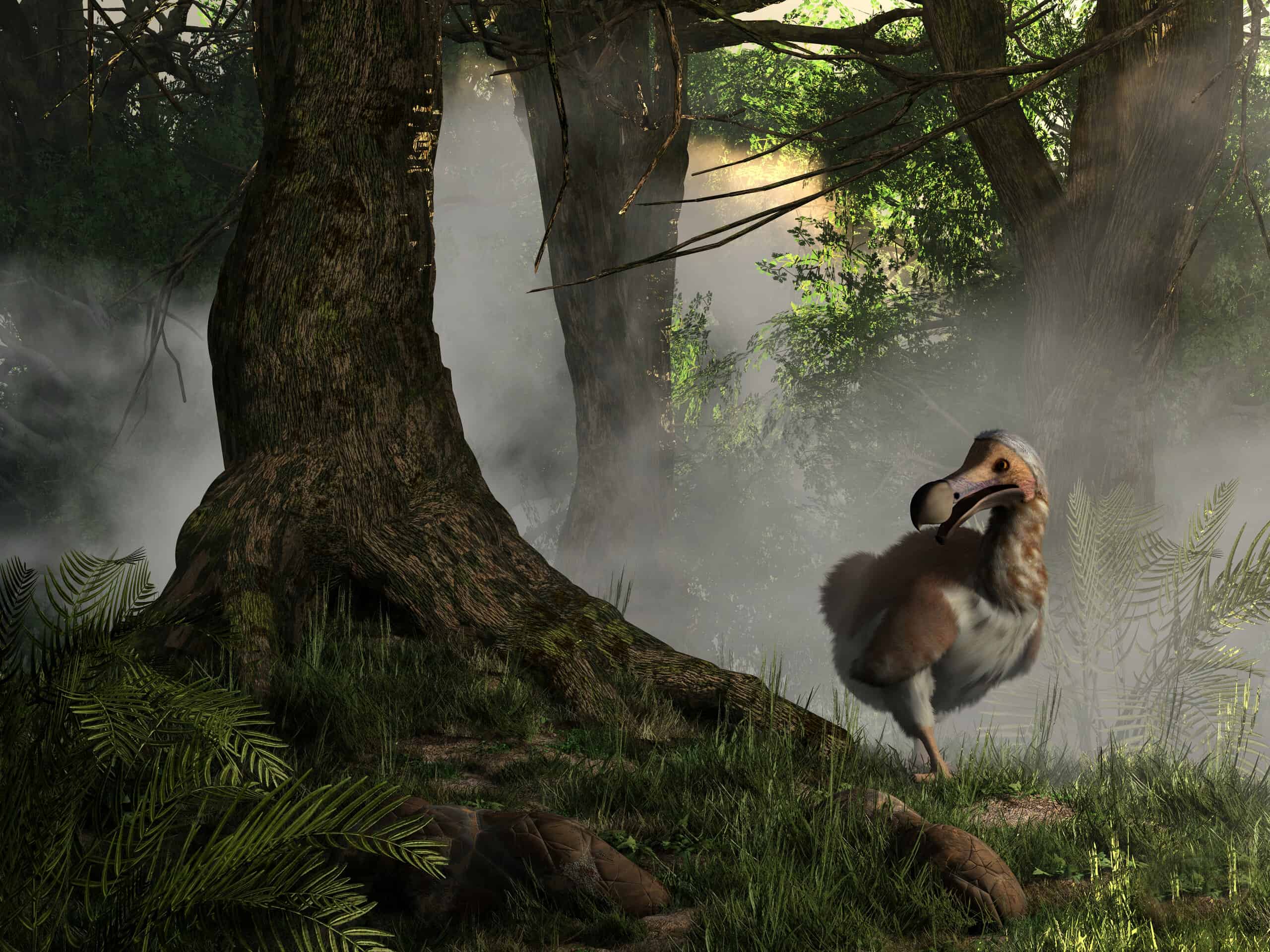
In the late 1590s, this isolated island was the only place in the world where the dodo bird existed. The landscape was lush with lakes, wetlands, and a dense canopy of trees. Wildlife was teeming in and around the lakes. The sailors would have found all sorts of animals, such as giant tortoises, parrots, songbirds, and, of course, the dodo. Although 1598 was the first time that Europeans spotted a dodo, the bird had been living on Mauritius Island for millions of years.
Island Gigantism: The True Science Behind a “Mythical” Bird
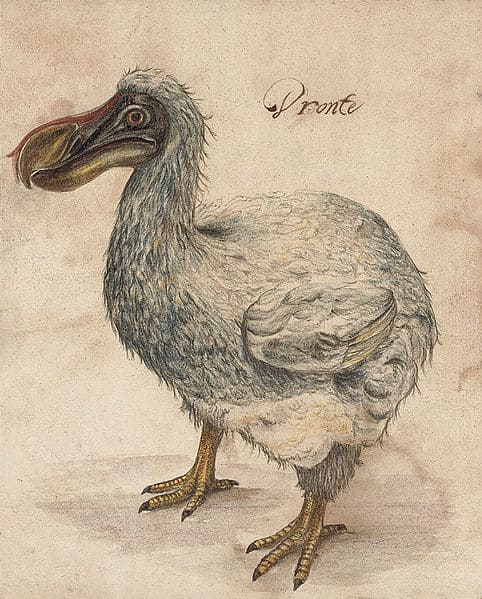
The dodo bird became nearly mythical in popular culture, yet for centuries, the real bird was greatly misunderstood. The species was discovered and went extinct at a time before the modern scientific method of animal classification had begun. Although we have drawings and descriptions from early accounts, it wasn’t until the 1800s that scientists learned dodo birds were related to pigeons. Not until 2002 did we learn that its closest living relative is the Nicobar pigeon (Caloenas nicobarica), which is only found on the Andaman and Nicobar Islands of India.
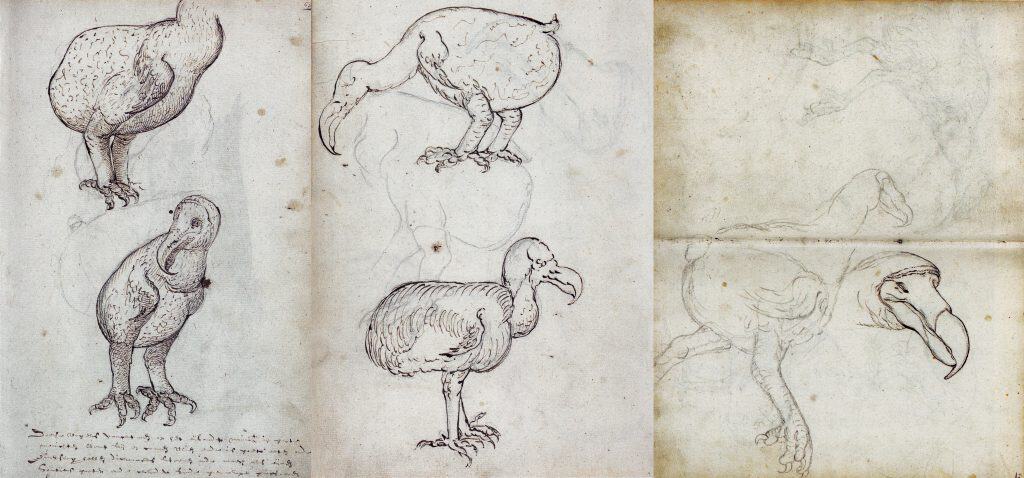
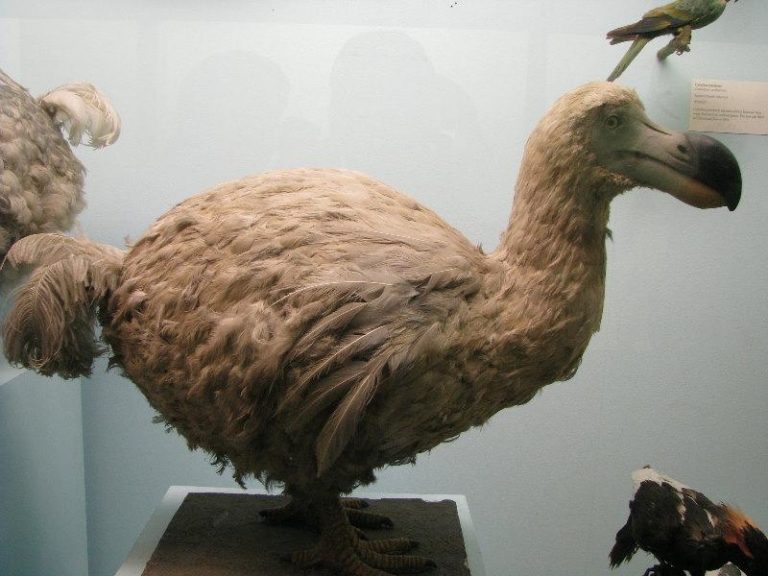
Many early descriptions of the dodo describe how good they are to eat rather than the behavior of the bird.
©Public Domain – Original
One reason for the myth of the dodo’s foolishness was its trusting nature, developed from living in isolation without predators. The dodo had evolved perfectly for a lifestyle where it didn’t need to fly to escape danger. Without predators, dodos nested safely on the ground. Because of the island’s abundant natural resources, there was little competition for food. Their beaks had adapted for foraging on the ground for nuts, seeds, and fallen fruits. Dodos grew larger than their pigeon relatives in a phenomenon known as island gigantism. This phenomenon occurs when small animals, living with abundant resources and few predators, grow much larger than their mainland counterparts.
The Eco Invaders and the Real Threat to the Dodo
When the Dutch settled on the island and encountered the large, flightless dodo bird foraging on the ground, they were amazed that they could simply walk up to it and club it over the head. The unsuspecting dodos did not even try to get away. Sailors reported killing them in large numbers for an easy source of food. However, hunting by humans was not the greatest threat to the dodo bird.

Mauritius Island is located about 1,200 miles from Africa in the southwestern Indian Ocean.
©Myroslava Bozhko/Shutterstock.com
It was not just humans who invaded the island of Mauritius. Sailors brought with them dogs, cats, and pigs, plus rats that had hopped aboard the ships. The native animals of the island were unprepared to defend themselves, leading to the loss of many species during this period. Other extinct animals of Mauritius include Mauritian giant tortoises, Mauritius blue pigeons, and raven parrots. Overall, approximately 100 species of native plants and animals have been lost.
How Modern Science Debunked the Fat and Slow Myth
After sailors arrived in 1598, the last known sighting of a dodo bird was in 1682. Because its extinction occurred before the establishment of modern scientific methods, we actually know very little about the dodo. Despite its fame, we don’t have a single taxidermied specimen. The specimens you may see in a museum are reconstructions.
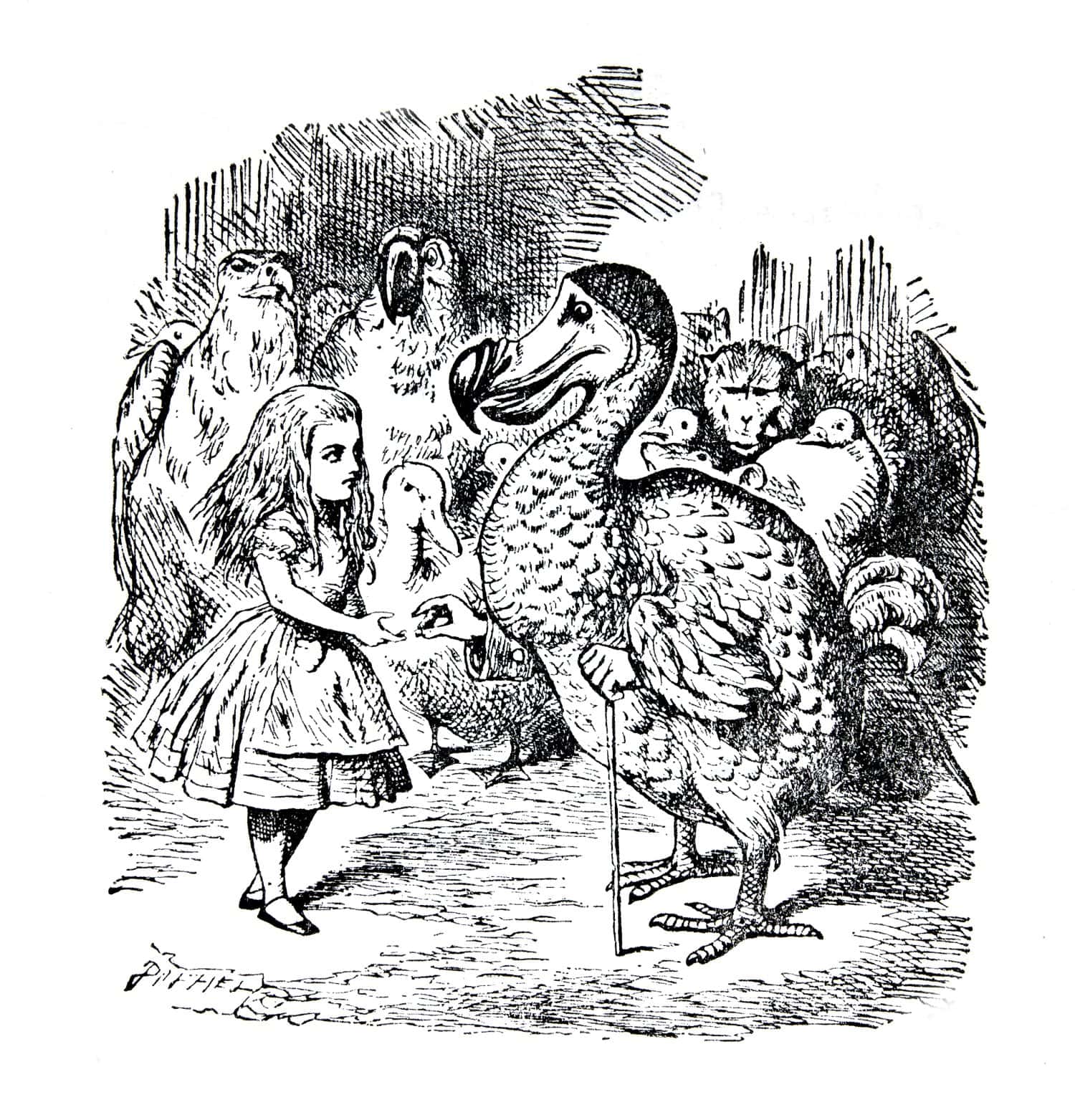
Lewis Carroll’s “Alice’s Adventures in Wonderland” helped the myth of the dodo bird rise to fame.
©Oleg Golovnev/Shutterstock.com
Europeans were fascinated by the unusual bird and are believed to have brought at least 11 back to the continent. However, we don’t have any soft tissue remaining to study, only their bones. Two nearly complete skeletons belong to the Mauritius Natural History Museum.
From analyzing the bones and also from the fossil record, we know they stood around 28 inches tall and weighed about 26 pounds. Unlike its reputation as being slow and fat, the actual dodo was lean and fast. Nor was it extraordinarily stupid, but probably about the same intelligence as today’s modern pigeons.
Scientists have learned that the dodo’s weight changed during the breeding season, which is perhaps why the drawings depicted them as chubby. The birds nested on the ground, with females laying a single egg and males defending the nest.
Can We Bring Back the Dodo?
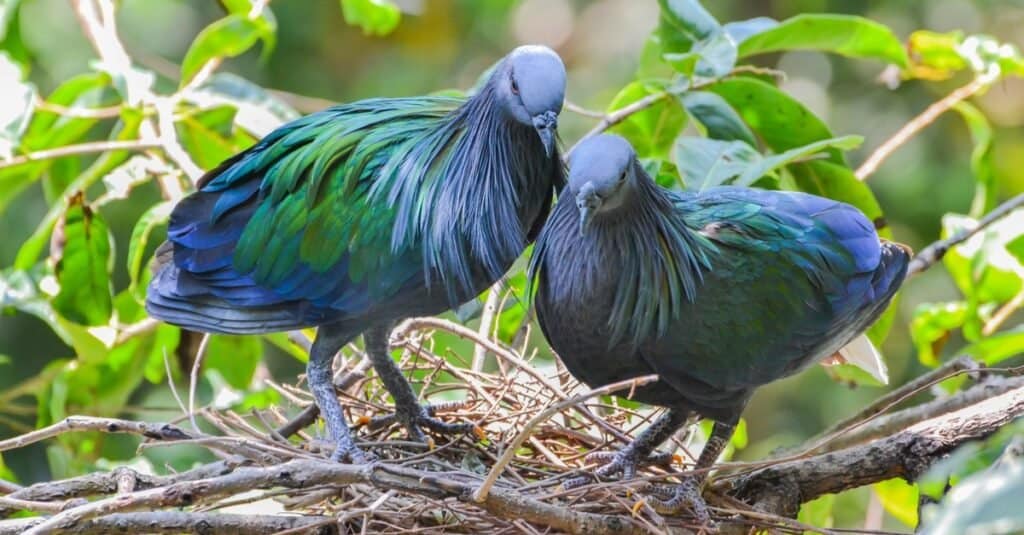
The Nicobar pigeon is the closest living relative to the dodo.
©wannachat/Shutterstock.com
Texas-based biotechnology firm Colossal Biosciences announced in 2025 a plan to genetically engineer a version of the dodo. This is the same company that announced the return of the dire wolf, a claim that has been controversial in the scientific world. Using cells from the Nicobar pigeon, the scientists plan to edit the germ cells with dodo traits and implant the embryos in a chicken. Critics argue a true reconstruction isn’t possible. The project is still years away from completion.