
Quick Take
- The Iberian ribbed newt must break its own skin to deploy lethal spines.
- The 10 internal nodules create an opening that allows the retraction of the bone.
- Recent studies reveal its extreme healing process that could be useful in human healing.
- Initial scouting of the defense mechanism was necessary to identify the source of the protruding bone.
Art often imitates life. In Marvel Comics, Wolverine was named after a mammal known for its aggression. And while wolverines can’t grow skeletal claws through their knuckles, there is an animal that can. The defense mechanisms of the amphibian world are hardcore, and the Iberian ribbed newt tops them all.
This newt doesn’t need mutations to summon its skeletal spikes, and its healing abilities could rival even the comic book version of Wolverine—perhaps even sending him to the emergency room. Here’s why the Iberian ribbed newt means business and isn’t afraid to rip its own skin to make its point.
The Terrifying Battle Armor of the Iberian Ribbed Newt
Iberian ribbed newts are found in the Iberian Peninsula and Morocco. At 8 to 12 inches long, you wouldn’t think much if you came across this amphibian in the wild. What you may not realize, however, is how deadly it can be to any animal that doesn’t take its warnings seriously. Its first instinct is typically to flee from predators, putting it in the “escape” category of natural defenses. If that doesn’t work, the newt does not hold back in the damage it inflicts.
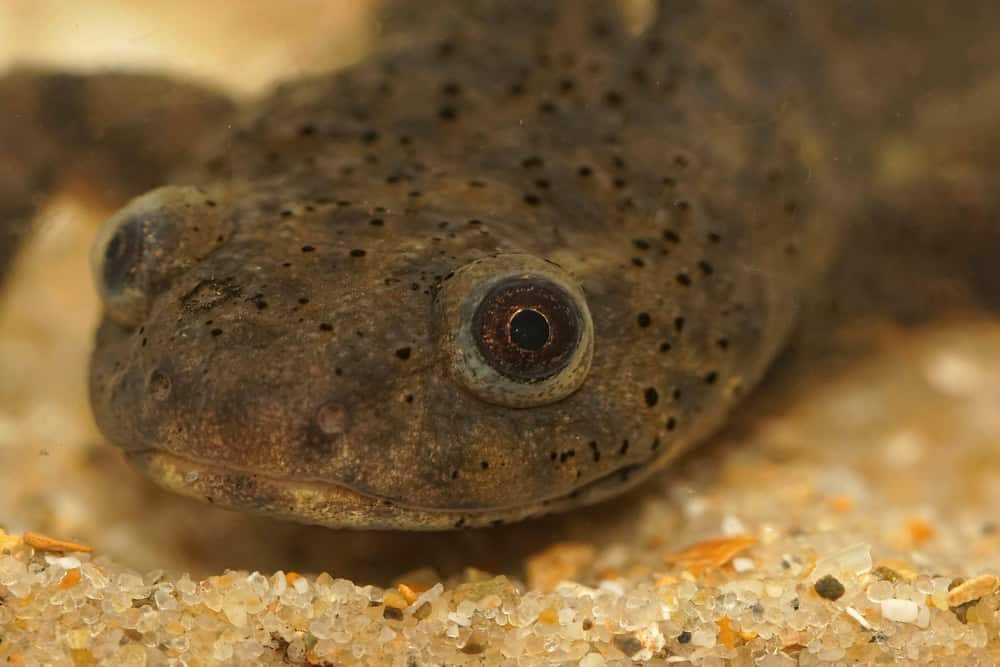
The Iberian ribbed newt is an unsuspecting contender both in the water and on land.
©HWall/Shutterstock.com
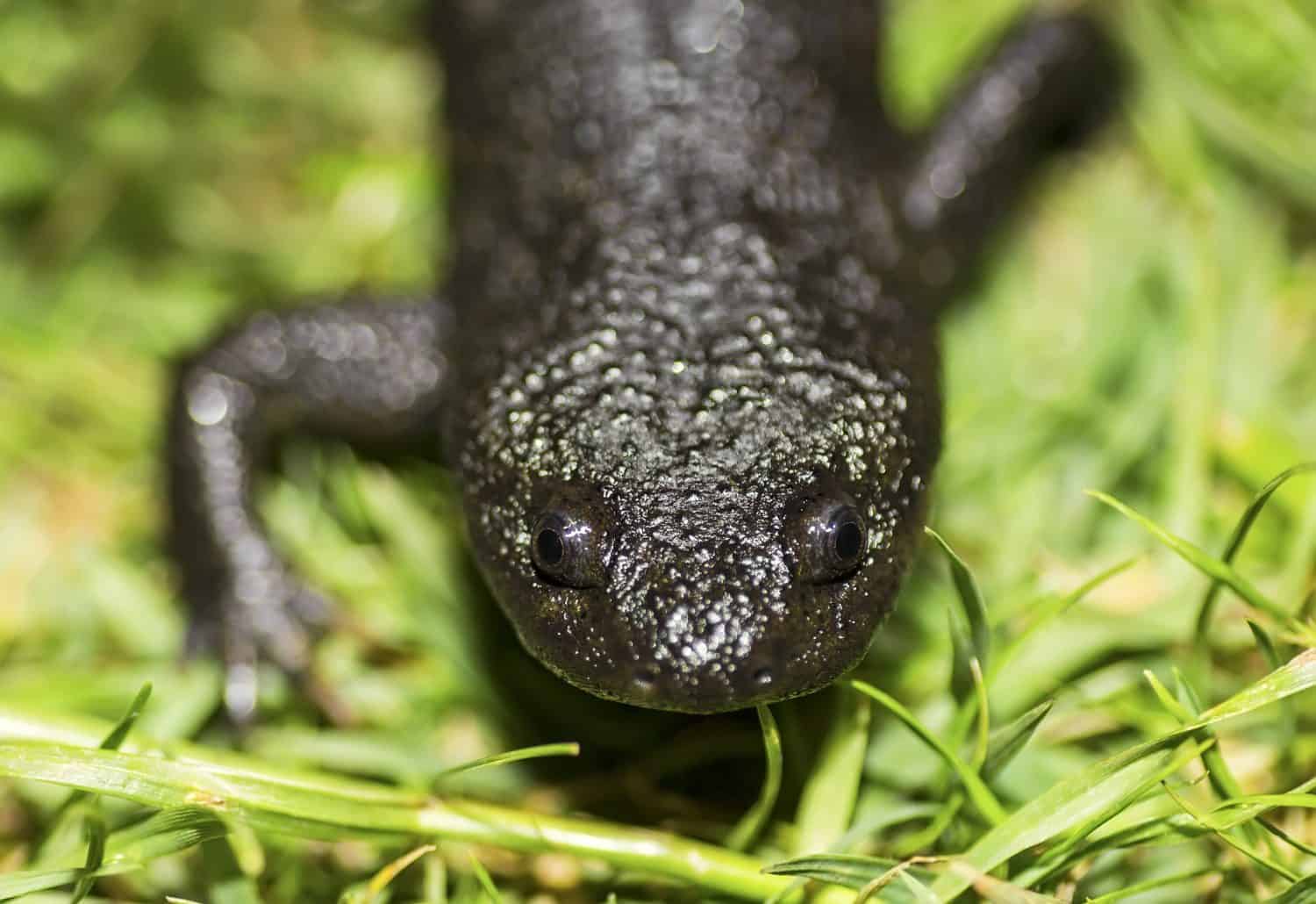
These dark gray or brown newts camouflage seamlessly with forest floors, but have one noticeable feature. Small, orange circles run the length of the sides of the Iberian ribbed newt. These marks are wart-like in appearance, and most would mistake them for normal skin texture. Predators that make this mistake are usually in for an unpleasant surprise. Their long tails help them evade predators, but when escape isn’t possible, the orange warts become their primary means of defense.
How Does the Iberian Newt Attack Predators?
If a predator advances on the Iberian newt, it readies its defenses. If it can’t flee, it produces a milky-white substance that oozes from its skin. Toxic secretions are relatively common in amphibians and nothing new. While it is a powerful weapon against oncoming attackers, it does not always deter determined predators. It can be lethal, but it is more irritating most of the time due to its sticky, viscous, and slimy texture.
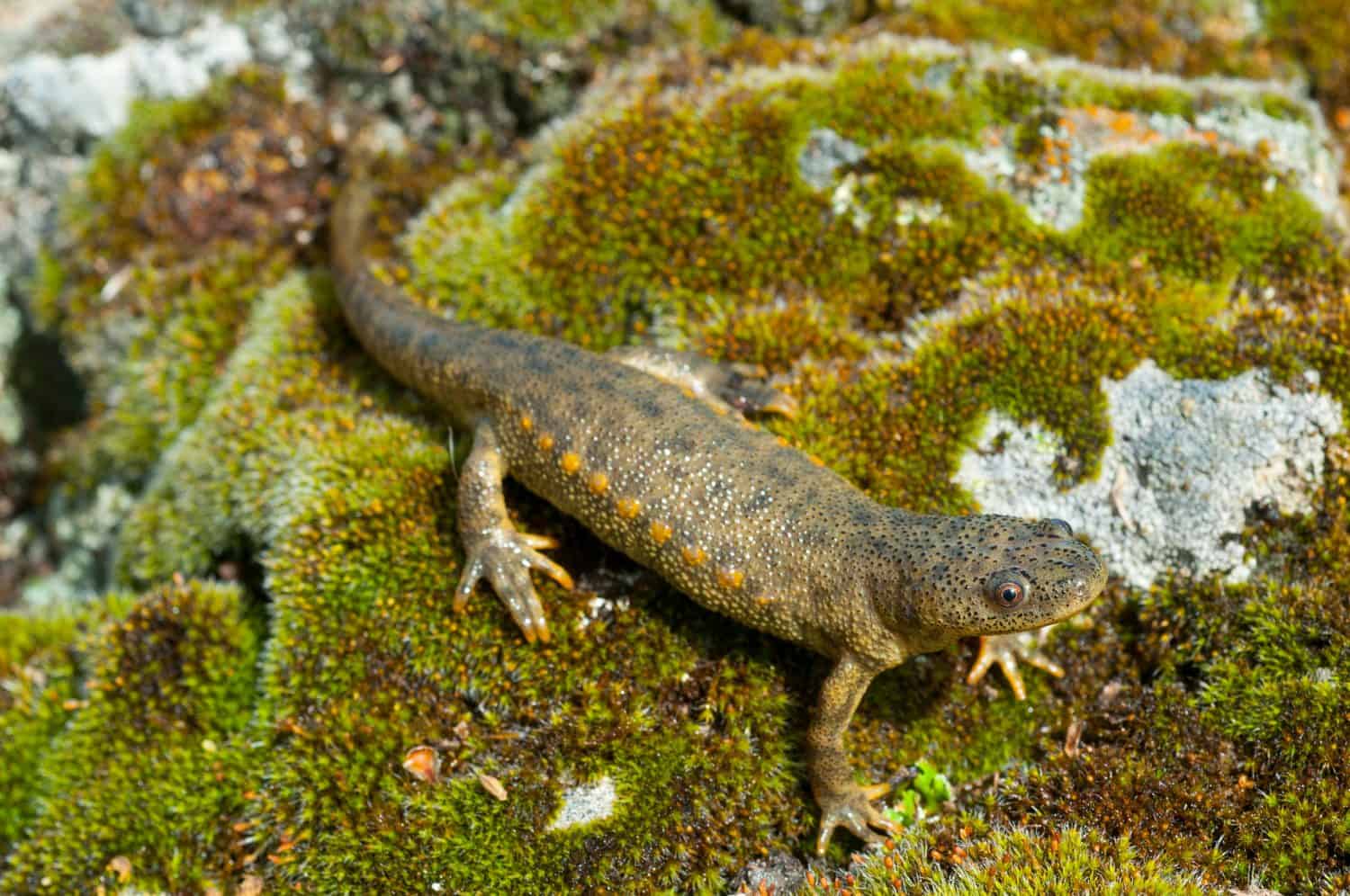
Mucous glands resembling warts line both sides of the Iberian ribbed newt, which is where its ribs protrude while defending itself.
©FJAH/Shutterstock.com
In addition, the Iberian ribbed newt takes its defense a step further, making its attack the most extreme among newt species. As the predator gets ready to lunge, the newt rotates its ribs forward in a move no enemy would ever see coming. As this happens, the ribs protrude through the orange mucous glands, forming a row of skeletal barbs. The sharp points of its skeleton can pierce soft tissue, and its milky toxin coats each barb. The result? A wounded predator is left not only bleeding but also affected by the newt’s toxic spines.
How Does the Iberian Ribbed Newt Recover?
Its self-inflicted wounds may sound gruesome. In reality, the protrusion of its ribs doesn’t actually hurt the amphibian. Its rapid healing ability happens so quickly that the wounds are usually fully healed before the next enemy encounter. This is one of the reasons the newt’s attack is so effective, making it one of the most successful survivors in most encounters.
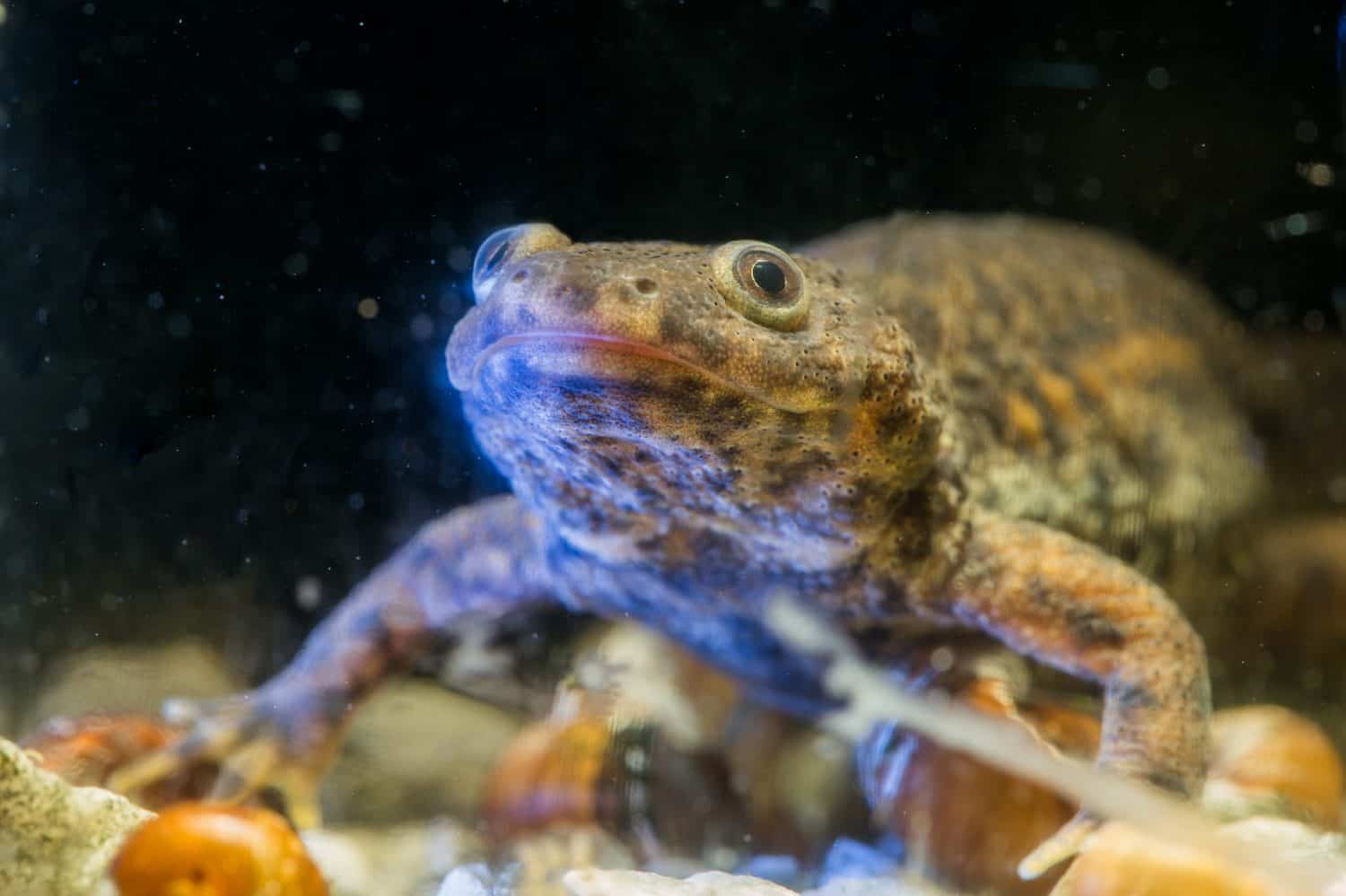
Regenerative abilities make this newt’s attacks so successful, but they also offer another method of protection against predators.
©foto_and_video/Shutterstock.com
In fact, the Iberian ribbed newt has such remarkable regenerative abilities that it can regrow anything from a limb to its tail. Some newts, including the Iberian ribbed newt, have been observed regenerating tissues in the brain and spinal cord, though not the entire organ. This ability to regenerate broken tissue both inside and outside of its body is why its skeletal attack works so well.
On average, an Iberian ribbed newt can fully regrow tendons and tissue within 12 weeks. This is faster than the average healing time for a human bone, prompting scientists to study the newt to see whether its cells could prove useful in treating human injuries. If an Iberian ribbed newt’s attack fails to deter a predator, its regenerative abilities serve as a final line of defense against persistent threats.