
Quick Take
- When threatened, hairy frogs break toe bones to form sharp, temporary claws that pierce through their skin for defense.
- Males sprout blood-rich, hair-like filaments during mating season, boosting oxygen uptake while underwater.
- Despite its fearsome defenses, the hairy frog is a prized food and cultural symbol in parts of Central Africa.
- Males guard and tend fertilized eggs, protecting them until they hatch.
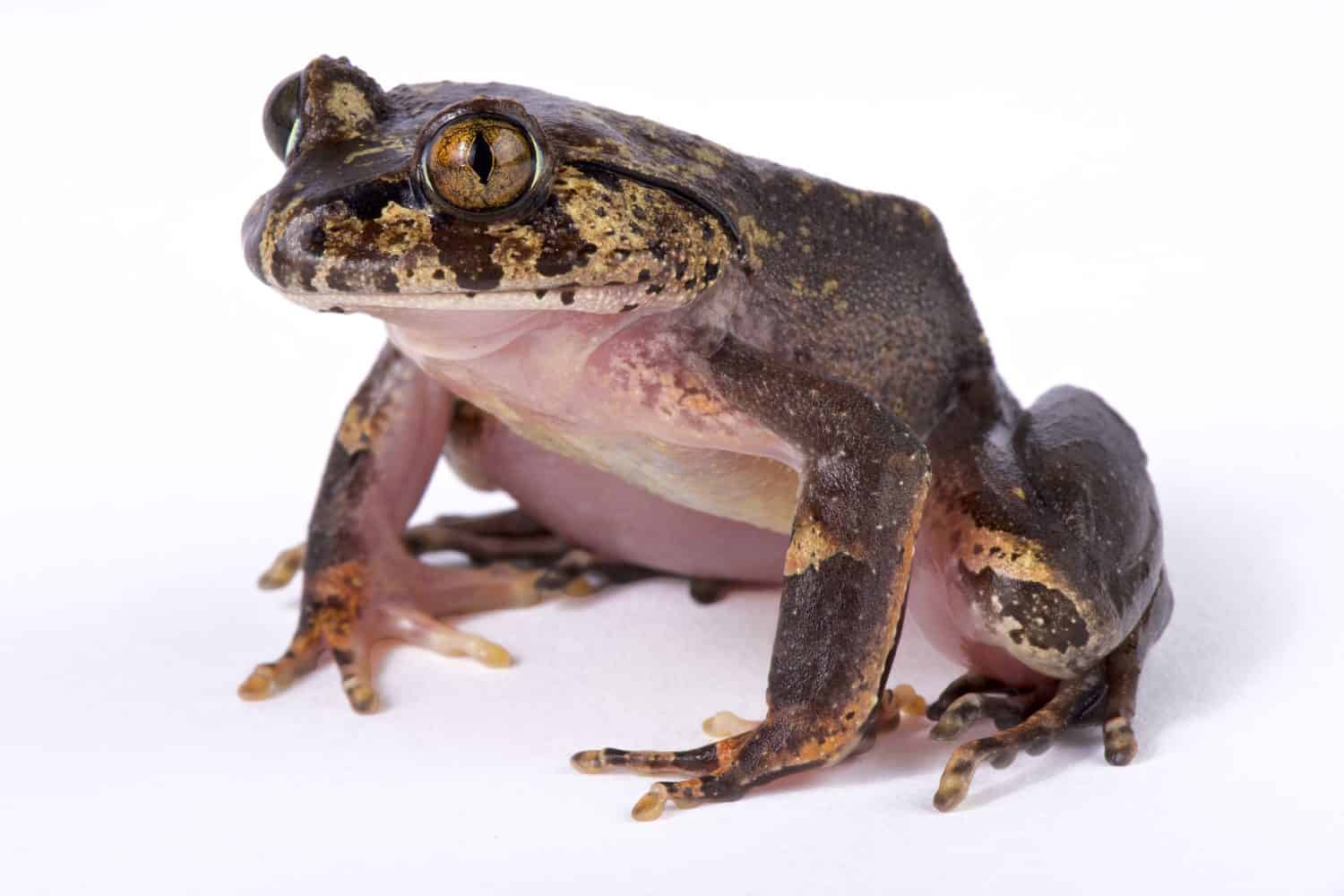
The hairy frog, also known as the wolverine frog or horror frog, is a remarkably unique species of frog native to Central Africa. Hairy frogs (Trichobatrachus robustus) are in the “squeaker” frog family (Arthroleptidae). They live in fast-moving bodies of water in subtropical or tropical forests. They are large frogs that can grow to be about 3 to 5 inches long, characterized by a robust, heavy body. Most of the time, they resemble typical tropical frogs. However, these fascinating amphibians possess some truly remarkable abilities.
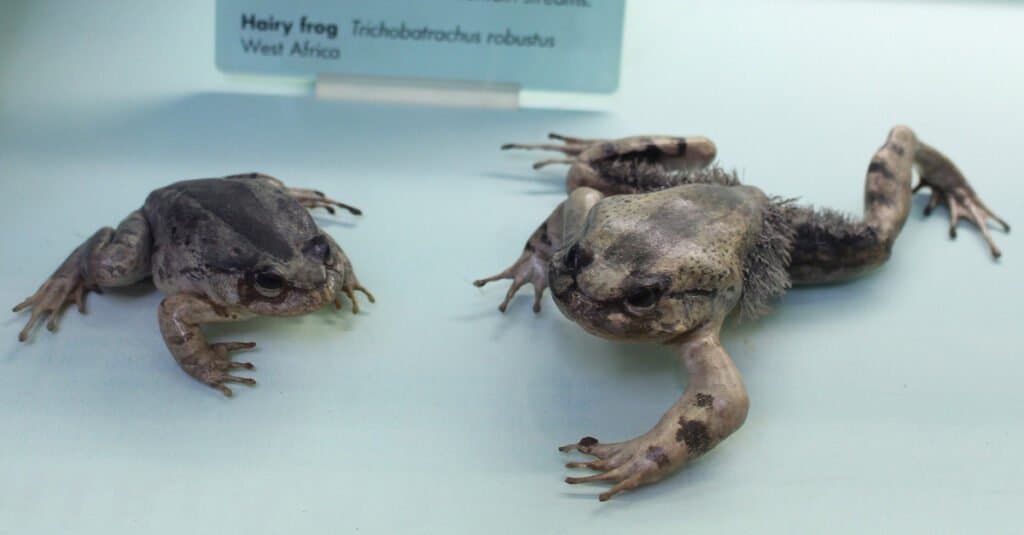
Hairy frogs are unique frogs in the squeaker frog family that are native to Central Africa.
1. Much Like the Marvel Character, Wolverine, They Have Retractable ‘Claws’
Perhaps the most fascinating fact about the hairy frog is its formidable, hidden claws. Wolverine, a character in the Marvel movies, can extend sharp claws and then retract them. His claws pierce through his skin, but because of his superhuman abilities, the wounds quickly heal. In the strange case of the wolverine frog, this amphibian has similar retractable claws in its hind feet that break the skin when extended.
While cats also have retractable claws for defense, the hairy frog’s claws are entirely different. Unlike the keratin-based claws of other animals, the hairy frog’s claws are made of bone. When the frog is threatened, rather than extending its claws like a cat, it flexes muscles in its feet. This causes the tip of the toe bone to break and push outward, breaking the skin. Unlike a cat, the frog does not have natural openings for its claws and must break through its own skin each time the claws come out. The claws are incredibly sharp and protect the frog from would-be predators.
As horrific as this sounds, much like Wolverine, frogs have excellent healing abilities. Once the danger has passed, the muscles relax, and the bones go back to their original position inside the skin. It doesn’t take too long for the frog’s muscles, skin, and bones to heal.
2. Males Grow ‘Hair’ During Mating Season
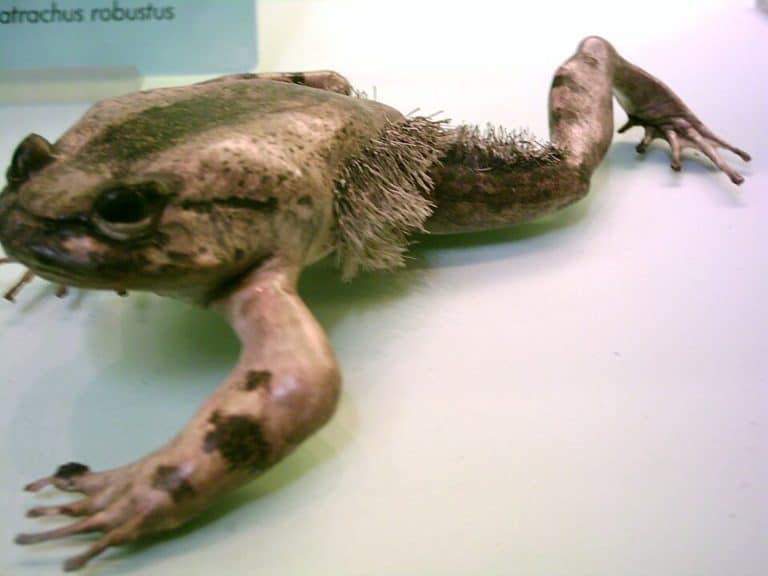
Although they are named the hairy frog, it’s only the males that grow “hair”. And they only grow it during a certain time of the year. This isn’t actually hair, although it makes the frog appear hairy. Instead, they are long strands of flesh that contain blood vessels. These hair-like dermal papillae grow on the animal’s thighs and flanks. The frog has small lungs, and the papillae allow it to breathe better temporarily during mating season.
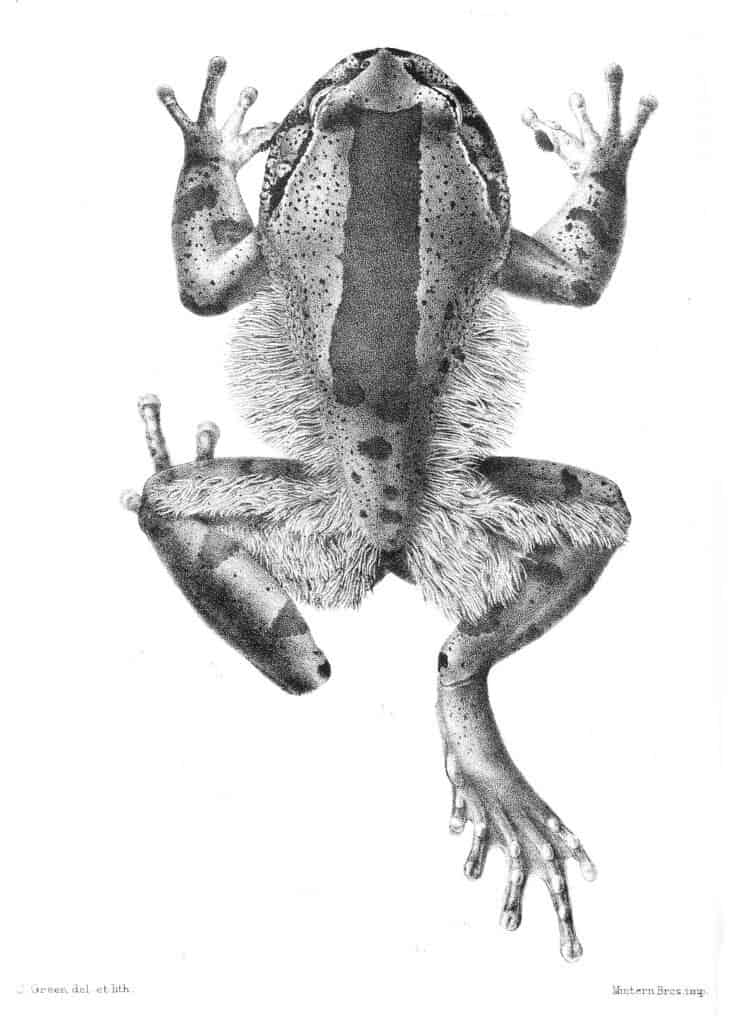
What looks like hair on the hairy frog’s body is actually flesh that contains blood vessels to help absorb oxygen.
©J. Green / This work is in the public domain in the United States because it was published (or registered with the U.S. Copyright Office) before January 1, 1927. Dialog-warning.svg Public domain works must be out of copyright in both the United States and in the source country of the work in order to be hosted on the Commons. If the work is not a U.S. work, the file must have an additional copyright tag indicating the copyright status in the source country. Note: This tag should not be used for sound recordings. – Original
3. They Use Their Eyeballs to Help Them Swallow Food
While this is a fascinating fact regarding the hairy frog, it’s not unique to frog species. Like many other frogs, hairy frogs do not chew their food. Instead, they swallow their food (such as insects and arachnids) whole.
4. People Use Spears and Machetes to Hunt Hairy Frogs for Food
These are not easy to catch frogs. If you pick one up, you will likely get a terrible cut from its sharp, bone-based claws. Despite its intimidating defense, the people of Cameroon consider hairy frogs to be a delicacy and a good source of protein. They are typically prepared by roasting.
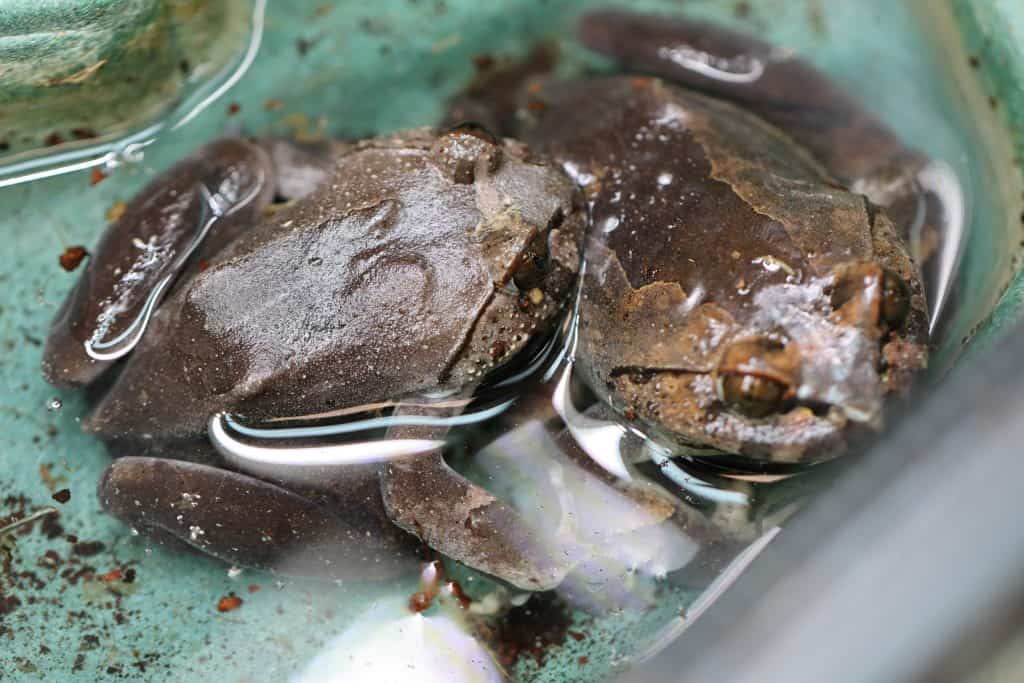
Unless the hairy frog is threatened and extracts its “claws,” it appears as a normal frog.
©ribution: Melvin TOULLEC, CC BY-SA 4.0, via Wikimedia Commons – Original / License
The people of Cameroon know better than to catch these frogs bare-handed. They hunt them with long spears and machetes. They are culturally significant to the Bakossi people, who traditionally believed the frogs fell from the sky and that eating them could help couples with fertility.
5. It’s a Very Good Father
Remember the dermal papillae that males grow during mating season? These structures act somewhat like gills and help the frog absorb oxygen while underwater. As it turns out, this adaptation makes the hairy frog an excellent father.
Hairy frog dads guard the fertilized eggs for extended periods, which the female lays underwater. They also occasionally move water around the eggs to improve oxygen flow. Finally, they use their formidable defense mechanisms to protect the eggs from predators. This level of care is unusual in amphibians. Most species leave the area after mating and egg-laying. Hairy frog fathers remain with the eggs until they hatch into tadpoles.