
Quick Take
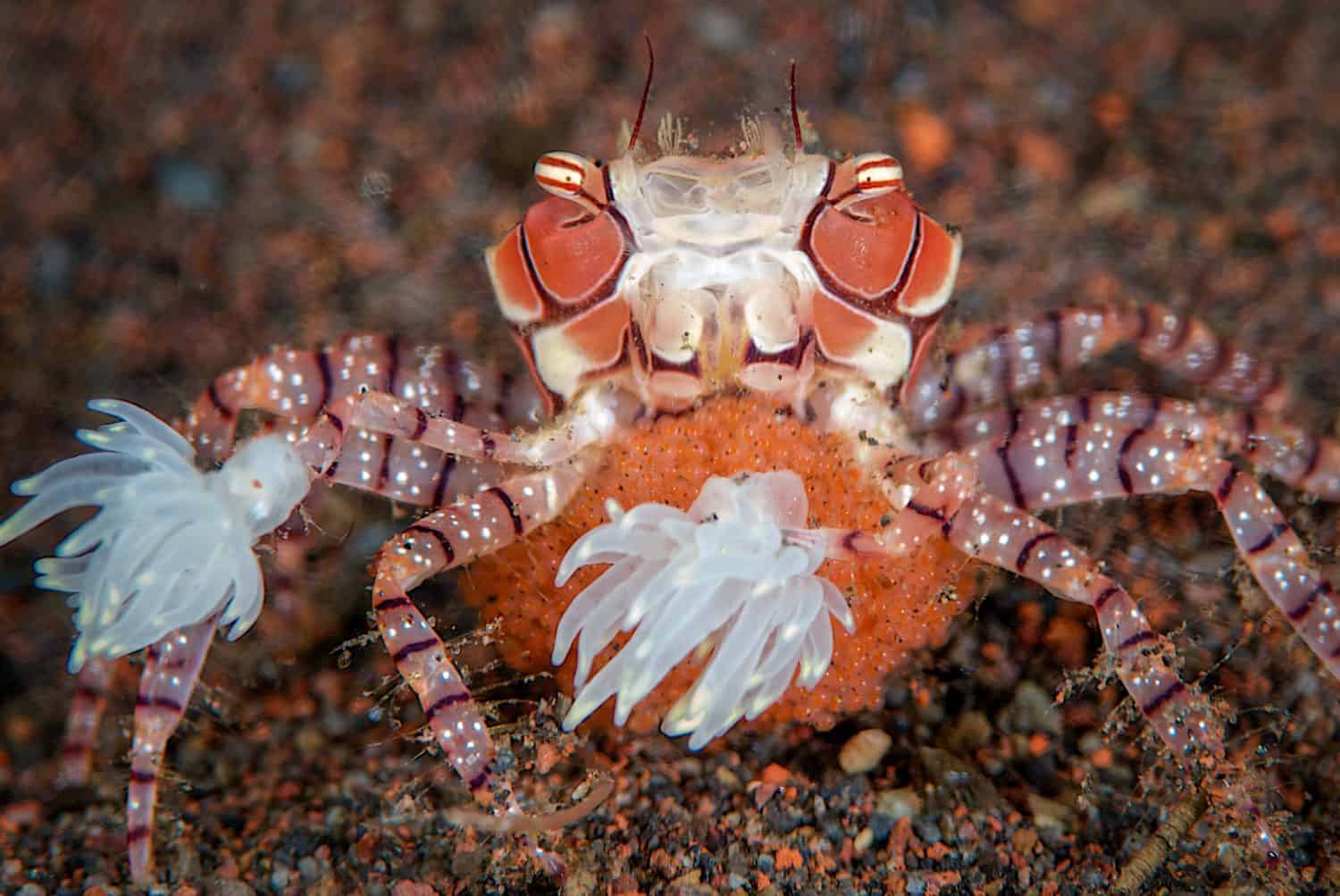
- The boxer crab uses tiny anemones as miniature boxing gloves, one on each front claw.
- This is known as a mutually symbiotic relationship in the marine world.
- If the crab loses one of its anemone boxing gloves, it simply cuts the remaining anemone in two to replace the missing anemone.
- You can find boxer crabs in the Indian and Pacific Oceans.
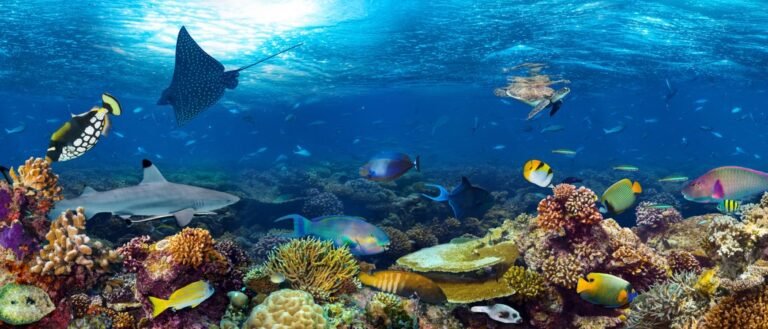
In an environment as vast and extreme as the world’s oceans, survival of the fittest takes on new meaning. That’s probably why cooperation is the name of the game for many of the more vulnerable species that call saltwater home.
Thanks to Disney movies like Finding Nemo, millions of people were introduced to the cooperative nature of marine life. Anyone who’s seen the movie knows that cute clown fish seek refuge and build their homes inside the welcoming, waving tentacles of the sea anemone.
This is just one example of a symbiotic relationship found beneath the waves. There are countless more. But are all symbiotic relationships created equal? Nope. And that’s where the boxer crab, also known as the pom pom crab, and the anemone come in. But to understand the nature of their relationship, it helps to understand the different types of symbiosis found beneath the waves.
Symbiosis In the Sea
Aquatic species, especially the smaller, more vulnerable ones, tend to band together for protection from predators. However, it isn’t always for mutual benefit. There are actually three types of symbiosis in the marine world.
Mutualism is when both parties to the symbiosis benefit from the relationship. That’s what the clownfish-sea anemone relationship does. The clownfish gets a cozy, safe home. In exchange, it acts as security for the sea anemone, keeping predatory butterflyfish at bay. The clownfish is also the chef, providing nutrients to the anemone via the waste the clownfish generates.
Commensalism is when one species gains a benefit, and the other is neither harmed nor helped by the partnership. If you’ve ever seen a shark swimming with a smaller shark-looking fish attached to its body, you’ve seen this kind of symbiosis in action. The smaller fish is a remora. It hitches a ride on the shark, gets protection from predators, and eats scraps from the shark’s meal. It does nothing for the shark, but the shark doesn’t care that the remora is along for the ride.
Parasitism is when one party benefits at the expense of the other. An example is sea lice and salmon. The lice attach to the fish and feed on the fish’s mucus and blood. When it’s only a few lice, the salmon can figuratively shake it off. But when a salmon is heavily infested with sea lice, it can weaken the fish’s immune system and make it more vulnerable to predators.
What’s the Relationship Between Boxer Crabs and Anemones?
If you’re not familiar with the boxer crab, Lybia tessellata, you might at first glance think the white, fluffy balls at the end of its claws are part of the crab’s natural design. That’s what I thought when I observed my first boxer crab on a scuba dive in Fiji. It was only when I got up close and really studied the crab that I realized those white puffs were actually sea anemones.
They weren’t a natural part of the crab at all! When I got back on the boat, I asked the local dive master about the strange crab-anemone combo I saw. I learned a lot about boxer crabs that day. Turns out, it’s the crab’s mission in life to find tiny anemones, then carry them around in their claws. But it isn’t because of crab vanity. The anemones become stinging boxing gloves that help the crab ward off predators and gather bits of food from the sea floor.
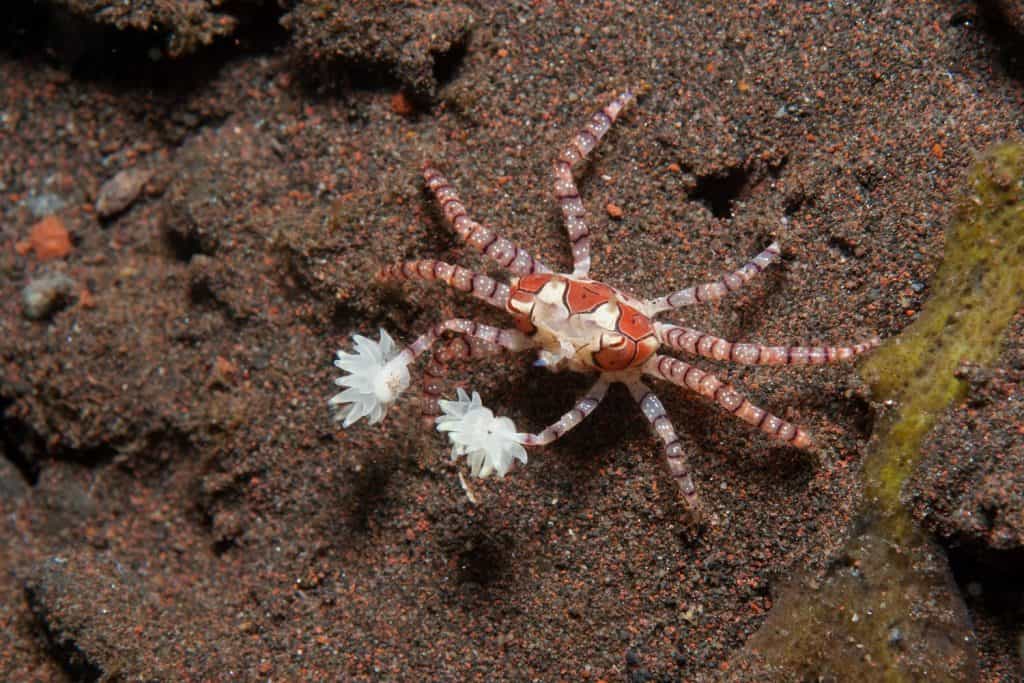
The boxer crab attaches an anemone to each front claw.
©Simagart/Shutterstock.com
The arrangement is beneficial to the anemone, too. Anemones aren’t known as the speediest, most mobile creatures in the sea. They’re actually pretty slow. When they pair up with the boxer crab, the anemone gets a free ride and turns into a lightning-fast anemone (relatively speaking). The extra mobility gives the anemone more access to oxygen and food. Sounds like a classic example of symbiotic mutualism, right? It depends on whether you’re the crab or the anemone.
The Dark Side of the Boxer Crab-Anemone Relationship
When things are going well for the pair, both the crab and the anemone benefit. But if the crab happens to lose one of its anemone adornments, things can deteriorate quickly. In this situation, the remaining anemone temporarily becomes a victim of parasitism.
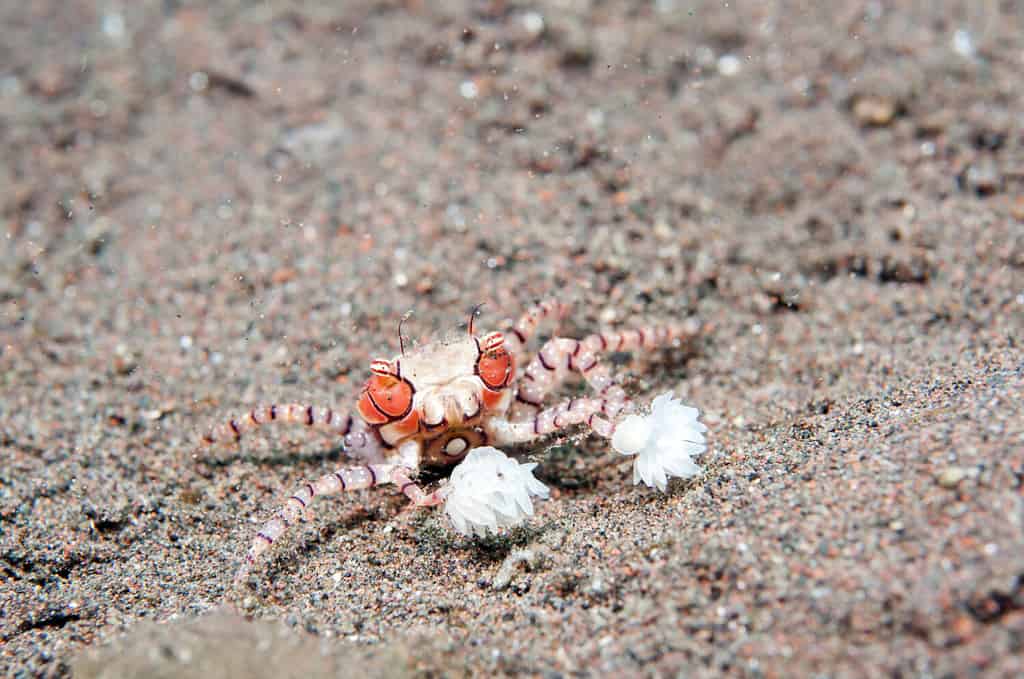
If the boxer crab loses one of its anemones, it just cuts the other one in half to make a pair again.
©Jung Hsuan/Shutterstock.com
Rather than searching for a replacement anemone, the crab instead turns to the remaining anemone for a solution. And the solution sounds anything but mutually beneficial. The crab uses its free claw to simply cut the remaining anemone in half. Voila! It once again has a pair of protective boxing gloves. This strategy works because anemones can reproduce asexually. However, for the anemone that gets cut in half, the symbiotic relationship can temporarily feel less than mutually beneficial.
More About the Boxer Crab
If you want to see this symbiotic relationship in action, you’ll need to head to either the Indian or Pacific Oceans. In the Indian Ocean, boxer crabs are indigenous in the waters from the Red Sea and the east coast of Africa to Mauritius, the Seychelles, and beyond. In the Pacific, you’ll find them across Indonesia and the Philippines, as far north as Japan, and as far east as Hawaii.
Fun fact: Hawaii is home to its own species of boxer crab, the Hawaiian boxer crab, Lybia edmondsoni. Just like other boxer crabs, the Hawaiian version also carries anemones around. But you’ll have to look closely and go scuba diving at night. Boxer crabs are tiny—less than an inch wide—and they’re also nocturnal. They spend most of their days hiding under rocks and coral rubble in shallow water, which helps protect them from common predators like octopus and moray eels. These tiny crabs tend to become more active at night when they come out to scavenge for food.