
Quick Take
- Cruise lines are required to implement comprehensive pest and biofouling management protocols, but there is no mandate to manage a specific number of species.
- Ventilation systems on cruise ships are designed to minimize pest entry, and regular inspections help identify any vulnerabilities in the ship’s structure.
- Regular hull cleaning and advanced antifouling coatings are used to reduce the settlement of barnacles and other invasive organisms.
- The dry-dock phase allows for thorough inspection and maintenance of the ship, including addressing any pest issues that may have developed during operation.
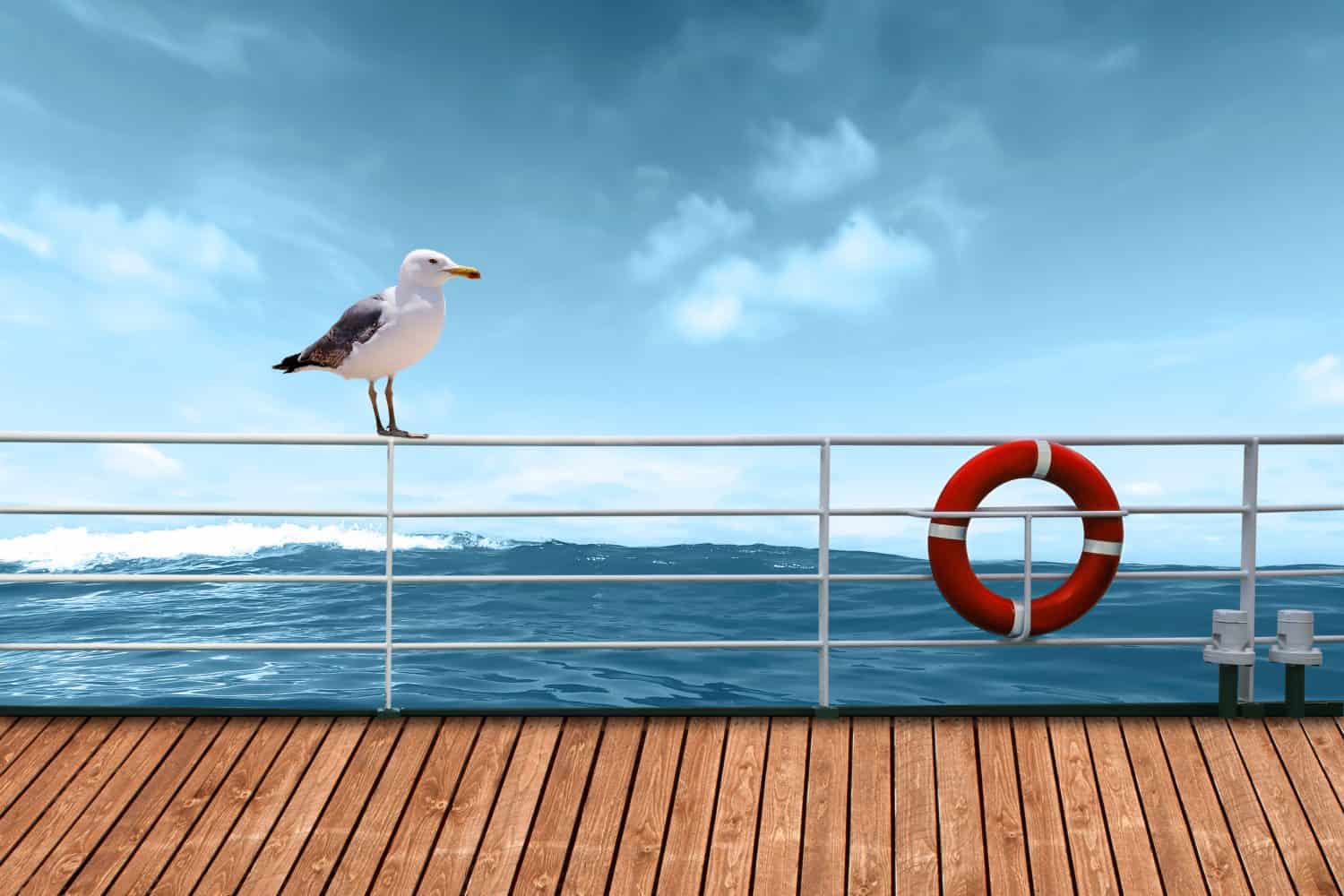
Standing at the rail of a large cruise ship at sunset, the scene can feel simple: metal, water, and sky. Yet the vessel is rarely alone. A cruise ship travels through the ocean as a moving structure that attracts, carries, or shelters many forms of life, including rodents below deck, birds resting on railings, and barnacles attached to the hull underwater. Some animals arrive by accident, others follow food or shelter, and a few are officially allowed aboard. Together, these organisms form a temporary and shifting community that exists wherever the ship goes. Cruise ships interact with wildlife in constant and often unseen ways. Understanding these interactions helps explain how modern ships influence marine and coastal ecosystems across the globe.
Cities at Sea
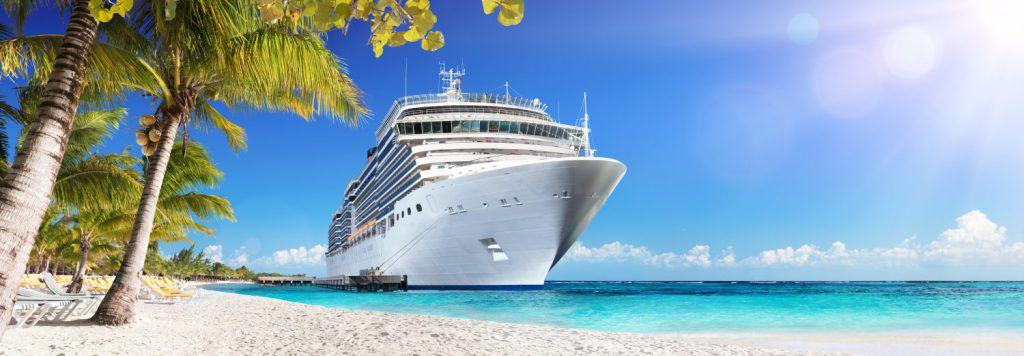
Cruise ships function like cities at sea, making a significant environmental impact wherever they go.
©Romolo Tavani/Shutterstock.com
Modern cruise ships are among the largest moving structures on Earth, functioning more like small cities than vessels. The biggest ships carry 5,000 to 7,000 passengers plus thousands of crew, along with food, fuel, spare parts, luggage, and supplies sufficient for weeks at sea. Each voyage generates large volumes of wastewater, food waste, emissions, and heat, all managed through onboard systems designed to operate continuously while traveling.
These ships routinely cross entire ocean basins and visit ports across the Caribbean, Mediterranean, Alaska, Northern Europe, Asia, and the South Pacific, often stopping in multiple countries on a single trip. Because of their size, reach, and constant movement, cruise ships exert physical and biological influence far beyond their hulls, shaping the environments they pass through before any discussion of wildlife even begins.
Uninvited Rodents and Classic Stowaways
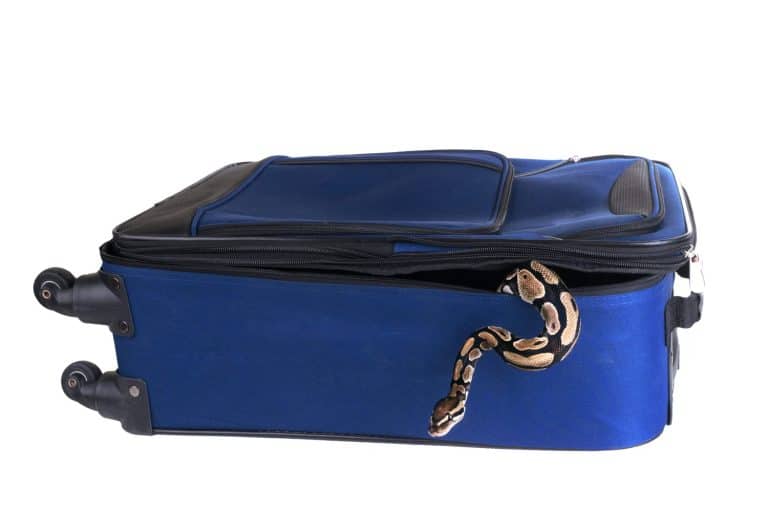
Rats have followed human ships for centuries, and modern cruise vessels are no exception. These rodents slip aboard in ports by climbing mooring lines, entering cargo areas, or hiding in supplies. Once onboard, they seek warm, quiet spaces with access to food, such as storage rooms or waste areas. A single breeding pair can create a serious problem if left undetected. Rat litters on average include 6-12 pups, and a female can have 5-7 litters per year. As the offspring breed with one another, within a year one pair can produce a colony of hundreds. And that’s just one pair.
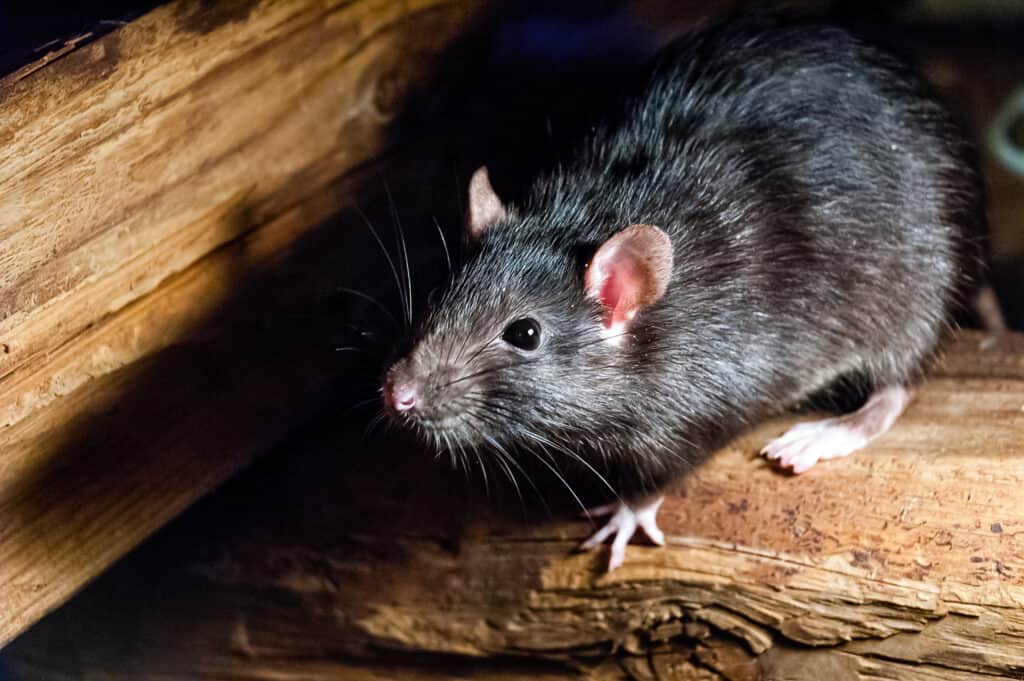
Rats can sneak onto ships in port and hide in dark storage spaces, which is why crews use traps and barriers to prevent infestations.
©Carlos Aranguiz/Shutterstock.com
Cruise lines work aggressively to prevent infestations. Crews use sealed containers, strict food storage rules, traps, and metal barriers called rat guards placed on ropes. Regular inspections focus on dark and rarely used areas where rodents might hide. Despite these efforts, total prevention is difficult because ships visit many ports with active rodent populations. Continuous monitoring remains essential for protecting sanitation and passenger health.
Birds Resting and Feeding at Sea
Birds frequently interact with cruise ships, especially near ports and along migration routes. Pigeons, gulls, and terns often land on railings or open decks to rest after flying over water. Passengers may notice them lingering for hours before taking off again. Farther offshore, seabirds follow ships to feed on fish disturbed by engines or scraps blown from outdoor dining areas.
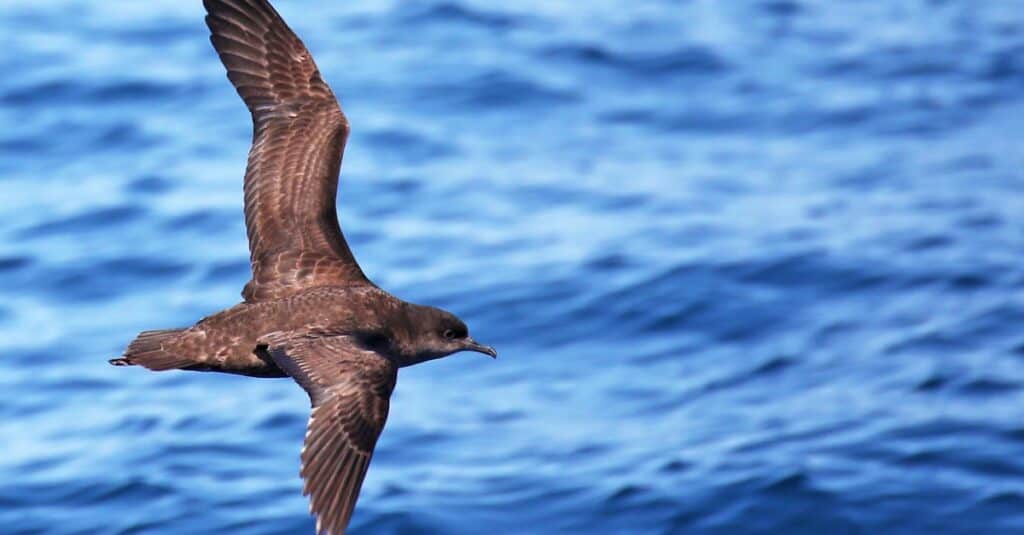
Pelagic seabirds often glide behind ships at sea, using air currents and feeding on fish stirred up by the vessel.
©iStock.com/Manakin
Pelagic species such as petrels, shearwaters, and albatrosses may glide behind ships, using air currents created by the vessel. These birds do not depend on the ship, but they take advantage of brief opportunities created by human activity. The ship serves as a platform rather than a home, offering rest and feeding chances during long ocean journeys.
When Birds Take Up Temporary Residence
Occasionally, birds remain onboard longer than expected. Land birds such as owls, hawks, or songbirds may become trapped or exhausted after storms push them far from shore. Enclosed spaces like glass atriums or indoor garden areas can resemble a safe habitat, which may encourage them to stay.
Cruise crews usually avoid disturbing these birds unless safety or sanitation concerns arise. Wildlife professionals are often contacted when the ship reaches port. The goal is safe removal and release rather than harm. For displaced birds, the ship may function as an unintended refuge until land becomes reachable again.
Animals Officially Permitted Onboard
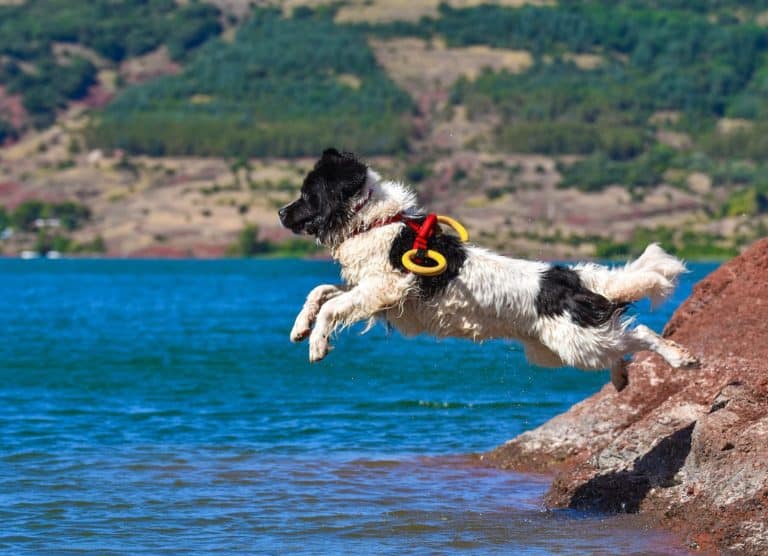
Unlike accidental stowaways, service animals are permitted as passengers on most cruise ships. Trained service dogs assist guests with visual, hearing, or medical needs and are allowed in most public spaces. Ships may provide designated relief areas with artificial turf and drainage systems.
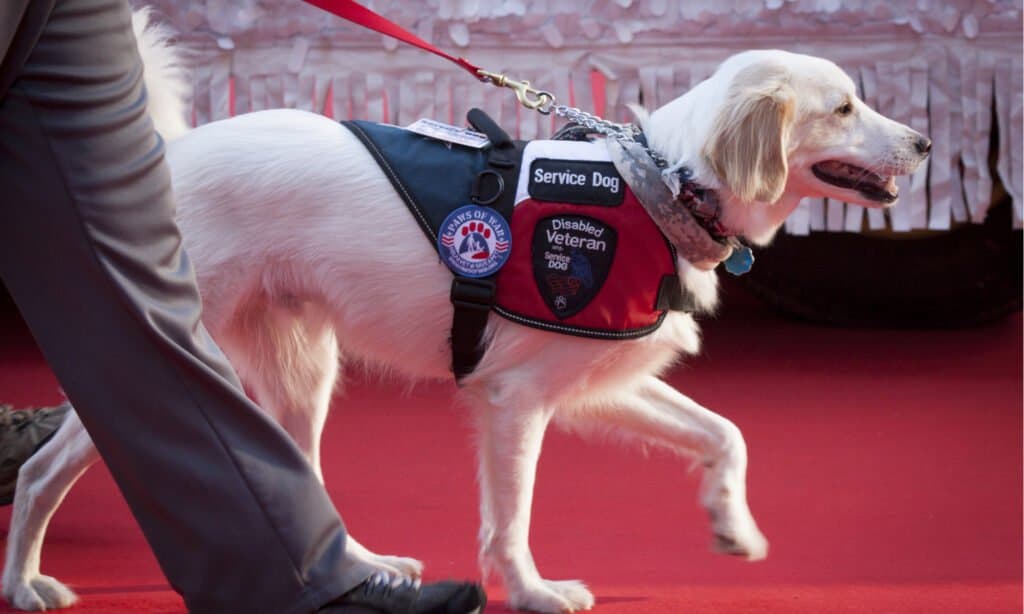
Trained service dogs are allowed on cruise ships and can assist guests in most public areas.
©Glynnis Jones/Shutterstock.com
As of 2026, regular pets and emotional support animals are not allowed on most cruise ships; only trained service animals are permitted. However, Cunard’s Queen Mary 2 is the only major ocean liner offering a kennel program for pets on select transatlantic routes, with limited availability and strict documentation requirements. Any dog seen calmly accompanying a guest is almost always a trained service animal performing essential work.
Small Invertebrates Traveling with Cargo
Insects and spiders frequently arrive onboard with food, luggage, and equipment. Produce shipments may contain fruit flies or beetles, while cockroaches can hide in warm mechanical spaces. Spiders often arrive unnoticed in outdoor furniture or shipping containers.
Cruise ships use strict cleaning schedules and pest control programs to limit these populations. Inspections focus on kitchens, bars, and storage areas where insects are most likely to appear. Despite precautions, passengers may still encounter a moth near a light or a cricket on a balcony. For these small creatures, the ship is simply another surface to explore in search of food.
Organisms Attached Below the Waterline
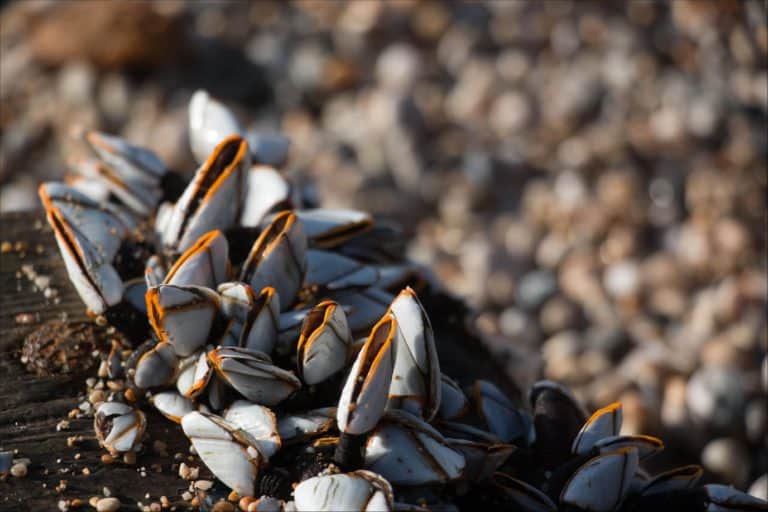
Below the surface, cruise ships support a very different group of organisms. Barnacles are crustaceans that begin life as free-swimming larvae. When they encounter a hard surface, such as a ship’s hull, they attach permanently and build protective shells. Algae, tube worms, and mussels may follow, forming dense layers.
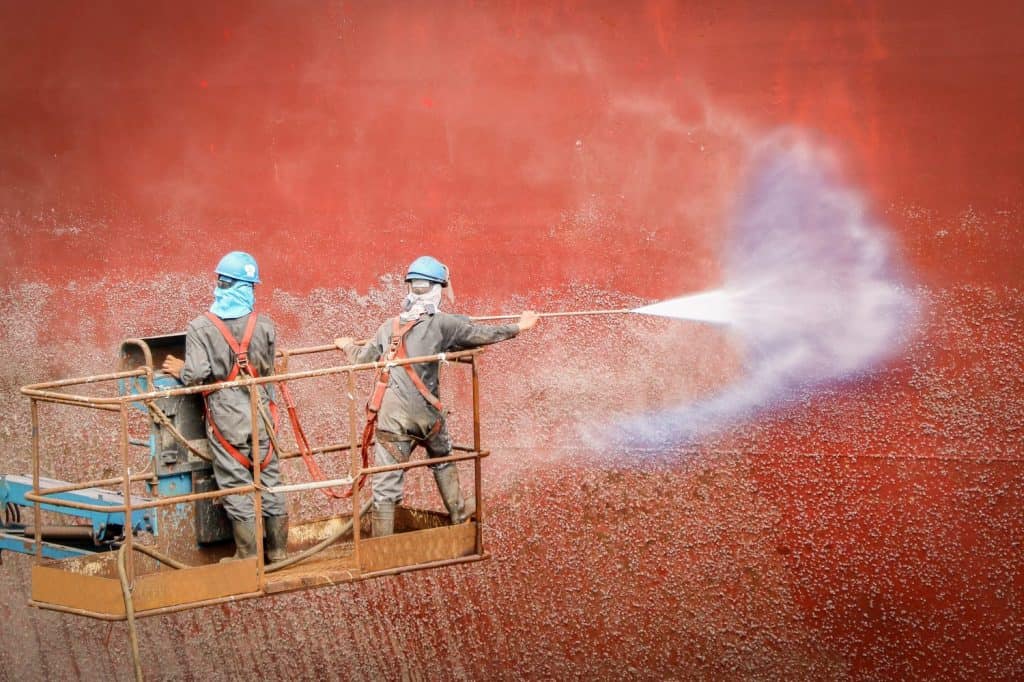
Workers pressure-washing barnacles from a ship’s hull.
©Tawansak/Shutterstock.com
This accumulation is known as biofouling. It interferes with the ship cutting smoothly through the water and increases fuel use. It also provides a base for all sorts of invasive species to travel between regions. To manage growth, ships use specialized hull coatings and schedule regular cleanings to scrape barnacles off. Many countries enforce regulations to reduce the spread of organisms carried on vessel surfaces.
Marine Life Following the Ship’s Wake
As a cruise ship moves through the ocean, it reshapes the water around it. The hull creates turbulence, pressure waves, and swirling currents that mix surface and deeper water, briefly concentrating plankton and small organisms. Dolphins often ride the bow wave to conserve energy, while flying fish may leap away from surface disruption. Below the surface, smaller fish gather along the edges of the wake where food becomes trapped, drawing in predators.
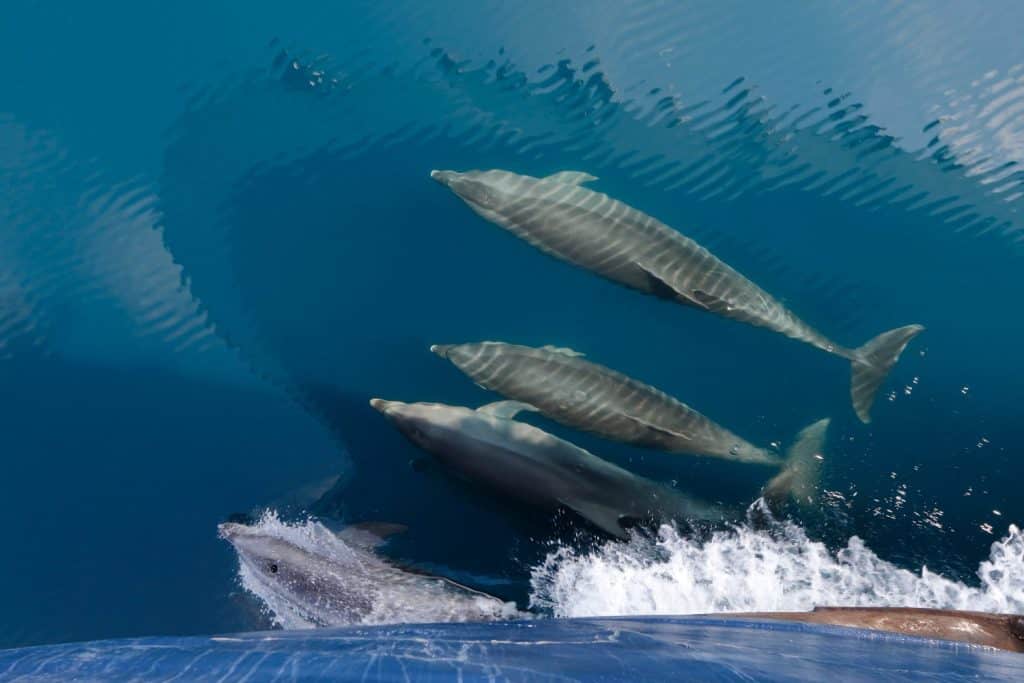
Dolphins swim in the wake of a cruise ship.
©Brian Lasenby/Shutterstock.com
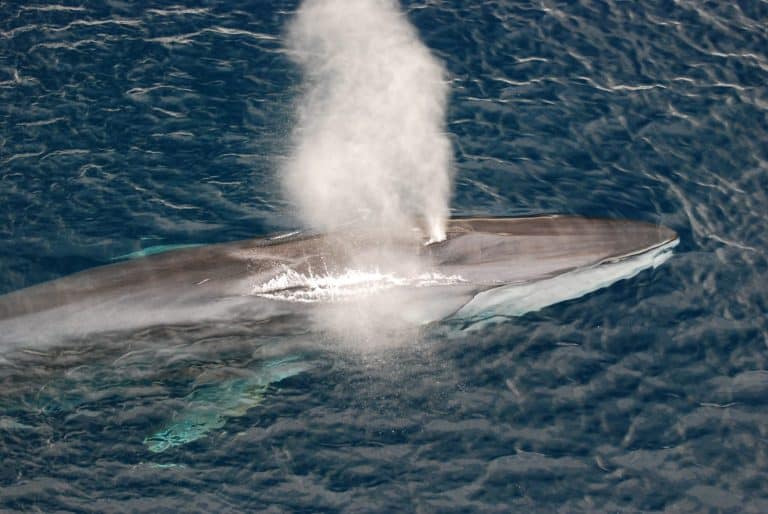
Along coastal routes, this temporary concentration of prey can attract larger animals such as sharks, sea turtles, and large fish. These animals are responding to changes in prey movement rather than the ship itself. While some species tolerate vessels well, the noise and vibration of large ships can disturb sensitive marine mammals. Recent research (2025-2026) has provided new evidence that the noise and vibration of large ships can significantly disturb sensitive marine mammals, such as whales and narwhals, especially in heavily trafficked or Arctic areas.
Waste Systems and Wildlife Attraction
Modern cruise ships do not simply dump toilets into the ocean. They operate like floating towns, producing sewage (blackwater), wastewater from sinks and showers (graywater), and food waste. Onboard treatment systems use filtration, bacteria, and disinfection to break down waste. International regulations strictly control when and where treated wastewater can be released, typically far from shore and only after it meets specific cleanliness standards. Untreated sewage discharge is prohibited under international law.
Even treated discharges can affect marine life. Organic particles and nutrients can attract fish beneath release points, and seabirds may gather at the surface. Over time, repeated discharges along busy cruise routes can subtly change local feeding patterns, especially near coastal areas.
Shade, Structure, and Temporary Shelter
Ships provide shelter as well as food. Small fish hide beneath hulls to escape predators, taking advantage of shade and structure. These fish attract larger hunters, creating short-lived food chains around the vessel. Birds use masts and railings as lookout points, while marine animals benefit from cooler, shaded water under the ship in warm regions. In this way, a cruise ship functions as a moving umbrella that reshapes interactions between species wherever it travels.
Microscopic Life Traveling with Passengers
Not all passengers are visible. Humans carry vast communities of bacteria and microscopic organisms on their skin and clothing. These microbes spread through air systems, surfaces, and plumbing during a voyage. Some play helpful roles in waste treatment systems, while others require careful sanitation control.
When ships move between ports, microorganisms attached to hulls or present in water systems may enter new environments. Some become invasive if conditions allow. The movement of these unseen passengers highlights how closely travel and ecology are linked.
When Stowaways Disembark: The Invasive Species Problem
Shipping has accidentally turned the world’s oceans and ports into a global conveyor belt for animal hitchhikers. Ships move organisms around the planet through ballast water, cargo holds, and hull fouling, often releasing them into ecosystems that have no defenses against them. One of the best-known examples is the zebra mussel, native to the Black and Caspian Seas, which spread to North America in ballast water and now clogs pipes and overwhelms native mussel species. The European green crab followed a similar path, spreading from Europe to coastlines on multiple continents, where it preys on shellfish and disrupts coastal habitats.
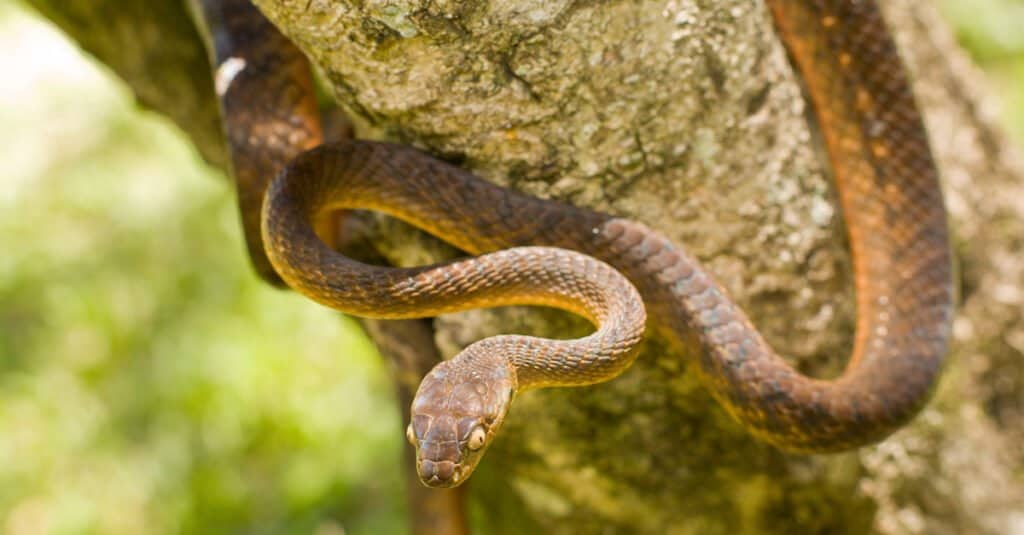
The brown tree snake, a ship’s stowaway, invaded Guam during World War II and has since wiped out many native bird species.
©Janelle Lugge/Shutterstock.com
Other invasive animals show how wide-ranging these impacts can be. Lionfish from the Indo-Pacific now dominate parts of the Atlantic and Caribbean, reproducing rapidly and consuming native reef fish. Asian shore crabs, transported in ballast water, have taken over rocky shores along the U.S. East Coast. In the Black Sea, the comb jelly Mnemiopsis leidyi exploded in number after arriving via ships, consuming fish eggs and contributing to fishery collapses. Even on land, shipping has played a role, as seen with the brown tree snake, which spread to Guam after World War II and caused the extinction of several native bird species. The pattern is consistent: ships move animals faster than ecosystems can adapt, and a single unnoticed arrival can permanently reshape an entire region.
A Moving Ecosystem with Consequences
Cruise ships don’t just carry passengers. They move water, organisms, and nutrients through systems that are already dynamic and interconnected. Most of the ecological effects tied to ships are not the result of individual choices, but of how large machines interact with the ocean as they pass through it.
Modern regulations and technology have significantly reduced many ecological risks associated with cruise ships, but they do not eliminate the fundamental reality that ship movement alters marine environments. Each voyage slightly rearranges where life concentrates and how species encounter one another. That isn’t a moral failing or a call to action. It’s simply a reminder that ocean travel is part of the physical systems shaping marine life, whether the journey is for commerce, research, or leisure.