
Quick Take
- The increase in bed bugs is a public health and economic concern.
- Research has found that some bed bugs are resistant to the insecticide called fipronil.
- Fipronil is found in some cat and dog flea treatments.
- Bed bugs acquiring fipronil resistance may be linked to cats and dogs sleeping on the owner’s beds.
Bed bugs have made an unwelcome resurgence in the US in the past decade or so. They now represent a notable public health and economic issue and have caught the attention of the media and scientific researchers as well as pest control companies. Research conducted by Virginia Tech scientists has suggested that bed bugs are now evolving with a resistance to some pesticides and that dog and cat flea control treatments may be connected to the findings.
Bed Bugs Reemerge as a Public Health Issue
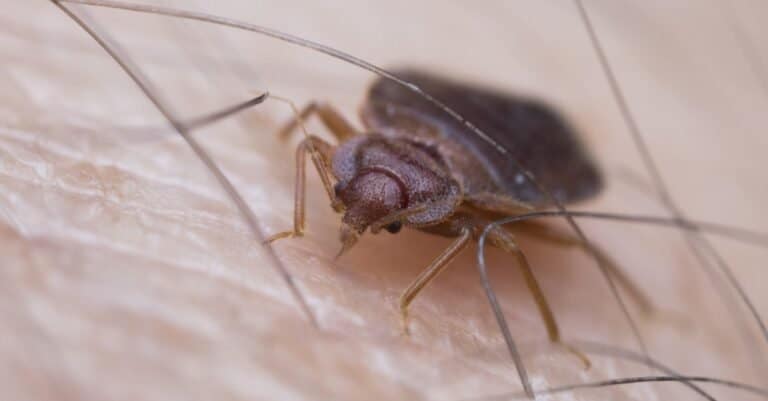
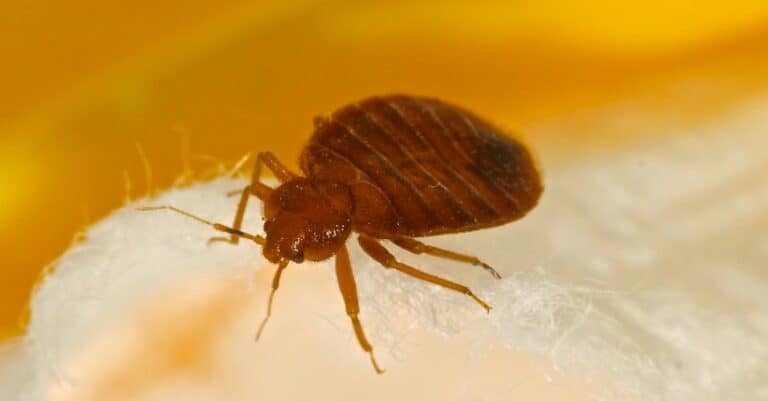
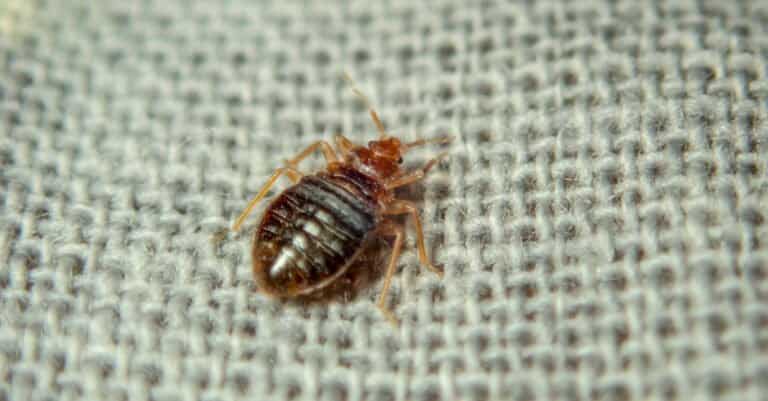
The common bed bug (Cimex lectularius) is a small, flat insect in the Cimicidae family. They grow to no more than a quarter of an inch in length, but cause big problems. The bugs can be found from North and South America, to Africa, Asia, and Europe. Because they feed by biting human hosts and sucking their blood, they are considered a public health pest.
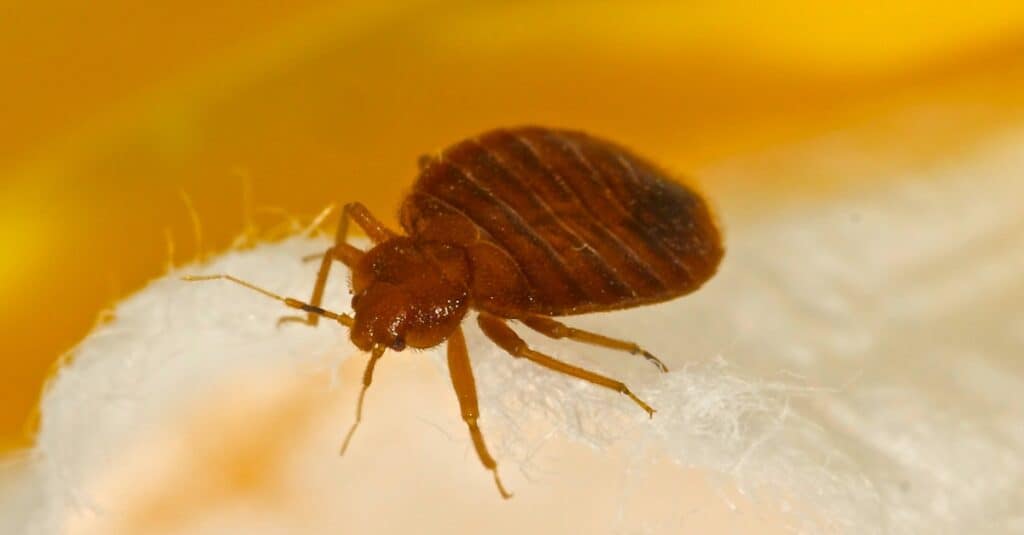
Bed bugs are a public health pest.
©iStock.com/John-Reynolds
Bed bugs may not transmit disease, but they can cause a range of physical and mental health problems, as well as economic losses. Their saliva triggers a histamine response, which causes localized itching. Some people are allergic to their bites, and reactions can be severe, even resulting in anaphylaxis. Secondary skin infections, such as impetigo, can also occur. Additionally, people living in infested homes may experience mental health impacts, including anxiety and depression. Getting rid of bed bugs can be time-consuming and expensive.
Although bed bugs were largely controlled using powerful pesticides after World War II, they are now making a comeback. This has been attributed to a combination of increased movement of people (bed bugs can hide in the seams of luggage) and the exchange of used furniture, together with resistance to an array of insecticides used for their control. Anyone can get bed bugs in their home. However, people who travel a lot or who frequently share living space with others are at higher risk.
Investigating Pesticide Resistance in Bed Bugs
Previous research has shown that German cockroaches and whiteflies have a gene mutation that makes them resistant to an insecticide called dieldrin. This acts in the same way as another insecticide called fipronil. Therefore, theoretically, this gene mutation would also confer resistance to fipronil. Importantly, resistance to fipronil has been reported in bed bugs. The gene involved is called the Rdl gene.
The researchers wanted to find out if bed bugs had this gene, so they analyzed samples collected by pest control companies in North America between 2008 and 2022 from 134 different populations.
They found the mutation in two geographically distinct populations. Multiple individuals from these two populations were found to have the mutation.
How Are Pet Flea Treatments and Bed Bugs Linked?
Fipronil is a phenylpyrazole insecticide commonly used in urban environments. It works by disrupting an insect’s central nervous system and is used in agricultural settings to control bugs such as grasshoppers and ants. It remains approved and is commonly used in spot-on flea and tick treatments for dogs and cats in the US as of early 2024, though its use is under increasing regulatory review in some areas.
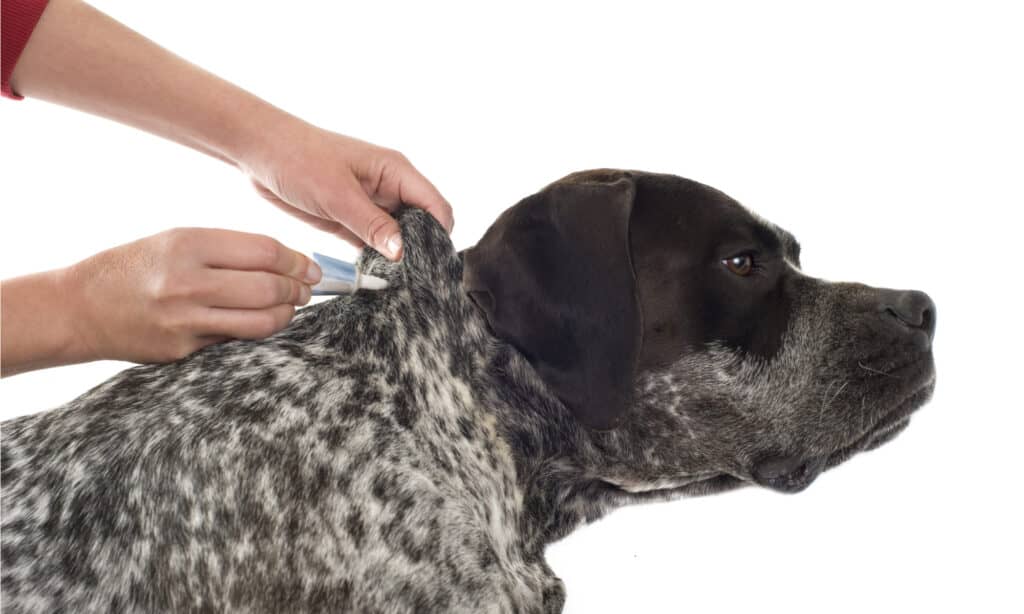
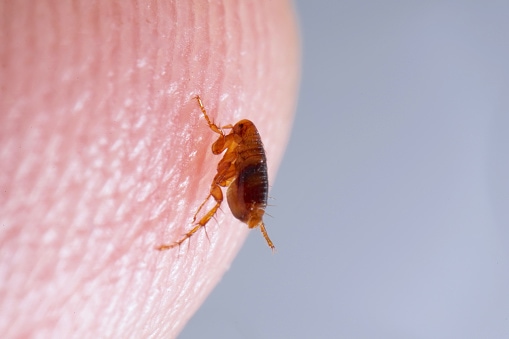
Dog and cat flea treatment can contain fipronil.
©cynoclub/Shutterstock.com
Many of the mechanisms that drive the emergence of mutations in animal populations are influenced by environmental factors. If one animal gains an advantage through the mutation, it gets passed on to future generations. So, how could this happen with fipronil and bed bugs?
The researchers suspect that owners apply fipronil to their pets and then those pets spend time on human beds. Bed bugs can therefore come into contact with residues of fipronil. Bed bugs with resistance to it have an advantage and reproduce more, eventually leading to a population of resistant bugs. Further research is needed to establish just how widespread this resistance is.
Bed Bug Vigilance
Millions of pet owners allow their dogs and cats to sleep on their beds and find their pets’ presence a great comfort. At the same time, it is sensible to keep an eye out for bed bugs so that you do not inadvertently add to the pesticide resistance issue.
It’s useful to know where bedbugs hide and what they look like. Adult bed bugs are about the size of an apple seed, and if they have just fed, they will be balloon-like and reddish-brown. If they have not fed, they are long and brown, with a flat, oval-shaped body. Nymphs (young bugs) are smaller and translucent or whitish-yellow, while eggs are pearl-white and about the size of a pinhead.
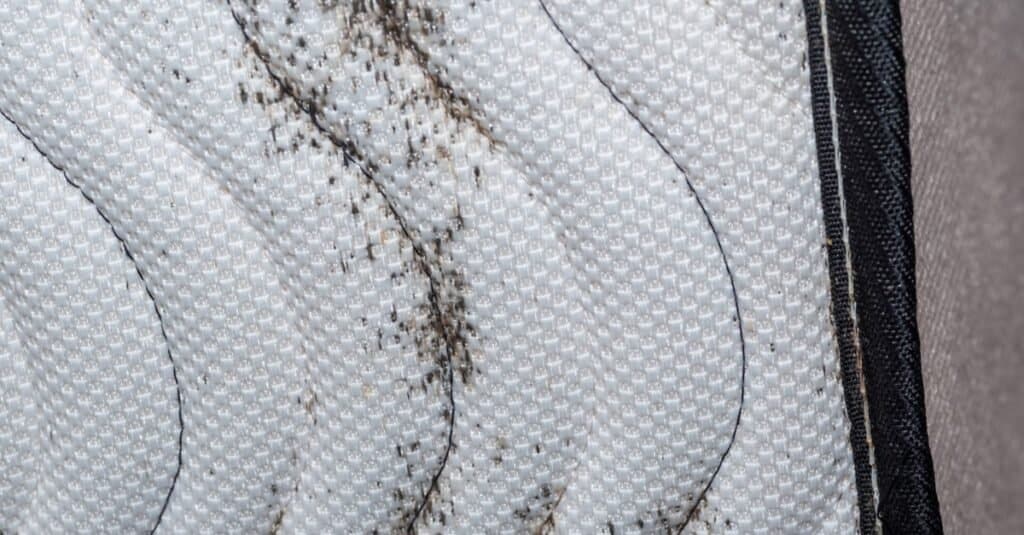
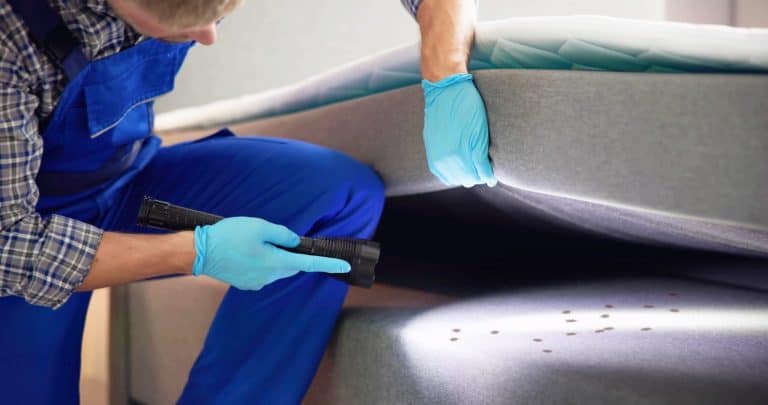
It’s useful to spot the signs of bed bugs.
©whitejellybeans/Shutterstock.com
In beds, they are often around the piping, seams, and tags of the mattress as well as in cracks in the bed frame and headboard. In heavily infested rooms, they can also be found in the seams of chairs, drawer joints, under loose wallpaper, and even in electrical appliances! Another sign of a bed bug infestation is rusty or reddish stains on bed sheets or mattresses. You may also notice their droppings, which appear as tiny dark dots.