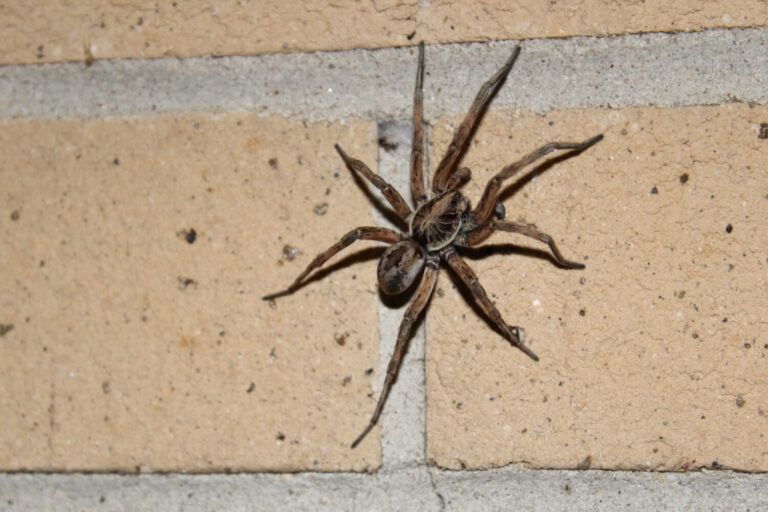
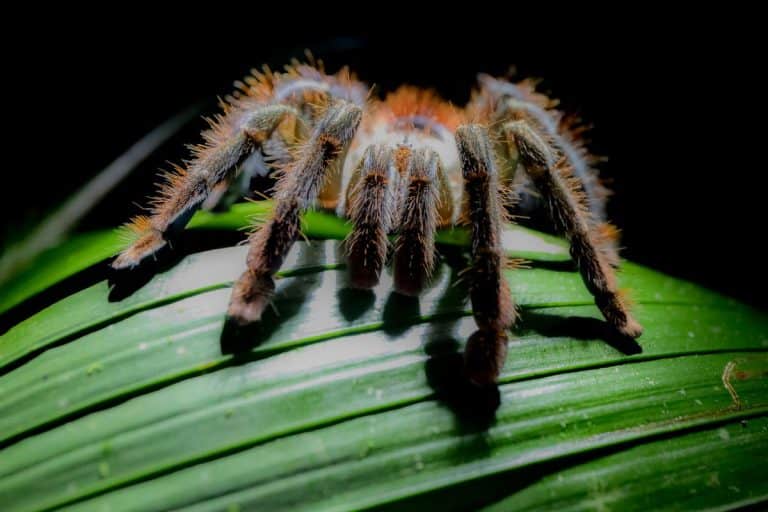
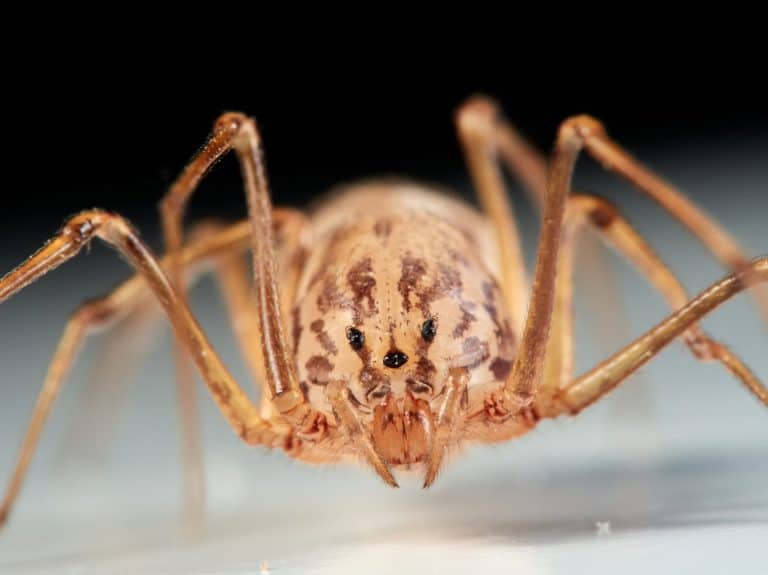
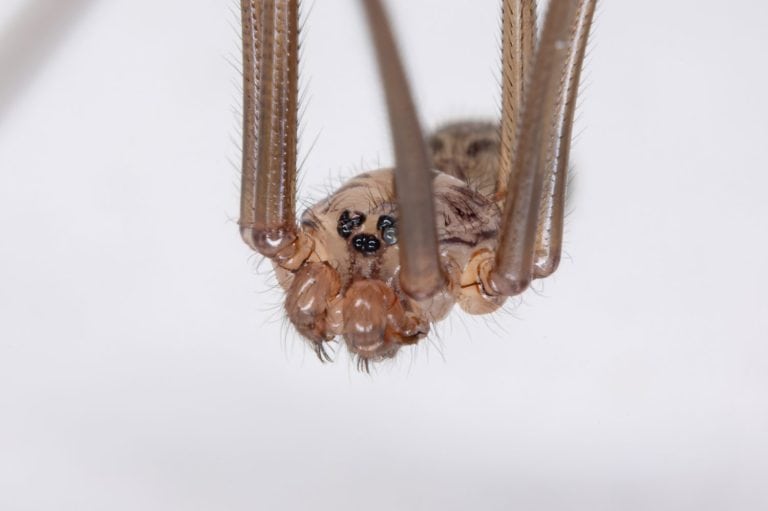
Picture a spider darting across your basement floor: thick legs, thick body, moving with surprising speed. You scream, jump up on an old chair, and brandish the nearest weapon you can find: a tennis racket. Calmly, as if it were not an emergency that it is, your wife comes downstairs and captures it with a mason jar and a piece of paper. You can’t bear to look at it, but she wonders aloud whether it’s a harmless wolf spider or a venomous brown recluse. You don’t know, and you don’t care. But she looks it up on A-Z-Animals.com and starts reading aloud this article:
Wolf Spider
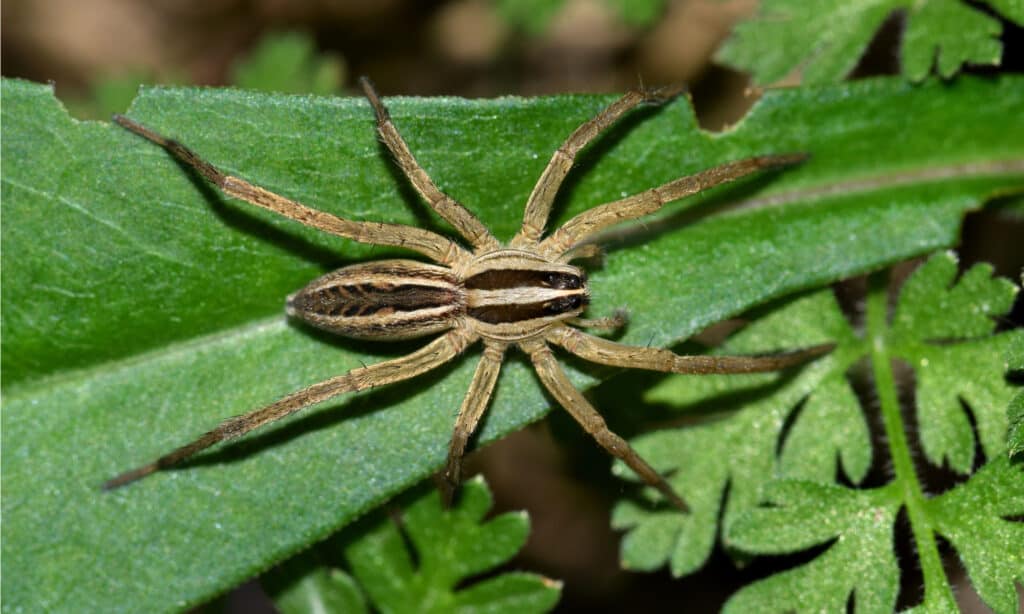
This is the Texas wolf spider, or rabid wolf spider, on the hunt for insects.
©Brett Hondow/Shutterstock.com
Wolf spiders belong to the family Lycosidae, a diverse group found worldwide. Unlike many spiders, they don’t spin webs to catch prey. Instead, they stalk—chasing down beetles, ants, and other insects with sharp eyes and legs primed for action. In North America, several species are common, including Hogna carolinensis, one of the largest, which can reach an impressive 1½ inches in body length and nearly 4 inches across when you count its leg span. Most wolf spiders are smaller, closer to ½–1 inch in body size, but their long legs and hairy build make them look even bigger in motion. They’re also everywhere: meadows, deserts, mountains, gardens, and yes, maybe even your basement. Their wide distribution makes them one of the most frequently seen large spiders in the U.S.
Brown Recluse

Neglected, cluttered conditions are ideal for brown recluse spiders.
©memv23/Shutterstock.com
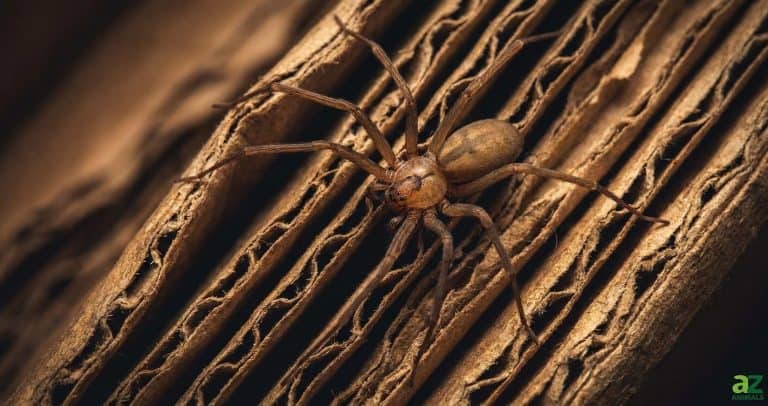
Brown recluses (Loxosceles reclusa) live mostly in the south-central and midwestern U.S. Common names for them include violin spiders or fiddleback spiders because of the markings on their backs. They prefer undisturbed corners of homes, sheds, or cluttered storage boxes. Outdoors, they hide under logs, rocks, or stacked firewood; indoors, they thrive in clutter—attics, basements, closets, and shoes that haven’t been worn in months. Their range is more limited than wolf spiders, but within their zone, they can quite contentedly become your roommates. And that’s concerning because their bite is venomous to people and can cause a painful, slow-healing necrotic wound.
Why You Shouldn’t Mix Them Up
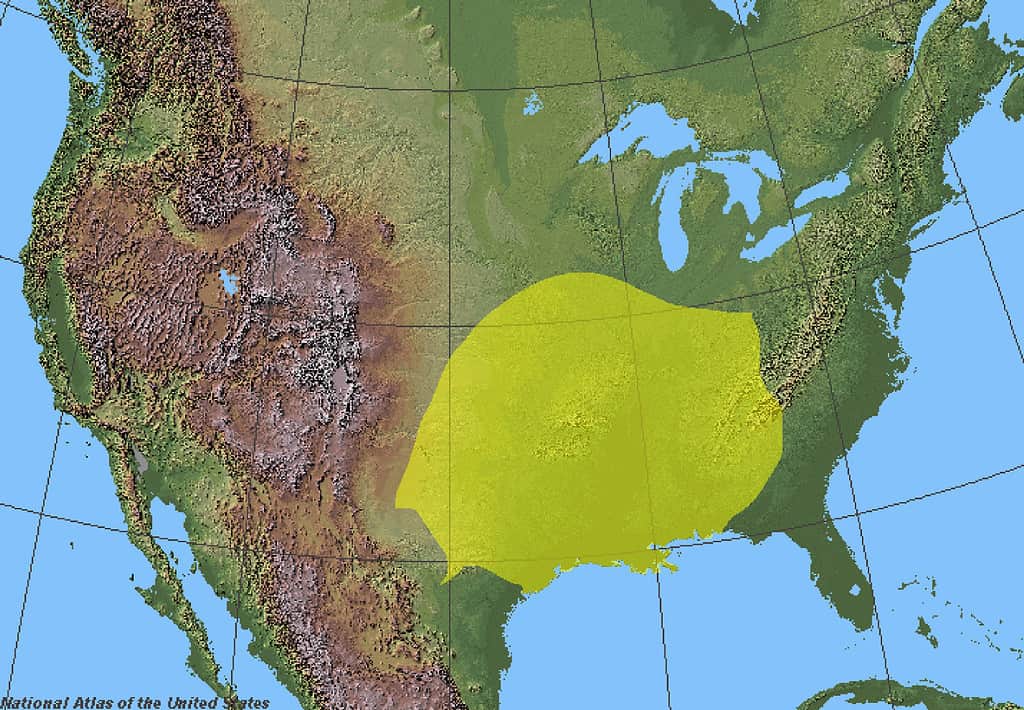
Brown recluse spiders live in the parts of the United States shown in yellow.
©ReliefUSA_map.gif: Public domain, U.S. government. Derivative work: Bob the Wikipedian, CC BY-SA 3.0, via Wikimedia Commons – Original / License
At first glance, some people think, “a spider is a spider, kill ’em all!” The real phobia some people struggle with regarding spiders is understandable. However, making a habit of killing every spider in your house could leave it vulnerable to roaches, beetles, crickets, pill bugs, flies, moths, wasps, and other stinging insects that may ultimately be more unpleasant and pose a greater threat to your health than the spiders that help control them.
That said, brown recluse spiders are not something you want in your house—especially not in large numbers, and particularly if you have small children or immunocompromised individuals, for whom a bite could be quite serious and, in very rare cases, fatal. If they are frequent visitors to your house, that might be a time when you would consider using strategies to drive them away.
For doctors, accurate identification matters too. Misdiagnosed “recluse bites” waste time and treatment resources. And for researchers, public reports help track the spread of brown recluses into new regions. All this means that knowing the difference isn’t just trivia—it’s practical knowledge that helps keep homes safer and ecosystems healthier.
Spotting the Differences

The brown wolf spider has eight intimidating eyes.
©Lukas Jonaitis/Shutterstock.com
Size and build: Wolf spiders are generally bigger, with stout, hairy bodies. While some reach 2 inches in length, most are closer to 1 inch. Their bulkier build and rough texture set them apart from brown recluses. Brown recluses are smaller, maxing out around 0.8 inches, with thinner legs and smooth, more delicate bodies.
Color: Wolf spiders come in earthy tones—brown, tan, or gray. Many show faint striping on their legs or back, though not all; some have blotches or a more uniform shade. Brown recluses are more uniform in appearance, pale to medium brown, with legs that lack stripes or bands. On their back is the famous dark violin-shaped marking, one of the clearest clues you’re not looking at a wolf spider.
Eyes: The eyes are another reliable giveaway. Wolf spiders have eight, set in three rows, with two oversized, reflective ones in the middle that gleam in a flashlight beam. Brown recluses, by contrast, only have six, arranged in three pairs. This unusual setup is rare among spiders and, along with the violin mark, confirms a recluse.
Behavior

Neglected or cluttered spaces like attics are favorite haunts for spiders of many different species.
©Beliphotos/Shutterstock.com
Wolf spiders are wanderers. Instead of spinning big, showy webs, they hunt on foot—stalking beetles, roaches, and other insects with surprising speed. They’re mostly nocturnal, prowling lawns, garages, and fields after dark, though it’s not unusual to spot one darting around in daylight. When startled, they rely on their speed to escape, sprinting across the floor or even up a wall, but they don’t stick around inside homes if they can help it. Despite their size, they’re not aggressive toward people; they won’t jump at you, though their fast movements can give you a scare.
Brown recluses live up to their name. They’re secretive and slow-moving, often staying hidden in attics, basements, woodpiles, or boxes. Instead of hunting out in the open, they build messy, irregular silk retreats in dark corners where they wait for prey to wander close. They’re shy and avoid confrontation, usually freezing or backing away when disturbed. A recluse won’t chase you down or leap at you, but it will bite if it’s pressed against your skin—say, if one is trapped in clothing, bedding, or a shoe.
Reproduction and Lifespan

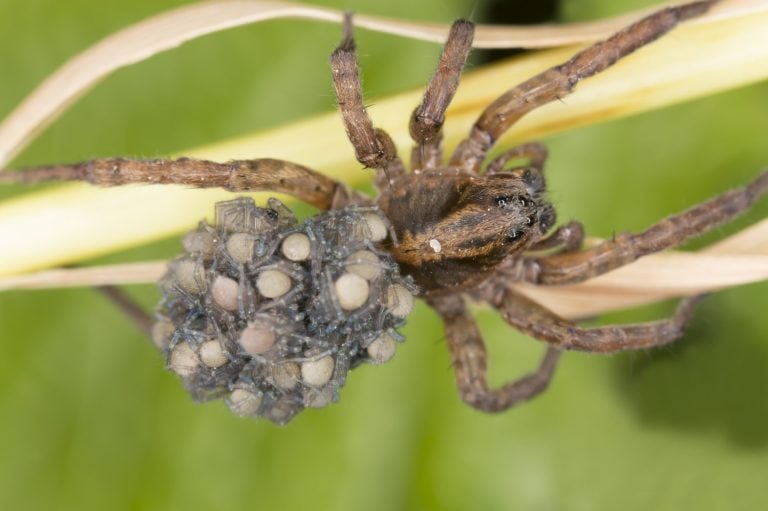
A mother wolf spider transporting her… cute(?) babies on her back. They’re called “spiderlings,” but clearly the science guys have missed a great chance to call wolf spider babies “spider cubs.”
©Henrik Larsson/Shutterstock.com
Wolf spiders display one of the most striking parental behaviors in the spider world. Females carry their egg sacs on their spinnerets, and once the spiderlings hatch, dozens of tiny babies ride on her back until they can hunt for themselves. A single egg sac may hold 100 or more spiderlings. Wolf spiders typically live about one year, though some larger species can survive up to two.
Brown recluses take a quieter approach. They lay eggs in hidden silk retreats, often producing two or three sacs a year, each with 40–50 spiderlings. The little ones disperse after hatching and grow on their own, with no maternal care. Recluses can live surprisingly long for spiders—up to two years in the wild and sometimes over three in captivity.
How Dangerous Are Bites?

A brown recluse spider bite on a victim living in Kansas.
©Robert D Brozek/Shutterstock.com
Spider venom is essentially a specialized hunting tool. Both wolf spiders and brown recluses use it to immobilize and digest insects, which requires a chemical punch far more potent to a tiny bug than to a human. Wolf spider venom is mild for people; their bites feel like a bee sting—brief pain, redness, or swelling that clears within a few days. Serious medical issues are exceedingly rare.
Brown recluse venom, however, is cytotoxic, meaning it can damage living tissue. Most recluse bites are minor—red, itchy bumps that heal normally—but no more than 1 in 10 cases may develop into necrotic lesions, painful sores that take weeks to recover. Severe or systemic reactions are extremely rare but possible, which is why recluses have such a notorious reputation compared to wolf spiders.
Although we’re not focusing on black widow spiders, it’s worth mentioning here that their venom is vastly more damaging because it affects the nervous system instead of localized tissue. Widow bites can cause muscle cramps, nausea, and other systemic effects, but even these are rarely fatal to healthy adults, given modern medical treatment.
Prevention and First Aid

People living in areas with brown recluse spiders might want to make a habit of shaking out their shoes before putting them on.
©Koldunov Alexey/Shutterstock.com
Keeping spiders out of the home means sealing cracks around walls and windows, storing firewood and clutter away from the house, and keeping attics, basements, and closets clear and tidy. Shaking out shoes or clothing before wearing them is a smart precaution in recluse country, and regular sweeping or vacuuming helps reduce both spiders and their prey.
If you are bitten, most wolf spider bites can be treated at home—wash the spot with soap and water, apply ice for swelling, and the discomfort usually fades in a few days. Recluse bites also start out mild, but because their venom can occasionally cause tissue damage, it’s important to monitor the wound. Seek medical care if you notice spreading redness, blistering, or a sore that gets worse instead of better. And, in the case of a black widow bite, seek immediate medical attention. In short: wolf spider bites are painful but harmless, recluse bites can be medically serious but rarely deadly, and widow bites are painful and require a doctor but almost never kill.
An Antidote to Fear

You don’t have to like spiders. But understanding them can help you make more rational decisions about what to do about them.
©New Africa/Shutterstock.com
The next time you see a spider skittering across the floor, take a closer look before panicking. Knowing the differences between harmless and venomous species—and understanding that, in the vast majority of cases, a bite does not mean you will die—turns fear into understanding. And in a world where myths spread faster than facts, a little knowledge about the spiders in your basement is the surest antidote to fear.