
Quick Take
- Bed bugs are never black, so that tiny dark speck in your sheets is something else entirely. Identifying it correctly changes everything about how you respond. Meet the dark oval impostor →
- One common bedroom invader isn't actually the color it appears to be, and its true shade reveals a lot about how dangerous it really is. See their true color →
- Some of these bugs hitchhike into your bed from an unexpected source that has nothing to do with your bedroom habits. Trace the unexpected source →
- Mistaking one of these insects for a bed bug could cause you to treat the wrong problem while the real infestation quietly explodes. Spot the common mix-up →
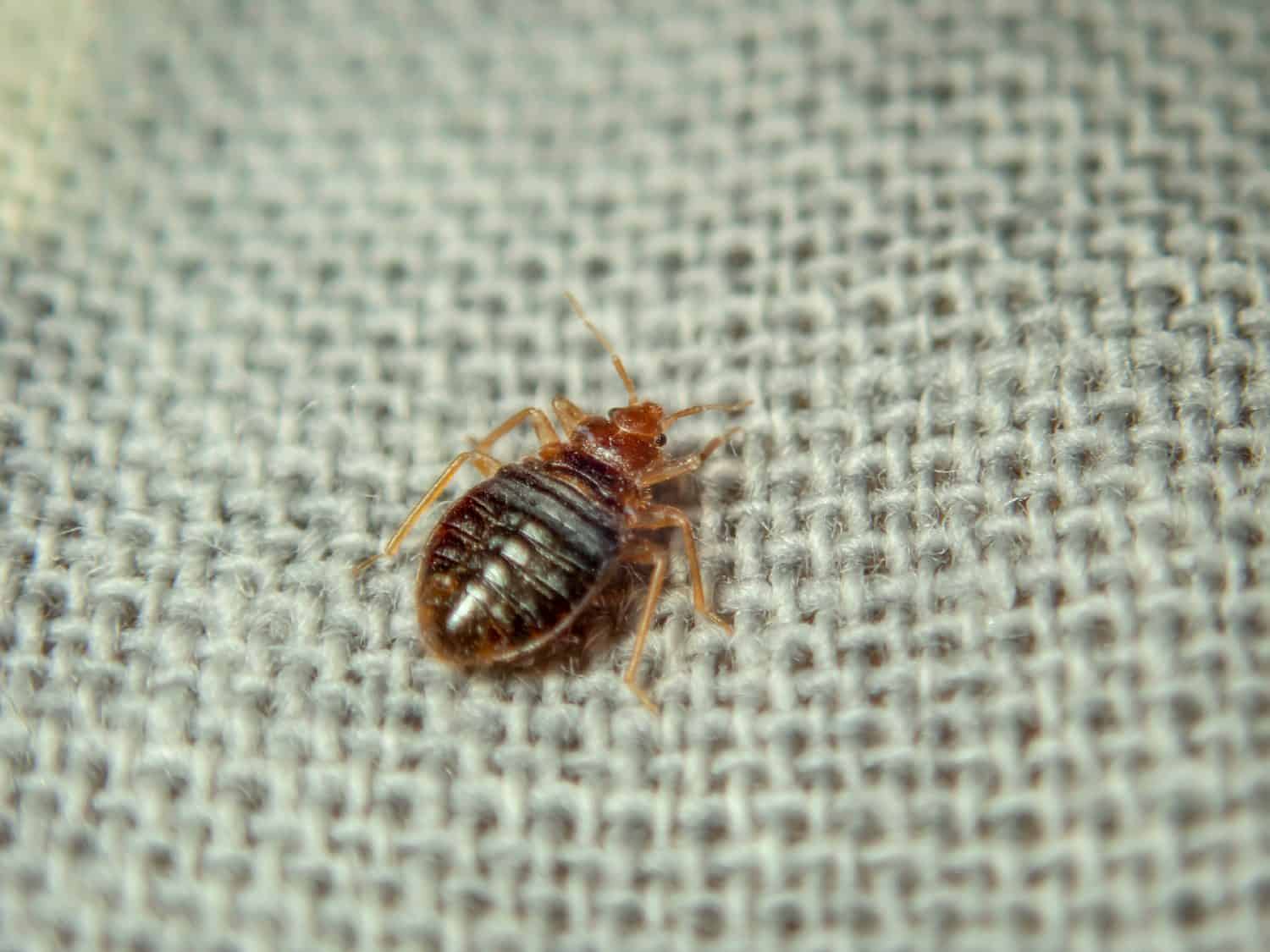
Bed bugs are troublesome little insects that hide behind light fixtures, inside cushions and peeling wallpaper, and in your bedding. However, the presence of tiny black bugs in bed linen is not necessarily a sign of a bed bug infestation — if you find a black bug in your bed, it is likely not a bed bug.
Tiny black bugs are not bed bugs, and many of these insects do not bite. Bed bugs are brown or reddish-brown (deep blood-red when well-fed). They are also oval. Bed bugs do bite, but they are never black.
Any tiny black bugs in bed linen or soft furnishings may be the following:
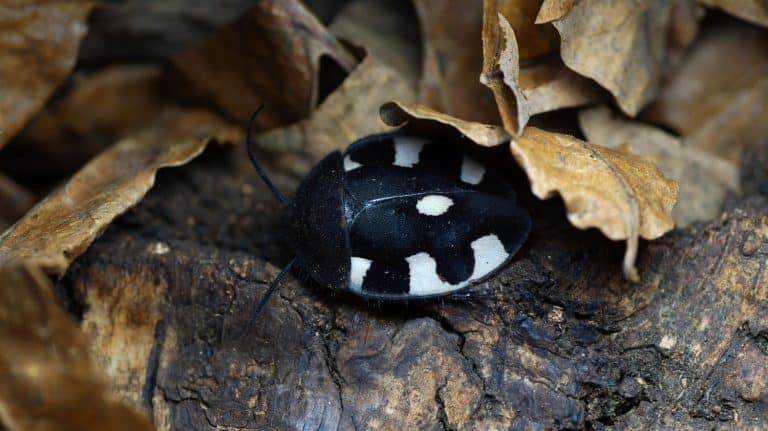
Black Carpet Beetle
The black carpet beetle (Attagenus unicolor) is uniformly dark brown to black. These insects lay eggs on materials and fabrics made from animal byproducts, such as leather, silk, wool, feathers, and the like.
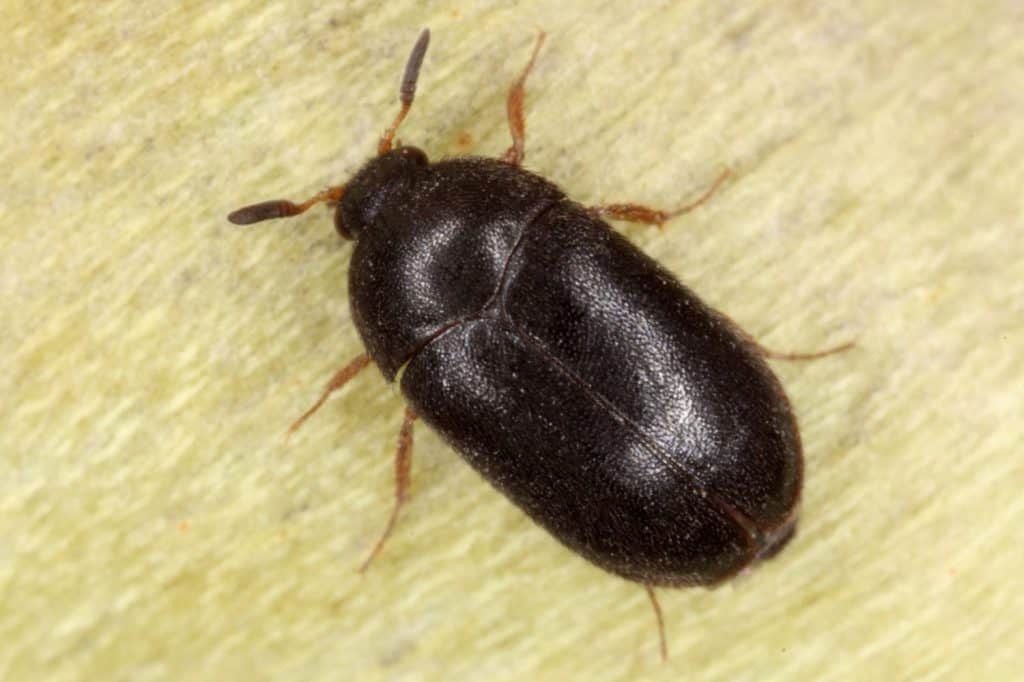
The black carpet beetle is smaller and more uniformly colored than a bed bug.
©Tomasz Klejdysz/Shutterstock.com
Black carpet beetles seem to find their way to beds in a lot of infestations. Like bed bugs, they’re oval-shaped but are slightly smaller. They hide in small gaps between the headboard and mattress, and bed frames. You may find them crawling on your sheets and blankets during the day because, unlike bed bugs, black carpet beetles are not nocturnal bloodsuckers.
Fleas
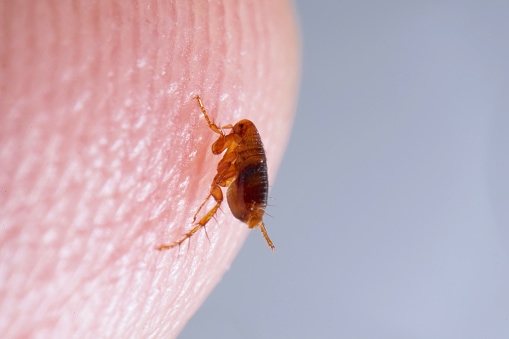
Fleas (Pulex irritans, Ctenocephalides felis, and C. canis) are minuscule parasites that can appear black due to their size. However, they are actually reddish-brown to dark brown and, like bed bugs, survive by biting and sucking blood. They usually enter homes via a pet.

You are as likely to be bitten by a cat or dog as you are a human flea (pictured).
©Mironmax Studio/iStock via Getty Images
Female fleas lay more than 20 eggs a day. The next generation of females will lay their own eggs at a similar rate, an so on. An adult flea can only survive one to two weeks without a blood meal, though undisturbed pre-emerged fleas can persist far longer, meaning a female can drop hundreds of eggs throughout the home over the course of her lifetime. Flea infestations escalate quickly, so prompt action is essential to stop them.
Cockroach Nymphs
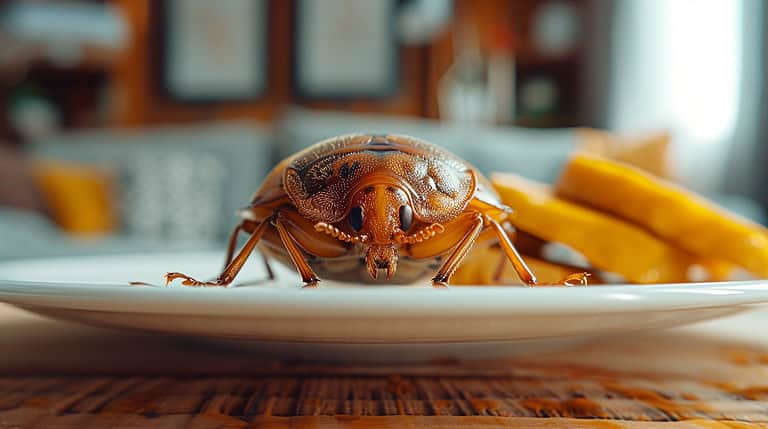
Cockroaches (Blattella germanica) are small bugs you may find in your bed, it is likely because they are passing through. Nymphs are often mistaken for bed bugs simply because people spot tiny black bugs and fear the worst.

Cockroach nymphs are sometimes mistaken for bed bugs, but their long antennae set them apart.
©bamgraphy/Shutterstock.com
Cockroaches prefer dark places close to food sources. They are constantly searching for food, which is how they end up in almost any room, including bedrooms. Bed bugs are more stationary and only come out to feed on hosts.
Bat Bugs
European bat bugs (Cimex pipistrelli) look similar to bed bugs, including their oval shape and size. They also have wing pads but don’t fly. Unlike the smooth pronotum of the bed bug, the bat bug’s pronotum has long hairs.
Bat bugs are usually found where bats rest, including caves, chimneys, and attics. But if the bats die or leave, the bat bugs will relocate and can show up in household bedding.
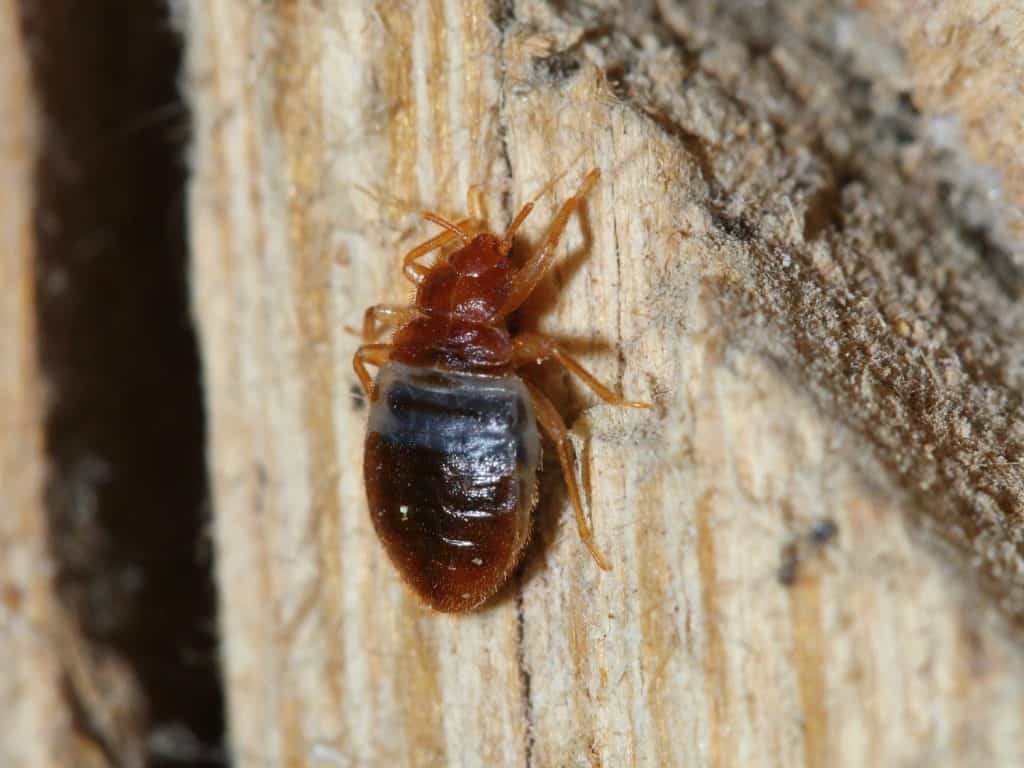
The European bat bug looks very similar to a bed bug.
©zdenek_macat/Shutterstock.com