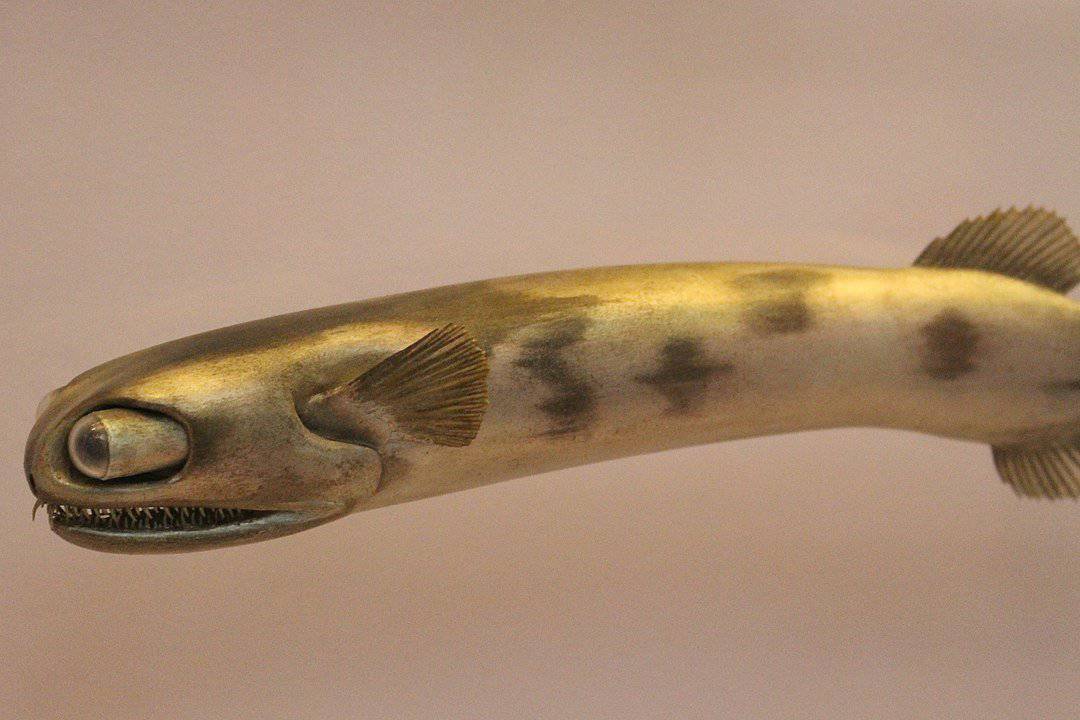

With eyes that jut out like periscopes, telescopefish are masters of deep-sea survival. Living thousands of feet below the surface, they use their tubular eyes to detect the faintest glimmers of light in an otherwise pitch-black world. This article explores how these oddball predators hunt, thrive, and remain one of the ocean’s most mysterious residents.
Types of Telescopefish
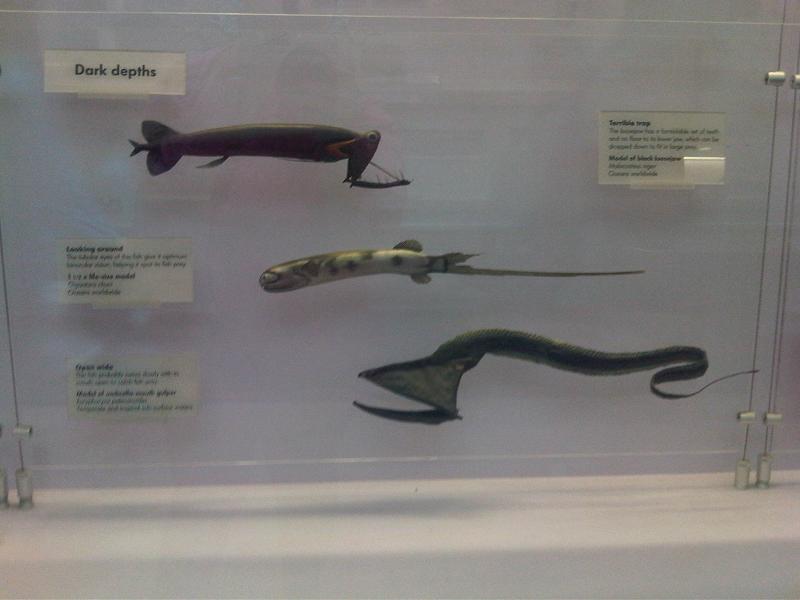
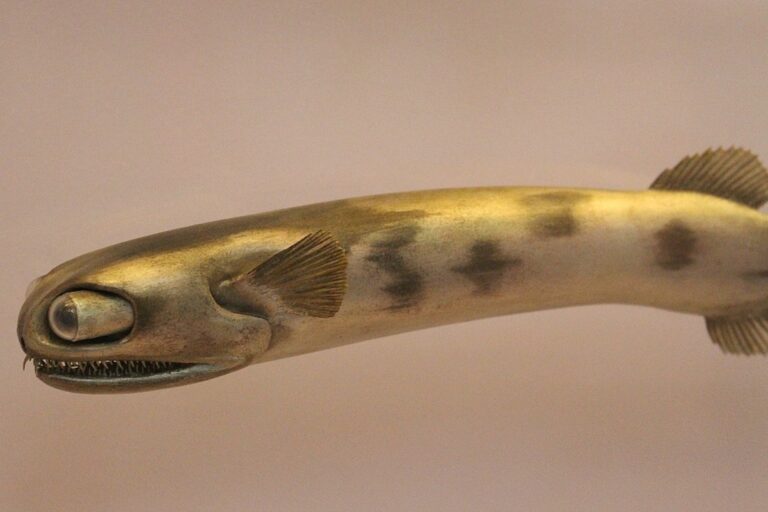
Telescope fish have large heads and a greenish-blue color with a silvery underside.
©By Emőke Dénes – kindly granted by the author, CC BY-SA 4.0, https://commons.wikimedia.org/w/index.php?curid=16151233 – Original / License
Telescopefish are deep-sea aulopiformes, a diverse order of ray-finned fish. As of 2025, there are two recognized species of telescopefish, which are Gigantura chuni and Gigantura indica. Both species have an almost startling appearance, with faces dominated by telescope-shaped eyes.
Chun’s Telescopefish (Gigantura chuni)
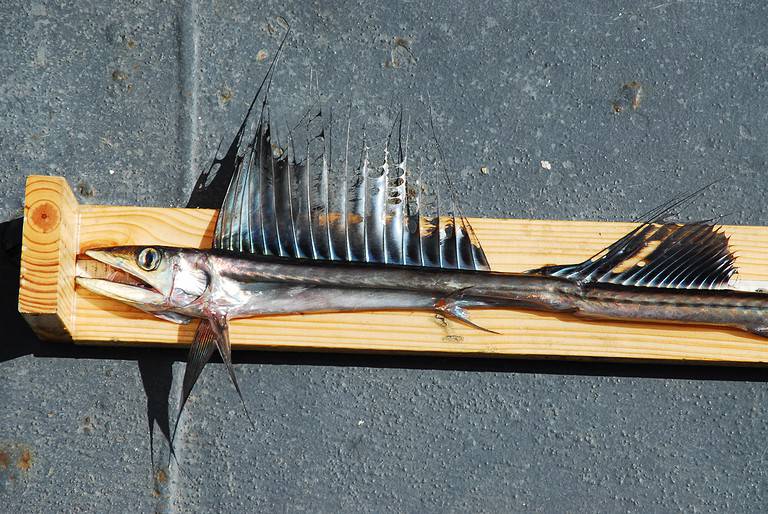
These are scaleless, silvery, and elongated fish with a ribbon tail. They have been recorded off Dampier in Western Australia and in the tropical waters of the Atlantic, Indian, and Pacific Oceans. Adults are found between 1,640 and 6,561 feet.
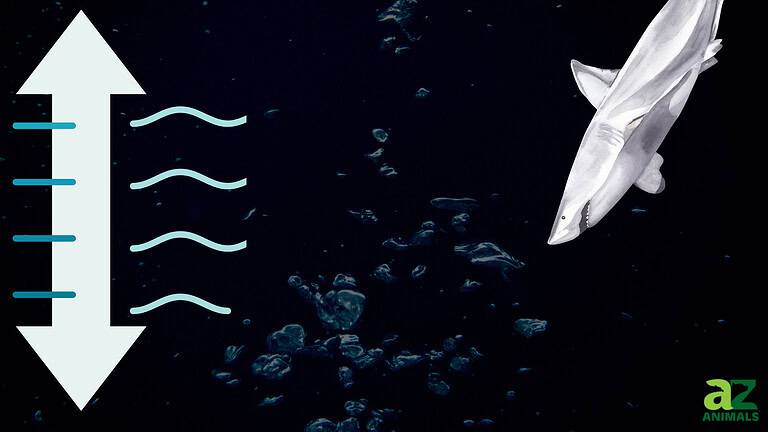
They swim vertically with their heads up, using their large eyes to detect the silhouettes of prey above. Because they are synchronous hermaphrodites, they can produce both sperm and ova, increasing their chances of reproduction in this challenging environment.
Indian Telescopefish (Gigantura indica)
These fish are also slender and slightly tapered, with large eyes. Close up, they look like a very scary alien! They have been recorded north of Port Hedland, Western Australia, off northern Queensland, and near Norfolk Island in the Tasman Sea. They are found circumglobally in tropical to subtropical waters. Adults occupy the mesopelagic and upper bathypelagic zones. They also swim vertically, looking for prey, and are synchronous hermaphrodites.
Perfectly Adapted for Life in the Depths
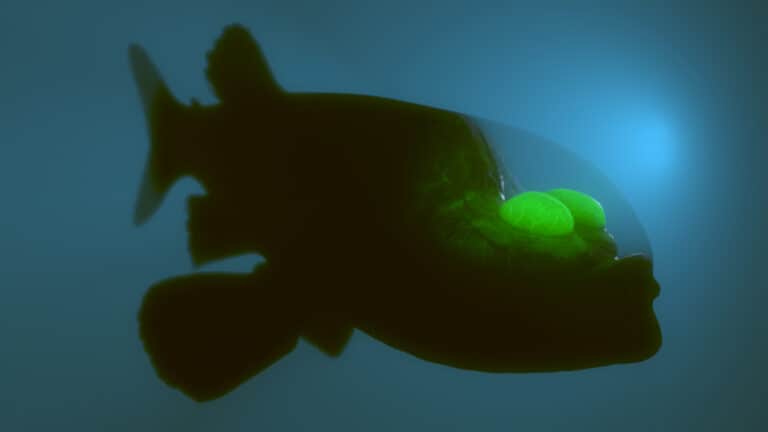
The eyes of telescopefish have evolved to give them the best possible advantage in the deep ocean. They live in the mesopelagic and bathypelagic zones where there is hardly any light. Their eyes are tubular with large lenses, and from certain angles, they look just like telescopes. This shape allows the eyes to collect as much light as possible, including the faint bioluminescence emitted by other fish.
Telescopefish can extend both their stomachs and jaws, allowing them to swallow prey whole—even if it is larger than them. This is an important adaptation when there is very little food around! They also move closer to the surface at night to feed, retreating to deeper, safer waters during the day.