
Few animals can claim vision as specialized as the telescopefish. Its upward-facing eyes act like night-vision goggles, tuned to catch shadows against the faint glow of surface light. This article dives into how their eyesight works, what they’re looking for in the gloom, and why their vision is an evolutionary solution to an ancient problem.
The Bizarrely Named Telescopefish
Telescopefish are very unlike most other fish! They live in the mesopelagic and bathypelagic zones of the ocean where there is hardly any light. The mesopelagic zone reaches depths of around 3,200 feet and has so little light that photosynthesis cannot occur. The bathypelagic zone reaches 13,000 feet in depth and is known as the midnight zone because there is no light.
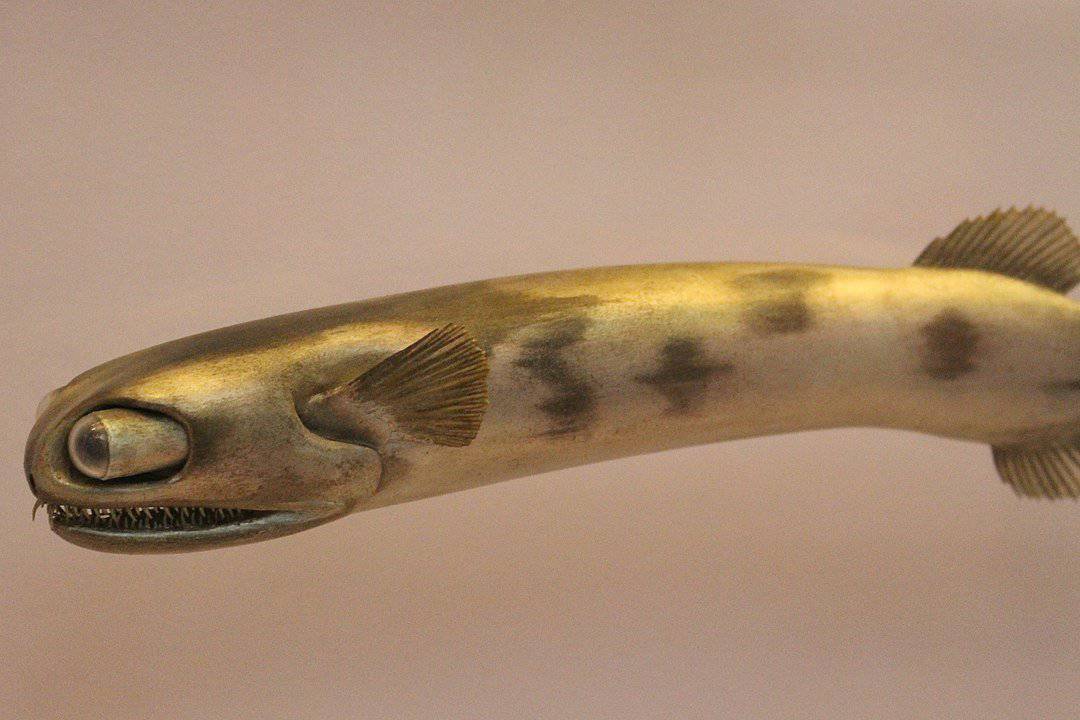
Telescopefish navigate this inhospitable habitat by swimming in a vertical position, with their heads upright and their specialized eyes pointing upward to scan the waters above for food. Viewed from some angles, their eyes look just like telescopes. There are two recognized species: Chun’s telescopefish (Gigantura chuni) and the Indian telescopefish (Gigantura indica).
The Science of Telescope Eyes

Deep in the ocean, there is very little light.
©Yetugraphic/Shutterstock.com
Telescopefish have eyes that are different in shape from ours. These fish have elongated, tubular eyes. In the low light conditions of deep ocean waters, animals can only see if their eyes can let in as much light as possible. So, they need a large exposed lens. However, larger lenses focus the light a longer distance away. For this to work in a round eye, it would have to be huge and would take up all of the creature’s head! A tubular eye, however, can gather all of the available light and focus it closer to the lens. Additionally, the telescopefish swims upright so its eyes are directed toward the brightest part of its habitat, increasing its chances of spotting prey.
Several other types of fish also have tubular eyes, but they are found in different lineages. It is a great example of what scientists call convergent evolution. Unrelated animals that face the same challenges have evolved similar mechanisms to solve them.