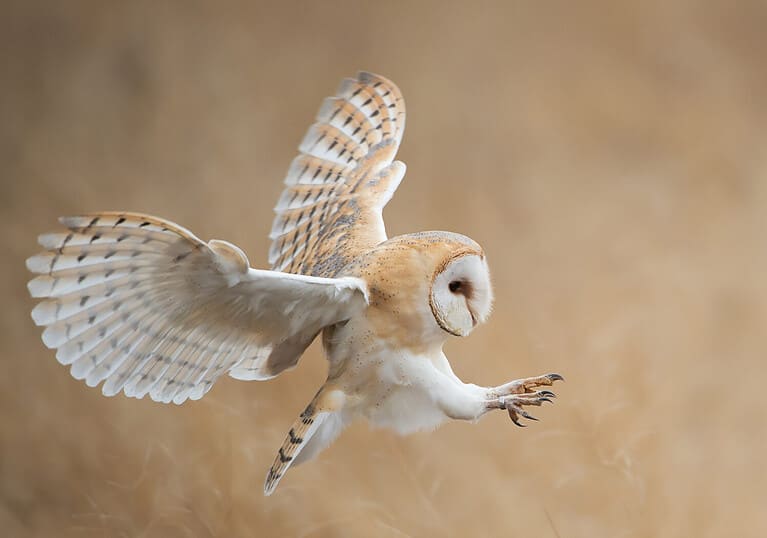
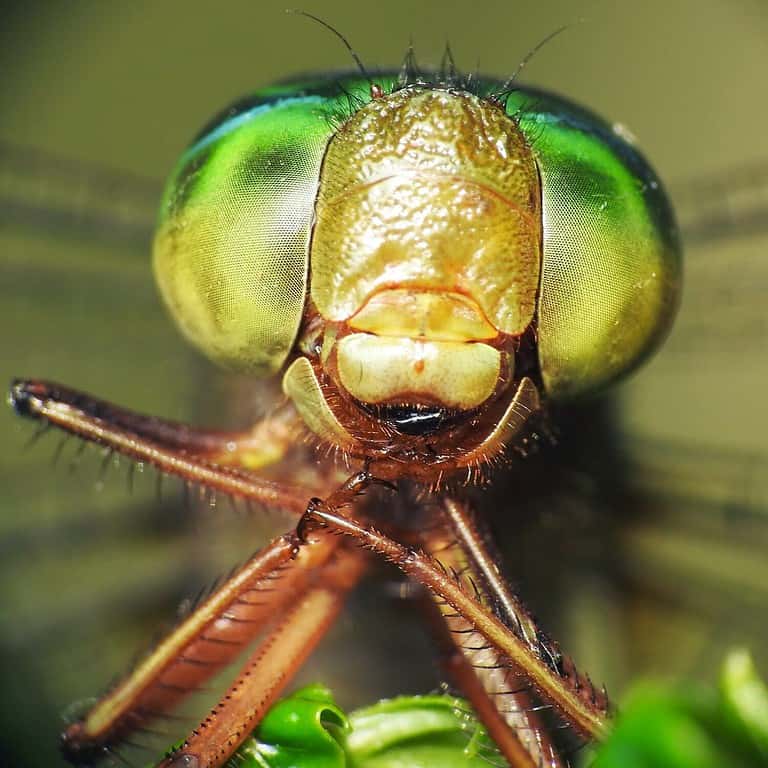
Owls are some pretty fascinating creatures. They can move their heads 270 degrees and fly silently through the air. But did you know that owls don’t have typical eyeballs? This YouTube short by @MontanaFWP discusses more about eye tubes. Keep reading below to learn about owl eye tubes and how they work!
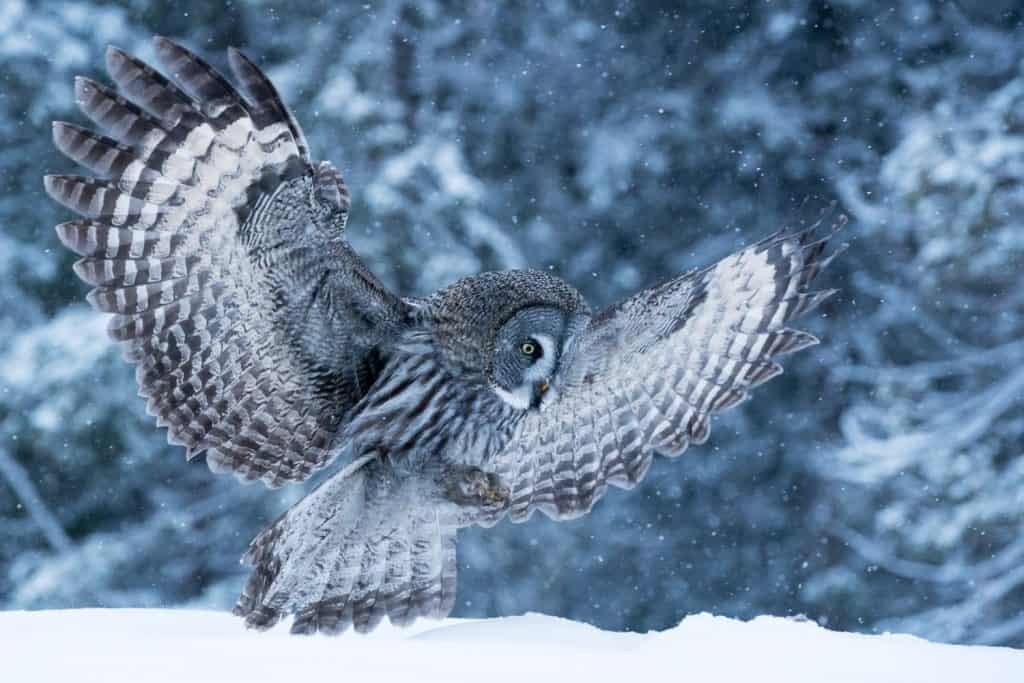
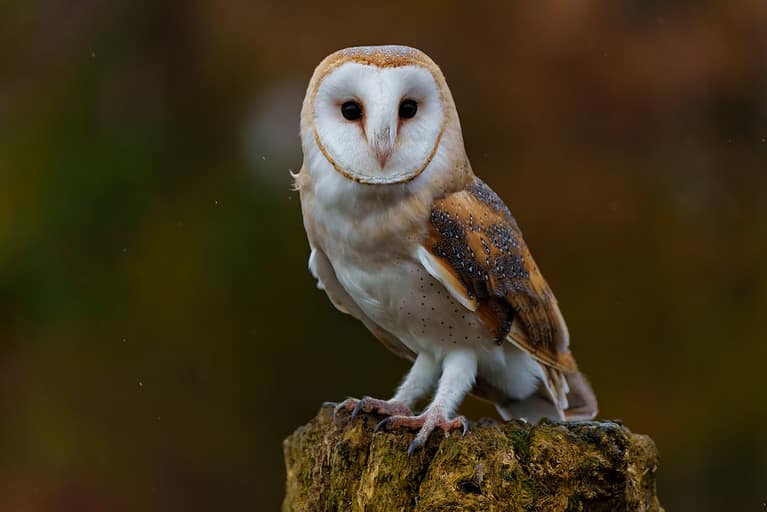
Owls can see in the dark.
©adamikarl/Shutterstock.com
What Are Eyetubes?
Human eyes are spherical, making it hard to imagine what a tube-like eye is. A tubular eye is elongated and fixed in place in the eye sockets of the owl’s head. Because of this, owls are unable to move their eyes left to right like humans can. Another major difference is how the eyes are supported. Human eyes are cushioned by soft muscle tissue, while owls’ eyes are supported by a bony structure called the sclerotic ring. This structure is what locks the eyes in place. To compensate for their lack of eye mobility, owls have highly flexible necks. Owls can rotate their necks up to 270 degrees, helping to compensate for the locked position of their eyes.
Owls are most famous for their tube-like eyes, but there are some other animals that have them as well. These include some bat species, deep-sea creatures (like barreleye fish), and other birds of prey. These eye shapes have evolved in these animals for various reasons, including improved hunting and foraging abilities. They can help support vision in different lighting, provide more telescopic precision, and improve depth perception. So, while these animals lose the eye mobility that humans have, they gain advantages in other ways.
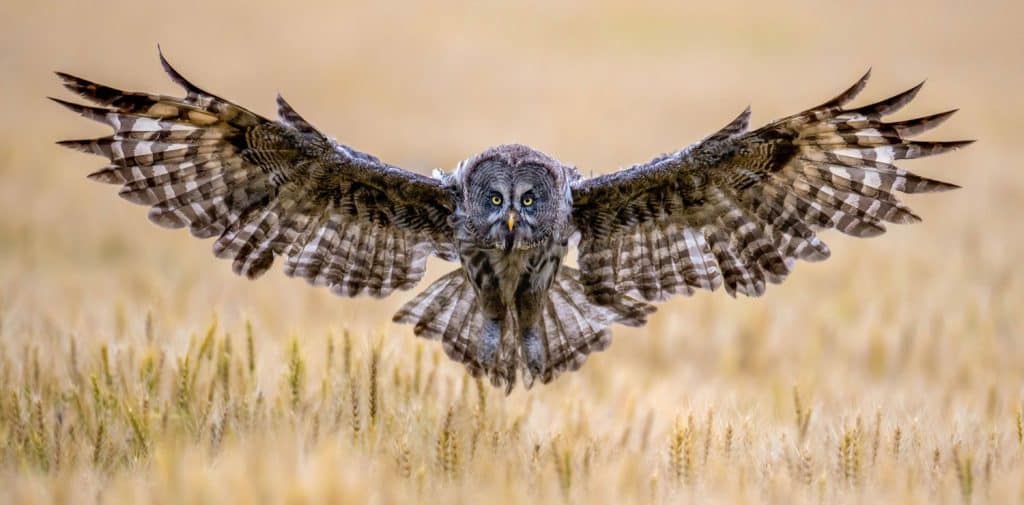
Eye tubes allow owls to have larger retinas.
©Wang LiQiang/Shutterstock.com
How Do Eyetubes Help Owls?
Eye tubes are extremely beneficial to owls, as they have adapted over centuries to use them. While they are an unusual shape to the human mind, the advantages they offer are essential. The tube-like shape allows for larger retinas, meaning that the owls can intake more light. For nocturnal creatures like owls, which do the majority of their hunting at night, this is extremely beneficial. The shape also creates telescopic vision. With telescopic vision, owls have an almost built-in zoom, allowing them to focus sharply on prey from a distance. When you combine this unique vision with their silent flight and excellent hearing, it’s clear that owls are among the most effective hunters in the animal kingdom.