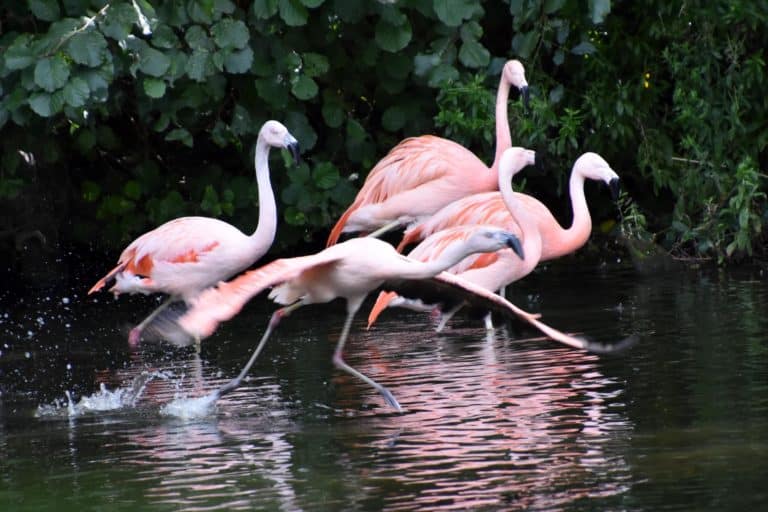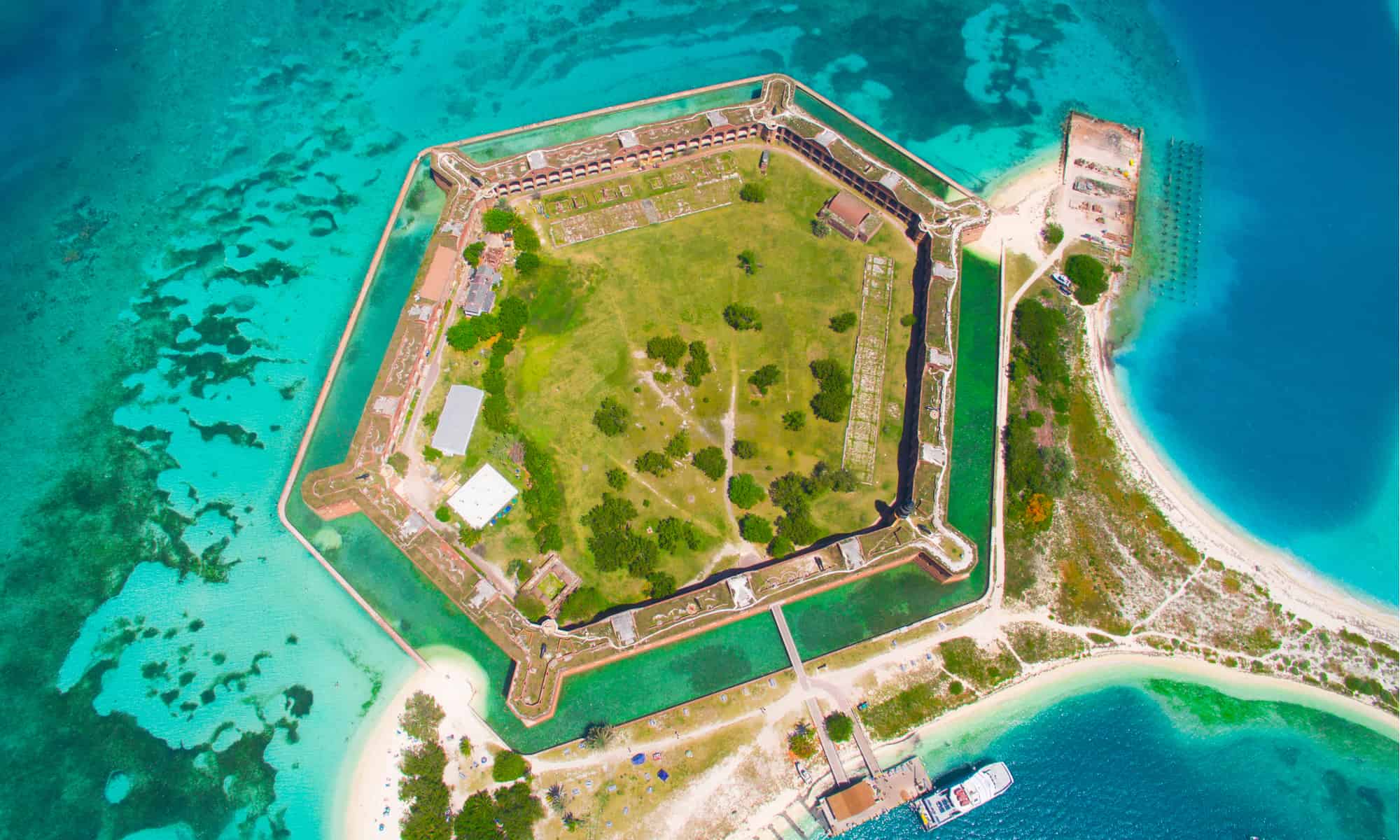

Dry Tortugas National Park rises from turquoise waters about 70 miles west of Key West, Florida. Accessible only by boat or seaplane, this island park’s beaches, coral reefs, and historic Fort Jefferson remain peaceful and largely untouched. In 2024, more than 84,000 visitors came to snorkel vibrant reefs, stroll white sand, and witness wildlife both above and below the waves. Though small in size, the park’s habitats support an extraordinary mix of creatures, from nesting seabirds to roaming sea turtles, playful dolphins to rare corals. Covering every species would be impossible, so what follows is an alphabetical guide to the animals most visitors are likely to encounter, with notes on where and when to see them.
Barracuda (Sphyraena barracuda)
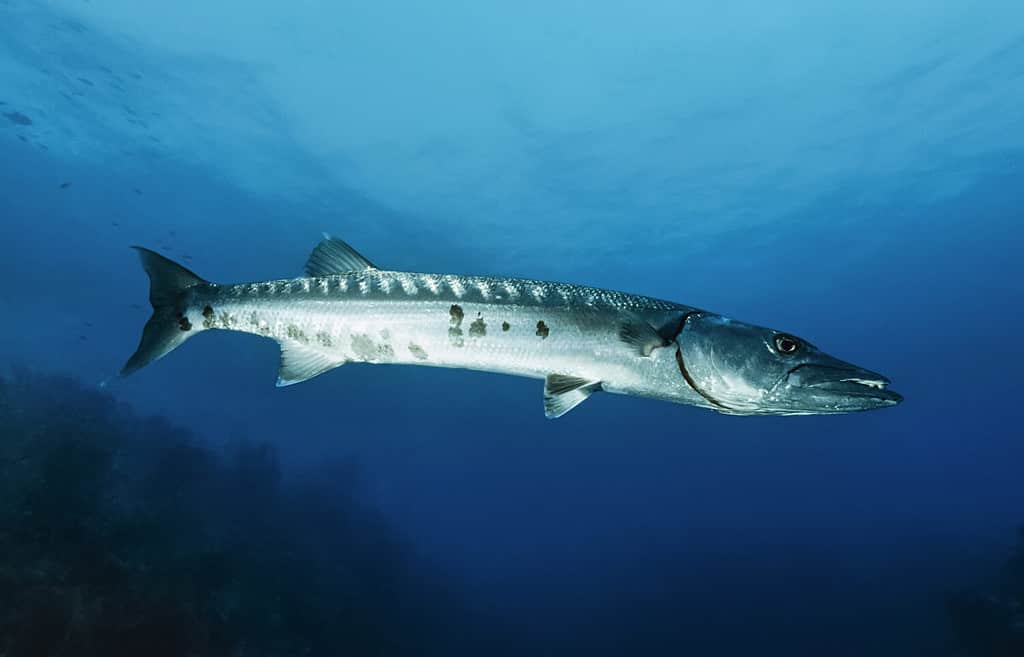
Barracuda (Sphyraena barracuda)
©Angelo Giampiccolo/Shutterstock.com
Great barracudas are sleek reef predators with long bodies and fearsome teeth. They hover in open water, dart suddenly to seize smaller fish, and sometimes unnerve snorkelers by shadowing them curiously. These fish are present year-round, particularly near Garden Key and Loggerhead Key. Though startling in appearance, they are common sights for divers and snorkelers.
Blue Tang (Paracanthurus hepatus)
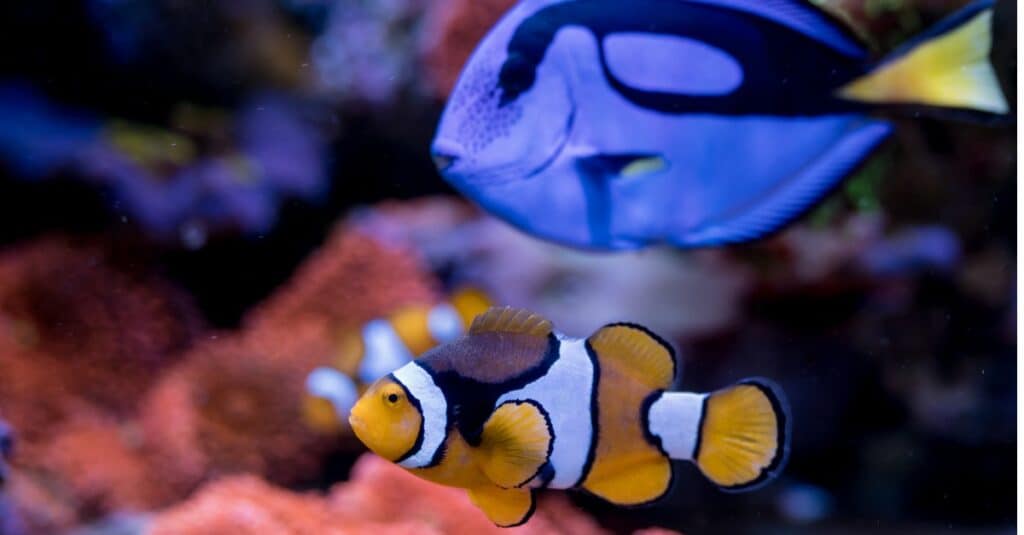
Blue Tang (Paracanthurus hepatus)
©Tatiana Gordievskaia/Shutterstock.com
In the ocean blue tangs brighten reefs with their vivid blue bodies and yellow tails. They graze on algae, darting in schools among coral heads and adding constant flashes of color. Snorkelers see them year-round around Garden Key and Loggerhead Key. They are plentiful and easy to spot on any clear-water reef dive.
Booby (Brown Booby, Sula leucogaster)
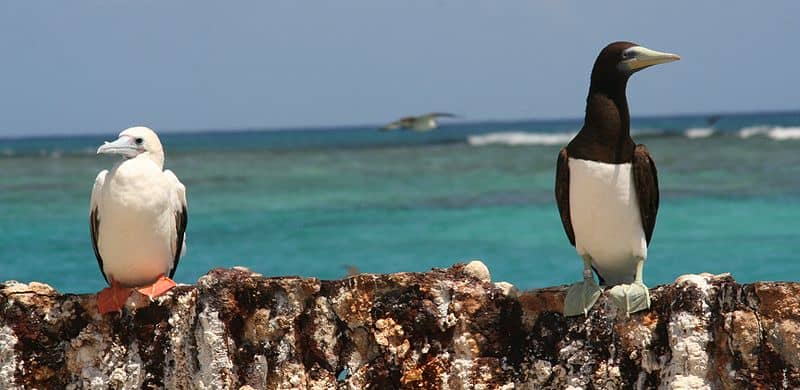
Booby (Brown Booby, Sula leucogaster)
©Duncan Wright – Public Domain by US Fish and Wildlife Service
Brown boobies are powerful seabirds that plunge dramatically into the sea for fish. They are chocolate-brown with white bellies and striking yellow feet. Though less numerous than frigatebirds or terns, they can be seen circling offshore waters or resting on buoys. It’s not unusual for boat travelers to see them.
Booby (Masked Booby, Sula dactylatra)
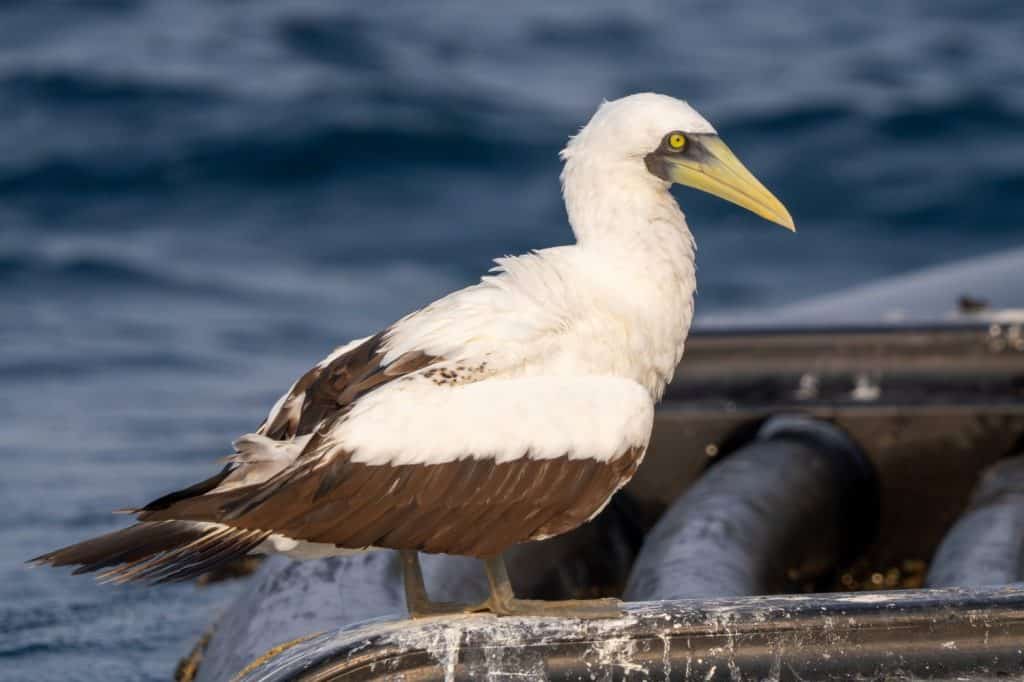
Booby (Masked Booby, Sula dactylatra)
©kingma photos/Shutterstock.com
Masked boobies nest on sandy spits of the Tortugas, making this the only regular site in the continental U.S. Their stark white plumage contrasts with black-tipped wings, and they raise chicks during spring and summer. They are scarce compared to other seabirds, but pairs are reliably present during the nesting season.
Bottlenose Dolphin (Tursiops truncatus)
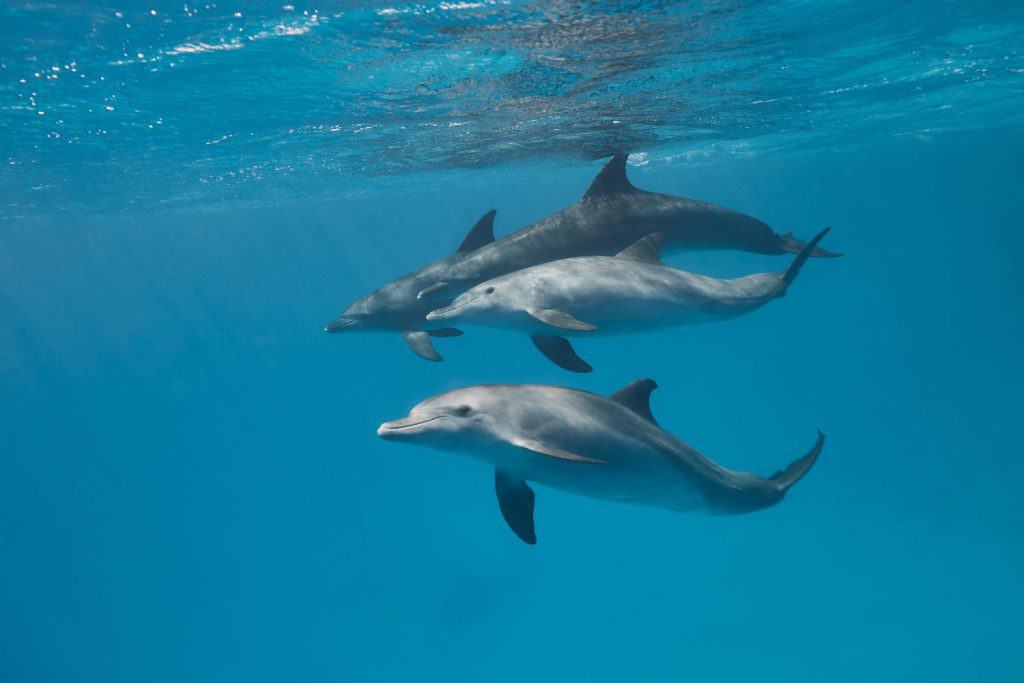
Bottlenose Dolphin (Tursiops truncatus)
©Tetsuo Arada/Shutterstock.com
Pods of bottlenose dolphins glide around the islands, chasing fish near the surface and bow-riding the wakes of ferries. They are active year-round, and many visitors see them on the ferry approach to Garden Key. Calm spring and summer mornings increase the likelihood of spotting their leaps and spins.
Brown Pelican (Pelecanus occidentalis)
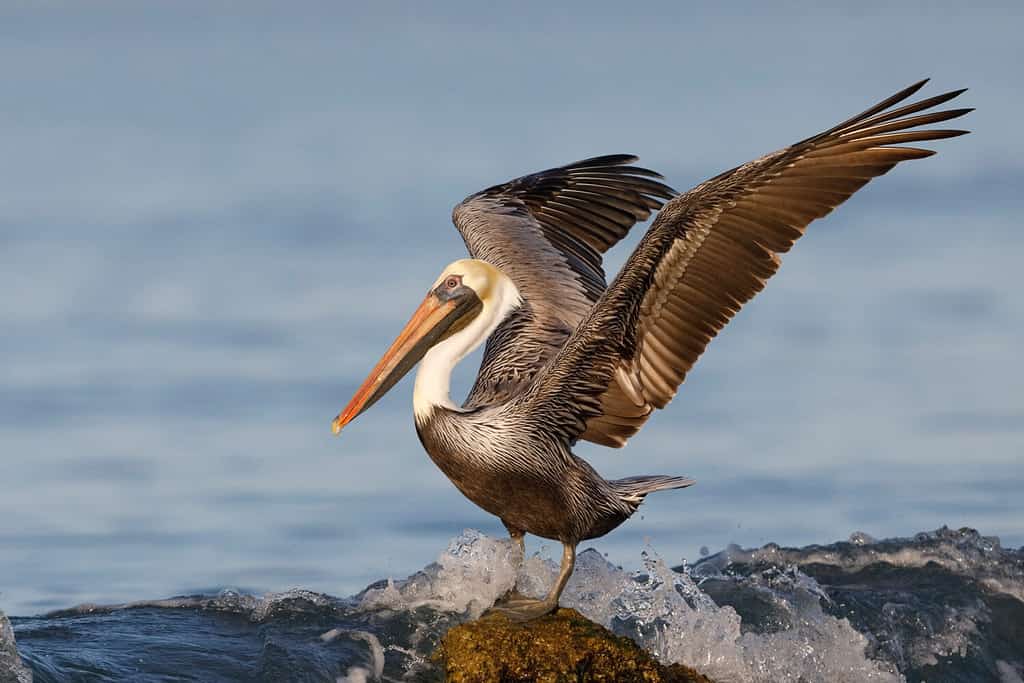
Brown Pelican (Pelecanus occidentalis)
©Brian Lasenby/Shutterstock.com
The brown pelican is always around, plunging headfirst into shallow water or loafing on pilings to dry its wings. They nest in colonies along island edges and circle the beaches throughout the day. They are among the most familiar wildlife of Dry Tortugas.
Caribbean Spiny Lobster (Panulirus argus)
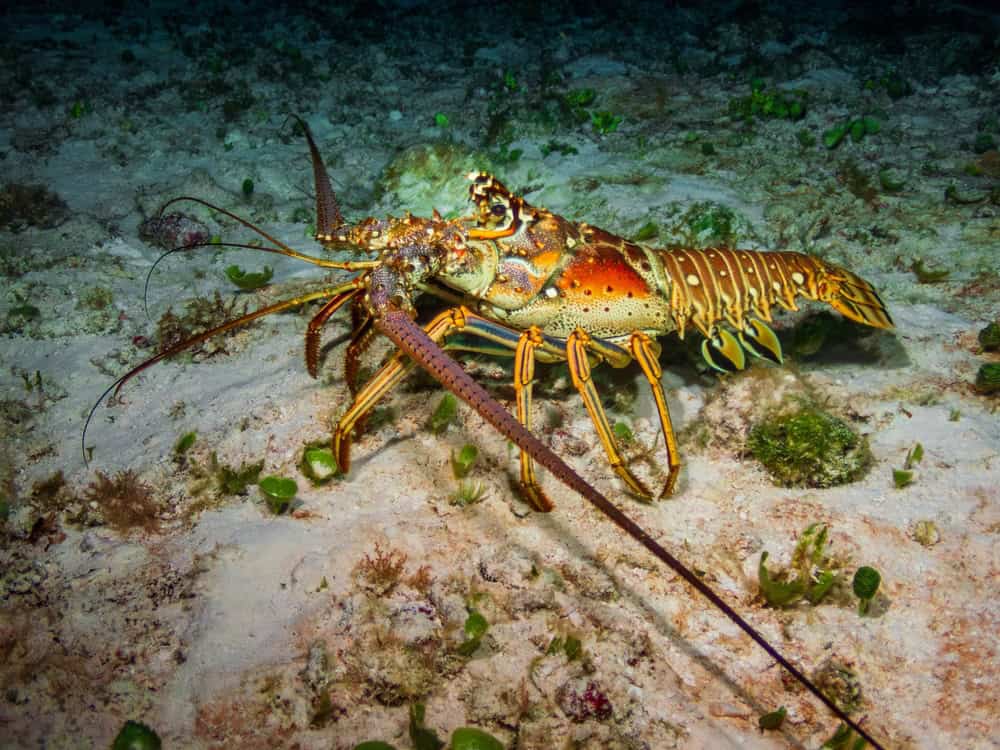
Caribbean Spiny Lobster (Panulirus argus)
©alonanola/Shutterstock.com
Spiny lobsters hide in reef crevices by day, antennae waving, then emerge at night to graze on algae and detritus. Summer brings their breeding season, when they become more active. Though wary, they are fairly common. If you’re snorkeling, you’ll often find them hiding under ledges.
Conch (Queen Conch, Aliger gigas)
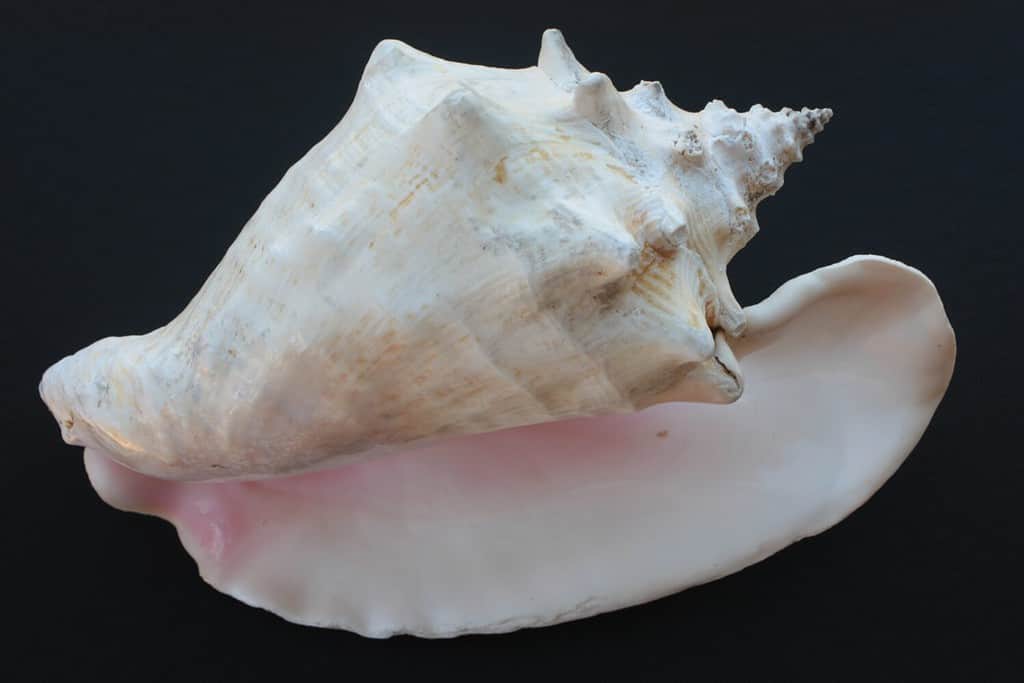
Conch (Queen Conch, Aliger gigas)
©Alexey Masliy/Shutterstock.com
Queen conchs crawl slowly across sandy bottoms and seagrass beds, leaving faint trails in the sand. Their immense shells, glowing pink inside, are iconic. Holding one to your ear is supposed to mimic the sound of the ocean. Once heavily harvested, they are now protected, and healthy populations endure here. Although they are not abundant, your best chance of spotting one is while snorkeling in a shallow lagoon.
Coral (various species)
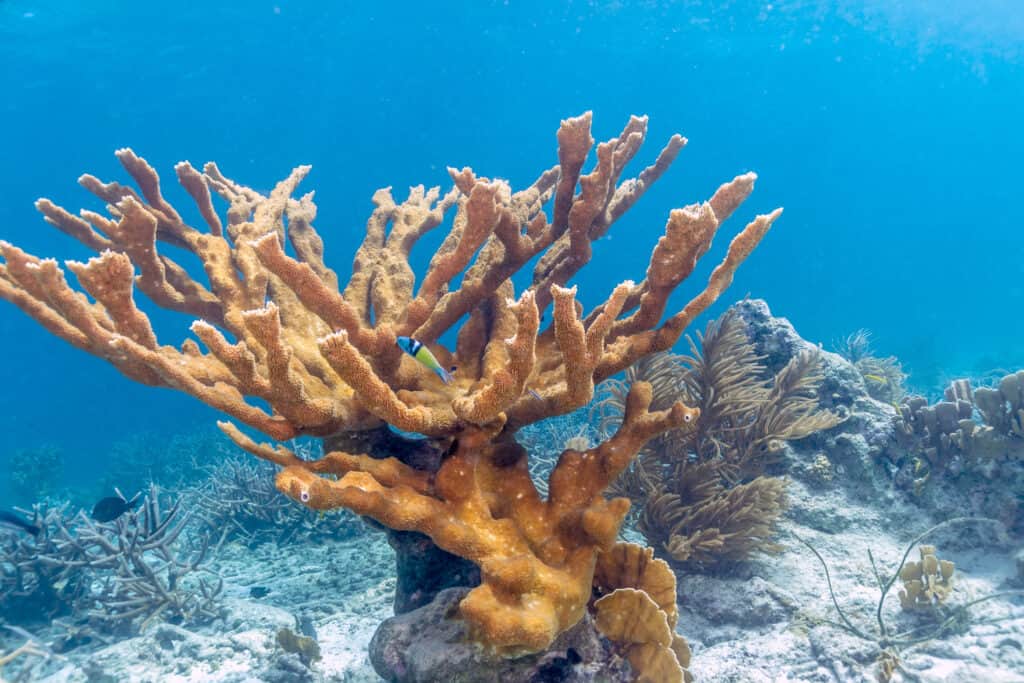
Elkhorn coral (Acropora palmata) is an important reef-building coral.
©iStock.com/johnandersonphoto
The reefs support about 30 coral species, including threatened elkhorn (Acropora palmata) and staghorn (Acropora cervicornis). Coral colonies provide shelter for countless fish and invertebrates, forming the backbone of the marine ecosystem. Loggerhead Key has some of the park’s healthiest patches.
Cormorant (Double-crested Cormorant, Nannopterum auritum)
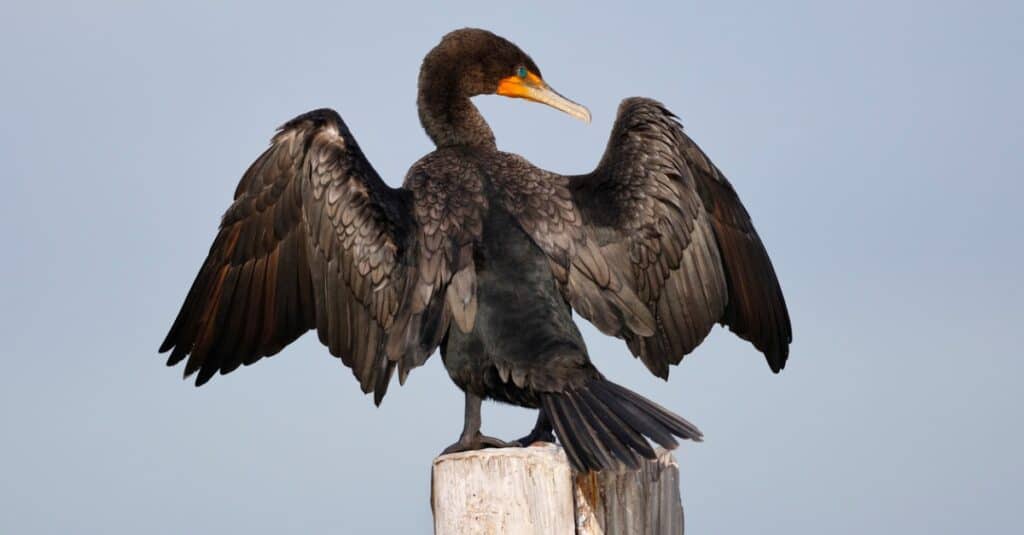
The double-crested cormorant
©iStock.com/BrianLasenby
Cormorants dive up to 30 feet to spear fish, then spread their wings to dry on pilings. They are common around Fort Jefferson and mooring areas, particularly in the morning and evening. Their habit of perching conspicuously makes them easy to observe.
Crab (Ghost Crab, Ocypode quadrata)
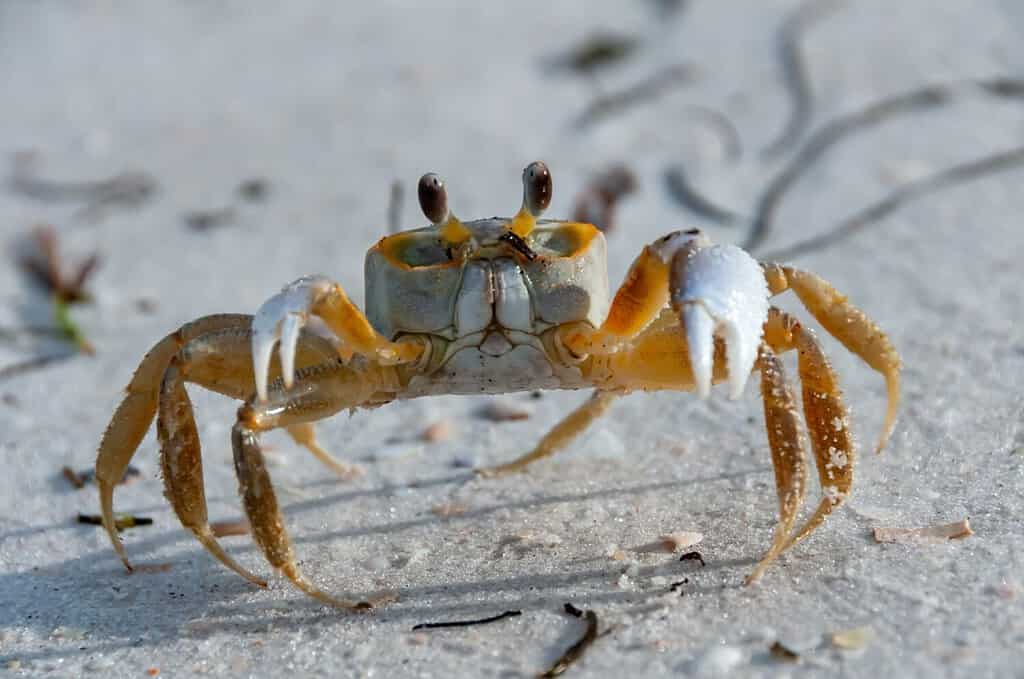
Crab (Ghost Crab, Ocypode quadrata)
©Oleg Kovtun Hydrobio/Shutterstock.com
Ghost crabs scuttle swiftly across beaches above the tide line, vanishing into burrows at the slightest disturbance. Their pale bodies blend with sand, making them tricky to spot unless they move. Visitors walking quietly at dawn or dusk have the best chance of seeing them in greater numbers.
Eel (Green Moray, Gymnothorax funebris)
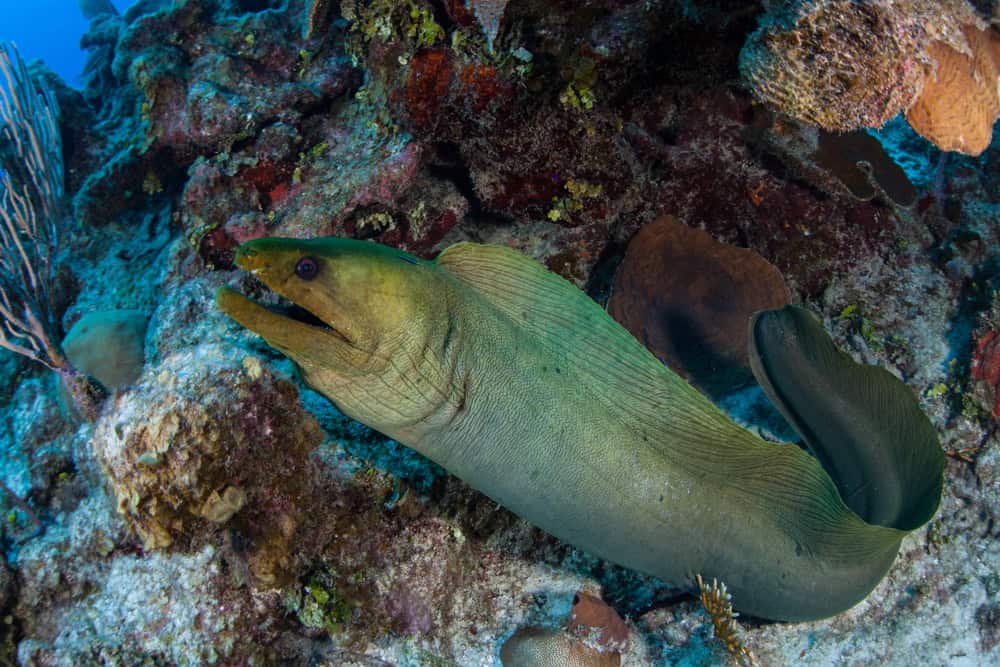
Eel (Green Moray, Gymnothorax funebris)
©Ethan Daniels/Shutterstock.com
Green moray eels lurk in reef crevices, their mucus-covered bodies draped like ribbons among the coral. Their open mouths reveal sharp teeth, but they are not aggressive toward snorkelers. Usually solitary, they are occasional but thrilling finds for divers scanning ledges.
Frigatebird (Magnificent Frigatebird, Fregata magnificens)
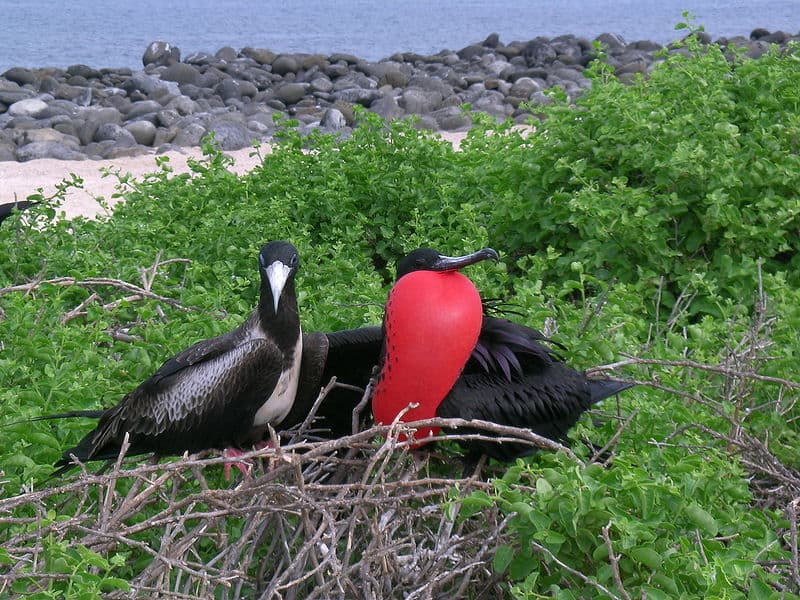
Magnificent Frigatebird (Fregata Magnificens)
©Balabiot / Creative Commons – Original
Magnificent frigatebirds soar effortlessly with forked tails and immense wingspans. They steal fish from other birds and roost in large numbers near the islands, particularly in spring. Males inflate bright red throat pouches to court females. They are plentiful overhead, so you’re nearly guaranteed sightings on any visit.
Grouper (Goliath Grouper, Epinephelus itajara)
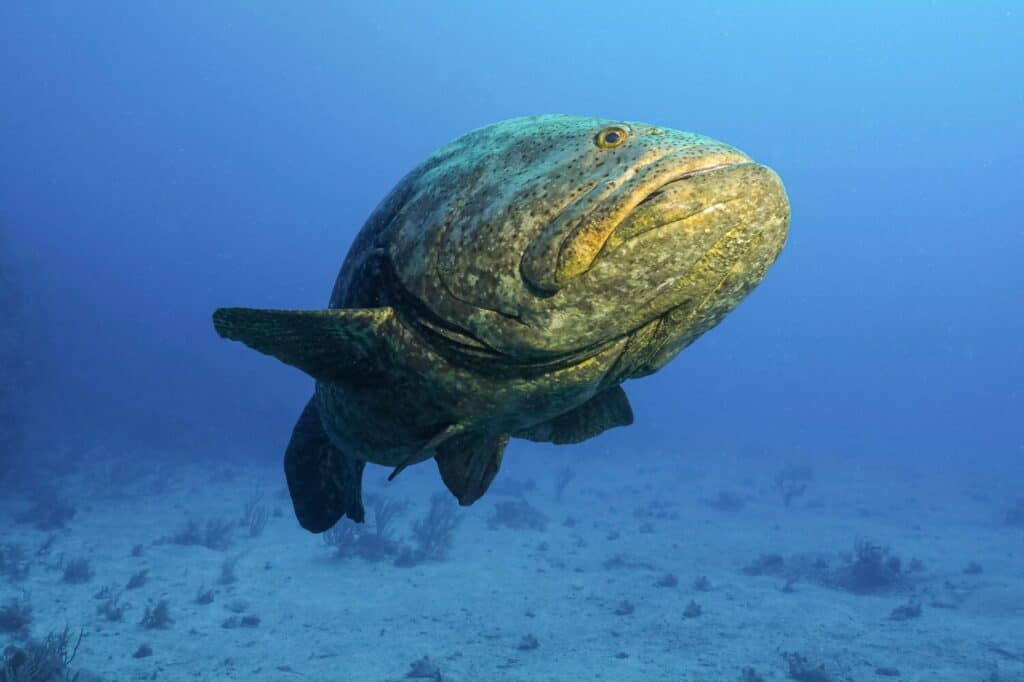
Grouper (Goliath Grouper, Epinephelus itajara)
©Jesus Cobaleda/Shutterstock.com
The goliath grouper is a giant of the reef, reaching a whopping eight feet long and hundreds of pounds. They lurk near wrecks and ledges, sometimes startling divers with a booming grunt. Encounters are rare, but if you do run into one, you’ll never forget it.
Gull (Laughing Gull, Leucophaeus atricilla)
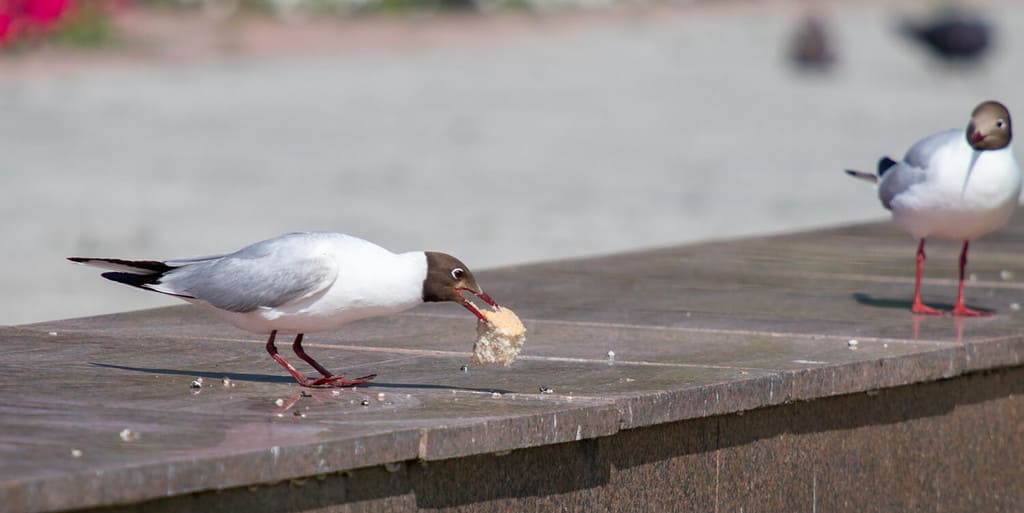
Gull (Laughing Gull, Leucophaeus atricilla)
©Greens and Blues/Shutterstock.com
Laughing gulls, with raucous calls and sharp black hoods, swarm beaches and docks in noisy flocks. They are opportunists, quick to snatch food. There are a large number of them, attentively watching not only for small crustaceans, but for any tourist with a sandwich or a bag of chips.
Hermit Crab (Coenobita clypeatus)
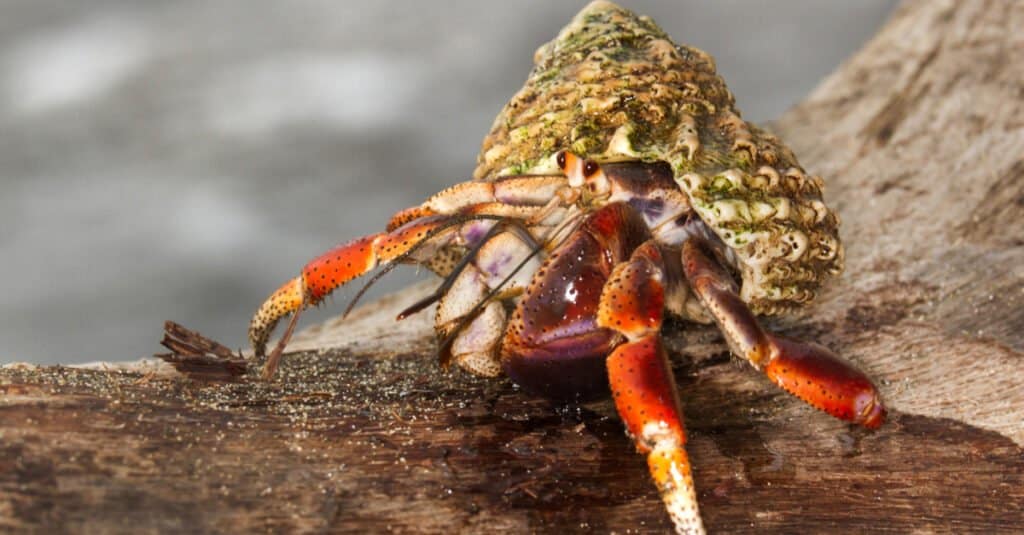
Hermit Crab (Coenobita clypeatus)
©Natalia Kuzmina/Shutterstock.com
Many hermit crabs roam sandy beaches and rocky shorelines, carrying borrowed shells as mobile homes. At night, they often emerge in numbers, scavenging for food near driftwood or wrack lines. They are especially noticeable on quiet beaches after dark. They’re quite common but easy to overlook because of their small size and habit of hiding in random shells.
Manatee (West Indian Manatee, Trichechus manatus)
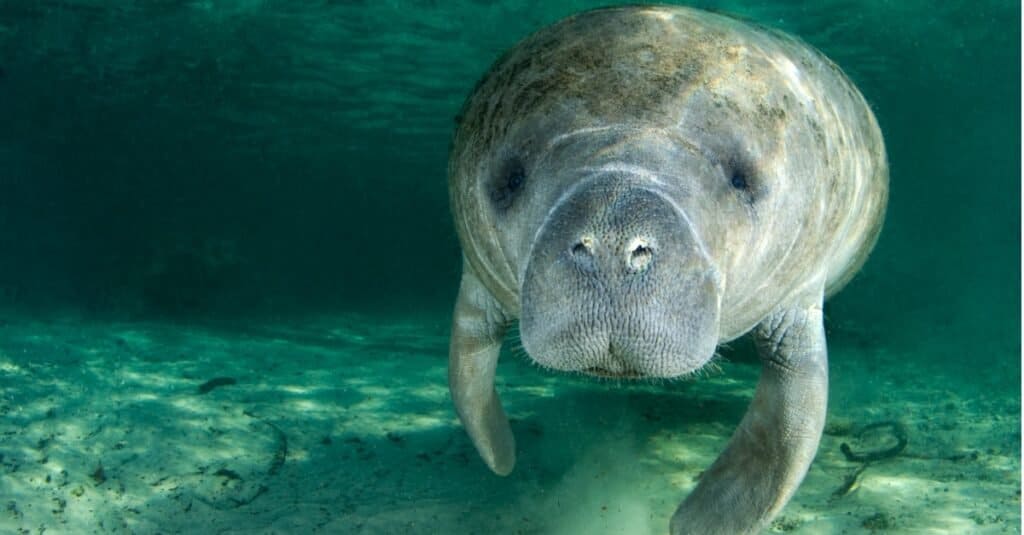
Manatee (West Indian Manatee, Trichechus manatus)
©A Cotton Photo/Shutterstock.com
These gentle mammals drift slowly through lagoons and canals, grazing on water plants and surfacing gently to breathe. They are rare visitors to Dry Tortugas, appearing sporadically near docks. Visitors who see one are understandably surprised and delighted.
Noddies (Brown Noddy, Anous stolidus; Black Noddy, Anous minutus)
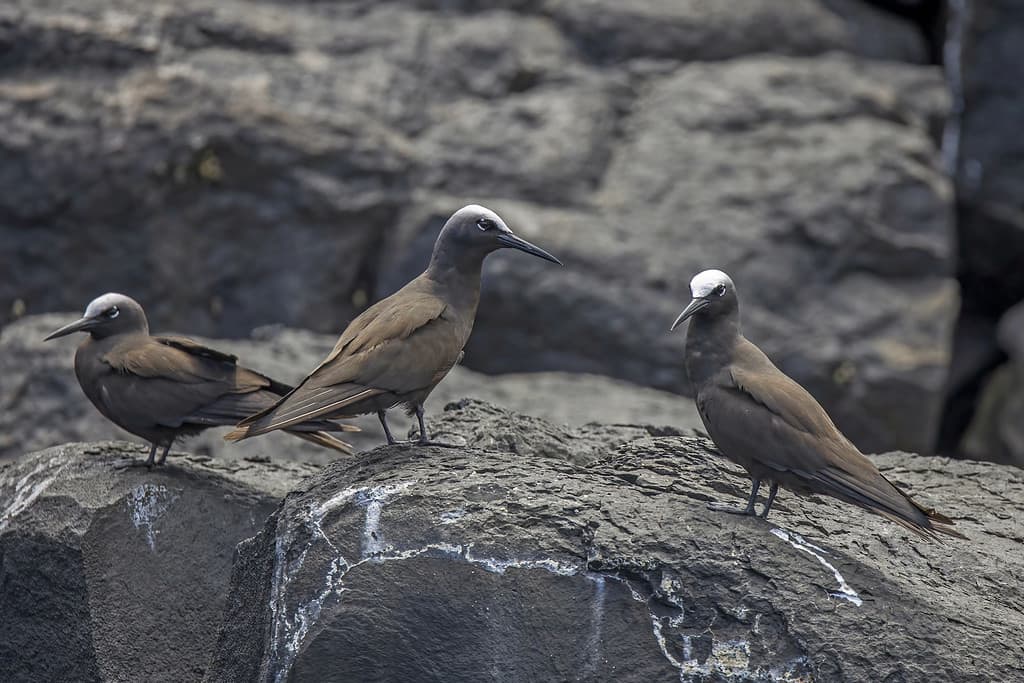
Noddies (Brown Noddy, Anous stolidus; Black Noddy, Anous minutus)
©Charles J. Sharp, CC BY-SA 4.0, via Wikimedia Commons – Original / License
Tens of thousands of noddies nest on Bush Key each nesting season. Brown noddies are chocolate-colored, while smaller black noddies are darker and rarer. From March to September, the colonies fill the skies with noise and motion. Their abundance during breeding makes them one of the park’s must-see spectacles.
Nurse Shark (Ginglymostoma cirratum)
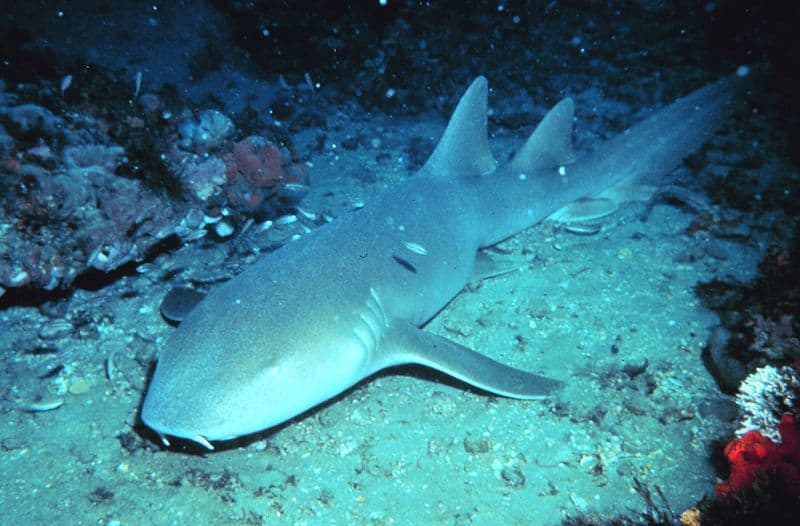
A Nurse Shark (Ginglymostoma cirratum)
©Dr. Mathew Gilligan – Public Domain by U.S. National Oceanic and Atmospheric Administration – Original / License
Nurse sharks are slow-moving bottom dwellers that spend days resting under ledges or on sand. They can reach 10 feet long but are gentle giants, posing no threat to people. They are rather common in shallow channels and not hard to find while you’re snorkeling.
Osprey (Pandion haliaetus)
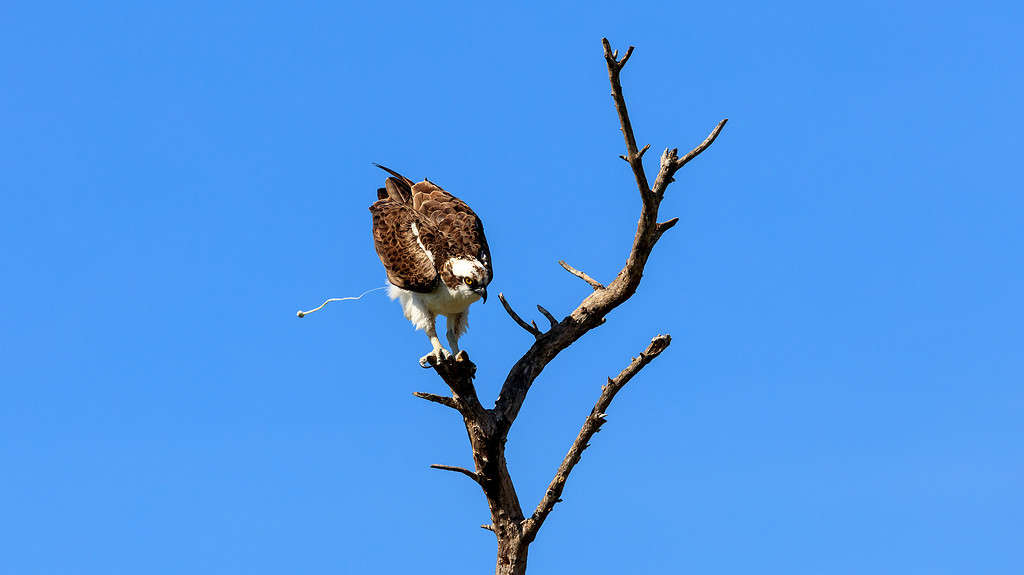
Osprey (Pandion haliaetus)
©Ullimi/iStock via Getty Images
Ospreys nest atop pilings and dead trees, swooping to pluck fish from the sea with powerful talons. They are most visible in late winter through summer while feeding chicks. Ospreys are abundant in the park and easy to see around Garden Key.
Parrotfish (Family Scaridae)
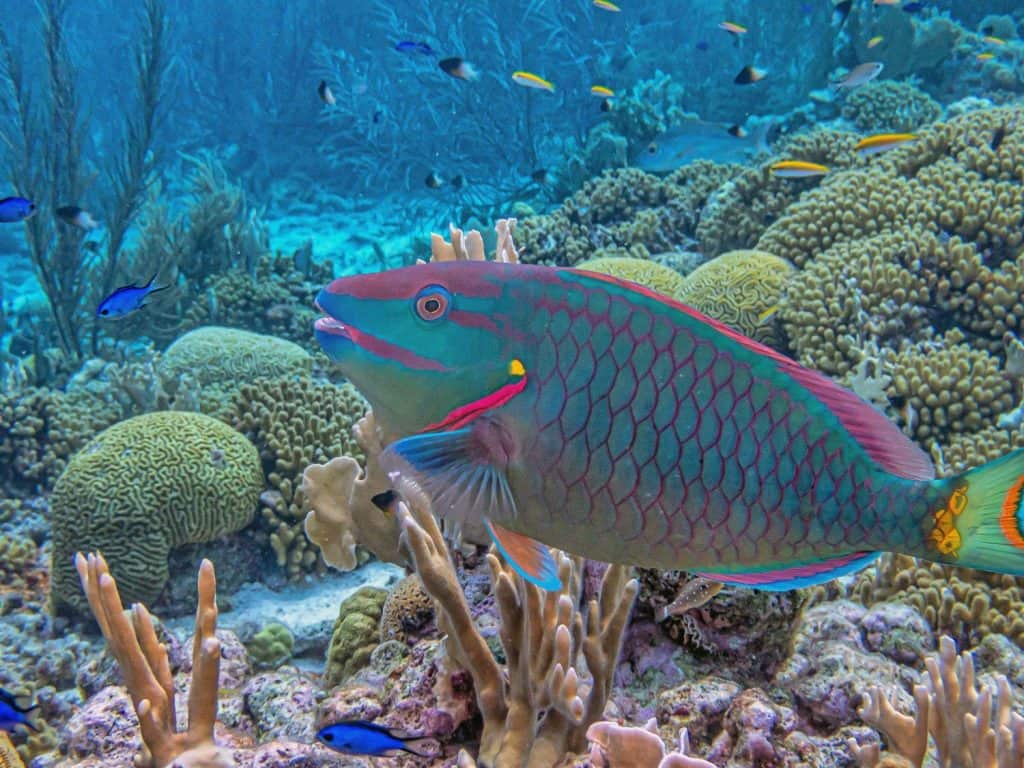
Parrotfish (Family Scaridae)
©John A. Anderson/Shutterstock.com
Brilliant parrotfish scrape algae from coral with beaklike teeth, producing much of the park’s white sand as they excrete ground coral. Blue, rainbow, and midnight parrotfish brighten reefs in every season. You will see a great many of these if you go diving around the reefs.
Great Hammerhead Shark (Sphyrna mokarran)
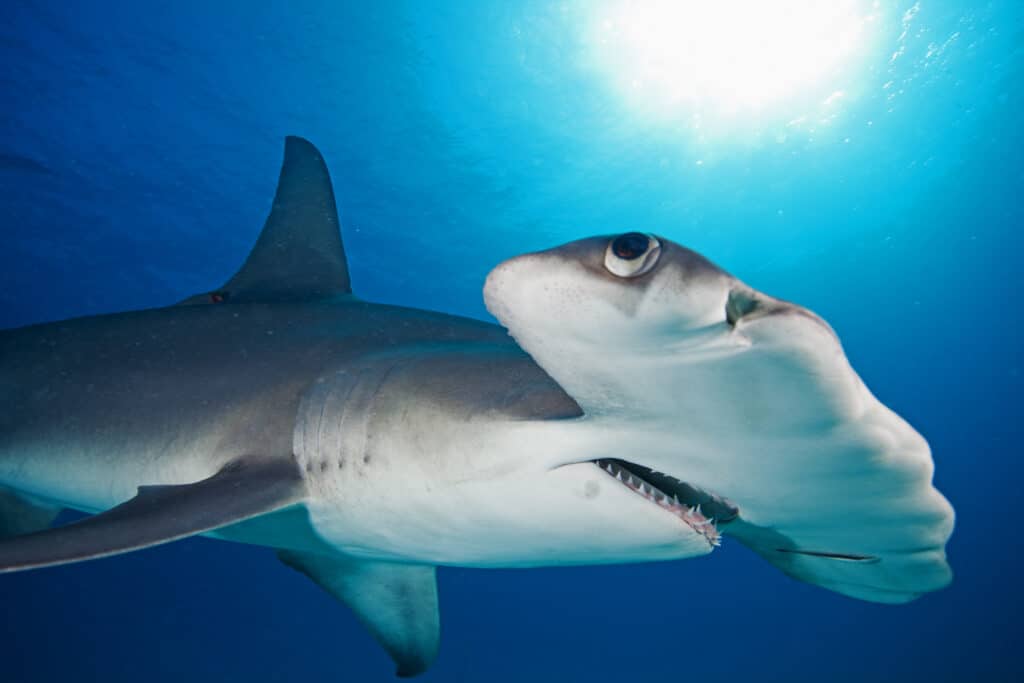
Great Hammerhead Shark (Sphyrna mokarran)
©Martin Prochazkacz/Shutterstock.com
Occasionally, great hammerheads cruise the deeper channels near the Tortugas. With wide hammer-shaped heads and immense size, they are unmistakable. They are not aggressive toward people; however, divers who are lucky enough to see one in the park should still give them plenty of space.
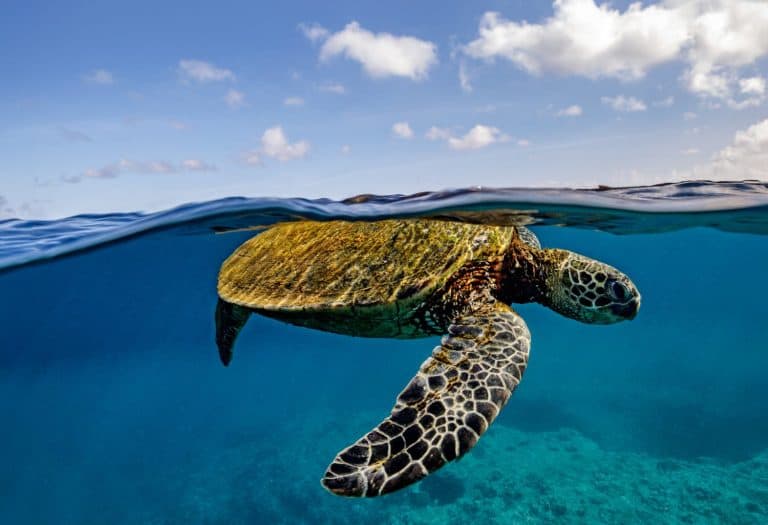
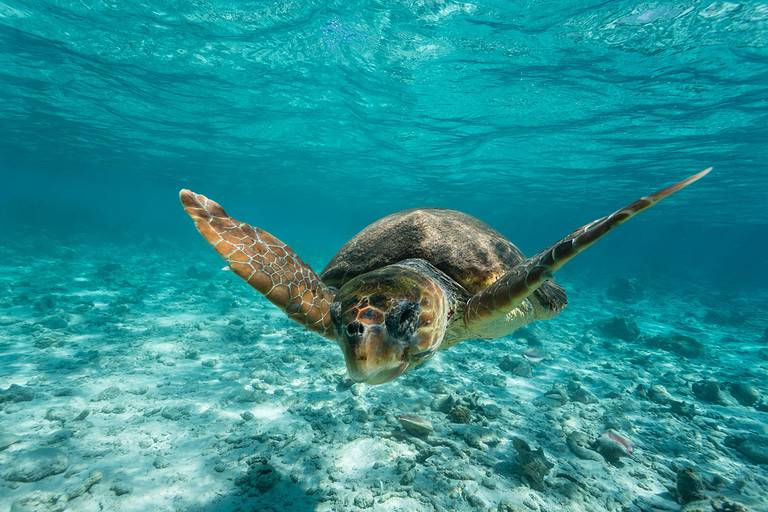
Sea Turtles (Green: Chelonia mydas; Loggerhead: Caretta caretta; Hawksbill: Eretmochelys imbricata)
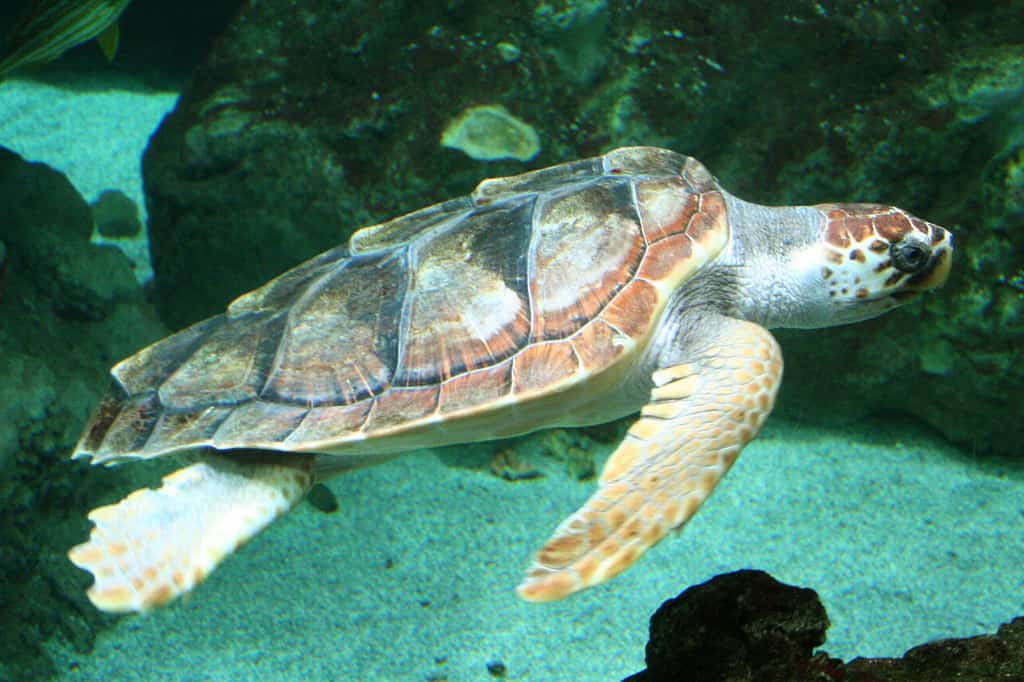
Loggerhead sea turtle: Caretta caretta
Three sea turtle species inhabit the park. Green turtles graze seagrass beds and nest on East Key and Loggerhead Key in summer. Loggerheads, larger and more common, also nest on sandy beaches. Hawksbills, rarer and critically endangered, forage among coral reefs. Turtles are regularly seen by snorkelers, with nesting females most visible from May through August.
Sea Urchin (Long-spined Sea Urchin, Diadema antillarum)
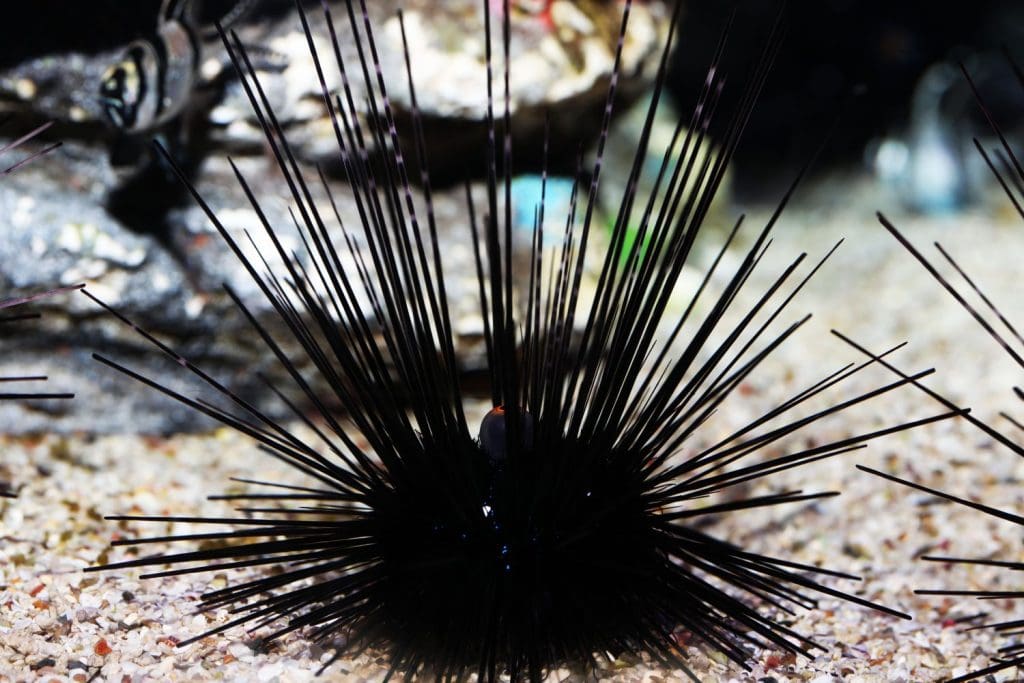
Sea Urchin (Long-spined Sea Urchin, Diadema antillarum)
©Pavaphon Supanantananont/Shutterstock.com
These urchins cling to reef crevices, their black spines extending like needles. They graze algae, preventing overgrowth on corals. Once nearly wiped out in the Caribbean, their numbers are rebounding, and they are fairly common in reef habitats. Look, but don’t touch! Spine punctures hurt, and some species inject mild venom that can cause aches and inflammation.
Shearwaters (Genus Ardenna)
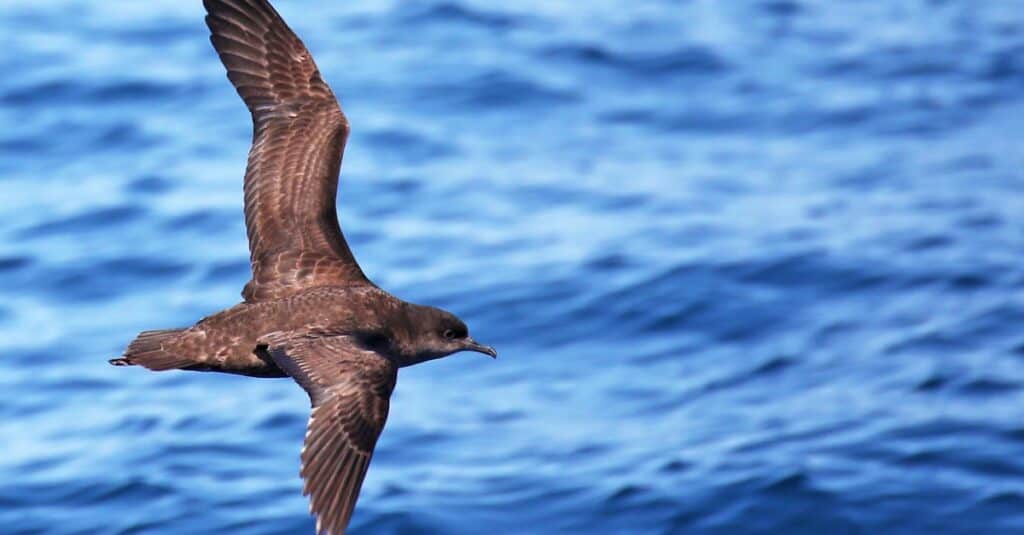
Shearwaters (Genus Ardenna)
©iStock.com/Manakin
Several shearwater species migrate past Dry Tortugas in spring and fall, gliding low over waves. They are seen mainly from ferries or boats offshore. Though not abundant, they are seasonal highlights for birders.
Sooty Tern (Onychoprion fuscatus)
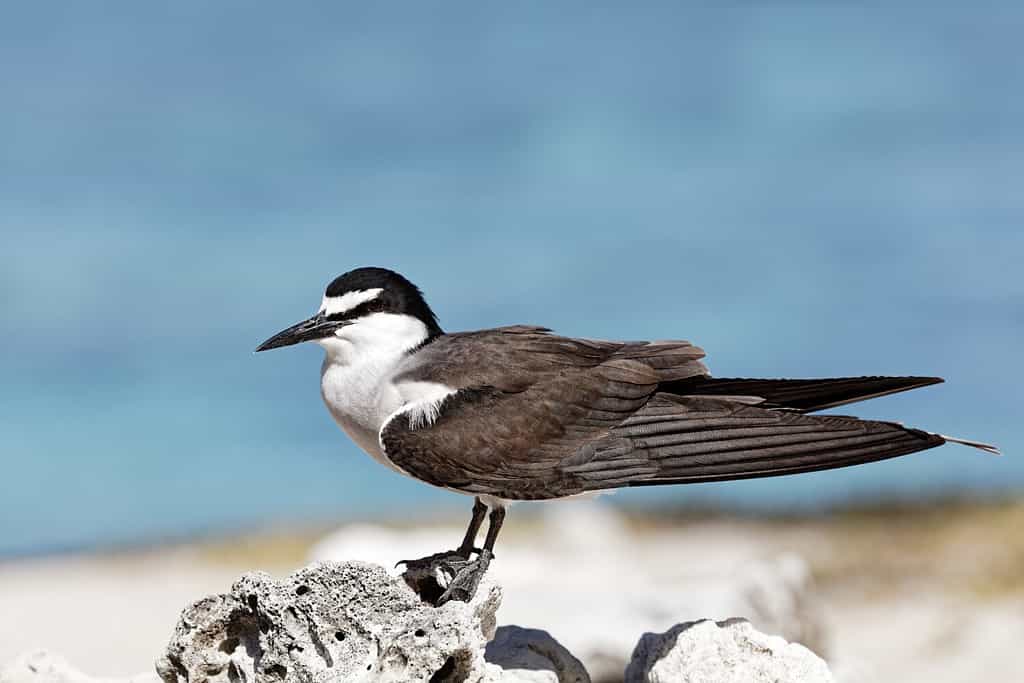
Sooty Tern (Onychoprion fuscatus)
©Paleokastritsa/Shutterstock.com
The Sooty terns nest in staggering numbers on Bush Key, their only regular U.S. nesting site. From March to September, more than 80,000 birds fill the sky in a deafening chorus. They are abundant in the breeding season and one of the park’s most dramatic wildlife spectacles.
Tarpon (Megalops atlanticus)
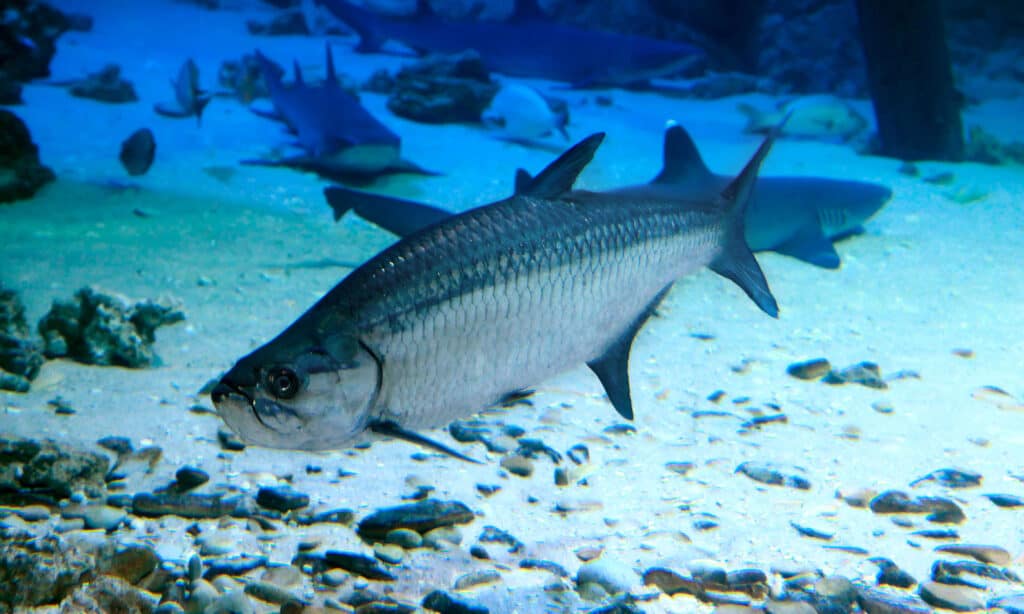
Tarpon (Megalops atlanticus)
©iStock.com/TatianaMironenko
These are immense silver fish known for spectacular leaps. They patrol channels and are often visible near docks. Peak sightings come in late spring and summer, when schools gather in shallows. They are common enough that most anglers see them.
Tern (Roseate Tern, Sterna dougallii)
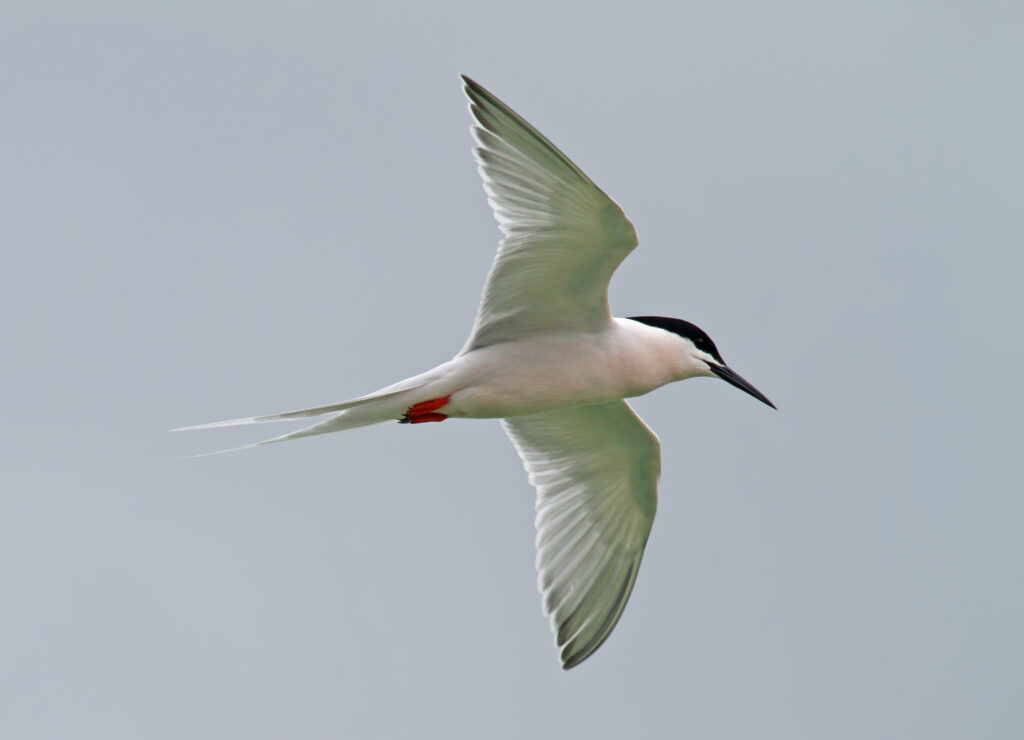
Tern (Roseate Tern, Sterna dougallii)
©Agami Photo Agency/Shutterstock.com
Roseate terns, pale and delicate, nest in small colonies on sandy spits. They are rare breeders, usually mixed with other terns. Late spring and summer offer the best chance to see them.
Tern (Royal Tern, Thalasseus maximus)
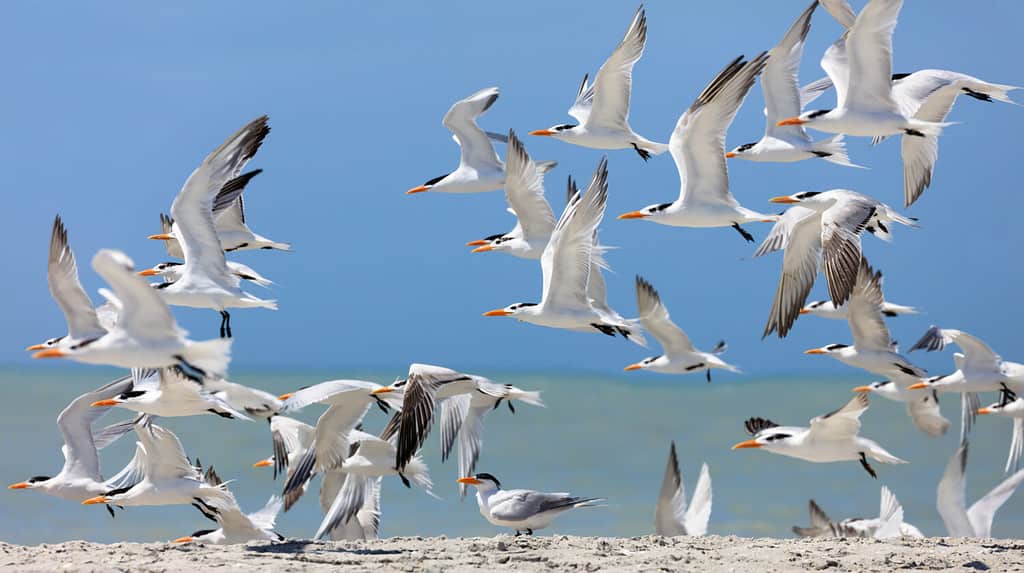
Tern (Royal Tern, Thalasseus maximus)
©ulrich missbach/Shutterstock.com
Royal terns, with tall orange bills and shaggy black crests, fish actively along shorelines. They loaf in groups on beaches or docks, especially in spring and summer. They are common and easy to find.
Tropicbird (White-tailed Tropicbird, Phaethon lepturus)
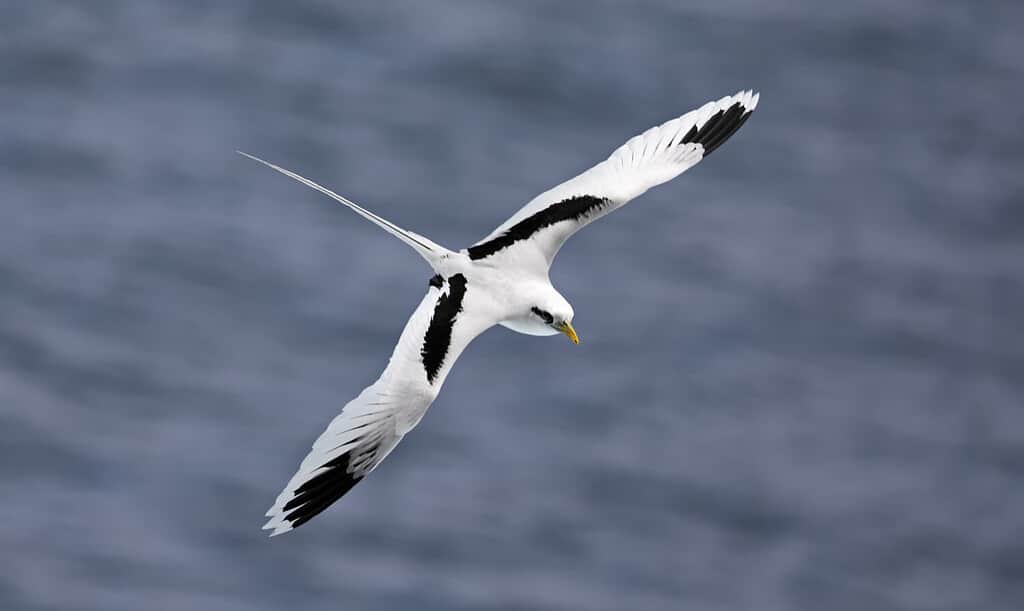
Tropicbird (White-tailed Tropicbird, Phaethon lepturus)
©Henner Damke/Shutterstock.com
These spectacular seabirds, white with long streaming tails, occasionally soar above the islands. They are rare visitors, most likely in summer. Spotting one is a memorable highlight for birdwatchers.
Turkey Vulture (Cathartes aura)
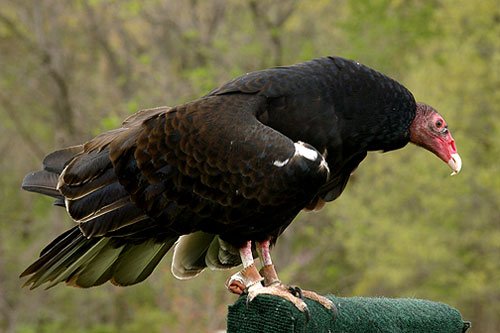
Turkey Vulture (Cathartes aura)
©Attis, Public domain, via Wikimedia Commons – Original / License
High in the sky, Turkey vultures circle overhead, riding thermals while scanning for carrion. They are not as numerous as in mainland Florida, but occasionally drift over the islands. Sightings are irregular but add to the mix of soaring birds.
Yellowtail Snapper (Ocyurus chrysurus)
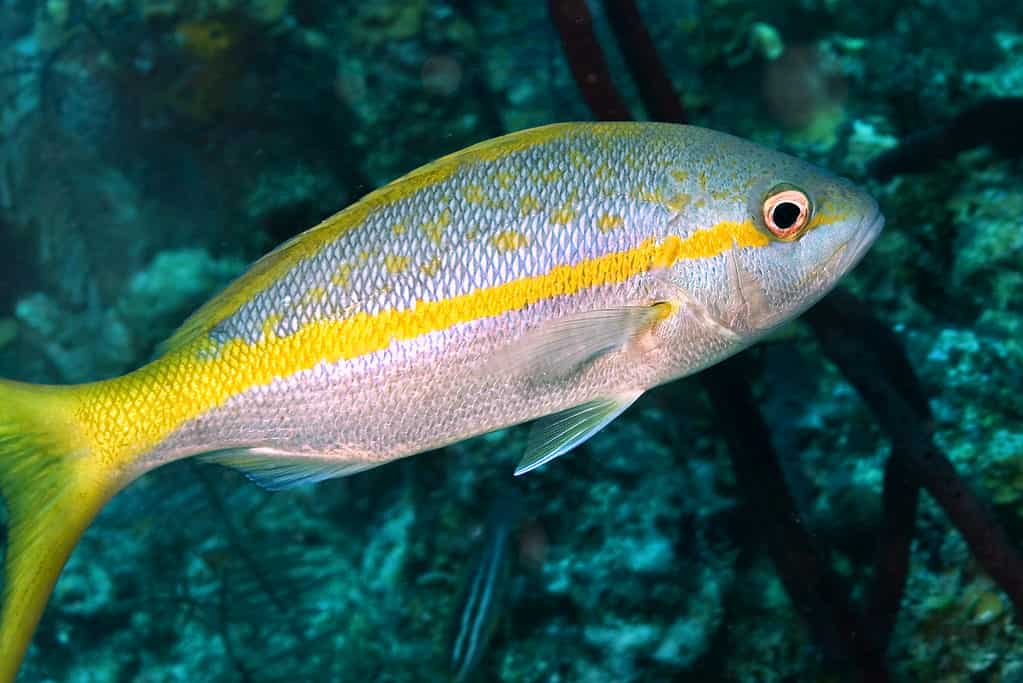
Yellowtail Snapper (Ocyurus chrysurus)
©iStock.com/Alberto Carrera
These fish school in brilliant formations, flashing their golden tails as they weave through coral reefs. They feed on small fish and invertebrates, often gathering near drop-offs or reef edges. Snorkelers and divers see them frequently, particularly in summer. Their abundance makes them a signature species of Dry Tortugas reefs.
Best Times to Visit the Park
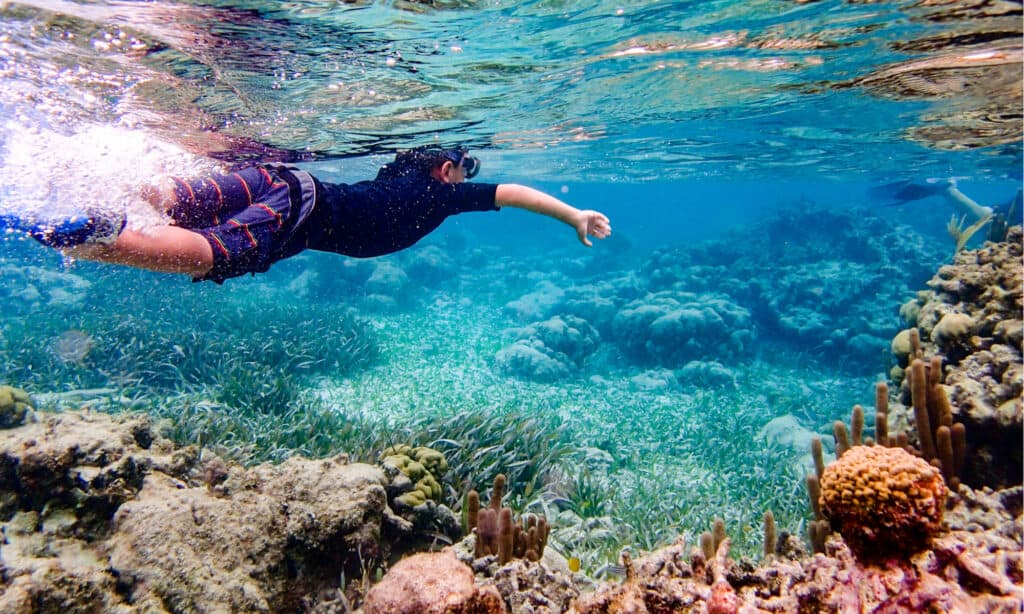
Snorkeling is one of the best ways to see the colorful wildlife of Dry Tortugas.
©Ventu Photo/Shutterstock.com
Spring (March–June) and early summer are the peak seasons to visit Dry Tortugas, when calm seas bring excellent snorkeling and islands come to life with nesting seabirds and sea turtles. Fall migration adds to the diversity of bird species as shearwaters and various land bird species stop briefly on their journey south. Winter seas can be rougher, but dolphins and pelicans are reliable sights any time of year. Dawn walks, patient snorkeling, and quiet observation at Bush Key or Loggerhead Key will increase your chances of seeing as many of these species as possible from your “must-see” list.