
Quick Take
- Scorpions don't reinforce their entire bodies with metal. Instead, they target something far more specific, and the precision is almost unsettling. See the precise distribution →
- Researchers expected bulkier-clawed scorpions to carry the most metal reinforcement. That expectation turned out to be wrong, and the real pattern reveals something unexpected about how these weapons actually work. Explore the unexpected findings →
- Scorpion stingers work like a human engineering trick that has been used in industrial manufacturing for decades, though with one critical difference that makes the biology even more impressive. See the engineering analogy →
- What scorpions figured out over millions of years may soon reshape how humans manufacture materials, beginning with a fundamental rethinking of what 'metal' even needs to look like. Discover the manufacturing implications →
Scorpions already have a pretty intimidating reputation. Between their venomous stingers, spooky-looking pincers, and their tendency to appear unexpectedly, scorpions are already quite daunting. But now, scientists have discovered something impressive hidden inside these weapons: metal.
A recent Smithsonian study found that scorpions strengthen their stingers and pincers with metals like zinc, manganese, and iron, reinforcing the areas that experience the most stress and wear. Essentially, scorpions have armor. Researchers say the way scorpions acquire this armor is surprisingly similar to how humans build stronger, longer-lasting materials and tools. It’s an impressive example of nature-driven engineering.
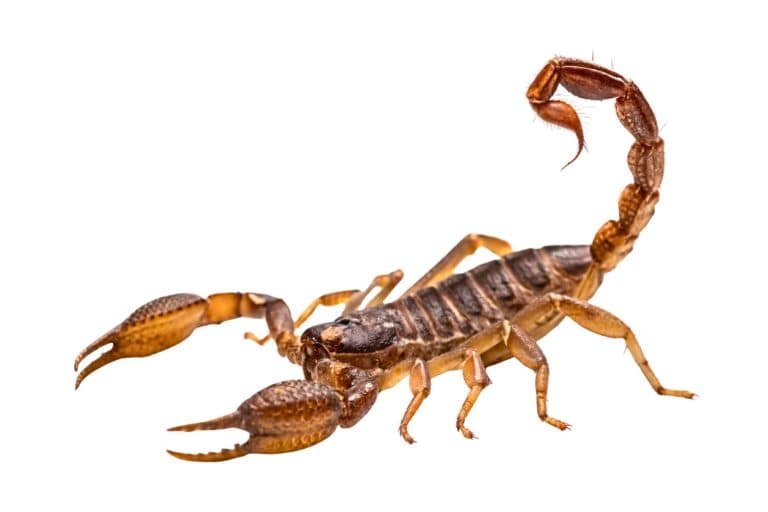
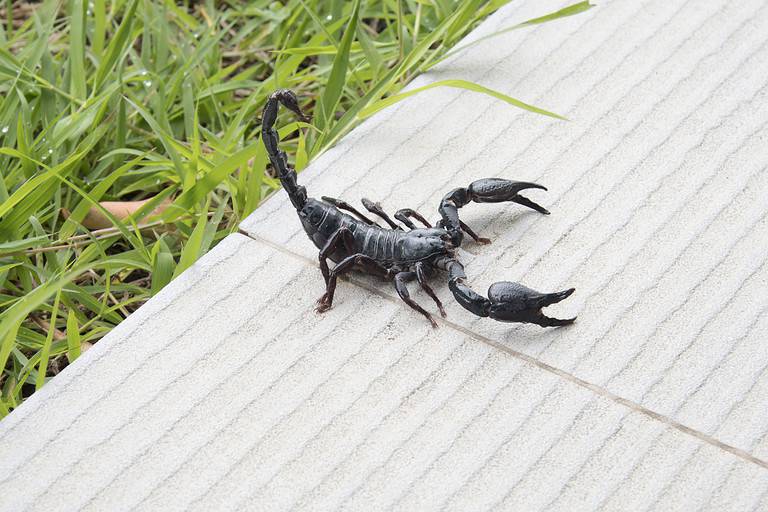
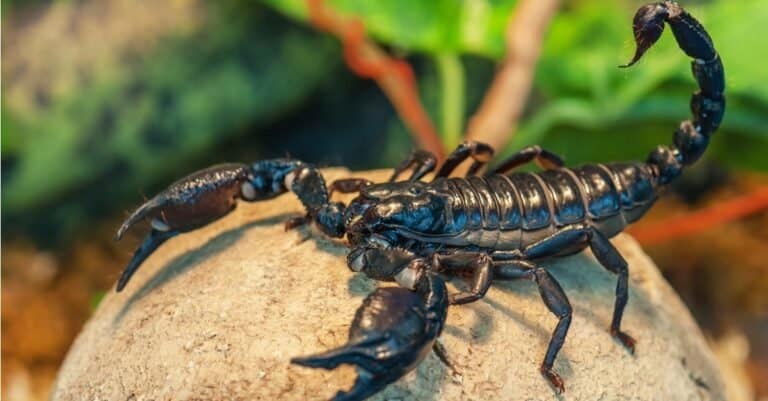
With nearly 3,000 known species worldwide, scorpions have evolved an impressive range of hunting styles and weapon shapes.
©iStock.com/Wirestock
The Official Smithsonian Study
The study, which was published in the Journal of the Royal Society Interface, examined 18 different scorpion species using powerful imaging tools that allowed researchers to zoom in at a microscopic level. They found something surprising. Metals are concentrated in the exact parts of the scorpions’ stingers and pincers.
“A scorpion’s stinger tapers to a point and is roughly cone-shaped,” explains Edward Vicenzi, a research scientist at the Smithsonian’s Museum Conservation Institute and a co-author of the study. “Because the tip of the stinger is so narrow, and because pressure equals force per unit area, the force of the tail swing during a strike exerts high pressure on the surface. The area where venom is ejected is near the tip of the stinger, at this point of maximal pressure, which makes this weapon system most effective.”
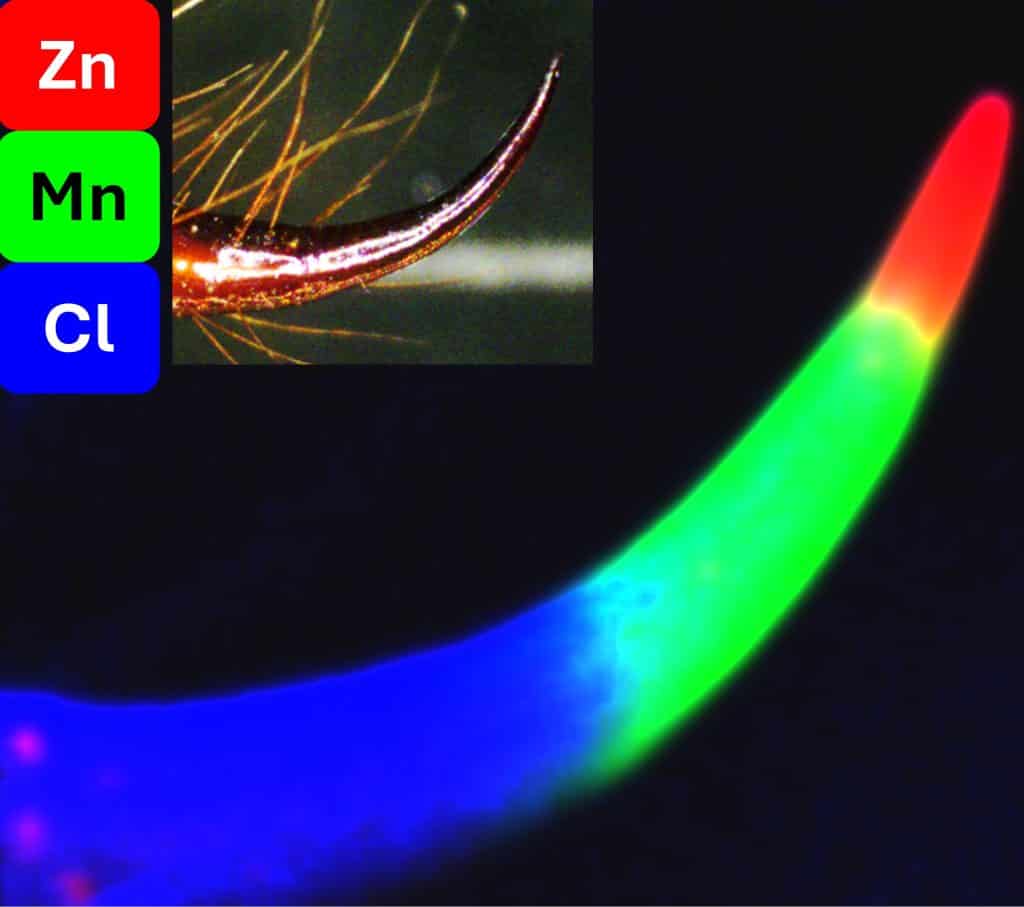
The venom-producing glands inside the scorpion’s tail push venom through the stinger during a strike.
©E.P. Vicenzi/Smithsonian Museum Conservation Institute and NIST – Original
That shape already makes the stinger an efficient puncture tool, but the added metals make it even tougher and more durable. “Metals enriched in the tip of the stinger make the exoskeleton harder and more durable, therefore less force is required to puncture their prey’s armor prior to venom injection,” Vicenzi says.
And that’s not all. The metals are distributed with incredible precision. Zinc appears at the very tip of the stinger, while manganese is concentrated just below it. The pincers show a similar pattern. Zinc and iron are concentrated along the cutting edges in tiny tooth-like structures called denticles.
In other words, scorpions are not reinforcing their entire bodies. They are strengthening only the areas that take the most impact during hunting and defense.
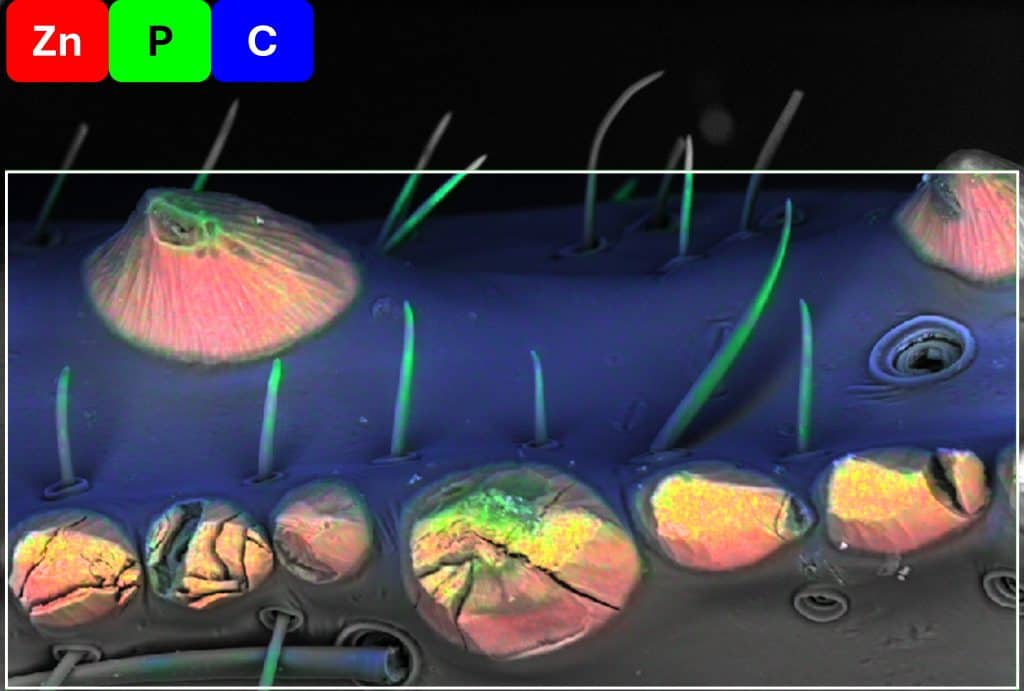
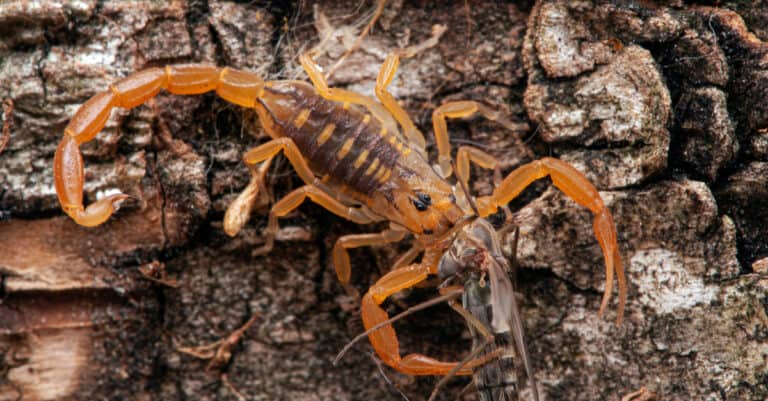
Researchers discovered that metals are concentrated in the scorpion’s tiny serrated denticles. These reinforce the areas that experience the most wear and stress.
©Smithsonian Museum Conservation Institute – Original
What Scorpions and Industrial Design Have in Common
Vicenzi says it’s fair to compare the scorpion’s process to human-made alloys.
“In the case of the cutting edge of scorpion pincers, which feature a homogeneous mixture of zinc and iron within tiny teeth-like structures called denticles, it is fair to say this mixture is analogous to human-made alloys,” he tells us. “There is one distinct difference, however. Unlike alloys used in manufacturing, which are composed of 100% metals, the zinc and iron in denticles are present within a lightweight protein-chitin matrix.”
Metals enriched in the tip of the stinger make the exoskeleton harder and more durable.
Edward Vicenzi, a research scientist at the Smithsonian’s Museum Conservation Institute
In simple terms, the scorpion reinforces its pincers in a way similar to how humans strengthen tools or industrial materials—by strategically combining materials to make them tougher and more durable. Instead of building something heavy like steel, the scorpion embeds trace metals into its lightweight exoskeleton, creating a weapon that is both strong and efficient.
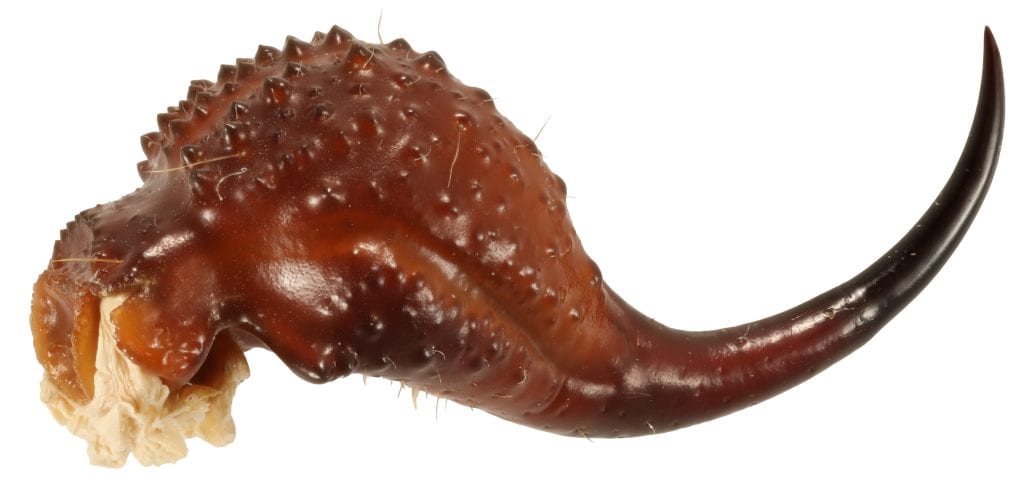
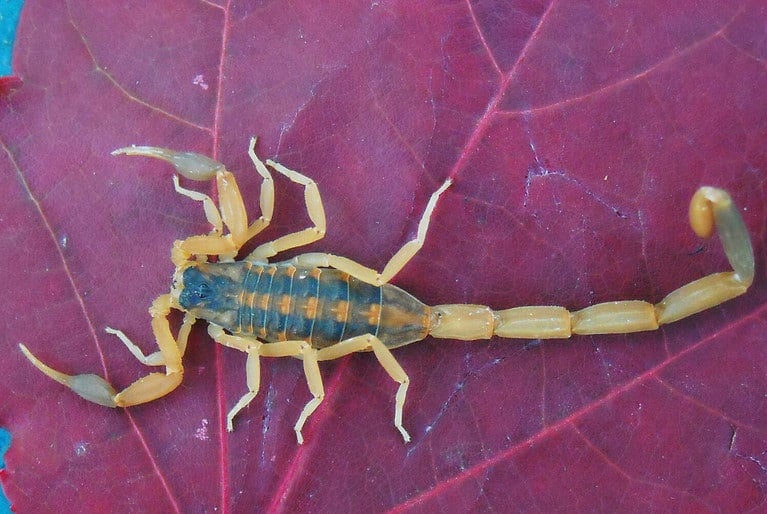
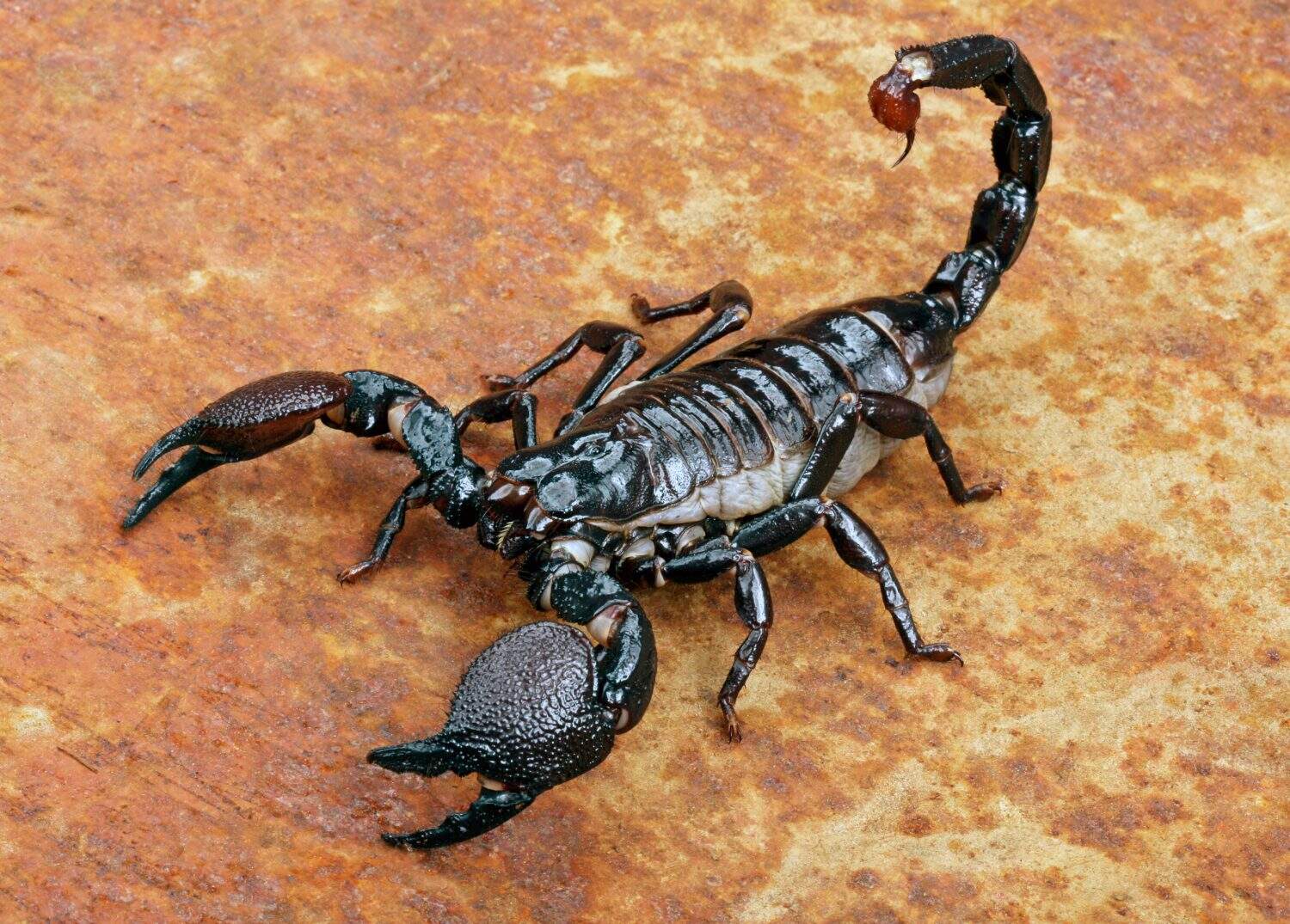
This is a photograph of the whole telson of a granulated thicktail scorpion (Parabuthus granulatus). “The granulated thicktail scorpion is a medically important scorpion, known to ‘rub’ its telson against its body/tail to generate a (defensive) warning sound in a process called stridulation,” Campbell tells us.
©Sam Campbell/National Museum of Natural History – Original
A Closer Look at Evolution in Action
The Smithsonian’s findings also show just how precisely these structures have evolved over time. According to the study’s lead author, Sam Campbell, the metals appear in the exact spots where the scorpion’s stinger and pincers experience the most stress and strain.
“They showed that there is a very high concentration of stress at the tip of the stinger, while some longer stingers also experienced stress at the base of the curve in the stinger,” Campbell explains. “These specific regions that experience high stress are exactly where we see metal enrichment, and these metals likely play a direct role in ensuring the stinger is resistant to snapping under high stress.”
The pincers tell a similar story.
“Within the claws, the enrichment is actually restricted to the teeth-like protrusions along the cutting edge,” Campbell shares. “These denticles are effectively serrations that help scorpions grip onto items in their grasp.”
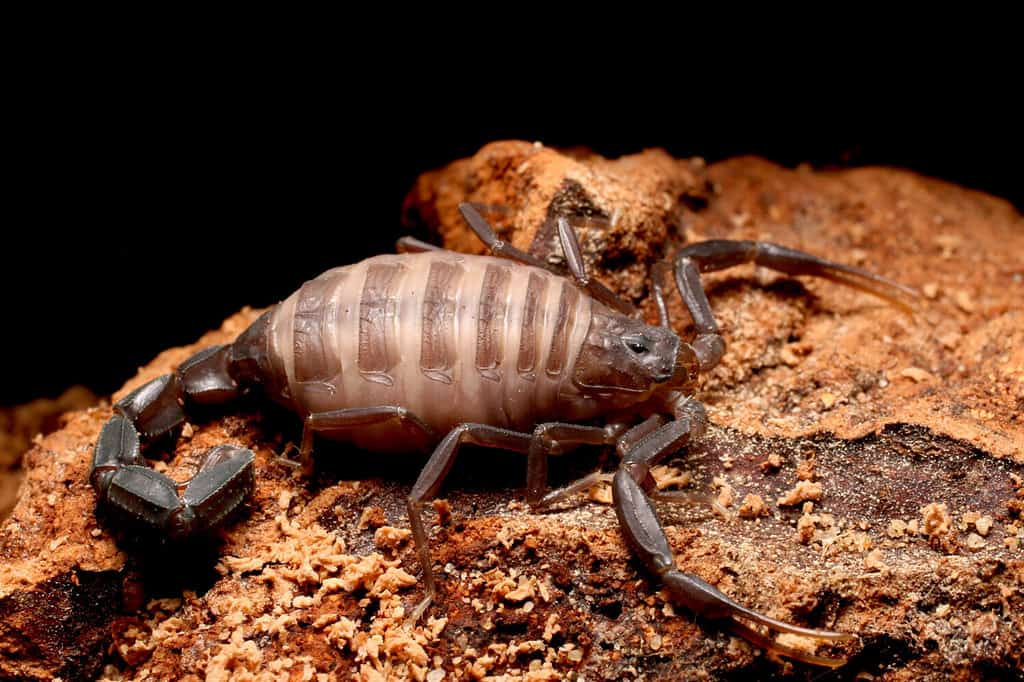
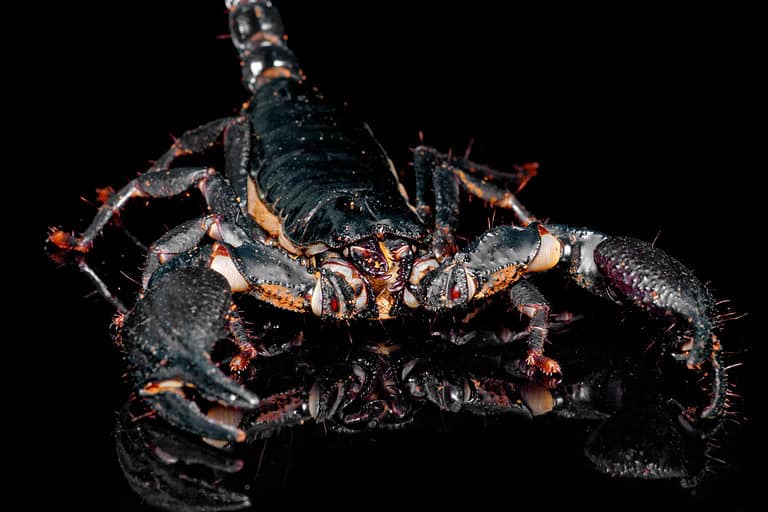
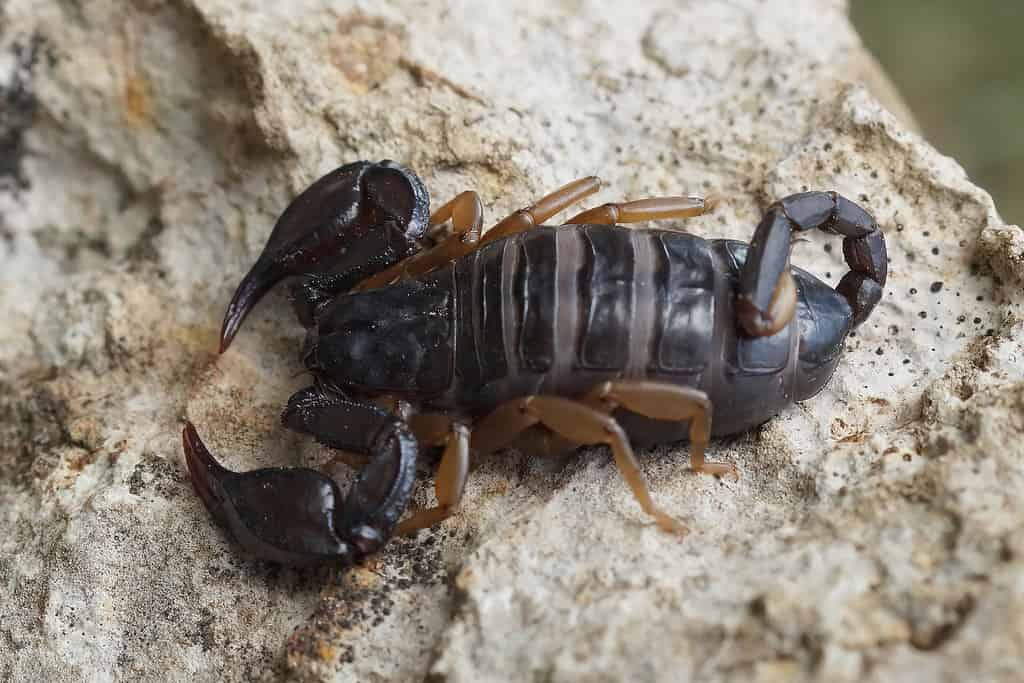
“The Androctonus family of scorpions, also known as fattail scorpions, is known for its potent venom featuring a powerful neurotoxin that can be lethal to humans,” explains Edward Vicenzi.
©Dan Olsen/Shutterstock.com
More Discoveries
Researchers initially expected scorpions with stronger, bulkier pincers to contain higher levels of zinc. Instead, they found zinc more frequently in species with longer, slender pincers that rely more heavily on stinging prey.
That discovery suggests the metals do more than simply make the weapons stronger. They may also help the stingers and pincers stay sharper, hold up longer, and work more efficiently over time.
“We did not study the specific functional roles of each metal in this study,” Campbell tells us. “However, previous studies have shown that zinc and manganese enrichment contribute greatly towards increasing the durability, sharpness, and mechanical performance of scorpion weapons.”
Beyond the scorpions themselves, researchers say the study could help scientists better understand how other animals reinforce their own biological tools and may even inspire new materials in the future.
“Metal-enriched chitin in the hard parts of animals found in nature have inspired efforts to synthesize new materials that can be manufactured using far less energy than the traditional high-temperature metallurgical methods used today,” Vicenzi says.
For an animal that has survived on Earth for hundreds of millions of years, it turns out the scorpion may still have a few engineering secrets left to reveal. And we’re here for it!