
Quick Take
- Before any social learning kicks in, most cockatoos don't just ignore unfamiliar food. They actively retreat from it. So what flips that switch? See how the study began →
- Just a handful of 'trained' birds triggered a chain reaction that tore through entire roosting communities in days. The speed of spread is hard to believe. See the rapid spread →
- Juvenile cockatoos pick which food to eat based on something other than hunger or instinct, a behavior that mirrors what researchers have documented in young human children. Explore juvenile conformity findings →
When animals learn to live in urban environments, they are on a steep learning curve. There are new dangers to be aware of, but also lots of new opportunities. The quicker a species can learn how to take advantage of a new urban food source, the better. And this is where intelligence can be a huge advantage. We already knew that the parrot family was clever. Now, there is new research from Australia that demonstrates how sulphur-crested cockatoos use social transmission of knowledge to obtain food in an urban area.
Important Facts About Sulphur-Crested Cockatoos
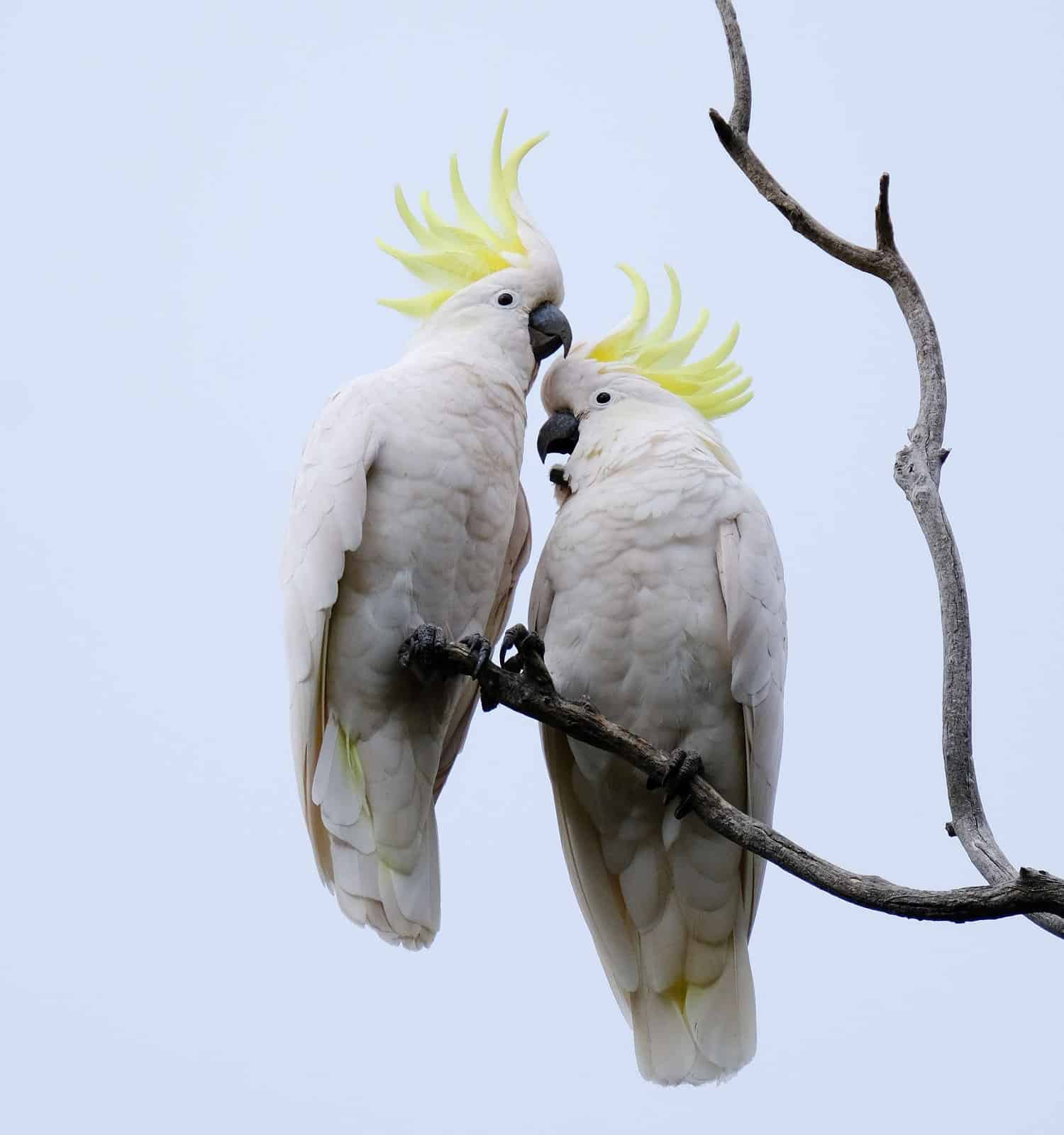
Sulphur-crested cockatoos (Cacatua galerita) are a large member of the parrot family. You will find these social birds across Eastern Australia and New Guinea, gathered in roosting communities. They share their range, foraging for food and sleeping together at night. Sulphur-crested cockatoos are described as ‘generalist foragers’, which means that they will eat a broad range of foods. This includes seeds, nuts, fruits, roots, bulbs, and even wood-boring larvae.
These cockatoos have proved highly adaptable to urban environments. Here, they eat foods such as eucalyptus gum-nuts and native figs. People also like to feed them sunflower seeds and nuts.
Social Learning and Food
Sometimes, the cockatoos help themselves to our food. They have been seen opening people’s bins in Australia and feeding on the scraps of food inside. This behavior started in just two suburbs but soon spread to 42 areas over a period of several years. This suggests that the behavior is being spread by social learning.
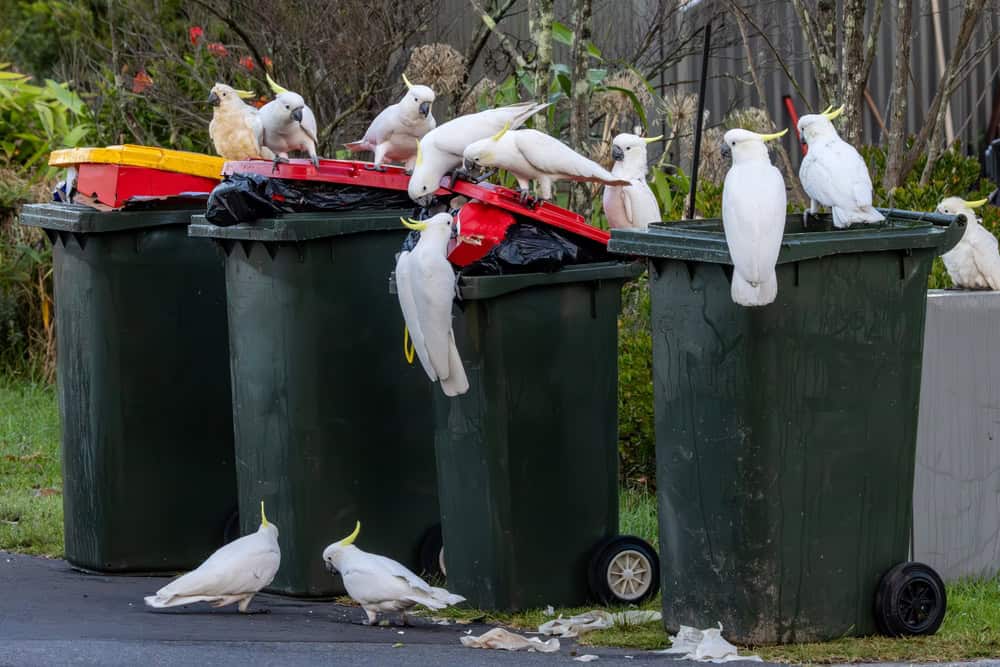
Cockatoos can learn to feed from bins.
©Ken Griffiths/Shutterstock.com
So, how is this knowledge spread between individuals, and do the cockatoos show a preference for learning from some individuals over others? Researchers conducted an observational study to find out.
How Was Social Learning in Cockatoos Studied?
Scientists individually paint-marked cockatoos at five roosting communities in central Sydney and measured their social associations. Then, they trained one bird to eat unshelled almonds painted red and another bird to eat unshelled almonds painted blue. Almond trees do not grow naturally or commercially in Australia, making almonds an unfamiliar food for these birds. If local residents ever feed almonds to the cockatoos, they are invariably shelled and are certainly not painted blue or red! Therefore, these almonds represented a novel food source for the birds.
The researchers observed whether the ability to recognize red or blue almonds as food, and to open their shells, was spread through social learning.
Cockatoos Spread Knowledge by Social Learning
The results of this observational study were fascinating. They strongly suggested that the cockatoos acquired the knowledge that almonds are food from other birds (social learning). Before watching another cockatoo eat the almonds, most birds ignored them or even backed away from them! What’s more, the knowledge spread rapidly. Starting with just four ‘trained’ birds, it spread to 349 individuals in five roosts over a period of days. The information was spread through social network ties. Cockatoos are known to move between roosting communities and clearly take their new knowledge with them.
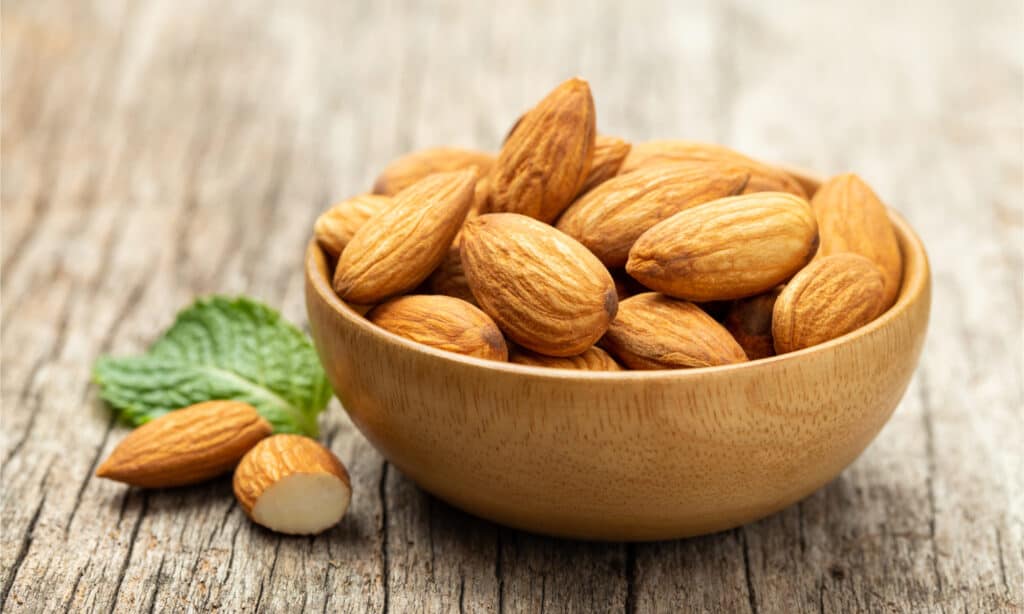
Almonds are not a regular food for cockatoos.
©suriya yapin/Shutterstock.com
All age groups of birds were equally good at learning this new knowledge. However, juvenile birds were more likely to conform to what the majority were doing when it came to choosing the color of almonds to eat. This effect is called conformity and can be very useful in adaptive behavior when exploring a new food source. It stops the juveniles from being exposed to potentially toxic foods. Basically, if you eat what everyone else is eating, you are safer! Similar behaviors have been observed in human children. Studies have shown that children under six years old are willing to update their prior beliefs using social information, but only if everyone around them does. Older children, however, are less likely to conform to the majority.
Interestingly, the birds adopted different techniques for opening the almond shells. Within a roost, they tended to all use the same technique. Roosts that were further away adopted different techniques. It was as if an ‘almond-opening culture’ developed within each roost.
Why This Research Is Important
This study tells us a lot about how cockatoos have adapted to live in urban communities. Just four trained birds were able to spread the knowledge that almonds were good to eat. The message reached 349 other cockatoos in five roosts in just days!
Cockatoos can live up to 40 years in the wild and reproduce slowly. Therefore, evolution is not going to be fast enough to enable them to keep up with the pace of human-induced environmental change. Their dietary flexibility is a distinct advantage. This study has shown that it has a strong social component.
We must deepen our understanding of how animals adopt new food sources as humans continue to alter their natural environments. In doing this, we can learn how to improve the human-wildlife coexistence that is so crucial for the well-being of all living things.