
As humans have wondered about their own capacities for thought and imagination, so too have they wondered about the mental faculties of animals. What is the inner life of, say, a lower primate like? Do they dream, wonder, aspire, reminisce, or imagine in the ways that we consider to be distinctly human? A team of researchers at Johns Hopkins University set out to answer those questions. Inspired by children’s tea parties and the conceptual potential of a bonobo primate, they tested the limits of imagination.
Scientists once treated the line between human thought and animal behavior as distinct. Imagination, like storytelling, was thought to be a distinctly human activity, one that separated us from the rest of Earth’s creatures. Research like that out of Johns Hopkins University, however, has helped soften that line. It turns out that even a simple children’s game like tea time can give startling implications for mental acuity, especially considering the actions of one bonobo. Researchers found that the bonobo, named Kanzi, could engage in “secondary representation” or holding a real-world scenario and an imagined one in its head simultaneously without confusion. Let’s learn more about these fascinating findings that upset the traditional notions regarding animal intelligence.
The Power of Imagination
Play may seem like it has nothing to do with intelligence upon first glance. A closer look, however, shows that play is the stuff intelligence is made of. Play, or imagination, requires the ability to keep track of something that is not present, to remember it is not real, and to pretend as if it is. This skill, known as imaginary representation, allows the brain to hold two ideas at once without confusion.
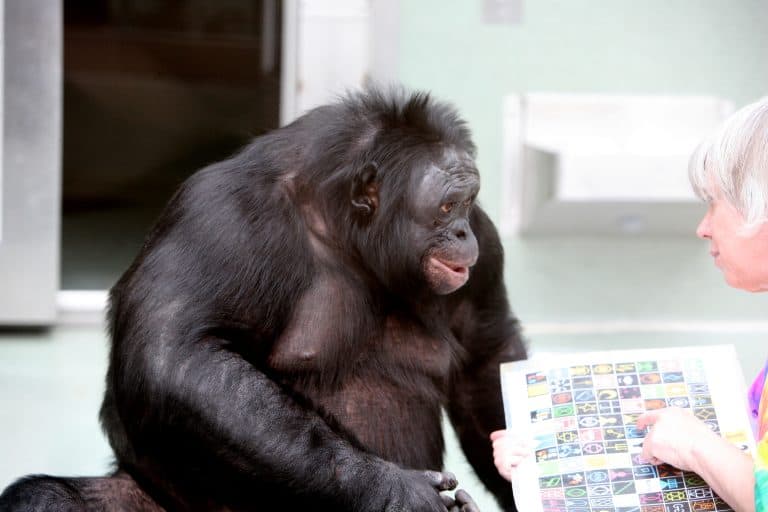
Scientists believe secondary representation serves as a foundation for more advanced mental planning, empathy, and the ability to consider variables and possibilities. As such, a team of scientists set out to figure out whether or not animals ever exhibit this type of thinking. Enter Kanzi, a 43-year-old male bonobo at the Ape Initiative in Iowa.
Tea Time
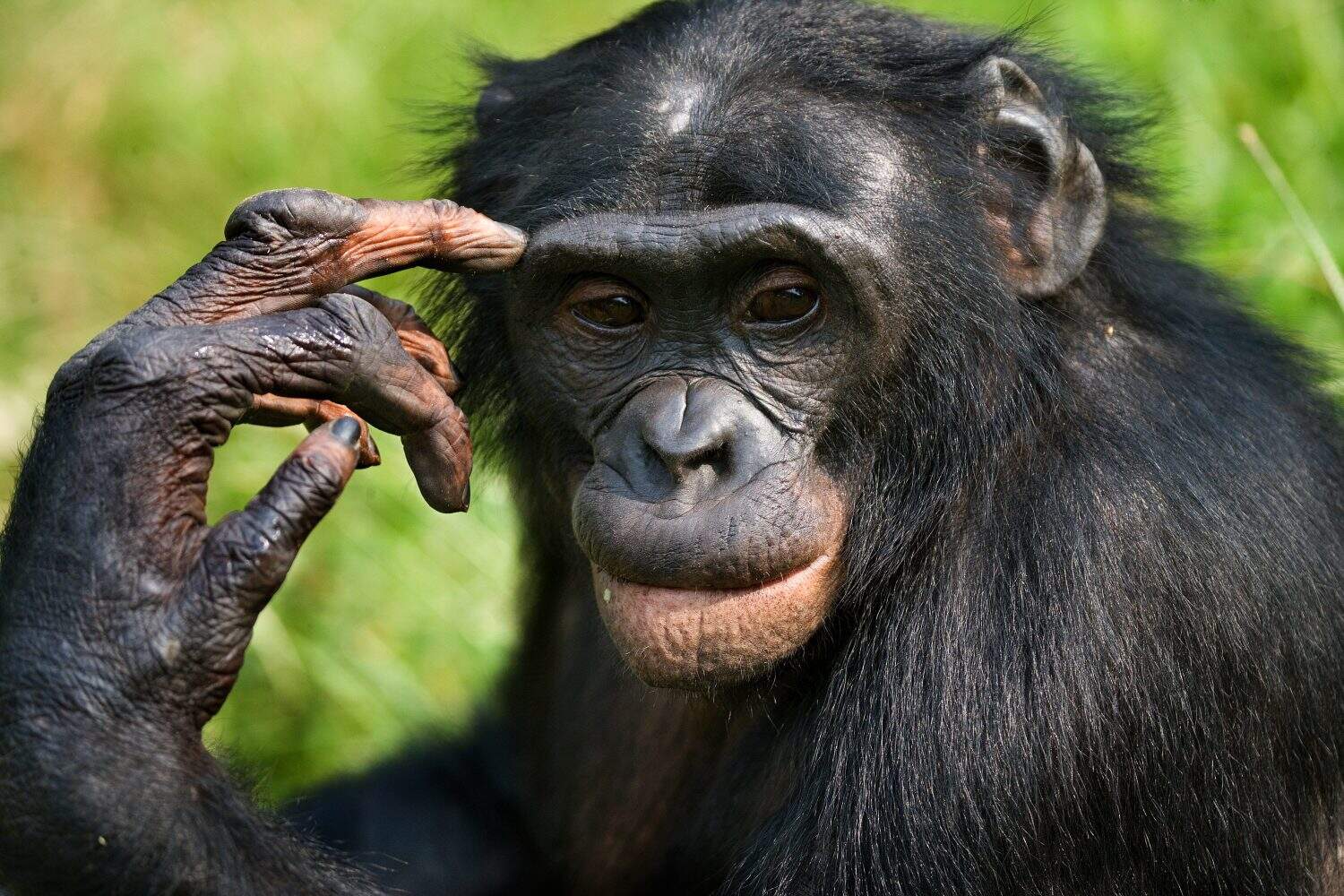
A 40-year-old male bonobo named Kanzi showed the ability to differentiate between real and imagined objects.
©GUDKOV ANDREY/Shutterstock.com
The researchers at Johns Hopkins University chose Kanzi because he had spent years interacting with people, learning how to use picture symbols to communicate ideas and even understand spoken language. Furthermore, he could answer spoken questions by pointing. Considering the test subject for the experiment needed to communicate with the researchers, Kanzi seemed like the perfect fit.
To ensure that Kanzi answered questions without the expectation of treats, the experiment design ruled out habit or reward seeking. Then they created a simple but pretend game of tea time using empty cups, jars, and pitchers. A researcher pretended to pour out juice or place fruit when none was really there. Then they asked Kanzi where the items were. In one game, pretend juice entered two cups and then left one cup. In response, Kanzi pointed to the cup that still ‘had’ pretend juice. He maintained his choice even after the cups switched places, suggesting he was able to track the imaginary action.
Then the researchers played a game contrasting pretend and real scenarios. They used one cup containing real juice and another that received a pouring of pretend juice. When asked to choose, “Kanzi almost always picked the real juice, showing awareness of the difference.” The final game used grapes. For this game, a researcher pretended to put a grape in a jar and remove it from another jar. Again, Kanzi pointed to the jar with the imaginary grape more than expected by pure chance. Additionally, researchers implemented multiple safeguards to ensure that Kanzi’s responses were not influenced.
Fortuitous Findings
These findings are pretty remarkable, as they suggest that bonobos can form secondary representations during shared imaginative play. This implies that primates like bonobos can imagine situations beyond their present reality. Plus, as previously stated, the researchers ensured that no other explanations could qualify. They systematically ruled out all alternative explanations. Kanzi preferred real juice when it was available, showing a difference between imagined and real items. Imitation was also ruled out, as the experimenter’s actions differed from Kanzi’s responses, and the visuals did not influence him since the containers remained empty and transparent. Furthermore, no “signs of frustration followed unrewarded choices, suggesting understanding rather than mistaken belief.”
As the study’s lead author, Amalia P. M. Bastos, explained in an interview with Earth.com, the findings were significant. She said, “It’s extremely striking and very exciting that the data seem to suggest that apes, in their minds, can conceive of things that are not there.”
In the same article, co-author Christopher Krupenye added, “Imagination has long been seen as a critical element of what it is to be human, but the idea that it may not be exclusive to our species is really transformative.”
What This Means
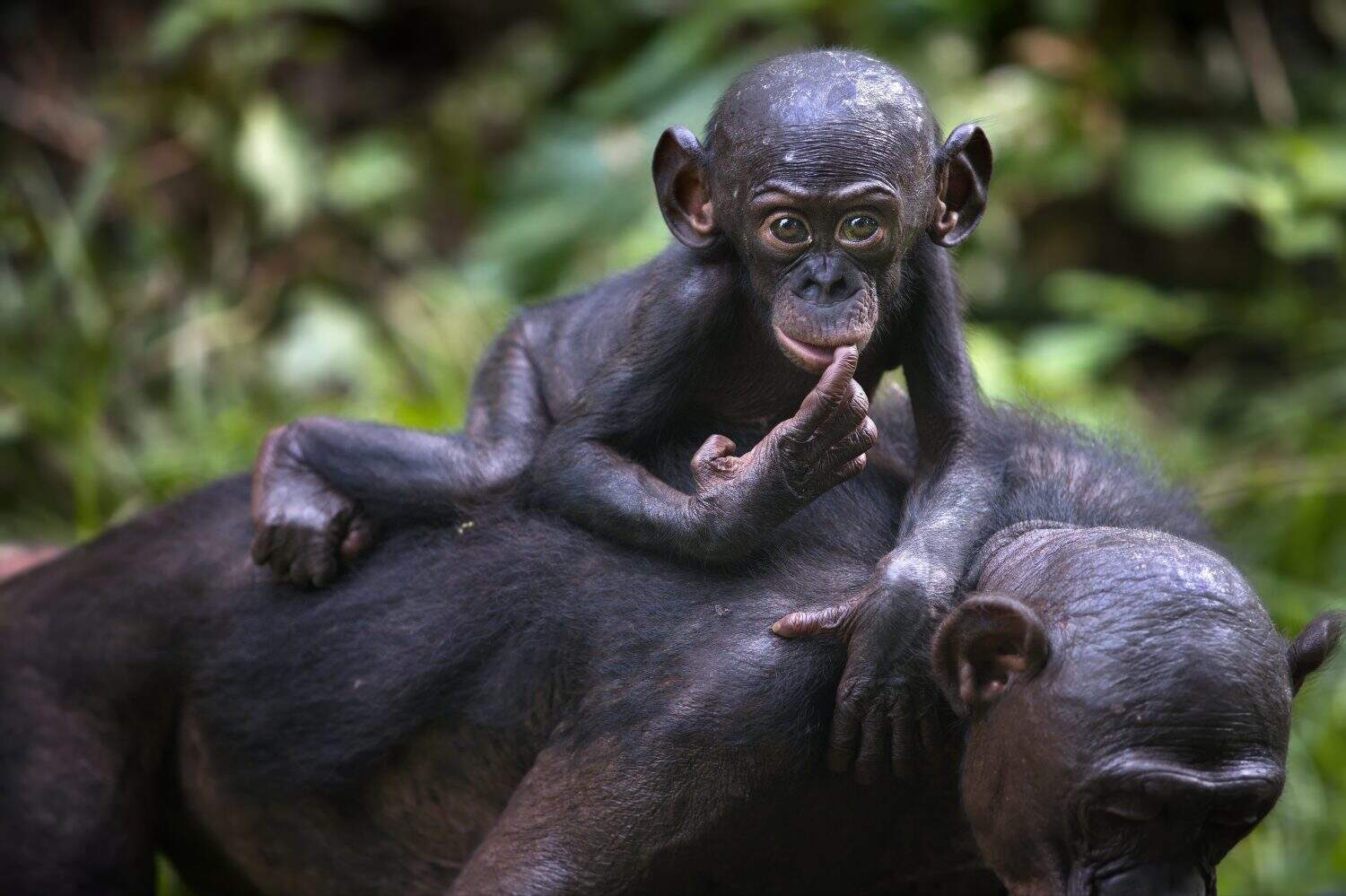
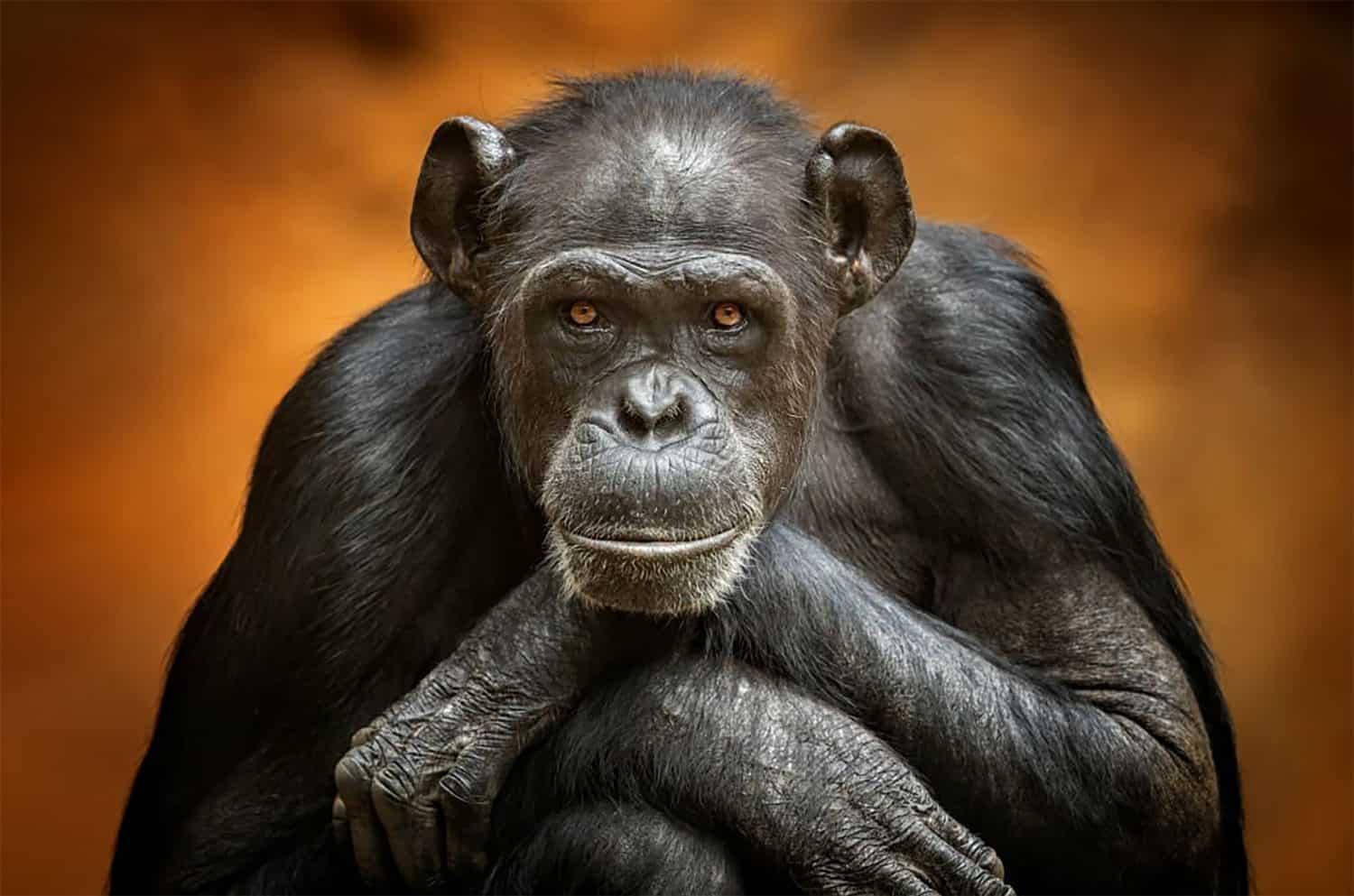
Human imagination and planning mental faculties might not be as unique as previously thought.
©Wirestock Creators/Shutterstock.com
These findings not only offer insight into the internal worlds of animals but also challenge long-held assumptions regarding the uniqueness of human experience and perspective. The team’s findings, in particular, suggest “secondary representation likely existed in a common ancestor shared by humans and apes around six to nine million years ago.”
Kanzi was undoubtedly a perfect choice. Since enculturation may play a role, language training can help articulate mental skills, and symbol use may help express imaginary states. Kanzi demonstrated what is possible with proper preparation and training. Next, the researchers hope to test apes without extensive human contact. Who knows what they may discover in the mind of a primate? It may turn out to be very similar to our own.