Quick Take
- Western ridged mussel populations have disappeared from more than 40 percent of their historical range.
- The conservation group Xerces Society filed a petition with the U.S. Fish and Wildlife Service in 2020 seeking protection under the Endangered Species Act.
- Fish and Wildlife did not act on the petition within the legal timeframe.
- On March 17, 2026, the conservation group Center for Biological Diversity sent an official letter to the U.S. government notifying them that a lawsuit will be filed if no resolution can be reached.
The western ridged mussel plays a crucial role in keeping rivers in the Western United States clean. However, thanks to environmental threats and the introduction of invasive species, these valuable mussels are on the brink of extinction.
Conservation groups have been trying for years to get protection for the western ridged mussel under the Endangered Species Act. However, the U.S. government has been slow to respond, missing key deadlines along the way. Now, concerned environmental groups are threatening to sue the U.S. Fish and Wildlife Service.
What Is the Western Ridged Mussel?
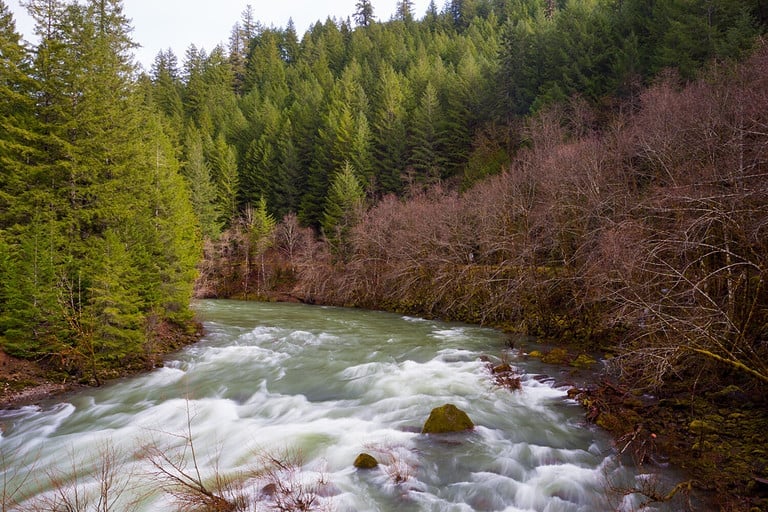
The western ridged mussel is found in freshwater lakes, streams, and rivers across Washington, Oregon, California, Idaho, and Nevada. As members of the mollusk family, they grow to about five inches long and one and one-half inches wide. By mussel standards, the western ridged is considered medium to large. They are most notable for the sharp ridge running diagonally across their shells.
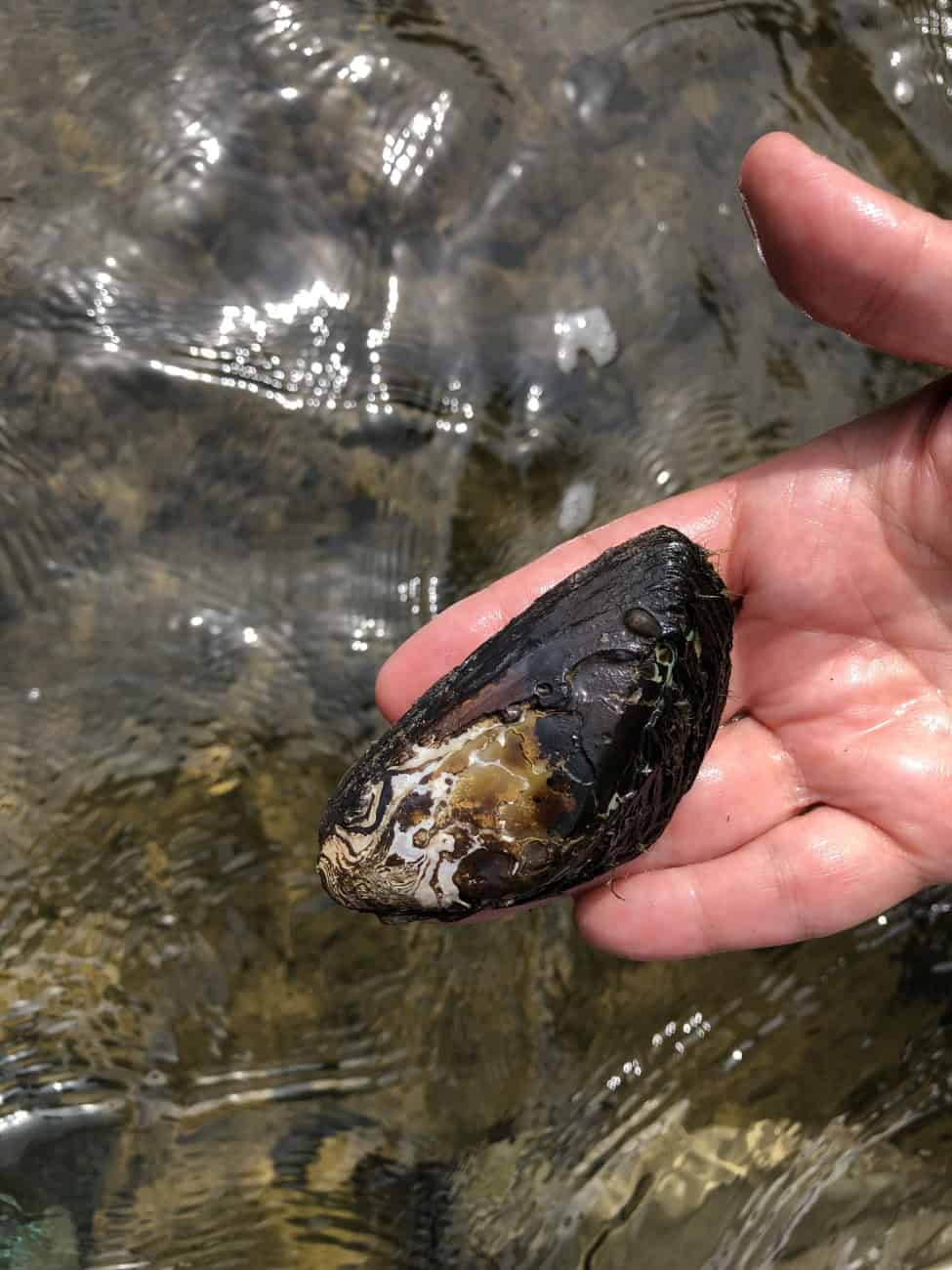
Western ridged mussels have a notable ridge along their shells.
These mussels live, on average, between 20 and 30 years. They have an unusual reproductive method: when they release thousands of tiny larvae into the water, the larvae’s survival depends on their ability to attach themselves to the fins or gills of a fish. They’re not picky about their host fish, and are often seen on sculpins and trout.
Once attached, the larvae receive nutrition from their host, but this process is harmless to the fish. In fact, the larvae are so small that the fish do not notice them. After a few weeks, when the larva is large enough, it detaches from its host and settles into the sediment at the bottom of the water.
Why Is the Western Ridged Mussel Important?
The western ridged mussel serves an important purpose. Each mussel continuously filters the water in its habitat. A single mussel can filter several gallons of water each day, removing algae, bacteria, and other pollutants. This process helps maintain a healthy ecosystem for all river inhabitants and users.
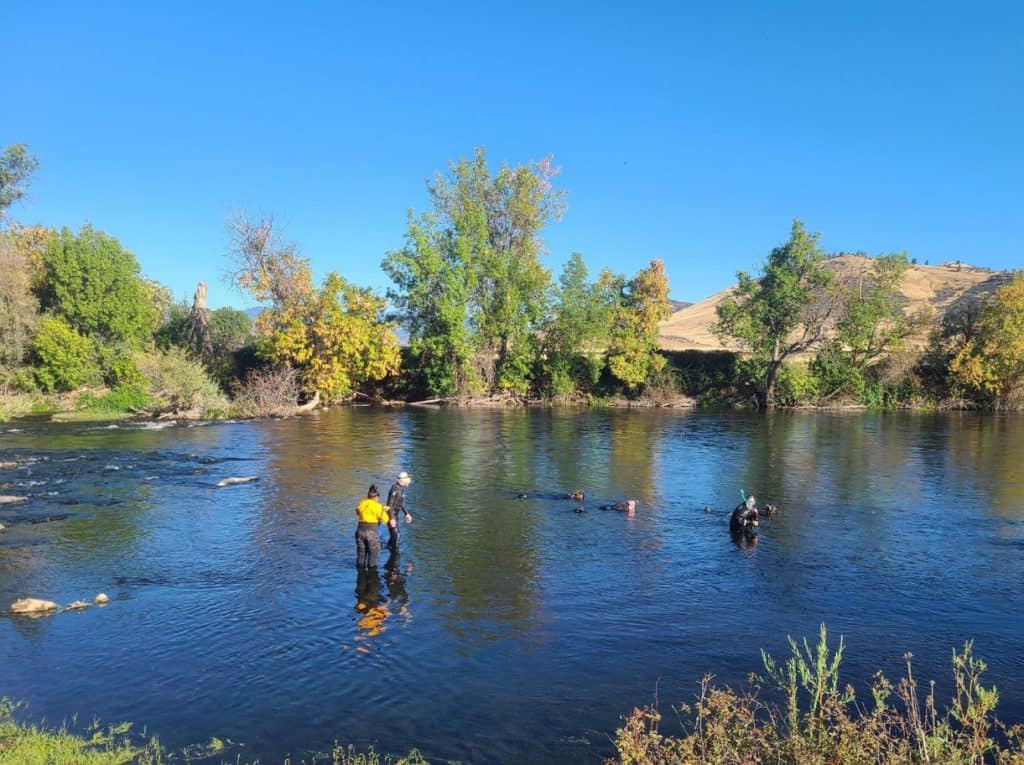
Western ridged mussels are vital to healthy river ecosystems.
Mussels are also highly sensitive to environmental changes and are considered an indicator species. A decline in mussel populations signals that the water system is unhealthy.
What Threats Do These Mussels Face?
Unfortunately, western ridged mussel populations have been steadily decreasing over the past decade. Estimates are that total numbers have disappeared from more than 40 percent of their original range across the western United States. There are several significant threats facing the western ridged mussel, including:
- Habitat loss – The creation of dams and channels changes the water flow and temperature, resulting in less-than-ideal habitats for mussels
- Water quality – Agricultural runoff and other pollution overload the mussel’s ability to effectively filter the water, often becoming toxic to the mussel
- Invasive species – Non-native quagga, golden, and zebra mussels—unintentionally introduced to western U.S. waterways via watercraft and other sources—use the native mussels’ shells as their home, often overwhelming and killing the western ridged mussel.
- Declining host fish populations – As native fish populations decline due to poor water quality, habitat destruction, and fragmented waterways, mussel larvae have fewer opportunities to find a host and develop.
- Climate change – As water temperatures rise and water flow decreases, the mussels’ natural habitat can no longer support their long-term survival.
What Conservationists Have Tried So Far
On August 20, 2020, the Xerces Society petitioned the U.S. Fish and Wildlife Service to list the western ridged mussel as an endangered species and to designate critical habitat. On July 27, 2021, Fish and Wildlife issued a finding that the petition had merit and that legal protection action may be warranted.
That finding triggered a 12-month deadline for Fish and Wildlife to issue final findings. Within that 12-month period, Fish and Wildlife was supposed to conduct studies and hold public hearings before issuing a final ruling. The deadline to complete that activity was August 21, 2022. However, Fish and Wildlife never issued the required final finding. To date, they have taken no further action beyond issuing their initial finding on Xerces’ petition.
Next Steps to Protect the Western Ridged Mussel
In response, the Center for Biological Diversity on March 17, 2026, sent an official letter to the U.S. Department of the Interior and the U.S. Fish and Wildlife Service advising them of the violation. The Center is a national nonprofit conservation organization with more than 1.8 million members that advocates on behalf of endangered species and wild places.
The Center also used the letter as a formal notice, under the Endangered Species Act citizen suit provision, that it intends to file a lawsuit after 60 days. According to its letter, the Center hopes to resolve the issue before litigation is required.
The Center believes an appropriate resolution would be for Fish and Wildlife to set a date for issuing its final endangered listing rule for the western ridged mussel. However, it is prepared to file a lawsuit if no such solution is reached. The date for possible filing of any lawsuit is on or around May 17, 2026.