
Quick Take
- There is one cognitive task where chimpanzees actually beat humans, and it is probably not what you would expect. Chimpanzee spatial memory →
- Gorillas may rank last in tool use among the great apes, but the real reason has nothing to do with intelligence. Why gorillas skip tools →
- One great ape was recently observed doing something scientists had never documented in the wild before, a discovery that changes how we define animal intelligence.
- The smartest ape title depends entirely on what you're measuring, and that's precisely where the ranking gets complicated. How rankings get complicated →
The word ape commonly refers to large, tailless primates. Humans, bonobos, chimpanzees, orangutans, and gorillas are considered great apes, while gibbons are considered lesser apes. Apes are not monkeys. Although both apes and monkeys are primates, apes are typically bipedal and spend most of their time on the ground. Monkeys are quadrupeds that spend most of their time in the forest canopy. Apes also have larger brains and more complex cognitive skills than their cousins, as well. So, just how intelligent are apes, and which great ape is considered the smartest in the world? Continue reading to find out.
Which are the Smartest Apes in the World?
The great apes (hominids) are the most intelligent primate family, and humans are vastly more intelligent than the other great apes: bonobos, chimpanzees, gorillas, and orangutans. This isn’t surprising, considering that the human brain is three times larger. So, technically, humans are the smartest apes in the world. However, when it comes to determining the second smartest ape, the answer is less clear.

Humans are the smartest apes in the world.
©quickshooting/iStock via Getty Images
No single ape holds the title of the absolute smartest because intelligence can be measured in multiple ways. Each of the great apes is considered exceptionally intelligent, but each has its own unique cognitive style and areas of expertise, primarily shaped by its environment.
While bonobos easily outperform chimpanzees or orangutans in tasks involving teamwork and emotional connection, they often lag in mechanical problem-solving or spatial memory tasks, where orangutans and chimps excel.
Bonobo
Bonobos are renowned for their exceptional social intelligence, advanced communication, and problem-solving capabilities. They can master hundreds of geometric symbols (lexigrams) and comprehend thousands of spoken words. They can mentally track multiple individuals who are out of sight and have been shown to distinguish between real and pretend objects.
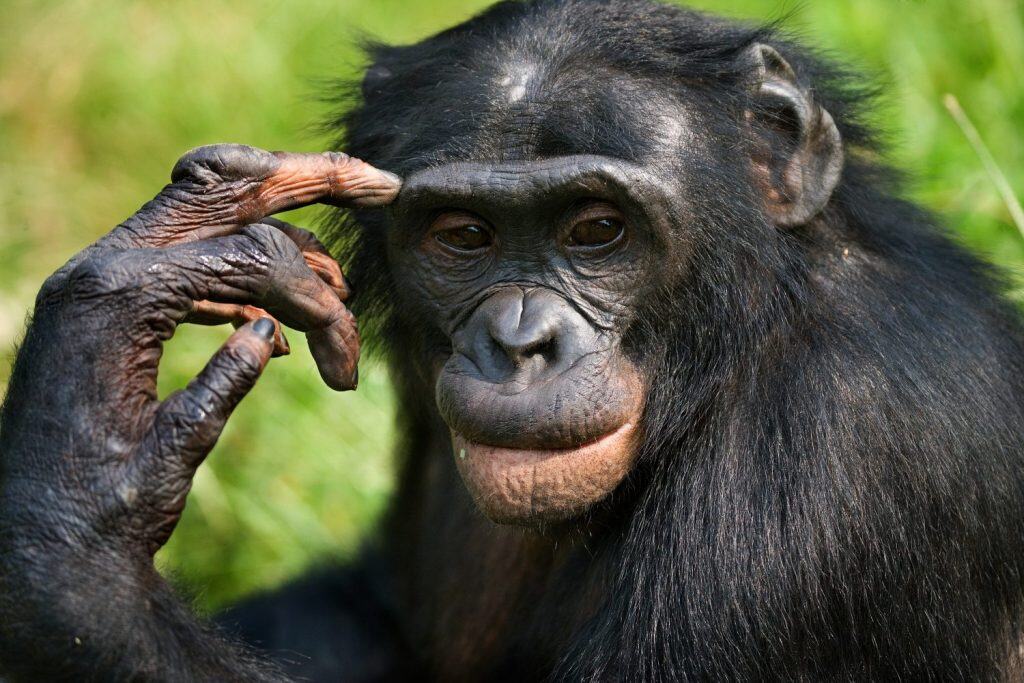
Bonobos understand that other bonobos have thoughts, intentions, and perspectives that differ from their own.
©GUDKOV ANDREY/Shutterstock.com
Studies show bonobos understand when a partner is ignorant of a situation and will proactively communicate or point to help them solve a problem. They possess high socio-emotional competence, regulating their emotions to navigate complex social hierarchies and friendships.
Researchers measure linguistic abilities by tracking how apes combine symbols to form new phrases or correctly respond to spoken English commands.
Hide-and-seek tasks using photos and voices are used to measure spatial memory, object permanence, and facial recognition.
Chimpanzee
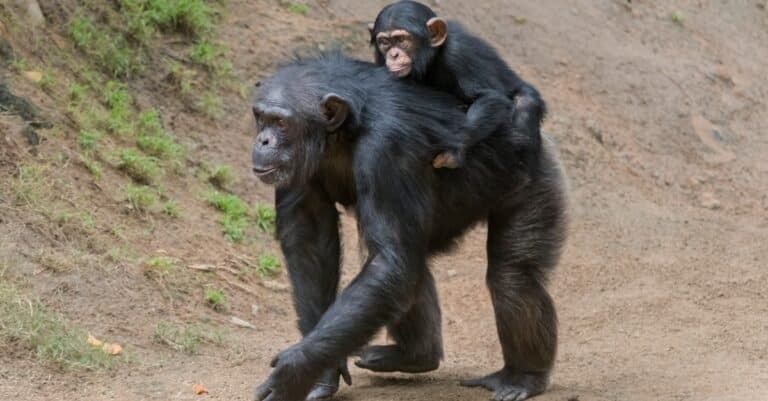
Chimpanzee intelligence is characterized by advanced tool use, complex social management, and remarkable spatial memory. Chimpanzees are capable of abstract thought, deception, and planning.
Chimpanzees don’t just use tools; they actively modify them. Documented behaviors include fashioning grass stems to fish for termites, using stones to crack nuts, and chewing leaves to create sponges for soaking up water.
They maintain highly intricate community hierarchies. They exhibit empathy, engage in deception, and can understand the perspective of others.
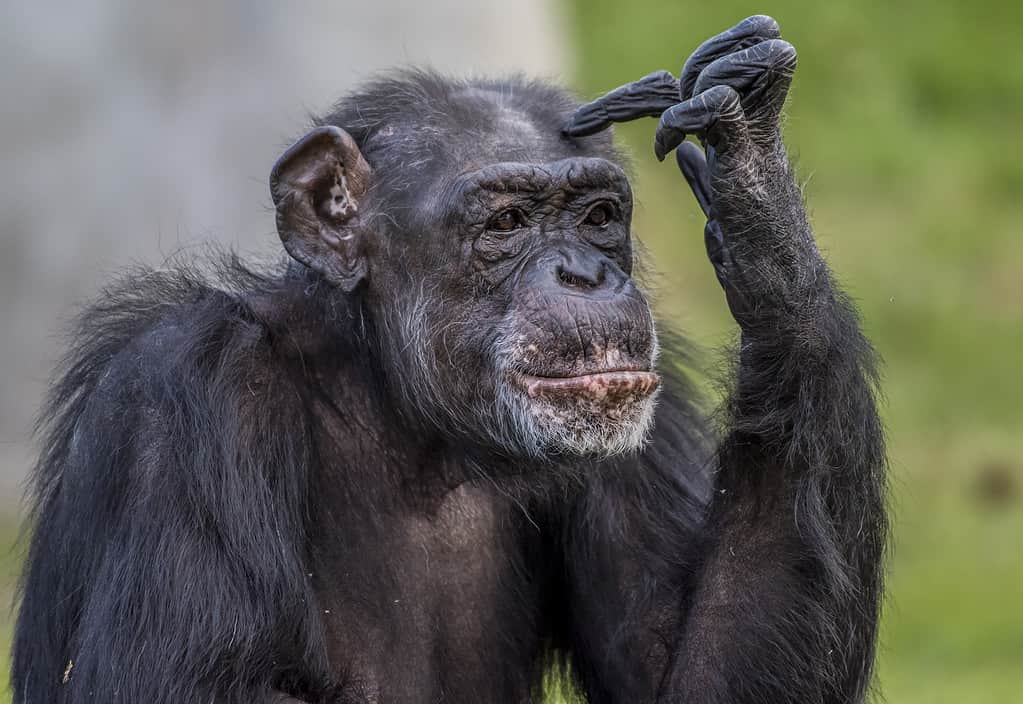
Chimpanzees outperform humans in short-term memory tasks.
©Wirestock/iStock via Getty Images
Chimpanzees can learn lexigrams, symbols, and elements of sign language. They use these to describe past events, make requests, and comment on the actions of others.
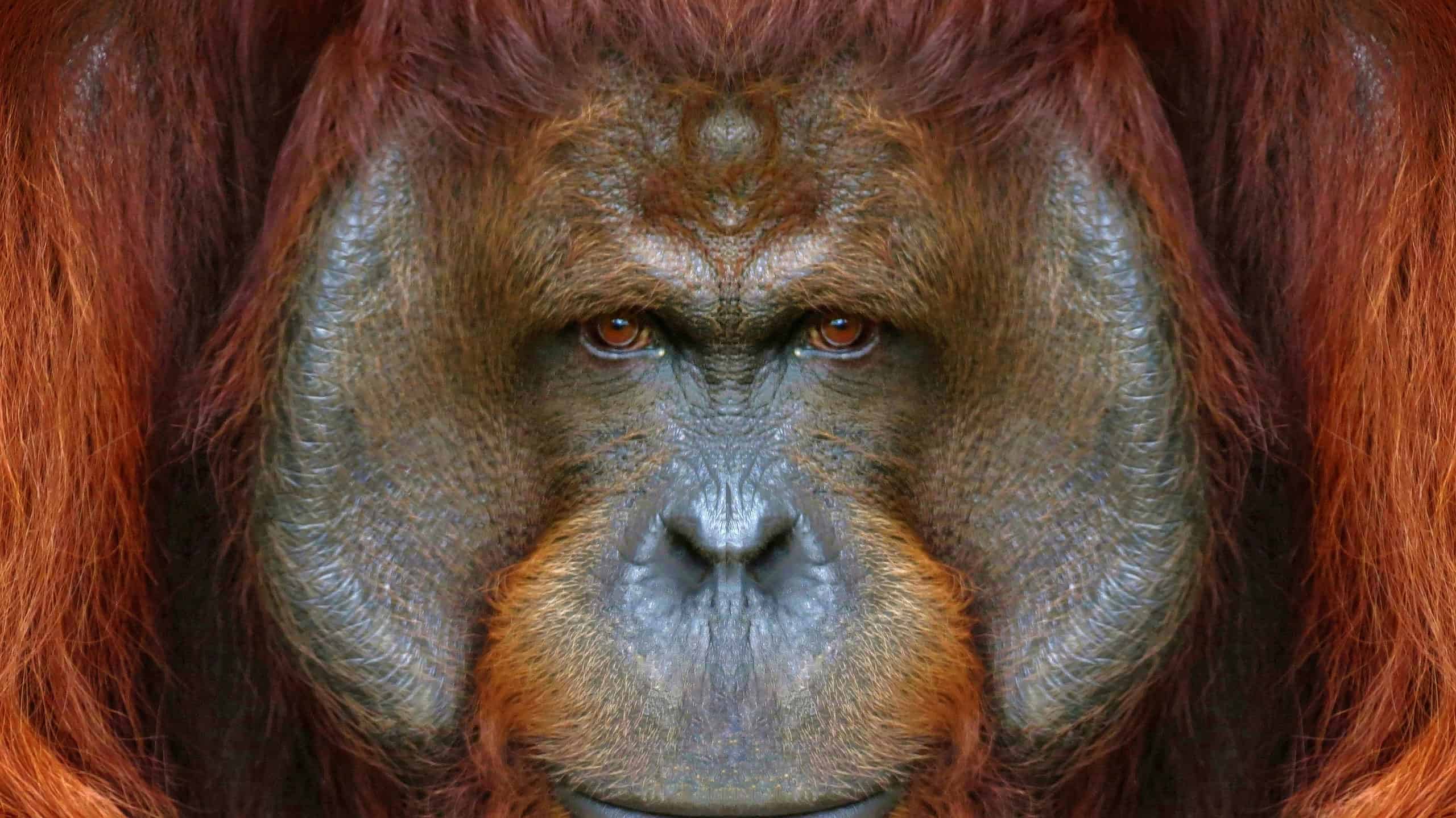
Orangutan
The orangutan’s cognitive expertise includes complex tool use, medical self-medication, calculated reciprocity, and advanced spatial mapping skills. They craft twigs into probes to extract insects, use leaves as sponges or umbrellas, and employ sticks to test water depth or catch fish.
In 2024, researchers observed a Sumatran orangutan chewing medicinal plants and applying the paste to a wound, suggesting self-medication for pain and inflammation, though this behavior has only recently been documented and requires further study.
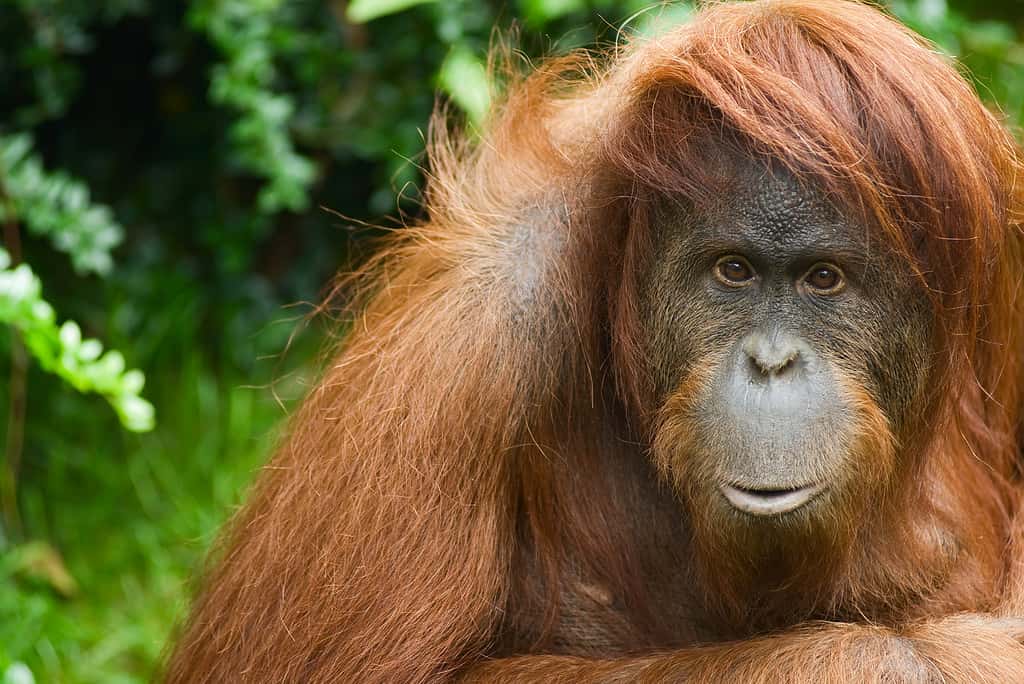
Orangutans (pictured) adapted to solve individual physical and spatial puzzles in solitary canopy life, while chimpanzees adapted to navigate complex social networks.
©Michael Steden/iStock via Getty Images
Unlike chimpanzees, whose intelligence is primarily driven by complex social hierarchies, orangutans evolved their genius largely to survive in a demanding physical environment. To survive, orangutans must navigate complex forest canopies, remember the locations of hundreds of scattered, seasonal food sources, and process various mechanical materials (such as the strength of different tree branches), all of which require advanced spatial memory and planning.
Gorilla
Gorillas possess impressive intellectual prowess, characterized by deep emotional intelligence, strong symbolic capacity, and advanced spatial tracking.
However, in comparative cognitive testing and wild observations, they often appear to fall slightly short of bonobos, chimpanzees, and orangutans in areas like spontaneous tool use and analytical problem-solving.
Still, gorillas have an excellent capacity for interspecies communication, expressing complex thoughts, memories, and emotional states.
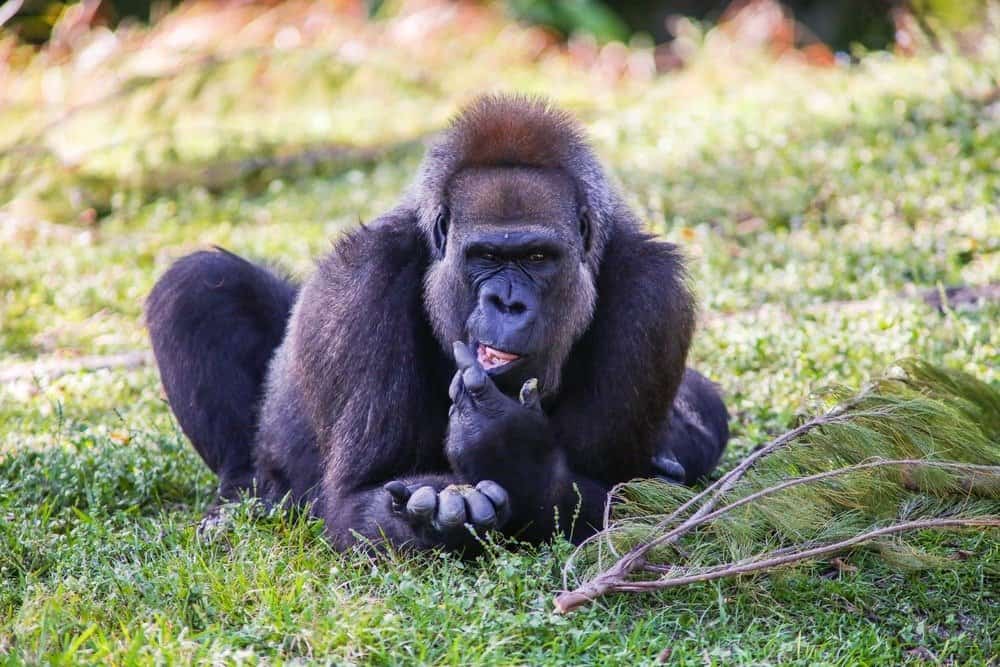
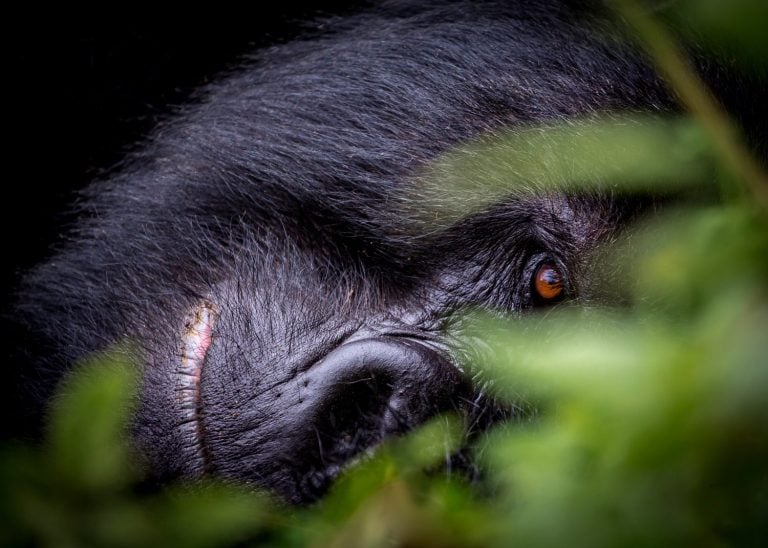
Gorillas may not be the smartest apes, but they do form deeply loyal family bonds and grieve their dead.
©Kit Korzun/Shutterstock.com
Chimpanzees use tools to crack hard nuts, and orangutans use them to extract deeply hidden insects or seeds because they have to. Gorillas do not need these tools to survive. If a gorilla wants to eat a tough bamboo stalk or a hard piece of wood, it does not build a tool; instead, it simply uses its immense physical strength to tear it apart.