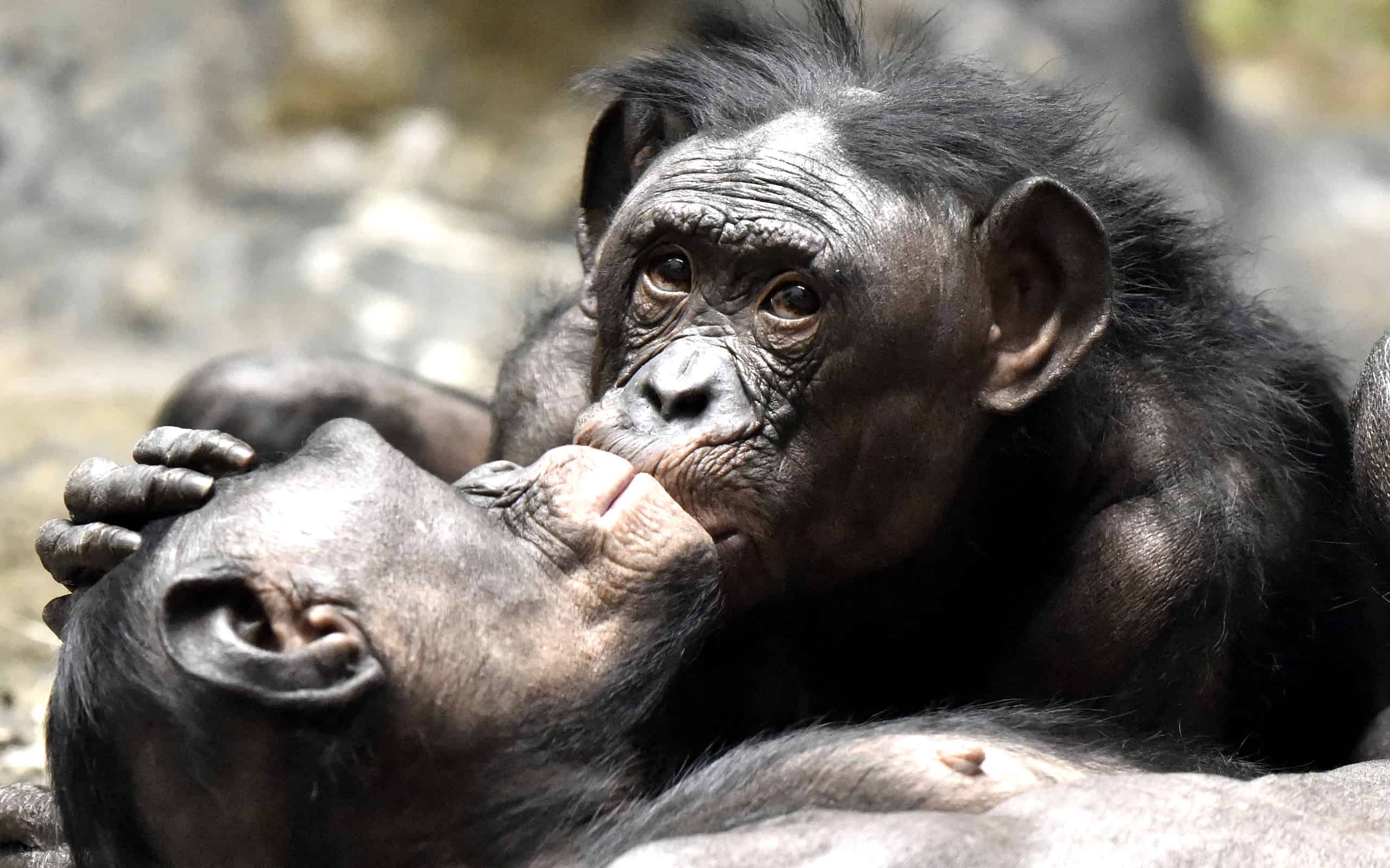

If you’ve heard the common phrase, “Bonobos make love, not war,” you might wonder about the context behind this statement. Essentially, bonobos use sexual activity as a form of conflict resolution. These peaceful, loving creatures also share almost 99% of their DNA with humans. Here’s everything you should know about bonobos—the peacemakers among primates.
What Are Bonobos?

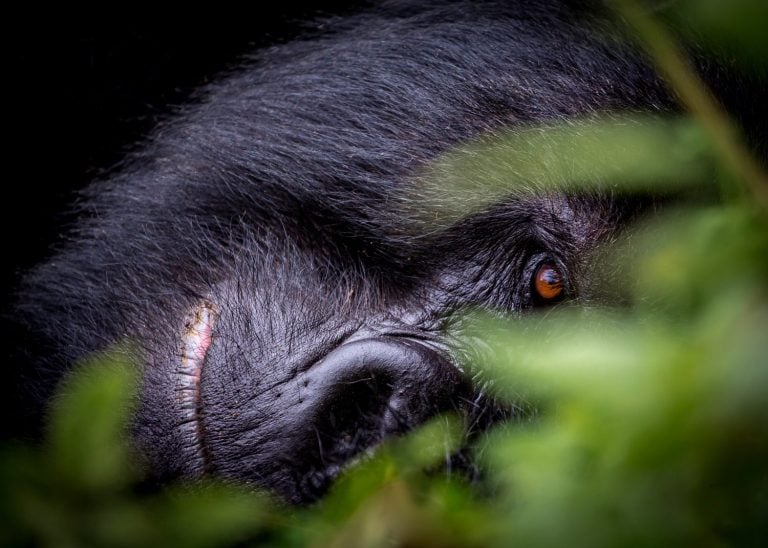
Bonobos are known as the “hippies” of primates.
©Sergey Uryadnikov/Shutterstock.com
The bonobo is an endangered great ape and one of the closest relatives to humans (along with the chimpanzee). In fact, the animal shares 98.7% of its DNA with us. Bonobos are not only extremely intelligent, but they also express empathy, love, and playfulness. According to Sally Jewell Coxe, founder and president of the Bonobo Conservation Initiative, “They are distinguished by their peaceful, matriarchal, cooperative society, their keen intelligence—and their sexuality.”
In fact, the bonobo’s tendency to turn conflict into sex is one of the most fascinating aspects of them. Additionally, these creatures are technically considered bisexual, as same-gender sex is quite common.
“They engage in sexual activity frequently and with members of either gender,” Coxe says. “In the wild, female-female sex is the most common.”
Bonobos vs. Chimpanzees: Key Differences

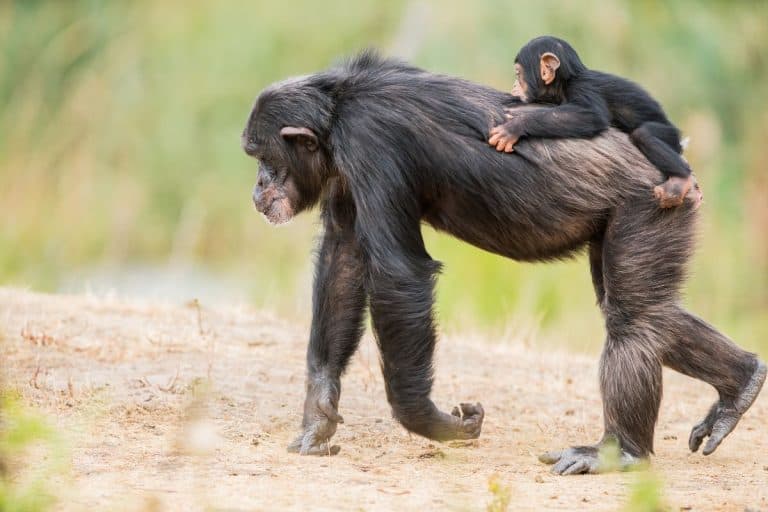
Bonobos are typically more slender than chimpanzees.
©Kabir Bakie / CC BY-SA 2.5, from Wikimedia Commons, the free media repository – Original / License
While bonobos are cousins of the chimpanzee, there are some key differences between the two. Here are a few specific contrasts between the primates.
Appearance
Bonobos tend to be slender with long legs, short arms, and a round skull. Chimpanzees, on the other hand, are shorter and stockier with a more developed jaw.
Aggressiveness
Many assume that bonobos are just as hostile as other apes, if not more so. However, according to Coxe, that’s a myth. These animals are far less aggressive, known as “peaceful apes” and “hippie chimps.” Rather than fighting each other for food and territories, they share their resources and make love with one another. In contrast, chimpanzees, like humans, will attack their own kind, often resulting in death. They don’t share; instead, they assert dominance, even if that means killing their own kind.
Bonobo groups coexist peacefully with each other, sharing territory and food.
Sally Jewell Coxe, founder and president of the Bonobo Conservation Initiative
Social Dominance
Bonobos live in a female-dominated, matriarchal society characterized by playfulness, love, and frequent sexual activity.
“All of this is in stark contrast to chimps, which have a male-dominated, patriarchal society and wage violent ‘wars’ against other groups of chimps over territory and resources,” Coxe says.
Sexual Behaviors
According to Coxe, bonobos are the only primates besides humans who have sex for recreational purposes. They make love, not war, with members of either gender, involving no sexual coercion. This is great news for female bonobos, as they can choose their own mates. Bonobos use sex to form bonds and resolve conflict.
Coxe points out that chimpanzee societies have quite the opposite setup.
“Chimp females have no (or little) choice in who they mate with,” she says. Unfortunately, these poor females are also often battered in the process.
Do Bonobos Use Sex to Resolve Conflict?

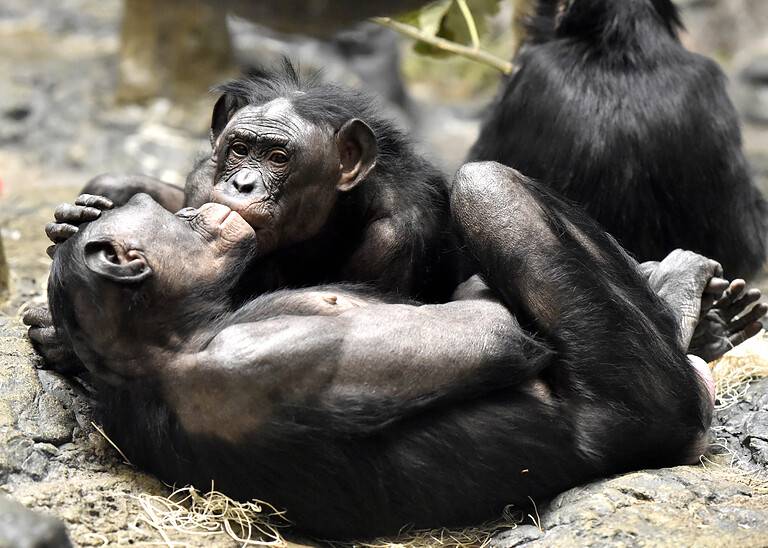
Bonobos mate facing each other.
©Jeff McCurry/iStock via Getty Images
Yes, bonobos use sex to resolve conflict. Bonobos are known for being peacemakers, but the way they achieve this might shock you. Essentially, bonobos will initiate sexual contact to de-escalate situations that might otherwise lead to conflict.
“If there are skirmishes or competition between bonobos over food, for example, they will often soothe the tension with sex,” Coxe says.
As mentioned earlier, these sexual encounters can involve male-male, male-female, and female-female interactions. However, bonobos don’t just have sex for conflict resolution. According to Coxe, sex serves a variety of purposes for bonobos, including bonding and pleasure.
“Females use sex to bond with each other—and it is through female coalitions that they maintain ‘power’ over the physically stronger males,” she says.
Are Bonobos Aggressive?
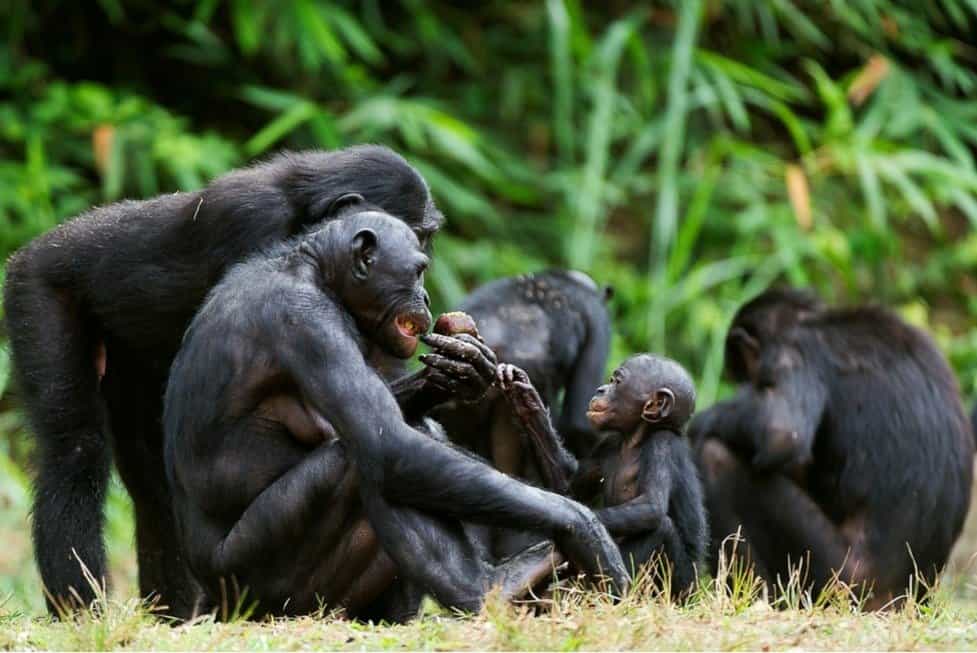
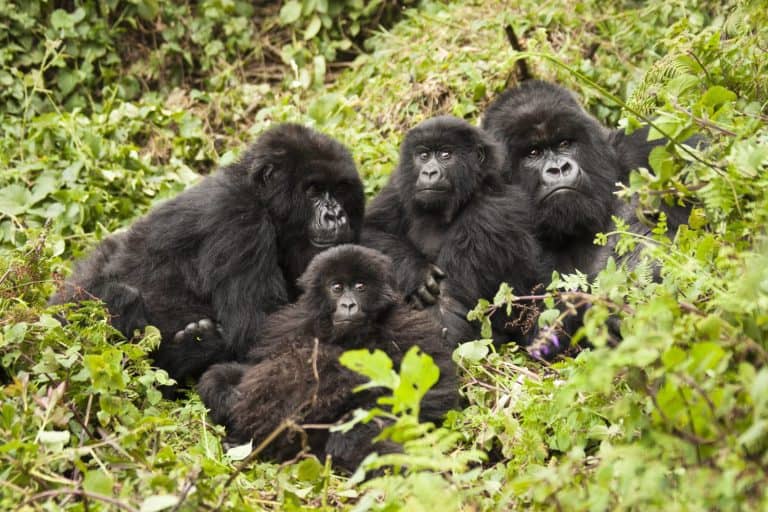
Bonobos form a playful, loving society.
©Sergey Uryadnikov/Shutterstock.com
According to Coxe, despite what some might believe, bonobos are incredibly peaceful creatures.
“We humans have a lot to learn from them in this regard,” she says. “Bonobo groups coexist peacefully with each other, sharing territory and food—and often engaging in sex and grooming when they meet up in the forest.”
Some people might assume bonobos are aggressive due to the competition among bonobo males. It’s not uncommon for them to tussle from time to time, but these fights rarely escalate or last, Coxe explains. Not to mention, bonobos are especially peaceful compared to chimpanzees. This is partly thanks to their use of sex as a peace-making tool and their female-dominated societies.
“This is also in stark contrast to the competitive, territorial chimpanzees,” Coxe says. “Some recent studies have talked about violent behavior among bonobo males, but this is not the same at all as the violence seen in chimps.”