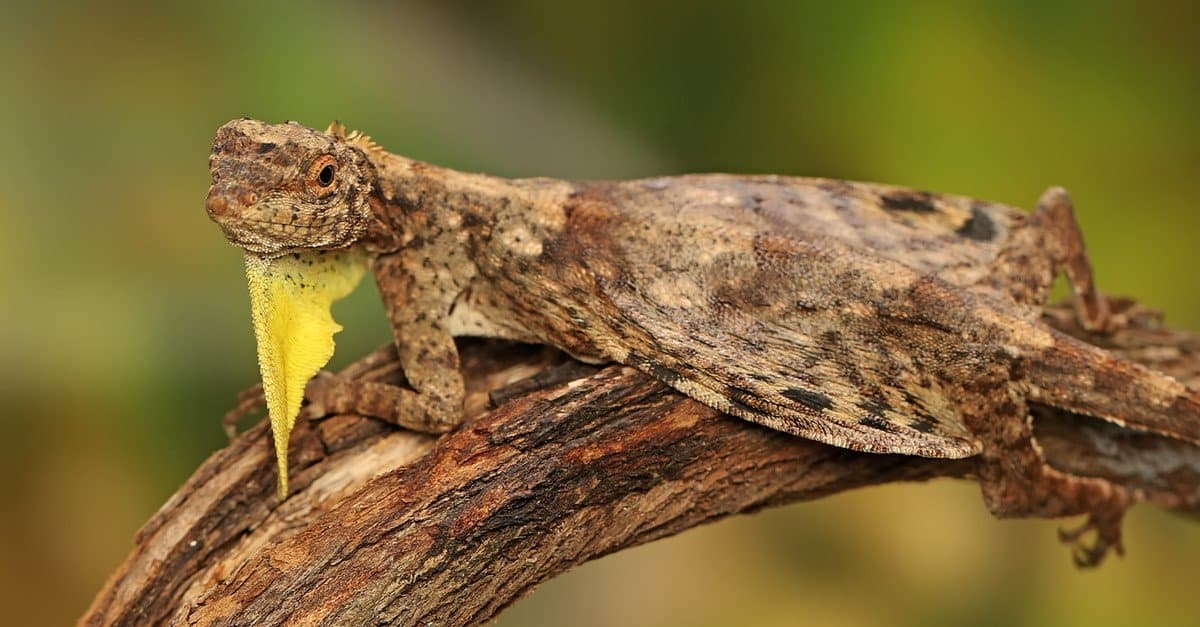

Whoever told you that dragons do not really exist was lying, and we have the proof. Just take a look at this stunning Instagram post featuring a common flying dragon (Draco volans). Despite its name, there is nothing common about this striking creature. Take a look for yourself and then read on to find out all about them.
Flying Dragon Range and Lifestyle
Flying dragons live in tropical rainforests in southern India and Southeast Asia. This means that they are found in the Philippine Islands as well as in Borneo. When it comes to habitat, they prefer to live in rainforests and tropical areas, where there are numerous trees, which is where they tend to hang out. The males are generally more active and territorial than the females.
Their diet is made up of insects, mainly ants and termites. To hunt, the dragon sits next to a tree trunk and waits for potential prey to wander past, before grabbing its victim without ever moving its own body.
Dragon Wings and Flying
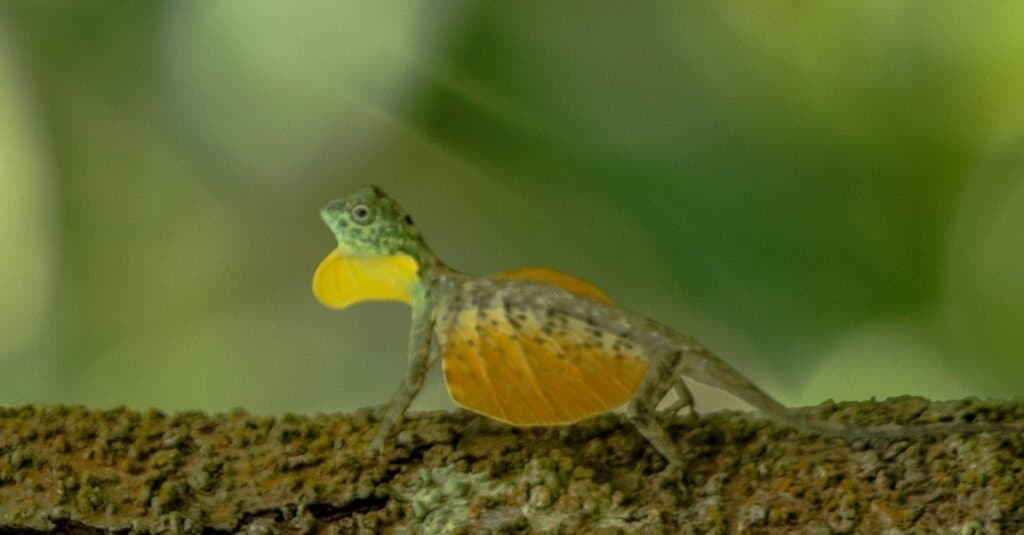
Draco volans wings are elongated ribs.
©iStock.com/Jiri Hrebicek
This lizard has a set of ‘wings’ that it uses for flight. These are actually elongated ribs that can be extended and retracted. The skin between the ribs lies flat against the body when not in use. The lizard’s length and wingspan are both about 8 inches. To launch into flight, the lizards position themselves with their head pointing towards the ground, spread their make-shift wings, and glide to the ground. In general, they can glide for about 25 feet.
They may use this gliding skill to escape predators, such as snakes and birds, though they will more often run away if they spot an enemy approaching. Draco volans primarily uses this skill to get from tree to tree in search of food. Their flight is a spectacular and colorful sight to behold, as their wings flash shades of blue, yellow, and red.