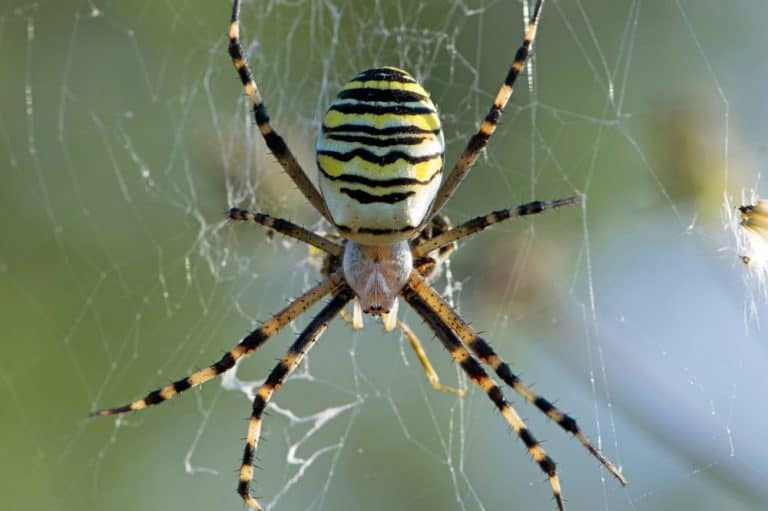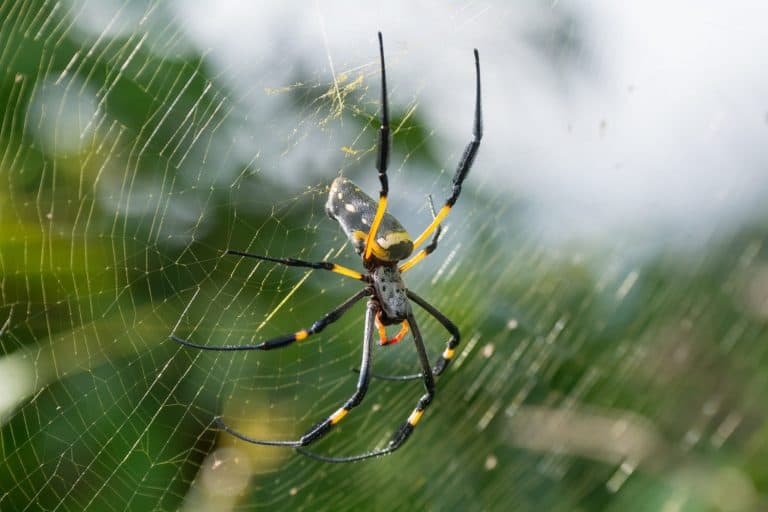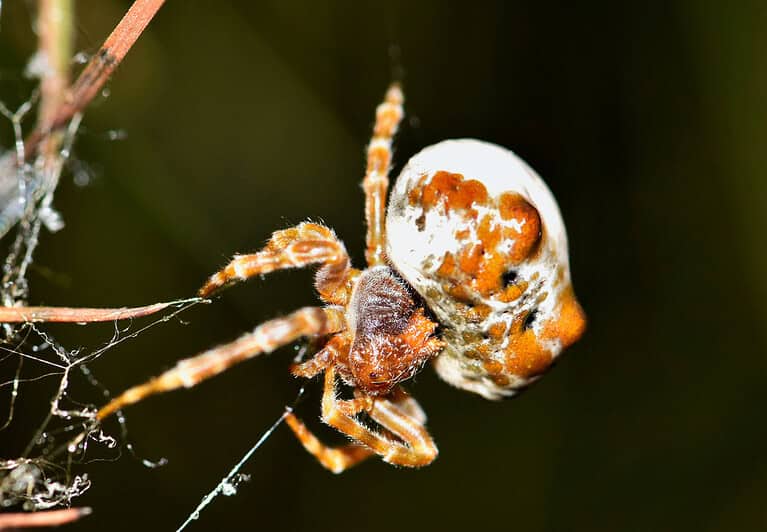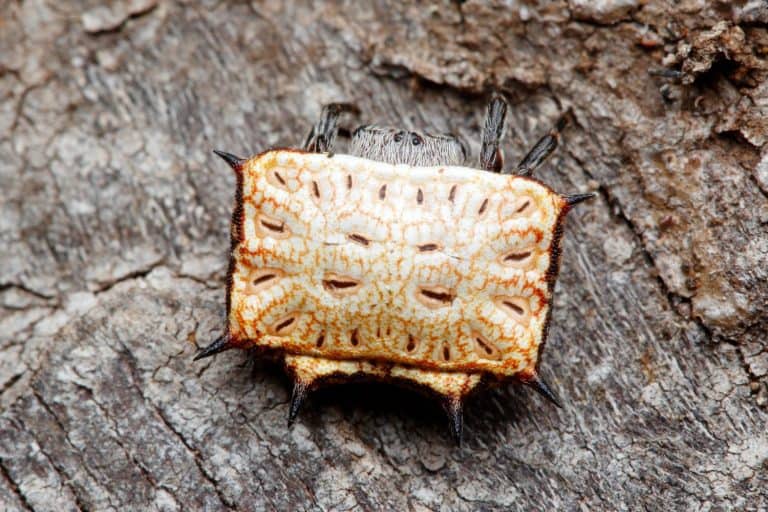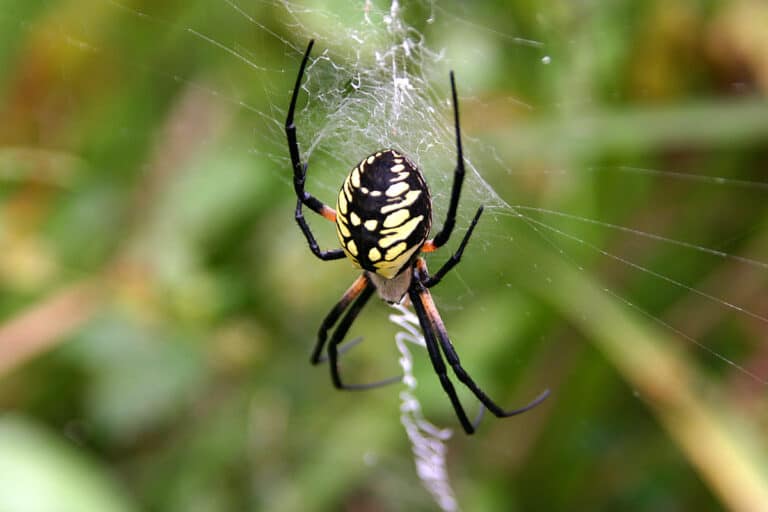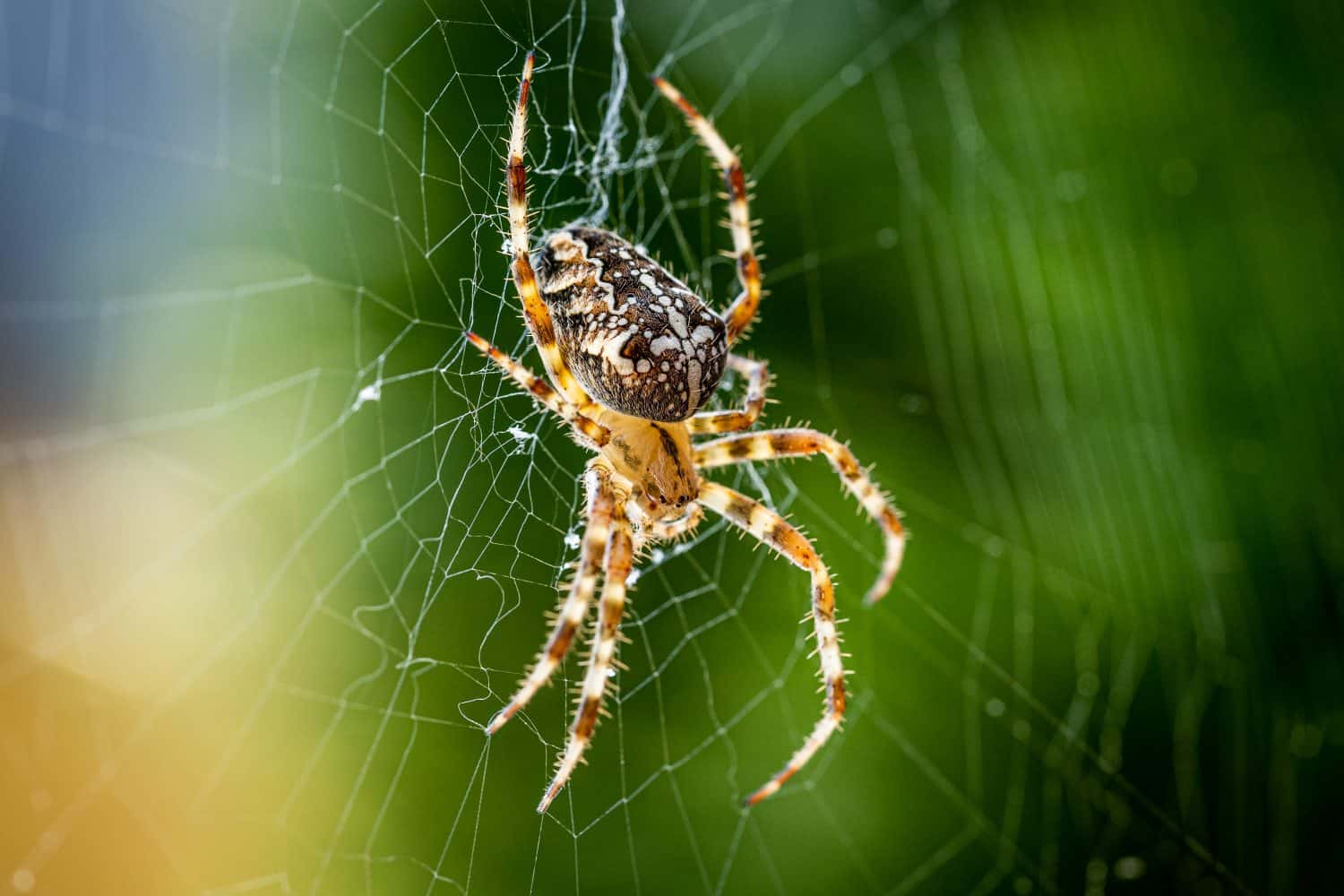

Spiders are amazing creatures, and orb-weaving spiders make some of the most intricate structures in nature. Their beautifully patterned webs are amazing to see, even if it means a creepy crawly is around. Thanks to social media, we can learn so much about how spiders work. This Instagram post by @hackingthescience shows a spider taking down its own web, seemingly eating all the silk. Read here to learn more about why they do this!

©Dave Montreuil/Shutterstock.com
Eating Your Own Web
Orb-weaving spiders create iconic wheel-shaped webs, like the one in the video. They view silk as a valuable resource, especially given the protein needed to create it. Because webs are intricate to a spider’s survival, making sure they are in pristine condition is important. Webs are used to catch prey, feeding the spider and its future offspring. If the web is damaged from rain or wind, or collects dust and leaves, it can’t catch prey as well, and the spider must make a new one. To help preserve the amino acids required to make the silk, the spider will ingest its own webbing, recycling the silk for future use. This shows how resourceful spiders are in the wild!
Because spiders eat their own webs, people often think that an empty web indicates that harm has come to the spider. While this may sometimes be the case, there are other reasons why the spider may not be visible. For example, spiders may simply hide away while hunting rather than sitting on the web. Additionally, sometimes the web is simply abandoned because it is beyond recycling.
Orb-weaving spiders typically take down their webs in the early morning and rebuild them in the evening or at night, following a roughly 24-hour cycle. The time it takes to dismantle a web is not well known. It’s estimated that it typically takes roughly 30 to 60 minutes to build a new one. The spider’s ability to ingest its own web before creating a new one is truly remarkable!