
Quick Take
- One pilot felt something press against his lower back mid-flight, and what he found beneath his seat triggered an emergency that could have ended very differently. See the cobra incident →
- Witnesses on the ground spotted the snake before takeoff, and the assumption they made next nearly turned a routine flight into a disaster.
- Flight attendants aren't specifically trained to handle loose snakes, so the question becomes what exactly they rely on when one appears in the cabin at cruising altitude. See crew training details →
- Not every snake on a plane got there by accident, and what smugglers were caught carrying in their luggage reveals a much darker side of wildlife trafficking. Explore the smuggling cases →
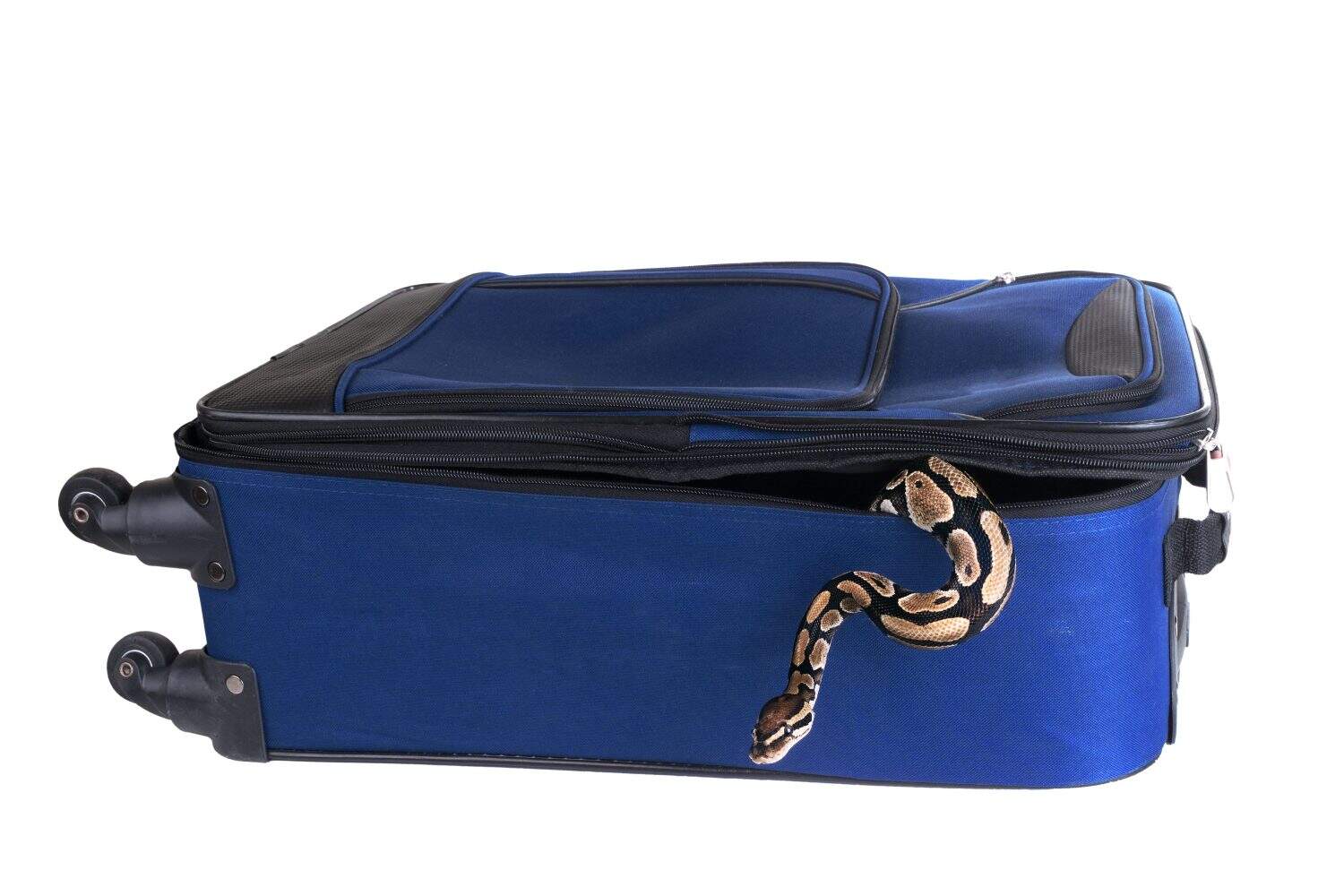
If you ever watched Snakes on a Plane, you likely assumed it was exaggerated entertainment, not reality. In truth, snakes do occasionally end up on aircraft, though such incidents are rare. They are usually due to accidents and linked to human activity; they don’t involve snakes seeking out planes. Even so, these encounters raise real concerns about aviation safety and wildlife movement, which is why authorities take them seriously.
A Snake in the Overhead Bin on a Thai Flight
In January 2024, passengers on a Thai AirAsia flight traveling from Bangkok to Phuket noticed a small snake moving along the plastic trim above the overhead bins. The animal appeared during the flight, not while boarding, which made the discovery more alarming as, of course, there was no option to de-plane at that point. Some passengers recorded the moment, while others remained frozen in their seats, unsure how to react.
Cabin crew acted quickly and calmly. A flight attendant first tried guiding the snake into a bottle, then switched to a trash bag when that didn’t work. Nearby passengers were quietly moved away from the area. The flight continued without further trouble and landed as scheduled. Afterward, maintenance teams inspected, cleaned, and fumigated the aircraft before returning it to service. Airline officials described the event as very uncommon.
A Cargo-Hold Stowaway in Australia
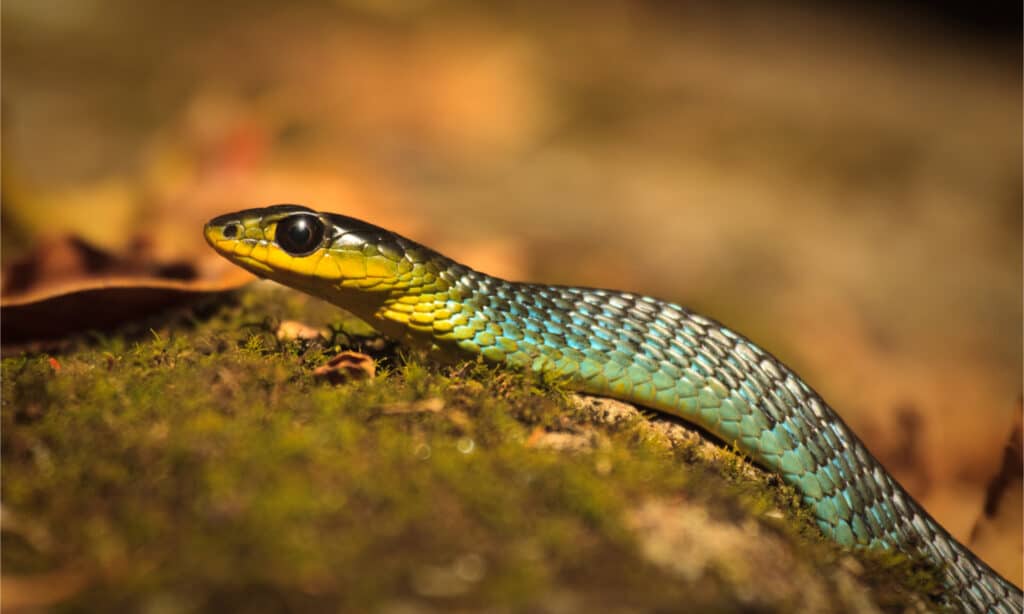
Dendrelaphis punctulatus, the green tree snake, was the species that got loose in an Australian plane.
©Pete Niesen/Shutterstock.com
In July 2025, a Virgin Australia flight from Melbourne to Brisbane was delayed by about two hours after ground crews discovered a snake in the cargo hold as passengers were boarding. The animal, identified as a non-venomous green tree snake roughly two feet long, was found partially hidden behind a panel. Fortunately, a professional snake catcher named Mark Pelley was able to catch it before it could escape into the panel, which would have required evacuating the plane and partially dismantling the cargo hold to find the reptile.
Pelley explained in a media interview that this was a first for him: “In Australia I find them in schools, factories, offices, businesses, airports. You name it. It’s one of the things of being in our wonderful country… Most people just live their lives, blissfully ignorant if there are snakes around them… [I’ve caught snakes] in very weird circumstances, but never one on a plane.” He surmised the snake likely stowed away in a passenger’s luggage. As for its behavior, “The snake was very scared. It wasn’t angry. It wasn’t trying to hurt me. Snakes never try to hurt people. They’re always trying to get away.”
A Cobra Beneath the Pilot’s Seat in South Africa
Some snake encounters involve far greater risk. In 2023, a pilot flying four passengers in a small Beechcraft Baron in South Africa felt something move against his lower back during flight. Looking down, he realized a Cape cobra was positioned under his seat. Cobras are highly venomous, and a bite in the confined cockpit could have been fatal.
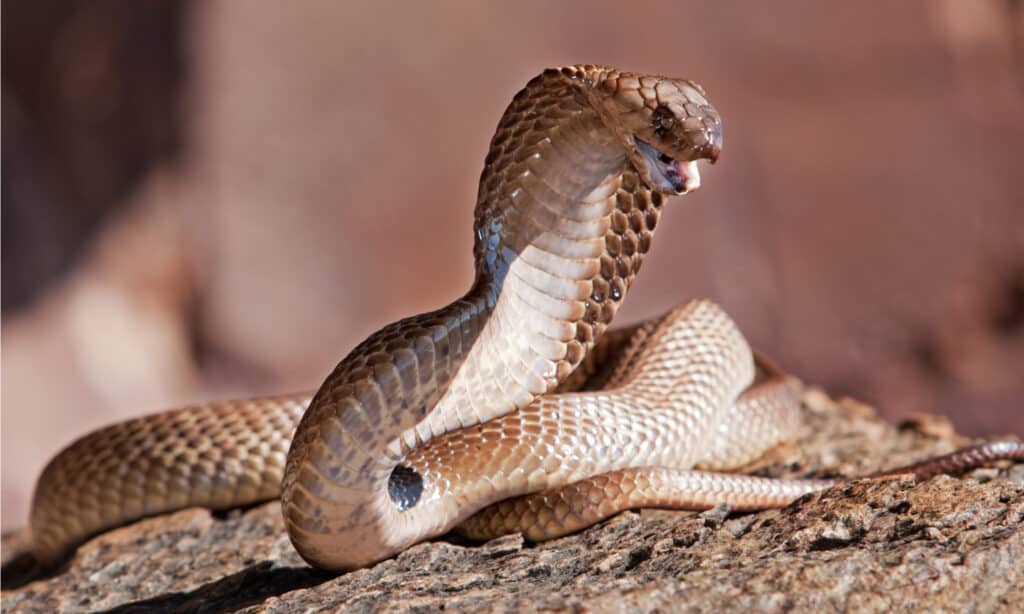
The Cape cobra is one of South Africa’s deadliest snakes.
©Martin Prochazkacz/Shutterstock.com
Witnesses on the ground had seen a snake near the aircraft before takeoff and attempted to capture it. When it disappeared, they assumed it had left the area. The pilot stayed composed, notified air traffic control, informed his passengers, and diverted for an emergency landing. After landing, responders found the cobra curled beneath the seat. No one was injured, but the incident highlighted how dangerous wildlife encounters can become in small aircraft.
How Snakes End Up on Aircraft
In the rare cases when snakes independently board aircraft, they are most often seeking warmth, shelter, or a hiding place and end up inside an aircraft by chance. Smaller planes parked outdoors are especially vulnerable. Snakes crossing hot tarmac might be attracted to the shade of a parked aircraft, and later slither into wheel wells, engine compartments, or fuselage gaps. If not discovered during inspection, they can remain hidden until movement or temperature changes cause them to emerge.
Large commercial jets face additional risks. Cargo holds, baggage systems, and open service doors create brief opportunities for animals to slip inside. Airports located in warm climates or near undeveloped land have higher exposure to reptiles. For this reason, airport authorities focus on habitat management around runways, limiting features that attract wildlife close to aircraft operations.
Smuggling Snakes as Living Cargo
Not every case involves an accidental stowaway. Wildlife smuggling has become a growing concern for aviation authorities. In recent years, customs officials along routes between Southeast Asia and India have intercepted passengers carrying live animals in luggage. These cases have included snakes, lizards, birds, and small mammals.
In 2025, officers in Mumbai seized 16 live snakes from a traveler arriving from Thailand. Many were non-venomous species popular in the exotic pet trade. Around the same period, other travelers were caught with venomous vipers and shipments containing more than 100 animals packed together. These incidents are part of a wider illegal trade that treats animals as commodities, often ignoring welfare, safety, and ecological impact.
Aviation Rules for Shipping Snakes
U.S. aviation rules leave animal policies largely to airlines, but federal guidance allows carriers to refuse snakes and other reptiles altogether and requires that any approved animals be fully contained and secured so they do not interfere with flight operations. In practice, most airlines prohibit snakes from the passenger cabin, limiting in-cabin travel to common household pets and requiring reptiles to be transported, if allowed at all, as properly contained cargo.
When reptiles are transported by air cargo, airlines typically require secure, escape-proof packaging that follows live animal handling standards such as those set by the International Air Transport Association. Snakes are usually placed in a sealed cloth bag or ventilated inner container, which is then secured inside a rigid outer box with air holes, absorbent material, and clear labeling. The container must prevent movement, escape, and injury while maintaining proper temperature and airflow throughout the journey.
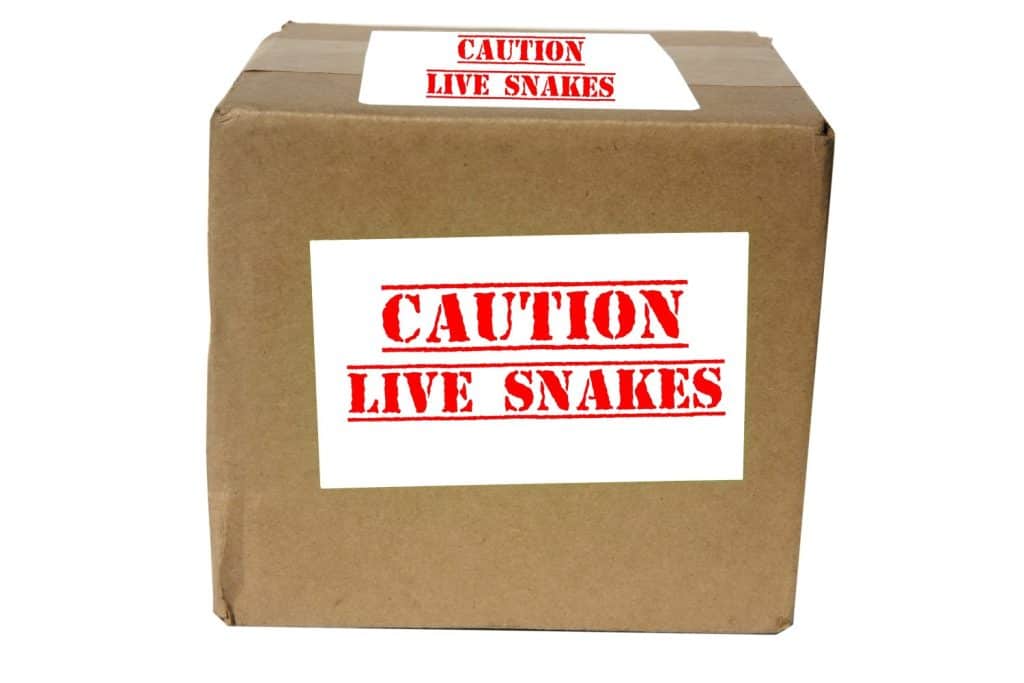
Careful FAA rules must be followed to ship snakes via aircraft; you can’t just put them in a box with a “live snakes” label on it.
©mikeledray/Shutterstock.com
Risks to Passengers, Crew, and Ecosystems
Hidden wildlife on planes creates multiple layers of risk. For passengers and crew, the most immediate danger is injury. A venomous snake loose in a cabin or cockpit could bite someone or distract pilots during critical moments. Fear alone can cause chaos in a confined space, increasing the chance of secondary injuries.
Beyond the aircraft, smuggled animals threaten ecosystems if they escape or are released. Non-native species can spread disease, disrupt food webs, and compete with local wildlife. For this reason, customs agencies work closely with conservation groups and law enforcement to stop illegal transport before it reaches its destination.
How Airports and Airlines Reduce Wildlife Incidents
Airports rely on detailed wildlife management programs to lower the chance of animal encounters. In the United States, the Federal Aviation Administration encourages airports to conduct Wildlife Hazard Assessments. These studies identify species present near airfields and recommend ways to reduce their presence through fencing, drainage control, and land management.
Airlines add further protections through maintenance checks that seal access points and regular inspections of aircraft interiors. Security screening also plays a role, with baggage and cargo inspections aimed at detecting live animals that lack permits or proper containment. After any wildlife incident, planes may undergo deep cleaning or fumigation.
How Cabin Crew Are Trained for Emergencies
Cabin crew are not trained for specific scenarios like loose snakes, but they are trained extensively to handle unexpected hazards in the aircraft environment. Federal Aviation Administration requirements mandate instruction in emergency procedures, passenger safety, and managing situations that could jeopardize the cabin. Training focuses on remaining calm, isolating the threat, assisting passengers, and coordinating with pilots using established safety protocols. Through recurrent training and scenario-based drills, flight attendants are prepared to respond to a wide range of unpredictable situations, including rare events like wildlife appearing onboard.
When the Unexpected Crosses Our Path
Stories about snakes on planes endure because human systems and the natural world inevitably overlap. Though rare, these incidents show that even tightly controlled environments like aircraft are not completely sealed off from unexpected reptile risks. Each case highlights the importance of inspection, responsible animal transport, and awareness. In the end, they remind us that safety depends not just on technology, but on human choices and respect for the world around us. And while these rare incidents can be unsettling, it’s worth remembering that snakes aren’t out to harm people. If one ends up on an aircraft, it’s likely just trying to find its way back to a familiar environment. When you think about it, that’s a goal most air travelers can relate to.