
Quick Take
- One spider turns its entire web into a loaded weapon and launches itself at over 130 Gs to fire it.
- The slowest animal on this list also has one of the fastest and most lethal strikes in nature, despite moving at a literal snail's pace.
- At least one of these biological weapons is now being studied to build stronger human armor.
Some predators chase. Others ambush. And then there are the ones that shoot.
Across the animal kingdom, a surprising number of species have evolved ways to hit prey from a distance — firing water jets, venom sprays, sticky silk, or even microscopic harpoons. These aren’t gimmicks. They’re highly specialized hunting systems designed to solve one core problem: how to catch prey that is faster than the predator.
Many rely on what scientists call latch-mediated spring actuation (LaMSA) — a way to store energy and release it instantly, like a biological trigger. The result is explosive speed, extreme precision, and in some cases, forces that rival human-made machines.
From fish that snipe insects out of the air to snails that fire venom-loaded harpoons, these predators have weaponized the laws of physics. While many creatures, such as bombardier beetles and spitting cobras, “shoot” to defend themselves, these elite marksmen use their abilities offensively, actively hunting and capturing their next meal.
Banded Archerfish (Toxotes jaculatrix)
If you thought fish only hunted underwater, the archerfish will quickly prove you wrong.

Banded archerfish have binocular vision.
©Panaiotidi/Shutterstock.com
This aquatic outlaw can knock insects off branches up to 5 feet above the water by firing a precise jet of water from its mouth. But it’s not just about force or power; it’s about physics and precision. Because light bends when it passes from air to water, the fish’s view of the insect is distorted. To hit its mark, the archerfish must account for this “refraction” before firing.
This skill isn’t purely instinctual, either. Young archerfish practice to refine their aim, eventually achieving near-perfect accuracy, especially when they position themselves directly beneath their target.
Spitting Spider (Scytodidae)
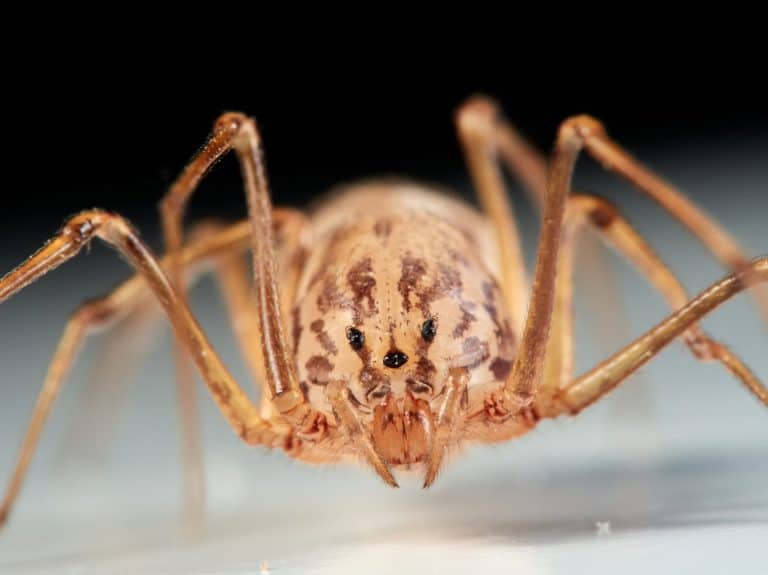
While many spiders wait for prey to get stuck in their webs, the spitting spider actively immobilizes its prey. In a fraction of a second, the spider sprays a specialized mixture of liquid silk and venom from its fangs while it rapidly vibrates its head, causing the silky streams to form a zigzagging net in the air. This sticky, toxic mesh pins insects to whatever surface they’re on. It’s fast, precise, and extremely effective.
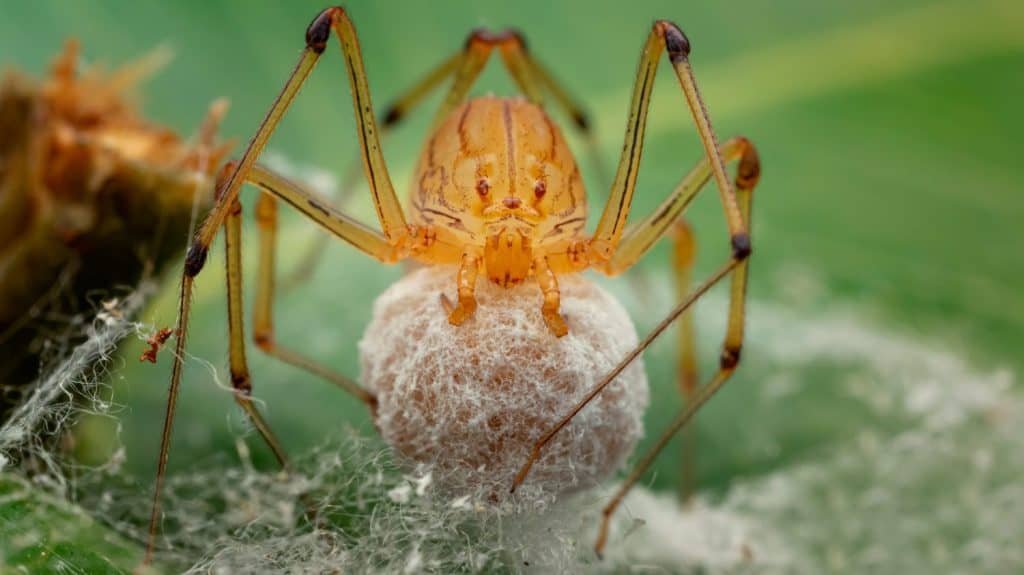
Unlike other eight-eyed spider species, spitting spiders only have six eyes.
©fendercapture/Shutterstock.com
Pistol Shrimp (Alpheidae)
While most shrimp are scavengers, the pistol shrimp is a gunslinger of the sea. Unlike its relatives, this impressive hunter doesn’t kill by pinching; it uses physics to hunt. When the shrimp slams its oversized claw shut, it ejects a high-speed jet of water that creates a cavitation bubble. This bubble is a tiny pocket of low pressure that collapses almost instantly, triggering a massive release of energy.
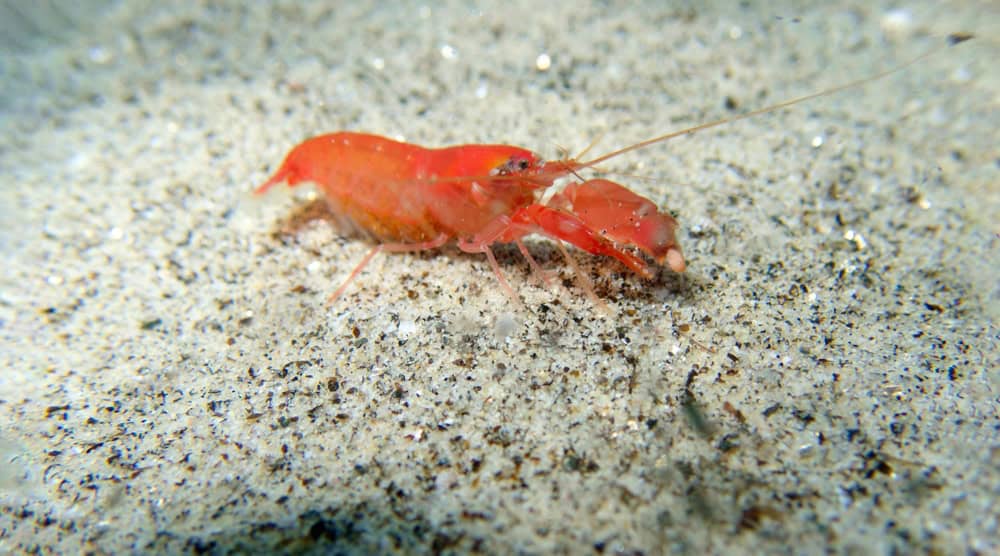
The pistol shrimp may only be 1.5 inches long, but it can move its claws at 60 miles per hour.
©Vojce/Shutterstock.com
The collapse of this bubble is so violent that it produces a shockwave louder than a gunshot, stunning or killing small prey from a distance. For a tiny fraction of a second, the temperature inside the collapsing bubble can reach nearly 8,700 degrees Fahrenheit (4,800 degrees Celsius). The energy release is so intense it actually produces a brief flash of light.
The shrimp’s claw features a unique spiral, crack-resistant structure designed to withstand the repeated stress of these underwater “explosions.” Materials scientists are actively studying the pistol shrimp’s claw to develop stronger, more impact-resistant armor and helmets for humans.
Velvet Worm (Onychophora)
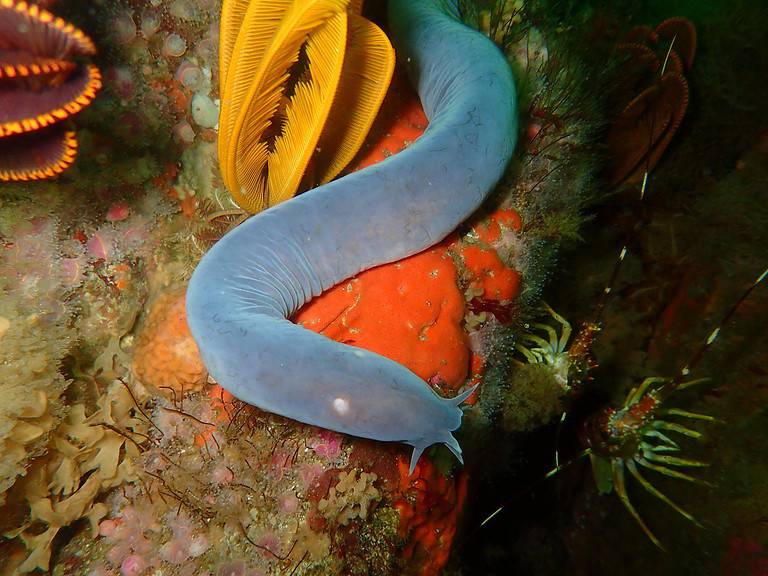
The velvet worm may appear soft, slow, and relatively harmless, but it is a surprisingly effective predator. Using specialized nozzles near its mouth, it sprays twin jets of slime at a speed reaching nearly 5 feet per second. The slime hardens in the air as the jets oscillate rapidly, and the movement ensures that the slimy webbing covers a large area to make it nearly impossible for an insect to escape. Once its prey is immobilized, the worm dissolves the victim’s insides and consumes the liquefied remains.
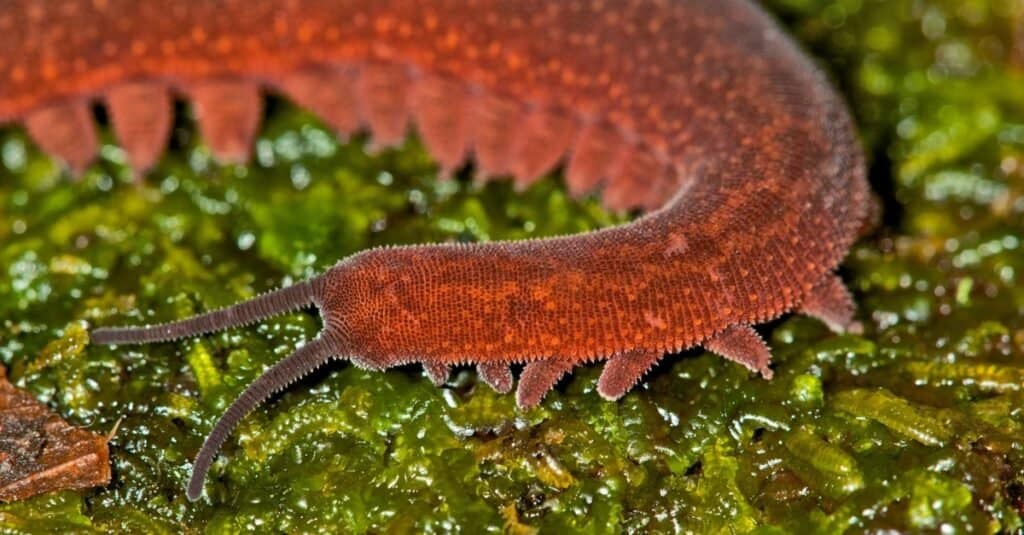
Velvet worms typically hunt woodlice, crickets, and spiders.
©Pedro Bernardo/Shutterstock.com
The worm also eats the dried strands of slime afterward, ensuring that no resources are wasted after the energy-intensive hunt.
Ogre-Faced Spider (Deinopidae)
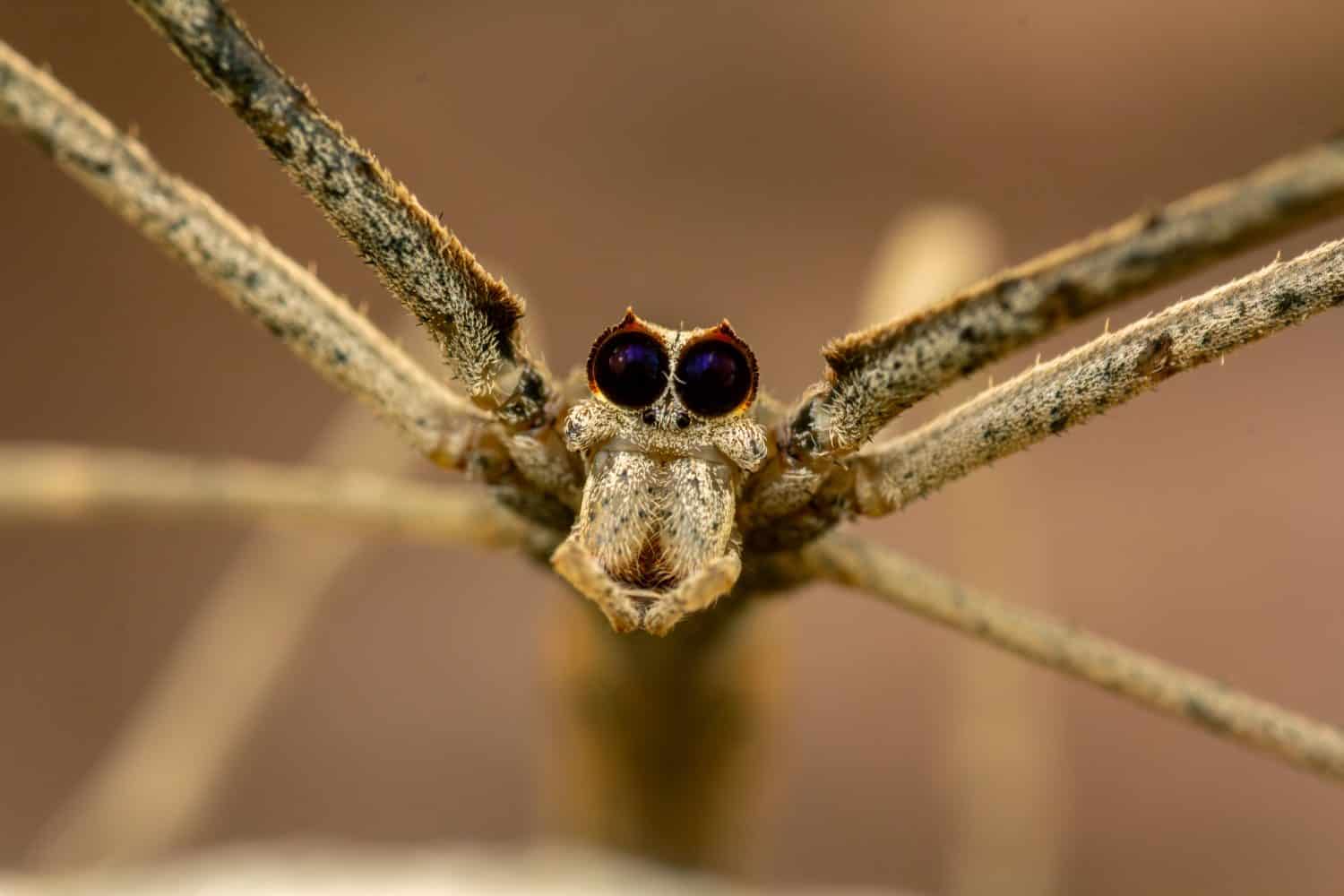
Unlike other spiders that build stationary webs and wait for prey to get caught, the ogre-faced spider actively casts its net like a tiny eight-legged fisherman. Hanging upside down from a single silk line, the spider holds a small, rectangular frame of highly elastic silk between its front legs. It uses its specialized slit sensilla or vibration sensors to detect the movements of insects walking or flying nearby. When an insect comes within range, the spider lunges, stretching the net to several times its original size and snapping it over the prey.
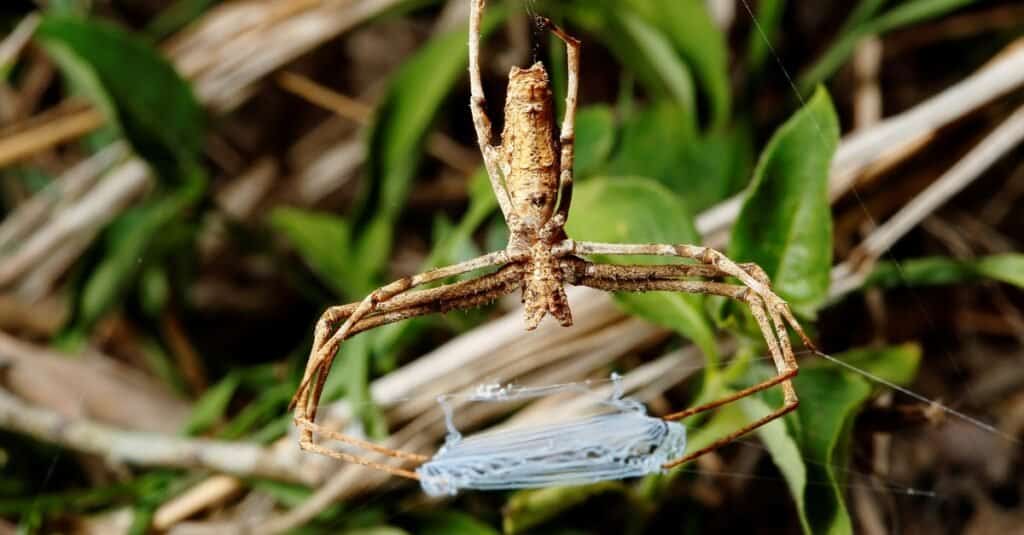
Two of the ogre-faced spider’s eyes face forward and are much bigger than the rest, giving it excellent low-light night vision.
©Ondrej Michalek/Shutterstock.com
Cone Snail (Conus)
The cone snail moves at a literal snail’s pace, yet its strike is one of the fastest and most lethal in nature. Instead of chasing its prey, this snail uses its hollow, venom-tipped tooth—essentially a built-in biological harpoon—to strike with incredible speed. It happens in less than one millisecond, even faster than the blink of a human eye. Once the harpoon hits, the snail injects a complex cocktail of neurotoxins that shuts down the prey’s nervous system instantly.
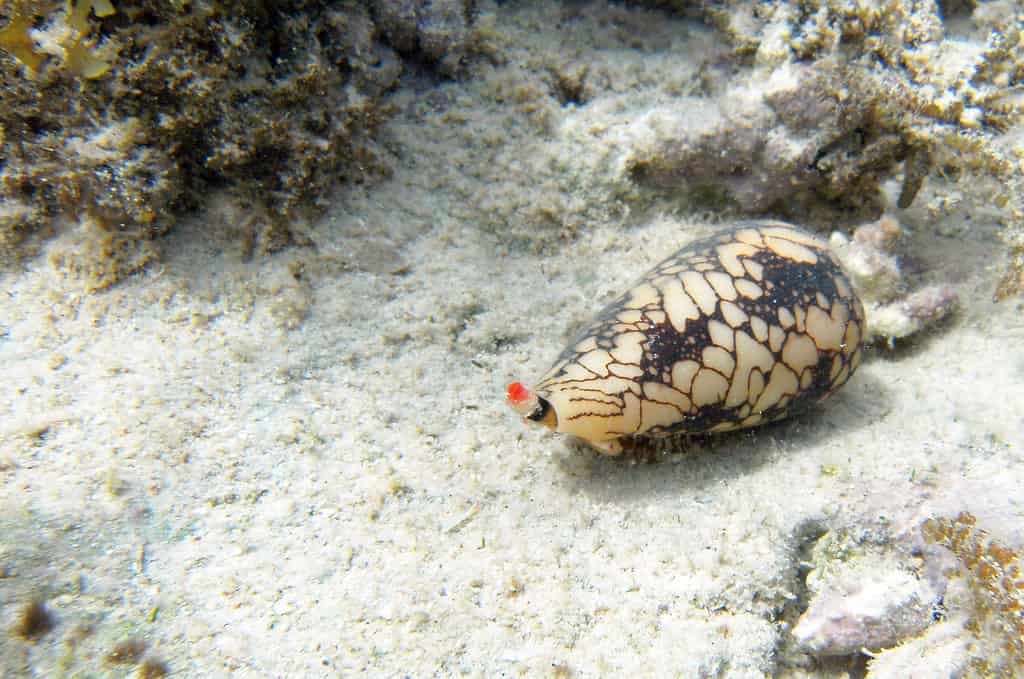
Some cone snail species can launch their harpoon in less than 100 microseconds.
©O'KHAEN/Shutterstock.com
Some species, like the geography cone (Conus geographus), are so toxic that a single sting can be fatal to humans. This species is sometimes called the “cigarette snail” due to a grim myth: if you are stung, you’ll only have enough time to smoke one last cigarette before you die. While this may be an exaggeration, the venom does act extremely quickly.
Bolas Spider (Mastophora)
Instead of spinning traditional webs, the bolas spider uses a specialized “fishing” technique to catch its prey. Instead of a net, it creates a single silk line tipped with a heavy and sticky glob called a bolas. The bolas’ incredibly sticky texture allows it to bypass a moth’s slippery scales and adhere directly to its body.
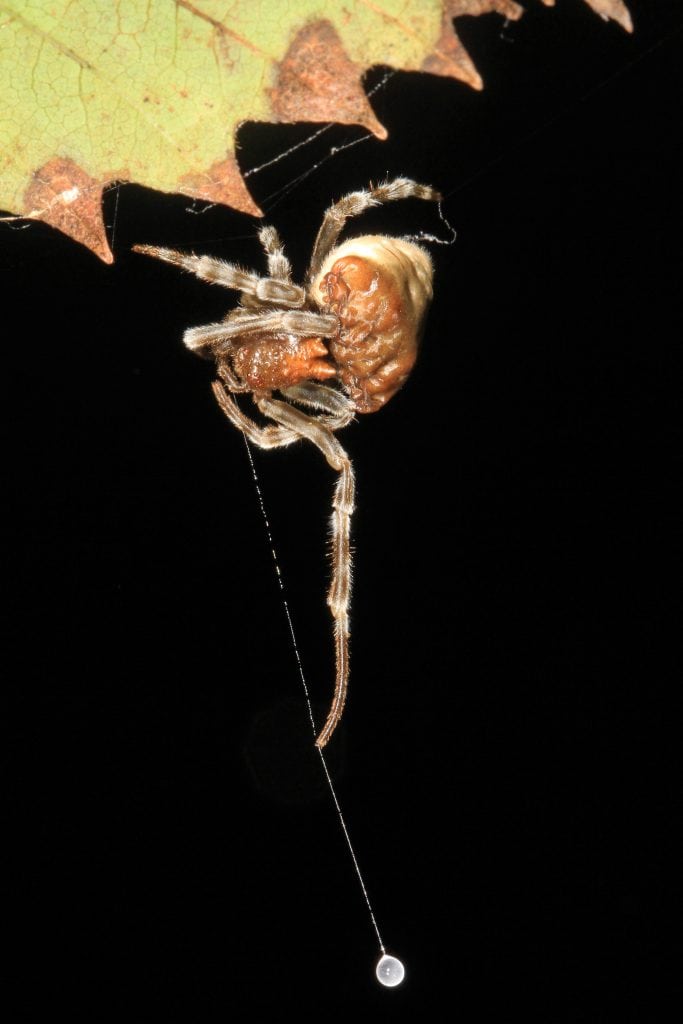
The bolas spider creates silk with a sticky texture.
©Judy Gallagher / CC BY 2.0 / Wikimedia Commons – Original / License
The spider releases a scent that mimics the pheromones of a female moth. When a male moth approaches in search of a mate, the spider swings the bolas in a circular motion to snag the moth out of the air.
Chameleon (Chamaeleonidae)
The chameleon is a long-range predator that relies on mechanical advantage rather than raw muscle power to catch its prey. Its long tongue doesn’t simply reach out to snatch up an insect; instead, the chameleon launches it from its mouth like a high-speed projectile. This mechanism relies on stored energy rather than rapid muscle movement, allowing it to function even in cooler temperatures.
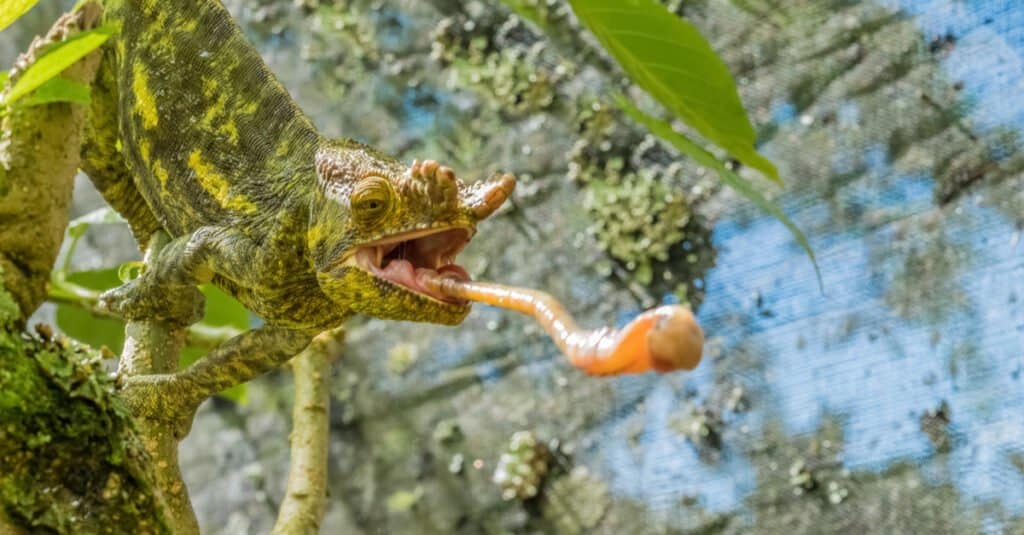
Chameleons have a unique physiology that allows them to “wind up” energy in their tongue’s tissue so they can snap it out at speeds of 60 miles per hour in a fraction of a second.
©LouieLea/Shutterstock.com
The tip of the chameleon’s tongue has a suction cup-like pouch coated with saliva that is about 400 times thicker than human saliva. This special coating ensures that the bond is strong enough to pull the prey back, even if it is heavy or struggling.
Slingshot Spider (Theridiosoma)
Rather than waiting for an insect to fly into its web, the slingshot spider transforms its entire web into a loaded spring. It constructs a conical web and pulls the center tight using a tension line attached to a nearby surface. By pulling back and holding the web under extreme tension, the spider stores potential energy, essentially turning itself into a living bow and arrow. When the spider senses prey, it releases the tension line, sending itself and its web catapulting forward at over 130 Gs (for perspective, humans typically black out at around 9 Gs). The sudden launch collapses the web over the prey, entangling it before it can react.
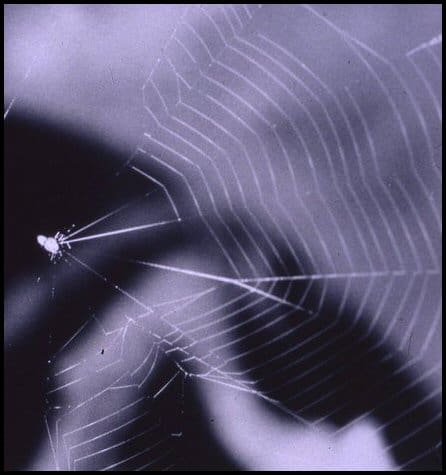
Slingshot spiders shoot their own bodies at their prey.
©LOPEZ André / CC BY-SA 4.0 / Wikimedia Commons – Original / License
The same silk structures that provide the tension also act as shock absorbers, bringing the spider to a safe stop at the end of its flight.