
Quick Take
- The wolf dominates on speed, but there's one combat factor where it falls surprisingly short against an animal that rarely hunts. See the speed comparison →
- A gorilla's upper body is six times stronger than a human's, yet that raw power might not be its most dangerous weapon in a fight. Explore gorilla offensive power →
- Wolves hunt in packs for a reason, and understanding that reason changes everything about how this one-on-one scenario plays out. Understand wolf pack hunting →
- Only a handful of predators can legitimately threaten a gorilla, and the wolf is not even the most dangerous one on that list. See gorilla's real threats →
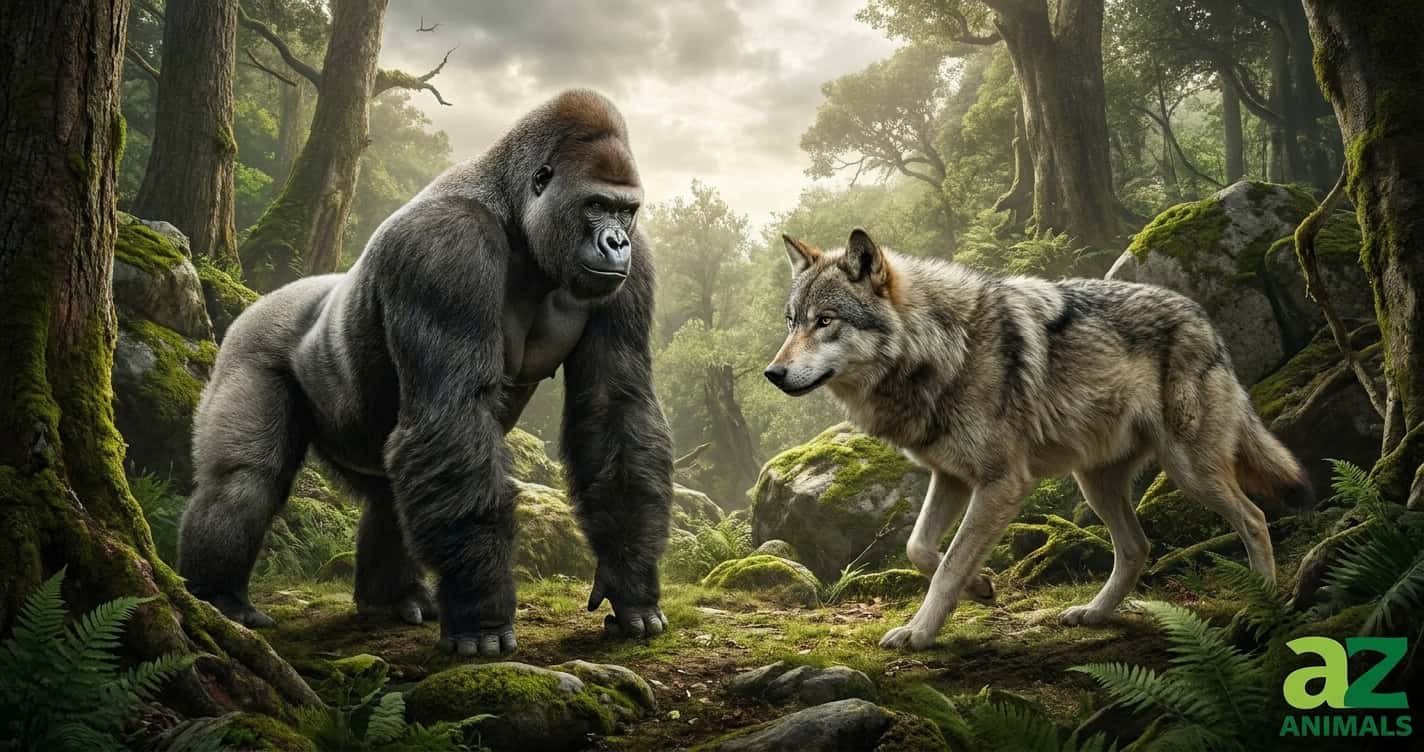
When thinking of incredible animals, the gorilla and wolf may be two that come to mind. After all, the world’s largest primate and the apex predator each have their arsenals of spectacular traits. While both are impressive on their own, what would happen if these two remarkable animals went head to head? Would the sheer weight and size of the gorilla be enough to take a wolf down? Or would the wolf’s sharp teeth and hunting capabilities place it on top? This article will compare these two magnificent creatures and reveal who would win in the fight: gorilla vs. wolf.
What Are the Key Differences Between a Gorilla and a Wolf?
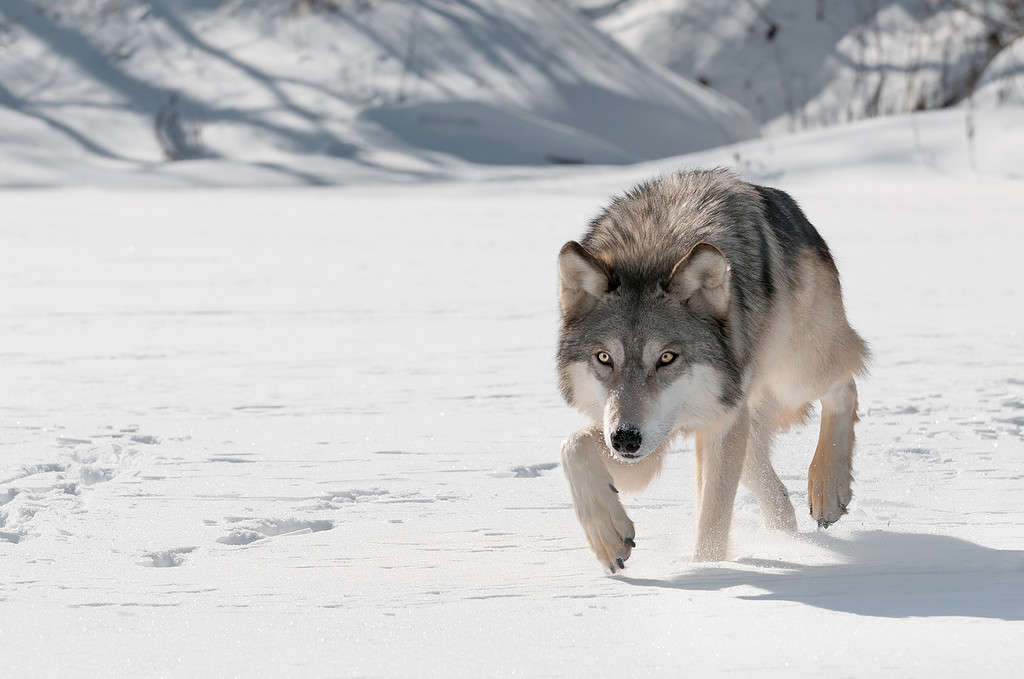
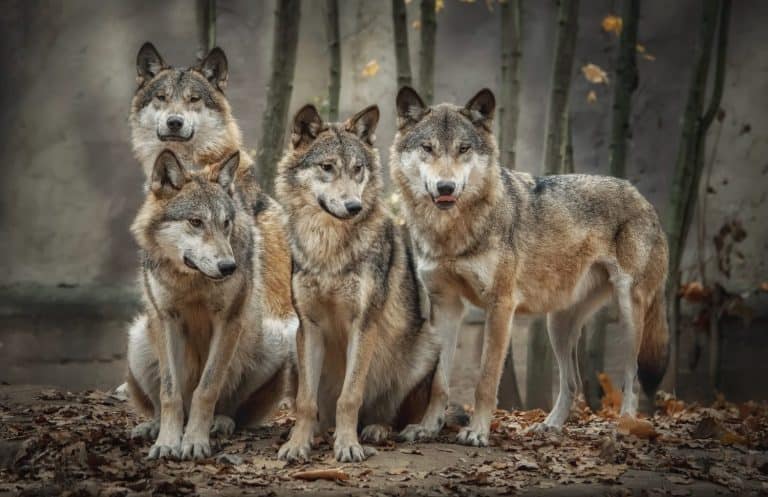
Wolves can be found in arctic tundras, mountains, forests, plains, and other types of northern environments.
©Holly Kuchera/iStock via Getty Images
While gorillas and wolves are both mammals and impressive creatures, there are key differences between them. One thing that sets these two animals apart is their size. Although both animals are large, gorillas stand much taller and are dramatically heavier than wolves. Additionally, their diets are drastically different. Wolves are carnivores that primarily consume large, hoofed animals. Despite their large physique, gorillas mainly eat plant matter.
Also, their habitats differ. Gorillas inhabit the tropical forests of Africa whereas wolves are native to the northern hemisphere. One final difference is their coat: gorillas have relatively sparse body hair compared with wolves, which have dense insulating coats.
What Are the Key Factors in a Fight Between a Gorilla and a Wolf?
Although these two animals would most likely never meet in the wild due to their different habitats, for this article we will assume they crossed paths in an environment considered a level playing field for both. With habitat excluded, this article will discuss the key factors that would determine who would win the gorilla vs. wolf fight. After presenting this data, we will reveal the winner of this fight.
Size
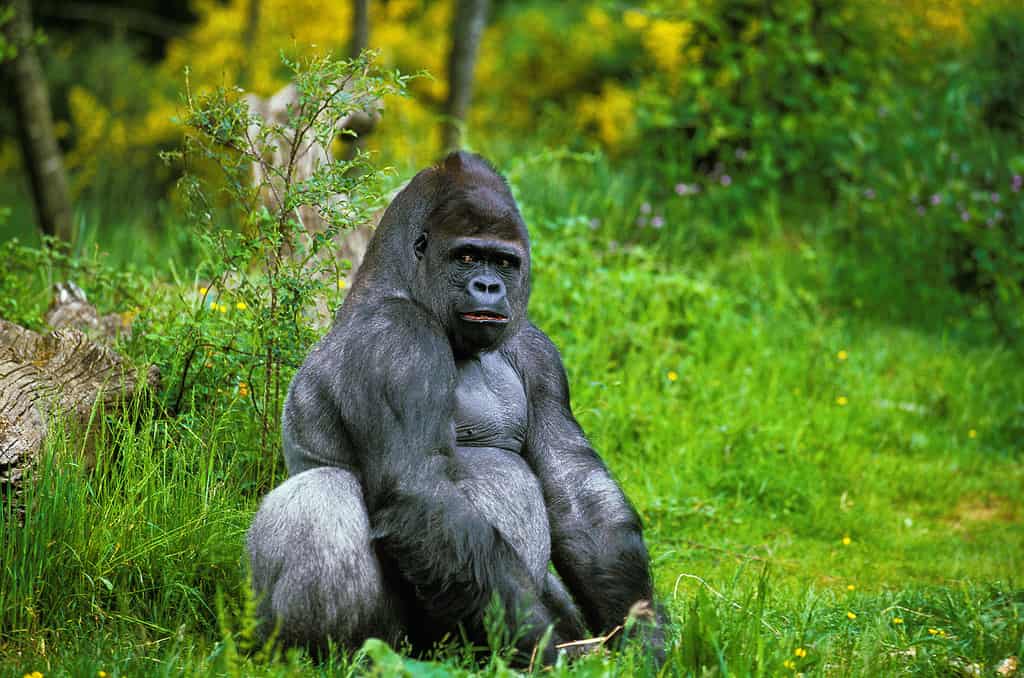
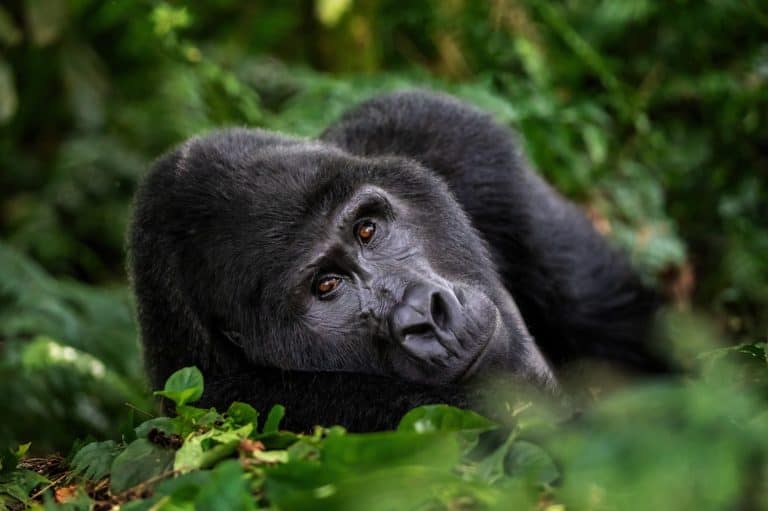
The average gorilla weighs between 220-440 pounds.
©slowmotiongli/Shutterstock.com
The largest of all primates didn’t get that name for no reason. The gorilla is a sizeable animal. While there are some slight differences, depending on the type of gorilla, the average height of a gorilla is between 4 and 6 feet, and the average weight is between 150 and 500 pounds. Additionally, gorillas have a very distinct shape. They have smaller chests and large, rounded stomachs with large, powerful arms.
Wolves are much smaller than the gorilla. While a wolf may reach 6 feet in length, its height from floor to shoulder only reaches about 2.5 feet. Additionally, while there may be slight variation between species, their average weight is between 50–175 pounds, with females typically on the lower end of that range. These four-legged animals have pointed ears, elongated snouts, bushy tails, and thick fur.
The gorilla is much larger than the wolf, so it wins the advantage in this category.
Speed and Movement
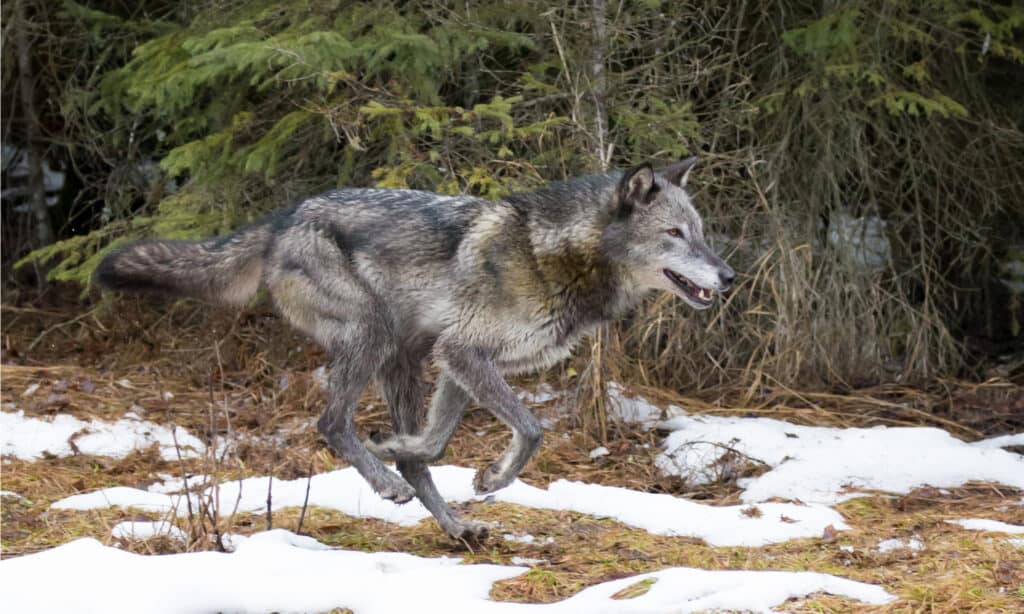
Wolves can pursue prey for extended periods and have been reported chasing prey for up to about 20 minutes, but their maximum sprint speed is limited to short bursts.
©Warren Metcalf/Shutterstock.com
While gorillas can move at speeds of up to 25mph, the average gorilla runs around 20 mph. Gorillas put their long arms to use by running on all fours, using their powerful arm muscles to help propel them forward.
While the gorilla may be faster than the average human, it is no match for the wolf. On average, wolves can reach speeds of up to 37 mph. They can cover roughly 16 feet in a bound and are better known for endurance than pure sprinting, pursuing prey over distance and rough terrain.
The wolf’s speed is much faster and can be maintained longer, so they beat the gorilla in this category.
Defenses
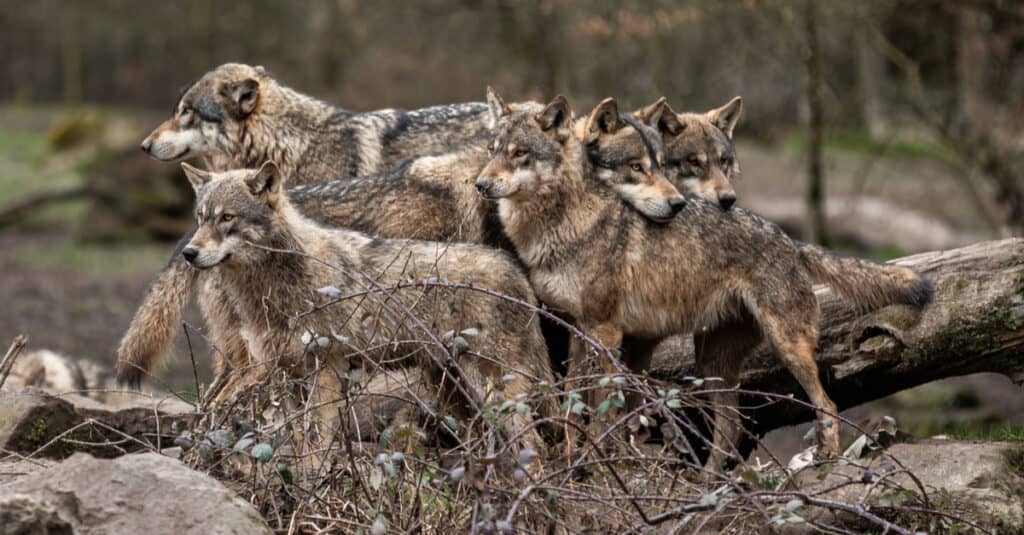
Wolves’ coat colors often help them blend into their habitats, which can aid concealment while hunting or moving through cover.
©AB Photographie/Shutterstock.com
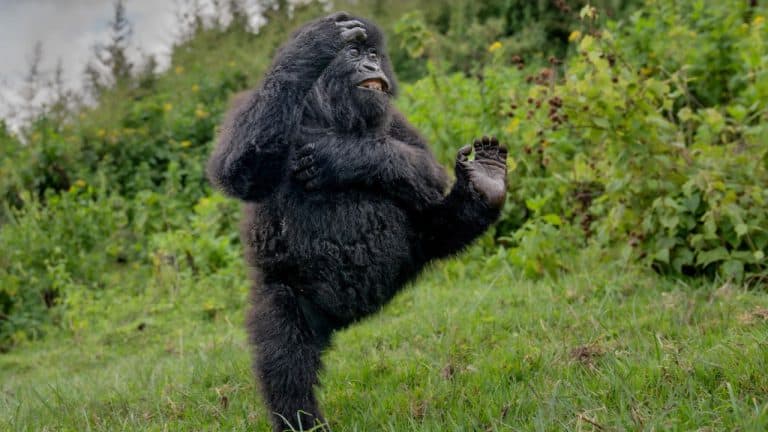
The gorilla has two main defensive tactics. One is relying on their perception of aggressiveness to drive away others. Additionally, gorillas will bang on their chests, stomp their feet, or stand up straight and make noise to make themselves seem larger and more threatening. If an animal does approach them, they have their speed and knuckle-walking to get them away from danger.
Along with their incredible speed, a wolf’s coloring is another of its defense mechanisms. Usually, a wolf’s coloring will match the colors of its habitat, allowing it to easily blend in and avoid predators. Also, wolves are pack animals. Staying in a large group makes the wolf a more difficult target.
A wolf would have the advantage in speed and endurance, while a gorilla would have the advantage in size and intimidation displays.
Offensive Capabilities
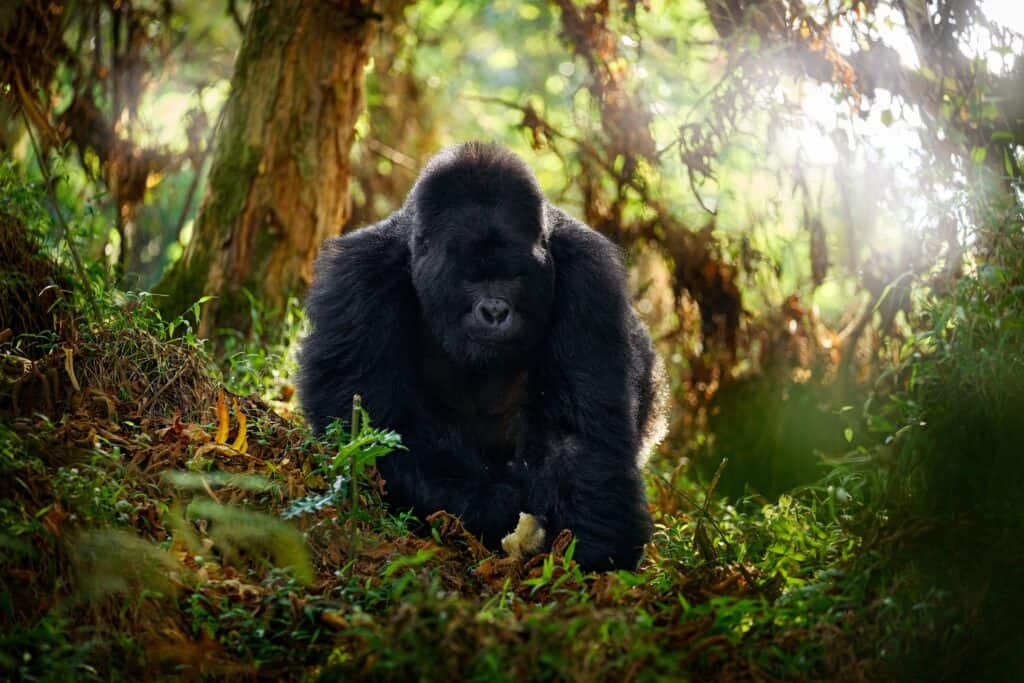
Although a gorilla’s diet is mostly plant-based, they still have large, powerful teeth and an impressive bite force.
©Ondrej Prosicky/Shutterstock.com
Along with their large size, gorillas also possess large teeth. Although their diet mostly consists of plants, their teeth are capable of grinding and breaking down a substantial amount of tough material. In addition to those teeth, gorillas also pack a powerful bite force.
Additionally, gorillas have large hands and strong upper arms. According to Seaworld, “An adult gorilla’s upper body strength is six times more powerful than that of an adult human — enabling them to lift, break, and squeeze heavy objects.” Also, they have large, strong hands, with opposable thumbs that allow them to easily grab and manage objects.
Wolves have 42 adult teeth in their mouths, the most noticeable being the canines. Those canines are perfect for grabbing hold of their prey, tearing through meat, and crushing bones. Their bite force, estimated at up to 1,200 PSI, helps them latch onto prey and keep it from getting away.
Although the wolf’s canines appear terrifying, the size, strength, and larger bite force of the gorilla give it the upper hand in this category.
Predatory Behavior
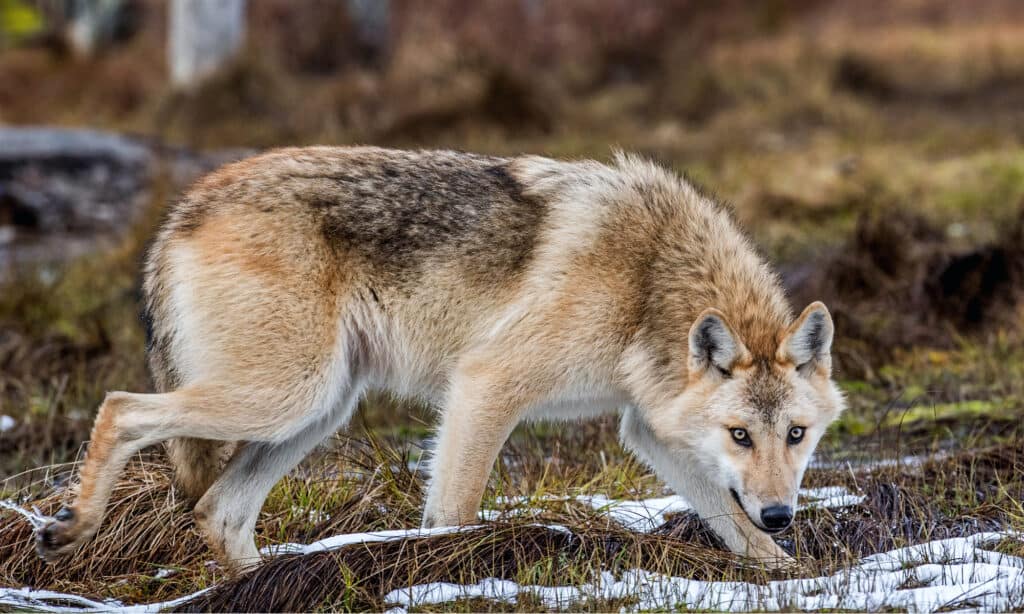
The Eurasian wolf hunts moose, deer, wild boar, reindeer, wild goats, and other mammals.
©Sergey Uryadnikov/Shutterstock.com
Although gorillas are not considered apex predators like wolves, they should not be mistaken for easy prey either. Leopards are among the few predators known or suspected to prey on gorillas, particularly young or vulnerable individuals, though attacks on healthy adult males are much harder to document. Other than their defensive tactics, gorillas do not have many predatory behaviors. They are primarily herbivorous foragers, though they may also eat insects such as ants and termites, and they are always aware of their surroundings and do attempt to scare off predators with chest beating and other tactics.
Wolves are apex predators. They are known to ambush their prey and usually go for areas such as the shoulders or flank of an animal. Although they can hunt alone, wolves are known to hunt in packs and surround their prey. This helps with the success rate as the pack can surround the animal and attack it from all sides. Regardless, hunting for a wolf is dangerous and they have a relatively low success rate when it comes to their hunting.
The wolf has the advantage in predatory behavior because it is an active carnivore adapted for pursuing and attacking prey. The gorilla’s advantage lies more in defense, strength, and intimidation than predation.
Who Would Win in a Fight Between a Gorilla and a Wolf?
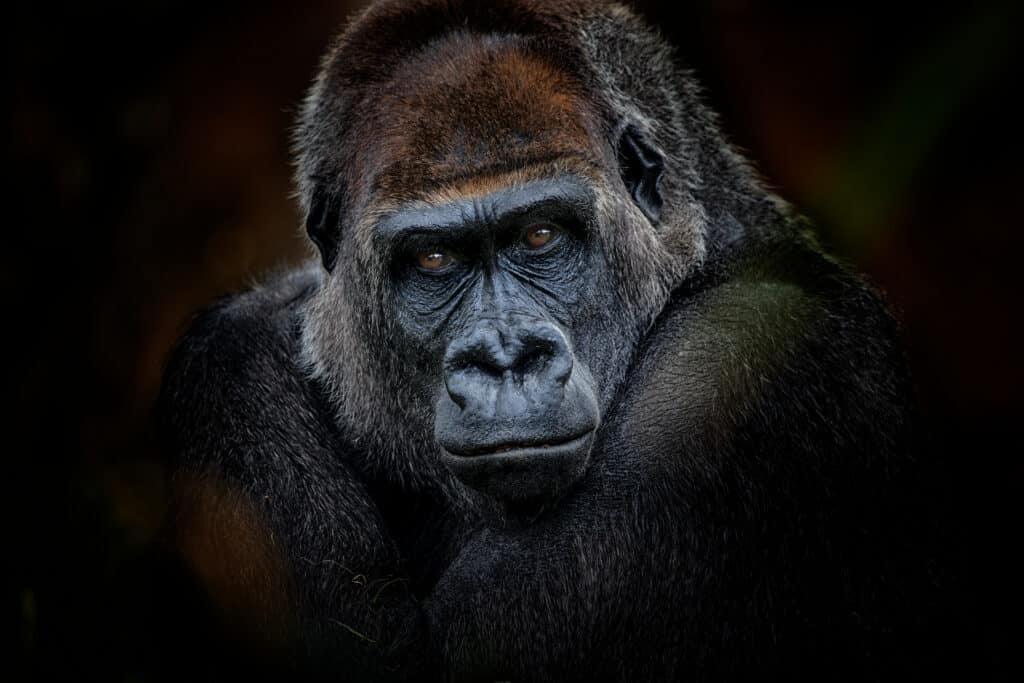
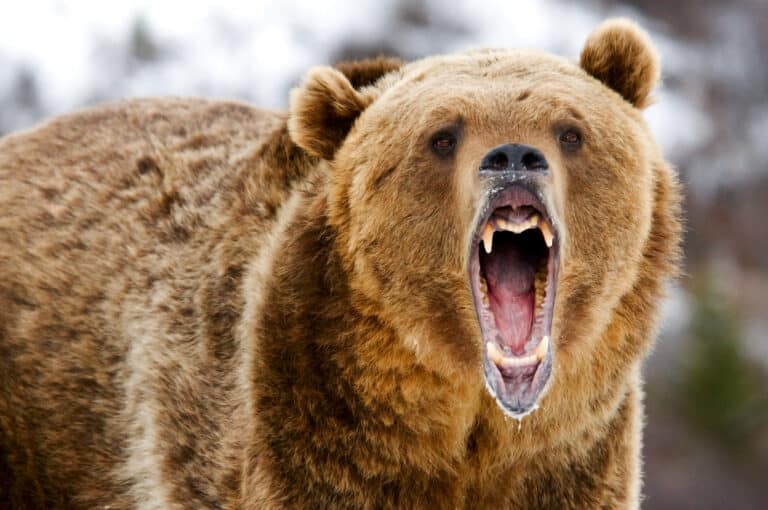
Gorillas can become aggressive when threatened, but they often rely on warning displays before physical confrontation.
©Jiri Fejkl/Shutterstock.com
In a fight between a gorilla and a wolf, the gorilla would win. While the wolf has stronger predatory behaviors, impressive teeth, and speed, it is no match for the gorilla’s strength. Even if the wolf ambushed the gorilla, unless it got very lucky with the location that rendered the gorilla unable to defend itself, the gorilla’s size, strength, and grasping ability would give it a serious advantage at close range.
Its large size, immense strength, and stronger bite force make the gorilla the winner of this duel. If there was an entire pack of wolves fighting the gorilla, they would stand a much better chance and could be successful. However, in a one-on-one encounter, a healthy adult gorilla would likely have the advantage over a lone wolf.
What Animal Could Take Down a Gorilla?
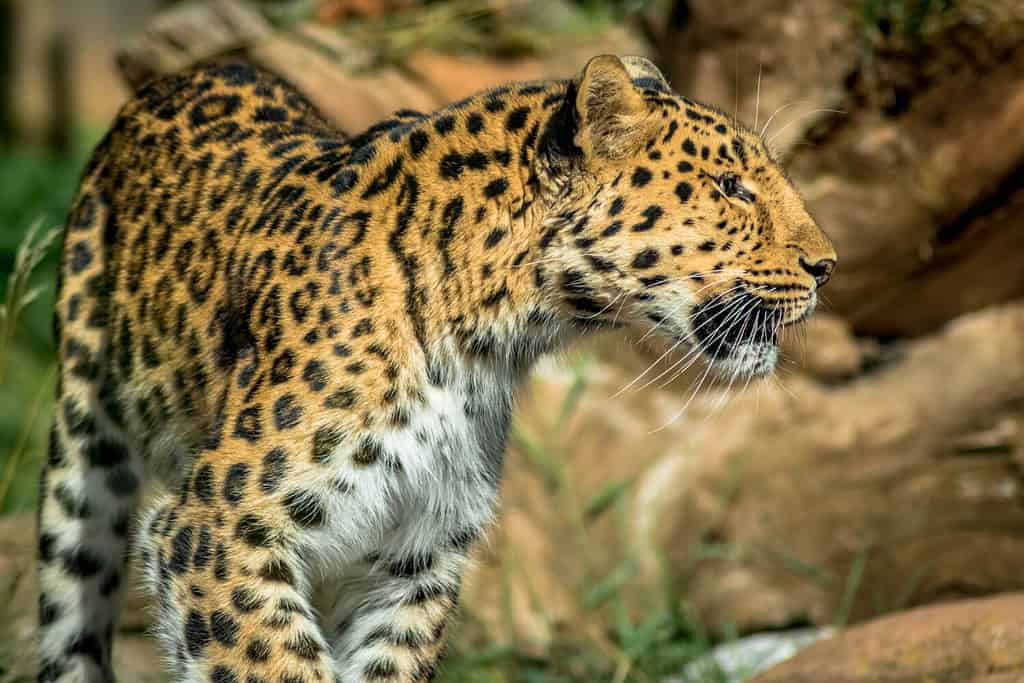
Leopards are known for being stealthy, extremely powerful cats.
©JamesCookPhotography/Shutterstock.com
Leopards are among the few predators known or suspected to prey on gorillas, particularly young or vulnerable individuals. With their stealth, climbing ability, sharp claws, and powerful bite, leopards are capable predators that can pose a threat to some gorillas. While gorillas may be larger, the leopard is a cunning hunter who knows how and when to strike the gorilla for maximum impact. For a full breakdown of what a showdown between these two animals would be like, check out Leopard vs. Gorilla: Who Would Win in a Fight?