
The deep ocean is home to the largest ecosystem on Earth, but we’ve only explored a tiny portion of it. Despite the enormity of our seas, new species are discovered all the time thanks to technological advancements. Recently, a team of researchers discovered an impossibly cute bumpy snailfish. The little fish was swimming in the deep, along with two other species of snailfish. We reached out to Mackenzie Gerringer, lead author of the study and a biologist from the State University of New York College at Geneseo, to learn the fascinating details.
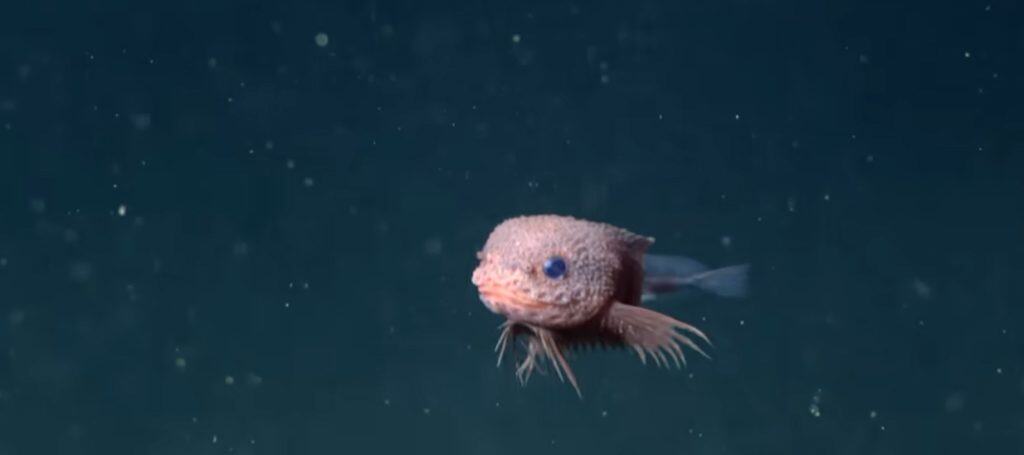
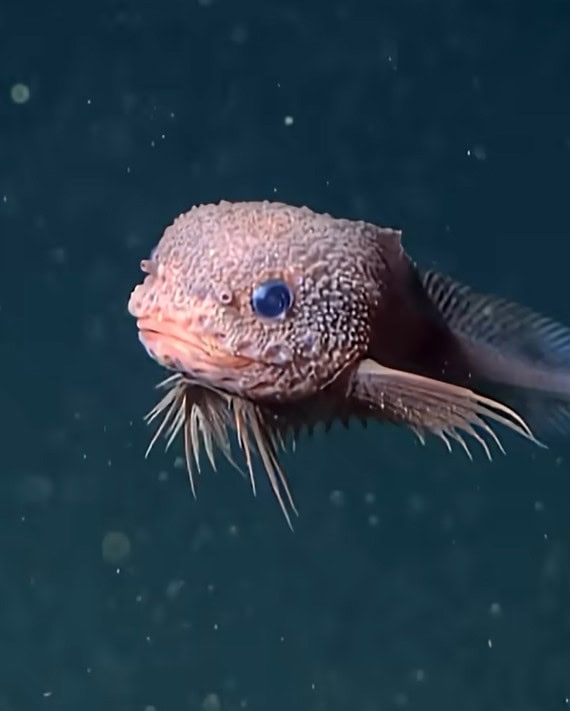
As seen in a video from MBARI, the bumpy snailfish is a newly discovered species in the family Liparidae.
©YouTube/MBARIvideo – Original
Three New Species of Snailfish: Bumpy, Sleek, and Dark
In a research study published in the journal Ichthyology & Herpetology in August 2025, scientists describe three new species of snailfish, including the bumpy snailfish. (This video from MBARI shows the little snailfish swimming in its habitat.) Scientists found the snailfishes at depths greater than 10,000 feet off the coast of California on a Monterey Bay Aquarium Research Institute (MBARI) expedition.
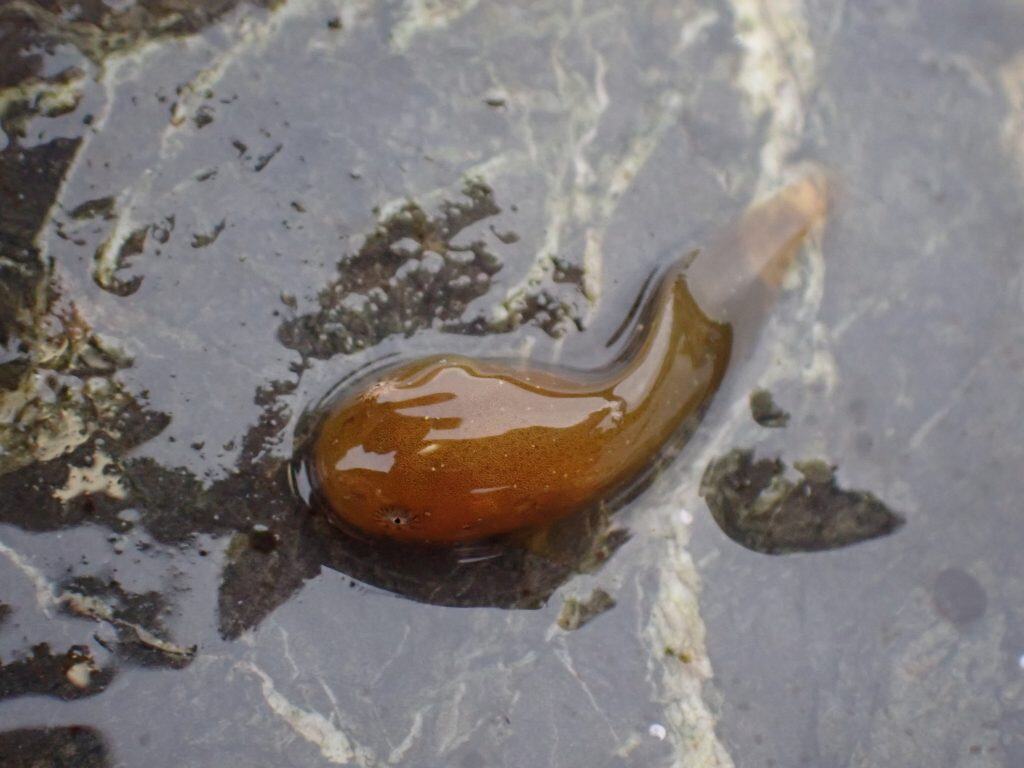
Some snailfishes live in shallow waters, like the tidepool snailfish (Liparis florae).
©Ellyne Geurts, CC0, via Wikimedia Commons – Original
The three new species discovered belong to the family Liparidae. This is a diverse family of gelatinous-bodied fish that live in shallow tide pools as well as the deepest ocean trenches. Scientists know of at least 450 different species of snailfish, but there are probably many more undiscovered species. In only the past ten years, scientists have discovered over 40 species.
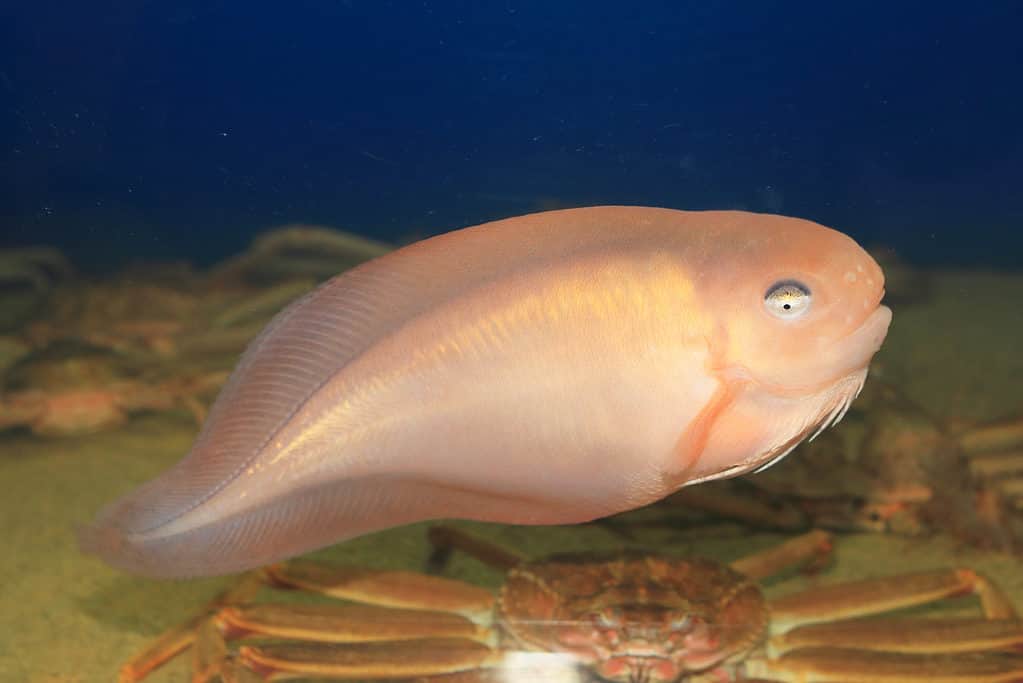
There are over 450 known species of snailfish; shown here is the salmon snailfish of Japan.
©feathercollector/Shutterstock.com
The three newly discovered species include:
- Bumpy snailfish (Careproctus colliculi): The bumpy snailfish (3.1 inches long) has pink skin, a round head, and a suction disk on its belly. Scientists think it uses the suction to cling to rocks or maybe hitch a ride on other animals.
- Dark snailfish (Careproctus yanceyi): The dark snailfish (6.1 inches long) also has a round head and a small suction disk.
- Sleek snailfish (Paraliparis em): The sleek snailfish (4 inches long) lacks a suction disk and has a more hydrodynamically shaped body.
Although their diets are not completely known, they probably feed on small crustaceans and plankton similar to other snailfish. Snailfish are typically prey to fish and cephalopods.
How the Snailfishes Were Discovered
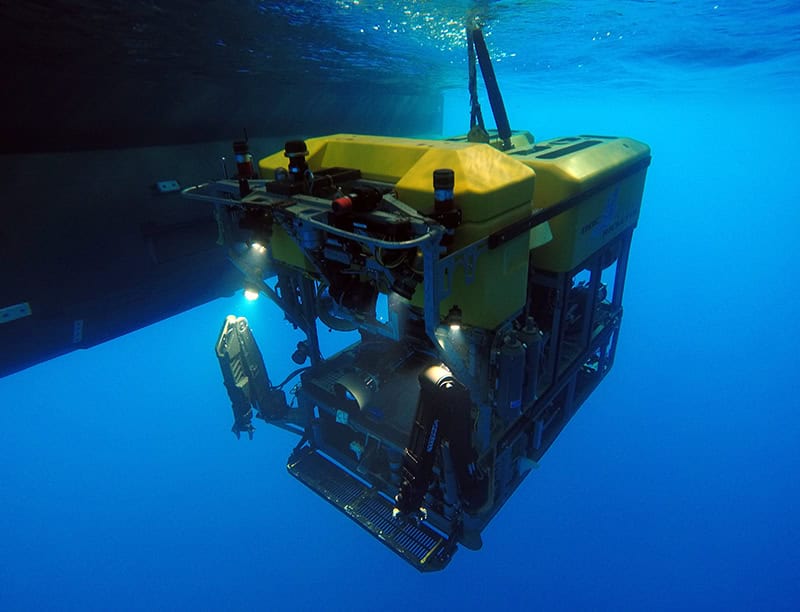
The bumpy snailfish was discovered in the deep ocean by MBARI’s remotely operated vehicle Doc Ricketts.
©Courtesy of Monterey Bay Aquarium Research Institute (MBARI) – Original
Researchers found the dark snailfish and sleek snailfish on the crewed submersible, Alvin, near Station M. Station M is a research site in the deep sea (13,100 feet) off the coast of Santa Barbara. Researchers collected the bumpy snailfish in Monterey Canyon at a depth of 10,722 feet, with the remotely operated Doc Ricketts.
We spoke with lead author Gerringer via email to learn more about the importance of this discovery.
How did you determine the specimens you collected were previously unknown species of snailfish?
It takes some detective work to figure out if a certain fish is new to science. After the specimens were collected, we carefully examined these snailfishes in the lab, taking measurements and making counts. For snailfishes, we are comparing features like the length of the head compared to the length of the body, the number of fin rays, the number of vertebrae, the shape and number of the teeth, and more. We also look for whether the snailfish has a suction disk on its belly, which some species use to stick to rocks! Other species have lost this disk over evolutionary time.
In addition to looking at the features of the fish, we also sequence genes that help us compare how similar the DNA in this individual is to the DNA of described species. We then take all those genetic and morphological data and compare that information to every known snailfish, trying to see if these could possibly be known species. We spend a lot of time trying to disprove that a species is new to science, and if we cannot do that, we describe it as a new species.
What implications do your findings have for our understanding of deep ocean ecosystems?
The discovery of three species of snailfishes that are new to science is exciting, and it highlights how much we have to learn about our planet, especially the deep oceans. These species also give us the opportunity to better understand adaptation and evolution into habitats that may seem harsh to us: the deep sea has high pressure, cold temperature, and no sunlight. But to these snailfishes and the incredible diversity of other deep-sea organisms, this environment is home! The deep sea is the largest habitat on our planet, and understanding diversity and adaptation in the oceans requires deep-sea exploration and taxonomy.
Can you explain the significance that two of the newly discovered species of snailfishes were collected from the same area?
Two of these abyssal snailfishes, Paraliparis em and Careproctus yanceyi, were discovered by the Alvin submersible on the same dive more than 13,400 feet below the surface. The submersible was studying a site called Station M, which has a rich and amazing history of deep-sea research spanning more than thirty years. This abyssal research station is one of the better-explored parts of the deep sea, yet there are still species here that we do not know about.
To me, the discovery of these two snailfishes that are new to science on the same abyssal submersible dive shows how much we still have to learn about these incredible habitats. The abyssal plains make up half of Earth’s surface area and house a beautiful and incredible diversity organisms and it is critically important that we understand and protect these ecosystems.
What are some of the biggest challenges in collecting specimens at these depths?
It is a long way down to reach the abyss! Studying the deep sea is challenging because of the high pressures that deep water exerts and the need to access deep waters from ships. Although these fishes and other deep-sea species are well-adapted to life under high pressure, cold temperature, and lack of sunlight, we humans require a lot of specialized technology to explore these habitats.
Underwater robots called remotely operated vehicles (ROVs) and human-occupied submersibles allow for deep-sea exploration. Deep-sea research requires partnerships between scientists, engineers, and the captains and crew on research vessels. To me, deep-sea exploration is a beautifully collaborative process; we need the expertise, time, and effort of many people coming together to meet these challenges.
What do you hope to explore next?
Everything! Science is the process of asking questions, staying curious, and continually learning, and there is always more to explore. I am especially excited to continue to explore biodiversity and adaptation in the deep sea. We are currently working to understand how deep-sea animals are adapted to high pressure, which reaches 1,100 times the pressure that we experience at the surface at the ocean’s deepest depths. Deep-sea animals have evolved many incredible adaptations, and it is a joy to be part of exploring and understanding these awesome habitats.
And finally, is there anything else you would like our readers to know?
Although the deep sea may seem remote or even otherworldly, these habitats are closely connected to the rest of the oceans, and our actions at the surface matter for deep-sea life. The deep oceans are threatened by multiple human impacts, including plastic pollution, overharvesting, seabed mining, oil and gas extraction, and climate change. The deep oceans play a critically important role on our planet, including by storing excess heat and carbon dioxide, providing sources for bioinspired pharmaceuticals, cycling nutrients, and more. It is vital that we conserve and protect these important and beautiful ecosystems.