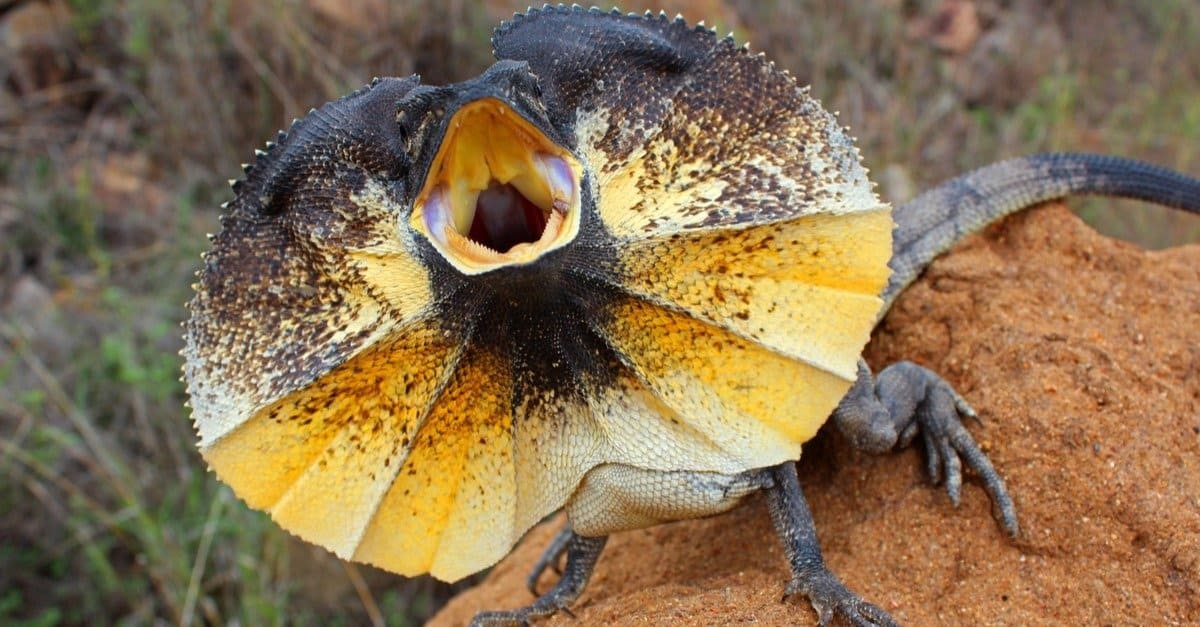

There are some interesting ways that animals behave in the wild. Whether it’s communication, attacking, or defending, it can be hard to decipher what some behaviors mean. This Instagram post by @thenaturewolf shows a frilled-neck lizard frilling its neck and climbing on a man. Read more below to learn about why these lizards frill their necks, and whether it’s a greeting or defense.
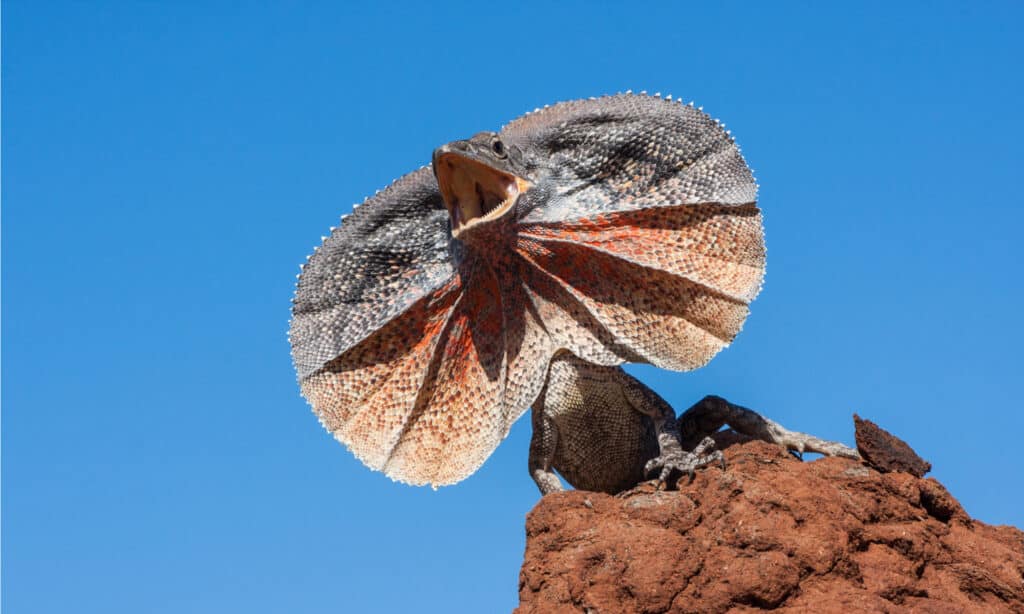
The frills are a warning for predators.
©Ken Griffiths/Shutterstock.com
Why Do Frilled-Neck Lizards Frill?
Frilled-neck lizards frill their necks for a few different reasons, primarily for defense and communication. Frilled lizards use their frills to communicate with other lizards! Displaying the frills is used in social interactions like attracting mates and asserting dominance. The size and color of the frills add to this communication, making the way each lizard communicates somewhat unique. They can also display intimidation by combining other behaviors, such as hissing and running toward threats, which can appear frightening. The frills also serve as a defense mechanism. When a lizard feels threatened or scared, it will quickly and suddenly expand its frills. This sudden burst can scare approaching predators. After expanding its frills, the lizard will most likely run away, using the momentary distraction to escape from the predator.
Frilled Lizards and Humans
As seen in the video, frilled lizards are not thought to be fond of humans. While not common, some reptile enthusiasts keep frilled-neck lizards as pets. They require specialized care and are best suited for experienced keepers. Frilled-neck lizards are often solitary creatures, as males can be extremely territorial and may fight. If you want to interact with a frilled lizard, it may take some time. While they may be defensive at first, frilled lizards can grow accustomed to human interaction. Using positive reinforcement can help make interactions with the lizard easier over time.