
Quick Take
- Bear encounters are increasing in suburban areas as development overlaps with wildlife habitat.
- Easy food sources like trash and feeders attract bears and encourage repeat visits.
- Black bears are responsible for most encounters, with growing populations across many states.
- Calm responses, awareness, and proper behavior during encounters help reduce risk and prevent escalation.
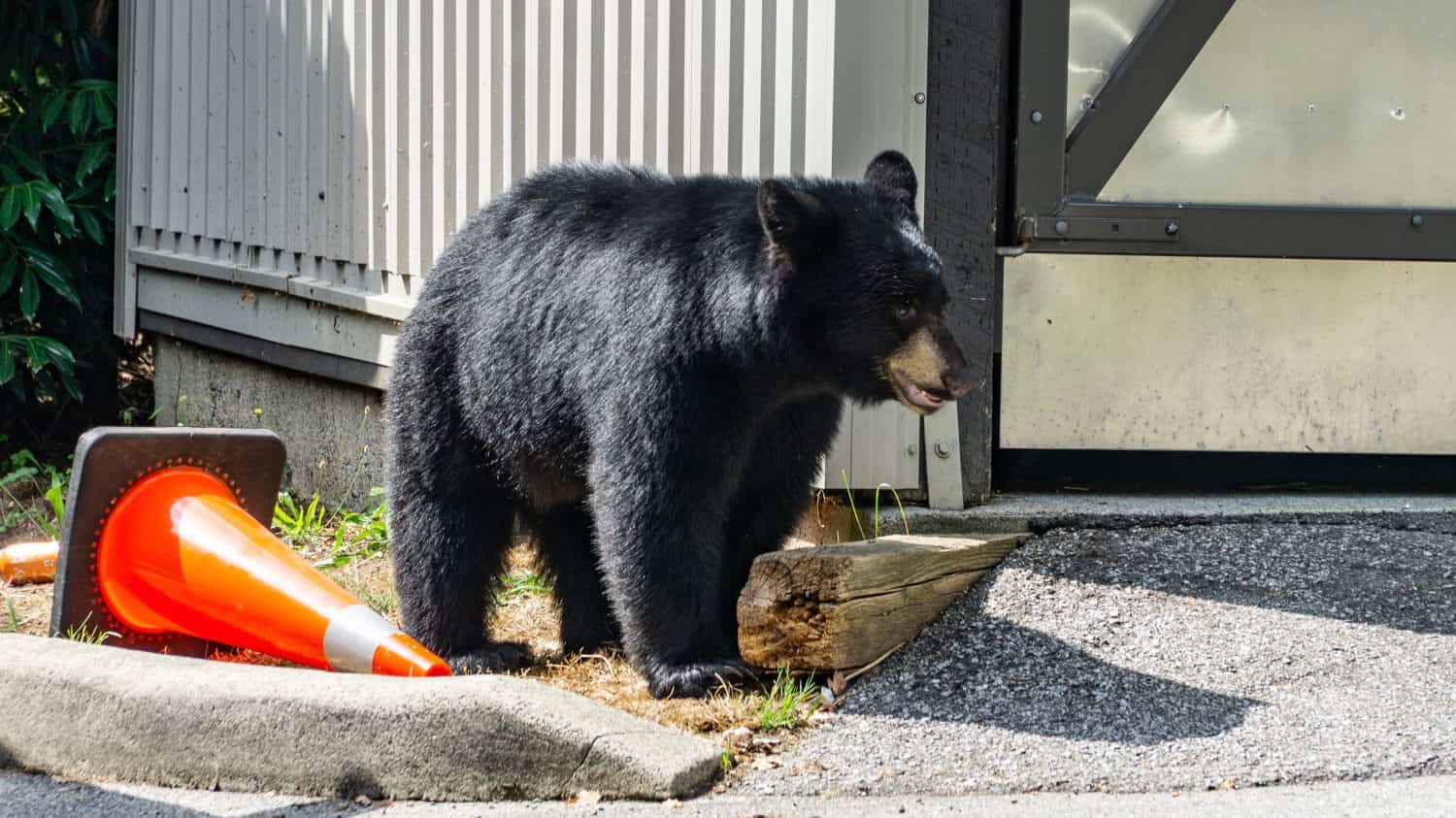
A few years ago, my aging mother started feeding wildlife outside her back door in Virginia and sending me photos of whatever showed up. It began with birds and squirrels, then a raccoon, then a fox. It was all fun and games until one day I opened a message from her with a photo of a black bear standing near her dog pen and this alarming note: “It’s so cute and cuddly, I just want to love on it.” I replied, “NO MOM! IT HAS RAZOR BLADES FOR FINGERNAILS!”
She didn’t live in the wilderness. This was a wooded suburb in a medium-sized city in Virginia. Yet wildlife, including bears, had made itself right at home alongside people. And our state is not alone. Reports from California to Connecticut show that bear encounters are becoming more common, especially in neighborhoods near forests and mountains. These sightings reflect a broader shift in how wildlife and human development overlap.
As suburban areas expand and bear populations recover, the line between natural habitat and residential space continues to blur. Bears are not new to these regions, but their visibility has increased. This trend raises questions about safety, coexistence, and how people should respond when wildlife enters everyday spaces.
California Encounters Near Mountain Communities
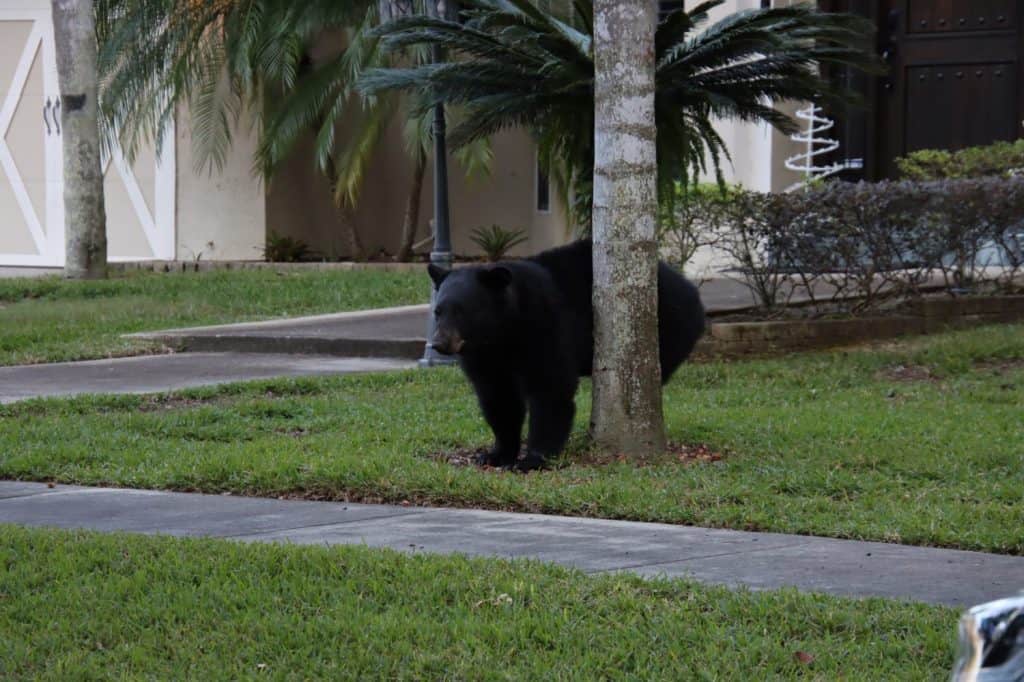
Black bears sometimes meander into suburban neighborhoods in densely populated California.
©Barb Elkin/Shutterstock.com
Southern California sits where steep mountain habitat meets dense neighborhoods, and black bears move between the two with surprising ease. In Monrovia, along the edge of the Angeles National Forest, a local TV reporter was covering a recent bear incident when another black bear suddenly wandered into the live broadcast behind her. The report focused on an earlier encounter in which a woman walking her dog was swiped on the leg and suffered minor injuries.
Wildlife officials from the California Department of Fish and Wildlife were already on scene, attempting to trap the animal connected to that earlier incident. As cameras rolled, the animal approached a driveway trap, then casually turned away and moved through the neighborhood, largely unfazed by the activity around it. Residents in the area noted that sightings like this are not unusual, which highlights how frequently these predators now pass through suburban spaces in this region.
Connecticut’s Rising Bear Activity
Connecticut has become one of the clearest examples of how quickly black bears are adapting to suburban life. In 2025, a widely reported incident in Simsbury showed just how close these encounters can get. A bear broke into a home by pushing through a screen door and dislodging a window air-conditioning unit, then entered the kitchen and ate food while a teenager inside the house was sleeping, and later hid in a closet as the animal moved through the house. It returned the following day—a reminder of how quickly animals will revisit locations where food is easily available.
Cases like this are no longer isolated. State officials estimate that between 1,000 and 1,200 black bears now live in Connecticut, and sightings have risen sharply over the past decade. Bears have been reported in all 169 towns across the state. In 2025, nearly 40 home entries were documented across multiple communities. The Department of Energy and Environmental Protection emphasizes that preventing access to human food remains the most effective way to reduce these increasingly common encounters.
Why Bears Are Moving Into Suburbs
Encounters tend to be highest where three factors overlap: growing bear populations, expanding human development, and easy food sources. As more bears spread into new territory and more neighborhoods push into forested areas, the chances of crossing paths increase. This overlap creates a steady pattern of sightings in places that once saw little wildlife activity.

Easy meals from trash cans are the biggest draw for wildlife into suburban neighborhoods.
©Tomas Hulik ARTpoint/Shutterstock.com
Food is the strongest pull. Neighborhoods offer high-calorie meals that require far less effort than natural foraging. Trash cans, bird feeders, pet food, compost piles, and outdoor grills can draw all sorts of animals in from nearby woods. Once a bear finds a reliable food source, it often returns. Over time, this behavior becomes learned, and cubs may follow their mothers into these areas and repeat it.
Seasonal changes add to the pattern. In late summer and fall, bears enter a period of intense feeding to prepare for winter. During this time, they are more willing to take risks and explore new spaces, including residential areas where food is easy to access.
Species Found in America
The United States is home to three main bear species, each with different patterns of interaction with people and different conservation statuses.
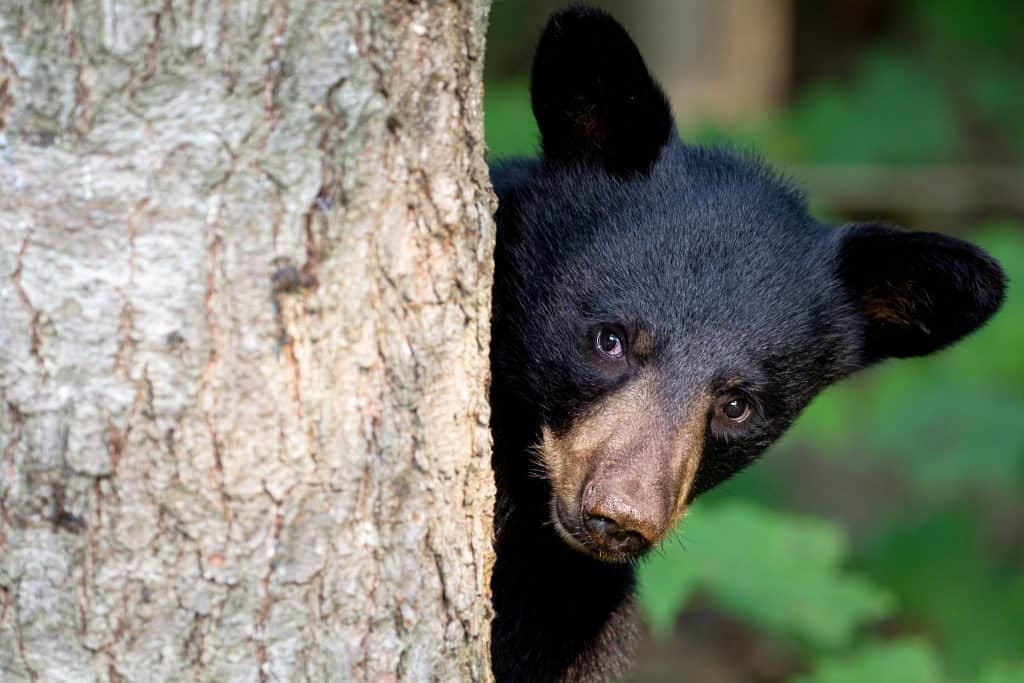
Black bears are not endangered. They live in 37 of the 50 states.
©Christopher MacDonald/Shutterstock.com
The American black bear is the most widespread, with an estimated population of about 800,000 to 900,000 across North America. They live in at least 37 states and are generally considered a species of least concern, with stable or increasing populations in many regions. This species accounts for most suburban encounters, especially in states such as California, Connecticut, Pennsylvania, North Carolina, and Tennessee, where forested land overlaps with growing neighborhoods.
The Grizzly bear, a type of brown bear, is found mainly in parts of Montana, Wyoming, and Idaho. In the lower 48 states, their population is much smaller than that of black bears, with only about 2,000 individuals. Grizzlies are federally listed as threatened under the Endangered Species Act in most of their U.S. range. Encounters tend to occur in or near wilderness areas such as Yellowstone and Glacier National Parks rather than in suburban settings.
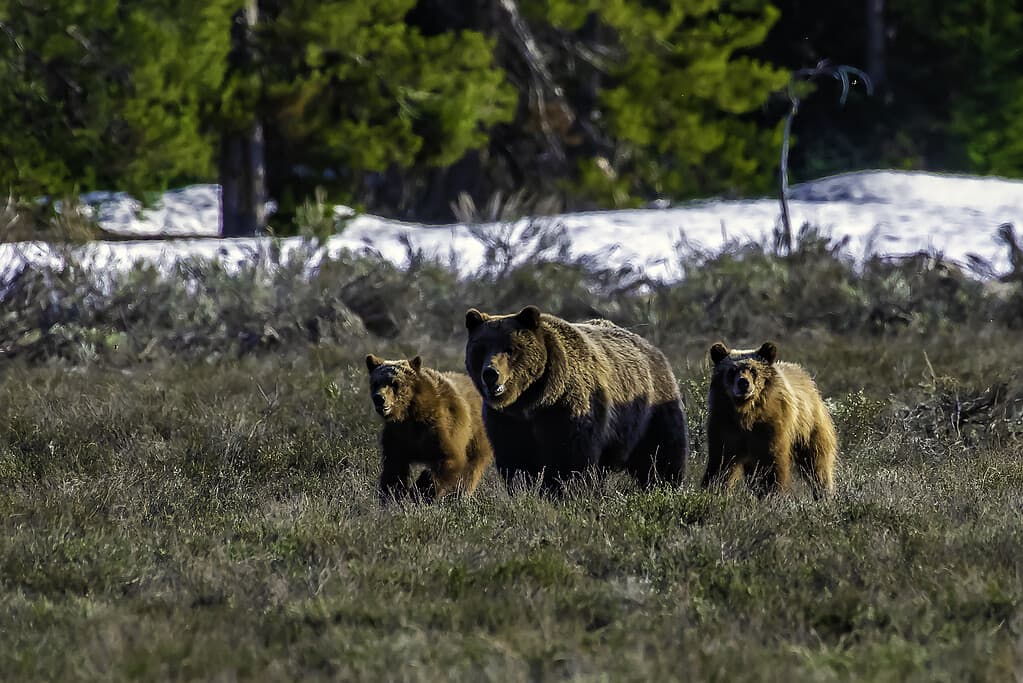
Grizzlies are found in the inland mountain states of the Pacific Northwest.
©John Morrison/iStock / Getty Images Plus via Getty Images
Alaskan brown bears and polar bears live in Alaska. Brown bear populations in Alaska are considered stable, with an estimated 30,000 individuals, and are not federally listed as threatened in the same way as grizzlies in the lower 48. Polar bears, however, are listed as threatened under U.S. law due to long-term habitat loss driven by declining sea ice. Across the country, black bears remain the primary species involved in human encounters, especially in regions with growing populations and expanding development.
What Research Shows About Human Influence
Scientists studying bear behavior have found that human activity strongly shapes where bears travel. In communities that introduced bear-resistant trash containers, the animals changed their movement patterns and spent less time in residential areas.
When food sources disappear, scavengers tend to move on. When food is easy to find, they return again and again. This pattern shows that human habits directly influence how often bears appear in neighborhoods. It also suggests that small changes, when applied across a community, can reduce conflicts over time.
Hunting and Bear Behavior
Hunting can shape how black bears behave, but it does not determine where encounters happen on its own. In areas with regular hunting seasons, bears tend to be more cautious. They avoid open spaces, limit daytime movement, and keep a greater distance from roads and people. This learned wariness can reduce bold behavior near homes, especially in rural areas.
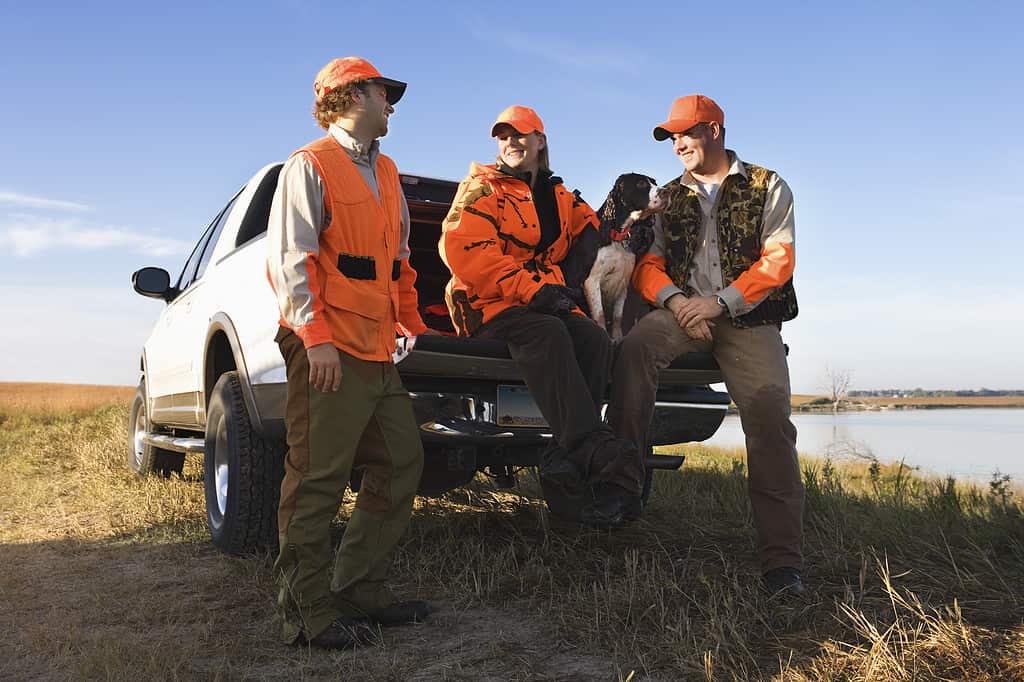
Hunting is used in some states for bear population management, but it does not fully deter bears from entering human communities.
©© Getty Images/Stockbyte via Getty Images
At the same time, hunting does not remove the main attractant, which is food. Bears that discover easy meals in neighborhoods may continue returning despite risk. Hunting also does not always target the specific animals causing problems. When dominant bears are removed, younger bears may move into new areas, including suburban edges, which can lead to short-term increases in sightings.
Because of this, wildlife agencies often view hunting as a population management tool rather than a direct solution to human-bear conflicts. It can influence behavior and help control numbers, but it works best alongside efforts that reduce access to human food.
Government Response to Growing Bear Encounters
State and local governments generally do not view bears as a problem species to eliminate. In most regions, black bear populations are considered a conservation success after recovering from historic declines. Agencies aim to maintain healthy populations while reducing conflicts with people.
The primary strategy focuses on prevention. Many states promote guidelines that encourage residents to secure trash, remove bird feeders during active seasons, and avoid leaving pet food outdoors. Some communities require bear-resistant garbage containers or restrict when trash can be placed outside. These policies aim to remove the food sources that draw bears into neighborhoods in the first place.
When conflicts increase, agencies may track bear activity, issue public alerts, and intervene with specific animals that become too bold. In some cases, problem bears are relocated, though this is not always effective. If a bear repeatedly enters homes or behaves aggressively, officials may remove it from the population. Overall, the goal is not to reduce bear numbers across the board, but to manage how bears and people share the same space.
Practical Steps to Reduce Risk
Preventing encounters starts with removing food sources. Trash should be stored in secure containers and only placed outside on collection day. Bird feeders should be taken down during seasons when bears are active. Pet food and cooking equipment should be kept clean and stored indoors when possible. These steps work best when entire neighborhoods follow them. A single unsecured yard can attract a bear and bring it into contact with nearby homes. Community awareness and shared effort play a major role in reducing repeat visits.
What If a Bear Shows Up in YOUR Yard?
If a bear enters your yard, stay calm and avoid sudden movement. Do not run, since that can trigger a chase. Stand upright at a safe distance and face the bear without staring it down. Speak in a firm, steady voice so the animal recognizes you as a person. Slowly raise your arms to make yourself look larger, then begin backing away in a controlled, deliberate manner. Keep your movements smooth and give the bear a clear path to leave. If you are with others, stay together to appear bigger and more noticeable.
If the bear moves closer or seems focused on you, increase your presence without panicking. Continue speaking loudly and confidently, and use strong, deliberate gestures to reinforce your size. Hold your ground while still creating space by slowly backing away to the safety of your house or car. Avoid direct eye contact and never turn your back.
Fight Back or Play Dead?

Bear attacks can be deadly. But if you stand your ground against a smaller bear you might intimidate it more than it intimidates you.
©lassi meony/ via Getty Images
Expert advice changes based on the type of bear and how it is behaving. A common rule is simple: fight back against a black bear, but play dead with a brown bear. An easier way to remember this under stress is to think in terms of size. If the bear is smaller, like a black bear, you fight back. If the bear is larger, like a brown bear, you play dead in a defensive encounter.
In the event an attack becomes unavoidable, fight back using whatever is available, aiming for the face and muzzle. This approach is especially important with black bears or in situations where the animal appears predatory. Most encounters do not escalate to this point, and many bears will retreat once they recognize you as a threat rather than prey.
For brown bears, the response is often different. In a defensive attack, such as when a bear is surprised or protecting cubs, the safest action is to play dead. Lie flat on your stomach, spread your legs to avoid being flipped, and cover the back of your neck with your hands. Remain still and quiet until the bear leaves. If the attack shifts from defensive to predatory, then switch tactics and fight back aggressively, again targeting the face and muzzle.
A Shared Future With Wild Animals
The growing presence of bears in suburban areas reflects a broader shift in how humans and wildlife share space. As populations recover and development expands, encounters will likely continue.
The outcome depends on how people respond. Communities that manage food sources and follow consistent practices can reduce conflict without removing bears from the landscape. Learning to live alongside wildlife requires awareness, restraint, and respect for animals that are simply adapting to the world around them.