
Quick Take
- The blood-squirting isn't a reflex. The horned lizard orchestrates the entire process on demand, and the mechanics of how it pulls that off are stranger than you'd expect. See how they control it →
- The spray itself isn't what stops predators cold. Something hidden inside the blood is what does the real work. Discover what's in the blood →
- The horned lizard's most fearsome weapon traces directly back to the dangerous prey it eats, and the connection is weirder than a simple food chain. Trace the ant connection →
- Those intimidating body spikes are essentially a bluff, and the lizard treats them as a last resort for a surprising reason.
All creatures have defensive strategies to ward off predators. For some, it is hard shells or coverings, spikes, speed, or the ability to camouflage. Others deploy unpleasant scents or inject venom to escape. The horned lizard does a bit of both.
With spikes along their bodies, horned lizards are not easy to grab. However, the lizards do not want predators to come close enough to attempt an attack. As a result, horned lizards deploy a gruesome defense strategy to make predators run. Their strategy is to squirt blood from their eyes.
Horned Lizards Possess a Frightful Defense Strategy
Horned lizards, also known as “horny toads,” are a favorite prey of various canine species. To ward off would-be predators and others who may want to harm them, these spiky reptiles have evolved a gruesome defense strategy: squirting blood from their eyes.
Through the process of ocular autohemorrhaging, horned lizards can pool enough blood within their ocular sinuses that when it is time to scare off predators, they spray blood at them. While spraying blood may surprise would-be predators, it is the smell of the blood that is more off-putting.
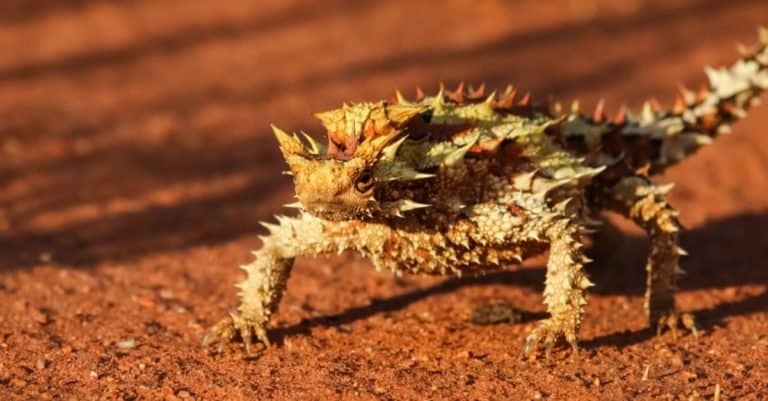
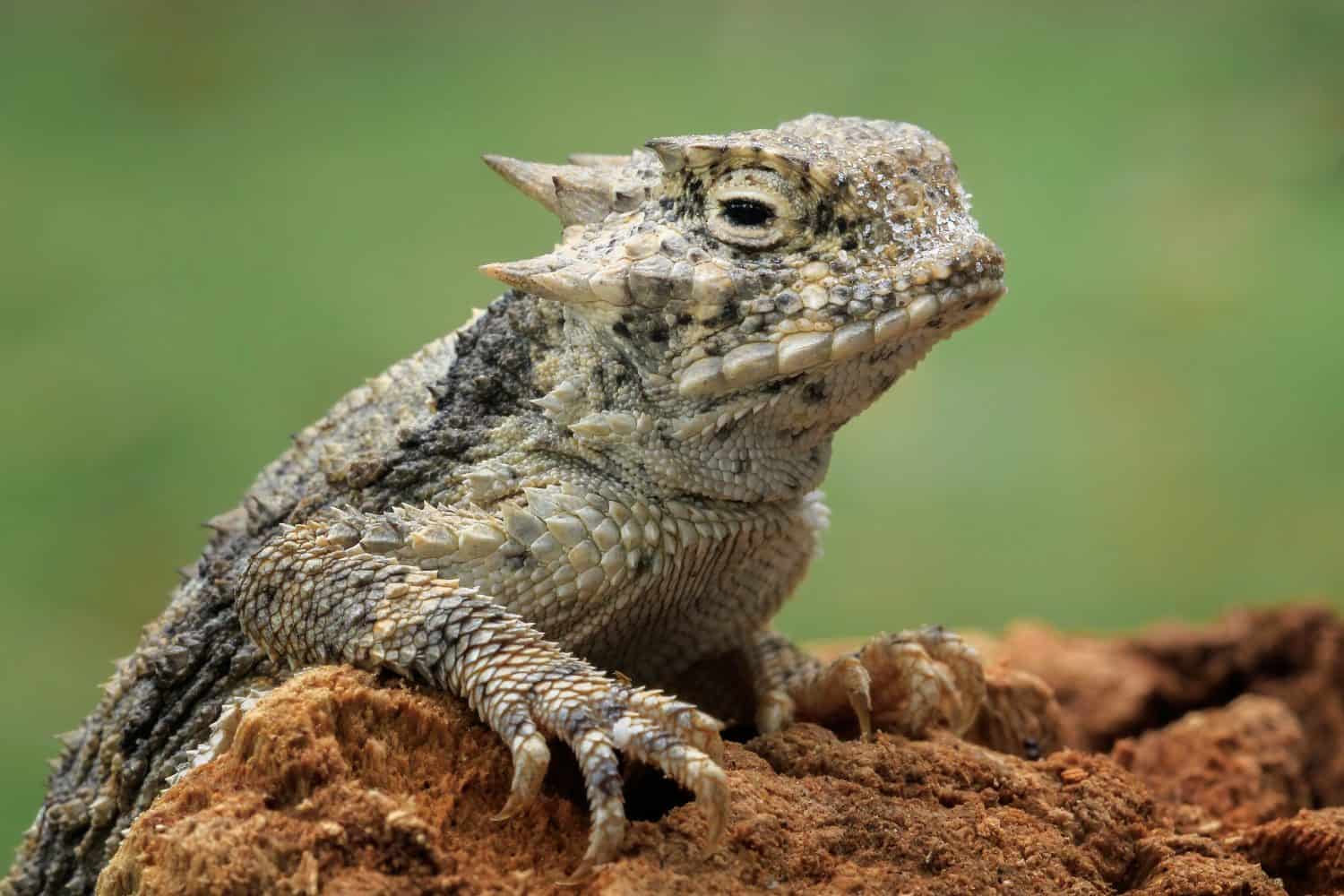
Horned lizards will shoot blood from their eyes to escape predators.
©Milan Zygmunt/Shutterstock.com
The smell of the blood that comes from the horned lizard’s eyes is due to formic acid. Formic acid in the blood is a direct result of consuming harvester ants and the painful venom these ants use against their own predators and nest invaders. Consequently, once blood is sprayed at predators, it is often enough of a deterrent to make them reconsider attacking.
How Does Ocular Autohemorrhaging Work?
Horned lizards may have sharp spikes along their sides, head, and back, but using those spikes to ward off predators is a last resort. Instead, horned lizards will use ocular autohemorrhaging to keep predators at bay.
Ocular autohemorrhaging is a process in which the horned lizard has complete control. When it senses danger, the lizard constricts veins that move blood away from the head, causing a rise in pressure.
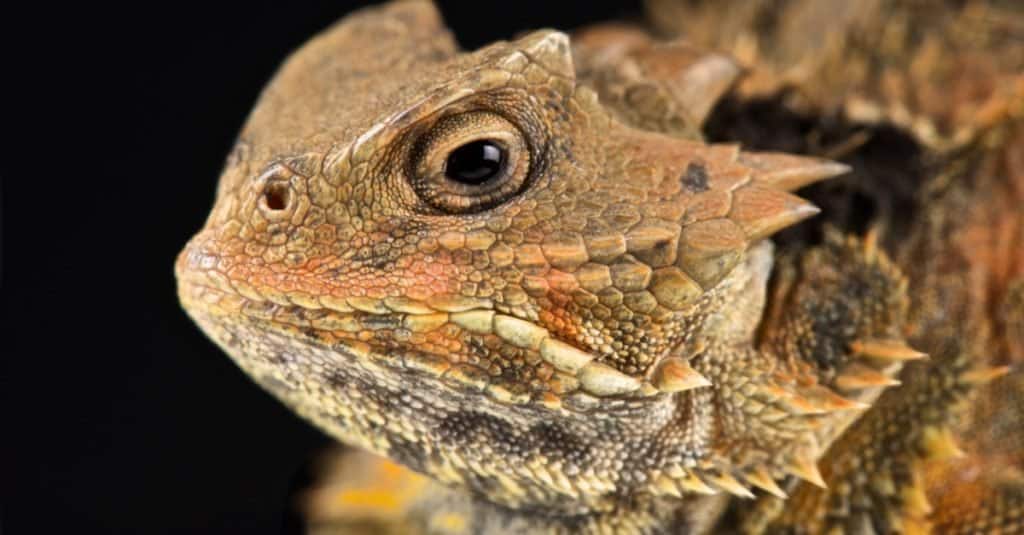
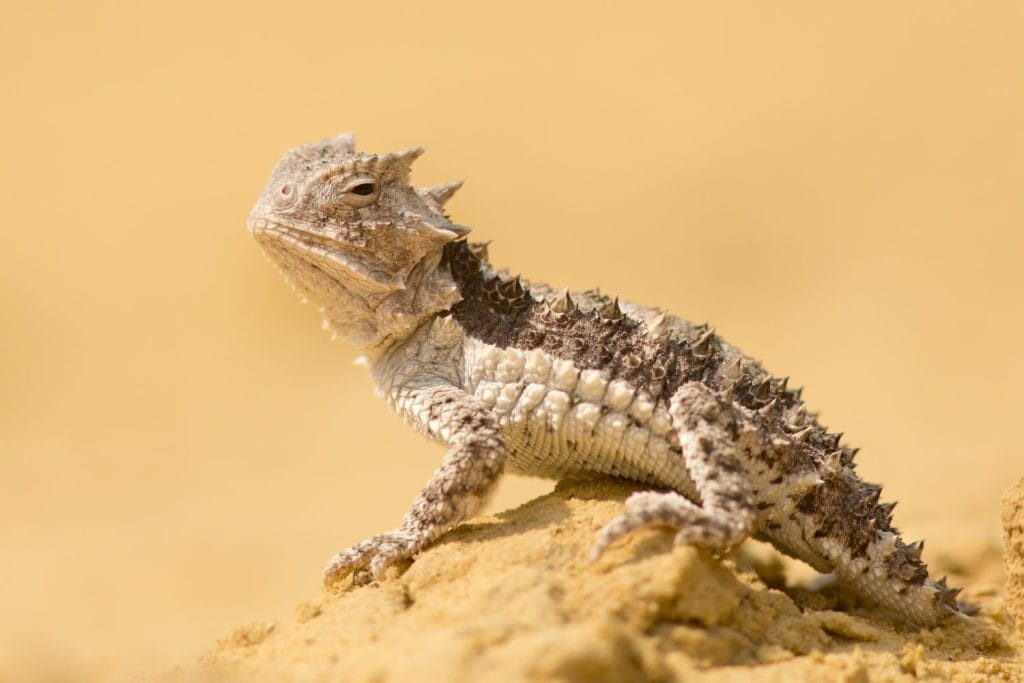
Horned lizards can make blood fill the ocular sinuses at will around the eyes, so they can shoot blood at predators.
©reptiles4all/Shutterstock.com
As the pressure builds, the blood fills the ocular sinuses around the eyes. Blood accumulates here before capillaries begin to rupture. The capillaries heal rapidly after the horned lizard finishes defending itself.
Finally, the muscles around the eyes contract, spraying blood onto the faces and mouths of predators. The stream of blood can travel over three feet, giving the horned lizard ample space to escape.
Why Horned Lizard Blood Smells Bad
When the horned lizard squirts blood from its eyes, part of its defensive strategy is the blood’s horrendous smell. This smell is related to the horned lizard’s diet, which consists mainly of toxic ants.
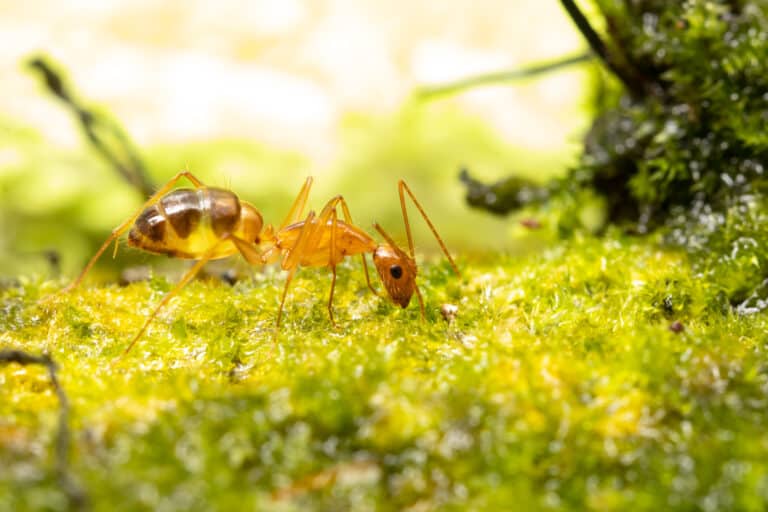
Horned lizards eat a diet that primarily consists of harvester ants. These ants provide essential dietary nutrients for the lizards, including amino acids, proteins, and formic acid.
Harvester ants also sting, but horned lizards have adapted over millions of years by developing thick mucus in their mouths that protects them from harm.
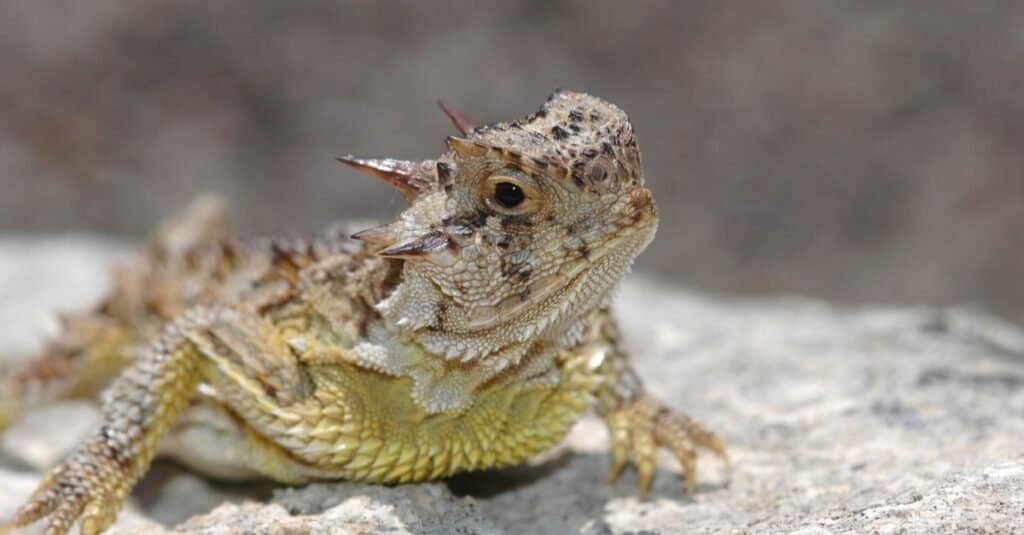
Horned lizards eat harvester ants, and the venom they consume from the ants contributes to the foul-smelling blood.
©iStock.com/Shoemcfly
Because of their diet of harvester ants, horned lizards’ blood has evolved to contain some elements of the ants’ venom. Specifically, the horned lizards have metabolized venom peptides in their blood. The blood not only smells bad when squirted from the lizard’s eyes, but it is typically enough to make canines reconsider pursuing the horned lizard as prey. At this point, the lizard makes its escape, hopefully to live another day.
It is unclear how many times a horned lizard can squirt blood from its eyes to escape danger, though some have been observed doing so multiple times in less than 20 minutes. Thanks to this defensive mechanism, horned lizards help keep harvester ant populations under control while sending domestic and wild canines in search of other prey.