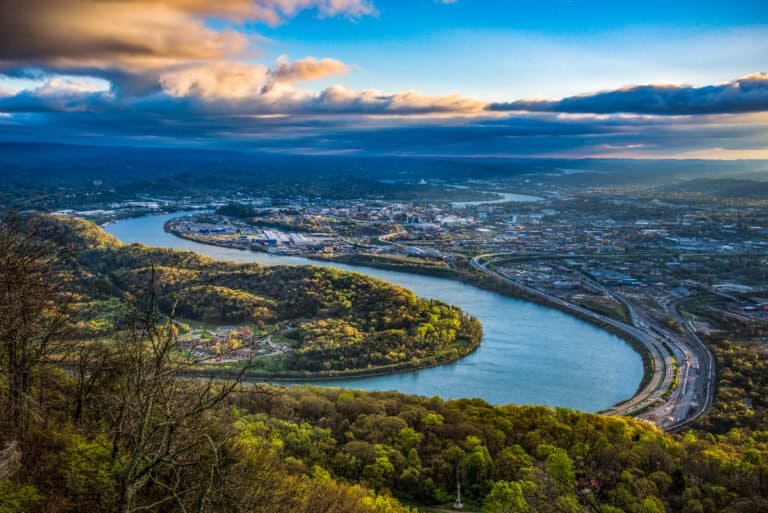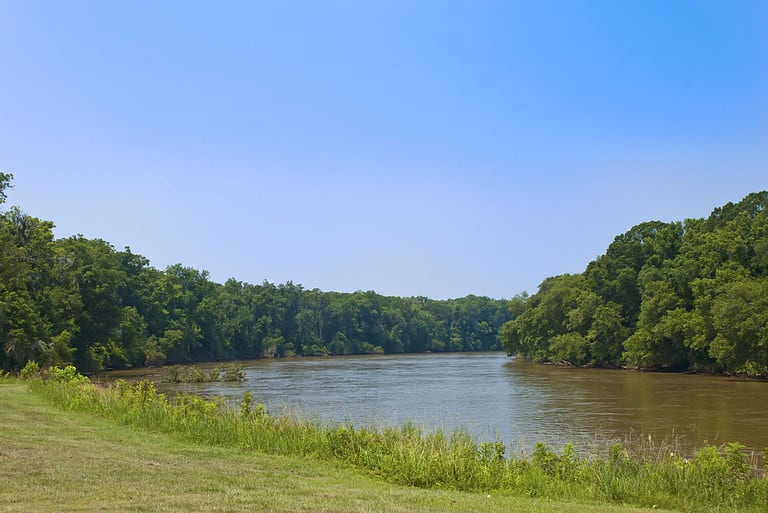

The Mississippi River is massive, but one of its major tributaries, the Arkansas River, is no less lengthy. Running 1,469 miles from Colorado through Kansas, Oklahoma, and Arkansas, the Arkansas River is the sixth-longest river in the United States. It’s also the 47th-longest river in the world. The river starts in the Rocky Mountains near Leadville, Colorado, winding through several states before reaching its mouth in Napoleon, Arkansas. Despite its length, the Arkansas River features a mean water discharge of about 40,000 cubic feet per second, which is considerably less than both the Missouri and the Ohio Rivers. Even so, the Arkansas River is teeming with life and history.
For thousands of years, the river and its basin were occupied by Native American tribes, including the Wichita, Quapaw, and Osage. In 1541, European explorers from the Spanish Coronado expedition arrived. Several years later, famed explorer Hernando de Soto discovered the Mississippi and Arkansas river junction. The Arkansas River got its name, however, from the French Jesuit Missionary Jacques Marquette. He called the waterway Akansa in his 1673 journal, taking the name the French gave to the indigenous people living in its basin.
As the centuries progressed, the Arkansas River found itself in the crossfire of numerous conflicts. The Osage Nation, who traditionally settled the land, fought conflicts against incoming Europeans. The United States government forcibly moved thousands of Cherokee refugees to the basin during the Trail of Tears. Plus, the American Civil War battles of Pea Ridge and Fort Smith were both fought in the fertile basin of the Arkansas River. Even today, disputes endure. Since the early 20th century, Kansas and Colorado have fought over the river’s water rights. Aside from ongoing human conflicts, countless life forms call the Arkansas River home. Let’s learn what kind of creatures are swimming in the Arkansas River.
American Bullfrog
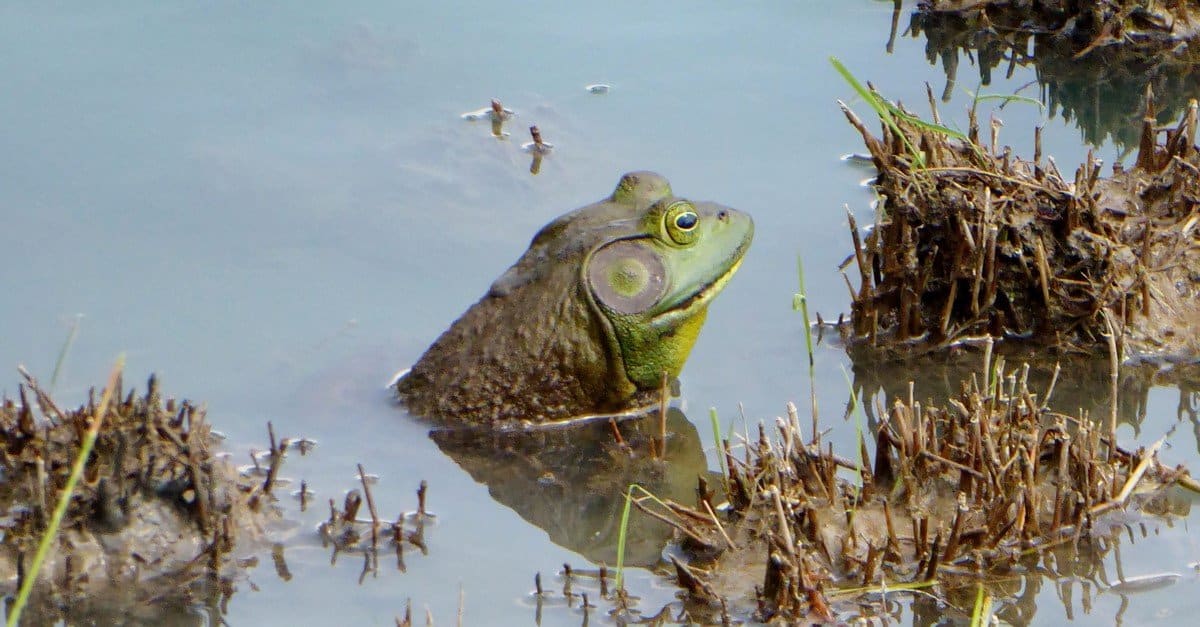
The American bullfrog is the largest type of bullfrog in North America.
©LizzyB33/Shutterstock.com
Before you see any animal on the banks of the Arkansas River, you will hear the American bullfrog. It emits a low-pitched, ‘rum’-sounding call during mating season. These bullfrogs are the largest in North America, reaching around eight inches in length. They have light green to brownish skin on their backs and cream-colored skin on their bellies with a yellowish throat. Unlike tree frogs, which have ridges on their backs, American bullfrogs’ ridges run from behind their eye to around their eardrum.
Due to similarities in size and color, they are often mistaken for green frogs. Despite often giving away their position with loud, rumbling calls, American bullfrogs are expert predators. They can catch invertebrates and fish just as easily as they can catch other frogs. They spend most of their time in the water, and the Arkansas River falls within their natural range, so expect to find plenty of them there.
White Crappie
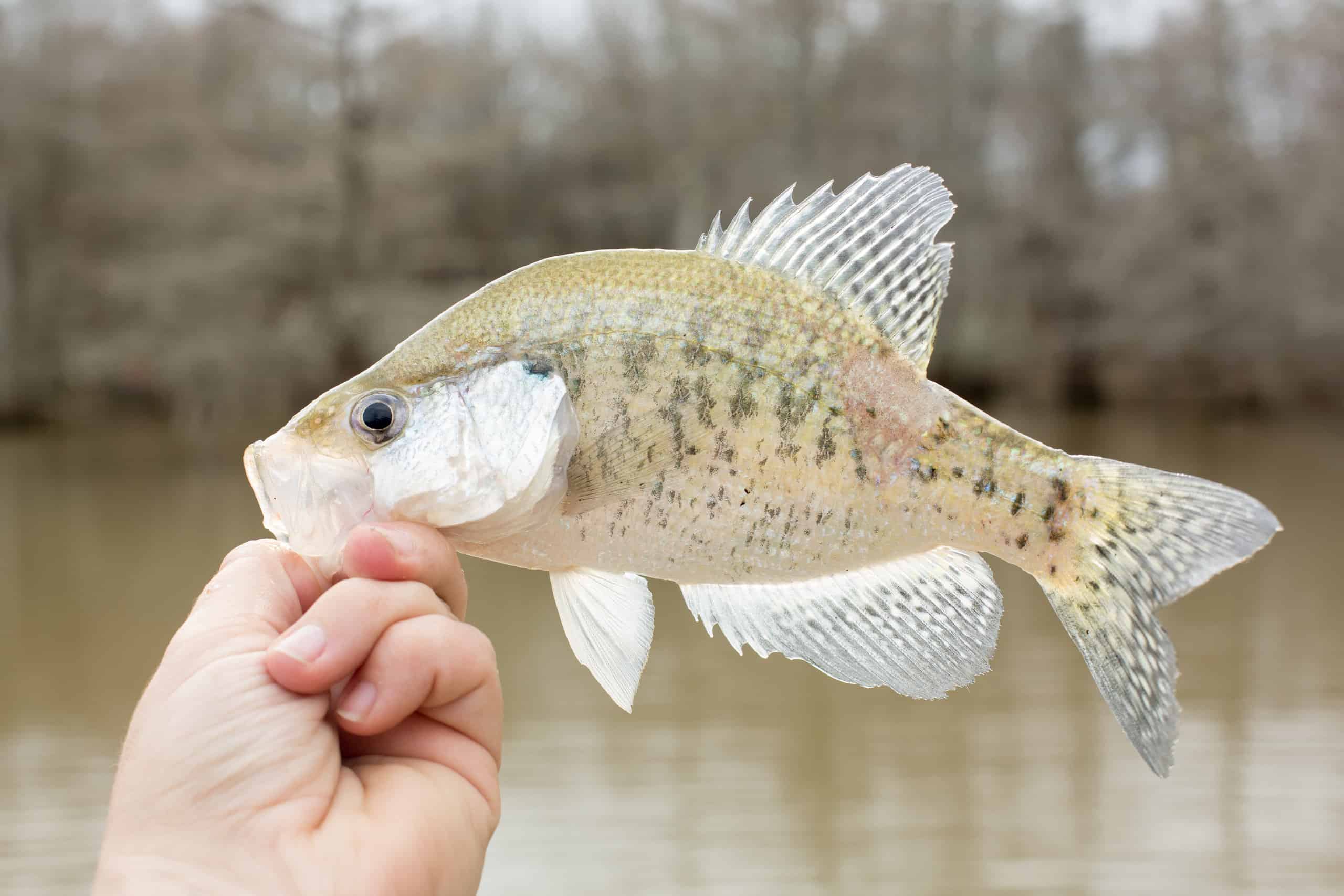
These small silver fish prefer warm, murky waters where they hunt for minnows and insect larvae.
©Jennifer White Maxwell/Shutterstock.com
Another fish found swimming in the Arkansas River is the white crappie. They have a silvery coloring and slight speckles on their sides. You will likely find them in the warmer stretches of the Arkansas River, where they hang out in casual schools. Usually, they spend time in murkier waters, often around submerged logs and vegetation. They hunt in groups, fanning out through the river’s shallows to find minnows and insect larvae. They are prized by fishermen for their fair, flaky meat. That said, they can be hard to catch because not only are they pretty small on average, but they also tend to stick to less-than-clear waters.
Smallmouth Bass
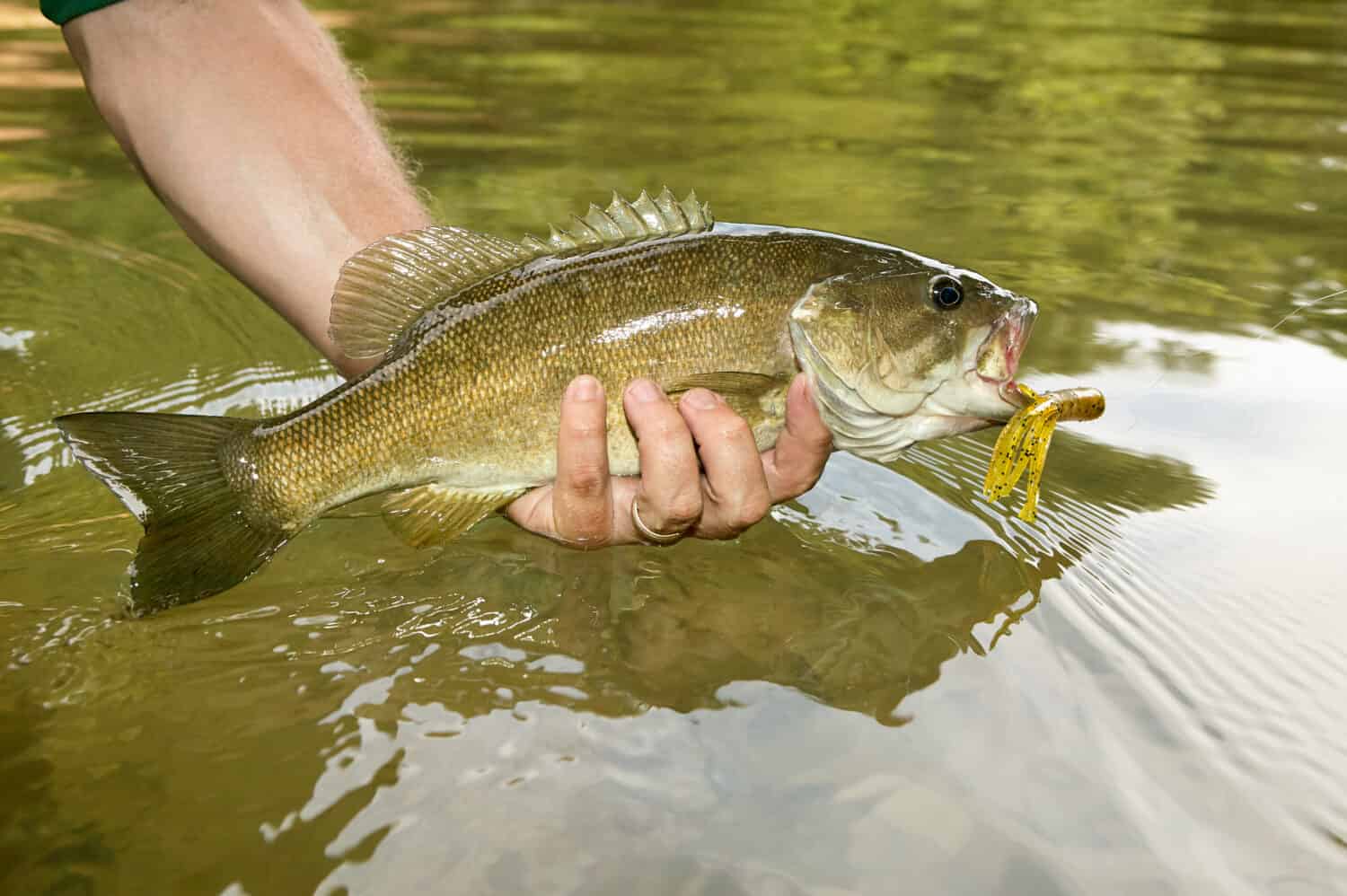
These fish are prized by anglers for their fighting spirit.
©CLP Media/Shutterstock.com
The smallmouth bass is an interesting specimen. Though they thrive in the Arkansas River and are constantly fished, they aren’t native to the region. Native to the upper and middle Mississippi River Basin, the smallmouth bass lives naturally in the areas around the Great Lakes System and the Hudson Bay Basin. They have upper jaws that don’t go past their eyes and dark bars on their bodies that fan out from the eyes. Smallmouth bass also have laterally compressed bodies with sides featuring golden flecks on greenish-brown scales. Overall, the body color of smallmouth bass changes with water quality. In clear, light water, they have distinct markings. In murkier water, their markings appear blurry.
Once confined to the Upper and Middle Mississippi River Basin, smallmouth bass have spread far and wide in the last two centuries. The construction of the Erie Canal in 1825 extended their range into New York. Once the railways came online, these hardy fish spread across the United States. Shippers quickly realized that smallmouth bass could be transported live in very small containers. Increases in pollution over the ensuing decades destroyed native fish populations and paved the way for smallmouth bass. Because these fish are quite adaptable to different cool-water habitats, they were able to take over the habitat of fish like brook trout.
Anglers prize smallmouth bass for their widespread populations and fighting spirit, especially when caught in topwater. These bass will even leap out of the water when hooked. Despite a love for smallmouth bass, fishermen usually catch and release them. When it comes to the Arkansas River, these fish can be found in its upper regions where strong currents oxygenate the cool, clear water.
Flathead Catfish
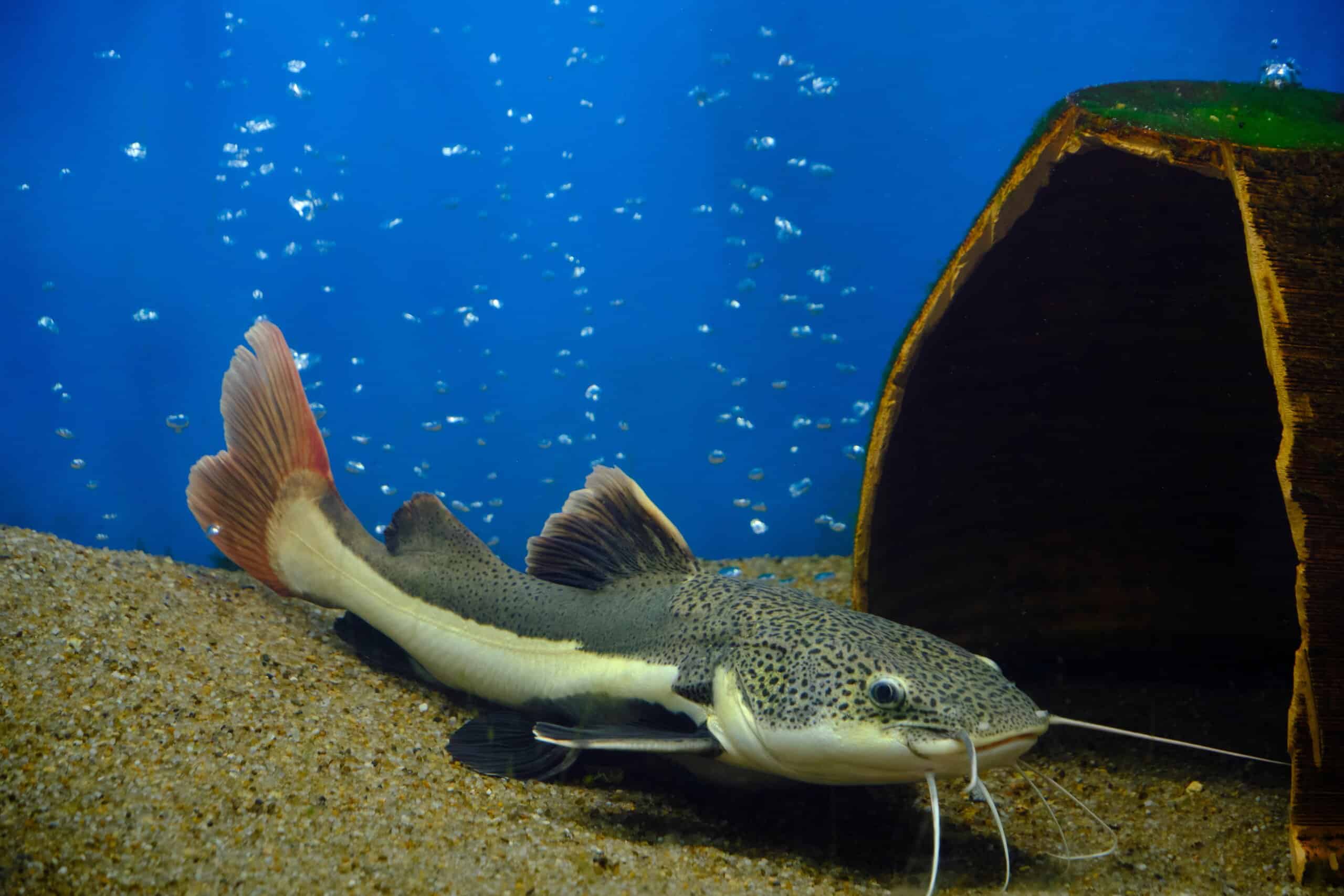
These catfish are potent symbols of the Ozark Mountain region, which contains the Arkansas River.
©Dmitriy Prayzel/Shutterstock.com
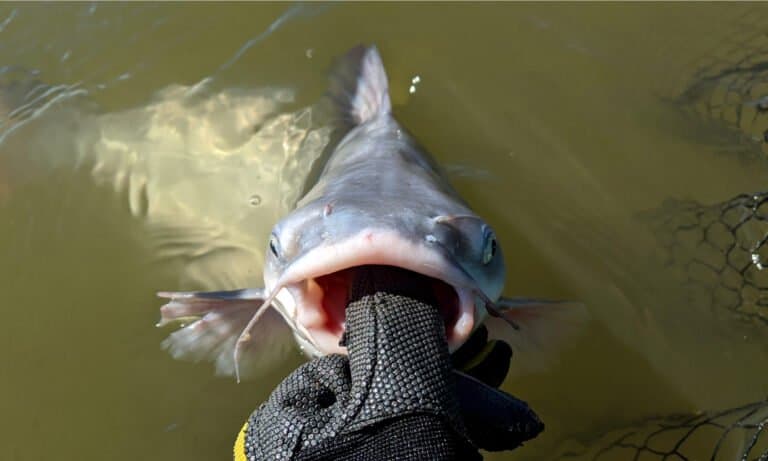
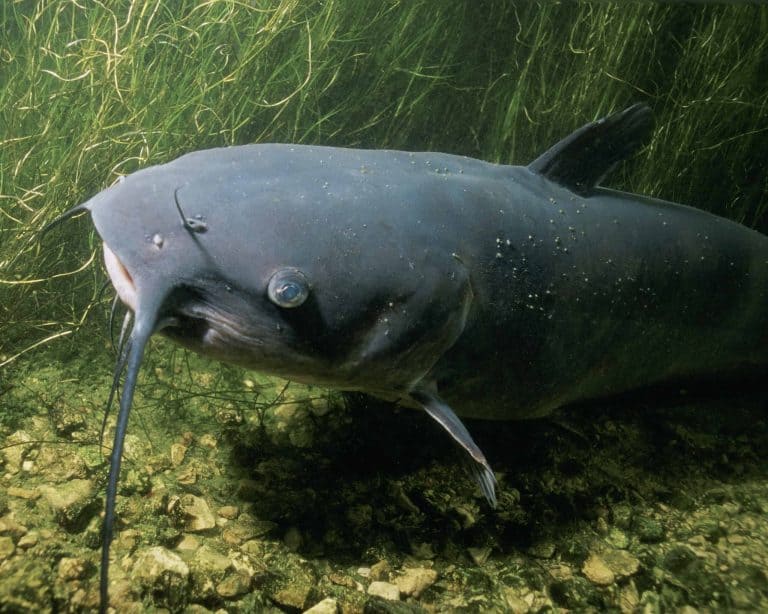
This wouldn’t be a complete list of creatures swimming in the Arkansas River without the flathead catfish. The only species in the genus Pylodictis, the flathead catfish is also called the mudcat or shovelhead cat. In the Ozark Mountains of Arkansas, they are sometimes called granny cats. The South loves nicknames, and flathead catfish love the South. Though they are native to the range between the lower Great Lakes and Northern Mexico, flathead catfish have been introduced widely and have become an invasive species. These fish have large bodies, flat heads, and those signature catfish barbels that protrude from the sides of their mouths like whiskers. Flatheads are nocturnal and typically loners, so they spend the daytime motionless in the river’s muddy depths before becoming active at night. Anglers prize these fish for their meat and tenacity.
Bluegill Sunfish
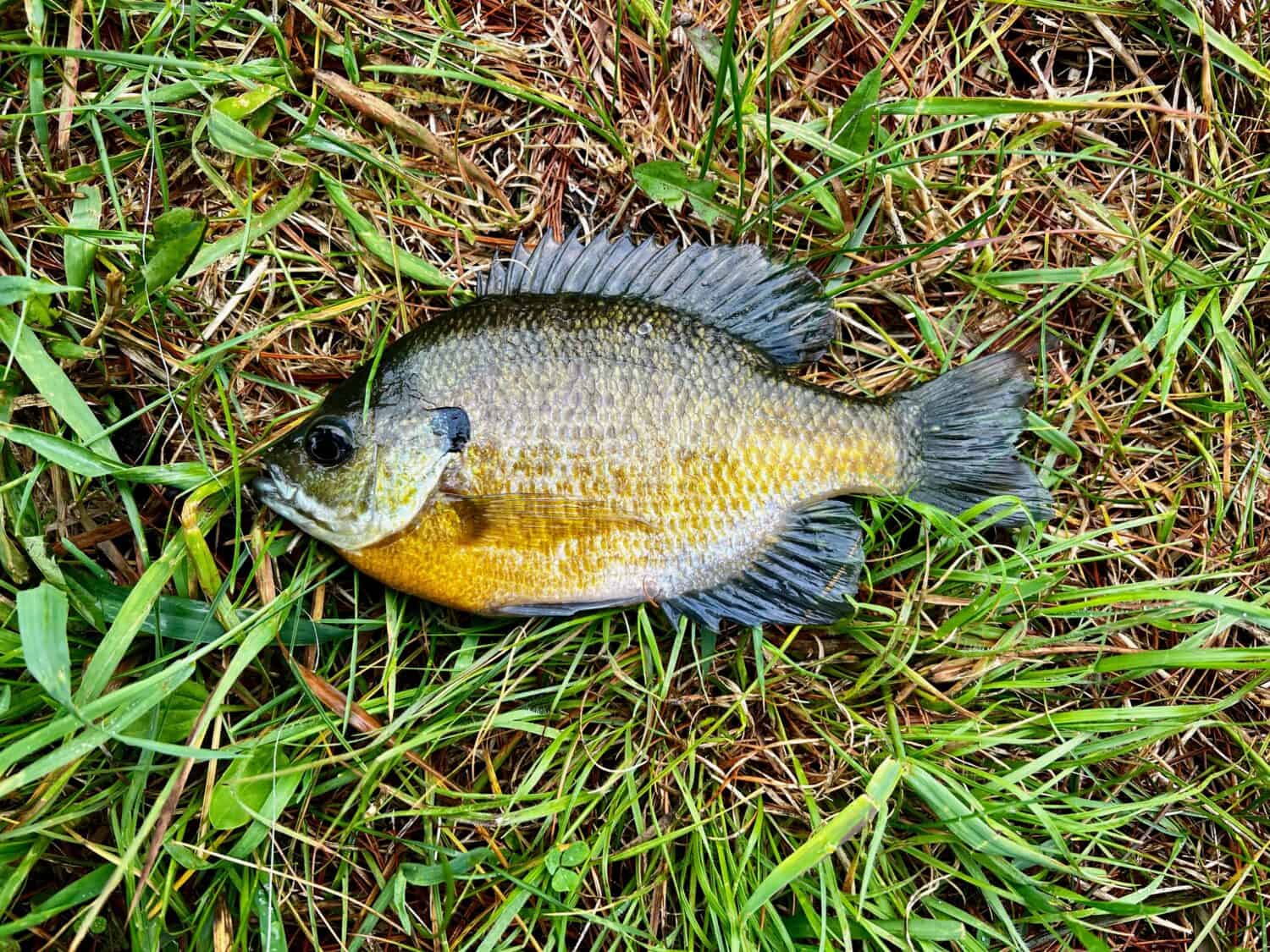
These true sunfish prefer shallow waters full of vegatation or decomposing plant matter.
©dcwcreations/Shutterstock.com
Bluegill sunfish are sometimes called breams or coppernoses. They are native to the area, especially the parts of the Arkansas River east of the Rocky Mountains. A member of the true sunfish genus Lepomis, bluegills can grow up to 16 inches and about four and a half pounds. Their color varies depending on the population, but typically, they have dark olive-colored bands down their sides, orange bellies, and distinctly blueish-purple faces and fins. A resident of the Arkansas River’s backwaters, bluegill sunfish prefer shallow waters that are chock-full of vegetation.
This habitat provides plenty of feeding opportunities due to an assortment of insects, crustaceans, and larvae. That said, these sunfish are omnivores and aren’t against preying on larger fish like baitfish. On the flip side, bluegill sunfish also serve as an important food source for bass, trout, and snapping turtles. Fisherman looking for bluegill sunfish will likely find them hanging out around old tree stumps or in dense vegetation and detritus. Like pumpkinseeds and crappies, bluegills serve as a solid panfish for opportunistic anglers.
White-tailed deer
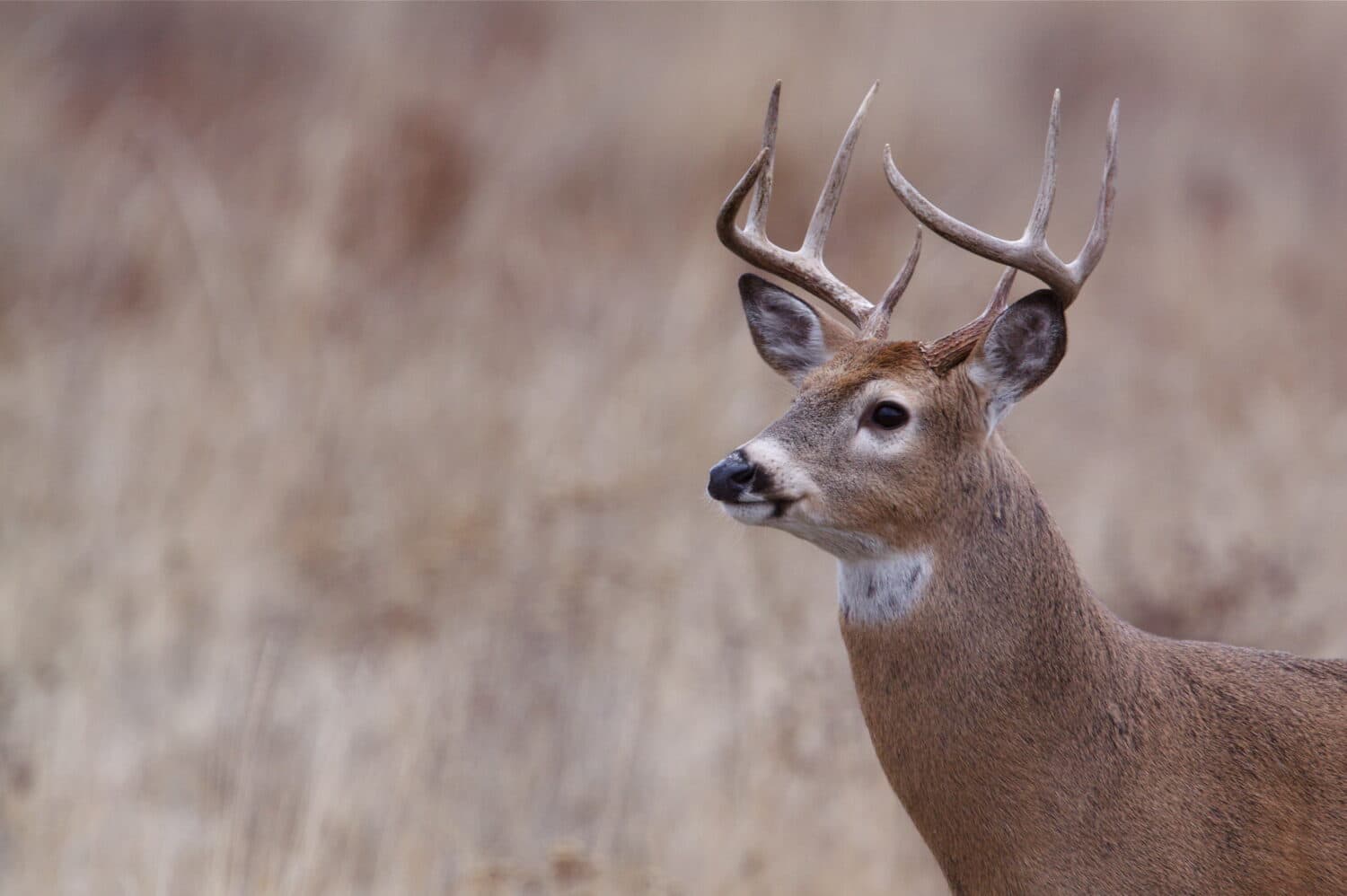
White-tailed deer forage for food along the forests and meadows lining the Arkansas River.
©Tom Reichner/Shutterstock.com
Another resident of the Arkansas River basin is the white-tailed deer. These ungulates are some of the most widespread of their kind across North America. They have tan-colored coats, white bellies, white throats, and white rings around their eyes. They also have signature white tails. While their coats are more reddish brown in the summer, they turn grayer in the winter. People commonly spot them around the forests and meadows that run alongside the Arkansas River.
As herbivores, they feed on grass, leaves, and other crops. Spotting white-tailed deer doesn’t take much patience since they are pretty widespread, but it does require proper timing. White-tailed deer usually only come out at dawn and dusk when they can move through the vegetation without bringing much attention to themselves. People almost hunted white-tailed deer to extinction, but in recent years they have made a resurgence in areas like the Arkansas River basin.
Largemouth Bass
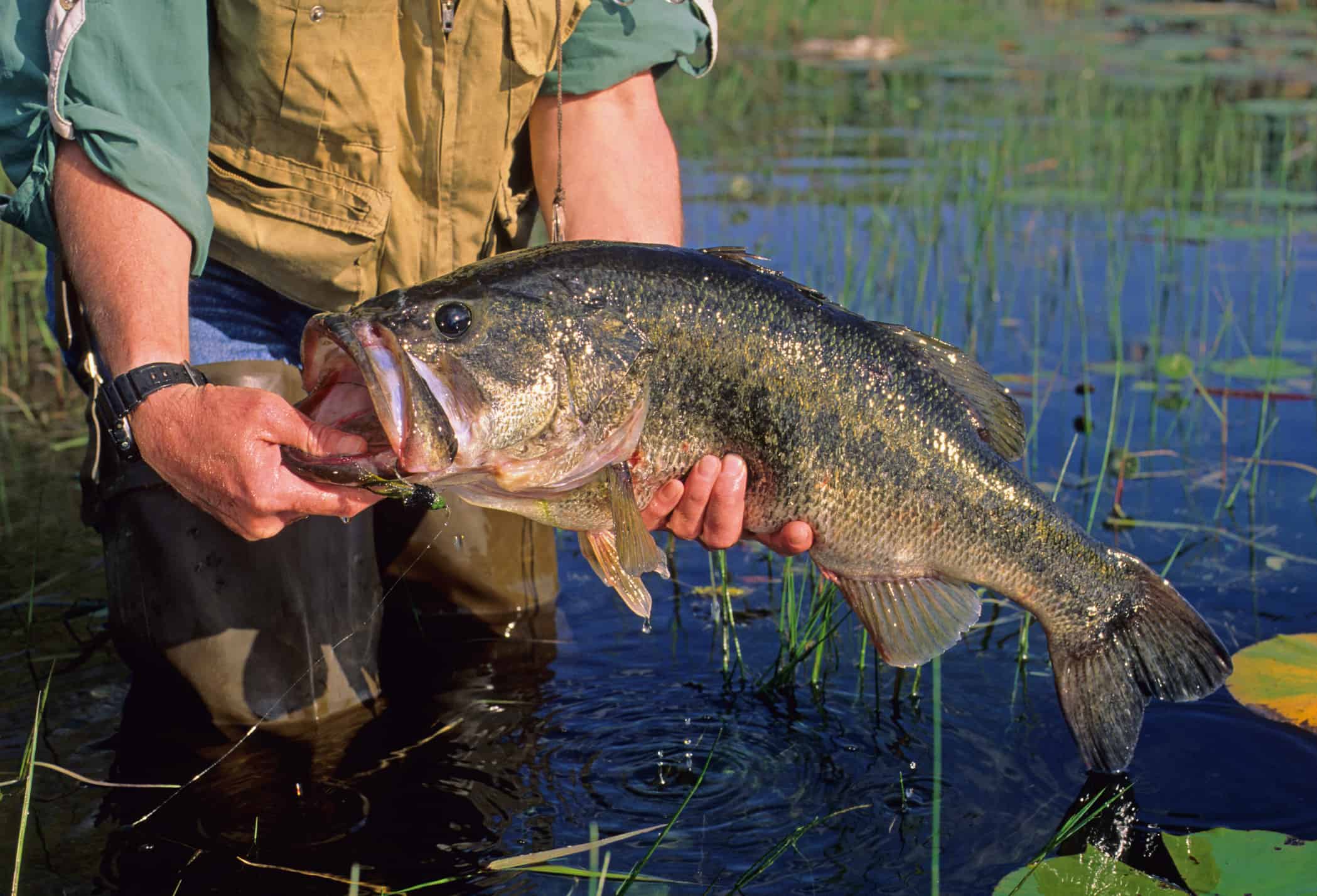
Fishermen love the largemouth bass because they put up a serious fight when hooked on a fishing line.
©iStock.com/stammphoto
While they are not too different from their smallmouth bass relatives, largemouth bass are distinguished by one standout feature: their massive mouths. These members of the Centrarchidae sunfish family are native to the area, as well as to southeastern Canada, and northern Mexico. They go by many different names including widemouth bass, largies, potter’s fish, bucketmouth bass, and southern largemouth. As the largest species of black bass, they can grow up to 25 or more inches long and weigh almost as much in pounds. The world record for the biggest largemouth bass is 22 pounds, 4 ounces, caught in Georgia in 1932. It’s such a common fish in the southern states that it holds the distinction of being the state fish for both Georgia and Mississippi. It’s also the freshwater fish for Florida and Alabama. Besides being a treasured fish in the angler community, largemouth bass are also important ecologically.
Sport fisherman prize the largemouth bass; they put up a serious fight when hooked on fishing lines. Plus, those big mouths provide more area for hooks. Their status in the fishing world, however, has had consequences. The introduction of largemouth bass into urban streams has allowed them to outshine native fish in some instances. In certain areas, officials classify them as invasive species due to their tendency to both eat native fish and compete with them for resources. When it comes to the Arkansas River, largemouth bass are usually found in its backwaters, most often in u-shaped ponds called oxbows or in regions with plenty of submerged vegetation.
Raccoon
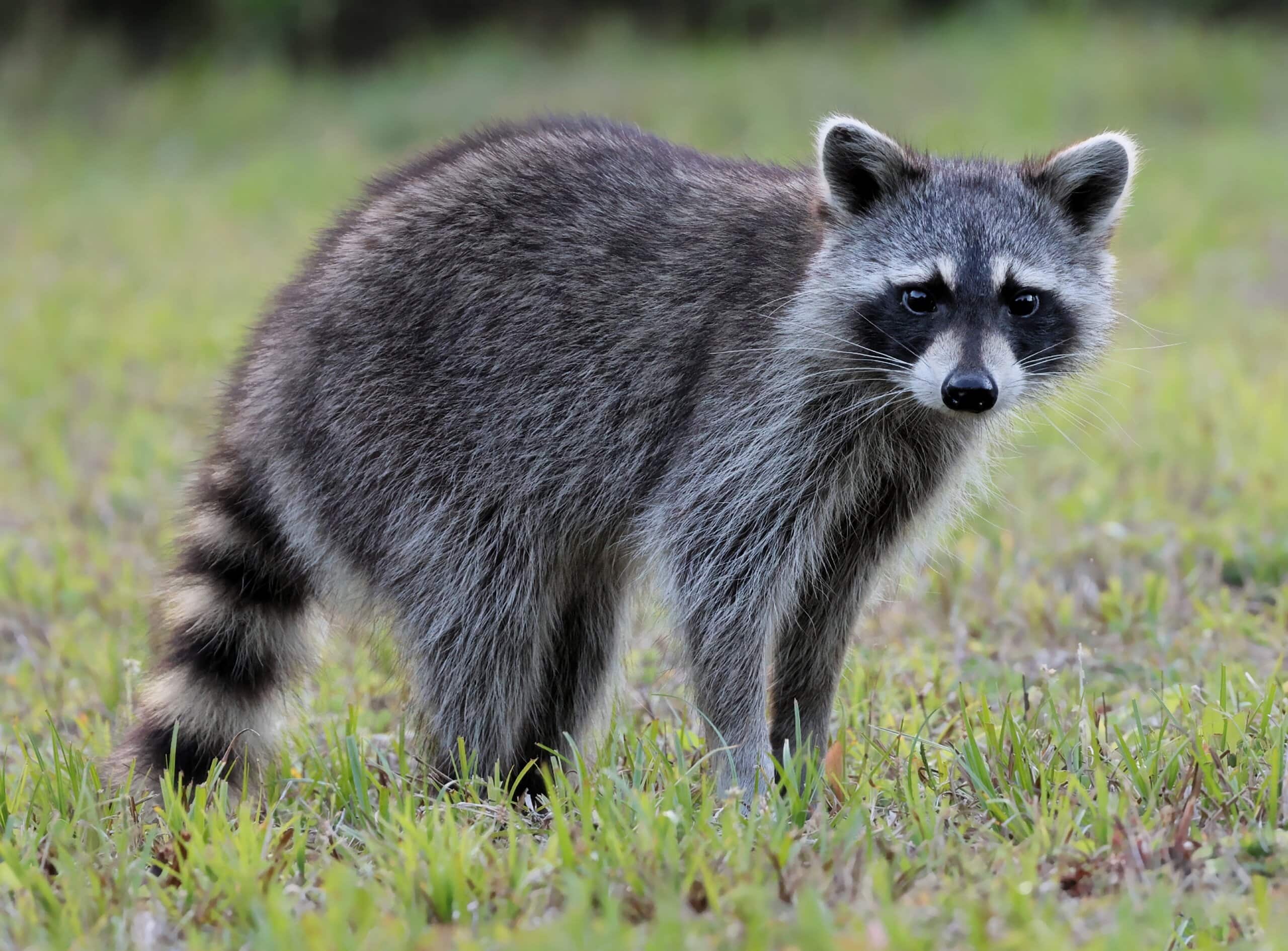
Raccoons are equally at home in urban areas digging through trash cans and in natural environments like the riparian forests that run alongside the Arkansas River.
©Jean Blom/Shutterstock.com
They may be called trash pandas these days, but raccoons can still be found in natural environments, including parts of the Arkansas River basin. Characterized by grey coats, ringed tails, and black eye areas, raccoons are crafty, stealthy, and pretty cute. They are an incredibly adaptable species, naturally found in forests, wetlands, and even mountainous areas. This means they are best spotted in the riparian forests that line parts of the Arkansas River. There, they subsist on an omnivorous diet of crayfish, insects, fruits, and fish. They use their human-like fingers to dig through fallen logs and search along the water’s edge. While they only live several years in the wild, raccoons are an integral part of the Arkansas River ecosystem.
Rainbow Trout
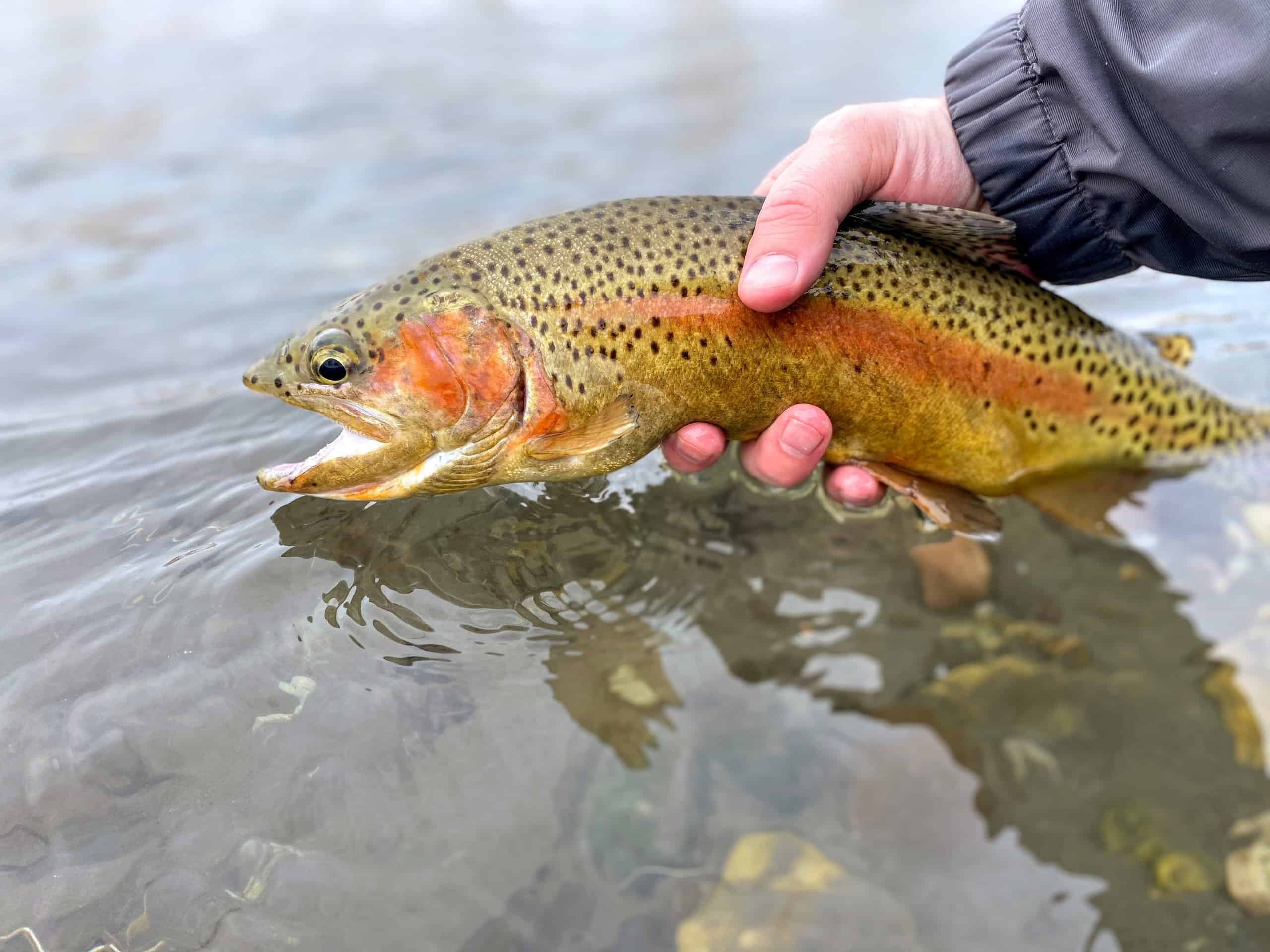
Rainbow trout are loved by fishermen but can be invasive due to their carnivorous eating habits.
©Ryan Cuddy/Shutterstock.com
Another one of the most common fish to be found in the Arkansas River is the rainbow trout. These fish have a range of body colors but all of them feature a distinct red band running along their sides. They vary in size from about a foot to 20 inches but the ones that live in lakes often grow larger. Native to the Pacific Coast and Rocky Mountain areas of North America, these fish have been widely introduced across the United States. Because they are carnivorous, rainbow trout can be invasive in many places, overrunning local fish populations. People often find them in the cooler stretches of the Arkansas River.
Snapping Turtle
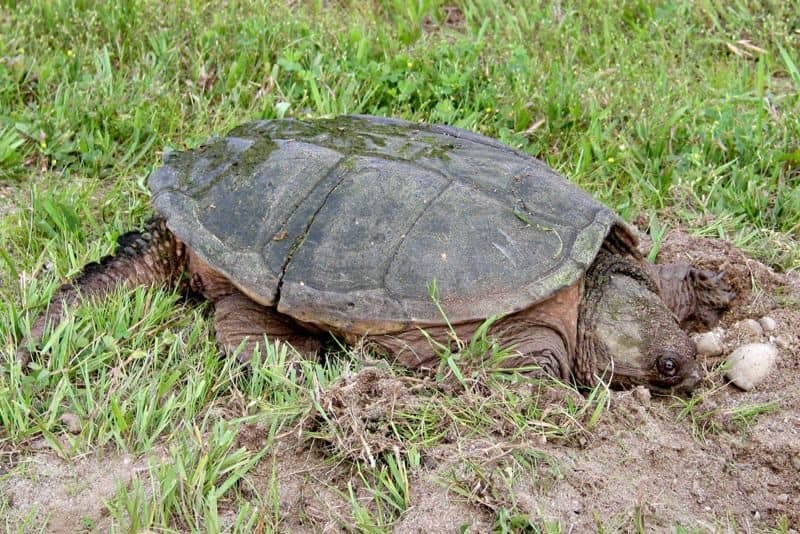
Snapping Turtles are tough on land but quite timid when underwater.
©Moondigger / Creative Commons - Original
A surprisingly common sight in the shallow parts of the Arkansas River and along its banks, snapping turtles are one of the more ancient species to call the area home. They are tough creatures, capable of delivering painful bites with their strong jaws and withstanding attacks thanks to their tough, spiny shells. They prefer the parts of the river that are slow and muddy. Snapping turtles can be hard to spot because they spend most of their time hidden in the mud.
Only their snout and eyes remain visible while they wait for prey to ambush. They do not back down from challenges lightly, especially when they are out of the water. Oddly enough, they become timid when they go underwater. Indeed, they are more likely to hide or flee from threats when they have room to swim. Typically, these small but mighty turtles feed on fish, carrion, aquatic plants, and amphibians. Since common snapping turtles occupy a surprising variety of water sources, including ponds, streams, and estuaries, people commonly spot these reptiles in the Arkansas River basin. Watch your feet, however, as they can easily take a toe off if it is exposed to the elements.
Red Shiner
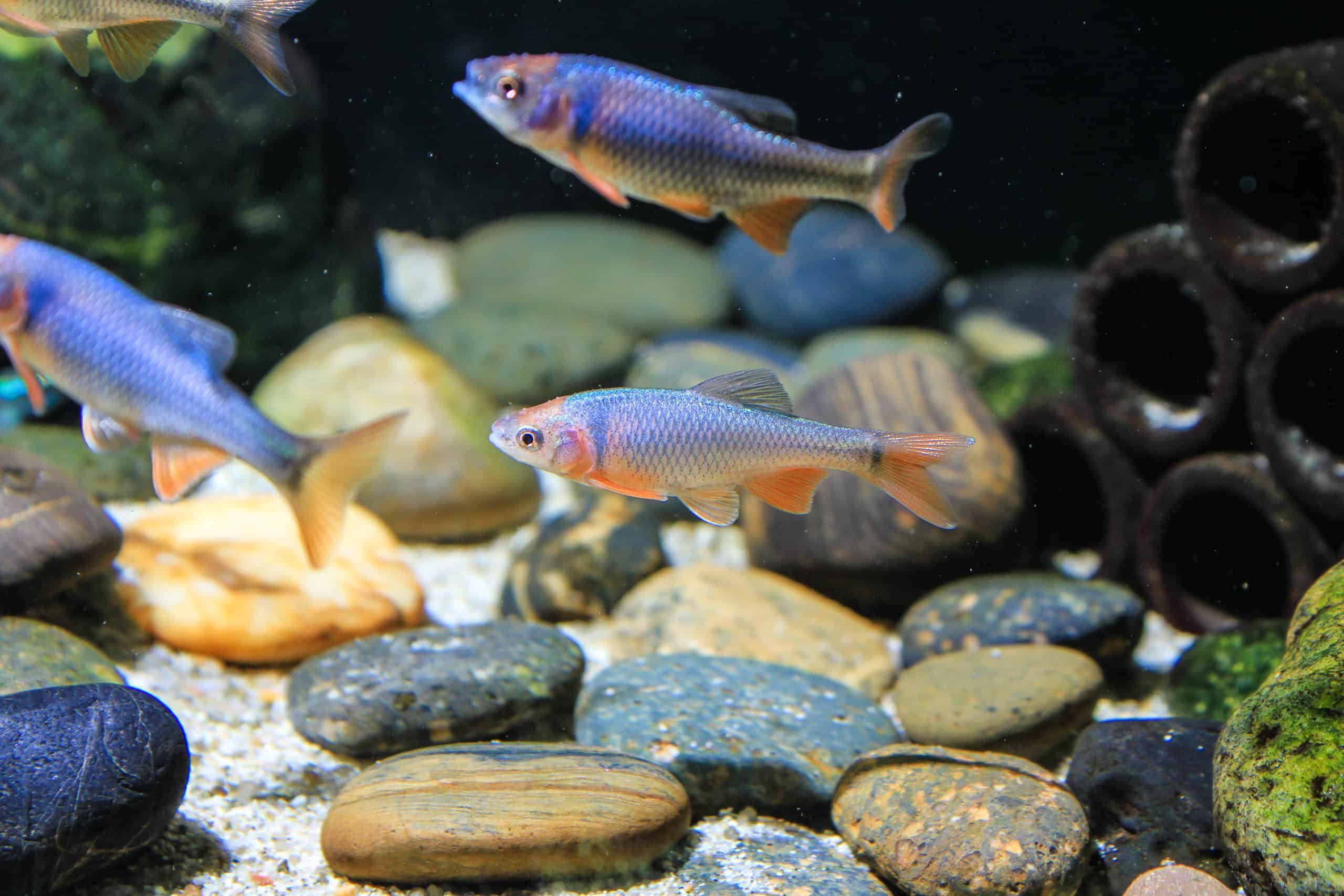
Red shiners are found in the warm, flowing regions of the Arkansas River.
©chonlasub woravichan/Shutterstock.com
Last but not least is the red shiner. These little fish are a type of ray-finned fish in the Leuciscidae family along with daces and minnows. They only grow to about three inches in length at most. Red shiners, as their name implies, have silver sides and white bellies, except during mating season. Males develop iridescent pink and purple sides along with red crowns and fins. They are omnivores that subsist on algae, invertebrates, and the eggs of fish in locations where they have been introduced. In the Arkansas River, red shiners are most often found in the lower regions, typically in areas with warm, flowing water.