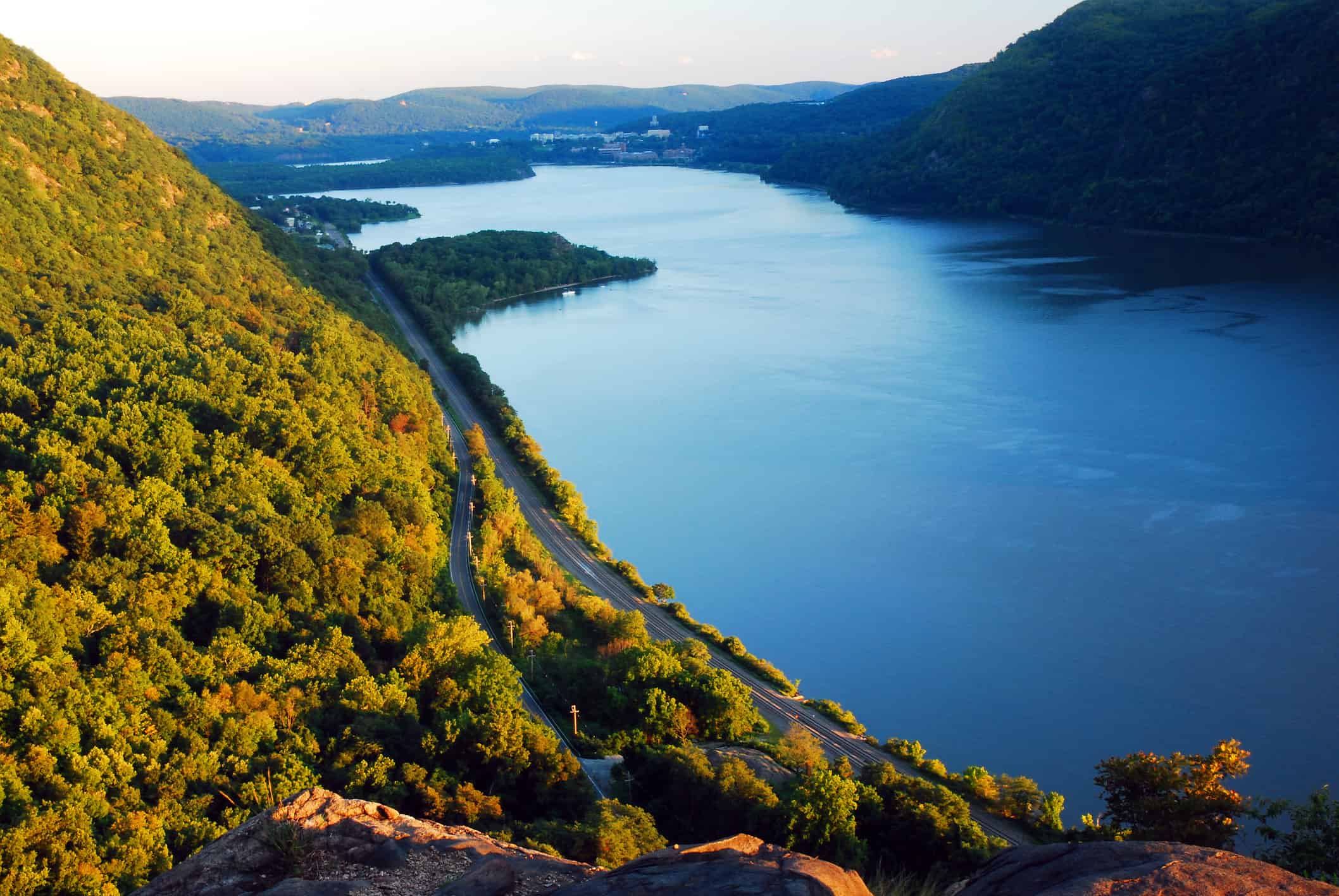

The Hudson River flows from its headwaters in the Adirondack Mountains in up-state New York down to New York Harbor and into the Atlantic Ocean. It’s named after Henry Hudson, who explored in 1609 for the Dutch East India Company. But like the rest of the American landscape, the Hudson River had been known to indigenous people for thousands of years before the Europeans arrived. One such people, the Lenape, had a different name for what we call the Hudson: Muhkeakantuck, which translates to “the river that flows both ways.” This as an accurate description, because for much its length the Hudson is not a true river at all but a tidal estuary; the tides from the Atlantic Ocean push the water as far north as Troy, New York before reversing current twice a day.
Along its approximately 315 miles, purely freshwater stretches upstream, with tidal and brackish regions downstream, providing a rich variety of habitats. Anglers, kayakers, hikers and nature-watchers frequent the river for fishing, boating, wildlife viewing and the scenic landscape. Beneath the surface you’ll find many fish and aquatic animals—some resident, some migrating—playing key roles in the ecosystem. Read on for a list for some of the more common or noteworthy creatures in this mighty river.
Sturgeon
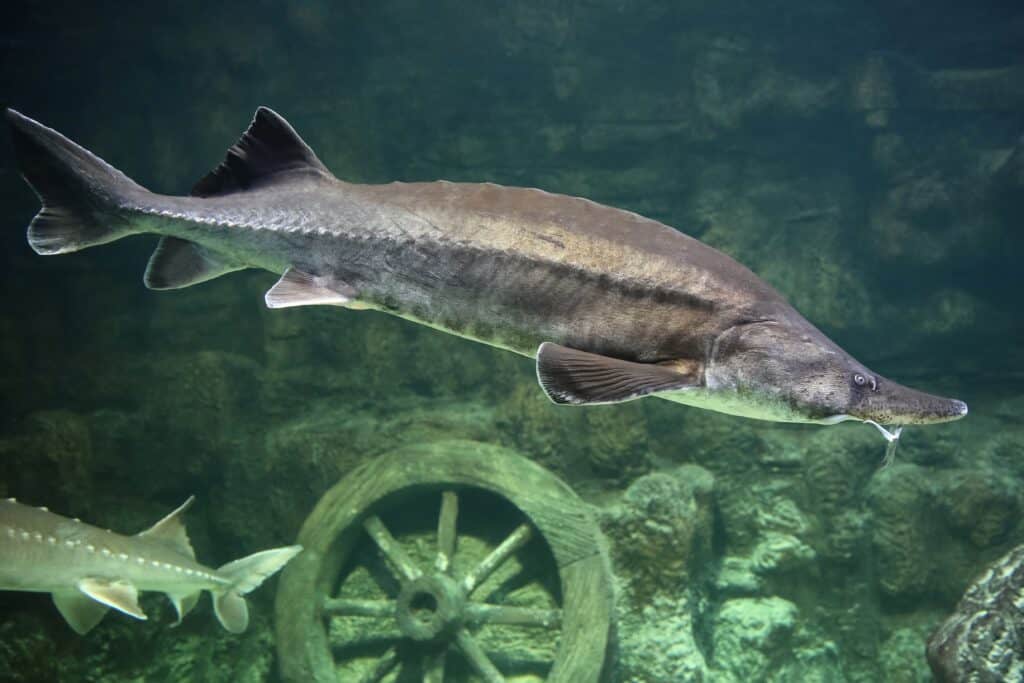
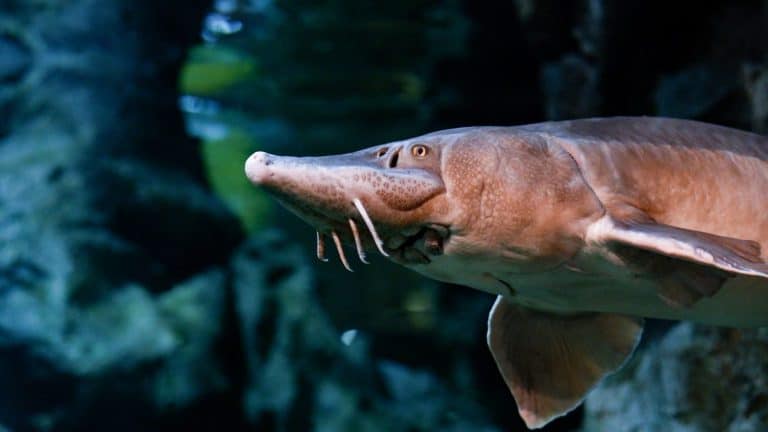
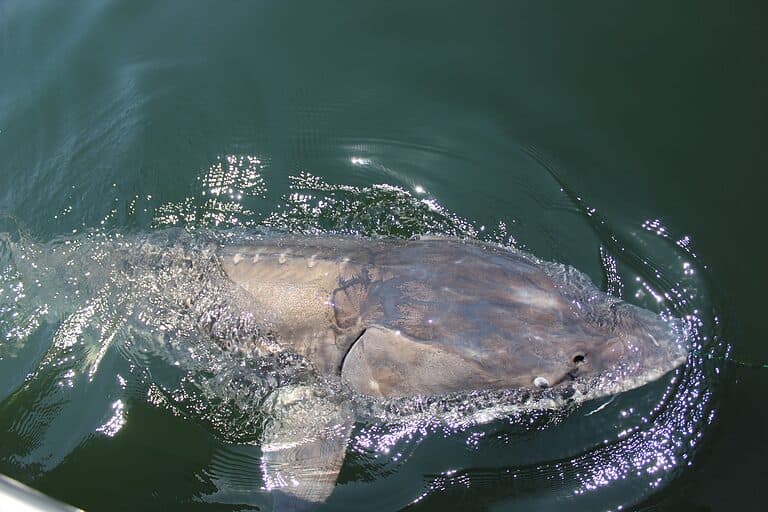
The Hudson supports one of the largest Atlantic sturgeon populations on the east coast.
©ivSky/Shutterstock.com
Distinguishable by the bony plates (“scutes”) along their bodies and shovel-like snouts, the ATLANTIC STURGEON is an ancient fish and one of the largest in the Hudson River system, often growing to over 7 feet or more. There are even reports of giant Atlantic sturgeon reaching 15 feet and weighing 800 pounds! They are an anadromous species, with mean they spend most of their time in the ocean but migrate upriver to spawn. At one time they were widely harvested, even acquiring the nickname “Albany beef” because of their size, though now fishing for them is strictly prohibited in many areas due to their endangered status. The Hudson supports one of the larger Atlantic sturgeon population on the east coast, but they are still relatively rare to see casually.
Another sturgeon species found in the Hudson is the SHORTNOSE STURGEON. The shortnose shares many commonalities with its Atlantic cousins, such as its ancient origins, the migration between tidal/estuary and freshwater zones, and their rarity and protected status. They also have similar diets, feeding on smaller fish and invertebrates. One key difference is that, while still a substantially sized fish, the shortnose is much smaller than the Atlantic.
Striped Bass
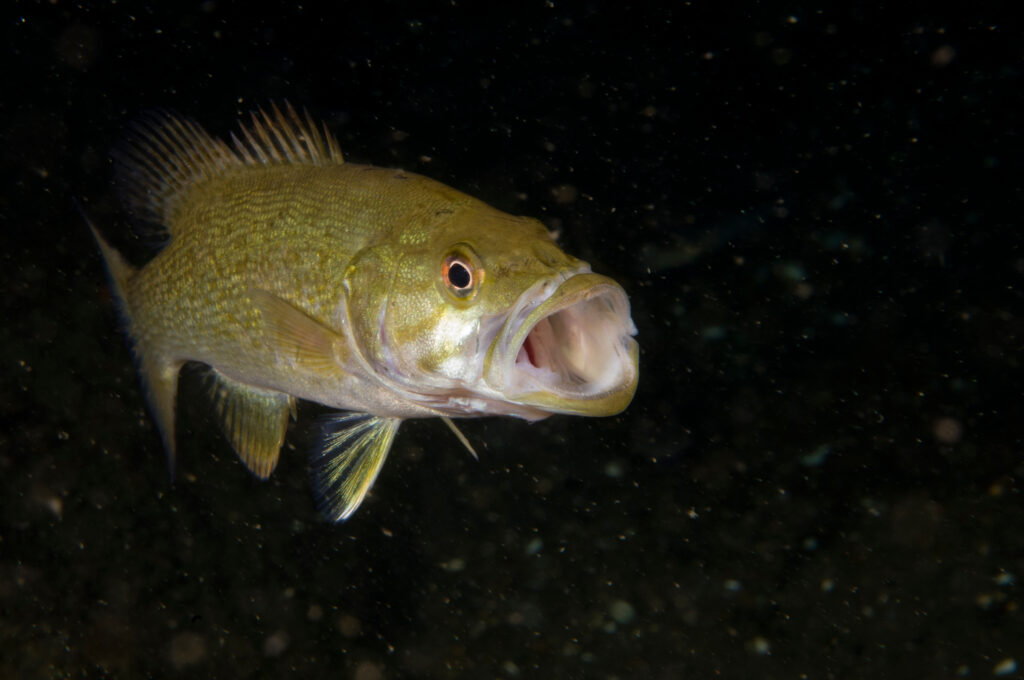
Smallmouth bass are famous among anglers for putting up a great fight.
©RLS Photo/Shutterstock.com
Another anadromous fish is the STRIPED BASS, one of the more iconic game fish in the Hudson River system. Its silvery body with dark horizontal stripes running lengthwise are commonly seen by anglers, snacking on herring or crustaceans, especially in the tidal sections during migration/spawn periods. They’re widely fished, but are subject to some regulations.
SMALLMOUTH BASS are common in the upstream freshwater stretches of the Hudson and its tributaries. They have brownish or greenish bodies, bronze highlights, vertical bars, and mouths that extend to about mid-eye. Feeding on insects, crayfish, and smaller fish, their size varies, often in the 1–3 lb range, but there are much larger trophy fish out there. Though relatively small, smallmouth bass are prized for the fight the put up; many anglers consider them to be pound-for-pound the best-fighting freshwater fish out there.
American Shad
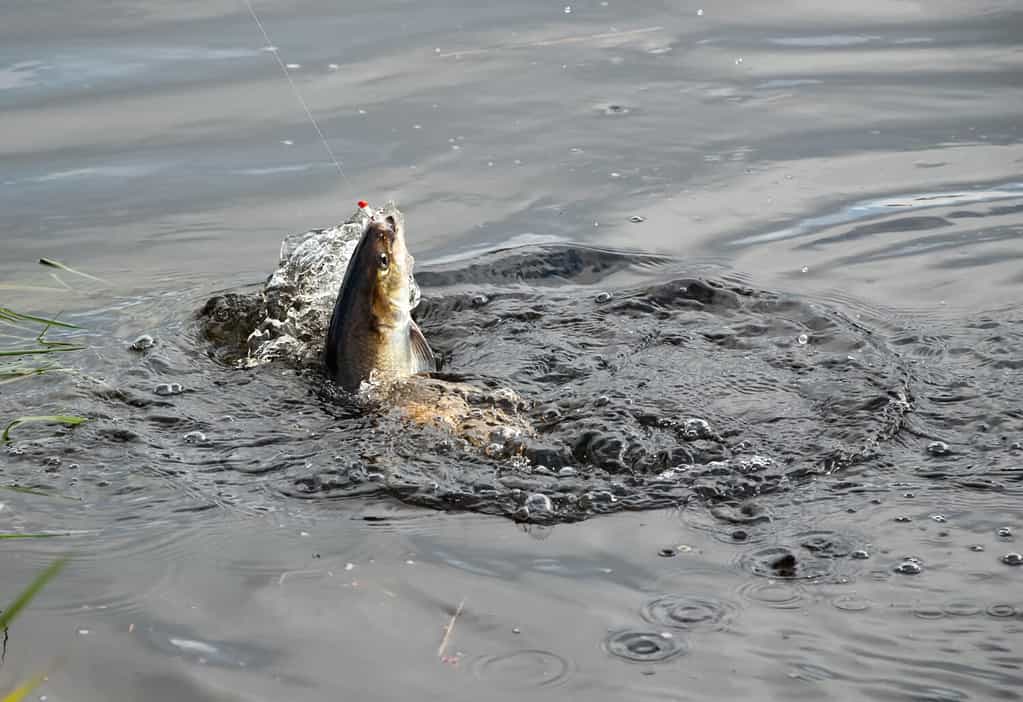
Smallmouth bass travel in large schools.
©Cindy Creighton/Shutterstock.com
Silver-bodied with a dark “cheek spot,” the American shad is a migratory herring-type fish that uses the Hudson River’s freshwater and tidal reaches to spawn. Schooling in large numbers, they feed on plankton and small invertebrates. Their full adult size is on the order of a few pounds. Historically, they were very important for commercial and recreational harvest. Their seasonal migration runs have been diminished from historical levels, but they remain ecologically significant as prey for larger fish and for connecting marine and freshwater ecosystems.
Blueback Herring
Also in the herring family, the blueback herring enters the Hudson River to spawn. Deriving its name from the blueish-green coloration on its upper back, it’s smaller than many game fish, typically just a few inches, maybe a foot in rare cases. While not typically targeted by anglers, their presence is ecologically important, as large school of them feed on plankton and small invertebrates, meanwhile themselves being prey for larger fish.
Perch
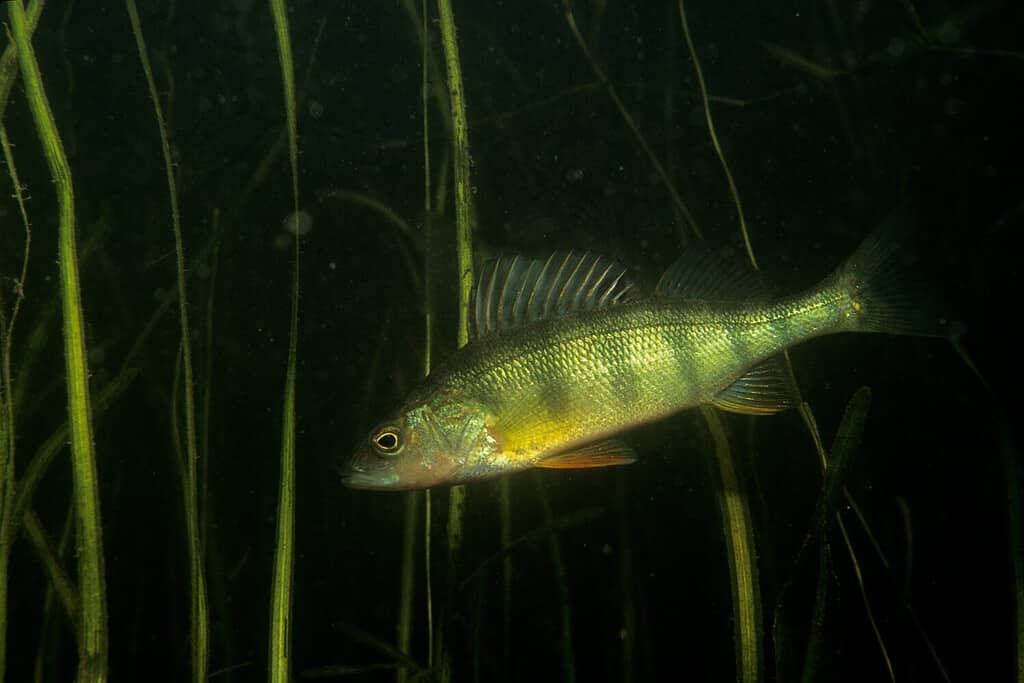
Yellow perch a popular for ice fishers and well as summer anglers.
©RLS Photo/Shutterstock.com
YELLOW PERCH are a commonly encountered freshwater fish in the Hudson River and its tributaries, especially in the more purely freshwater zones. As their name would suggest, their body is a yellowish gold, dark bars striping it vertically. Averaging about 6-12 inches (with maximum around 16 inches), they feed on insect larvae, crayfish, small fish and other invertebrates. Very common in the freshwater zones, they are fished recreationally both for ice fishing and summer angling, but contamination can sometimes be an issue, so you’ll want to check local advisories.
Found in the Hudson River’s fresh to brackish zones, particularly in warm, shallow areas, is the WHITE PERCH. Similar in size to their yellow cousins, their bodies are more silver than white and a bit compressed. They feed on minnows, crustaceans and insects. While less glamorous than other sport fish like striped bass, they’re still commonly caught by anglers from piers or near shore, especially in the tidal/estuary zones.
Channel Catfish
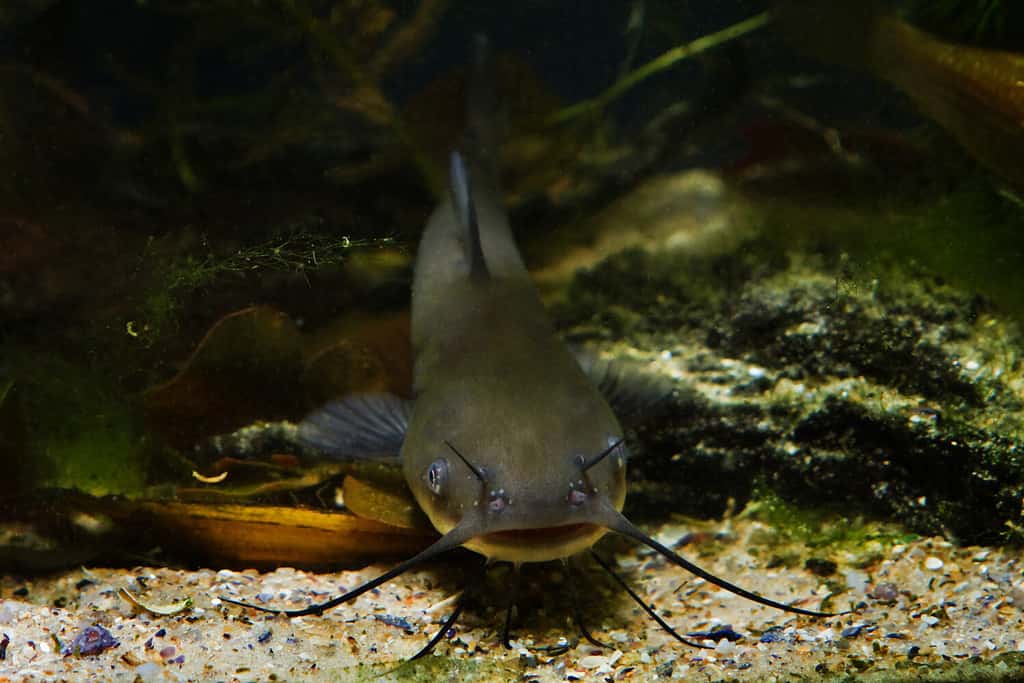
The catfish’s “whiskers” are actually called barbels.
©Aleron Val/Shutterstock.com
Channel catfish are present in the freshwater parts of the Hudson River system, especially tributaries or backwaters. Feeding on worms, crayfish, insects, small fish, and other bottom-dwelling prey, they average in size around 15-25 inches, maxing out at about 3 feet. They’re notable for their forked tail (especially in younger fish), smooth skin (no scales), and cat-like barbels (whiskers). Channel catfish are reasonably encounterable, especially for bank or drift anglers in backwater zones.
American Eel
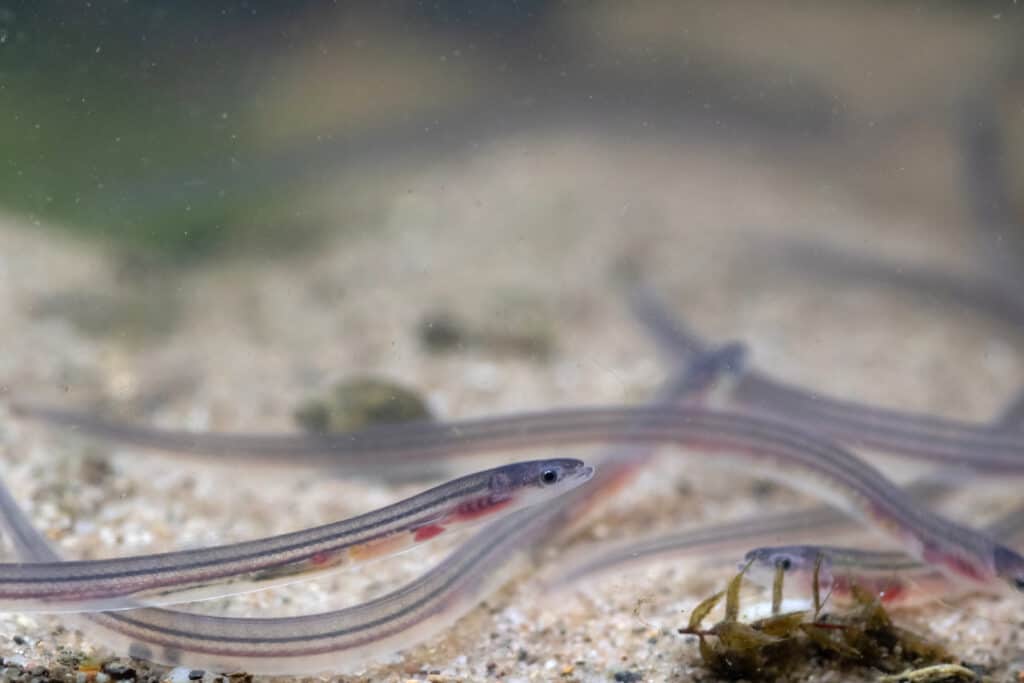
It’s illegal to take American eels out of the Hudson for food.
©jack perks/Shutterstock.com
The American eel is catadromous, which means it matures in freshwater or tidal river but spawns in the ocean, making the Hudson and inviting place. Feeding on crustaceans, worms, small fish and other aquatic life, they can grow to be 10-20 inches or more. Their long snake-like bodies, smooth skin, and lack of pelvic fins make them well-adapted for crevices, which is why their pretty hard to see unless you’re deliberately targeting them (best at night or crepuscular times). They’re not a target for anglers; in fact, NY DEC regulations prohibit taking American eels for food from the Hudson.
Pumpkinseed Sunfish
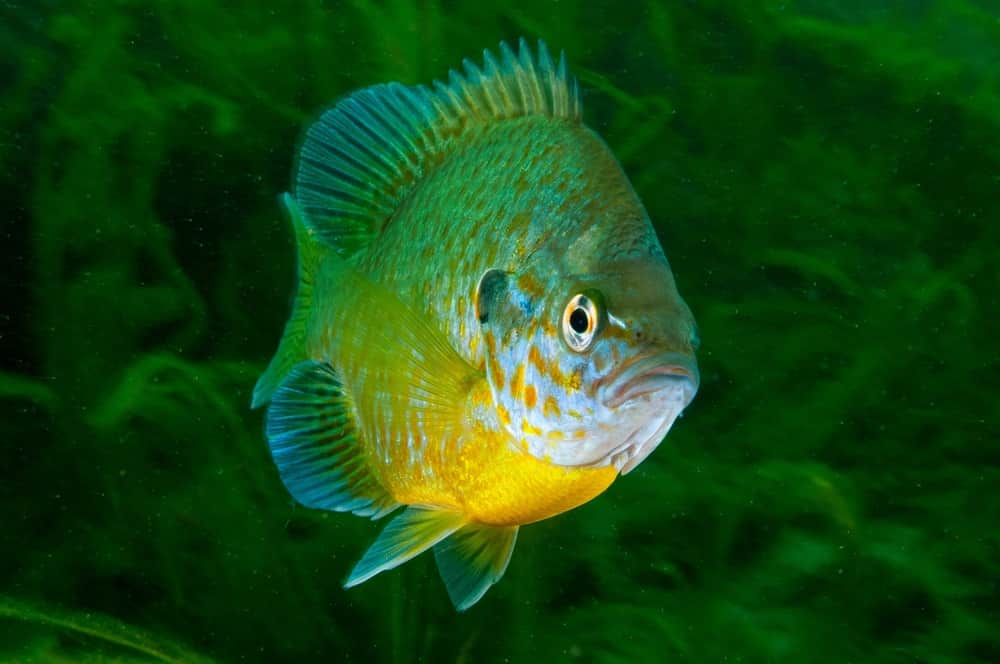
Pumpkinseed sunshine may be small, but they sure are colorful.
©RLS Photo/Shutterstock.com
Pumpkinseed sunfish are small, colorful freshwater fish found in slow-moving river sections. They only average about 5–7 inches, but what they lack in size they more than make up for in color, with vibrant orange bodies speckled in blue and yellow flecks. They feed on insects, zooplankton, small crustaceans, and the occasional small fish, and are quite common in the quieter tributary or back-water zones of the Hudson, though of little interest to anglers.
Northern Pike
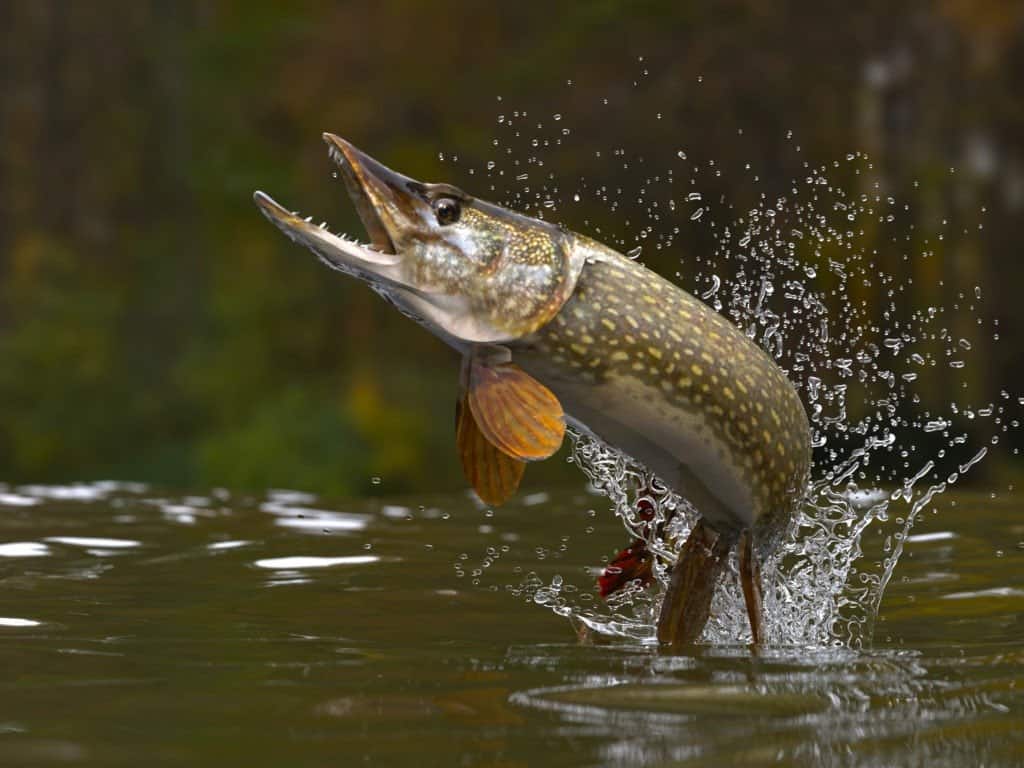
Northern pike are known to lung out of the water to prey on land animals near the shore.
©bekirevren/Shutterstock.com
Northern pike are large freshwater predators found in the Hudson River system and tributaries, especially upstream or in calmer areas. They average size 18–35 inches but have the potential to grow up to 4 ft or more. They feed on insects, amphibians, fish, or even small birds or mammals, ambushing non-aquatic prey along the banks before lunging with their elongated duckbill-shaped shouts and sharp teeth. For anglers they represent a trophy opportunity, though they are less common than smaller fish. But in the appropriate habitat they are very much present in the Hudson River system.
Native Freshwater Mussels
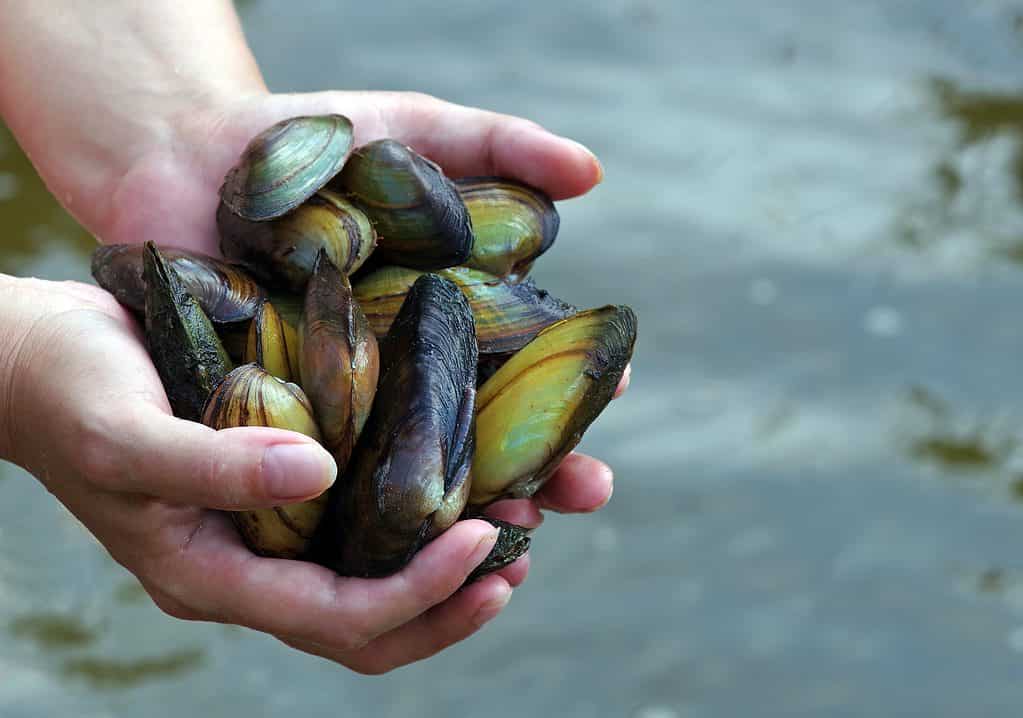
Mussels filter-feed; drawing water in and extracting plankton, etc.
©KRIACHKO OLEKSII/Shutterstock.com
This group includes several species of freshwater mussels found in the Hudson River system. These bivalve mollusks live buried in sand or gravel sediments in the river bottom. Mussels feed by filter-feeding: drawing in water and extracting plankton, bacteria, organic detritus. Their size varies by species, but many are several inches long. In the Hudson, they’re not harvested much for food nowadays, and many populations have declined due to habitat alteration and invasive species. They often live partially buried and you might just see the exposed shell lip, which makes them difficult to spot unless you’re in shallow flats or doing aquatic surveys.
(Non-native) Zebra Mussel
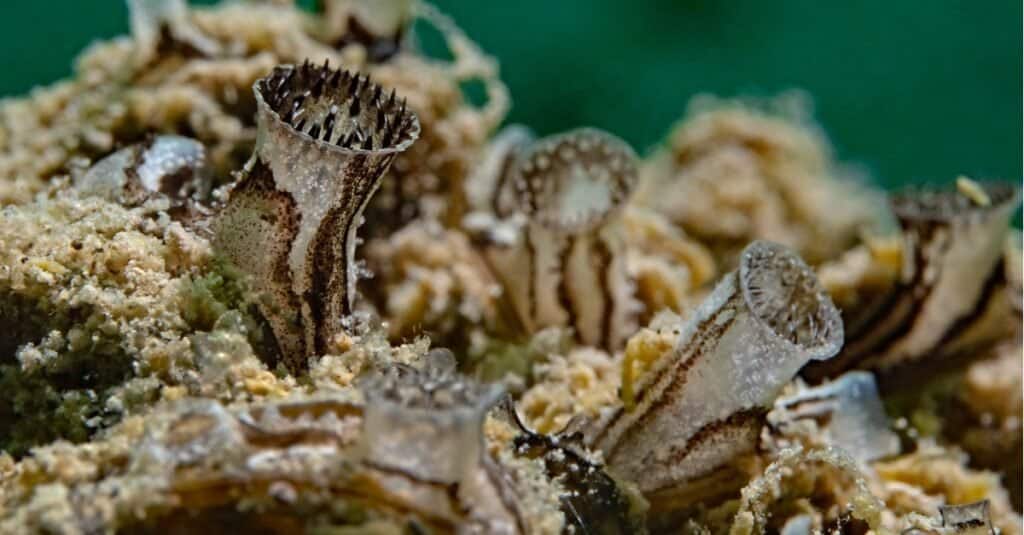
Zebra mussels are an invasive species in the Hudson and have significantly affected the ecosystem.
©iStock.com/scubaluna
Named for the dark and light zig-zag patterns on their shells, the zebra mussel is a small freshwater benthic (referring to the bottom of a body of water) bivalve. It’s invasive in the Hudson River and has dramatically altered parts of the ecosystem. Zebra mussels can filter enormous volumes of water, reducing plankton populations by 80% in some stretches of the Hudson. While their dramatic invasion has changed the Hudson’s food web, it has also cleaned the water, making it more transparent, due to its massive filtration ability.
Grass Shrimp & Mud Crabs
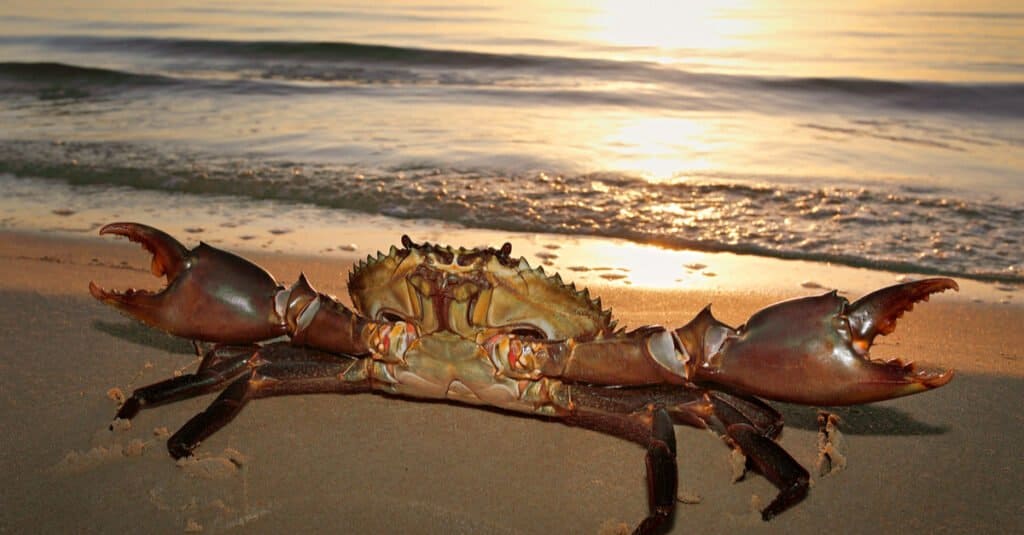
Mud crabs get their name from their muddy appearance.
©Jocelyn Watts/Shutterstock.com
In the shallows and tidal-influenced parts of the Hudson River, you’ll find small crustaceans such as grass shrimp and mud crabs. These animals feed on detritus, small invertebrates, algae, and organic matter washed into the river. Shrimp are elongated, translucent/brownish with long antennae; mud crabs have rectangular upper shell and are often muddy appearance. They are both relatively common in shallow edges, docks, or submerged vegetation, serving as key prey items for juvenile fish and helping to link the shoreline habitat with open-water fish communities.
Amphipods / “Scuds”
These tiny crustaceans dwell along the river bottom, often under rocks, in vegetation, or among detritus. Also called “scuds,” amphipods are the invertebrate you’re most likely to encounter at the Hudson River life station, scavenging dead plant and animal matter and providing vital food for small fish. Easy to overlook because of their small size, their role in cleaning up the bottom and serving as prey makes them an important part of the ecosystem, like tiny workhorses of the river floor.
The Mighty Hudson
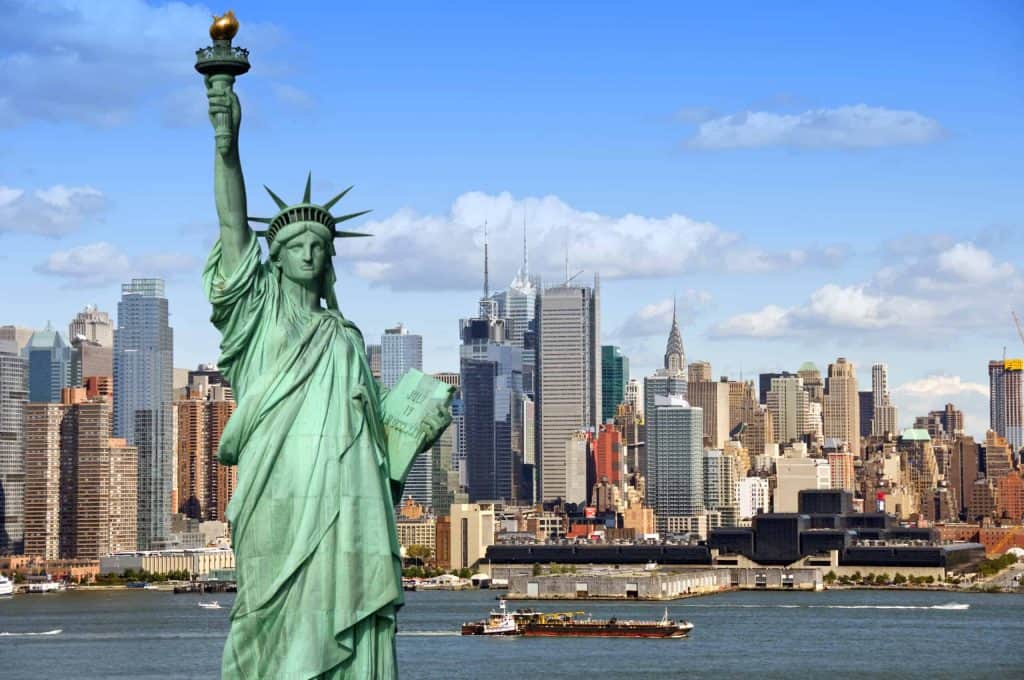
New York city skyline cityscape with Statue of Liberty over the Hudson river.
©shutterupeire/Shutterstock.com
The Hudson River is more than just a scenic waterway; it’s a living ecosystem teeming with life, from ancient sturgeon to tiny amphipods. Centuries of industry and urban growth have definitely changed its waters; let’s not forget it flows past perhaps the busiest, most industrious city in the world: New York. But conservation efforts are helping to restore balance and biodiversity. Anglers, kayakers, and nature lovers alike can witness a thriving array of freshwater species that tell the story of a river that existed long before the invention of skyscrapers and cargo ships and will likely continue to thrive long after.