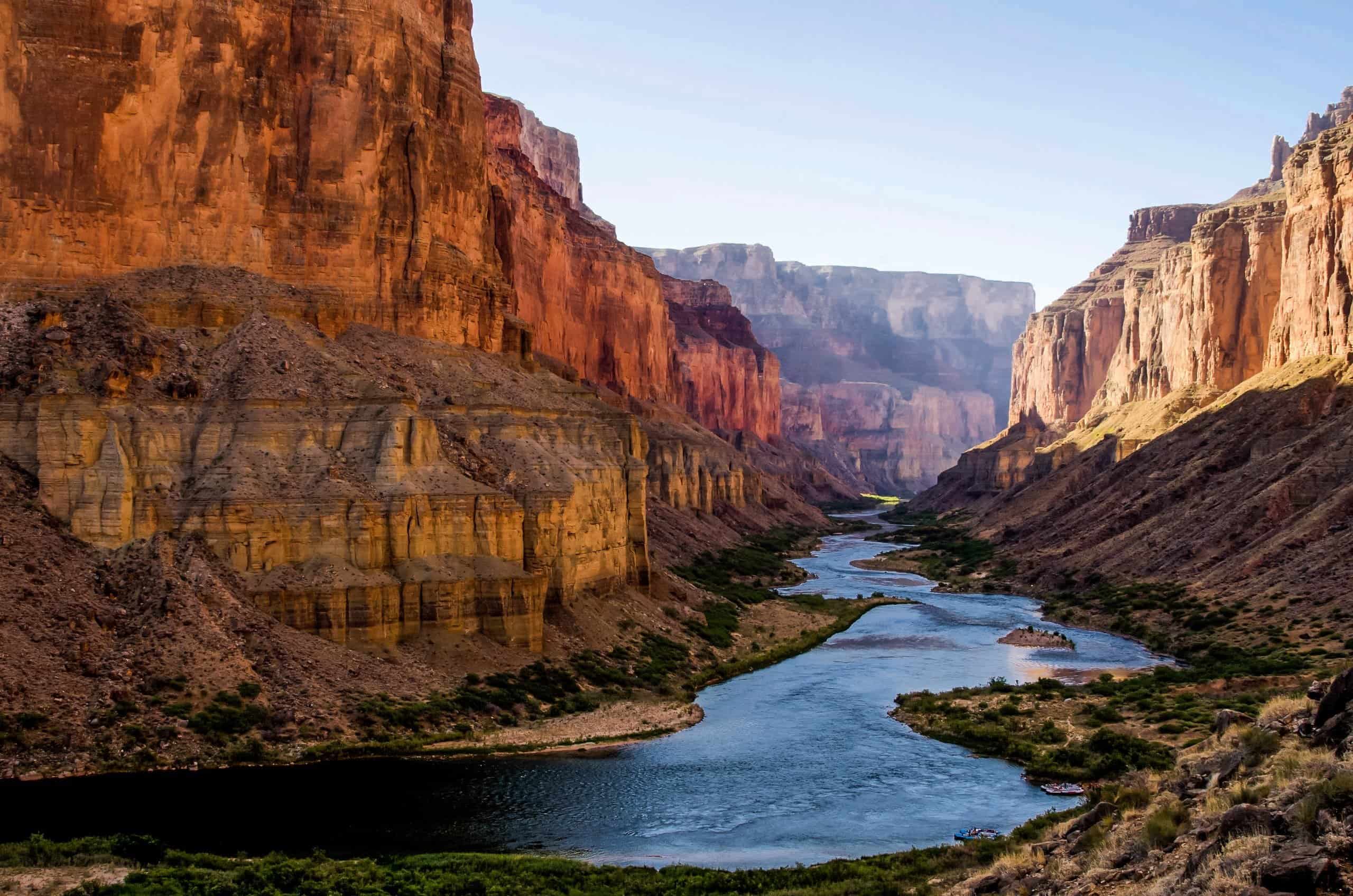

The Colorado River originates in the Rocky Mountains. It flows for 1,450 miles through Colorado, Utah, Arizona, and Nevada, and ends where it meets the Gulf of California in Mexico. Its river basin contains 246,000 square miles covering seven states. The river is divided into two regions: the Upper Basin (Colorado, New Mexico, Utah, and Wyoming) and the Lower Basin (Arizona, California, and Nevada). The river flows through 11 national parks, including the Grand Canyon. People come to the river for many activities, including fishing, rafting, canoeing, kayaking, swimming, and other water sports.
There are at least 35 native fish species in the Colorado River, and many of those fish live nowhere else on earth. The river is home to many unique fish that have adapted to a desert river. The water is cold and raging in the spring, while warm and muddy later in the year. However, as settlers moved West and began to stockpile non-native fish in the river, the native fish became endangered. We’ve rounded up a list of some of the most unique and fascinating fish that you may find in the Colorado River today.
Razorback Sucker
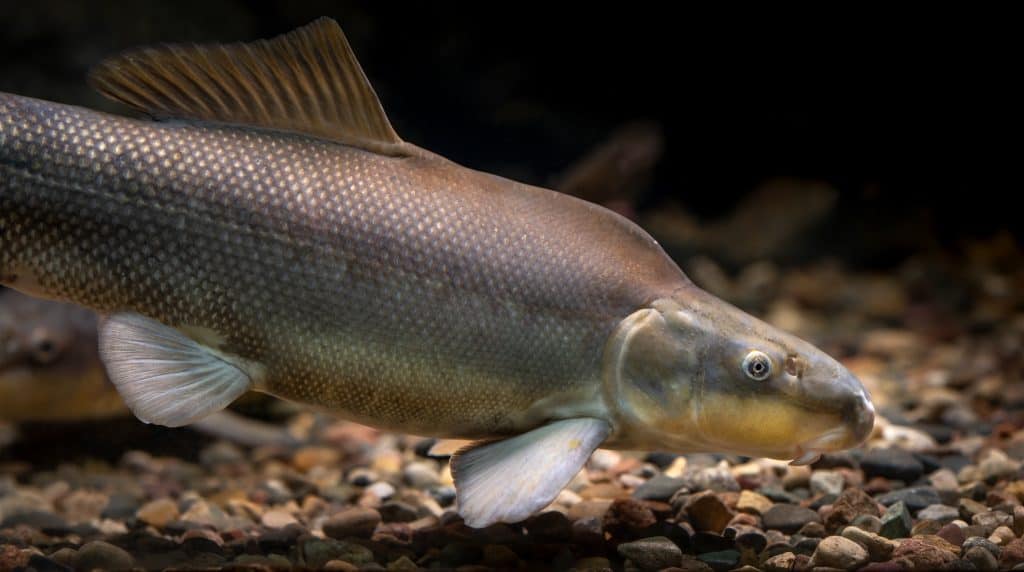
Razorback suckers swim in deep waters, but lay their eggs in shallow, sandy river bottoms.
©USFWS Mountain Prairie, Public domain, via Wikimedia Commons – Original / License
The razorback sucker (Xyrauchen texanus) is native to the Colorado River and can be found in both the Upper and Lower Basins. You can recognize it by the bony bump on the back of its head, called a keel. The razorback sucker is one of the largest sucker species in North America, and can grow up to 3 feet long. Razorback suckers eat plankton, insects, and plant matter. Classified as endangered in 1991, conservation efforts have helped to improve populations. However, as a federally protected fish, it should be returned to the water if caught.
Colorado Pikeminnow
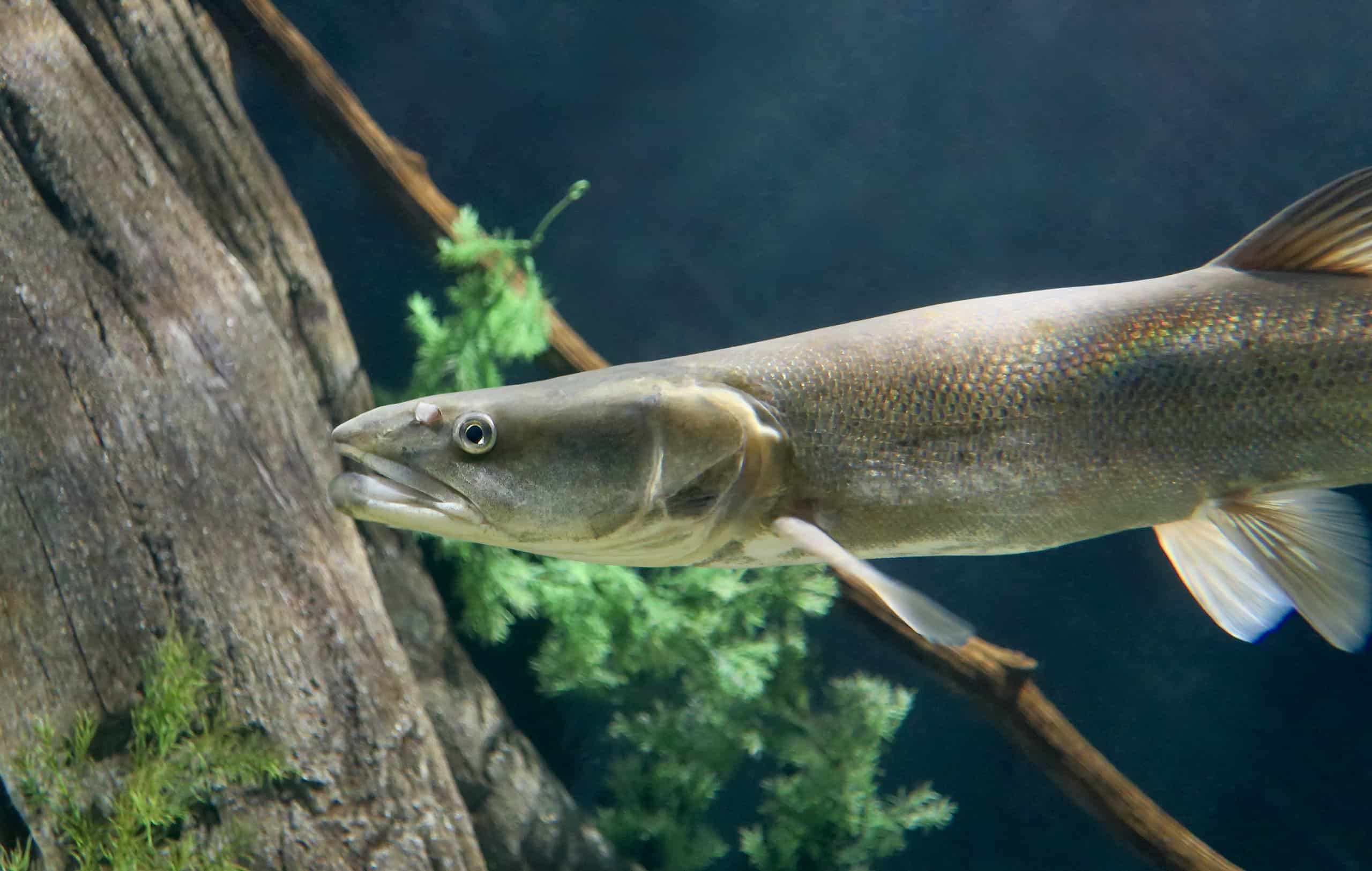
In the past, Colorado pikeminnows living in the Colorado River grew as large as 6 feet long.
©RatioTile, CC BY-SA 4.0, via Wikimedia Commons – Original / License
The endangered Colorado pikeminnow (Ptychocheilus lucius) once grew up to 6 feet long and is the largest minnow in North America. Today, adult pikeminnows do not grow as large and are usually found at lengths of around 2 to 3 feet. They feed on other fish and have adapted to eat native fish in the river without spines in their fins. Since non-native fish have been added to the river, pikeminnows have been found with catfish lodged in their throats. If accidentally caught, the Colorado pikeminnow should be carefully returned to the water. You may find the Colorado pikeminnow living in the Upper River Basin.
Bonytail Chub
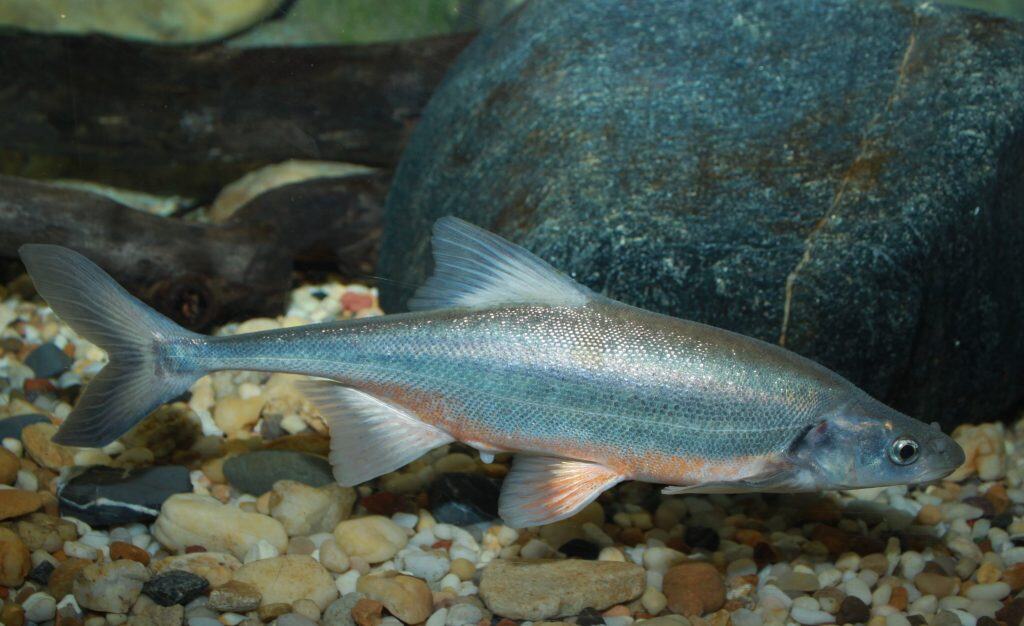
The rare Bonytail chub was once abundant in the Colorado River.
©"File:Bonytail chub or bonytail, Gila elegans.jpg" by Brian Gratwicke is licensed under BY 2.0. – Original / License
The bonytail chub (Gila elegans) is a rare and endangered fish endemic to the Colorado River. This fish was once common across the West, living in fast-moving rivers from Mexico up to Wyoming. It reaches lengths of around 22 inches and eats a diet of insects, algae, and plants. It’s the rarest of the large endemic fish in the Colorado River. Current conservation programs are stocking the fish in both the Lower and Upper Basins to try to prevent the unique desert fish from going extinct.
Colorado River Cutthroat Trout
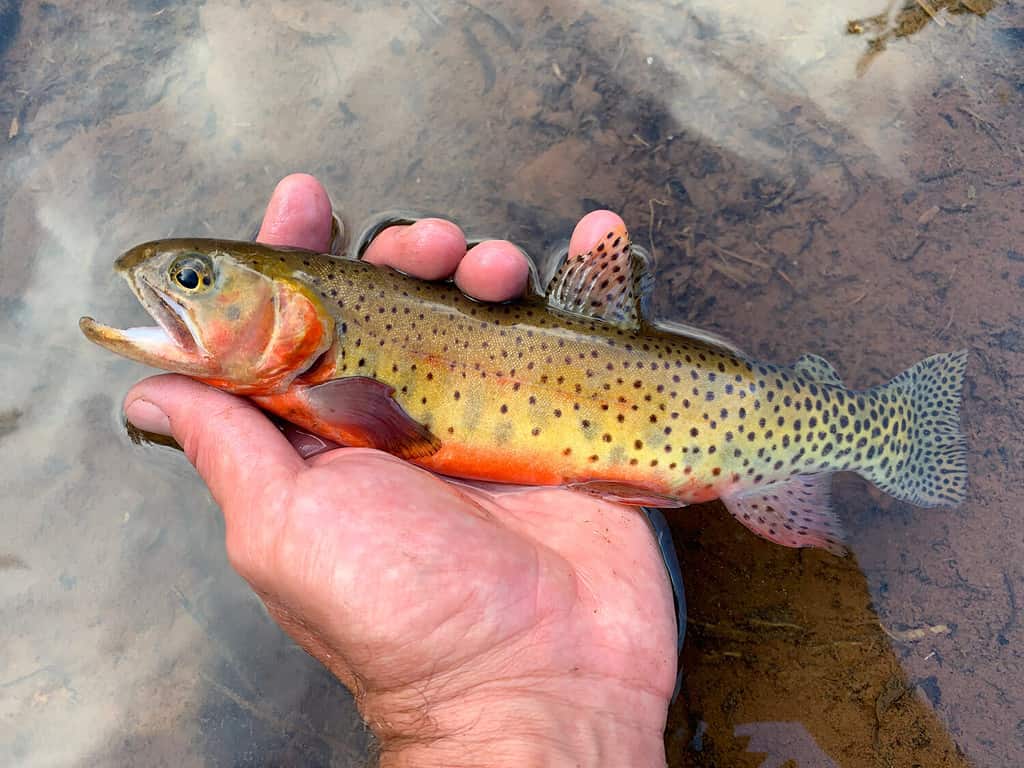
The Colorado River cutthroat trout is one of the most spectacularly colored subspecies of cutthroat trout.
©Sean Lema/Shutterstock.com
The Colorado River cutthroat trout (Oncorhynchus clarkii pleuriticus) is a subspecies of native trout that lives in the Upper Basin of the Colorado River. It’s a brightly colored fish with a yellow body, reddish belly, and black spots. As adults, they eat other fish, insects, and crustaceans. Colorado River Cutthroat Trout are a sport fish. However, there are restrictions to protect their populations.
Humpback Chub
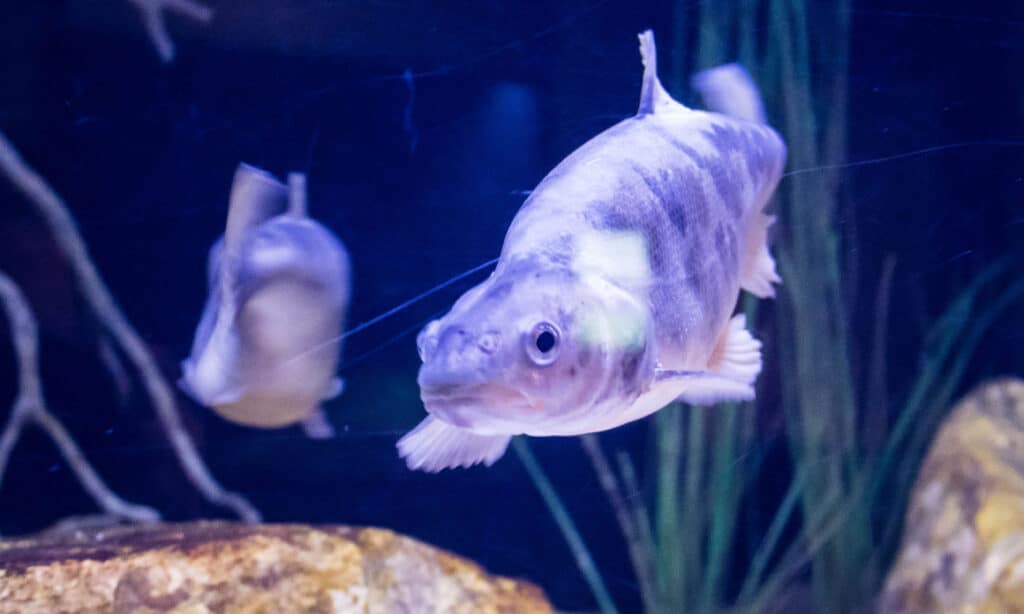
The unusual-looking humpback chub is identified by the hump behind its head.
©Melanie Martin/Shutterstock.com
The endangered humpback chub (Gila cypha) is native to the Colorado River and is the only species of chub that still lives in the Grand Canyon. Humpback chubs are named for the large lump behind their head, which gets larger as they age. These fish were once abundant in the Grand Canyon, but today are much rarer, although conservation efforts are ongoing to protect this unique species. Humpback chubs reach around 20 inches and eat a diet of insects, algae, and plants. If you catch a humpback chub, you should return it to the water.
Desert Sucker
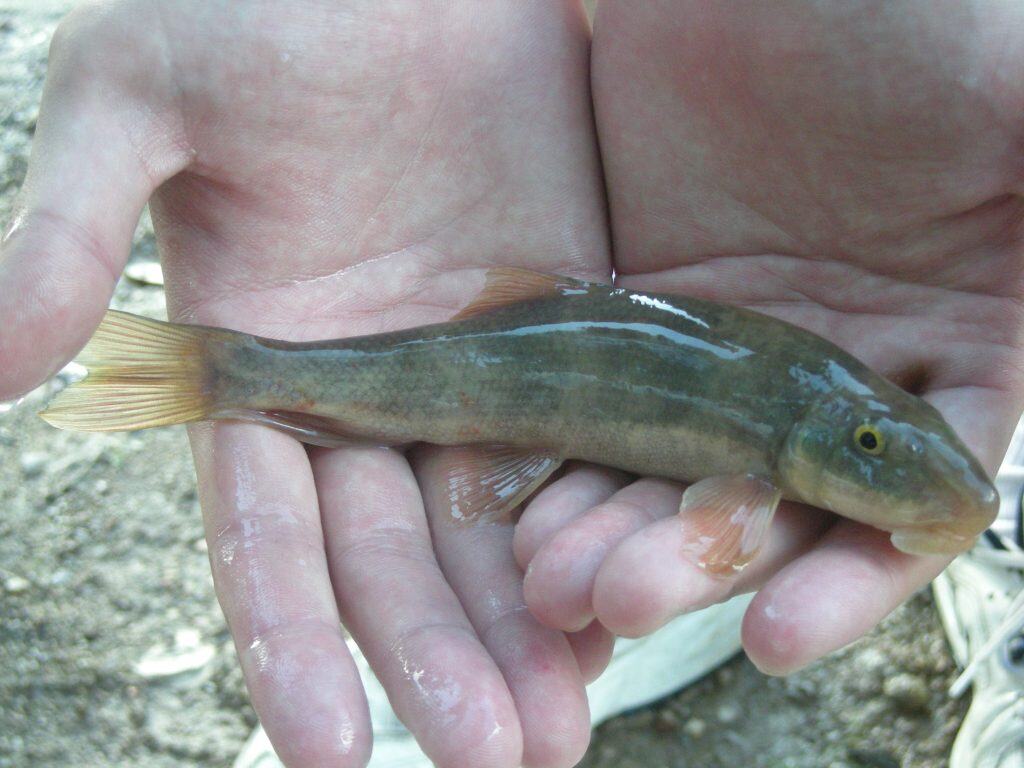
Desert suckers are bottom dwellers that mainly eat algae.
©Marine discovery, CC BY-SA 3.0, via Wikimedia Commons – Original / License
The desert sucker (Catostomus clarkii), also known as the Gila Mountain sucker, grows a little larger than 12 inches long. It can be found in the Lower Basin below the Grand Canyon. Desert suckers live on the bottom of rivers and eat algae off of rocks by using their mouths as a vacuum. Though some people do fish them to eat, others report they have a “muddy taste.”
Flannelmouth Sucker
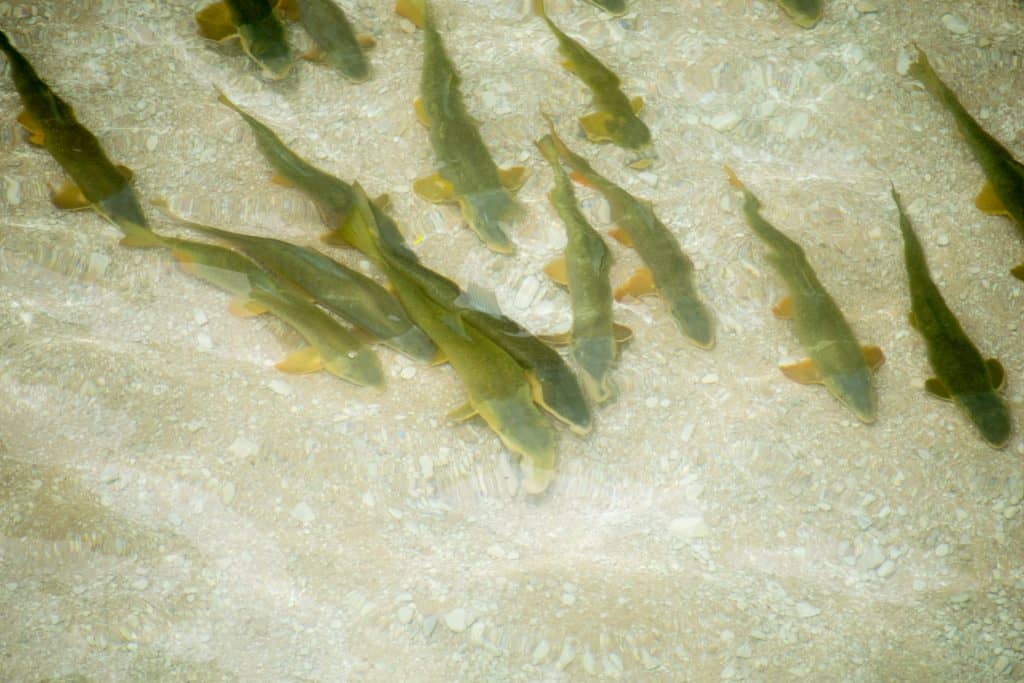
Flannelmouth suckers are sensitive to water quality, and their presence signifies a healthy waterway.
©Boris Grozev, CC BY 4.0, via Wikimedia Commons – Original / License
The flannelmouth sucker (Catostomus latipinnis) is one of the largest native fish species that is still commonly found in the Grand Canyon, reaching about 24 inches in length. However, this species is vulnerable to being preyed upon by non-native fish introduced to the river, such as rainbow trout. You can identify a flannelmouth sucker by its thick lower lip. It lives at the bottom of the river where it forages for plankton and algae. Anglers report that they are a challenging game fish when caught because they put up a strong fight. However, people typically only catch flannelmouth suckers when they are fishing for other species, such as trout.
Speckled Dace
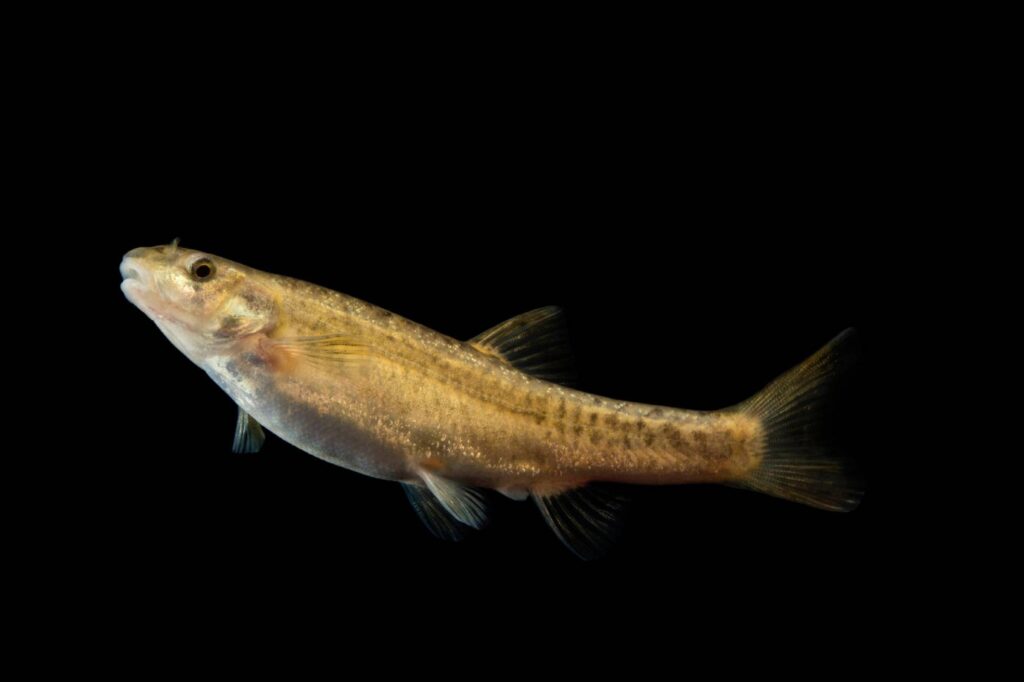
Speckled dace are small minnows that can be found throughout the western U.S.
©Usha Roy/Shutterstock.com
The olive green speckled dace (Rhinichthys osculus) is a small minnow native to the western U.S. It typically grows to just a few inches in length.This abundant fish has adapted to cold, fast-moving rivers and can also thrive in warmer, desert waters. Speckled dace feed on insects, algae, and fish eggs.
Western Painted Turtle
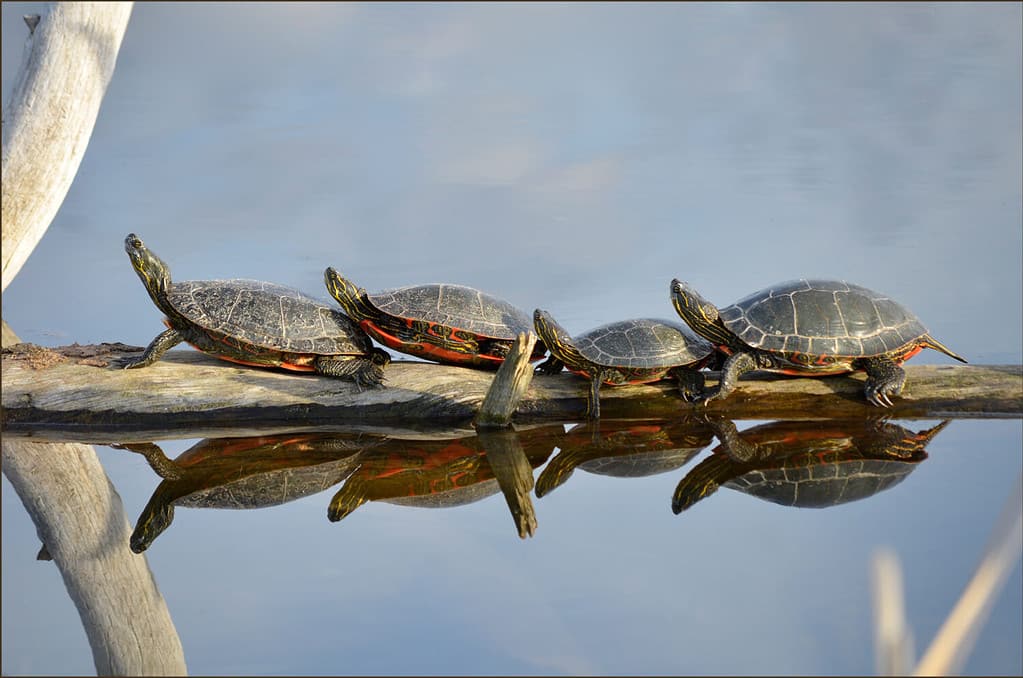
Painted turtles are social and can be found basking together in groups.
©Dennis Diehl/Shutterstock.com
Fish are not the only species that have adapted to life in desert rivers. The western painted turtle (Chrysemys picta) is commonly found living in the Colorado River. They swim at the bottom of the river and bask in the sun on tree logs. During winter, they bury themselves in the mud and go into brumation, which is similar to hibernation for reptiles. As omnivores, they eat a variety of plants, insects, and other invertebrates. Their shells are dark, olive green with bright red and yellow markings along the edge.
Northern Watersnake
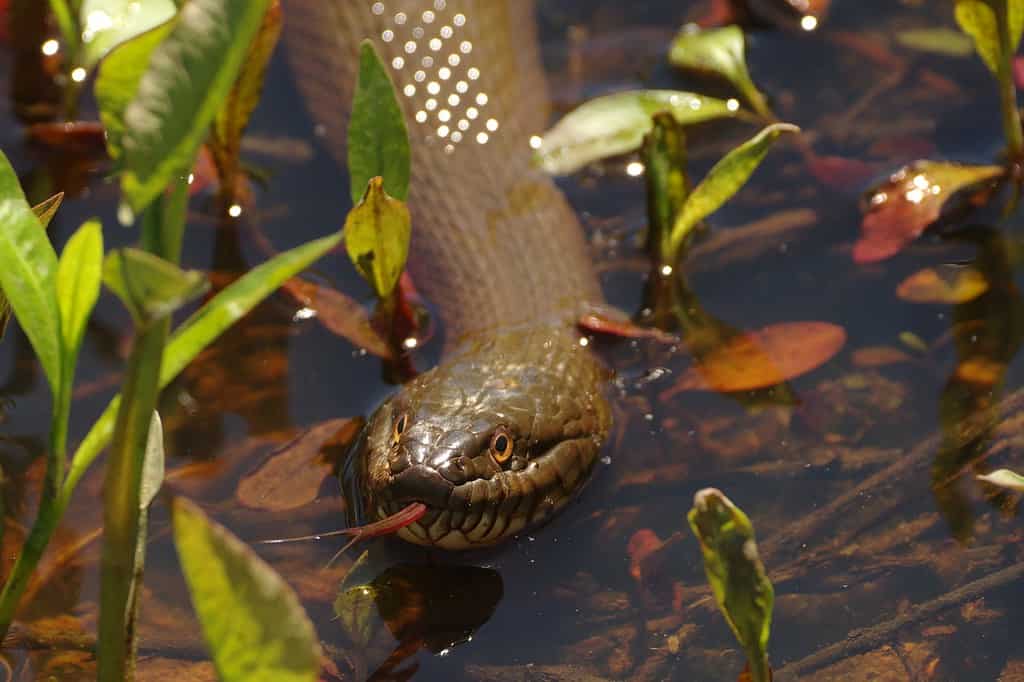
The northern watersnake is sometimes mistaken for a venomous water moccasin.
©Philip Yabut/Shutterstock.com
Many species of snakes live along the Colorado River, including the Northern watersnake (Nerodia sipedon). Northern watersnakes are a common snake living in North America. They can reach up to 59 inches in length, although most are much smaller, with females typically reaching about 32 inches. You may see one swimming in the Colorado River or basking on a log on a sunny day. They eat fish, amphibians, and other small animals. Northern watersnakes are a common species found throughout North America. They will bite repeatedly if threatened, and their saliva can stop blood from coagulating.
Texas Fatmucket
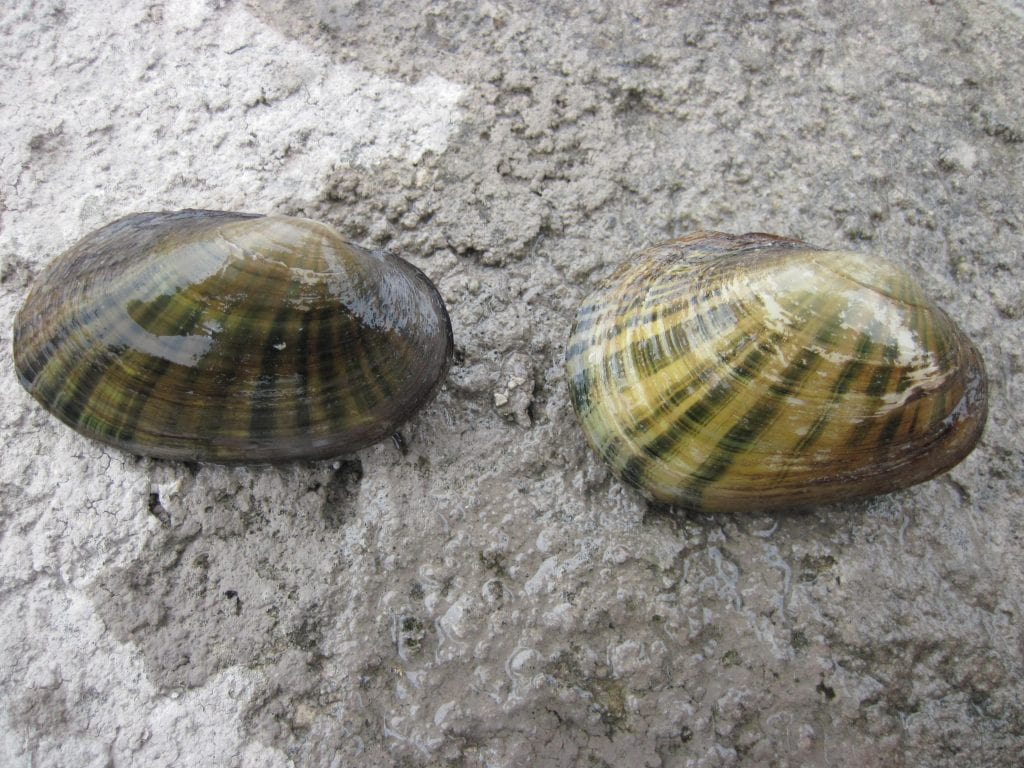
Once abundant in Texas, Texas fatmuckets are classified as endangered.
©U.S. Fish & Wildlife Service Southwest Region, Public domain, via Wikimedia Commons – Original / License
Also living at the bottom of tributaries of the Colorado River is the Texas fatmucket (Lampsilis bracteata). These are freshwater mussels that can only be found in central Texas within the Colorado River basin. They are dependent on host fish (such as the Guadalupe bass) for their life cycle. Adult Texas fatmuckets release their eggs into the gills of host fish. The eggs stay attached to the gills for about a month as they develop. Eventually, they drop off the fish and burrow into the river bottom. They are filter feeders and eat bacteria and algae.