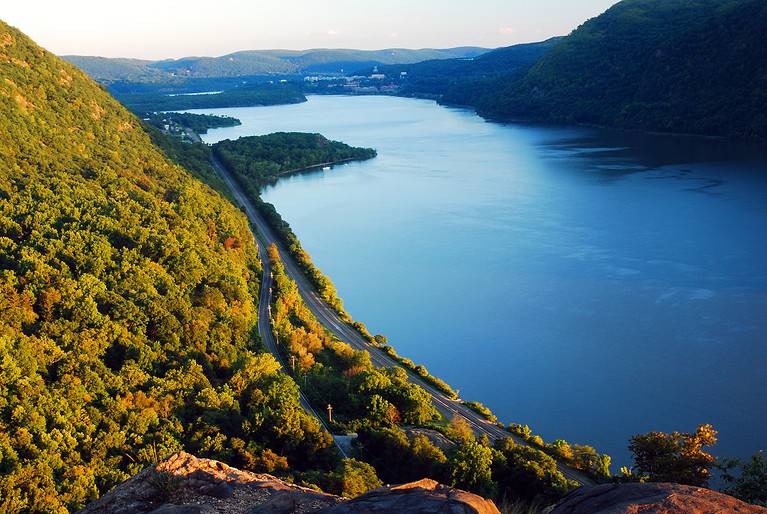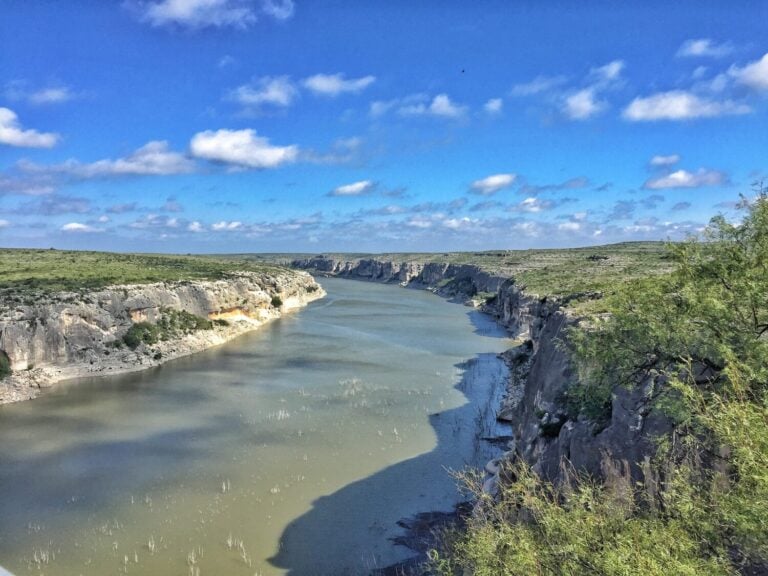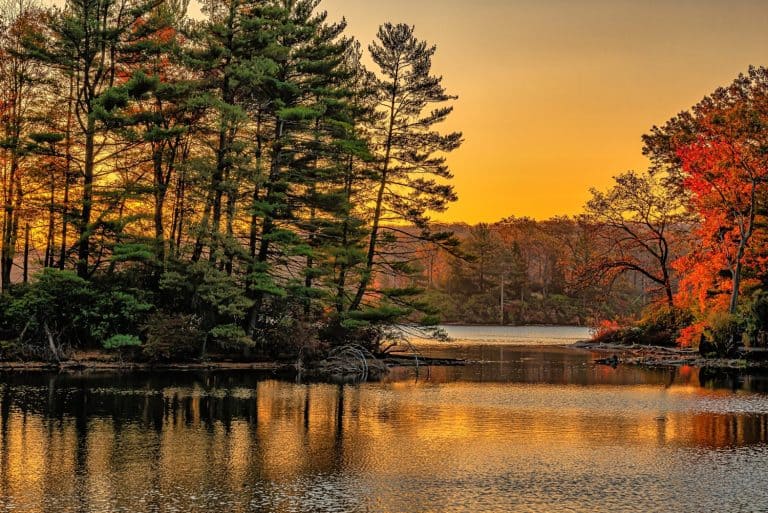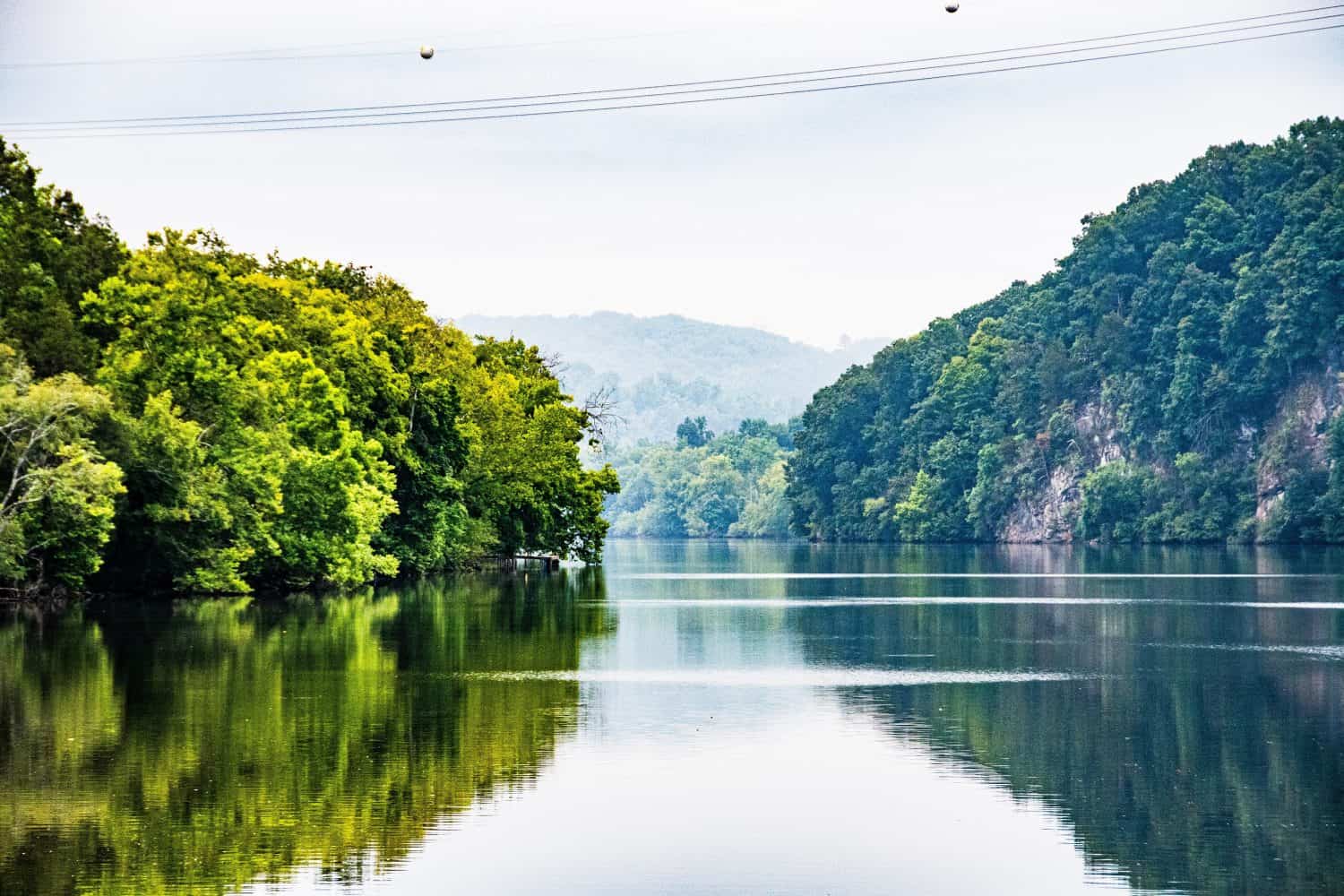

There is no doubt about it: the Tennessee River is one of the mightiest rivers in the southeastern United States. At 652 miles long, it flows through the Tennessee Valley in the states of Tennessee, Alabama, Mississippi, and Kentucky. The river starts at the confluence of the French Broad and Holston rivers in Knoxville before draining into the Ohio River. Once called the “River of the Cherokees,” the Tennessee River is home to a wide range of fish and freshwater animals. Let’s learn which creatures call the Tennessee River home.
Scarlet Shiner
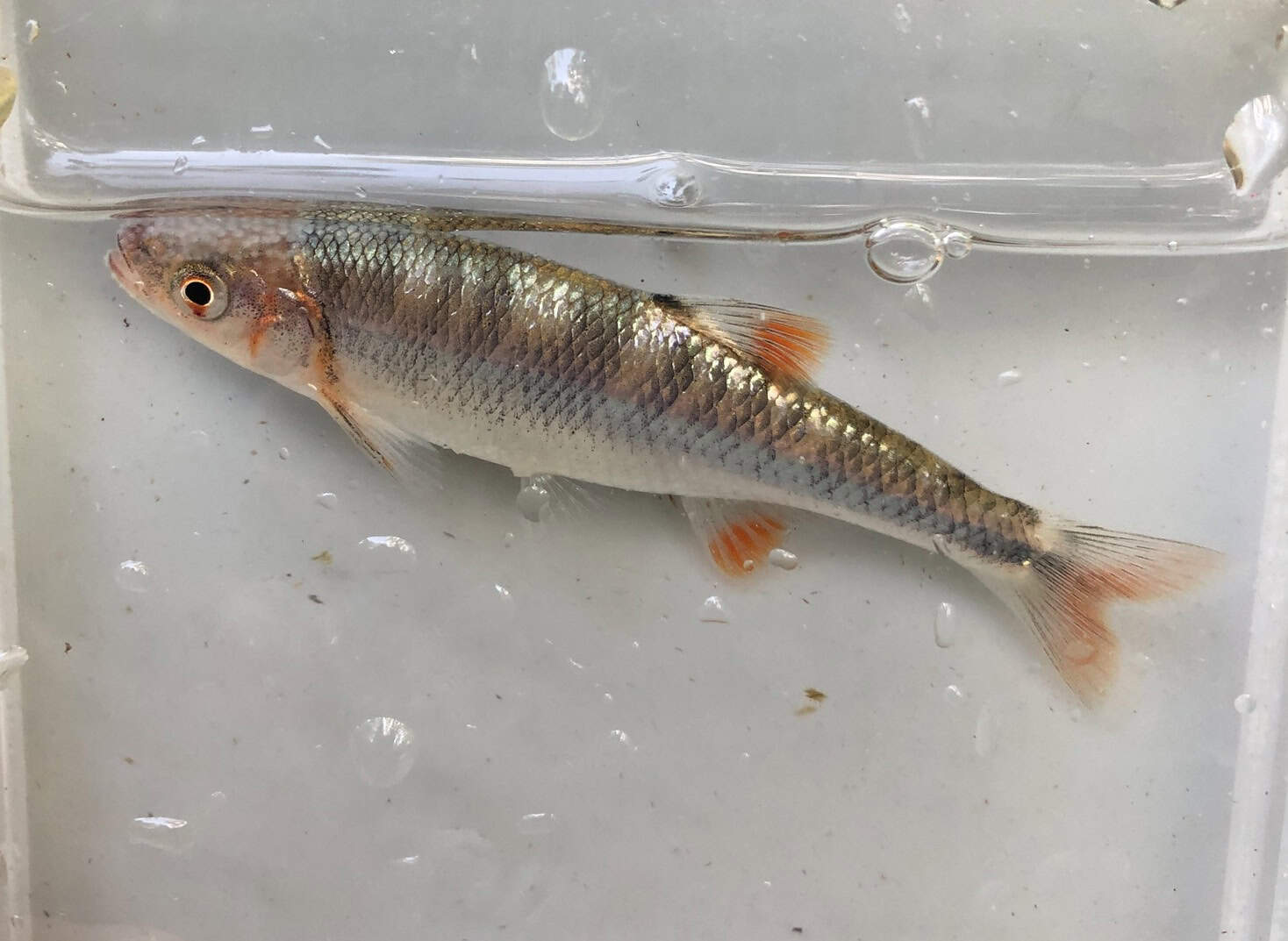
These fish tend to stick to clear water.
©"Scarletshinermale" by Dylan Shaw is licensed under BY 4.0. - Original / License
Scarlet shiners are one of the smaller but more dazzling-looking fish that people find in the Tennessee River. They have tiger-like stripes across their backs and uppersides and bodies that are silver, except for their more cream-colored bellies. These small fish tend to stick to clear water. They prefer higher altitude streams with coarser substrates. In the eastern United States, the main habitat of scarlet shiners is around the Ohio River Basin. That said, people find these fish in abundant numbers further south as well. They live in the Little River Basin, which connects to the Tennessee River before flowing down to northern Alabama. Various fish prey on them, including invasive species like rainbow trout. Rainbow trout have noticeably reduced scarlet shiner populations in several areas of the eastern United States.
Yellow Perch
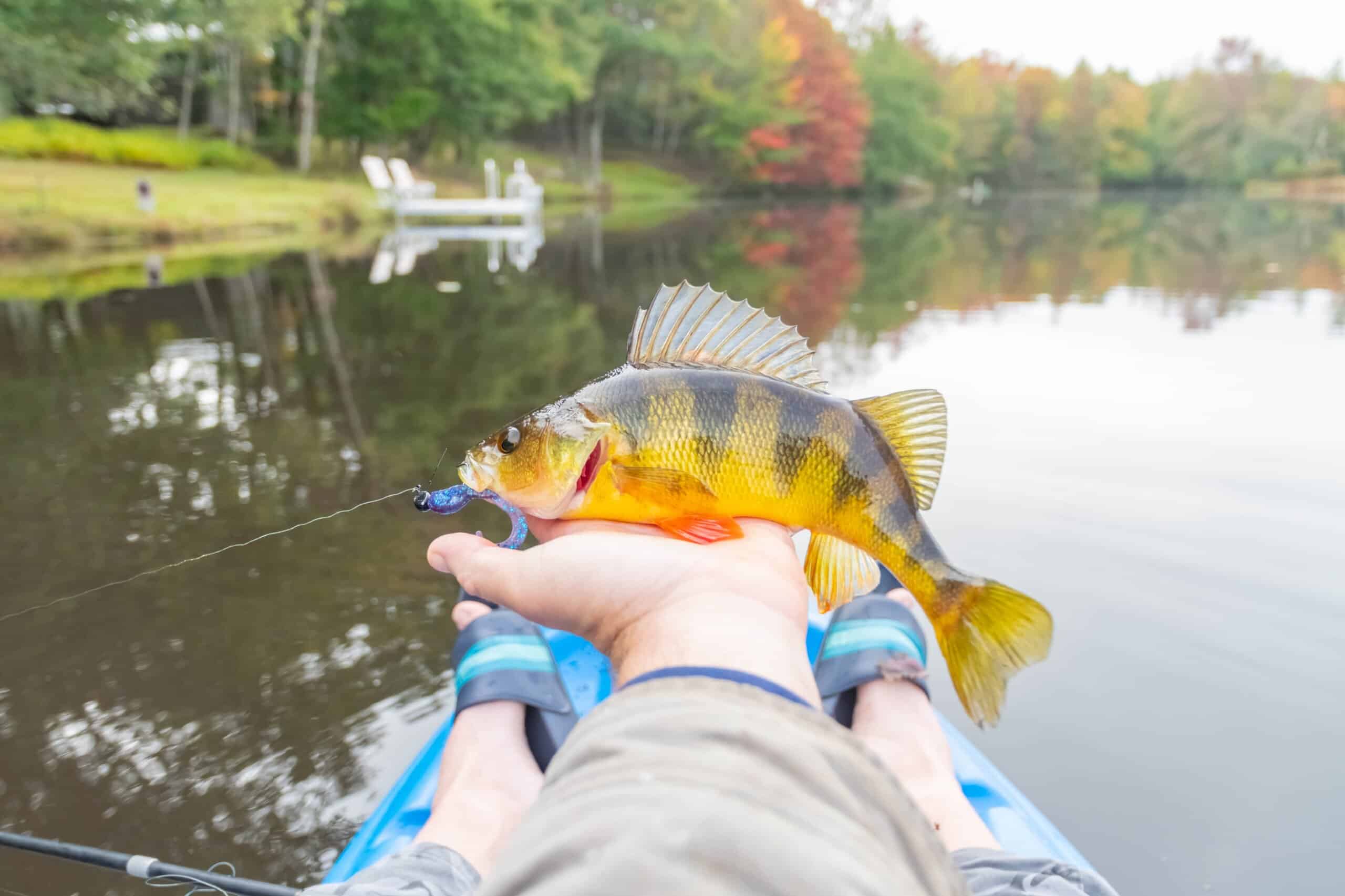
These fish tend to stick to large reservoirs connected to the Tennessee River.
©michasekdzi/Shutterstock.com
Another vibrant fish found in the Tennessee River is the yellow perch. They have elongated, yellow to gold-colored bodies with six to eight triangular-shaped stripes on their sides. Yellow perch usually grow between six and ten inches, though some specimens grow considerably larger. Their diet consists of insects, larger invertebrates, and even other fish. Their tendency to hunt in both open water and at the bottom of waterways makes them an adaptable species. They can thrive in the open stretches of large lakes, ponds, or calm rivers with average vegetation. When it comes to the great state of Tennessee, yellow perch usually stick to the large reservoirs of the Tennessee River in the southeast region of the state. While they are uncommon in other areas, fishermen are finding them more and more in unexpected waterways. This suggests their numbers are expanding.
Smallmouth Bass
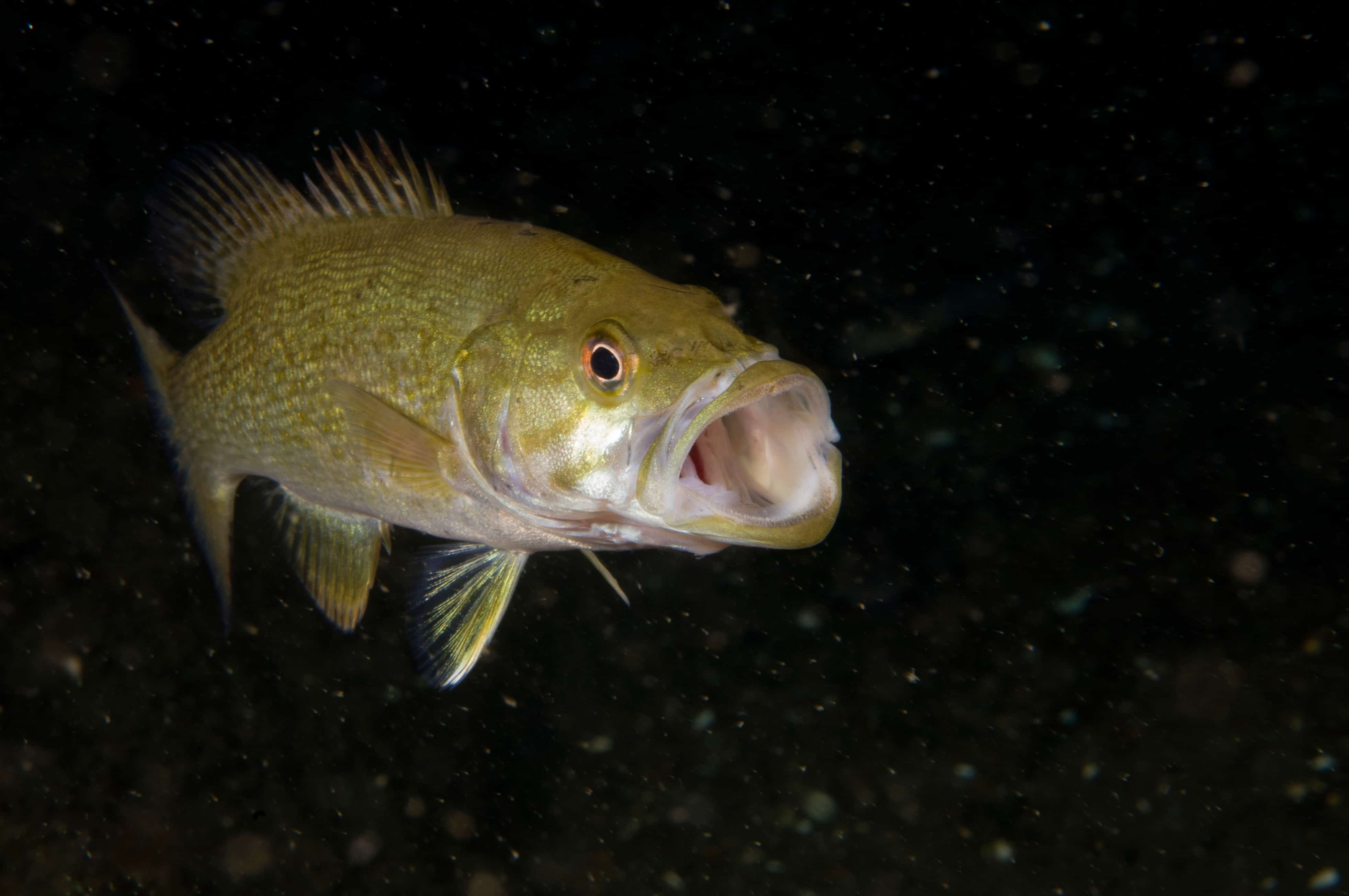
The smallmouth bass is Tennessee’s official sport fish.
©RLS Photo/Shutterstock.com
A common sight in waterways across North America, smallmouth bass are another one of the fish commonly found in the Tennessee River. This common sport fish features a mandible that doesn’t extend past its often red-colored eyes. They also have dark bars extending backward from the eyes. Usually, their sides have scales with golden flecks. Smallmouth bass feed on a wide variety of prey, including smaller fish like sunfish and shiners, as well as invertebrates like tadpoles and crayfish. They also eat a selection of ‘flies,’ including mayflies, stoneflies, dragonflies, and damselflies. People typically find these small-mouthed fish in clear, rocky streams with fast currents, adjacent pools, and large rocks.
Fishermen also find them in large reservoirs near rocky areas, such as ledges and shorelines, where water remains clear. Smallmouth bass are pretty abundant in Tennessee, ranging from the Kentucky Reservoir eastward into the foothills of the Great Smoky Mountains. While most smallmouth bass caught by anglers are between 14 and 18 inches, Tennessee holds the world record. Not only is it the state’s official sport fish, but the recognized world record smallmouth bass was caught in Tennessee. It weighed 11 pounds and 15 ounces.
Muskellunge
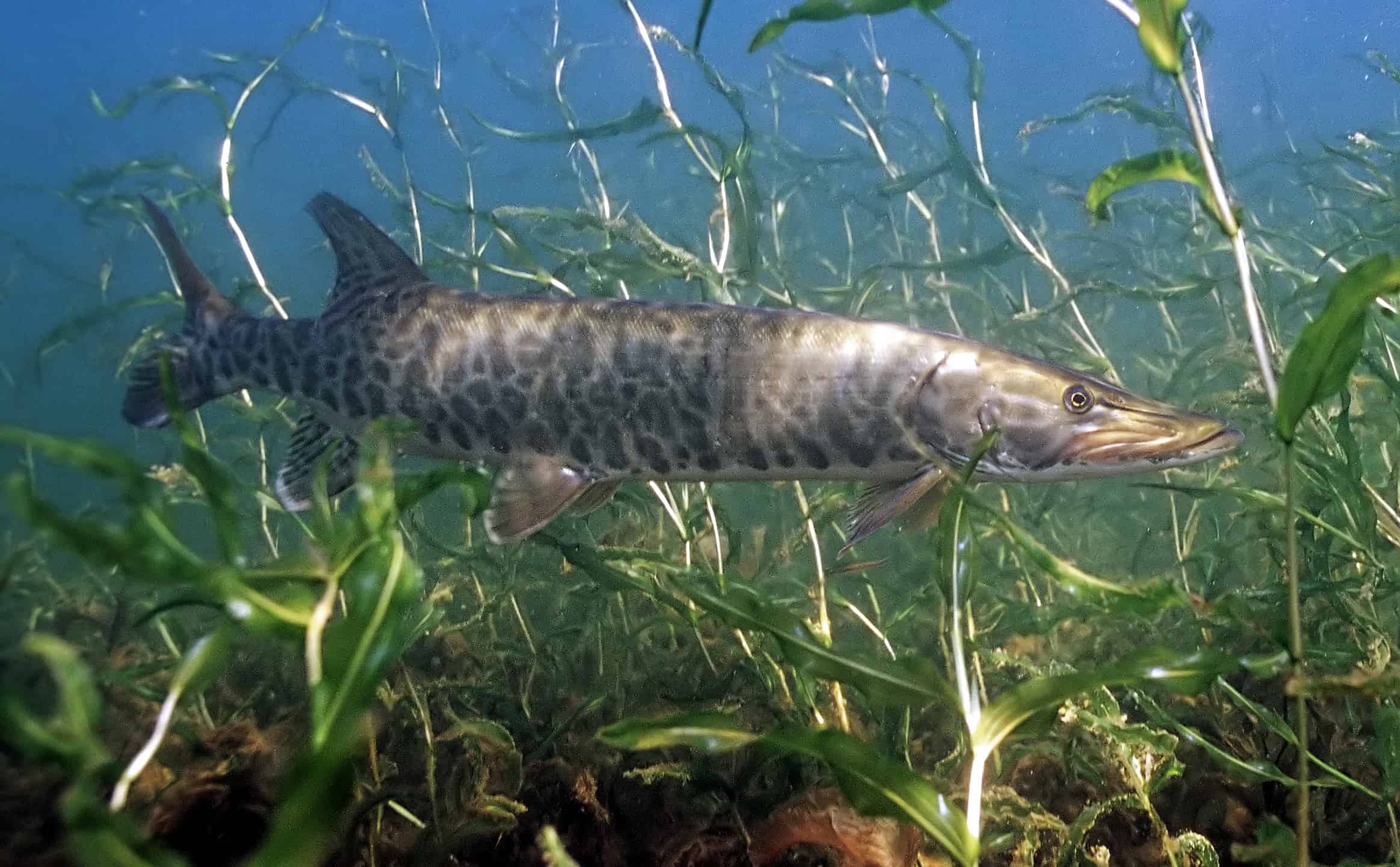
Jake pikes, or muskellunge, are ambush predators.
©Engbretson, Eric / U.S. Fish and Wildlife Service, Public domain, via Wikimedia Commons - Original / License
There are two types of pike fish found in Tennessee, but muskellunge are most common in the Tennessee River. Also called jake pikes, these long, thin fish have leopard-like spots across their bodies. They also have large, tapered snouts and mouths filled with canine and needle-like teeth. These pike fish grow pretty large, averaging about 32 inches in length. In Tennessee, these pike prefer cool, clear water with plenty of aquatic vegetation. They use this underwater foliage to hide, waiting motionless before ambushing passing prey.
While they usually feed on fish, muskellunge also eat snakes and even land animals if they get close enough to the water’s edge. Fishermen find these fish in many of the tributaries of the Tennessee River system. In truth, however, muskellunge are all over the state. They live in the Emory River, the Calfkiller River, and tributaries of the Big South Fork of the Cumberland River. Anglers also find them in reservoirs, including Melton Hill, Dale Hollow, and Parksville.
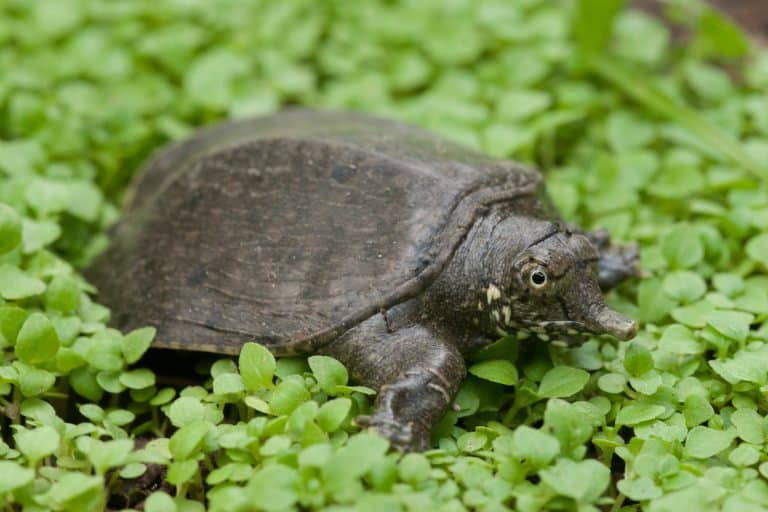
Spiny Softshell Turtle
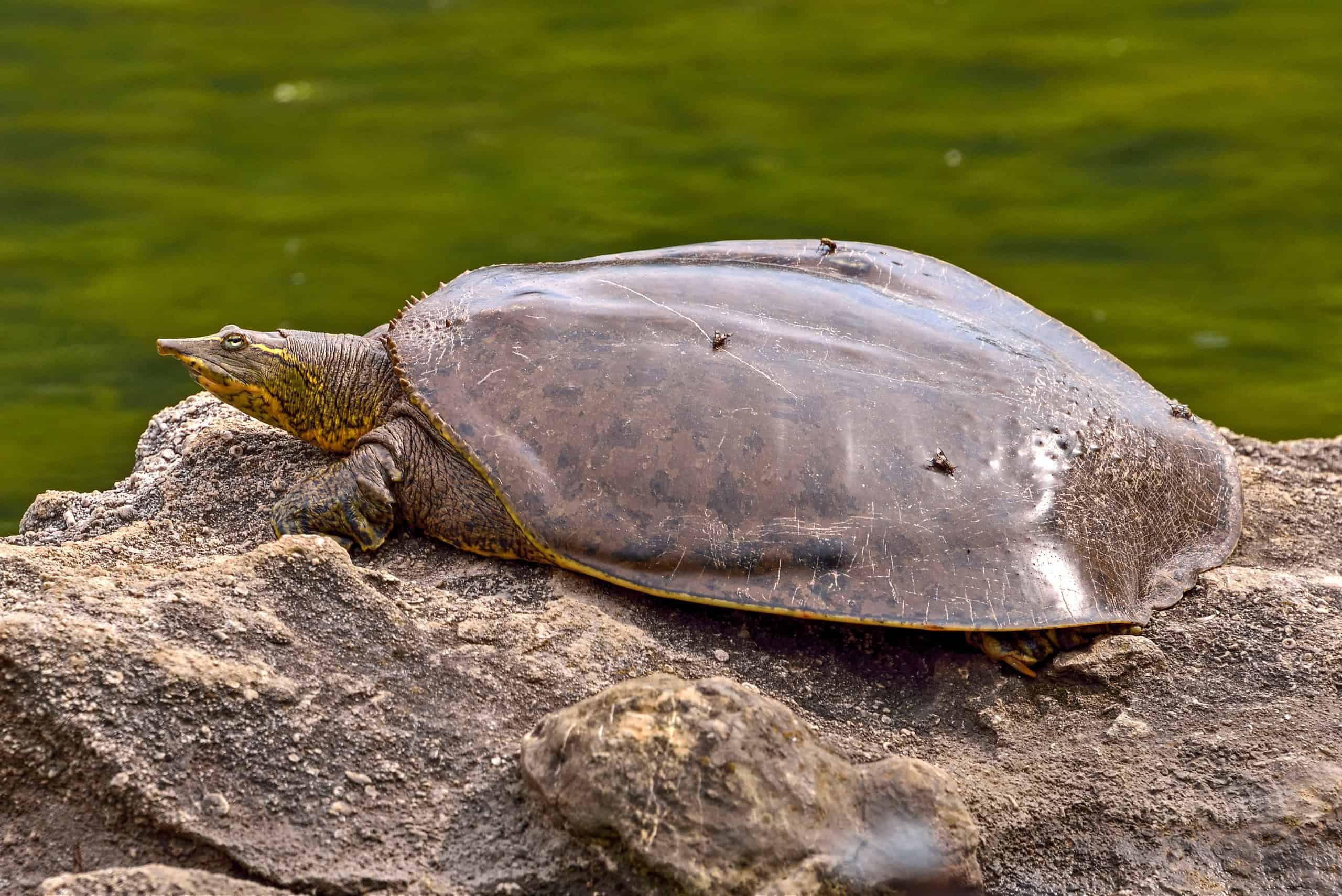
Spiny softshell turtles spend most of their time underwater.
©damann/Shutterstock.com
Some creatures have names that don’t really speak to their characteristics. Spiny softshell turtles, however, have names that accurately characterize their features. One of the largest freshwater turtle species in North America, spiny softshell turtles have large soft shells, webbed feet, and long, fleshy noses. They prey on a variety of animals, but usually feed on invertebrates like crayfish and aquatic insects. They will also feed on fish, mussels, and aquatic vegetation. The picture above may show one sunning on a rock, but in truth, spiny softshell turtles are highly aquatic.
They spend most of their time near the sandy or muddy bottoms of lakes, reservoirs, and rivers like the Tennessee River. At the bottom of waterways, they bury themselves in the sediment to hide and catch prey. Their long, tapered snouts allow them to breathe underwater for extended periods. Remarkably, they can also absorb oxygen through their skin and the lining of their throats. Though spiny softshell turtles are relatively common across North America, they face threats in the form of pollution, habitat loss, and human encroachment onto riverbanks.
Sauger
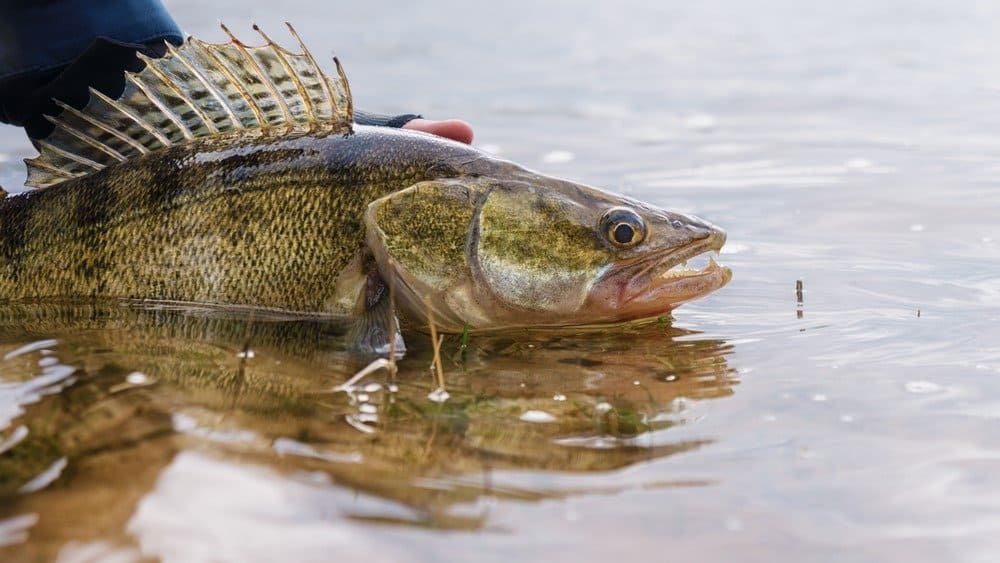
Saugers resemble larger yellow perch.
©wwwarjag/Shutterstock.com
Another kind of fish commonly found in the Tennessee River is the sauger. Not to be confused with yellow perch, which have similar dorsal fins, saugers are larger and have more tapered snouts. They also feature distinct black spots in their spiny dorsal fins. Saugers grow to an average length of 16 inches, but they can range between 10 and 22 inches. They usually subsist on other, smaller fish, which they find in free-flowing waterways, including streams and reservoirs. More adaptable and tolerant of murky water than their relative, the walleye, people find saugers in practically all the mainstream reservoirs of the Tennessee and Cumberland river systems. People also find them in abundant numbers in the Mississippi River and its larger tributary streams.
Rosyface Shiner
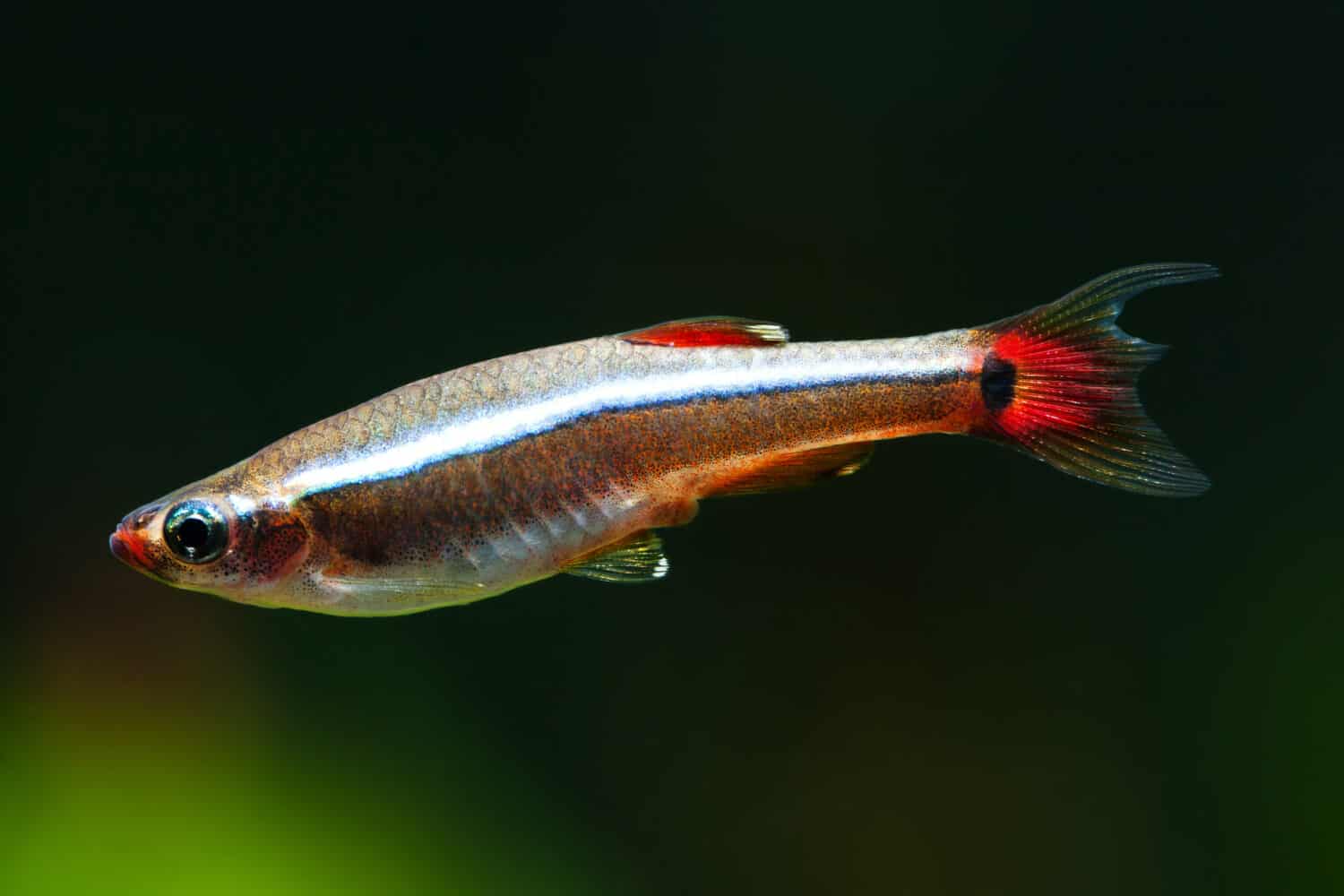
They get their name from the males who have red colorations on their faces and heads.
©Besjunior/Shutterstock.com
So far, the fish have ranged on the larger side. As such, it’s time for a smaller, but vibrant-looking fish: the rosyface shiner. A species of ray-finned freshwater fish in the Leuciscidae family, rosyface shiners are closely related to daces, minnows, and, obviously, other shiners. They are also native to eastern North America and commonly found in both the main waterways and tributaries of the Tennessee River. Rosyface shiners are characterized by bodies that taper at both ends, with silvery sides and blue-green stripes. They have transparent fins, including those in their abdominal regions.
While reproductive males have red colorations on their faces and heads (hence the rosy face), females have considerably less blush. As freshwater fish with slight frames, rosyface shiners stick to large to moderately-sized streams with clear water and rushing currents. While they tolerate streams with sediment or gravel-heavy bottoms, they don’t do well in murky waterways.
Whereas other fish migrate during the winter, rosyface shiners just move to deeper pools and eddies before returning to their regular habitats at the start of spring. Despite their small sizes, rosyface shiners subsist on an omnivorous diet. They eat insects, flies, nymphs, fish eggs, algae, and other organic material. Rosyface shiners will eat insects underwater as well as those that fall onto the water’s surface. They have even been observed jumping out of the water to capture passing flies and insects.
In terms of habitats, rosyface shiners are equally at home in subtropical, benthopelagic, and freshwater environments. While most of their population lives around the Ohio River basin, they also range down to the Little River basin, which connects to the Tennessee River. Due to their wide diet and adaptability, rosyface shiners are listed as a species of least concern.
Blenny Darter
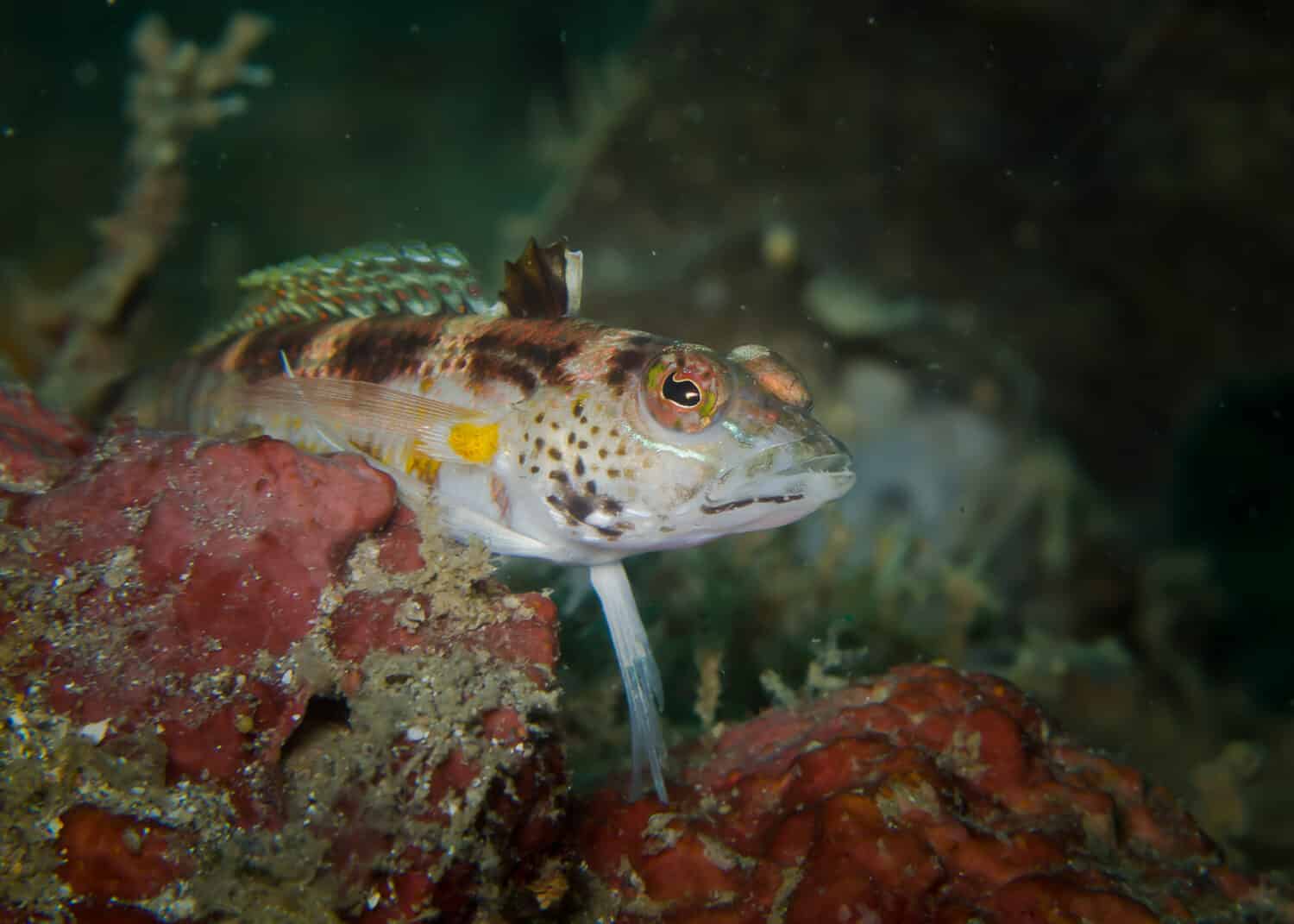
These fish only reach about three inches in length.
©Ekkapan Poddamrong/Shutterstock.com
Blenny darters are another fish often found in the Tennessee River. A species of freshwater ray-finned fish from the family Percidae, blenny darters are closely related to perches, pikeperches, and ruffes. They have saddle-like blotch patterns across their backs and spots on their upper flanks. Blenny darters also have prominent fins on both the posterior and anterior parts of their bodies. When spawning, male blenny darters darken to a nearly solid black color on their heads, while their fins become more vibrant. Blenny darters are small fish, with the largest individuals reaching 3.3 inches in length, though most are even smaller.
These fish are native to the southeastern United States and are found across the Tennessee River region, in both small and large tributaries. More specifically, blenny darters are found in the Buffalo River, Duck River, Sequatchie River, and White Oak Creek. It’s one of the few fish on this list with a population mostly restricted to the Tennessee River and the Tennessee Valley. There, blenny darters prefer gravel-bottomed creeks and moderately flowing waterways with clear water. That said, seeing them clearly requires a flashlight, as blenny darters are mostly nocturnal. They hunt for insects, including mayflies, caddisflies, and nymphs, under the cover of darkness.
First described by American zoologists Charles Henry Gilbert and Joseph Swain in 1887, blenny darters remain a staple fish of the Tennessee River. While they still enjoy relatively healthy numbers in Tennessee, they have been recommended for special concern status in Alabama. This is because several proposed dams would considerably diminish their habitats in the area.
Great Blue Heron
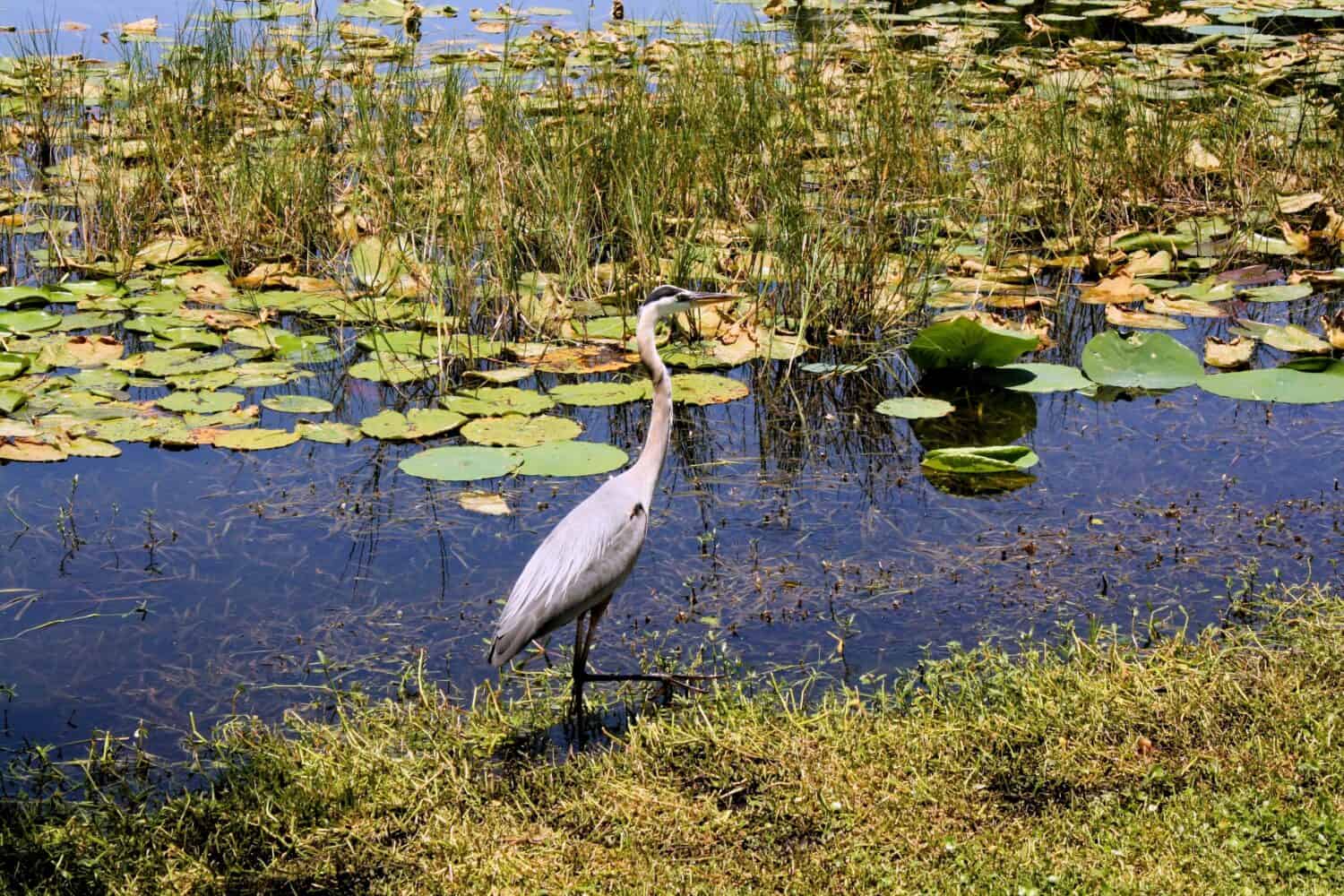
Great Blue Herons are a common sight in North American waterways.
©TAMMY M JOHNSON/Shutterstock.com
One of the most common large birds found around North America is the great blue heron. As such, these large birds are often seen in and around the Tennessee River region. Standing at nearly four feet tall, great blue herons have white to cream-colored heads with black feather plumes that start just above their eyes and radiate outwards behind their heads. Their body feathers are brown, black, and white. From a distance, however, these body feathers give off an unmistakable blueish-gray coloring. They have long, thin, almost needle-like bills. The toes on their feet are not webbed.
Great blue herons primarily feed on fish, with their diet varying by region. For example, in California, they eat sculpin, bass, perch, flounders, and top smelt. As opportunistic hunters, great blue herons will also eat other animals. They will eat amphibians like frogs, toads, and salamanders, as well as turtles, snakes, and lizards. Great blue herons can even gulp down larger serpents like water snakes. As for mammals, they will hunt small rodent-like game, including shrews, rats, ground squirrels, and moles. There are even reports of great blue herons eating smaller birds.
They are found throughout most of North America, as far north as Alaska and as far south (at least in the winter) as the Caribbean and into South American countries like Colombia and Venezuela. Incredibly adaptable, great blue herons can figure out and thrive in almost any type of wetland habitat. They are at home in freshwater swamps, saltwater marshes, and everywhere in between. They are a common sight in the Tennessee River region due to the river’s ample fish population.
American Bullfrog
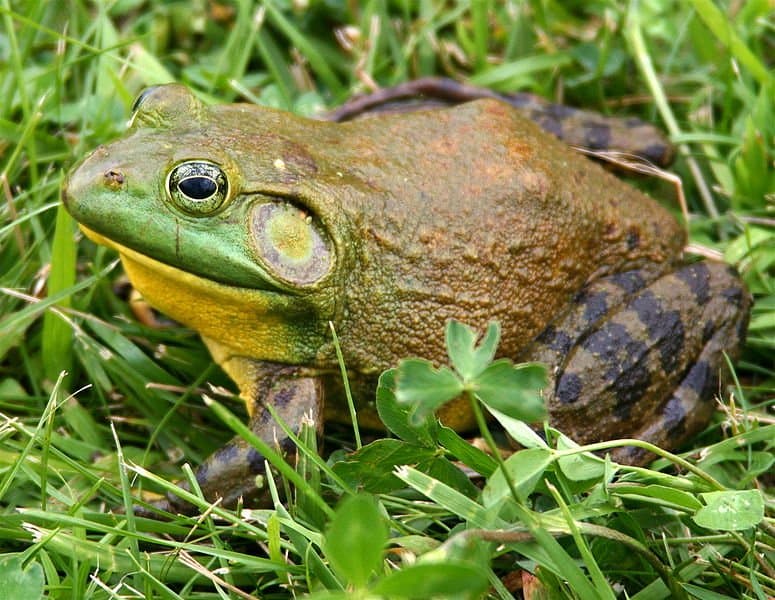
Bullfrogs will eat practically anything they can fit in their mouths.
©Carl D. Howe / Creative Commons - Original
American bullfrogs are one of the more commonly found amphibians in and around the Tennessee River. Best known by the more general name ‘bullfrog,’ American bullfrogs are large, true frogs native to the eastern part of North America. They have textured green to brown bodies, green snouts, and distinct, circular eardrums behind their eyes. Bullfrogs get their name from the sound males make during breeding season, which resembles the roar of a bull. These true frogs are most commonly found in permanent bodies of water, including swamps, lakes, and ponds. They also adapt well to manmade aquatic habitats like pools, canals, ditches, and even koi ponds.
Besides their reputation for their bellowing vocalizations, American bullfrogs are known to have voracious appetites. As ambush predators, they will hunt down any animal or creature they can overpower and fit in their mouths. Examinations of bullfrog stomachs have revealed a remarkable diet range. They eat rodents, lizards, small birds, bats, tarantulas, scorpions, and even other frogs and toads. There are even reports of cannibalism among American bullfrogs. While they are quite skittish and difficult to catch, bullfrogs have a surprisingly wide distribution across the world.
Besides their native region, which includes the Tennessee River valley, bullfrogs have been introduced into the Western United States, Western Europe, Southeast Asia, and even Japan. Plenty of large animals eat bullfrogs, but not enough to make a serious dent in their numbers. Indeed, due to the American bullfrog’s voracious appetite and ability to lay a large number of eggs, many places consider them an invasive species.
Lake Sturgeon
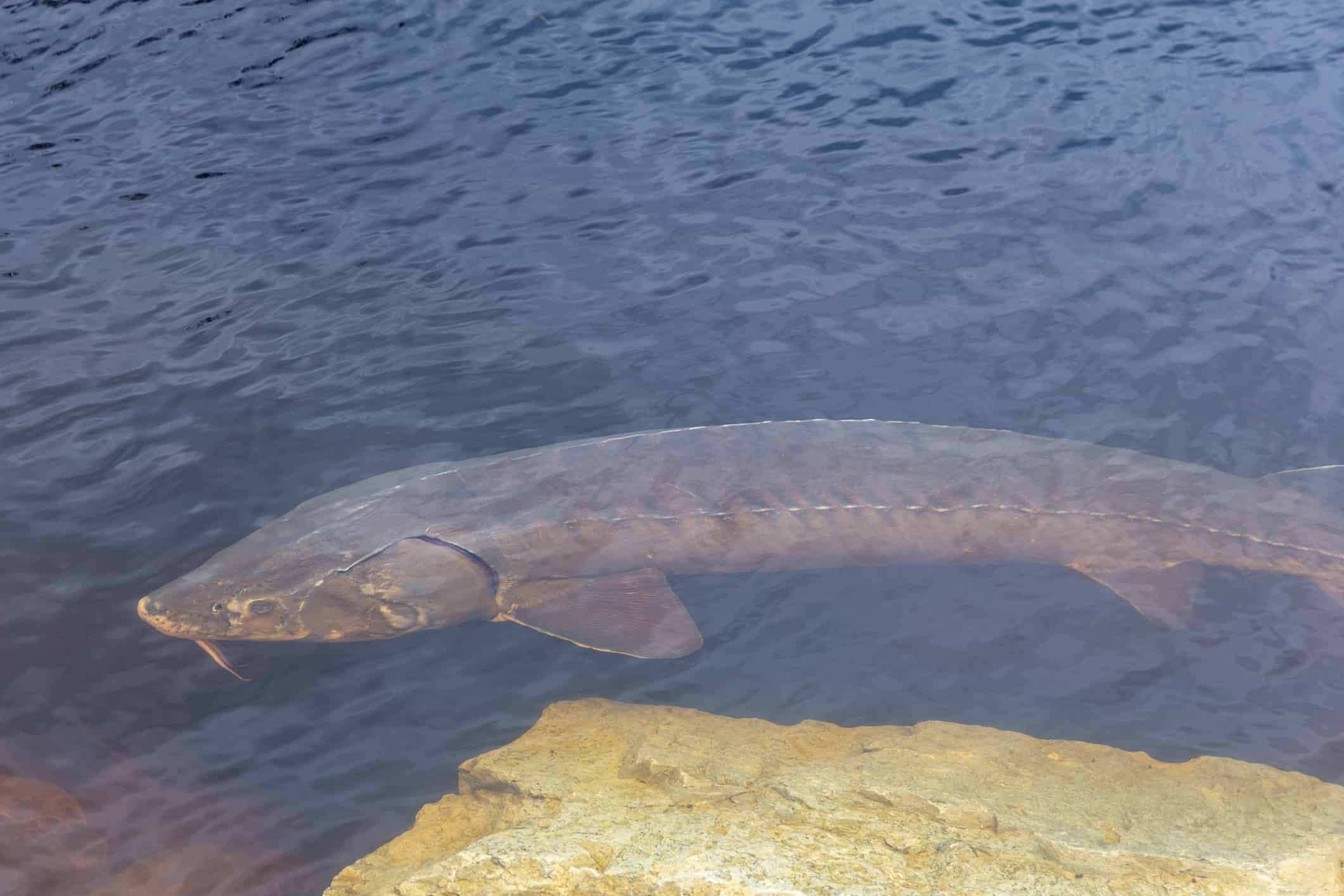
They are the largest and longest fish found in Tennessee.
©James Pintar/iStock via Getty Images
Lake sturgeon are another type of fish found in the Tennessee River. They are one of the two sturgeon species native to Tennessee. They are bottom feeders, subsisting on a diet of snails, insect larvae, and crayfish. Seeing one in the water, however, could be a scary sight as they are one of the largest and longest fish found in Tennessee. Indeed, they can grow up to eight feet long and weigh up to 300 pounds, though most individuals are much smaller. Though lake sturgeon used to have a more widespread population, their numbers have dramatically declined in recent years. Due to overfishing, dam construction, and habitat loss, Tennessee lists the lake sturgeon as endangered. However, conservation efforts have been initiated to boost their numbers. Since 2000, game officials have reintroduced over 220,000 lake sturgeon to the Cumberland River and the upper portion of the Tennessee River.
Bowfin
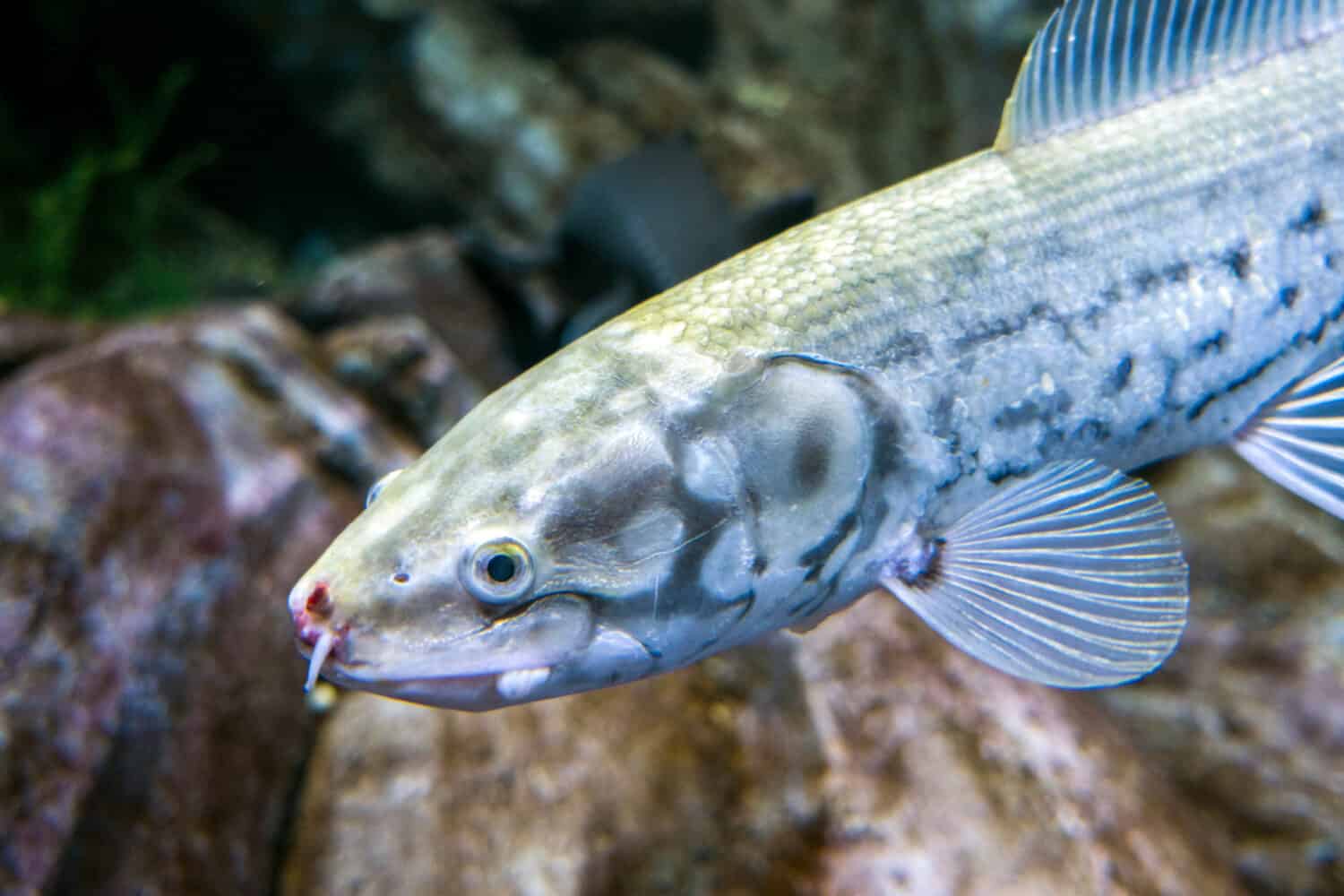
Bowfins are voracious predators.
©Miroslav Halama/Shutterstock.com
Bowfins are some of the more unusual-looking fish found in the Tennessee River. They have cylindrical bodies and sharp teeth. These voracious predators prefer quiet, swampy waterways where they feed on fish, freshwater shrimp, frogs, and large insects such as dragonfly nymphs. Typically, bowfins range in length between 16 and 32 inches and weigh between two and five pounds. In Tennessee, people commonly spot bowfins between the Tennessee River and downstream of Chattanooga. That said, they are more common in the western part of their range and are rare in the eastern part. A strong fighter when caught on a fishing line, fishermen often confuse them with snakeheads, a nuisance and potentially invasive species in Tennessee.
American Eel
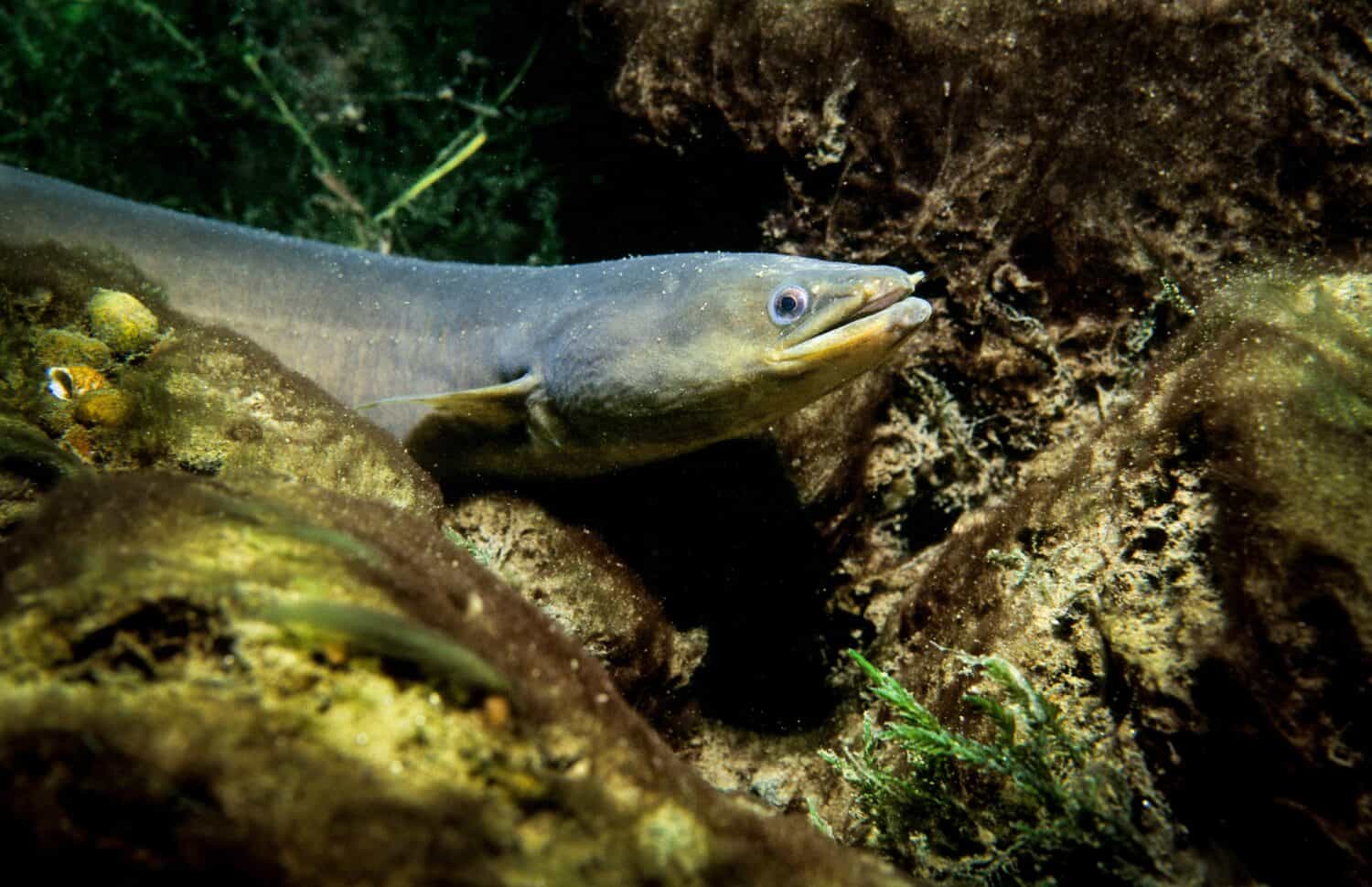
Eels are a rare sight in the Tennessee River.
©RLS Photo/Shutterstock.com
They may look like snakes, depending on the angle, but American eels are actually a type of ray-finned fish. People find American eels in the drainage areas of both the Cumberland and Tennessee rivers, but they can be difficult to spot. Mostly nocturnal, these serpent-like fish hide in the deeper water during the day before emerging under the cover of night to eat fish, crayfish, and insects. Despite reaching lengths of up to 35 inches, American eels are elusive. They are considered a rare find in the Tennessee River because fishermen usually catch them by accident. Once hooked, American eels put up a strong fight.
Woodchuck
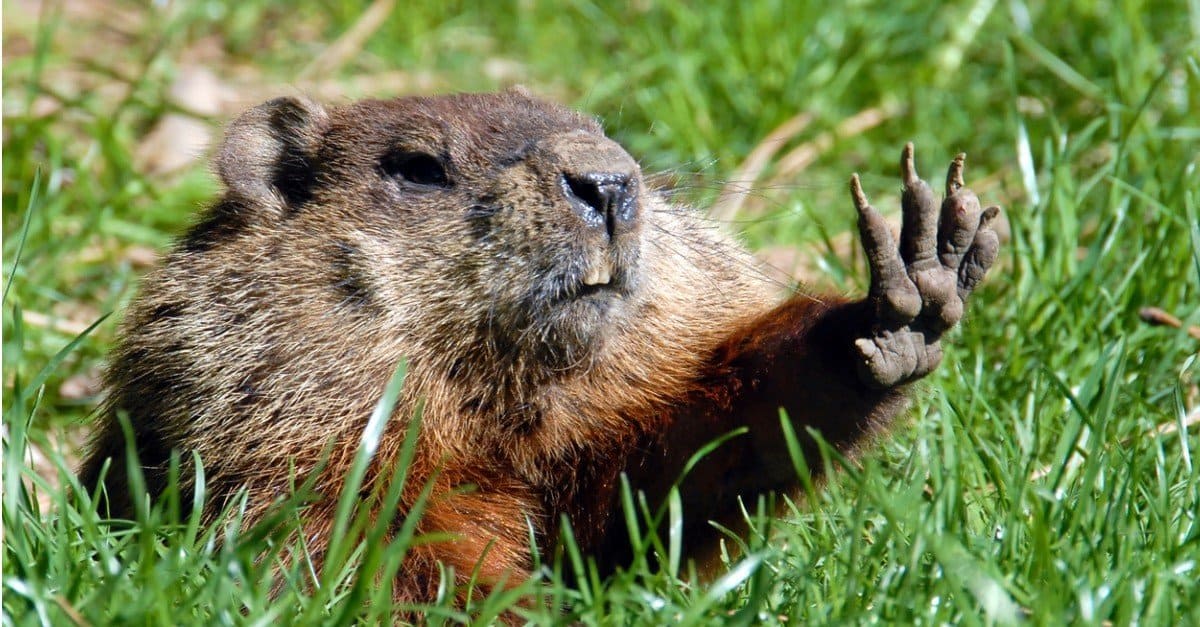
Woodchucks are also known as groundhogs.
©iStock.com/mirecca
Not to be confused with beavers or muskrats, woodchucks—also known as groundhogs—are rodents in the Sciuridae family and are found throughout much of the Eastern United States. They prefer lowland areas with pastures, low-elevation forests, and small woodlots. Although they don’t spend much time in the water, woodchucks inhabit areas around the Tennessee River valley. While some animals suffer from human encroachment, woodchucks appear to benefit from increased access to food.
Atlantic Needlefish
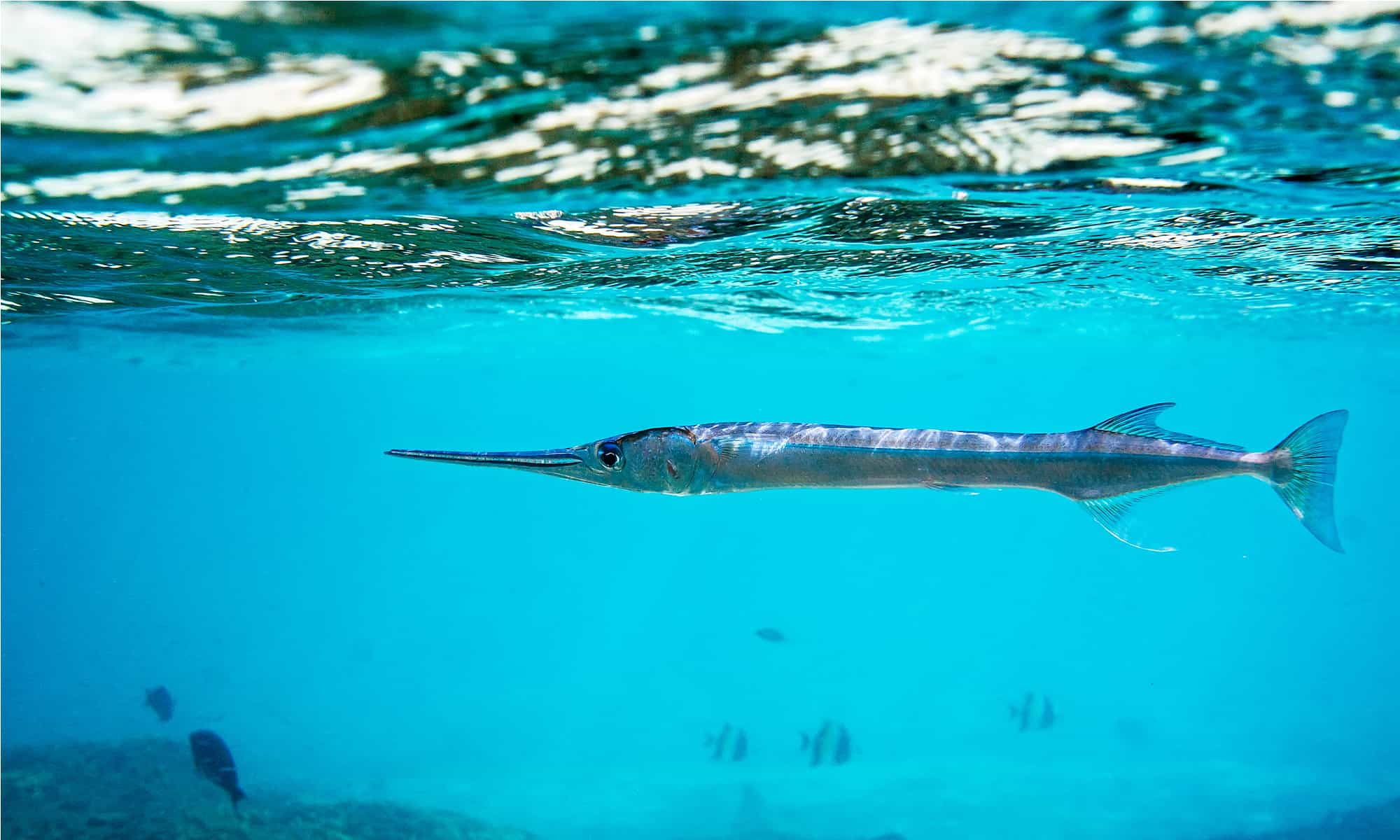
A marine species, Atlantic needlefish have established populations in the Tennessee River system over the past several decades.
©AndrisL/Shutterstock.com
One of the more unique-looking fish found in the Tennessee River area is the Atlantic needlefish. While they are historically a marine species, Atlantic needlefish have migrated into the Tennessee River from the Gulf Coast in recent years. Ranging between eight and 20 inches in length, these thin, needle-nosed fish feed on smaller fish like minnows and shad. While they aren’t commonly fished because they lack much meat, Atlantic needlefish have the potential to become an invasive species in Tennessee. Typically, fishermen find them in the Kentucky and Pickwick reservoirs.
Zebra Mussel
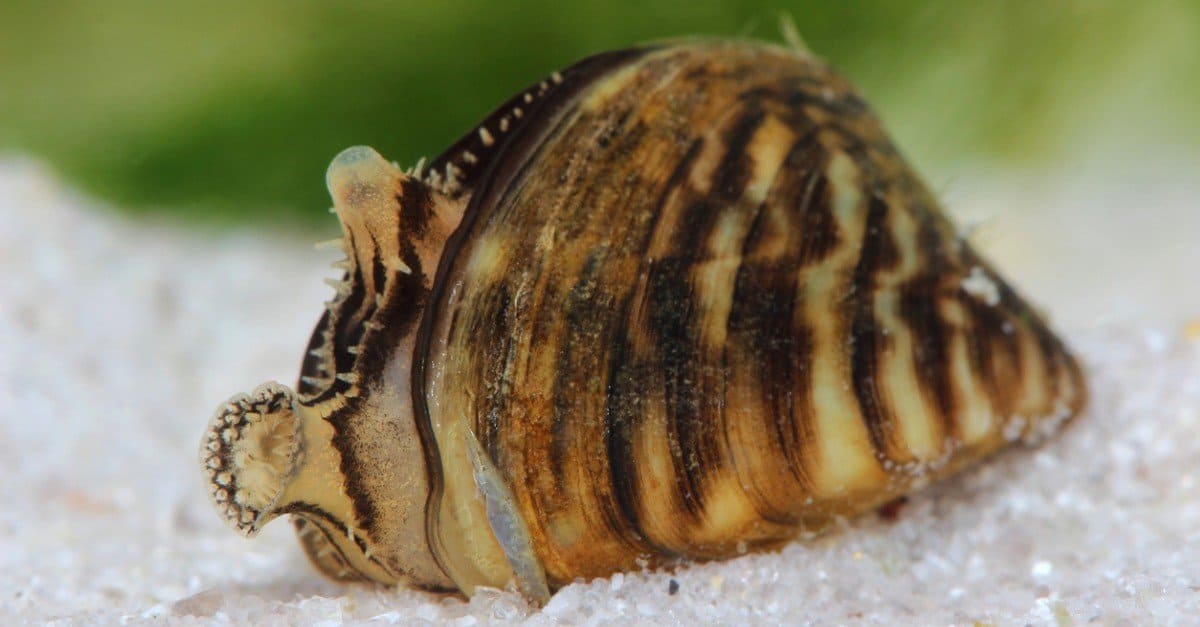
Zebra mussels are considered an invasive species in Tennessee.
©iStock.com/VitalisG
Native to the Black and Caspian seas, zebra mussels were introduced to North America in the Great Lakes region starting in 1988. Since then, they have established themselves in many waterways south of the region, including the Tennessee River. They are about 1.5 inches long, feature zebra-like stripes, and feed on algae. Despite their stunning looks, officials consider zebra mussels an invasive species in the region. Not only do they constrict water flow to hydroelectric power plants, but they also colonize and damage both steel and concrete structures.