
Quick Take
- There are several myths surrounding the Virginia opossum’s reproductive biology.
- Opossums do not give birth through their nose!
- Females have two wombs and three vaginas.
- Males have a bifurcated (forked) penis.
Two wombs, a forked penis, and giving birth through the nose. These are just a few of the bizarre stories circulating about the reproductive biology of the Virginia opossum. This beady-eyed, big-eared creature is the only marsupial species native to North America. Marsupials have also been around for more than 70 million years, making them one of the Earth’s oldest surviving mammalian lineages. So, which of these crazy characteristics have helped these guys stick around for so long, and which are just made-up nonsense? Read on to find out the truth about opossum reproductive biology.
Virginia Opossum – The Basics
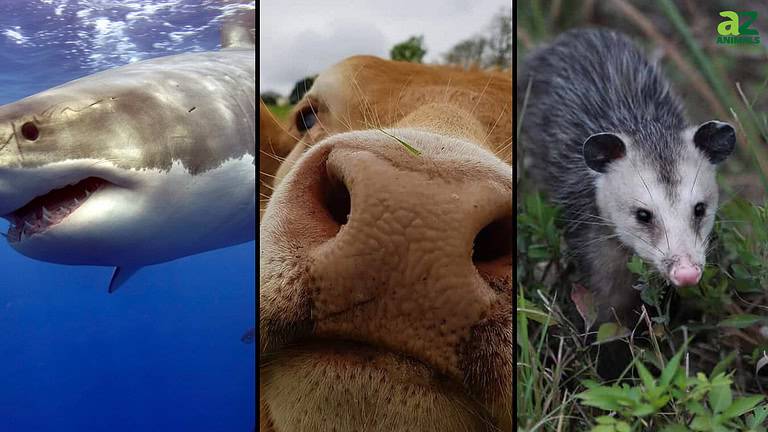
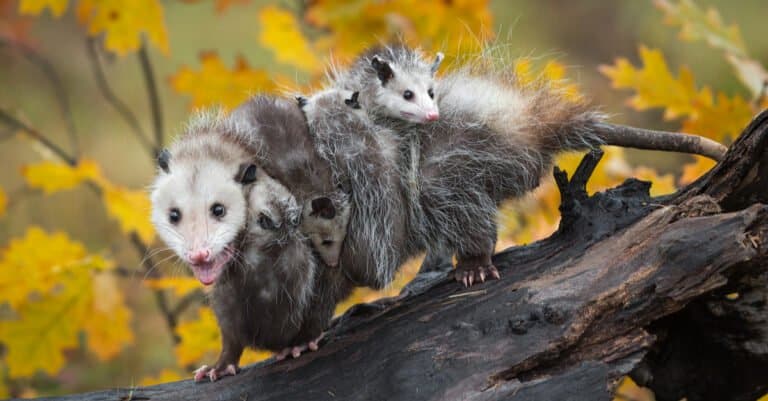
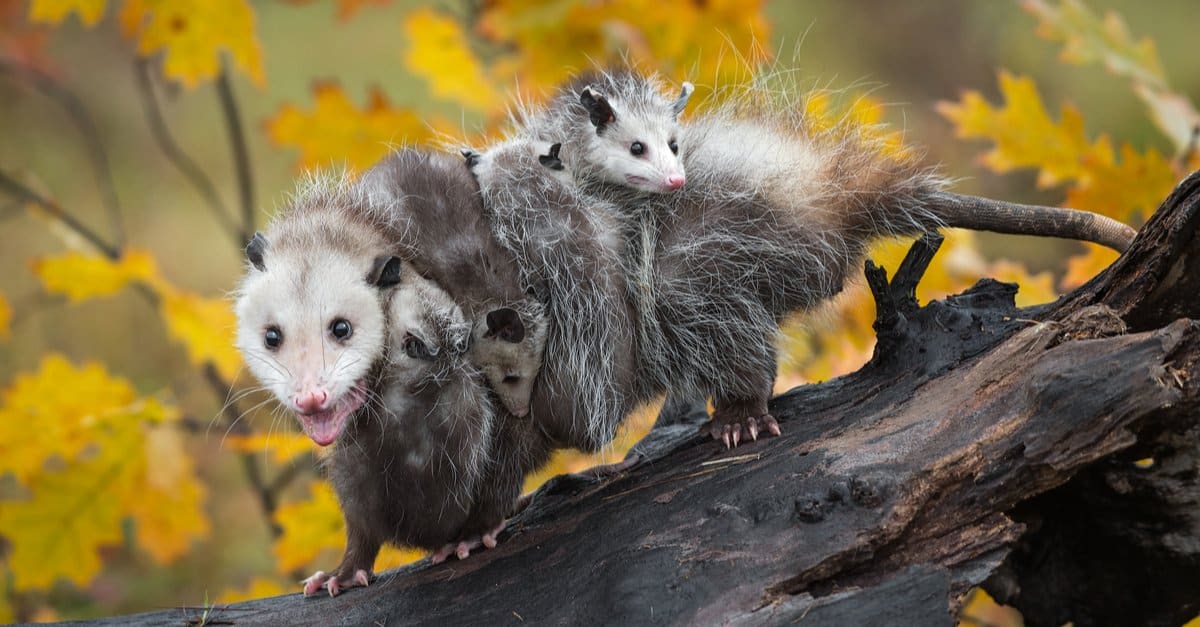
The Virginia opossum (Didelphis virginiana) can be found in most of the U.S. that is east of the Rocky Mountains and on the West Coast. They can also be spotted in Mexico, Central America, and British Columbia, Canada. Around the size of a large domestic cat, these marsupials are not that picky when it comes to habitat. They will live in deciduous forests, open woods, and farmland. However, they tend to prefer wet areas around marshes, swamps, and streams. The opossum has a prehensile tail, allowing it to grip objects, and opposable, clawless big toes that function like thumbs.
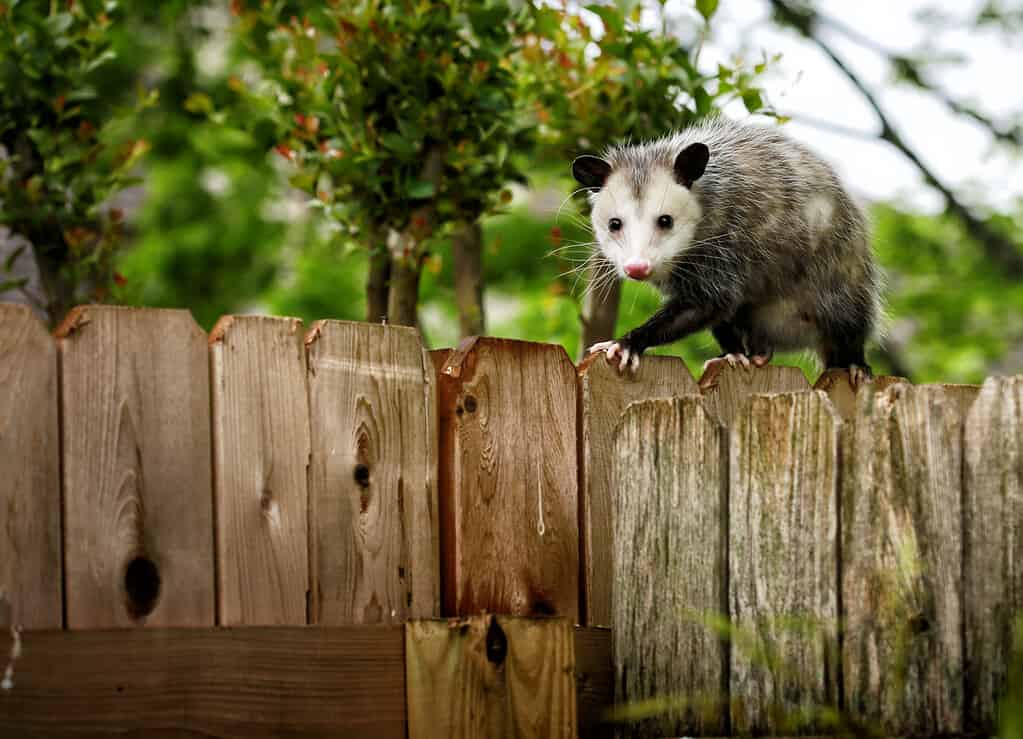
Some people think that opossums are a source of annoyance.
©galinast/iStock via Getty Images
Opossums are nocturnal omnivores and will eat just about anything they can find. This includes fruits, insects, and other small mammals. They are also skilled at surviving in both suburban and urban habitats, where they scavenge for food in garbage bins and compost heaps. Many people consider them a nuisance, but they actually provide natural pest control by eating mice, rats, cockroaches, slugs, and snails in your garden!
Chasing an opossum out of your garden can be quite an experience. When threatened, they don’t just run away—they may grunt, growl, belch, urinate, and defecate. Some will also ‘play possum’ by rolling over, drooling, and going stiff. Their breathing becomes shallow as they enter a coma-like state, which can last up to four hours.
How Do Opossums Reproduce?
Virginia opossums have a polygynous mating system, meaning one male mates with several females. Typically, they start to breed at around 10 months old. The exact breeding season varies with location. Populations living further north breed between February and September, while those further south breed from January to August. In the northern regions, they only have one litter a year, but those further south can have up to three. Before mating, the male produces a scent from a gland on his chest, which stains his fur. The females have a 29.5-day estrous cycle. Most of the time, these animals are solitary, and after mating, they resume their aggressive, solitary disposition. So far, this all sounds pretty typical for a mammal. But from now on, things get a little strange!
Unique Anatomy
Both male and female opossums have some pretty unusual reproductive adaptations. Firstly, the male has a bifurcated or forked penis. This is a common feature of marsupials and is also seen in kangaroos and koalas. But to discover the reason for this, we must look at the female anatomy. The male’s forked penis allows him to deposit sperm in both of the female’s vaginas, increasing the chances of fertilization. In fact, the female has three vaginas, but only two are used for mating. She also has two separate uteri (wombs), and three vaginas: two lateral vaginas for sperm transport and a median vagina (birth canal) that forms temporarily during birth. All three connect to the urogenital sinus, which opens to the exterior via the cloaca. Birth takes place through the median vagina.
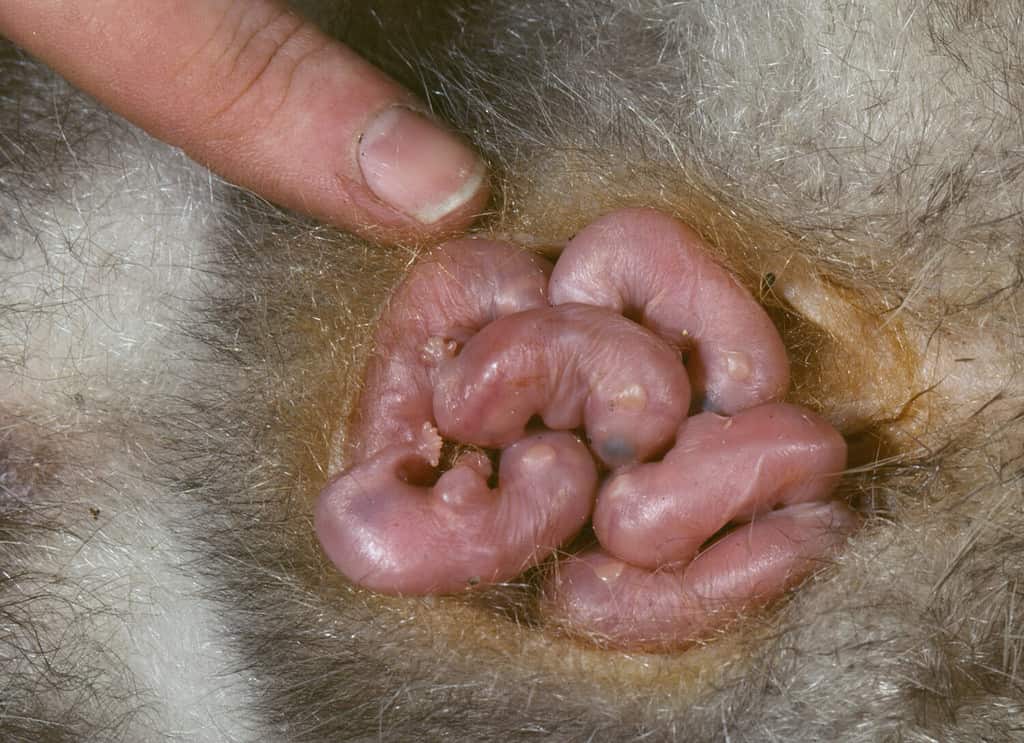
Newborn opossums are the size of a bee.
©Breck P. Kent/Shutterstock.com
It’s thought that these marsupials evolved two uteri to overcome the harsh environment where they were living. This adaptation gave these mammals the best chance of reproducing and surviving. Opossums have a relatively low sperm count, but they compensate with efficiency. In another remarkable display of symmetry, the sperm are paired, aligning their heads together while still inside the male reproductive tract. The paired sperm are ejaculated and enter the female together, remaining paired until just before fertilization. This is only seen in American marsupials, not Australian ones. It is thought that swimming together gives the sperm a better chance of reaching the egg.
The Origins of the ’Mating Through the Nose’ Myth
There is some interesting folklore surrounding opossum mating and birth. One of the most bizarre myths is that the male mates by inserting his bifurcated penis into the female’s nostrils, after which she sneezes on her genitals to impregnate herself. It was also believed that she gave birth through her nose!
This myth likely arose because the shape of the male’s penis could fit into two nostrils. Additionally, baby opossums are so tiny at birth—about the size of a bee—that the event was rarely observed. Their gestation period is just 12 or 13 days, so they do not have much time to grow! Using their muscular little front legs, they immediately crawl into her pouch. When female opossums were seen with their noses in their pouches, making sneezing sounds, observers probably assumed they were giving birth. More likely, the females were cleaning the pouch or licking the area to soothe their swollen teats. However, by then, the rumor had already spread among colonial Americans. Thanks to modern scientific research, we now know the truth!