
Quick Take
- Many animals have gestation periods longer than humans, varying by metabolism, size, and intelligence.
- Frilled sharks can gestate for up to 3.5 years due to slow metabolism.
- African elephants gestate for 22 months, the longest for land mammals.
Nine months might seem like a long time to be pregnant, but this time frame is tame for some members of the animal kingdom. Depending on the species, some animals have gestation periods that last for several years. While this may seem daunting to humans, it is normal for certain animals. There are also other reasons for these long pregnancies, not just developmental needs. Gestation periods also vary based on the animal’s intelligence and size.
Frilled Shark
Sharks typically have long gestation periods. Among the species, frilled sharks have the longest pregnancies, with some lasting up to 3.5 years. Experts believe the frilled shark’s slow metabolism contributes to its extended gestation period. As deep-sea inhabitants, these sharks naturally slow their heart rates and body functions to survive in harsh conditions.
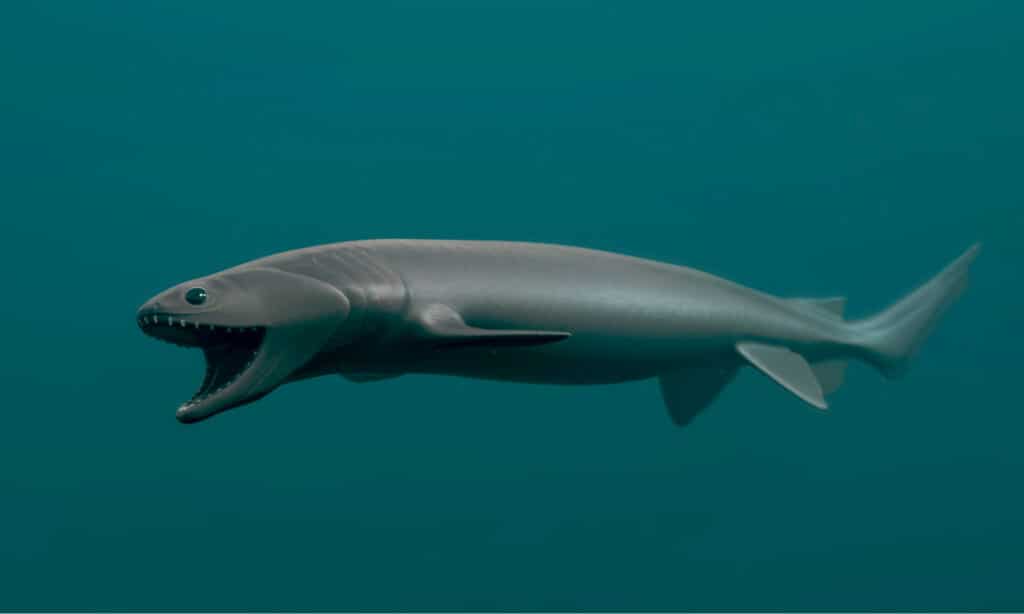
The frilled shark is rare in general, making its birth even rarer.
©iStock.com/3dsam79
When a female frilled shark gives birth, she doesn’t lay eggs. Her offspring develop within the eggs in her womb and emerge before live birth. Within her womb, they feed on their yolk sacs, which provide nutrition until they’re born. One litter contains anywhere from six to 12 pups, which is relatively small compared to some other marine species. This is why sightings of frilled sharks in the wild, particularly during live births, are extremely rare.
Sperm Whale
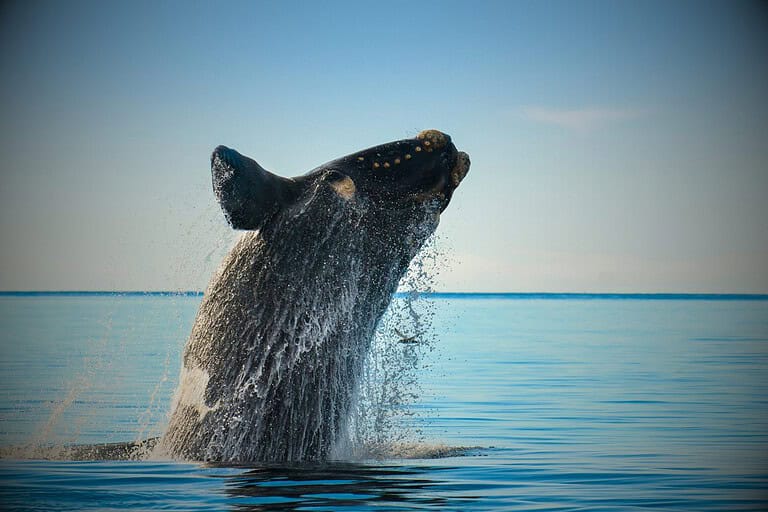
Due to its size, the sperm whale has a gestation period of 15 to 18 months. Sperm whales also have a slow birth rate, with females giving birth only once every five to seven years. This makes the birth of a new calf remarkable, as only one is born after such a long pregnancy.
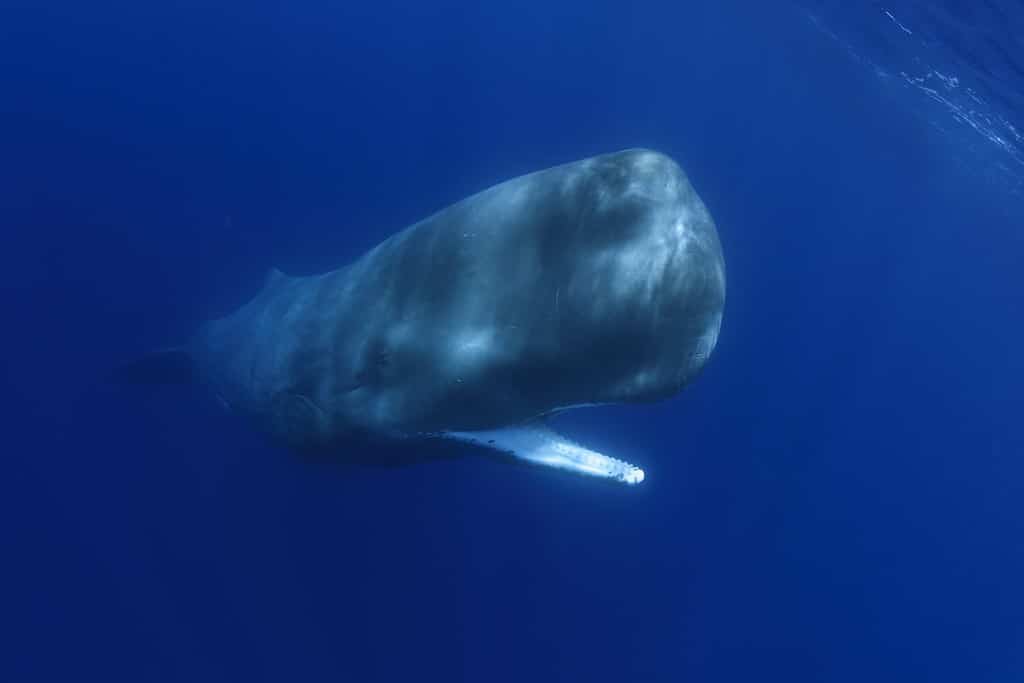
Sperm whales bond with their young for a significant period of time.
©Thierry Eidenweil/Shutterstock.com
Mothers nurse their calves for the first few years of their lives, slowing growth. This time is crucial for both bonding and calf development. It’s another reason why protecting whales as a species is essential, because motherhood is long and arduous for a sperm whale.
Rhino
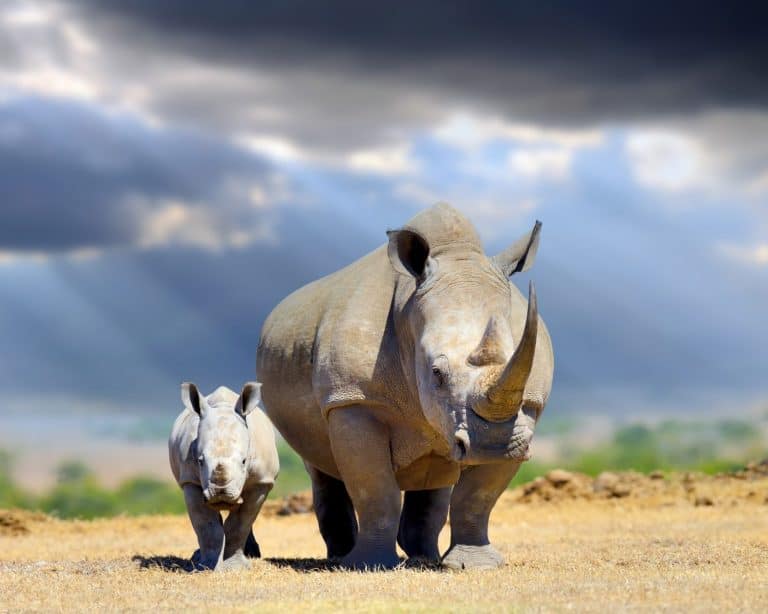
The gestation period for a rhino depends on its species. White rhinos are typically pregnant for 16 to 18 months, while Indian and black rhinos have slightly shorter pregnancies at 15 to 16 months. This is one of the longest gestation periods of any land animal, and it’s not an easy pregnancy.
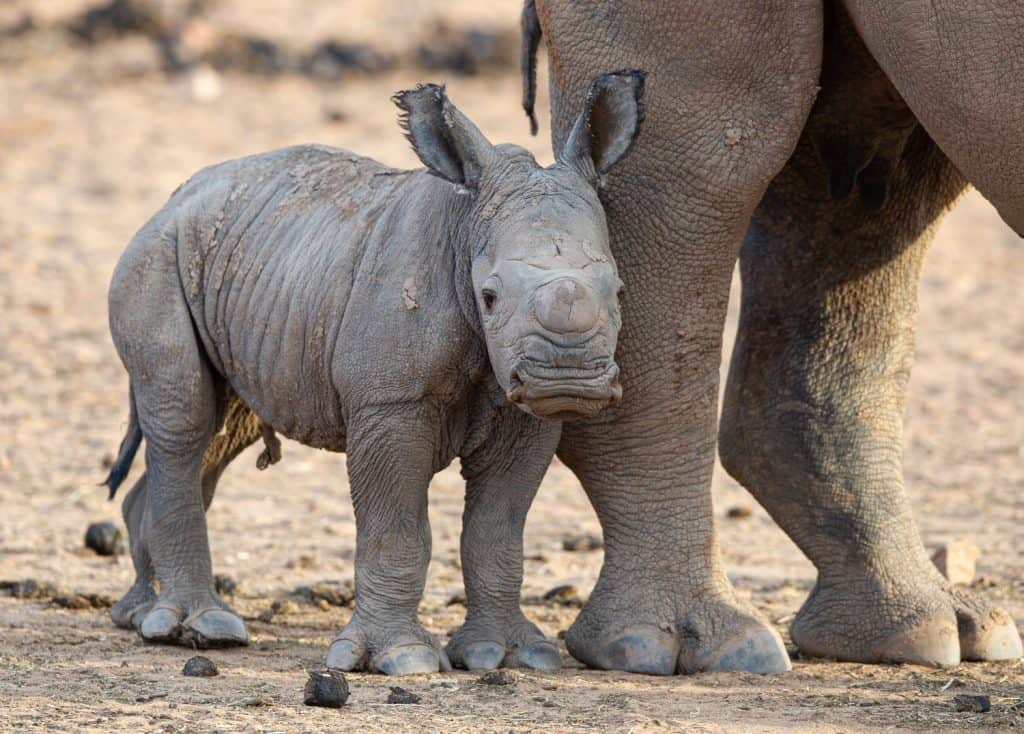
Rhinos are large at birth, making these pregnancies more challenging than those of other species.
©PrimEye/Shutterstock.com
During this time, the fetus develops inside the mother’s womb and grows to a substantial weight. When a female rhino gives birth, her offspring can weigh 88 to 143 pounds. This long gestation period also allows newborn rhinos to develop fully before birth. Doing this gives them the best chance of survival in the wild, especially given the environments rhinos inhabit.
Walrus
Walruses have unique pregnancies because implantation does not happen immediately. Instead, the fertilized egg floats freely for several months before developing. Whereas most species have eggs that embed in the uterine wall shortly after conception, a walrus’s pregnancy is designed to ensure favorable birthing conditions. This means pregnancy can last 15 to 16 months for a female.
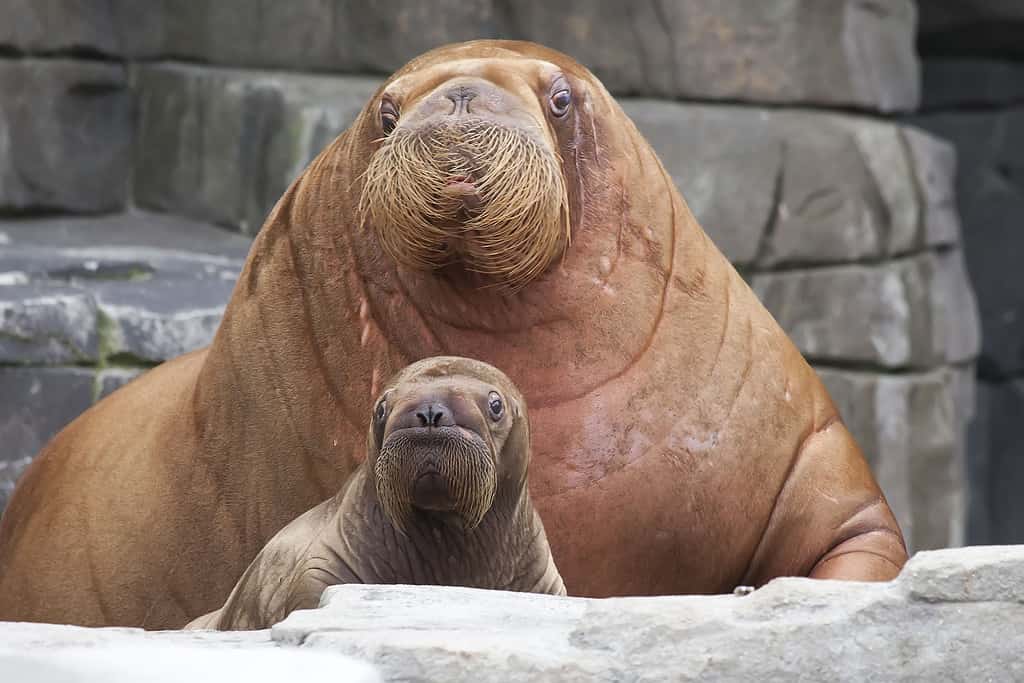
A walrus pup is nursed for two months after it’s born.
©thirtydry/iStock via Getty Images
Calves are born between late April and early June, and mothers continue nursing up to two years after giving birth. A female gives birth to one calf at a time, which is why the environmental conditions of her labor are so crucial to the survival of her offspring. If a calf were born during the harsh winter months, its chances of survival would be very low, making all those months of development futile.
African Elephant
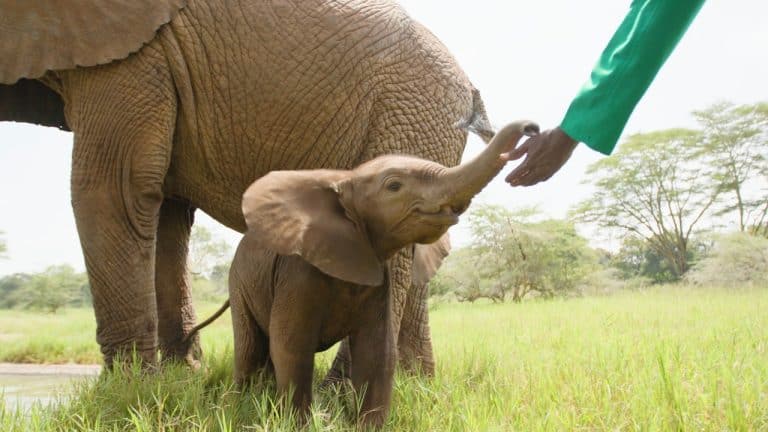
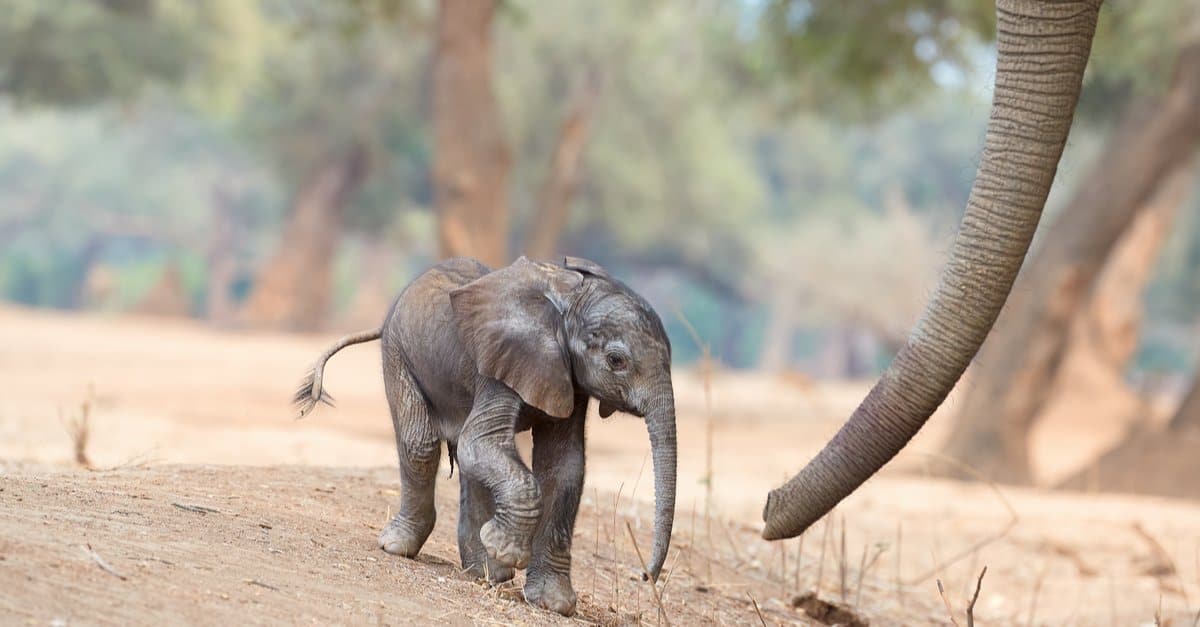
Elephants have significant gestation periods, but the African elephant remains pregnant for a whopping 22 months. This gives them the longest pregnancy of any terrestrial mammal. During this time, a calf can grow up to 260 pounds, which doesn’t make pregnancy easy for an elephant. Elephant pregnancies produce only one calf, which is why the species’ population growth is so slow.
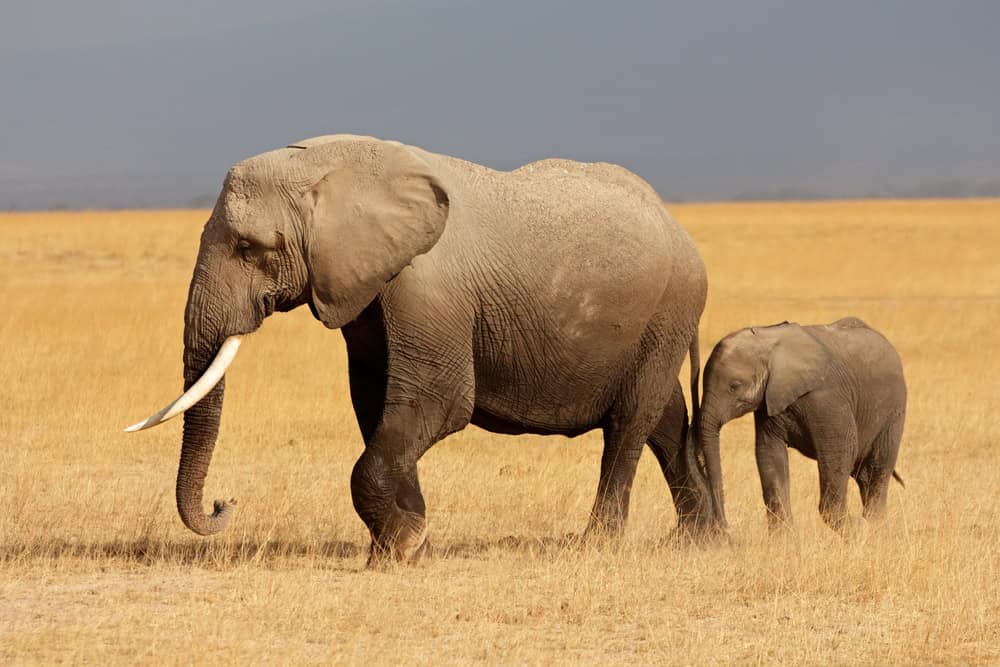
African elephants remain pregnant for 22 months, during which time they support body and brain development.
©EcoPrint/Shutterstock.com
Elephant calves are born during the rainy season, and typically at night. This gives the calves the best chance at survival and also ensures there’s plenty of food for a growing herd. Interestingly, an elephant’s gestation period isn’t solely due to its size. Brain development also plays a role, as elephants have more sophisticated brains with higher levels of intelligence that take time to develop.
Giraffe
While not as long as some others, giraffes still have a significant gestation period. Their pregnancies last 13 to 15 months, and by the time they give birth, their calves are already six feet tall. This long gestation period accounts for the time it takes for calves to be almost fully developed at birth.
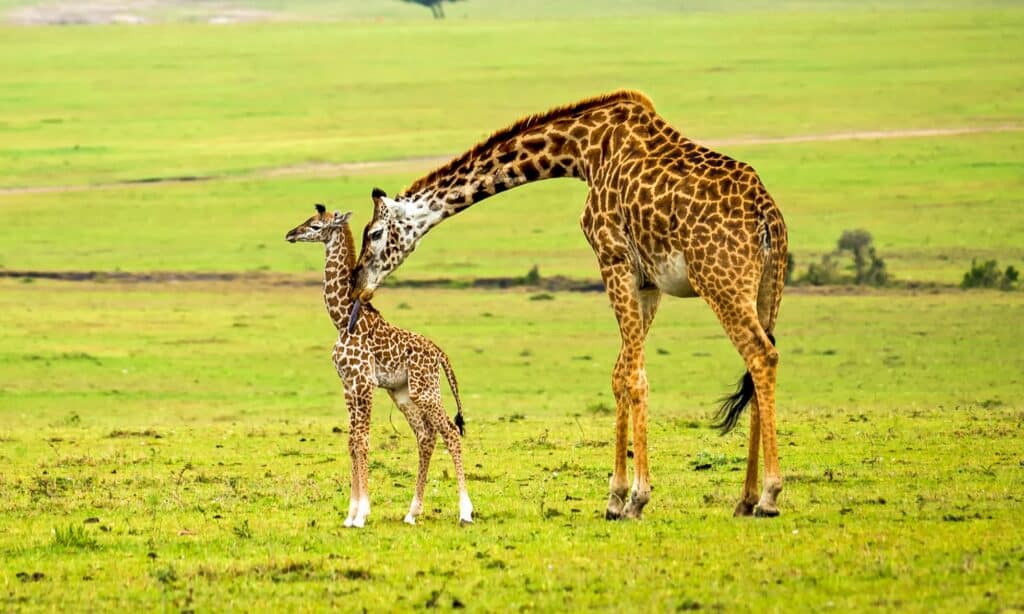
Female giraffes give birth while standing up to ensure the survival of their young.
©iStock.com/miroslav_1
Giraffes have an especially challenging labor, as well. Rather than giving birth lying down, they give birth while standing up. This is done to protect the calf’s neck and to allow its legs to emerge feet-first. Within the first day of life, calves can stand on their own, a testament to their mother’s endurance.
Camel
Camels have a slightly shorter gestation period, lasting 12 to 15 months. During this time, their offspring develop enough to survive and withstand harsh environmental conditions. The life of a camel traversing the desert means their offspring must be prepared from the moment they’re born.
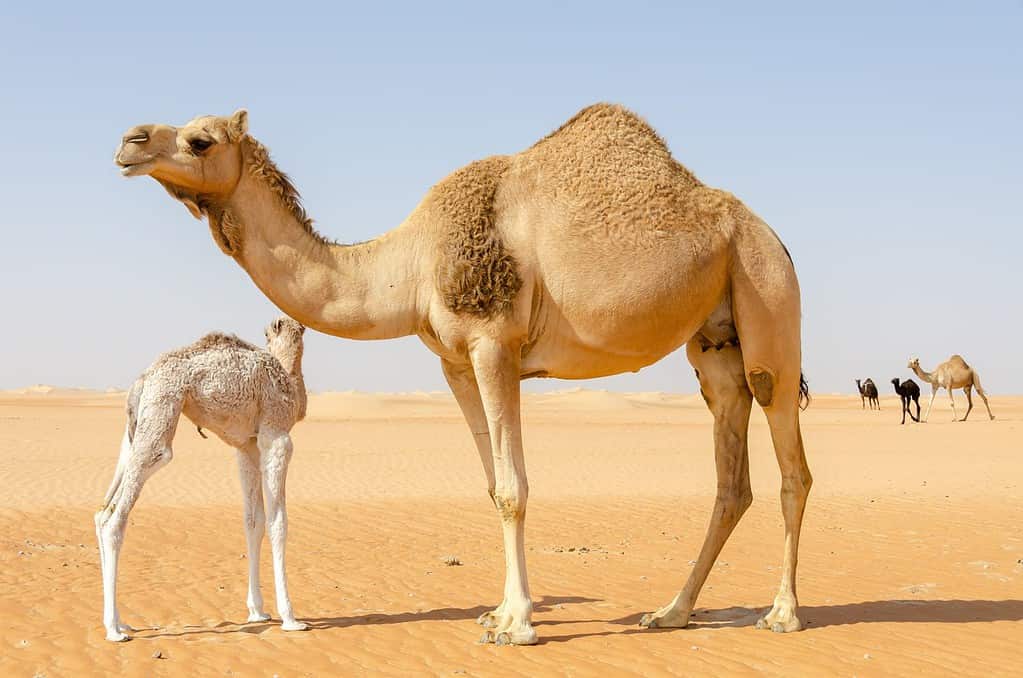
A female camel remains with her young for the first two weeks before they return to their herd.
©Lotta Axing/Shutterstock.com
Because of this, a female camel typically only gives birth once every other year. She has only one offspring, which she nurses for 10 to 18 months. Two weeks after the calf is born, she and her baby return to their herd, where the calf will integrate with the group and learn to forage. This is also how they learn the social hierarchy, which they join when they mature at age seven.
Manatee
The average gestation period is about 13 months, but it can last up to 14 months in some cases. Manatees have only one calf at a time and reproduce only once every two to five years. In some rare cases, twins are possible. This, combined with the fact that manatees remain with their young for the first two years, results in extremely slow reproductive rates.
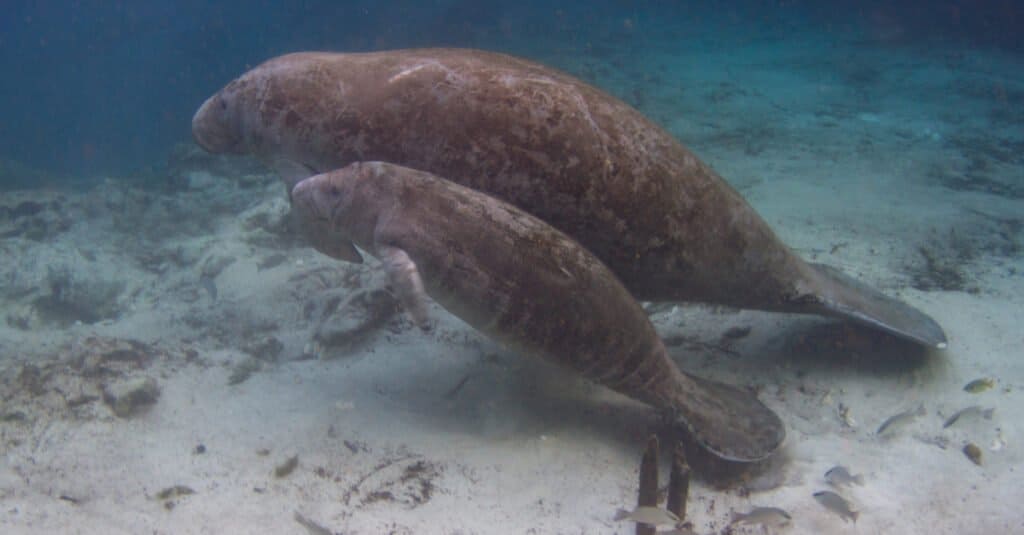
Female manatees stay with their calves for the first two years of their lives.
©Peter Douglas Clark/Shutterstock.com
While the gestation period of a manatee is considered average for most mammals, its slow rate is what makes it so significant. Manatees don’t reach sexual maturity until four or five years old, which means reproduction, as a whole, takes much longer. This, combined with a year or more of pregnancy and the ability to give birth only once every five years, makes their gestation periods among the longest.
Black Alpine Salamander
A year is one thing, but black alpine salamanders can be pregnant for several years. Their gestation periods range from 2 to 4 years, depending on environmental conditions. The altitude at which they live is a significant factor in determining when they give birth. A black alpine salamander living at a lower elevation has a shorter pregnancy, while those inhabiting higher elevations may remain pregnant for up to four years.
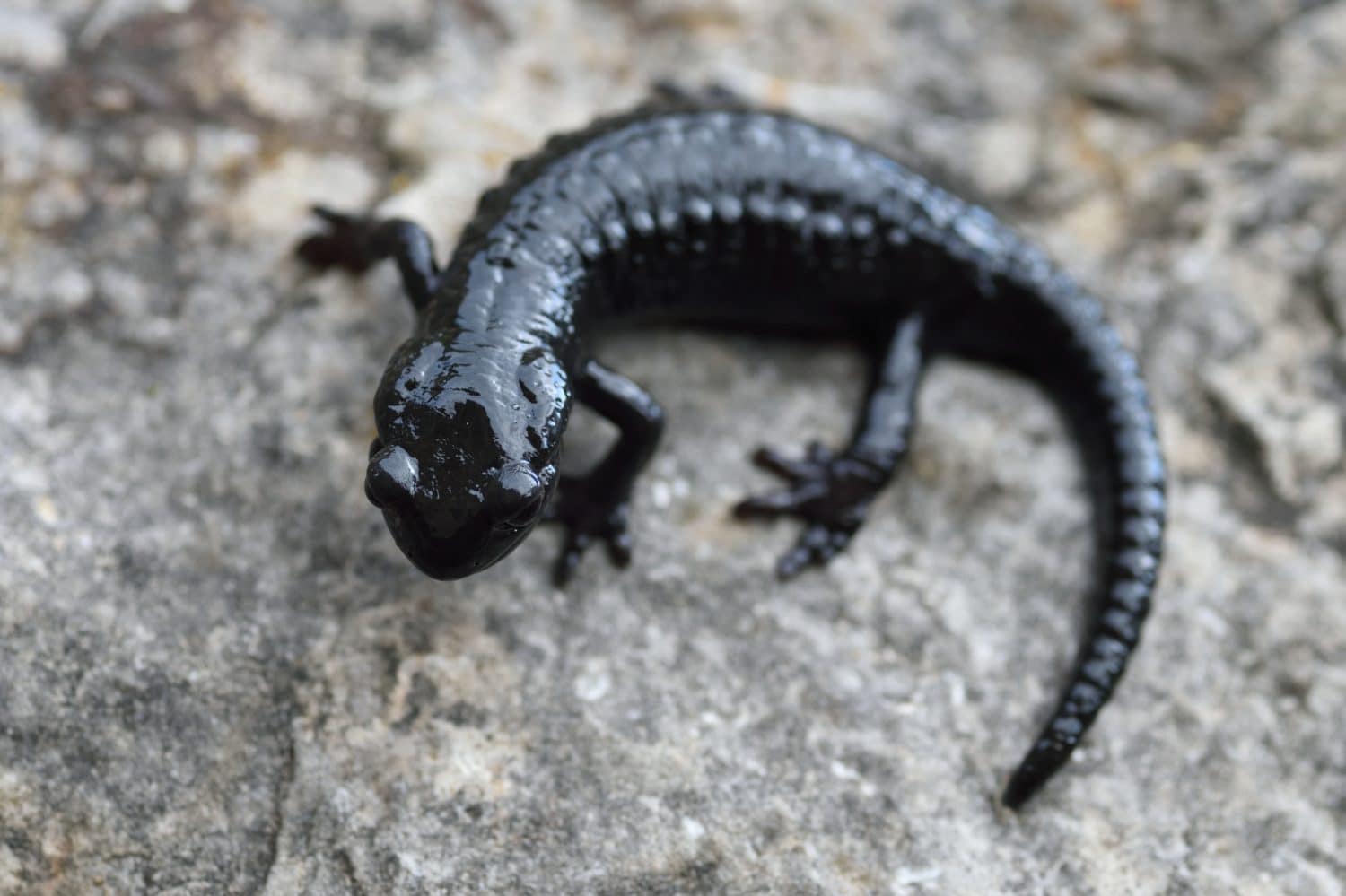
Black alpine salamanders have unusual births compared to most amphibians.
©Matteo photos/Shutterstock.com
Additionally, black alpine salamanders have only one or two offspring per pregnancy. They’re born fully developed, unlike most amphibians, which lay eggs that hatch into larvae. Since these salamanders live in the European Alps, pregnancies can last up to five years at the highest elevations.
Orca
The long gestation period of an orca contributes to its threatened status. Their pregnancies can last 15 to 18 months, with an average of 17 months. Their birth rates are not seasonal; therefore, calves are born whenever they are fully developed inside their mother’s womb.
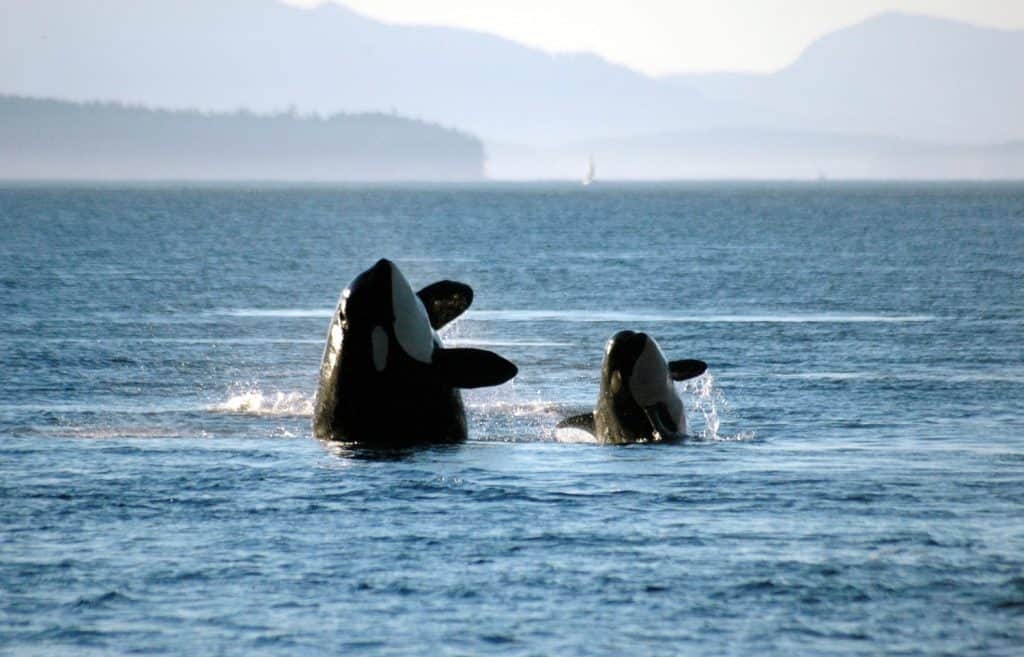
Some orcas go up to ten years without reproducing.
©Monika Wieland Shields/Shutterstock.com
Orcas have only one calf at a time, and some females can go up to ten years before having more offspring. Typically, the time between pregnancies ranges from three to five years. However, this depends on environmental conditions, the pod’s strength and health, and the mating season. Calves can weigh more than 350 pounds at birth and are born in the ocean with all of their appendages, including a dorsal fin.