
Quick Take
- Joeys are born extremely underdeveloped and continue growing inside the pouch. Explore the unique anatomy →
- A kangaroo can be simultaneously pregnant, nursing a newborn, and raising an older joey at the same time. See how simultaneous pregnancies work →
- Kangaroos can hit 'pause' on a developing pregnancy to pause it until the conditions are suitable for it to resume. Discover embryonic diapause →
- This reproductive system helps kangaroos cope with drought and unpredictable food supplies. See the survival strategy →
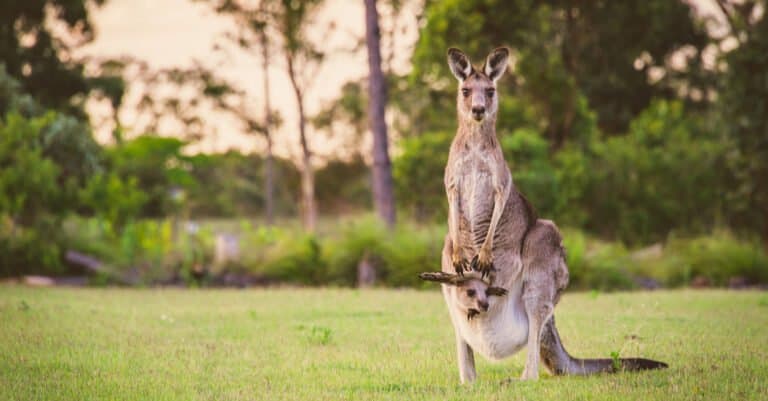
Kangaroos are the iconic Australian animals that are famous for their ability to carry their young around in a pouch on their front. However, they actually have one of the most unusual reproductive systems in the world. This is because they can support several young at the same time while they are at different stages of development. At any one time, they can have a joey outside the pouch, a younger one inside it, and an embryo waiting in the uterus. Learn how this helps them to survive in Australia’s harsh environment!
Kangaroos Can Carry Multiple Babies
As marsupials, female kangaroos have an unusual anatomy that allows them to support multiple young at the same time. This is because they actually have not one, but three vaginas. This complex system is very different from that of other mammals, but it allows kangaroos to be essentially pregnant all the time.
To allow this to happen, kangaroos also have two uteruses – one on each side. The corresponding vaginas carry sperm to each of these side uteruses. As they have two uteruses, they can support embryos at different stages of development at the same time. The third vagina is located in the middle and forms the birth canal for the delivery of the joey. Rather than raising one joey at a time, this unique setup allows kangaroos to overlap the different stages of reproduction.
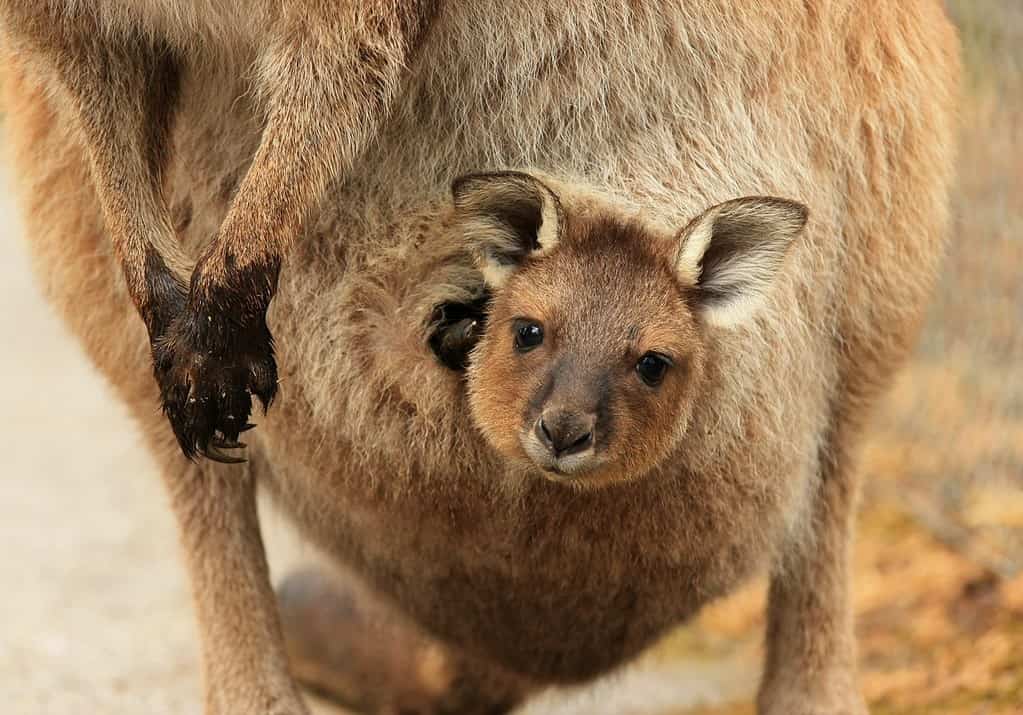
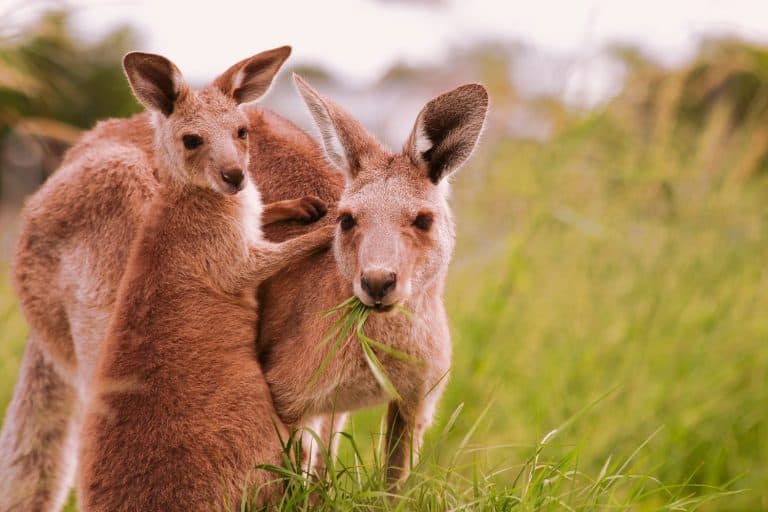
Baby kangaroos are born after just one month of gestation.
©K.A.Willis/Shutterstock.com
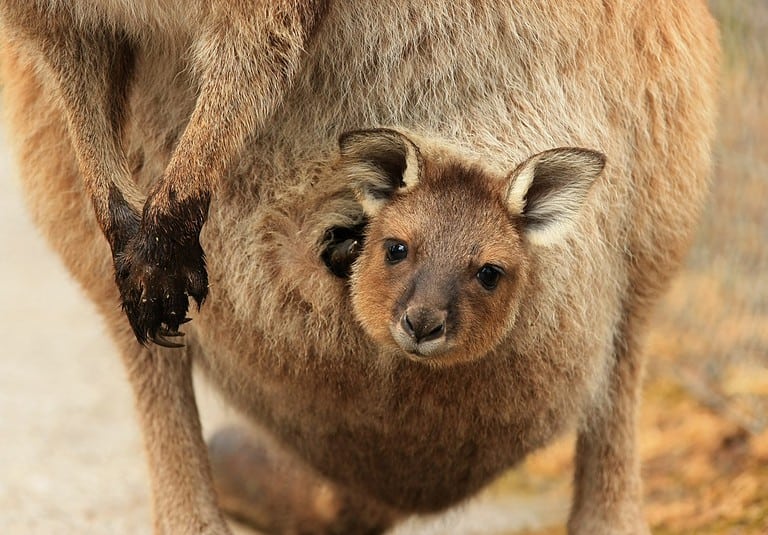
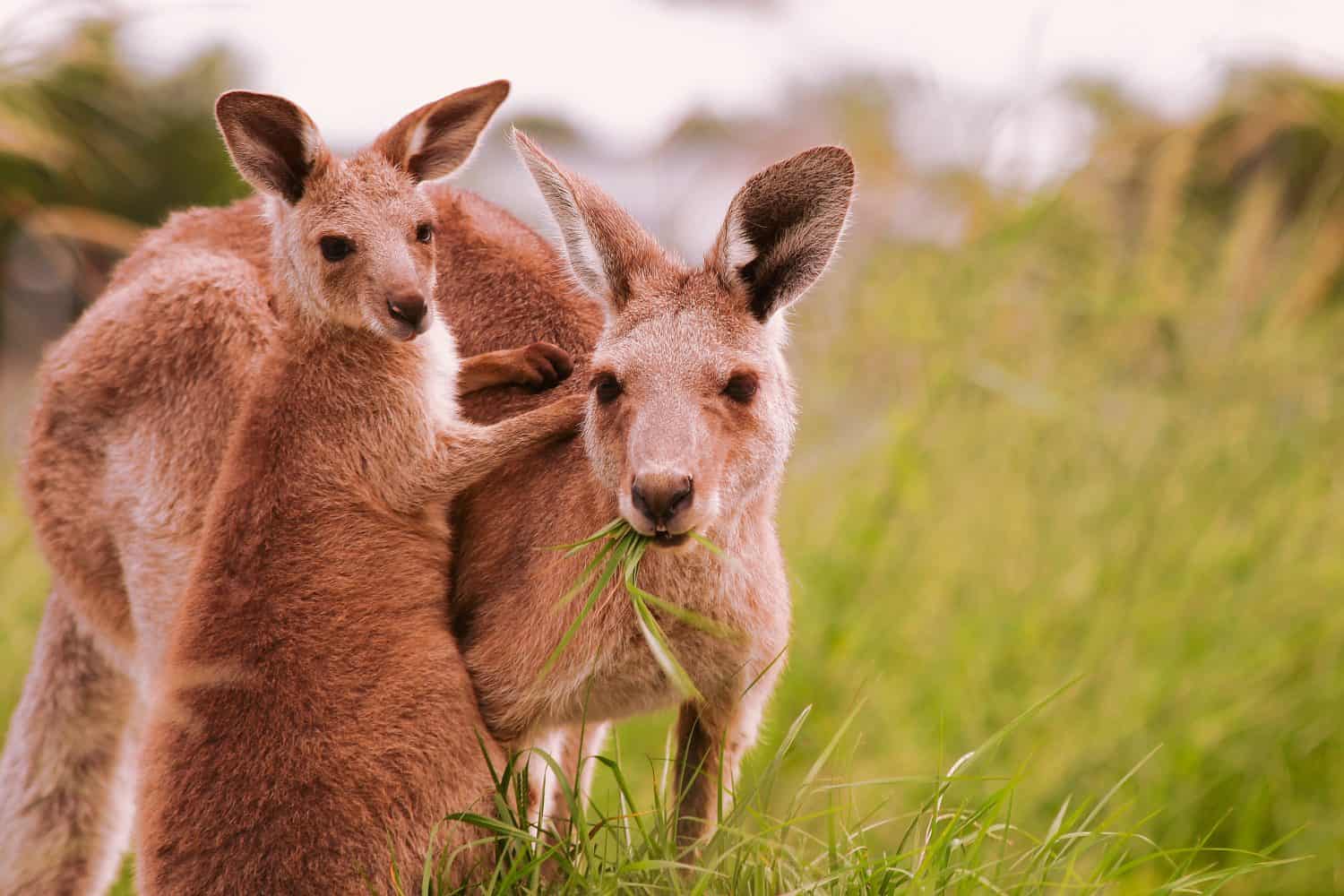
Joeys are born extremely underdeveloped after a gestation period of just 28 to 33 days. As a result, they are approximately the size of a jellybean at birth. After birth, the tiny joey crawls into its mother’s pouch, where it will remain for several months. Once in the pouch, the joey attaches itself to one of the mother’s teats. To help the joey suckle and remain secure in the pouch, the teat swells inside the joey’s mouth, forming a tight seal. The joey remains completely attached to the teat for around two months. However, it will stay in the pouch and nurse for up to eight months before beginning to explore outside. A female kangaroo can have a joey in the pouch, an older offspring outside the pouch that is still suckling, and another embryo developing in her uterus—all at the same time.
How Kangaroos Pause a Pregnancy
Being able to rear multiple joeys at the same time is just one part of a kangaroo’s unusual reproductive system. This is because they can pause a pregnancy for up to 11 months. This is known as embryonic diapause.
Embryonic diapause is a strategy where the development of the embryo is paused at the blastocyst stage instead of implanting. It can be held within this paused or “dormant” stage for anything from a few days to several months. Embryonic diapause only ends when the conditions are right for the pregnancy to continue. This is typically achieved when the joey in the pouch stops suckling. This can be because it is ready to leave the pouch or because it has died. When the suckling stops, the levels of the hormone prolactin also drop. This triggers the end of the embryonic diapause and leads to the implantation of the embryo.
Because kangaroos have two uteruses, one can contain a developing embryo while the other holds a dormant, fertilized embryo. This means embryonic diapause does not always depend on waiting for a joey to leave the pouch.
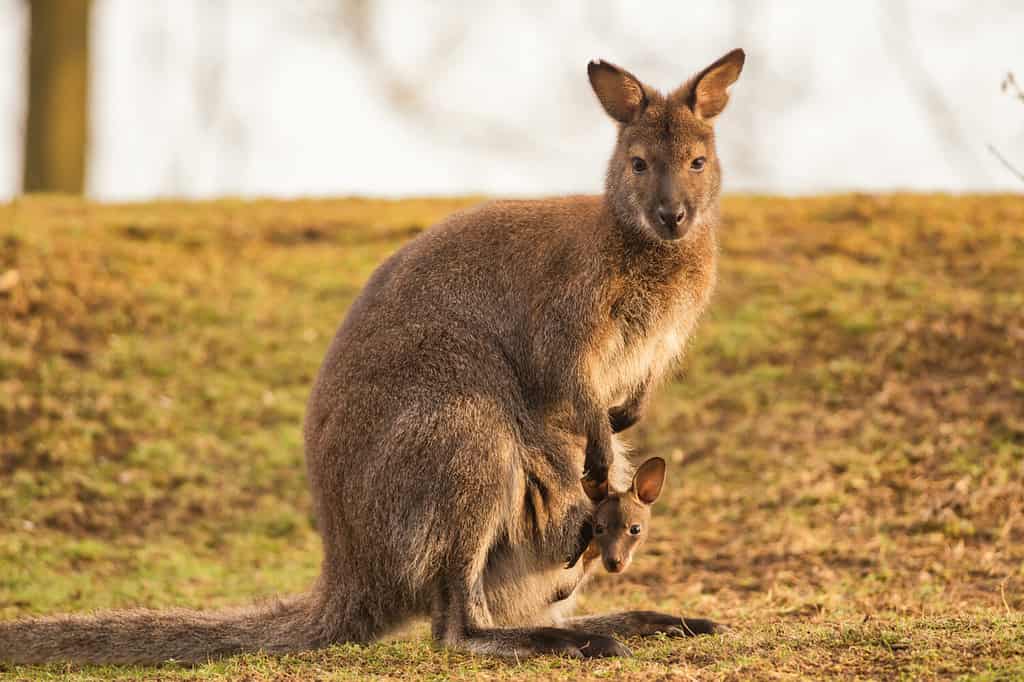
Kangaroos can pause their pregnancy for up to 11 months.
©Nick Fox/Shutterstock.com
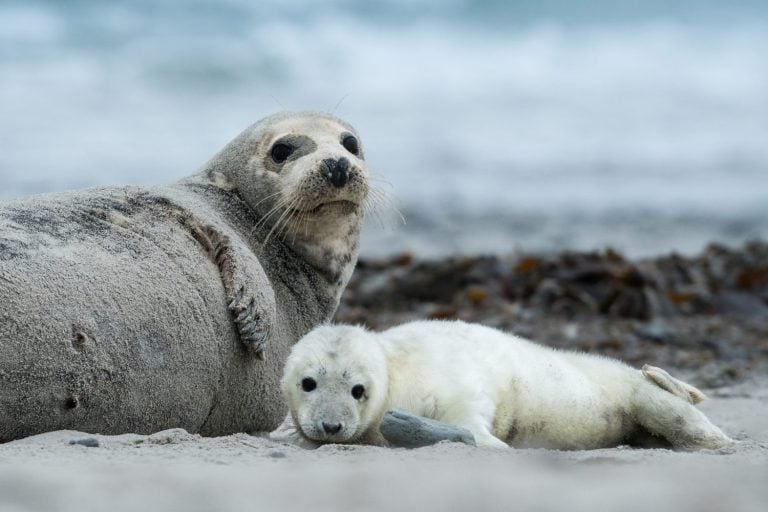
Kangaroos aren’t the only animals capable of embryonic diapause, though. As well as other marsupials, embryonic diapause is also achieved by some species of rodents, bears, seals, mustelids, deer, armadillos, and anteaters. However, in these cases, implantation is usually delayed to ensure that the young are born at a specific time of year. This is often at the start of spring, when the weather is warmer, and food is more abundant.
Why Does This System Work So Well?
Although the reproductive system of a kangaroo might seem quite complicated, it’s actually an extremely useful adaptation that allows them to thrive in Australia’s harsh environment. Animals in Australia often face challenges like drought and food scarcity. These conditions put significant pressure on female kangaroos, especially when nursing, as producing milk is energy-intensive. They must support both themselves and their young.
The ability to produce enough milk is vital, as kangaroos produce two different types of milk simultaneously. This allows them to meet the nutritional needs of both the newborn in the pouch and the joey outside it. A lack of food can mean that the female kangaroo is unable to produce milk. This can be a double blow if she is supporting two joeys—one in the pouch and one outside of it.
Embryonic diapause allows a new pregnancy to be delayed until food shortages or other pressures have passed, ensuring the female is strong enough to support another joey. It also enables a quick replacement if a joey dies, minimizing gaps between births. By being able to quickly replace a joey, the chances increase that at least one offspring will survive to adulthood.