
Being a mother is a tremendous accomplishment and one of the most challenging jobs in the world. This applies even in the animal kingdom, where it can be a literal dog-eat-dog world for many species. Obstacles such as defending territory, protecting young from predators, and finding food and shelter often add to an animal’s hardships.
For those with large litters, overcoming these obstacles becomes tenfold more difficult. However, these animals aren’t just rising to the challenge. They also excel at mothering large families, with some doing it more than once.
Tailless Tenrec
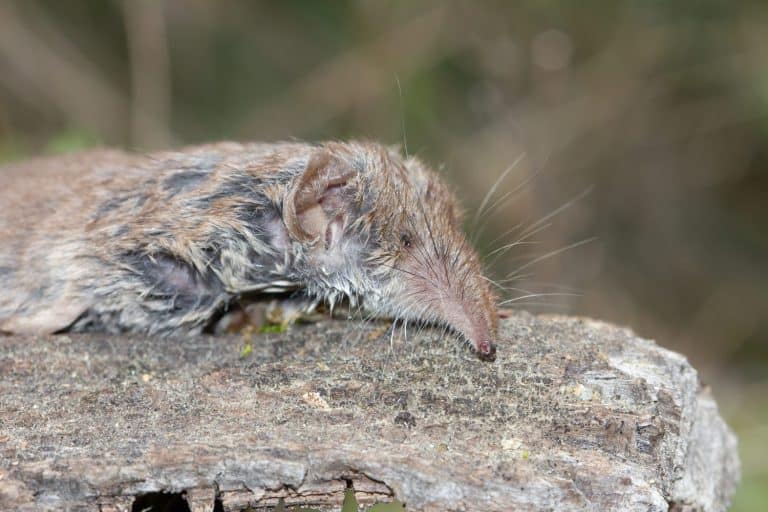
The tailless tenrec lives primarily in Madagascar, where it breeds one of the largest litters of any terrestrial mammal. This shrew-like animal only grows to 15.5 inches, yet it can give birth to 20 offspring at a time. Its gestation period is short, lasting only 54 to 64 days, but culminates in an entirely new colony of tailless tenrecs.

Tailless tenrecs are small, but produce mighty litters.
©Dimitri Coutandy/Shutterstock.com
Female tailless tenrecs are able to raise such large litters because they are well-equipped to be mothers. They’re born with up to 32 teats, which is more than any other mammal on earth. This makes it easier to feed babies at once, ensuring the survival of each annual litter. Although the mother is likely exhausted after each birth, she can rest easy knowing her babies have immediate access to food.
African Driver Ant
Many insects are known for their tremendous egg-laying abilities, but the African driver ant tops them all. A “small” litter from this ant is typically in the 10,000s, but they can lay up to two million eggs at a time. This is how their colonies flourish and produce nearly an infinite number of sterile female worker and soldier ants.
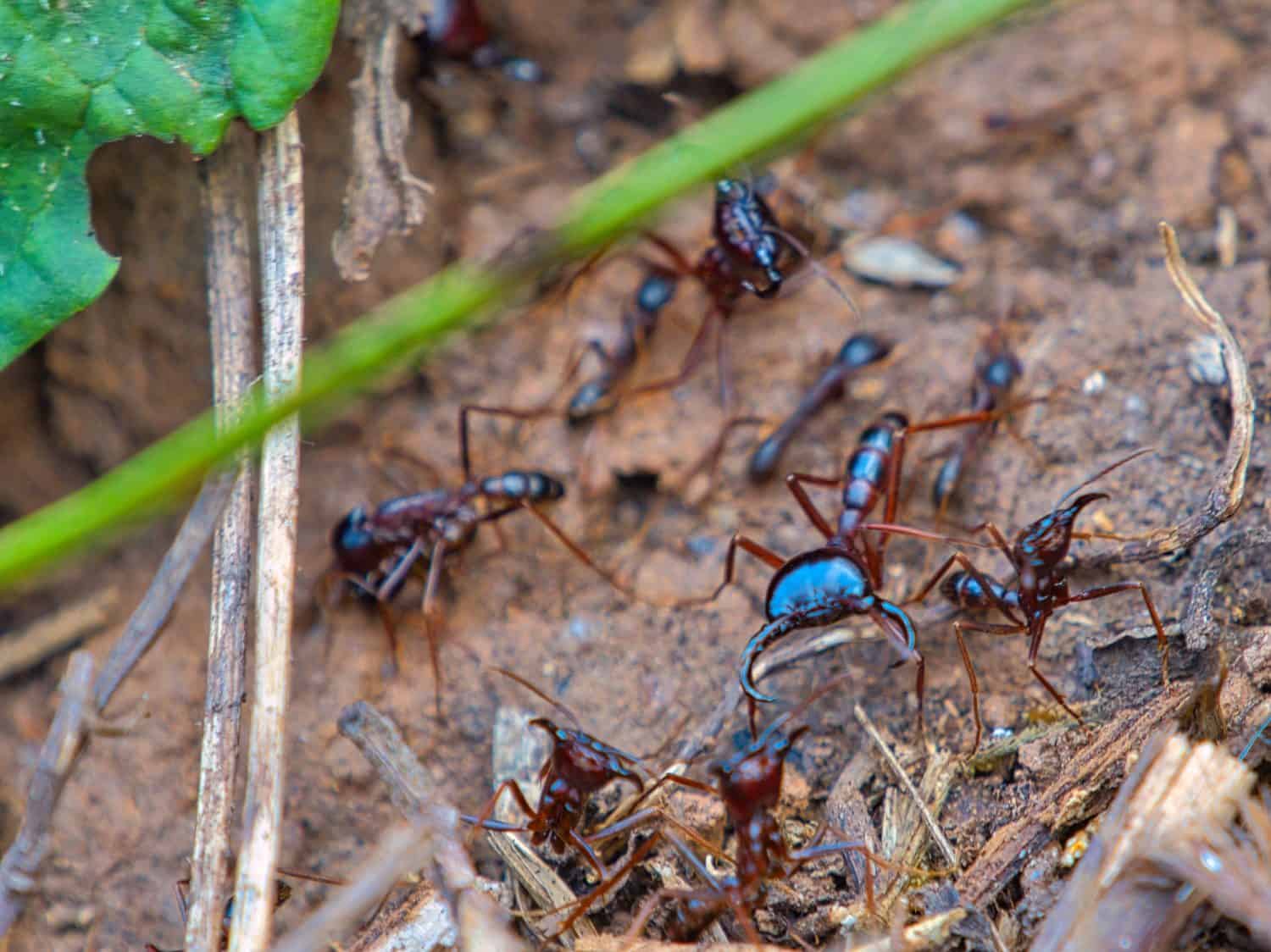
African driver ants can lay millions of eggs at a time.
©LensShift/Shutterstock.com
As with many insect colonies, African driver ants have a queen who is essentially responsible for all colony reproduction. Her primary job is to ensure the colony’s population and strength. While this is not an easy task, it allows her to focus solely on laying eggs, as other ants handle the remaining responsibilities.
Ocean Sunfish
The ocean sunfish might have a reputation as one of the largest fish in the world, but it also has one of the largest litters. One female ocean sunfish can produce a clutch of up to 300 million eggs. Given the large size of this vertebrate, such a high number of eggs might seem surprising. However, this large clutch size is necessary because so many predators prey on its eggs.
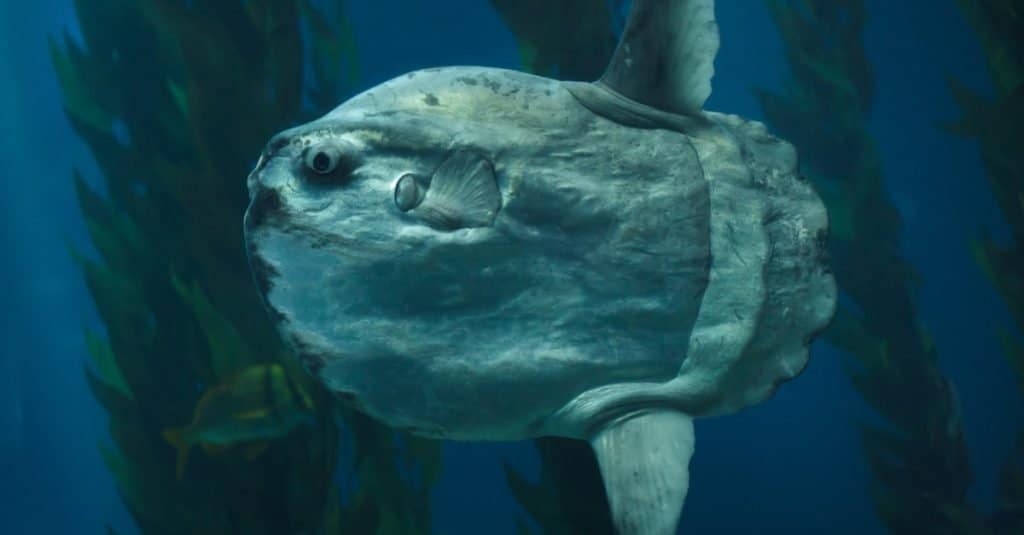
The ocean sunfish has large egg clutches to increase its survival.
©Vladimir Wrangel/Shutterstock.com
Broadcast spawning is another reason the ocean sunfish lays so many eggs at once. This increases the likelihood of fertilization. As females release eggs into the water, they’re fertilized by sperm that males also release. When the eggs and sperm meet in the water, fertilization occurs, increasing the chances that embryos will develop. While it’s less effort for females than a live birth, producing millions of eggs at one time is no small feat.
Naked Mole Rat
The litter size of a naked mole rat varies wildly depending on the size and age of the female. As she grows, she can accommodate more offspring, and litter sizes may reach 27-30 pups. The average is around 11 pups at once, which is still quite significant compared to other mammal litter sizes.
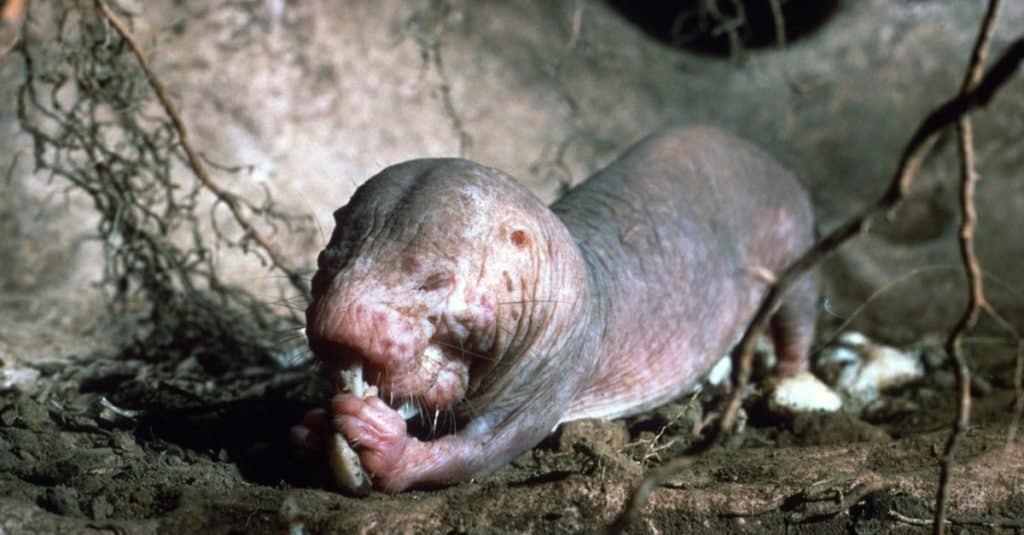
For their small size, naked mole rats can give birth to an impressive litter.
©Neil Bromhall/Shutterstock.com
While it’s not surprising that a rodent such as this has a large litter, it’s still impressive. Since the naked mole rat has only about 12 mammary glands, but her litter size can be twice that number, feeding all the pups can be a challenge. Regardless, females still find a way, and many focus on feeding their young in shifts to ensure each one survives.
European Rabbit
Another rodent with a large litter size is the European rabbit. Rabbits are known for quick procreation, but they also give birth to large litters, adding to their large population numbers. While the average litter size is around 5 to 7 kits, they can have as many as 12 in one litter. They can also breed multiple times in one year, which only adds to their numbers.

European rabbit litters vary in size, but they reproduce quickly.
©neil bowman/iStock via Getty Images
With a short gestation period of one month or less, European rabbits grow their families quickly. Females can do this because they spend little time with their young. Mothers stay with their kits for only a few minutes each day during the first week or so to feed them, but the young are mostly on their own from birth.
Arctic Fox
The litter size of an Arctic fox is heavily dependent on its environment and access to food. When food sources are low, litter sizes tend to be smaller. When food is abundant, females can potentially give birth to up to 25 pups at once. The average litter size is 5 to 8, but this varies from season to season.

Both mom and dad help raise Arctic fox pups.
©iStock.com/Alexey_Seafarer
Thankfully, Arctic fox moms don’t raise their young alone. Males help rear the pups, which takes some of the pressure off mom to do it herself. Both parents play a role in finding food and providing shelter for their litter. This not only ensures the survival of each generation but also prevents females from becoming exhausted after such a large birth.
Grey Partridge
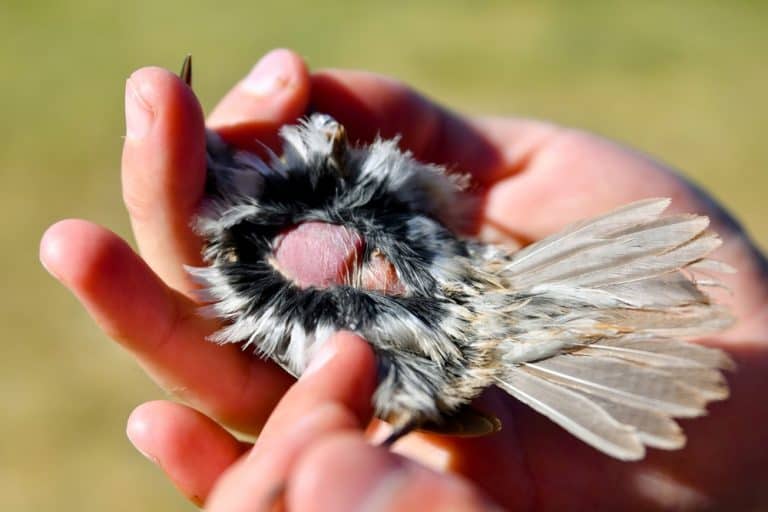
The average egg clutch size for most birds is 3 to 5 eggs. While this varies by species, the gray partridge still exceeds most. On average, this bird lays 13 to 16 eggs at a time, but can lay up to 22 if conditions are favorable. Gray partridges are smaller than the average crow and can weigh less than one pound, which makes this feat even more impressive.
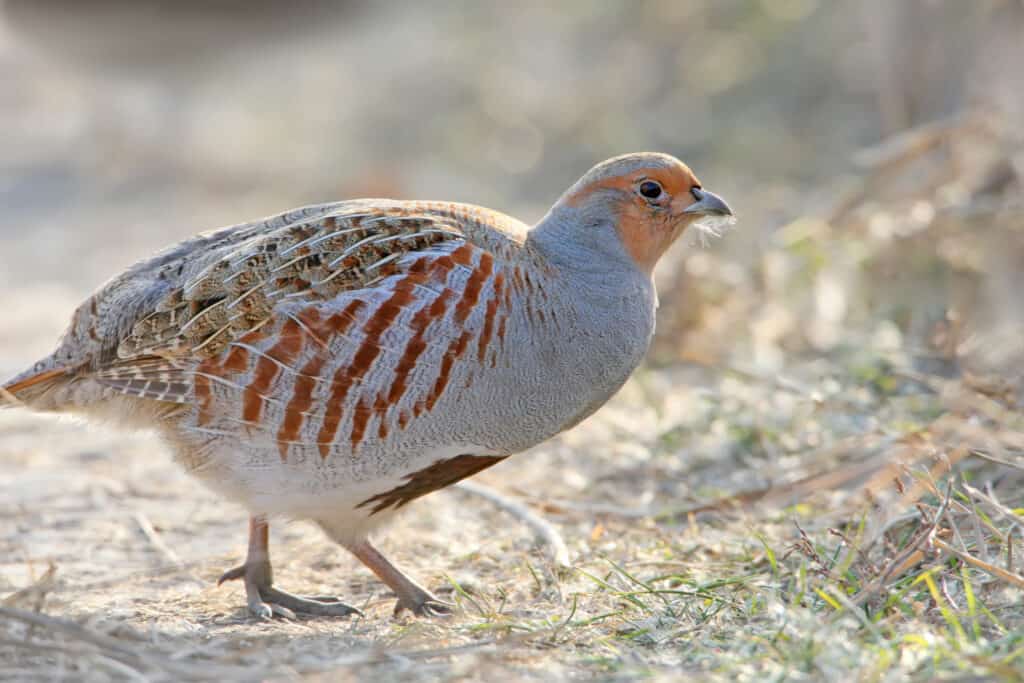
As a ground-dwelling bird, the gray partridge must carefully guard large egg clutches.
©Voodison328/Shutterstock.com
The reason for so many eggs is to ensure the best survival rate. The gray partridge is a ground-nesting bird whose eggs are vulnerable to predation. Because grey partridges have short lifespans, large clutches are necessary to maintain their population. Sadly, not all the eggs will survive, leaving an average number of newly hatched chicks by the end of the incubation period.
Seahorse
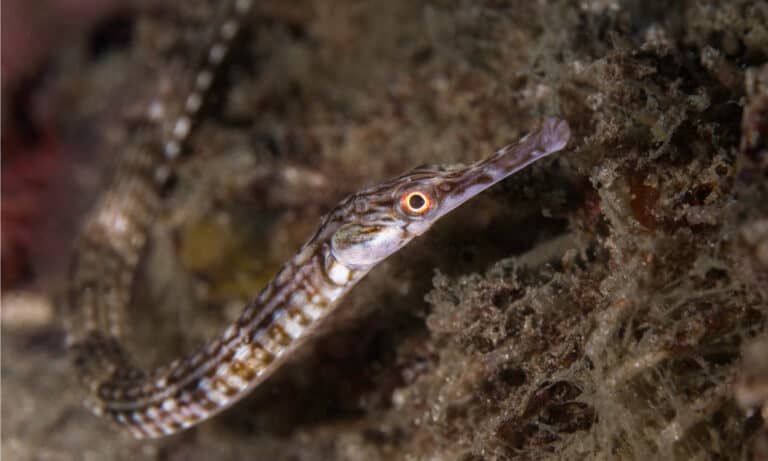
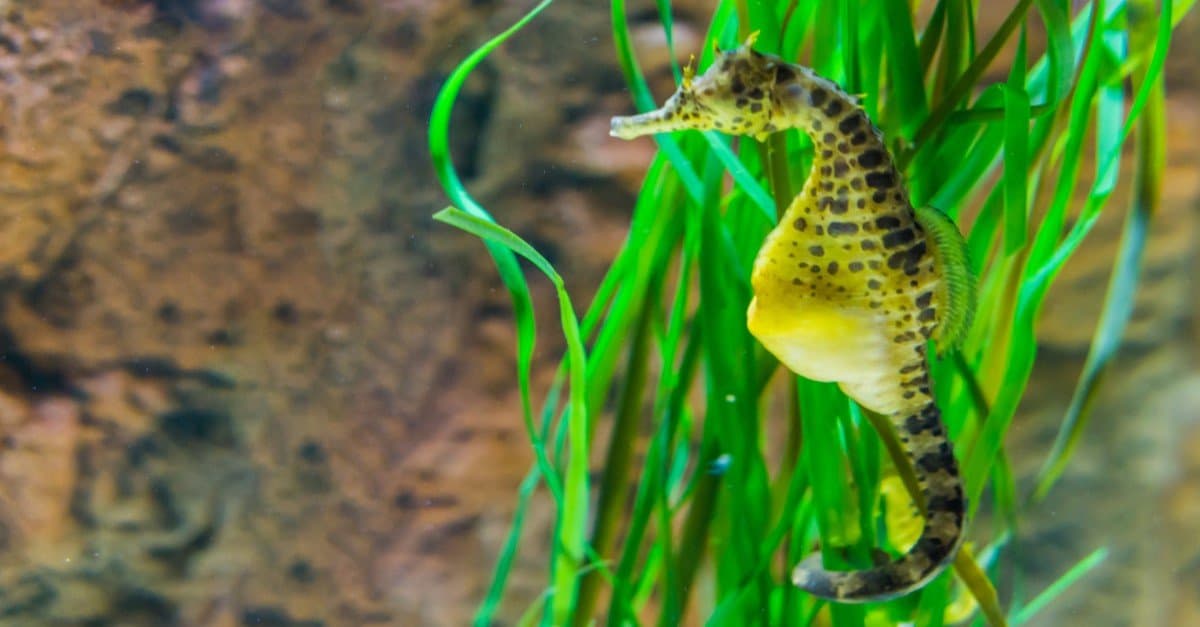
While some seahorses give birth to only a dozen babies, some species are known to give birth to thousands. In a rare twist of nature, male seahorses are the ones who fertilize and carry the babies, known as fry. He incubates them until they’re fully developed, and then gives birth to them live.
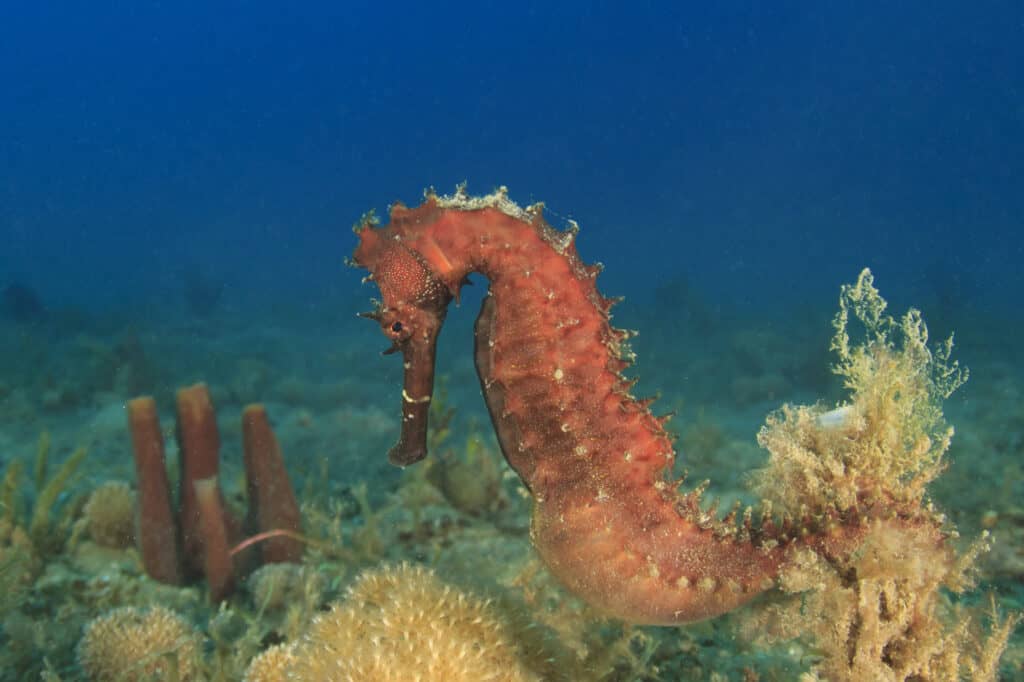
Male seahorses are the ones who give birth, while females help fertilize eggs.
©Rich Carey/Shutterstock.com
In this instance, females have the easier job of simply helping to fertilize the eggs. When they’re ready to hatch, male seahorses rock their bodies back and forth, which helps nudge the fry out of their pouch. As one can imagine, for a litter of thousands, this can take some time. A male seahorse’s devotion and dedication to birthing his young is what makes them one of the best dads in the animal kingdom.
Virginia Opossum
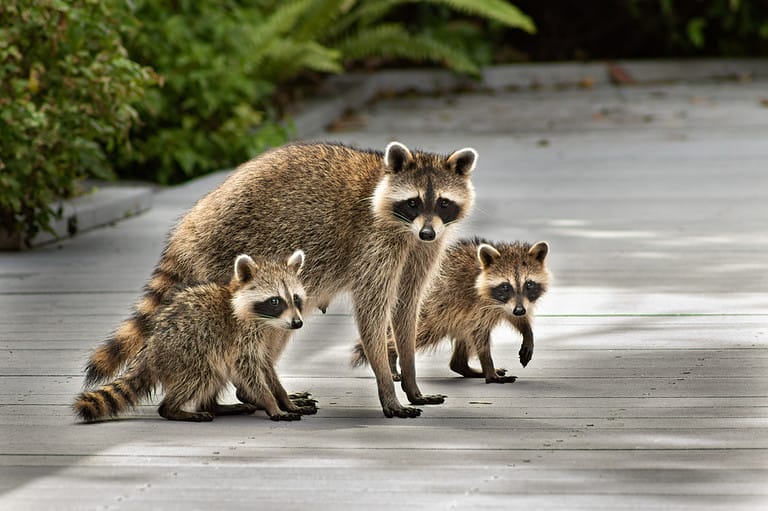
The Virginia opossum is one of the few marsupials with an impressive litter size. Although Virginia opossums don’t have the best reputation, the females are strong mothers. Their average litter size is typically 8 to 9 joeys, but they can have up to 25 in healthy, well-sheltered environments. Due to the small size of these mammals, their babies are only about the size of a bean.
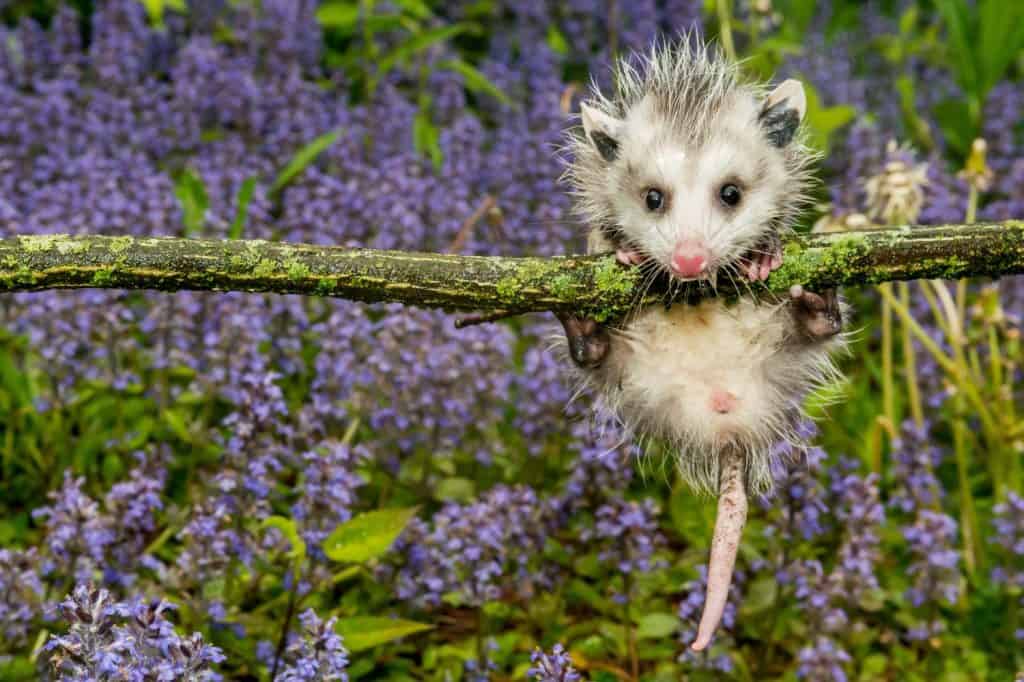
The Virginia opossum can have a litter of nine joeys.
©Jay Ondreicka/Shutterstock.com
Most females have only 13 mammary glands, so not every joey can nurse at the same time.
Puff Adders
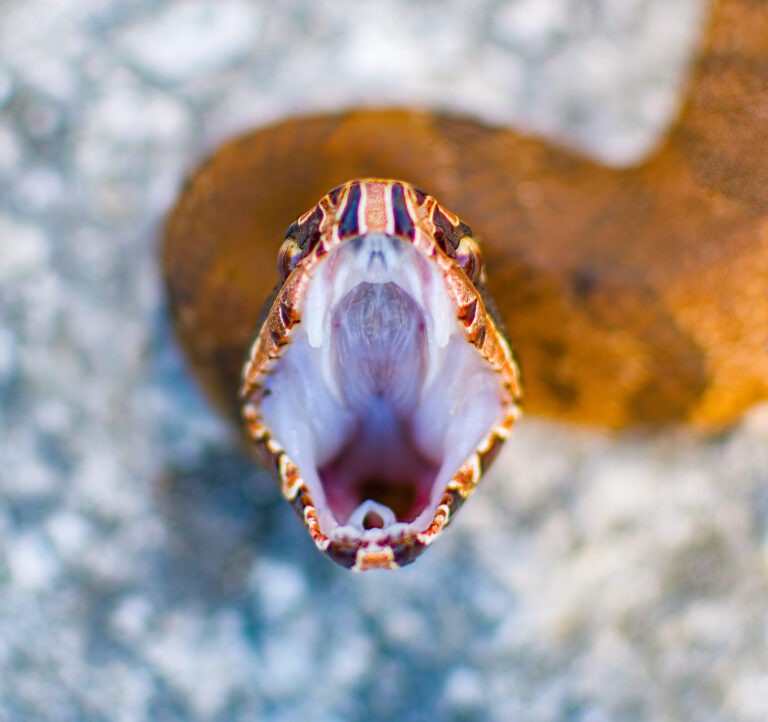
Puff adders are known for their aggression and poor disposition toward humans, but they also have an incredible reproductive rate. While this is not news for those who fear snakes, the puff adder clutch contains an impressive number of 20 to 40 eggs. In some cases, a clutch of up to 80 eggs has been reported.
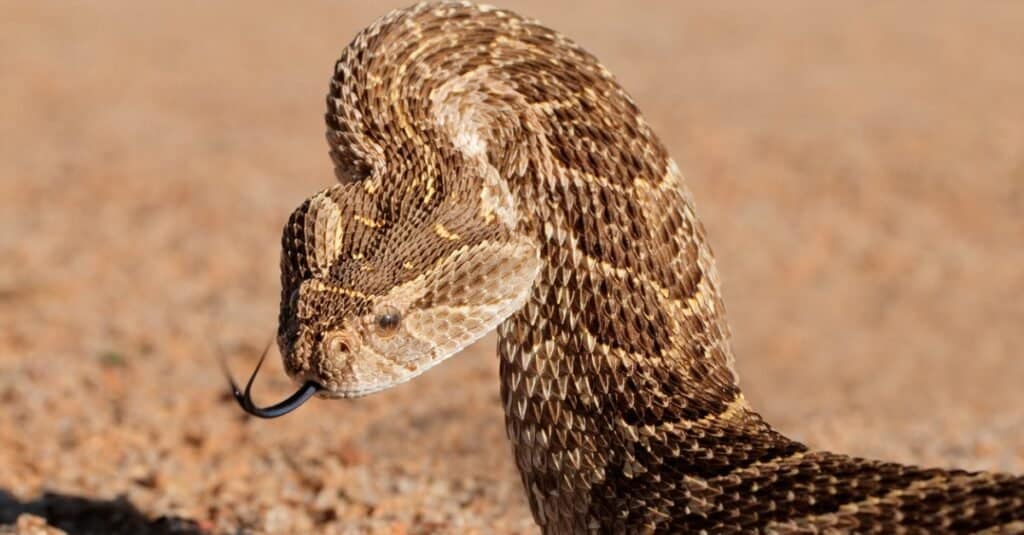
Puff adders hold the record among snakes for the largest litter.
©iStock.com/EcoPic
Puff adders are responsible for more snake-related deaths than any other species in Africa, making their prolific egg-laying even more remarkable. This species also currently holds the record for the largest litter among snakes. A puff adder from Kenya gave birth to 156 offspring in captivity, which is more than any other to date.