
Quick Take
- Bulls charging at red is one of the most repeated "facts" in popular culture, but biologically it simply cannot be true. See the biology →
- Something specific about how bulls process the world around them completely rewrites what's actually happening inside a bullfighting arena. Discover what bulls react to →
- The red cape was not designed with the bull in mind at all. Its real purpose has nothing to do with the animal. Uncover the cape's real purpose →
- A sticky myth this widespread doesn't survive on bad science alone. There are specific cultural forces keeping it alive. Explore the cultural forces →
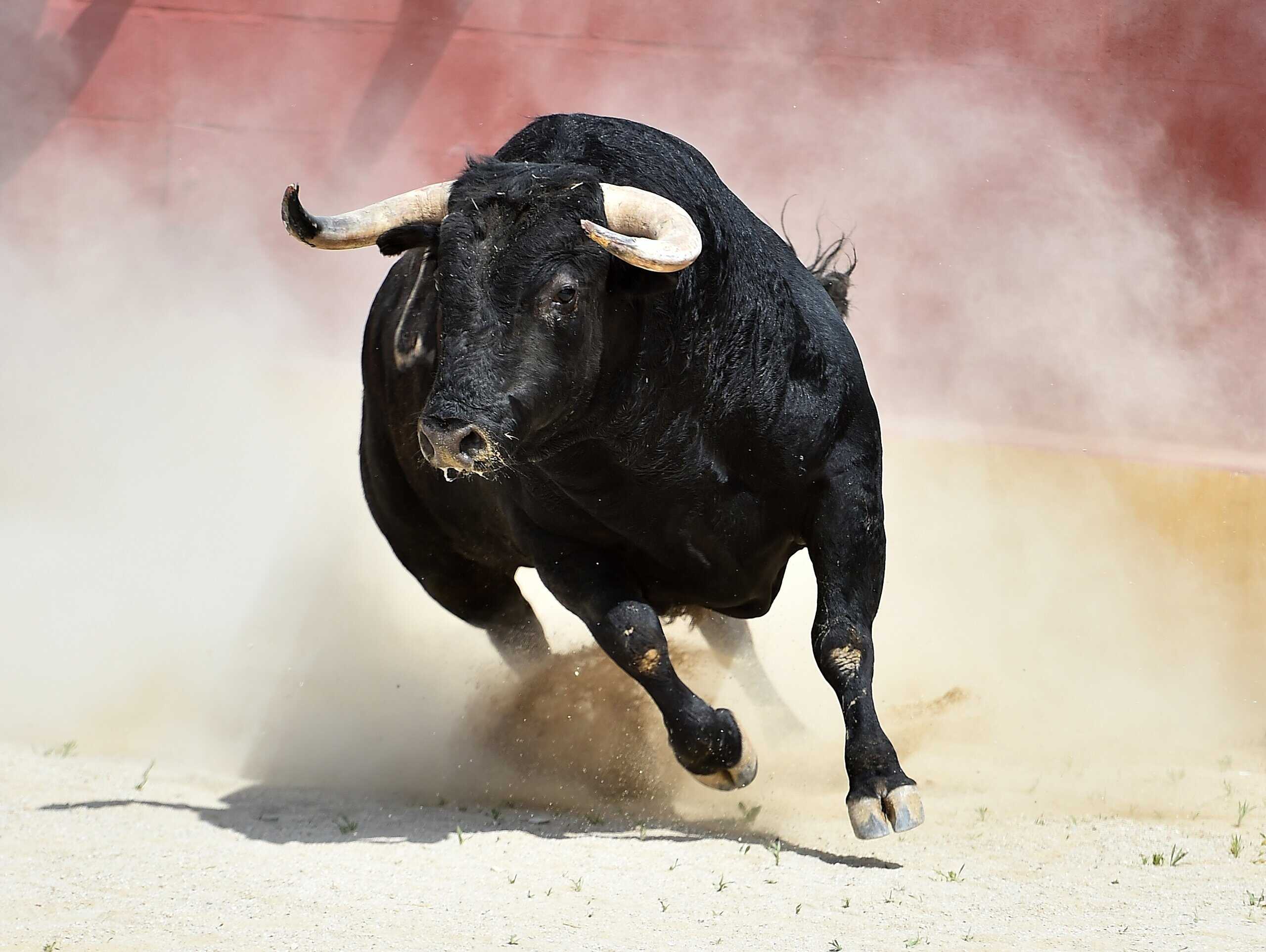
A matador swirling a crimson cape at a charging bull is an iconic image. Few animal myths are as persistent or dramatic as the idea that bulls charge when they see the color red. However, this popular belief is also entirely incorrect. In fact, a matador could use a bright blue or neon green cape, and the bull would still charge. The idea that a bull charges when it “sees red” creates excellent storytelling — it just doesn’t hold up to actual biology.
Bulls Don’t “See Red”
Biology quickly dispels the myth that bulls “see red” — in fact, cattle can’t see red at all, or at least not in the way that humans do.
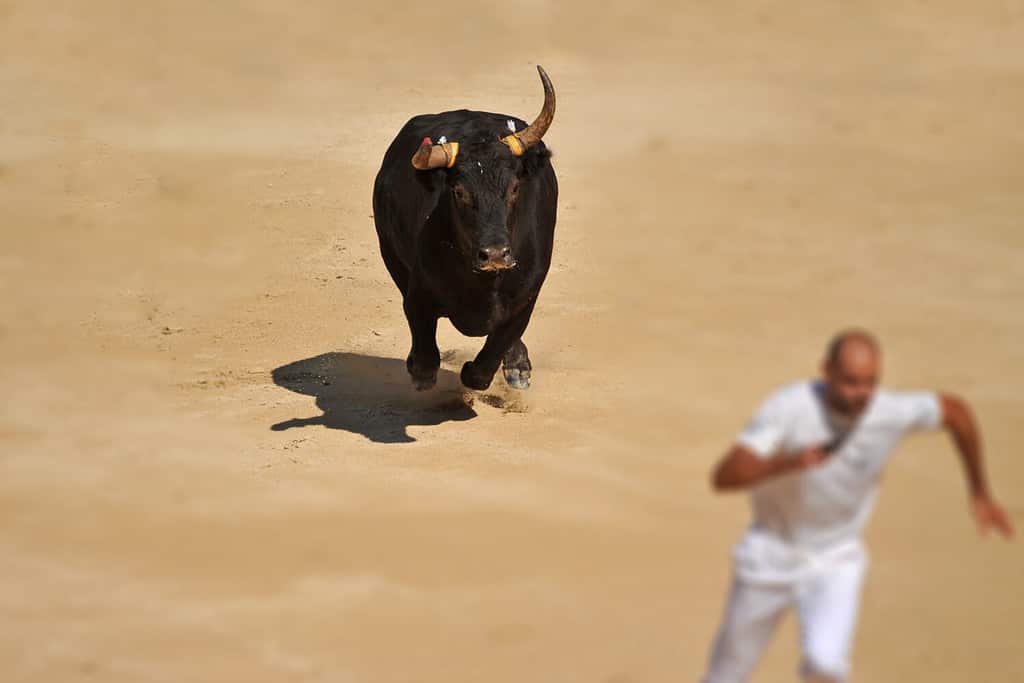
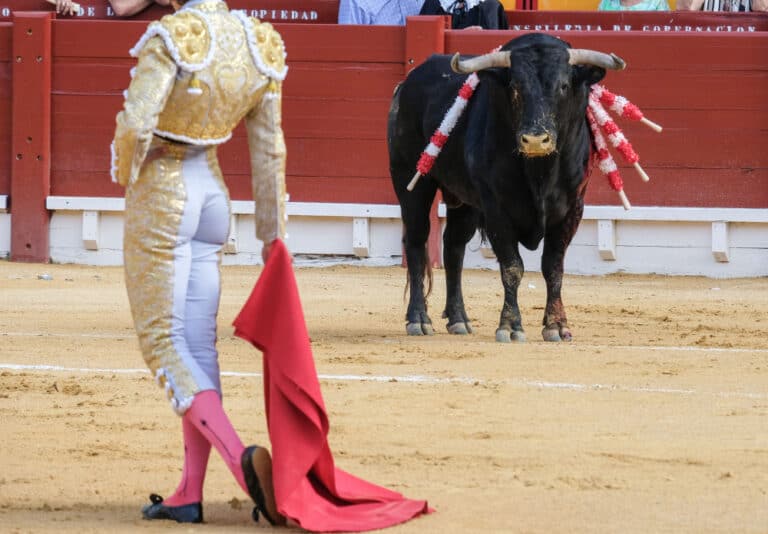
In a bullfight, the bull reacts to a plethora of stimuli in its environment.
©cynoclub/Shutterstock.com
Most humans have trichromatic vision, with three types of cones in their eyes that allow them to see red, green, and blue. Bulls, on the other hand, have dichromatic vision with only two types of cones. Because they lack the long-wavelength cone required to detect red light, they cannot perceive red in the same way humans do.
If a bull appears angry during a bullfight, it isn’t because of the color red. It is because of everything else happening around it.
What Actually Triggers a Bull: Motion, Not Color
Cattle are prey animals. Their eyes are designed for survival; detecting motion is more important to their well-being than distinguishing between different colors. They are highly sensitive to sudden or unpredictable movements across a wide field of view.
When a matador waves a cape, the bull isn’t evaluating the color palette. The fabric doesn’t make the bull angry; instead, it creates a moving visual target that the bull cannot ignore. This sudden movement is perceived as a challenge or an intrusion into the bull’s space, triggering its natural instinct to either investigate, avoid, or charge. The bull acts out of self-preservation, not malice. Its apparent anger is actually a response to physical pain, the stress of isolation, and a hostile environment filled with unpredictable movement, all of which force it to defend itself.
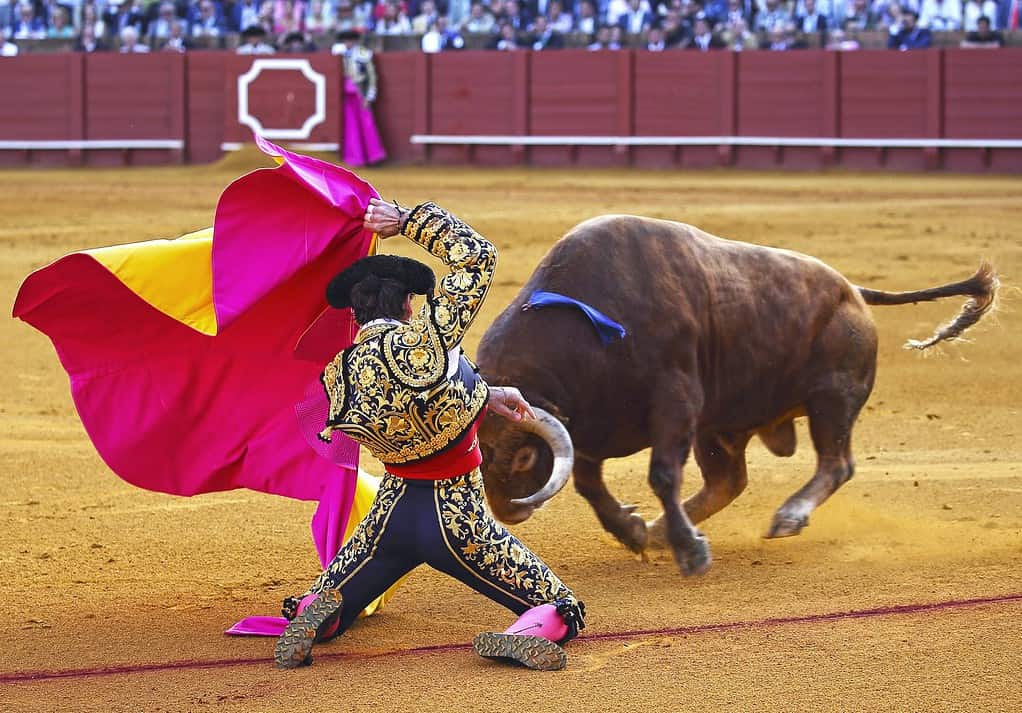
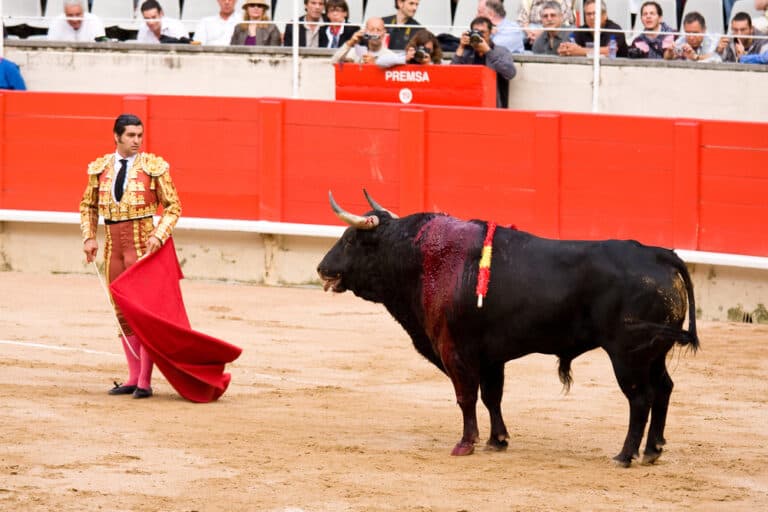
Bulls react to intense flashes of movement rather than color.
©David Pineda Svenske/Shutterstock.com
This theory has been tested and confirmed through various controlled experiments (including on the show MythBusters). When red, blue, and white flags remained stationary, bulls showed little interest in them. However, once motion was introduced to the flags, the bulls consistently prioritized the moving objects, regardless of their color.
In other words, cattle aren’t concerned about the color of an object; they’re more responsive to how that object is moving or behaving.
So, Why Is the Cape Red?
If bulls don’t care much about color, why is the cape always red? It’s actually for the human spectators, not the animals.
A matador’s red cape, known as the muleta, is used in the final stage of a bullfight. In the earlier stages, a larger cape called the capote—typically magenta and gold—is used. Bulls charge at these capes just as eagerly, illustrating that color is not what causes the animals to act aggressively.
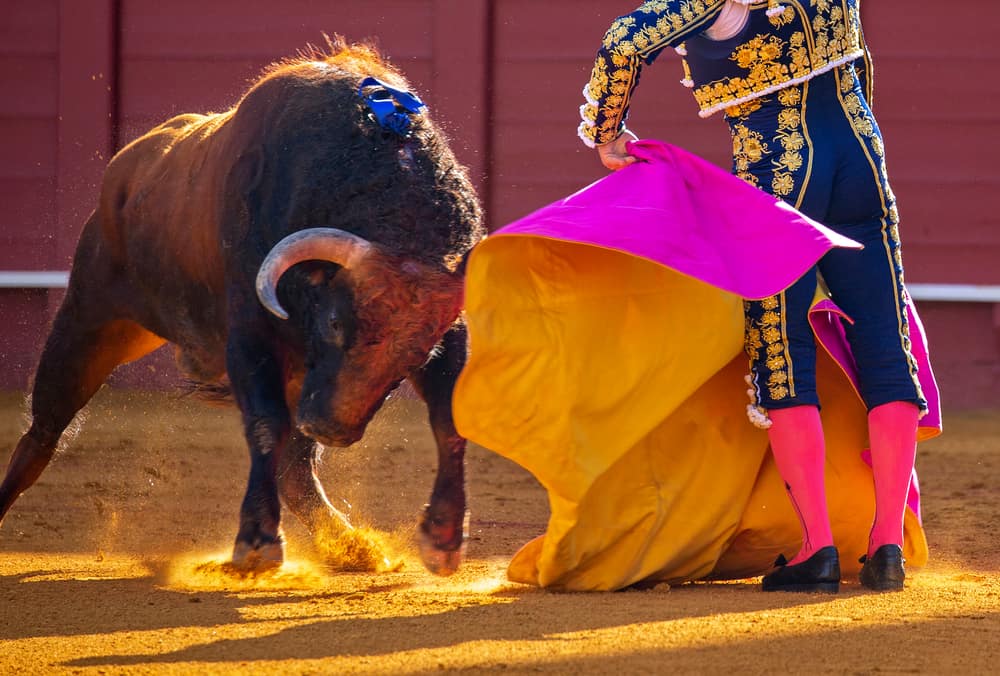
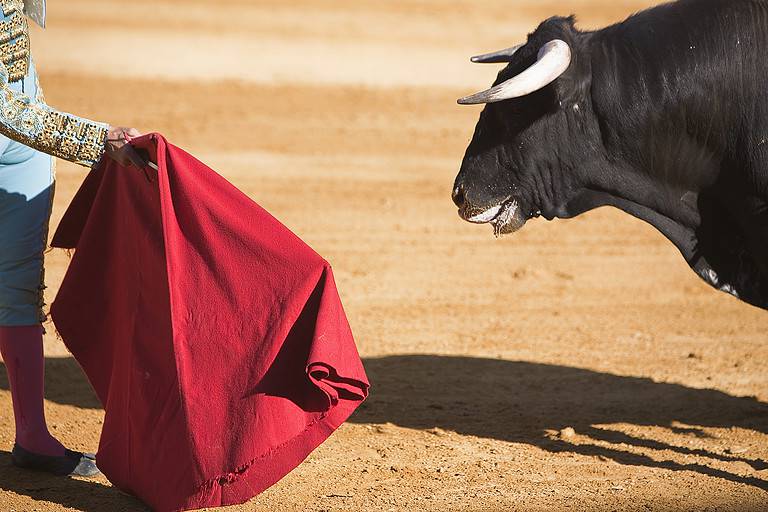
Only the muleta used in the final stage of a bullfight is red.
©David Pineda Svenske/Shutterstock.com
The red coloring of the muleta has traditionally remained red for the audience, not the animal. This choice is both practical and aesthetic. Red hides blood more effectively than lighter colors, which has historically helped audiences avoid focusing on the more gruesome aspects of the fight. The deep crimson hue also creates a dramatic contrast against the sand of the arena, making the action easier to follow for spectators. Moreover, red has a striking appearance in paintings, posters, and films, which is arguably the main reason the “angry bull vs. red” myth became so deeply rooted in popular culture.
Why the Myth Continues On
If science is so straightforward, why do we still believe the myth that bulls hate the color red? In reality, the red cape is nothing more than a tool of human storytelling.
Humans are visual storytellers who rely on simple metaphors to explain the world. For us, red symbolizes anger, passion, and danger. We naturally project these human emotions onto the bull, assuming it must feel the same way we do when confronted with such a bold color. In addition, decades of cartoons, movies, and advertisements have reinforced this idea. When a myth is used as cultural shorthand for so long, it begins to feel like common sense. We have seen the “bull vs. red” trope repeated so many times that we stop questioning its scientific accuracy.
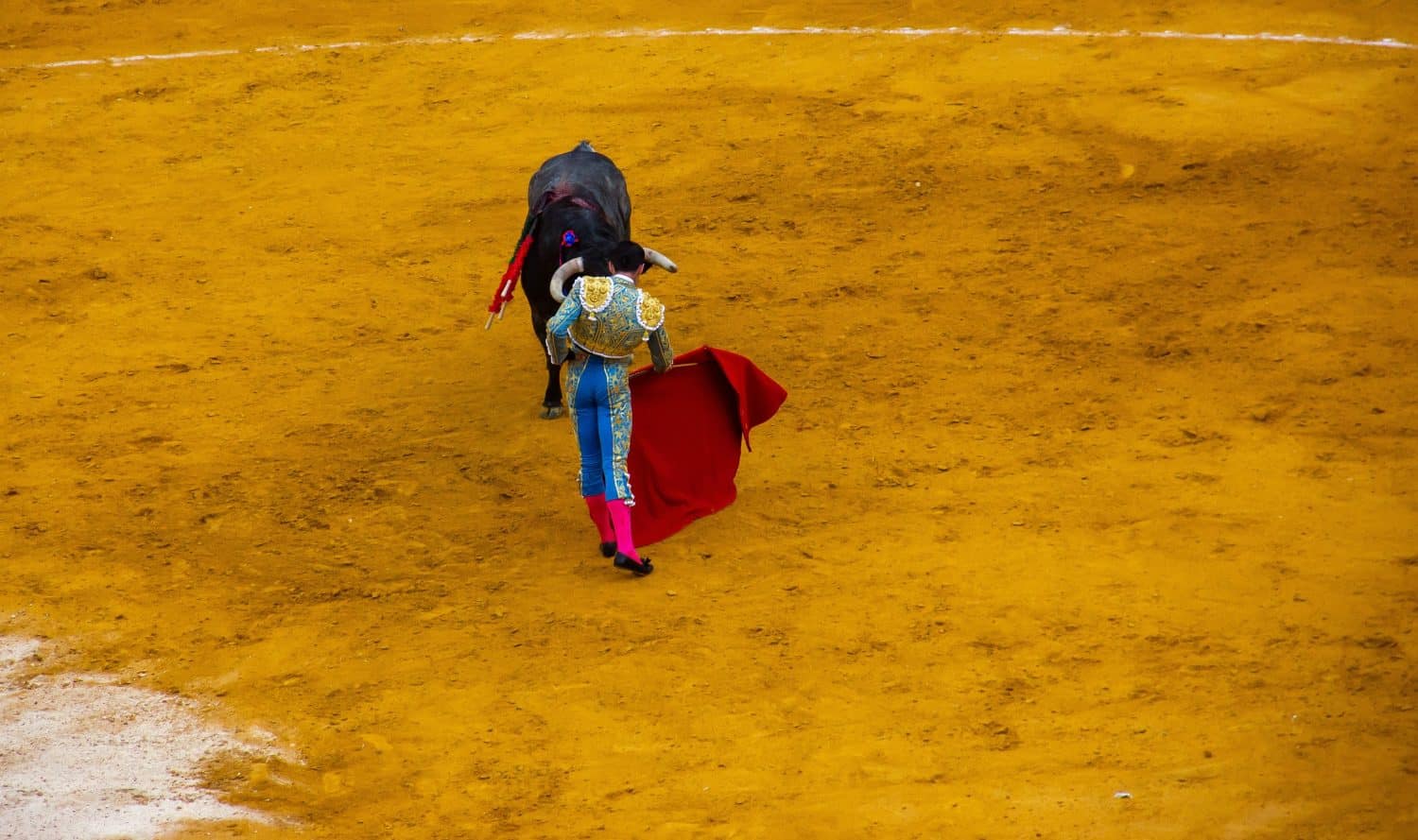
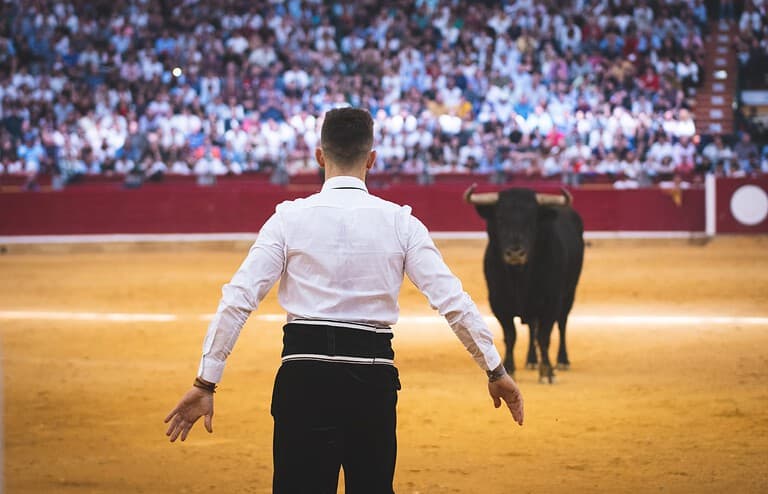
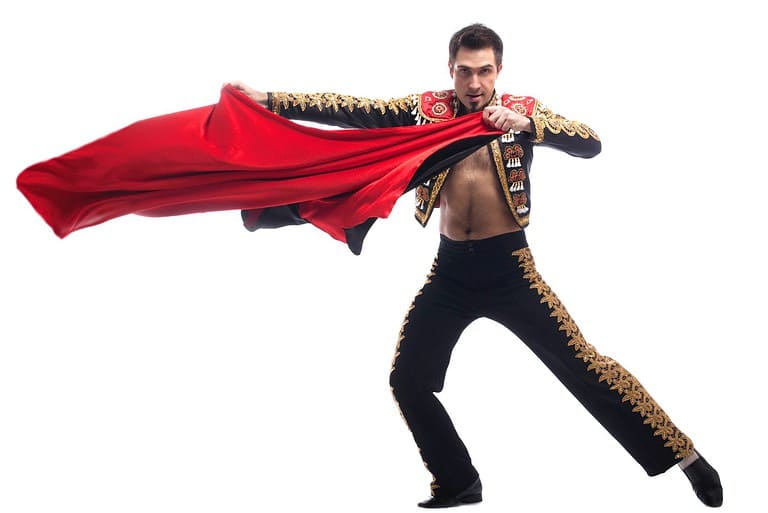
The final stage of a bullfight is often the most dramatic.
©Daria Zelenska/Shutterstock.com
Selective attention also plays a role: most people remember only the final, most famous stage of a bullfight involving the red cape. The earlier use of magenta and gold fabrics rarely makes it into movies or highlight reels.
These factors have led to a persistent misunderstanding: the combination of a dramatic animal and a dramatic color creates a compelling (though incorrect) story that prioritizes emotional heightening over biological reality. The “anger” we see is actually a prey animal responding to a possible threat in its immediate surroundings.