
Quick Take
- Matador bugs get their name from the oversized flags on their hind legs that look like the capes that bullfighters wave.
- These tiny bugs live on passionflower vines in the tropical rainforests of Central and South America.
- Matador bugs only live a few weeks to a few months once they reach adulthood.
Deep in the tropical rainforests of Central and South America, there’s a particular insect that stands out from the rest. And that’s no small feat, given the competition. From the distinctive Thoas swallowtail butterfly and Picasso moth to the giant horned Hercules beetle and green milkweed grasshopper, there’s an abundance of eye-catching competition.
But for the matador bug, scientific name Anisoscelis alipes, standing out is no problem. The vibrant red flags on its legs make it a true tropical wonder. The matador bug becomes even more alluring as it struts along leaves, looking ready to bust a move in true Saturday Night Fever style. This tiny bug is truly one of the most unusual insects you might see when venturing into tropical places like Panama and Costa Rica. Read on to discover what makes the matador bug so unique.
Get to Know the Matador Bug
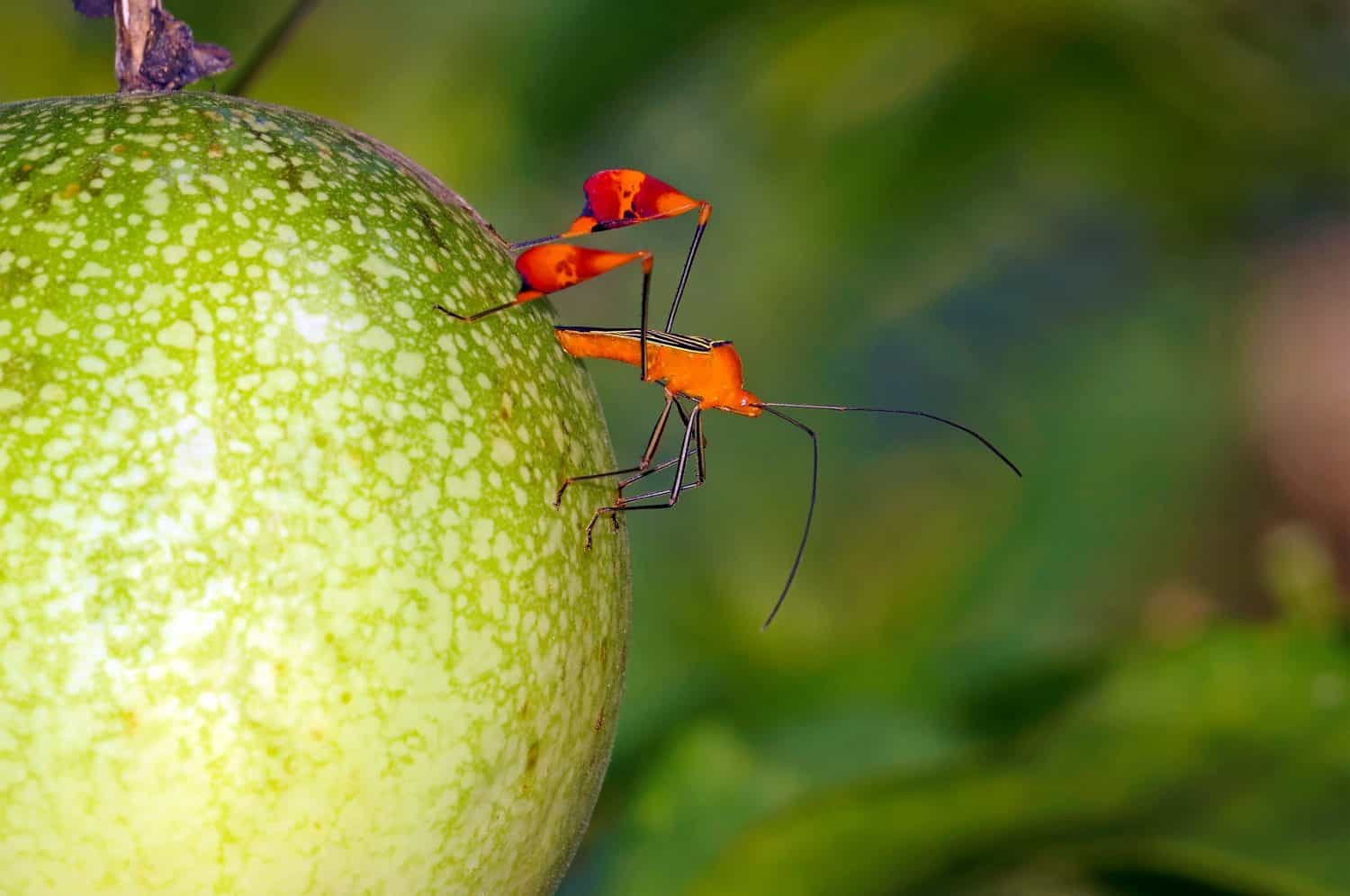
The matador bug lives in the tropical rainforests of Central and South America.
©Damsea/Shutterstock.com
The Matador bug is a species of leaf-footed bug. These insects live in tropical climates throughout Panama, Costa Rica, Mexico, and several countries in South America, including Colombia, Ecuador, and Venezuela. It’s relatively small, growing to less than one inch when fully mature. The females tend to be larger than the males.
Matador bugs feed primarily on passionflower vines found in the tropical rainforest. They use piercing and sucking mouthparts to drink sap and devour seeds, flower buds, and other parts of the plant. Once they pierce the vine’s protective outer layer, the matador bug extracts the liquids and nutrients from the plant.
They also use passionflower vines as their nurseries, laying eggs among the leaves where they are protected while they incubate. The eggs hatch into nymphs, which molt several times before eventually becoming adults.
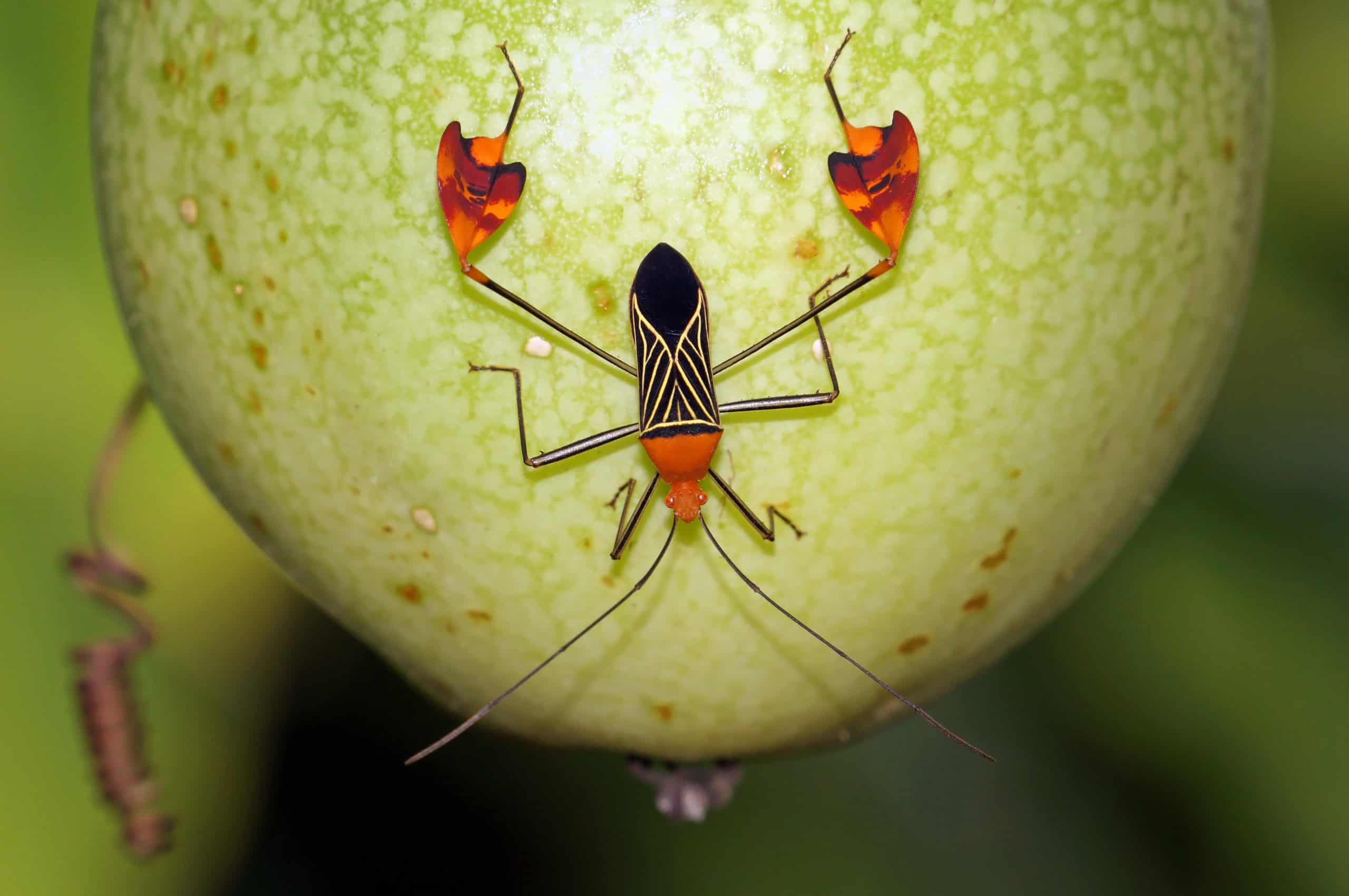
It is at adulthood that the matador bug develops its most recognizable feature — the vibrant colored flags that adorn the insect’s hind legs. These flags appear disproportionately large relative to the bug’s overall size. In fact, they’re also often referred to as “fancy pants.”
The flags also outshine the rest of the bug’s muted body color, which is usually dark on the bug’s topside. In contrast, the bug’s head and underside are orange, and its back displays an intricate pattern of light-colored, crisscross lines that often form a unique V-design. A set of six spindly legs makes the bug’s unusual appearance complete.
What’s with Those Funky Leg ‘Pants’?
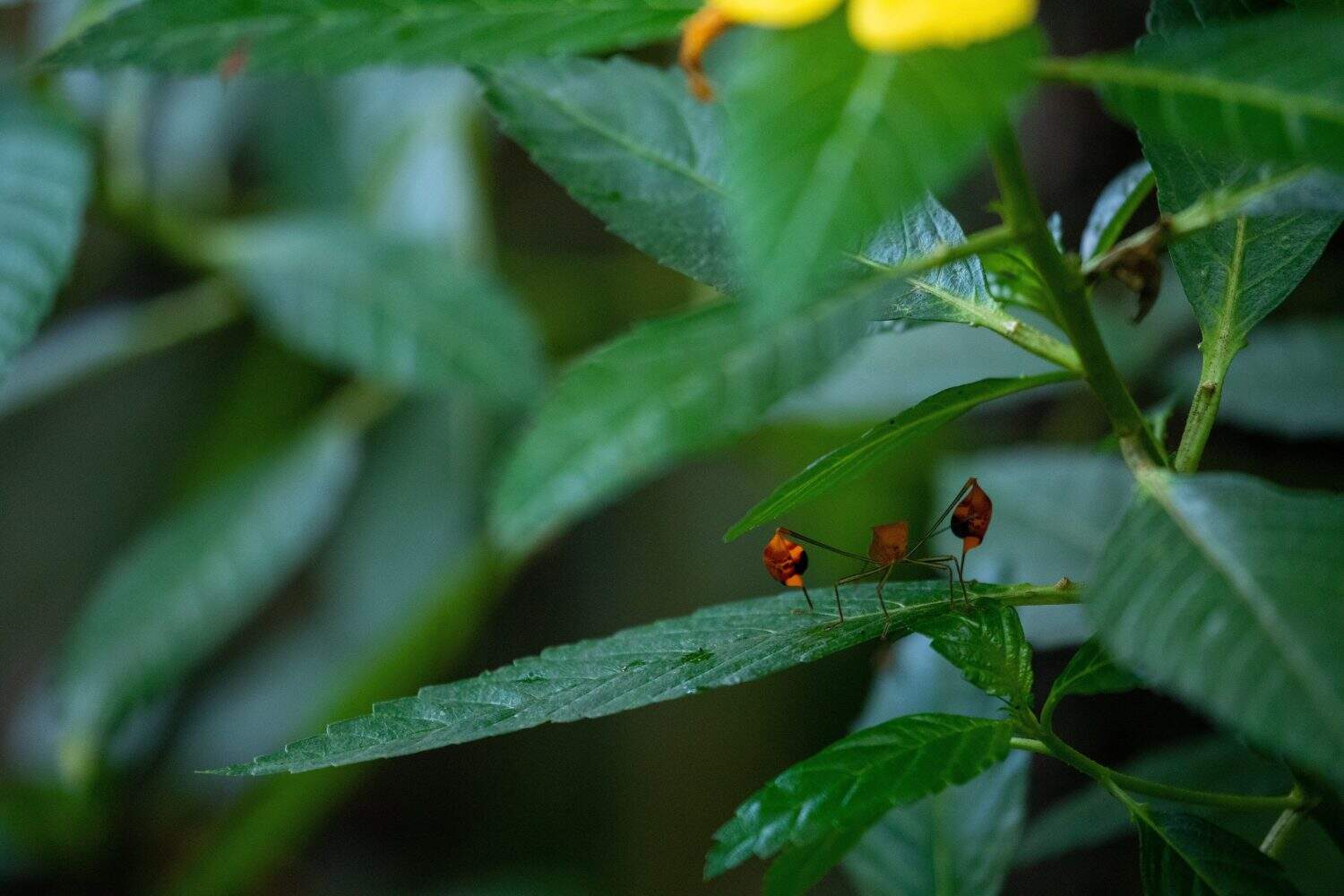
The oversized flags on the bug’s hind legs are a vibrant shade of red.
©Wirestock Creators/Shutterstock.com
For a long time, scientists hypothesized that the matador bug’s disco bell-bottom-style leg flags were used as a way to attract a mate during courtship rituals. But recently conducted scientific research has revealed a different purpose. Rather than an attention-grabber during courting, the matador bug uses its leg flags as one part of its overall defense strategy.
When under threat from a predator like a praying mantis or tropical bird, both the male and female matador bugs can flare their leg flags and rapidly wave them. It is their first warning sign to a predator that the bug isn’t an ideal meal option.
It’s actually this leg flag waving that earned these bugs their name. The waving is reminiscent of Spanish bullfighters brandishing their capes at a bull. Unlike actual matadors, though, matador bugs aren’t waving their flags to antagonize their opponent or invite additional attention. To the contrary, matador bug leg flag waving is part of a broader attempt to thwart an impending assault.
While the leg flags are the visual cue, flaring and waving them work together with the bug’s secondary line of defense – chemical warfare. Thanks to their regular diet of toxic passionflower vines, the bugs are able to sequester plant toxins, making themselves distasteful to predators. Scientists believe that the leg flags serve as an initial warning and, if the predator continues its attack, it is rewarded with the chemical part of the defense.
Experienced matador bug predators quickly learn that bugs waving bright red leg flags are to be avoided.
How Long Do Matador Bugs Live?
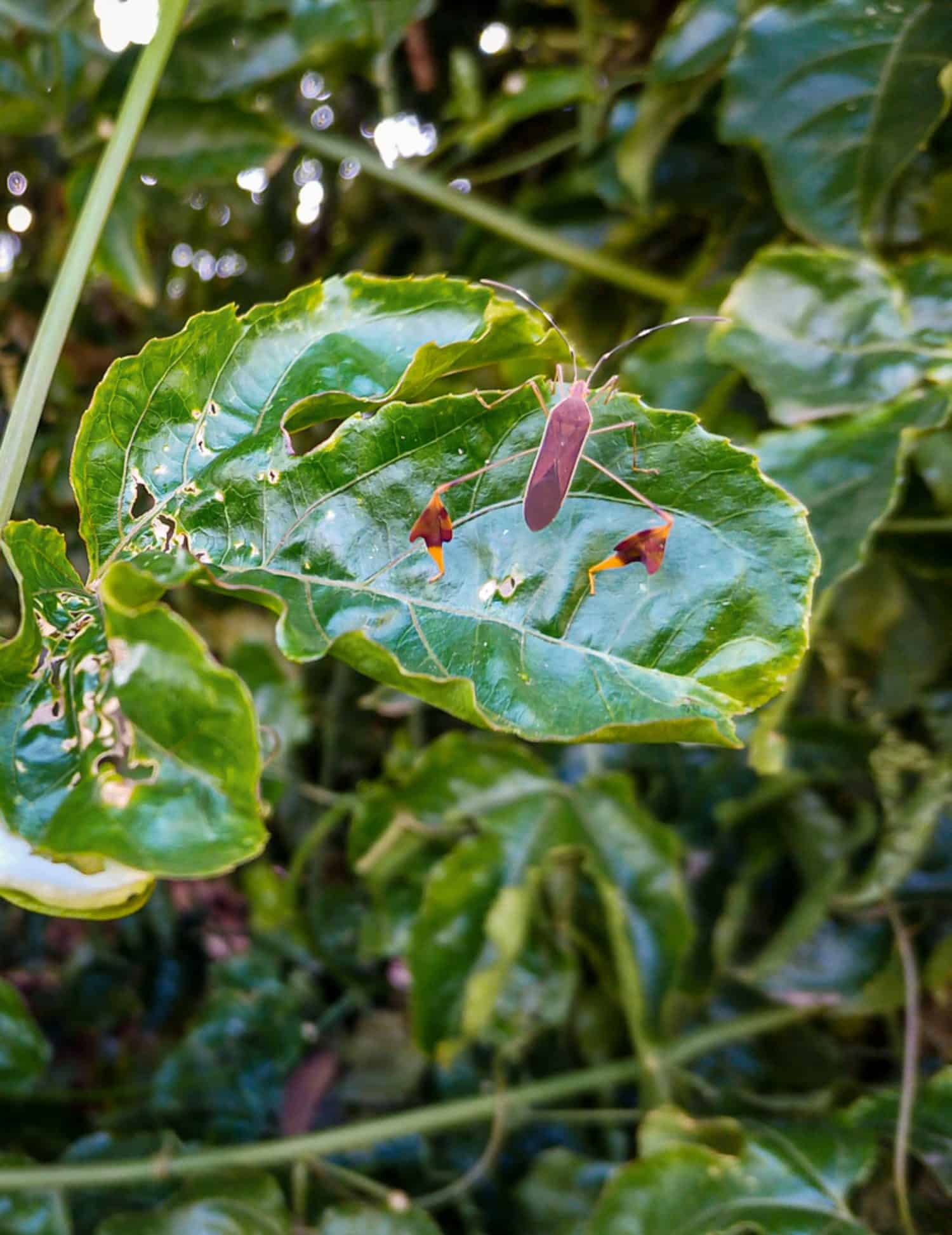
Matador bugs don’t live very long, and focus all their adult energy on reproduction.
©Diovane/Shutterstock.com
Matador bugs don’t have a lot of time to show off their fancy pants. Once they reach adulthood, they only live for a few weeks to a few months. The sole purpose of their short adulthood is to reproduce. After laying eggs, female matador bugs typically live for a short period, as adults of this species generally survive only a few weeks to a few months.
The eggs laid during the breeding season develop into nymphs and eventually adults. Then, the cycle begins again, and a new generation of matador bugs is ready for their turn to flash their fancy pants at predators.