
Animals do not see the world in the same way. Whether due to the colors they perceive, the depth they interpret in objects, or their ability to discern between shadows in low light, all animals possess vision that enables them to view their environments uniquely.
None of the ways that animals visually view their habitats is better than the other. However, these differences are what have allowed animals to thrive for generations. Without visual acuity, or the lack thereof, environments would appear very different from the standpoint of the species that inhabit them. This is why the way animals see the world is so incredibly important.
Video Shows How Animals See the World
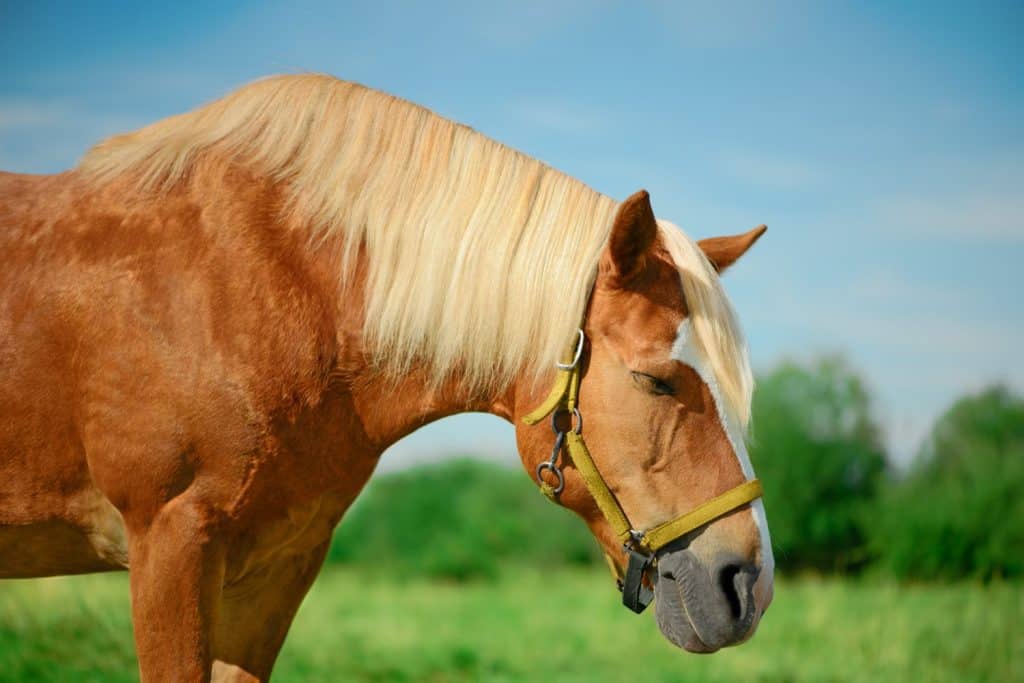
All animals see different colors, which impacts how they see the world.
©IRINA ORLOVA/Shutterstock.com
There is no question that each species of animal visually sees the world differently. Be it from the depths, animals can interpret the world or the colors and shadows they see; environments will not look the same from one animal to another.
An Instagram video uploaded by @insidehistory gives a great visual explanation of how color, or the lack thereof, determines how animals see their habitats. While some see nothing but shadows or blurriness, others have vision that surpasses what humans can see. This is neither an advantage nor a disadvantage for the animals. Instead, it is evolutionary adaptations that have helped each species of animal survive for millions of years in their individual environment.
A variety of animals are highlighted in the Instagram video. Some of those animals and the way they interpret the world visually include:
| Animal | Colors They See |
| Horse | Blue, yellow, green |
| Starfish | Shadows |
| Snake | Green, blue, and infrared light |
| Cow | Blue, yellow, black, white, gray, and brown |
| Goldfish | Red, green, blue, and ultraviolet light |
| Cat | Blue and yellow |
| Fly | Blue, green, yellow, orange, red, purple, and ultraviolet light |
| Dog | Blue, violet, and yellow |
| Frog | Blue and green |
| Chameleon | Blue, green, red, ultraviolet, and polarized light |
| Rabbit | Green and blue |
In addition to the colors these animals do or do not see, they also have different depth levels in their vision that they are able to interpret. The more acute depth is seen, the easier it is to spot another animal accurately from far away. While this may be seen as an advantage for all animals, it is not necessary visually for some, given their other visual strengths, allowing them to survive.
How Vision Varies Among Animals

Wolves are able to see a few colors but have a great field of depth, valuable for hunting.
©Tim Rains, National Park Service
Vision across the animal kingdom varies widely. Where some animals see the world in full color, others may only see shadows. Color may not be necessary to some, but without the ability to see infrared light, a variety of animals would not be able to hunt adequately.
The reason different species have adapted specific visual modifications as they have evolved is due to the environments they inhabit and the prey they hunt. If the way animals visually see the world suddenly changed to be akin to another species, it could very easily be the demise of those animals. This is why everything from the sharpness of vision to color and everything in between is so important to the very survival of animals.
The different aspects of vision include:
| Type Of Animal Vision | Explanation Of Animal Vision |
| Positioning of vision | Monochromacy: Animals that only have one cone photoreceptor are incapable of seeing color. Instead, light and dark are the variations seen in the environment. Dichromacy: Two cone receptors in the eyes allow for limited color vision. Most often, shades of blues and yellows are how the world is interpreted. Trichromacy: Those who have three cone receptors can see the world more richly. Colors like reds, greens, and blues provide contrast to the visual field. (The way people interpret color in the world.) Tetrachromacy: Animals with four cone receptors in their eyes not only see what trichromatic animals see, but also have the ability to see ultraviolet light. Pentachromacy or more: Animals that have five or more cone receptors in their eyes have a field of vision that is unparalleled by those with fewer. Colors and UV light are richer, allowing these animals to discern what it is they are looking at with astounding resolution. |
| Vision color variations | Monochromacy: Animals that only have one cone photoreceptor are incapable of seeing color. Instead, light and dark are the variations seen in the environment. Dichromacy: Two cone receptors in the eyes allow for limited color vision. Most often, shades of blues and yellows are how the world is interpreted. Trichromacy: Those who have three cone receptors can see the world more richly. Colors like reds, greens, and blues provide contrast to the visual field. (The way people interpret color in the world.) Tetrachromacy: Animals with four cone receptors in their eyes not only see what trichromatic animals see, but also have the ability to see ultraviolet light. Pentachromacy or more: Animals that have five or more cone receptors in their eyes have a field of vision that is unparalleled to those with fewer. Colors and UV light are richer, allowing these animals to discern what it is they are looking at with astounding resolution. |
| Light sensitivity | Nocturnal vision: Animals that are most active at night have nocturnal vision. Species with nocturnal vision generally have larger eyes than other animals. Their eyes have more rods than cones, allowing animals to see in dimly lit areas. However, the vision is not incredibly clear, with only shapes and sizes of objects or other animals being seen in little light. Diurnal vision: Animals that are active during the day have diurnal vision. They have more cones in their eyes, which allow for color differentiation and the ability to see well when it is bright out. |
There are so many different factors that go into how animals see the world, be it in shadow, color, or even the field of vision they have. While it may seem like some animals have an advantage with their vision, each species has adapted to have the vision they have for the greatest chances of survival.
Why Animals’ Vision Is Important For Survival
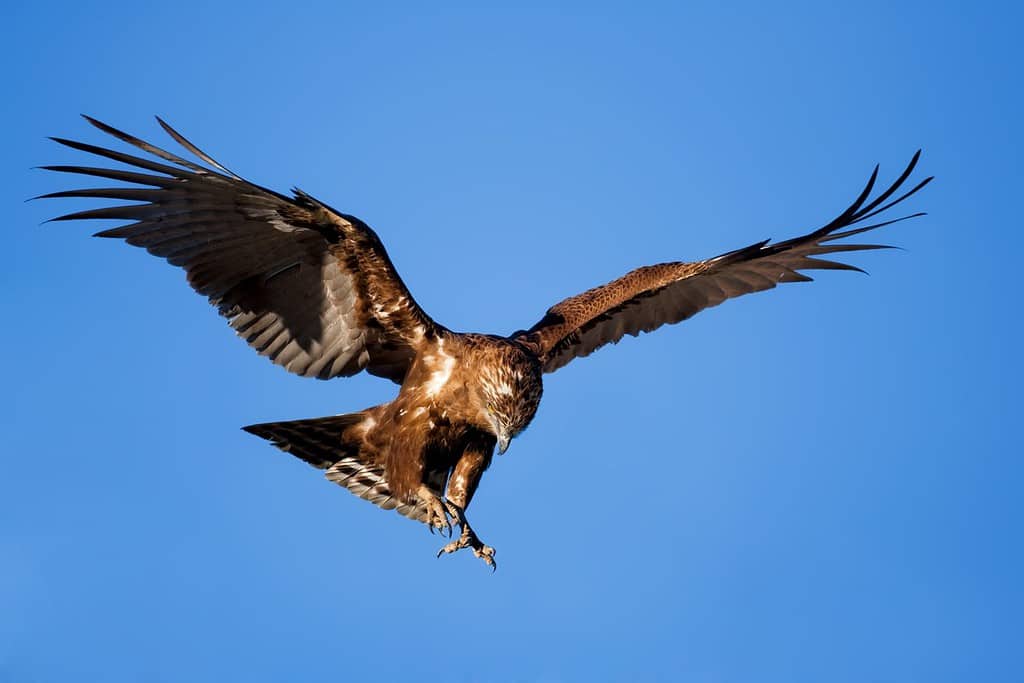
Eagles are able to see depth and color from far away, making them skilled hunters.
©Gerrit_de_Vries/Shutterstock.com
Because of the field and clarity of vision humans have, it may seem like anything different or less than that is something of a disadvantage for animals. However, the vision each species has evolved to have is what has kept them alive for millions of years and is vital for their very survival.
The animal kingdom is broken down into two main categories, which are predators and prey. The job of predators is to keep prey populations in check so that they do not overrun a habitat. Prey have their individual jobs, but their main one is to provide predators with sustenance to survive.
Consequently, predators and prey have developed different types of vision. For predators, their unique vision allows them to see prey from far off distances in some cases. Predators are then able to stalk and strike, sometimes before prey is even aware they are near.
But do not count prey out. They, too, have visual acuity. Although prey may not be able to see from far away, subtle visual changes in the environment and their ability to see well in lower light are advantages. Therefore, prey may be able to hide before a predator ever senses them. This all comes down to the two having unique visions from one another that have led to survival across generations.
Predators and Prey Have Unique Vision From One Another
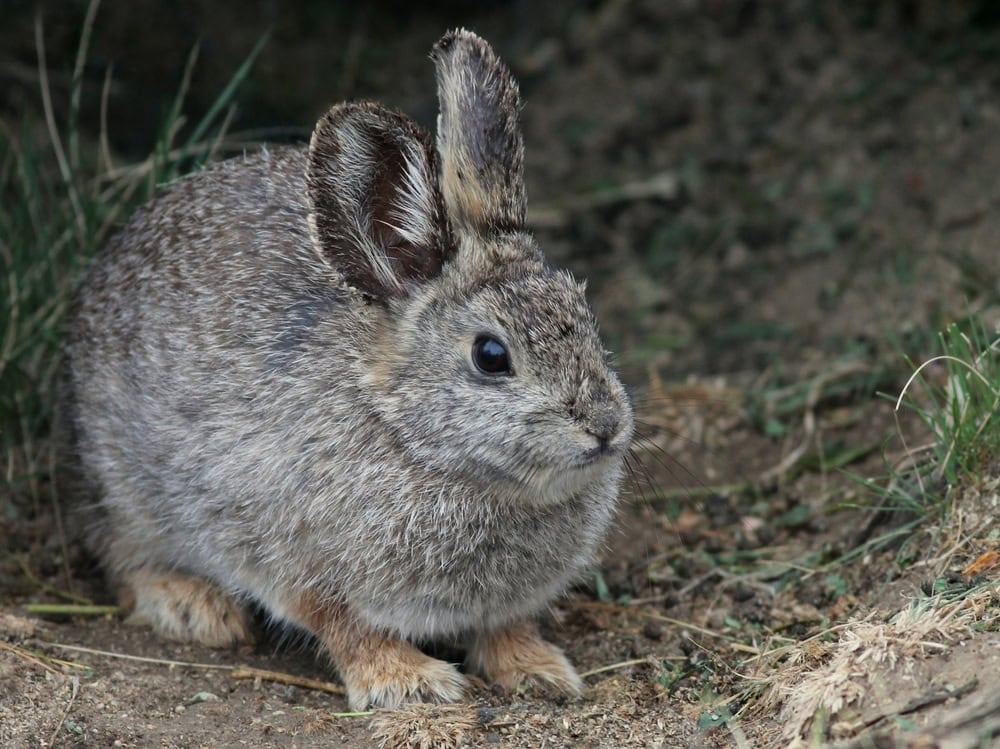
Prey, like rabbits, have eyes on the side of their heads, making it easy to determine where predators are coming from.
©Randy Bjorklund/Shutterstock.com
When it comes to the way predators and prey visually see the world, there are some commonalities across species. These adaptations over millions of years have allowed both predators and prey to have the best chances of survival, despite one being the hunter and the other being hunted.
One of the most striking differences between predators and prey is the placement of their eyes. Predators tend to have their eyes at the front of their heads. Prey, on the other hand, have eyes on the side of their heads. This is not done by accident. The location of a predator’s eyes allows the predator to have a great field of vision to strike a prey target accurately.
However, this does not mean that prey is just sitting around waiting to be eaten. By having eyes on the side of their heads, prey can see what is coming at them from all sides at all times. This allows prey to have time to hide or get away from the predator that is looking to make a meal out of them.
Additionally, predators have more cones in their eyes. This gives them better depth and color perception, allowing them to discern prey even when prey is attempting to camouflage themselves to stay out of danger.
Conversely, prey have more rods in their eyes. The more rods an animal has, the easier it is for it to pick up on movements meant to be subtle, such as a predator stalking. Prey may also have better vision in low light than predators, thanks to the rods in their eyes. This can help prey hide themselves from predators before predators realize they are there.
Aquatic and Terrestrial Animals See the World Differently
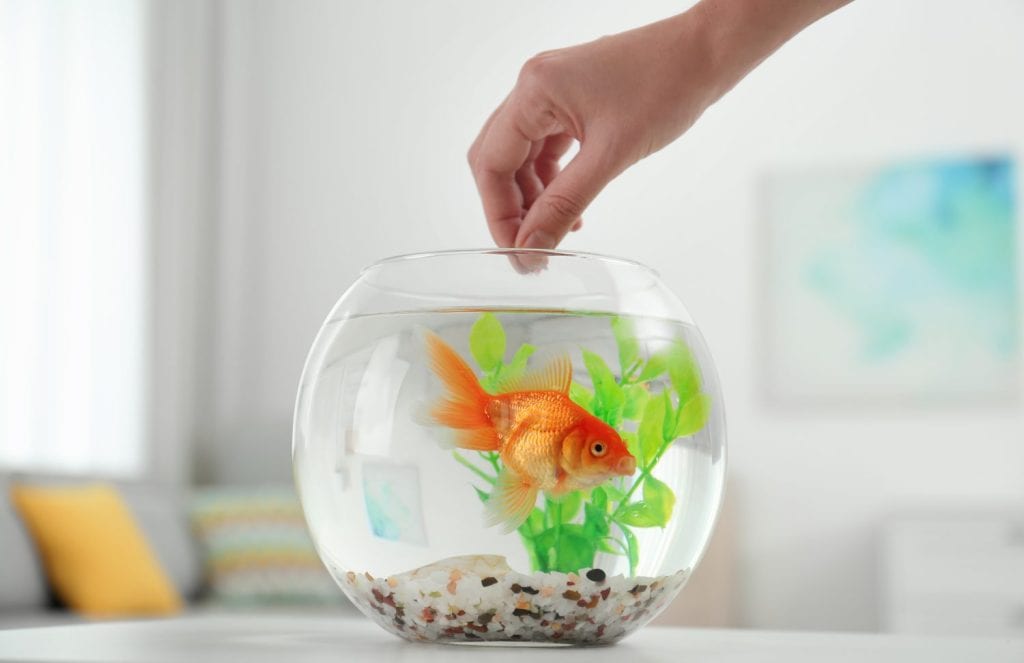
Aquatic animals, like fish, see clearly in the water due to the way their eyes are formed.
©New Africa/Shutterstock.com
Given the strikingly different environments, it should come as no surprise that aquatic and terrestrial animals visually see the world differently. Not only does this have to do with the way light moves through air versus water, but also with the way the eye is formed.
As people swim in the water with their eyes open, they can see objects, albeit not with perfect clarity. Aquatic creatures, such as fish, do not have this problem. Thanks to evolution, aquatic animals have eyes that are capable of seeing underwater clearly. Their eyes have a “flattened cornea, a spherical lens, and a high refractive power.” This helps these animals not only see well in their environment, but also to detect movement in lower light areas of the water.
In comparison, terrestrial animals have a curved cornea. This, in conjunction with “an elliptical lens and a duplex retina,” helps animals to see clearly in the air. Just how movement is detected, however, has to do with the type of vision the animal has, which varies across the animal kingdom.