Quick Take
- A routine day of trawling hauled up something that only one expert on Earth could name.
- Later sightings across the world raised a new puzzle: same kind of fish, but not quite.
- Is it truly a 'living fossil'? Many experts say the label hides something.
The Earth looked extremely different 65 million years ago. Lush vegetation covered much of the planet, home to a wide range of species. The North and South Poles were ice-free, creating even more green territory for species that sought warmth, humidity, and plant life. At the time, Earth had much higher carbon dioxide levels, keeping climates warm and tropical.
One year changed everything. An asteroid on a fated path wiped out all non-avian dinosaurs, along with many marine species. It irrevocably changed the landscape, and the coelacanth was among the species it took. Or so we thought.
But in 1938, one discovery changed what scientists had long believed. A fisherman found the ancient fish again, and its survival story is nothing short of a miracle.
This Ancient Fish Is 400 Million Years Old
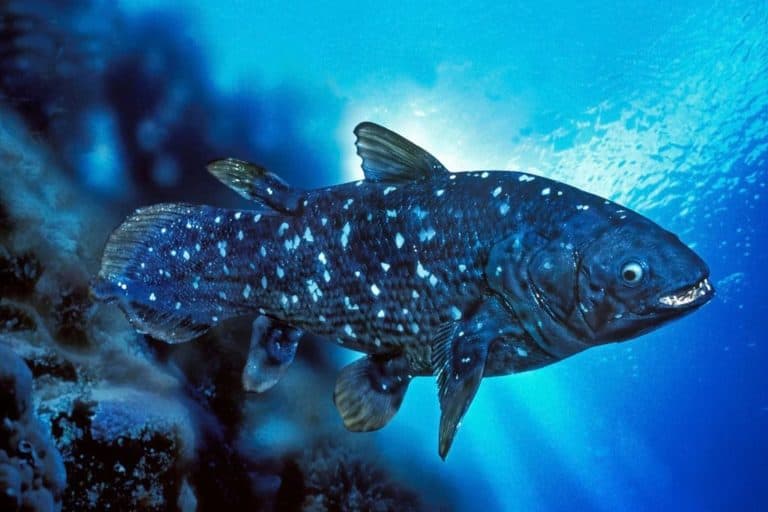
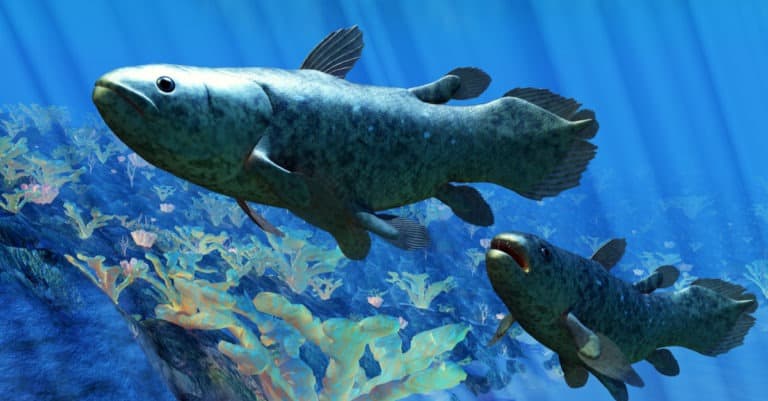
The coelacanth is a lobe-finned fish closely related to lungfish and terrestrial vertebrates. Its unique anatomy fools many into thinking it’s just another ray-finned fish, but it’s genetically closer to amphibians, reptiles, and even birds. But if you saw it in action, you might not think it’s a fish at all.
As deep-sea dwellers, coelacanths rely on underwater currents to push them along. They drift passively, waiting for scavenging opportunities. However, when they’re not drifting, their limbs become more tetrapod-like and less fish-like. Each pectoral and pelvic fin has flesh-covered lobes supported by bones. This allows coelacanths to “walk” underwater, alternating their fins as if they were legs.
The earliest coelacanth fossils date back 400 million years.
©Danny Ye/Shutterstock.com
In reality, these fish don’t actually walk. They use their bony fins as stabilizers while they drift along the ocean floor. When the current is weak, they sometimes use their fins to propel themselves forward but never rely solely on them for movement. Coelacanths are also the only animals with a functioning intercranial joint that mobilizes their heads.
Coelacanths are typically slow-moving but can gain impressive momentum when they feel threatened. When they’re the ones hunting, they can also position their bodies upside down to sift through the seabed. This puts their sensitive rostral organ close to potential prey, helping them sense small movements under the sand.
But the most fascinating thing about coelacanths isn’t their human-like movements or acrobatic agility; it’s the way they remained hidden for so long.
Caught In a Fisherman’s Trawler Net
In 1938, Captain Hendrick Goosen probably never expected to catch an ancient fish in his trawling net. But during a routine day of deep-sea trawling, a strange-looking, five-foot-long fish came up from the depths.
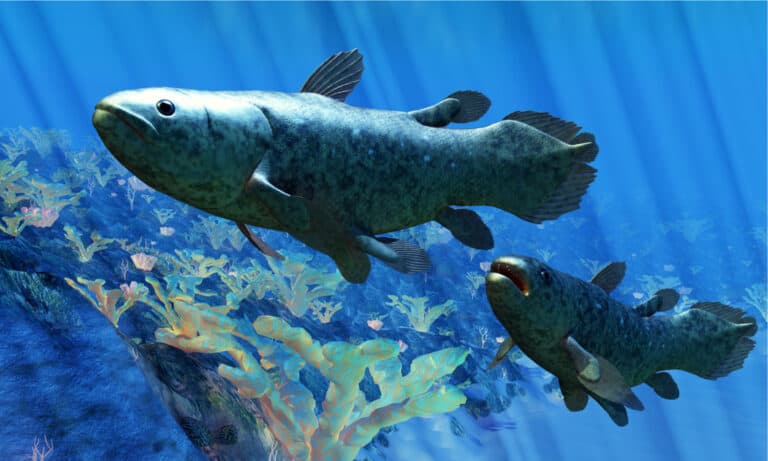
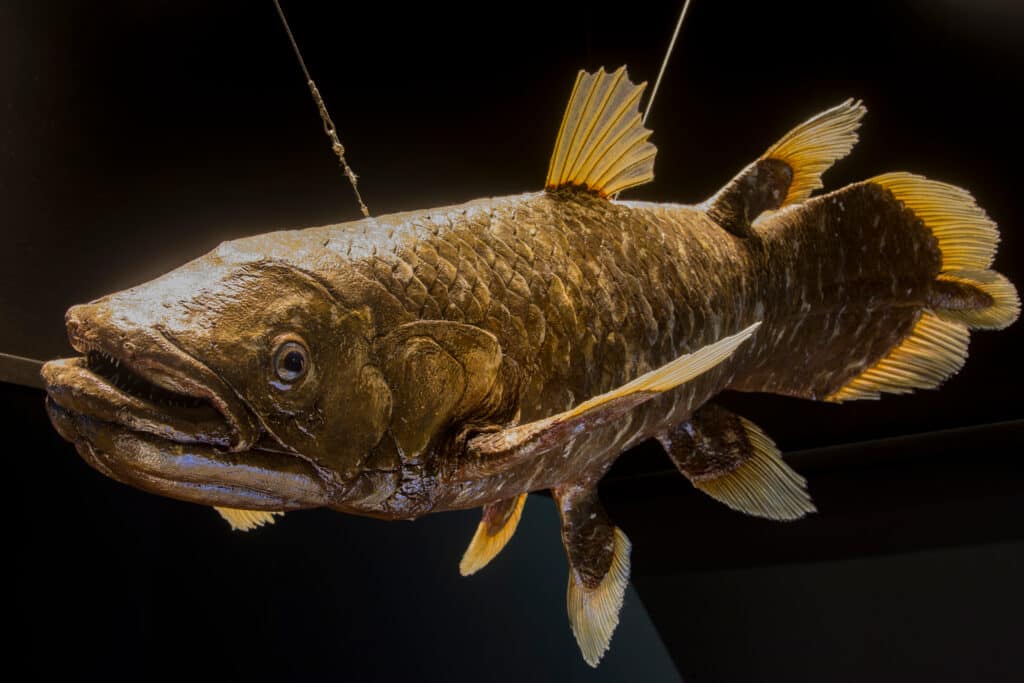
Slight differences between coelacanth fossils and living specimens contradict the label of a “living fossil.”
©Faviel_Raven/Shutterstock.com
The creature was big enough to stir Goosen and his crew, who ultimately decided to report their bizarre catch. They alerted the East London Museum, located in a small town off the South African coast where Goosen fished. Marjorie Courtenay-Latimer was the museum’s curator at the time, and when she saw the unusual catch, she immediately contacted an expert.
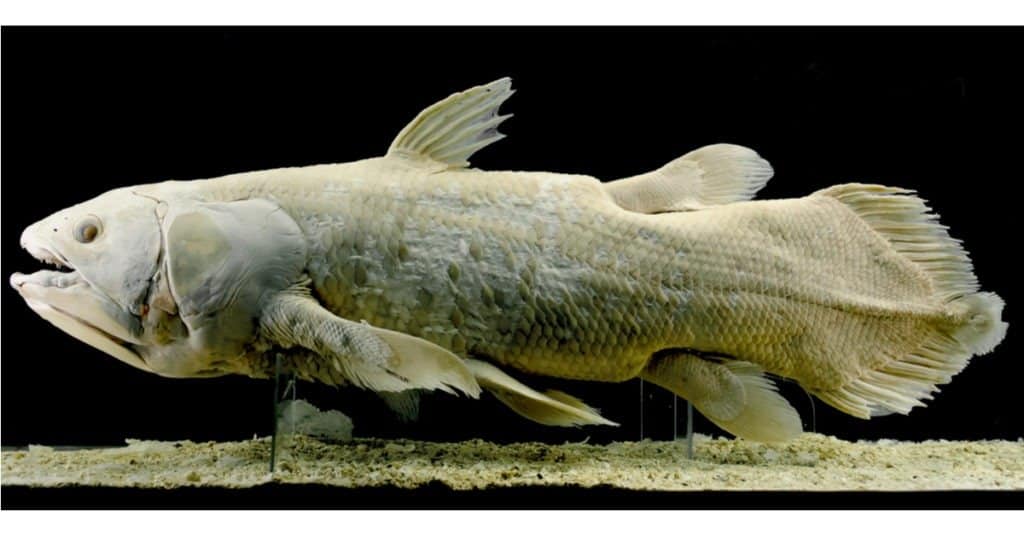
Dr. J.L.B. Smith, an ichthyologist, was the only one able to identify the fish. He confirmed it was a coelacanth, and it was later given the scientific name Latimeria chalumnae to honor Courtney-Latimer. Original coelacanth fossils date back 400 million years, but this was the first live specimen ever discovered. Until 1938, the species was thought extinct, along with many other species wiped out during the Cretaceous Period.
A Living Fossil, Or Something More?
After 1938, people reported many more coelacanths, starting with a 1952 catch in the Comoros. Two notable finds came decades later. The first happened in 1998 in Sulawesi, Indonesia, but this coelacanth was a different color. The 1938 specimen was steel blue, but this one was brown, leading scientists to confirm it was a different species. In 1999, scientists gave it the scientific name Latimeria menadoensis.
- 1938 Captain Goosen's trawl net brings up a coelacanth The first live specimen ever discovered; until then the species was thought extinct.
- 14 years later
- 1952 A catch in the Comoros
- 46 years later
- 1998 A brown coelacanth in Sulawesi, Indonesia Scientists confirmed it was a different species.
- 1999 Latimeria menadoensis is named
- 2007 A catch in Nungwi, Northern Zanzibar Researchers confirmed another Latimeria chalumnae.
The second sighting happened in 2007 in Nungwi, Northern Zanzibar. Another fisherman caught it and called in experts to identify what was stuck in his net. This time, researchers from the Institute of Marine Sciences in Zanzibar confirmed the fish was another Latimeria chalumnae.
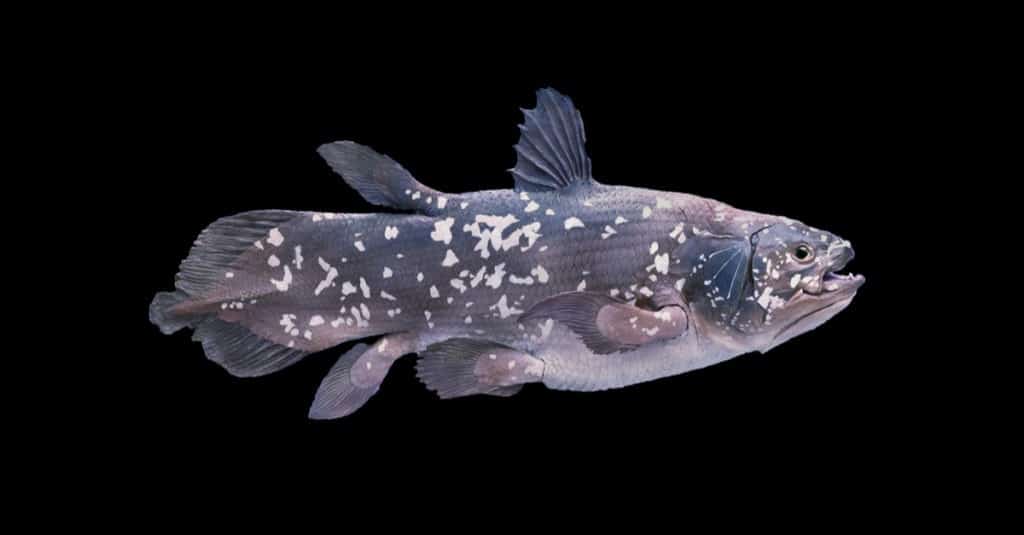
Some coelacanths are grayish-blue, while others are brown or muddy-colored.
©AlessandroZocc/Shutterstock.com
Between 2003 and 2007, researchers recorded 36 coelacanths in Tanzania alone. This is a miracle, considering an adult female’s reproductive cycle includes a five-year gestation period. They give birth to only 5 to 25 pups at a time, and they don’t sexually mature until around 55 years old. This makes the coelacanth’s life cycle extremely long and slow.
This is partly why the IUCN lists Latimeria chalumnae as Critically Endangered. Little is known about the species, and though many call it a “living fossil,” many experts disagree with this label. Slight differences in coelacanth fossils make some scientists pause when categorizing the current species alongside its ancient ancestors. While they’re undoubtedly related, differences in shape, size, and habitat confirm evolution.