
Quick Take
- One of these creatures was hiding in plain sight, sitting in a museum collection for years before anyone realized it was still alive. Protulophila's hidden survival →
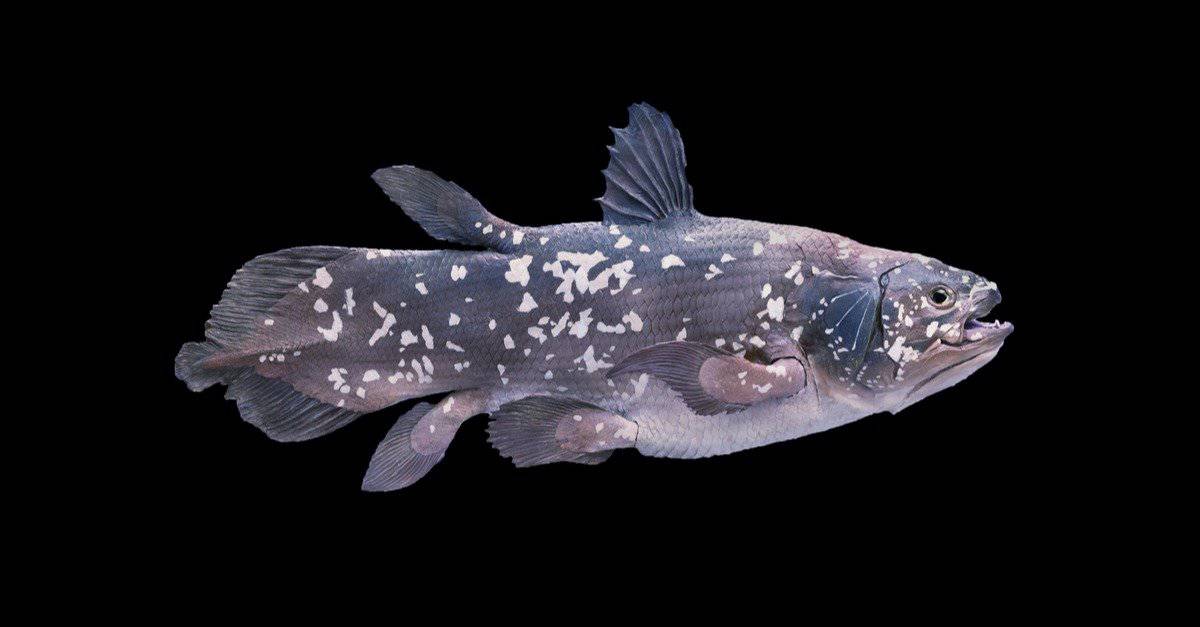
- A fish thought to have died with the dinosaurs 65 million years ago turned up very much alive, and its body holds features science never expected to see in a living animal. Meet the living coelacanth →
- One of these rediscoveries happened during a completely routine dive, and the scientists weren't even looking for it. The accidental rediscovery →
- Less than 0.001% of the deep ocean floor has been properly explored, a number that hints at just how many "extinct" species might still be down there.
The ocean covers around 70% of the planet’s surface. However, as of April 2026, only 28.7% of the global seafloor had been mapped. Scientists have only properly explored less than 0.001% of the deep ocean seafloor. So it’s no surprise that as we learn more about the ocean, scientists and researchers are discovering live animals that were once declared extinct. Read on to learn about five animals that surprised everyone just by being alive.
Protulophila
Protulophila are microscopic hydrozoans similar to corals and sea anemones. They inhabit the shell-like tubes of marine serpulid worms, or fan worms. This small organism, which lives in colonies, measures less than 0.0039 inches. It is first attached to a solid object as a polyp. Then, it branches off and changes into a little jellyfish. They were believed to have vanished around four million years ago.
In 2014, researchers found 1-million-year-old protulophila fossils in Wanganui, New Zealand. When they realized that the species had lived millions of years later than they thought, scientists searched museum archives to re-examine live-collected tubeworms gathered in 2008. Shockingly, they found that these worms still contained living colonies.
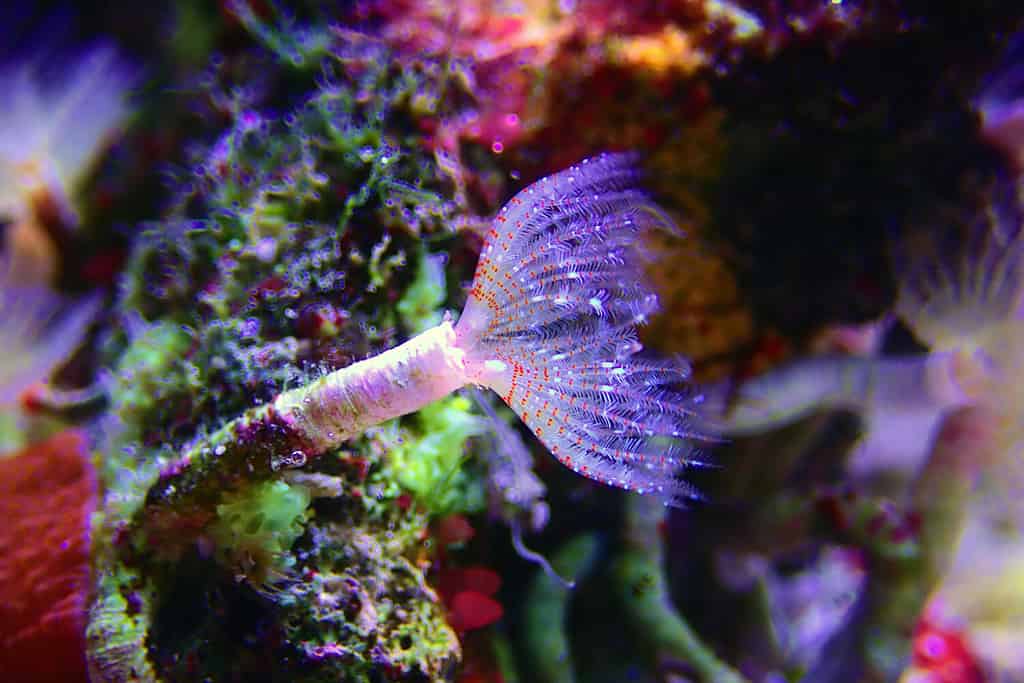
Protulophila lives in the calcareous tubes of marine fan worms, like the one pictured above.
©Vojce/Shutterstock.com
Monoplacophoran
One of the most significant discoveries in contemporary biology occurred off the coast of Costa Rica in 1952. Ten live monoplacophorans were discovered from a depth of 11,700 feet. It was once believed that they went extinct several million years ago. They were previously only known from Paleozoic fossils. Today, there are between 30 and 40 known species.
monoplacophorans have a cap-like shell that measures from approximately 0.12 inches to 1.18 inches in diameter. They have been found in deep-sea habitats and ocean trenches off the coastlines of Central and South America at depths of up to around 20,000 feet. Monoplacophorans can be found on both softer bottoms and harder substrates. They generally consume algae, detritus, and other microorganisms from the seafloor.
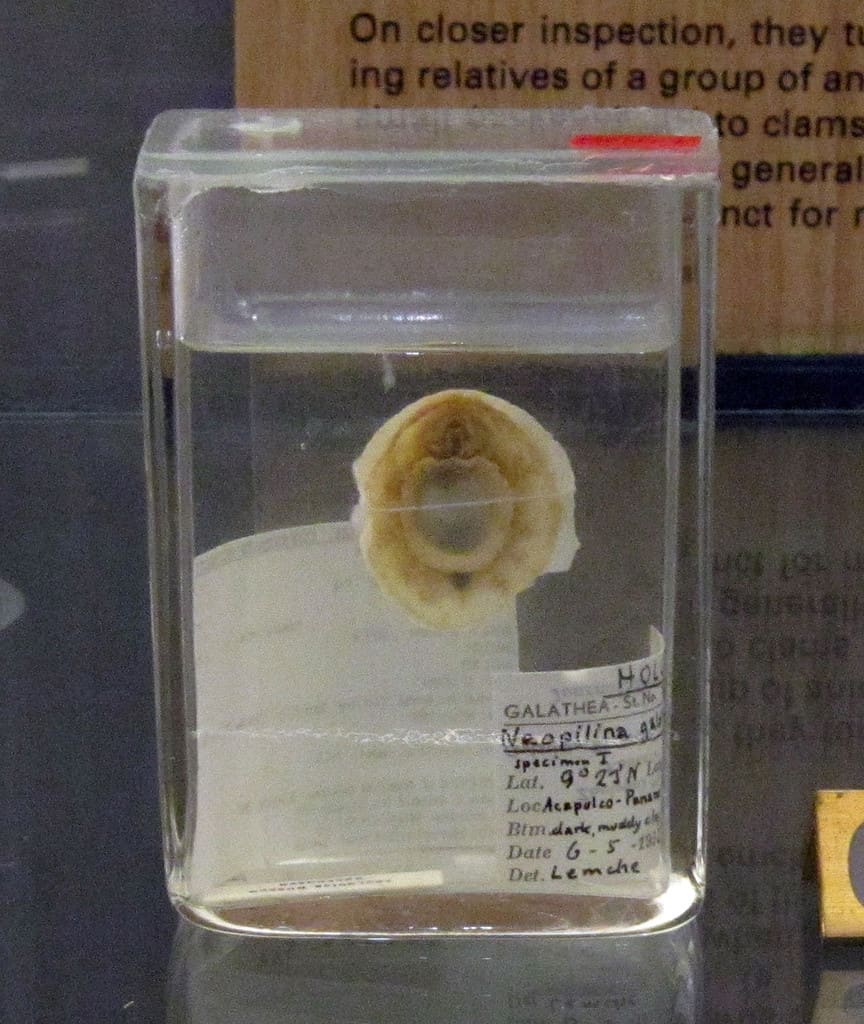
Monoplacophorans were rediscovered off the coast of Costa Rica in 1952.
©1,366 × 1,617 pixels, file size: 1.35 MB, MIME type: image/jpeg – Original / License
Goblin Shark
The goblin shark (Mitsukurina owstoni) looks like something out of a horror movie. These sharks are the only living members of the Mitsukurinidae family, dating back 125 million years ago to the beginning of the Cretaceous period. Modern goblin sharks were never exactly rediscovered after being lost, as scientists never knew they existed. However, scientists had believed that sharks in this family were extinct until a live goblin shark was caught in Japanese waters in 1898. Due to the similarities of their current form to extinct goblin shark species, they are often referred to as living fossils.
The bizarre-looking goblin shark has a long, flat snout with a staggering number of long, pointed teeth. They have elastic jaw ligaments at the joint of their jawbone that allow their jaw to rapidly shoot forward to capture prey. These sharks generally reach 10-13 feet, with some large individuals measuring up to 20 feet. Goblin sharks are typically found around continental slopes and deep trenches across the Atlantic, Pacific, and Indian Oceans.
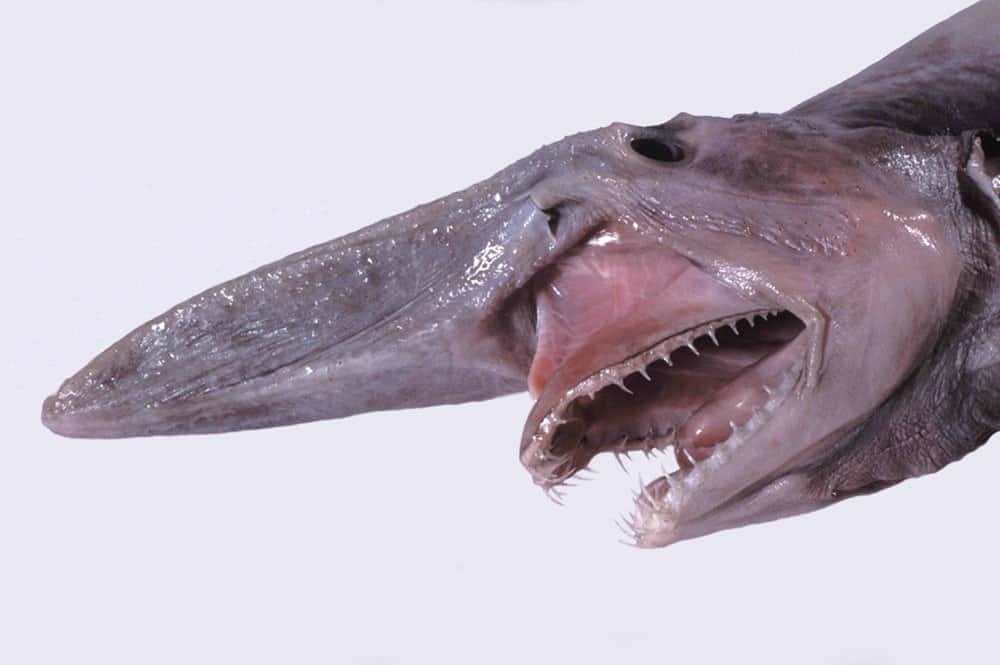
Goblin sharks can extend their jaws to capture prey.
©Dianne J. Bray Museums Victoria / CC BY 3.0 AU – Original / License
Neptune’s Cup
The Neptune’s Cup sponge (Cliona patera), was discovered for the first time in Singaporean waters in 1822. However, overharvesting caused the number of Neptune’s Cup sponges to rapidly decrease. It disappeared from Singapore waters by the 1870s, and it was last seen in 1908 off Bantam in West Java, Indonesia. This led many scientists to conclude that the sponge was globally extinct.
However, in March 2011, marine biologists surveying the southern islands of Singapore came across an unusual-looking sponge while conducting a typical survey dive. A sponge expert from Singapore later identified it as a Neptune’s Cup sponge. These sponges can grow to over a meter (3.3 feet) in both height and diameter. They are found in soft sediment habitats in the Indo-West Pacific.
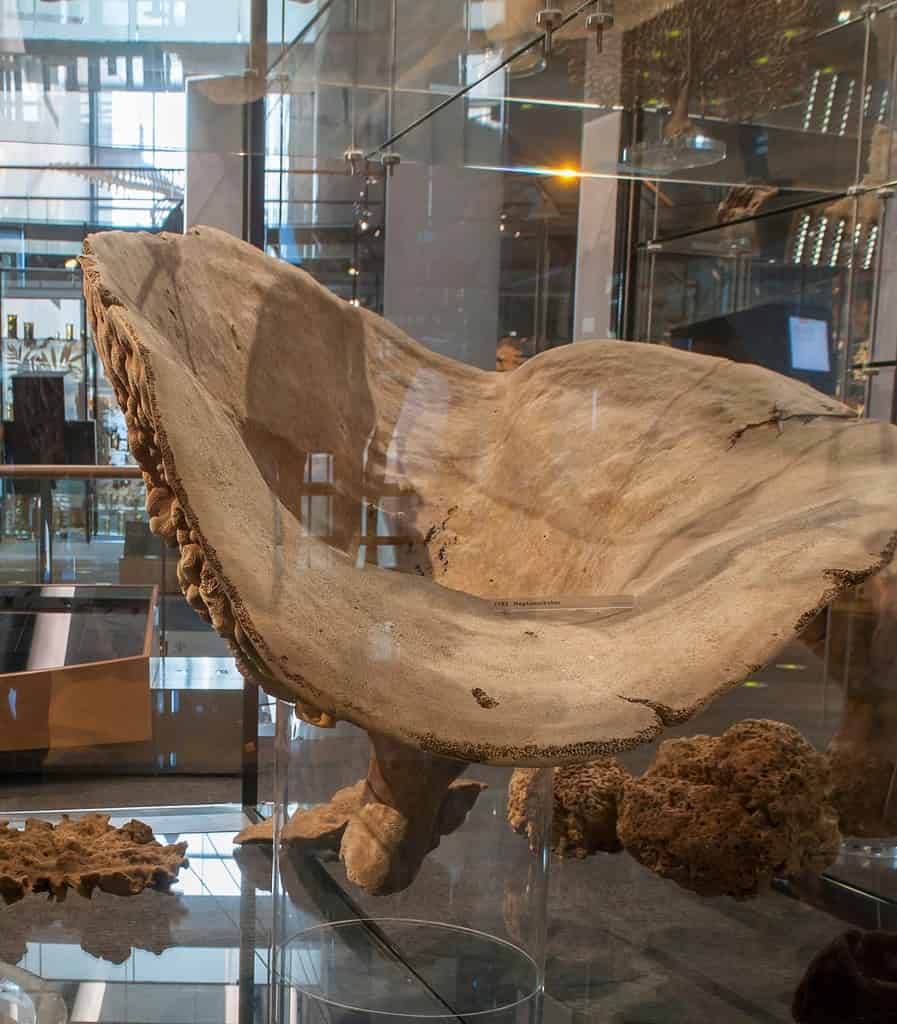
Marine biologists rediscovered Neptune’s sponge in March 2011 while conducting a typical survey dive.
©1,900 × 2,170 pixels, file size: 1.23 MB, MIME type: image/jpeg – Original / License
Coelacanth
The coelacanth was previously only known from fossils. They were believed to have vanished 65 million years ago in the same mass extinction event that wiped out the dinosaurs, until one was found off the coast of South Africa in 1938 by museum curator Marjorie Courtenay-Latimer. These lobe-finned fish have fleshy, muscular, limb-like fins that are attached to the body by a central bone. They also have hinged skulls so they can open their mouths wider when feeding on large prey.
There are currently just two known living species: the West Indian Ocean coelacanth (Latimeria chalumnae) and the Indonesian coelacanth (Latimeria menadoensis). Coelacanths once inhabited a range of environments, including shallow streams, freshwater lakes, and deeper ocean regions. Coelacanths are now mainly associated with caves and rock crevices in deep-ocean volcanic regions, such as the area around the Comoros Islands.
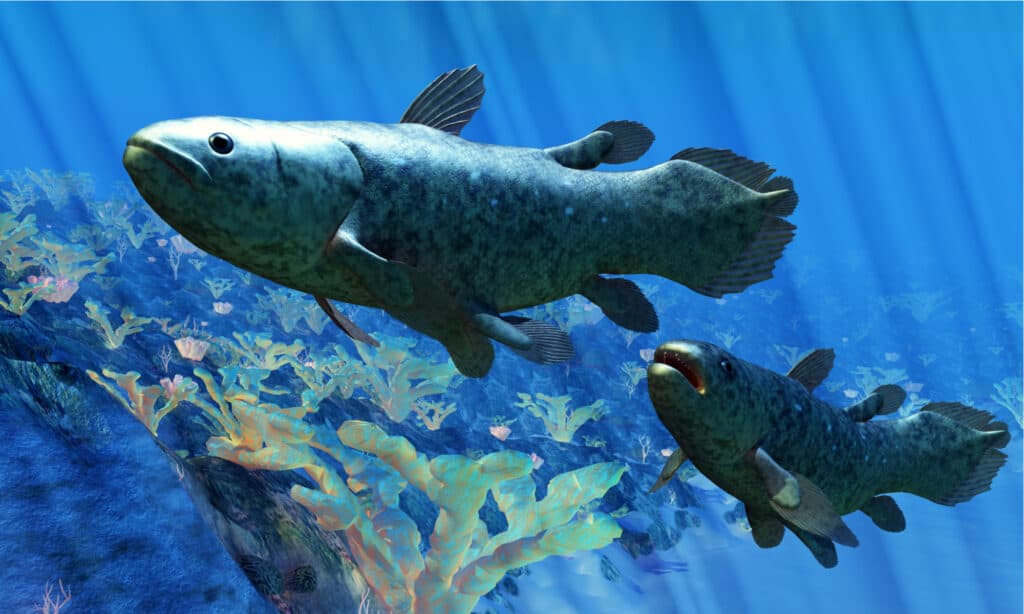
Scientists have discovered two living species of coelacanth.
©Catmando/Shutterstock.com