
Quick Take
- The scientist who identified one of history's most stunning zoological finds almost never saw it, and a costly delay nearly erased the evidence entirely. See the costly delay →
- A 32-year-old museum curator with no formal science training spotted something that every credentialed expert had missed for decades. Meet the curator →
- The 'living fossil' label turned out to be more wrong than right, and the reason behind this challenges what most people think evolution actually looks like. Explore the DNA evidence →
- After the 1938 catch, researchers waited 14 years to find out whether it was a fluke, and the answer they eventually got reshaped everything scientists thought they knew about the fish's survival. See the 14-year wait →
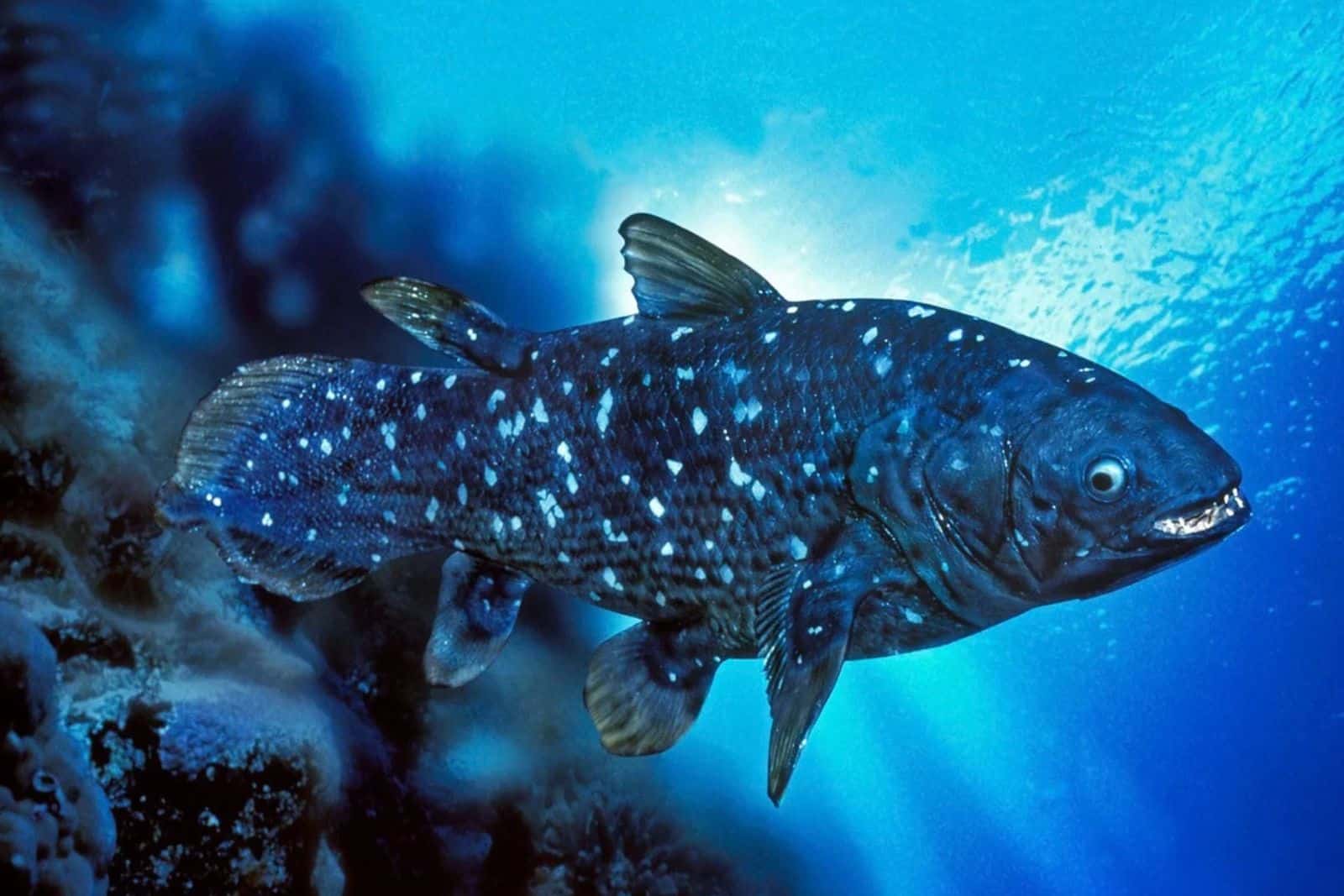
On December 22, 1938, Captain Hendrik Goosen brought his trawler Nerine into the harbor at East London, South Africa, and called a friend to come look through his catch, as he often did. Among the sharks and seaweed on deck lay a large fish unlike anything in his years at sea: steely blue, nearly five feet long, with strange limb-like fins, according to a historical account of the find.
The friend he called was Marjorie Courtenay-Latimer, the 32-year-old curator of the local museum. She had no formal training in science, but she knew enough to recognize that whatever this fish was, it wasn’t in any of her books, as the Linda Hall Library recounts. Captain Goosen had an arrangement with her: whenever something unusual turned up in his nets, she got first look.
A Museum Curator’s Eye for the Unusual
Courtenay-Latimer later described it as the most beautiful fish she had ever seen. Unable to identify it and unable to preserve the whole specimen in East London’s heat, she sent it to a taxidermist and mailed a letter with a rough sketch to J.L.B. Smith, an ichthyologist and chemistry lecturer she knew at Rhodes University, more than 300 miles down the coast.
Smith was away when the letter arrived, and by the time he wrote back asking her to save the fish’s gills and internal organs, 11 days had passed. The soft tissue was already gone, lost to the climate and the taxidermist’s work, a detail that would frustrate researchers trying to study the fish for years afterward.
Confirming a “Living Fossil”
Smith didn’t reach East London himself until February 16, 1939, nearly two months after the catch. The moment he saw the mounted specimen, he knew exactly what he was looking at: a coelacanth, a fish known to science only from fossils and believed to have died out around the time the dinosaurs went extinct, some 65 million years earlier.
He named the species Latimeria chalumnae, after Courtenay-Latimer and the river near where it was caught. It would be 14 more years before a second confirmed specimen turned up, in the Comoro Islands in 1952, proving the East London fish hadn’t been a one-off fluke but a sign of a population that had been quietly surviving all along. Between 1938 and 1975, researchers went on to record 84 more coelacanths, all from the waters around the Comoros.
What “Living Fossil” Gets Right, and Wrong
The nickname stuck because it captures something real: living coelacanths look remarkably close to their fossilized ancestors, with a body plan that has barely shifted in tens of millions of years. But later genetic research has complicated the picture. A 2021 study found that the African coelacanth picked up dozens of new genes through contact with other species roughly 10 million years ago, evidence that its DNA has kept changing even while its outward shape stayed put.
As Harvard researcher Jessica Alföldi put it after helping sequence the coelacanth’s genome, “it’s not a living fossil; it’s a living organism.” The body may look frozen in time, but the animal underneath has kept evolving all along, just not in ways that show up at a glance.