
Quick Take
- The caterpillar survives a mass larval exodus, which should kill it. What keeps it standing? See how it survives →
- Healthy caterpillars flee danger. Infected ones turn into something far more aggressive. Meet the zombie bodyguard →
- A 2008 experiment tested how the bodyguard really works. The results were stranger than expected. Explore the 2008 study →
The world of parasitism is merciless and gruesome. Even the goriest slasher film has nothing on the life cycles of parasites and creatures that exhibit parasitic behavior. In fact, some parasitic creatures will stop at nothing to ensure that their young reach maturity, even turning their victims into docile, half-dead bodyguards. That is the modus operandi of Glyptapanteles wasps, insects that use geometrid caterpillars as hosts, living incubators, and eventually larval guardians.
It sounds rather contradictory: injecting a caterpillar with eggs so that the growing wasps can eat it from the inside out. The larvae, however, eat just enough to turn that caterpillar into a compliant enforcer, capable of standing guard over the larvae in their final stages of growth. Research on this parasitic phenomenon shows that transforming a caterpillar into a bodyguard through infection is remarkably efficient. Even though the caterpillar is reduced to a comatose-like state or fits of thrashing around violently, it still offers the wasp larvae enough protection to reach maturity. Let’s dive into the merciless world of wasp parasitism and how they manage to take control of caterpillar bodies and minds.
From Egg to Authority
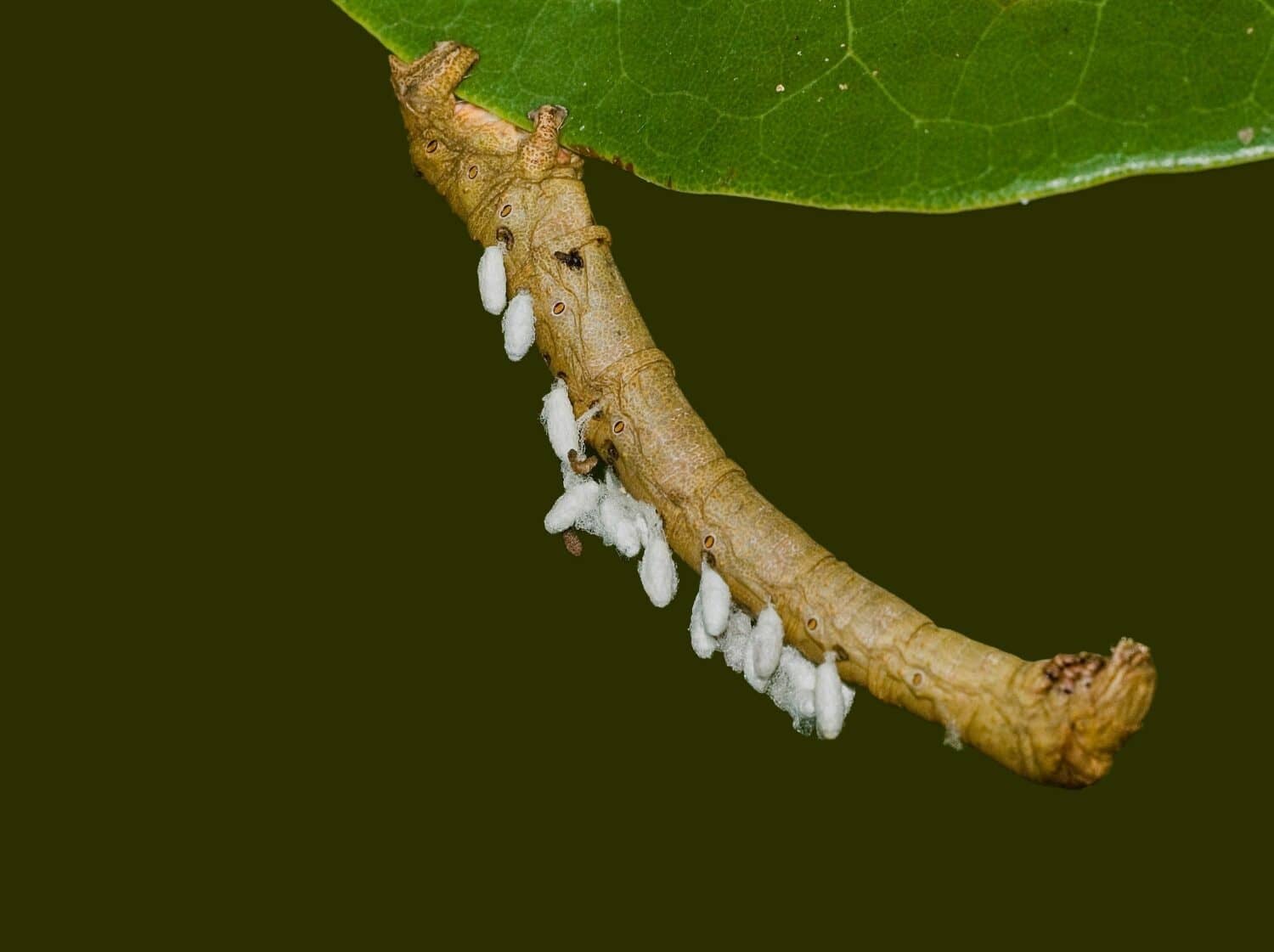
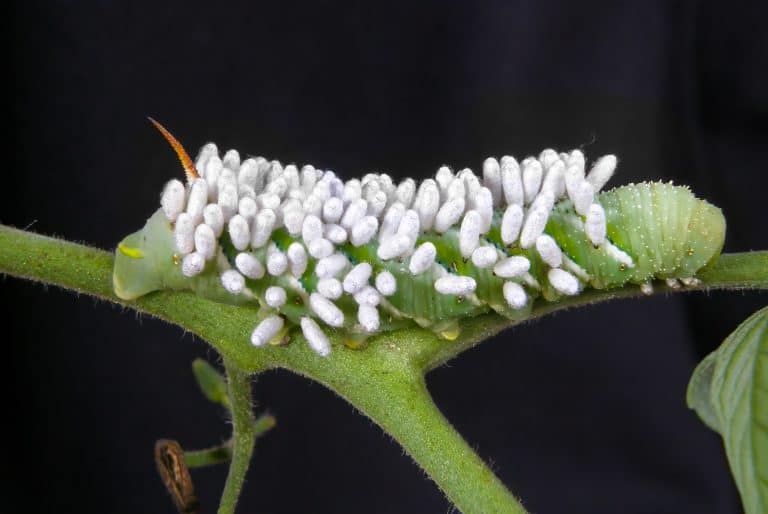
Glyptapanteles wasps lay eggs in caterpillars, which eventually renders the hosts into half-dead bodyguards.
©Donna Bollenbach/Shutterstock.com
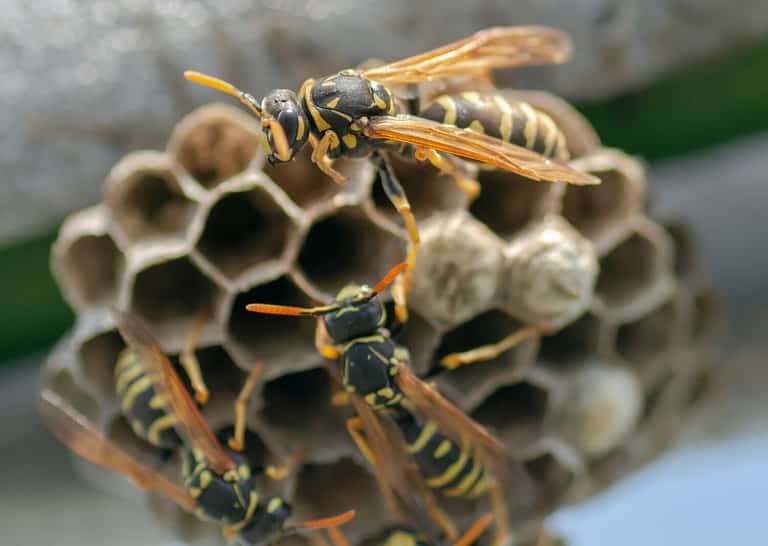
Wasps that belong to the Glyptapanteles genus are endoparasitoids. This means they parasitize living hosts for the sake of their own development, often at the host creature’s expense. There are plenty of gruesome examples of parasitism out there, but not many kill two birds with one stone quite like what Glyptapanteles wasps do to geometrid caterpillars (inchworms, spanworms, loopers). The process starts when an adult female wasp finds a caterpillar.
The female wasp briefly walks over a caterpillar, depositing around 80 eggs into the caterpillar’s body in a few seconds. The caterpillar, none the wiser, has become a host for a species that will eventually kill it. The eggs start to hatch inside the host, releasing larvae. The larvae begin to feed carefully on non-vital tissue, which allows the caterpillar to continue serving as a host long enough for the larvae to reach the next few stages of their growth cycle.
Things appear normal on the outside, at least for the time being. Once the wasp larvae reach their final development stage, however, things change drastically. They collectively chew exit holes out of the caterpillar host and spin white silk cocoons near the caterpillar’s body. The host caterpillar sustains considerable damage in the process. Theoretically, the mass larval exit should kill it. Instead, it lives on like a guardian zombie. It secures itself near the cocoon, stops feeding, and becomes a bodyguard for the maturing wasp larvae.
The Bumbling Bouncer
Normally, geometrid caterpillars hardly respond when a predator approaches. This is not the case for parasitized caterpillar hosts. They turn into living statues, guarding the wasp cocoons. A quick glance would make you think they were dead, but they are somehow still alive and remarkably formidable.
35%
%
of predator-pupae interactions still ended in contact when the bodyguard caterpillar thrashed, in laboratory settings
If predators approach, like stink bugs, the caterpillars swing their heads forcefully and thrash about. When replicated in laboratory settings, these thrashings successfully reduce predator-pupae contact to just 35% of interactions. This behavior is stranger in a larger context; uninfected caterpillars rarely show this kind of aggression. However, the caterpillar’s time is limited. Once adult wasps emerge from their cocoons, the caterpillar guard dies within a few days.
It’s one of the stranger examples of parasitism in the insect world. It led scientists to try to understand the exact mechanisms that made this parasitism possible.
Left-Behind Larvae
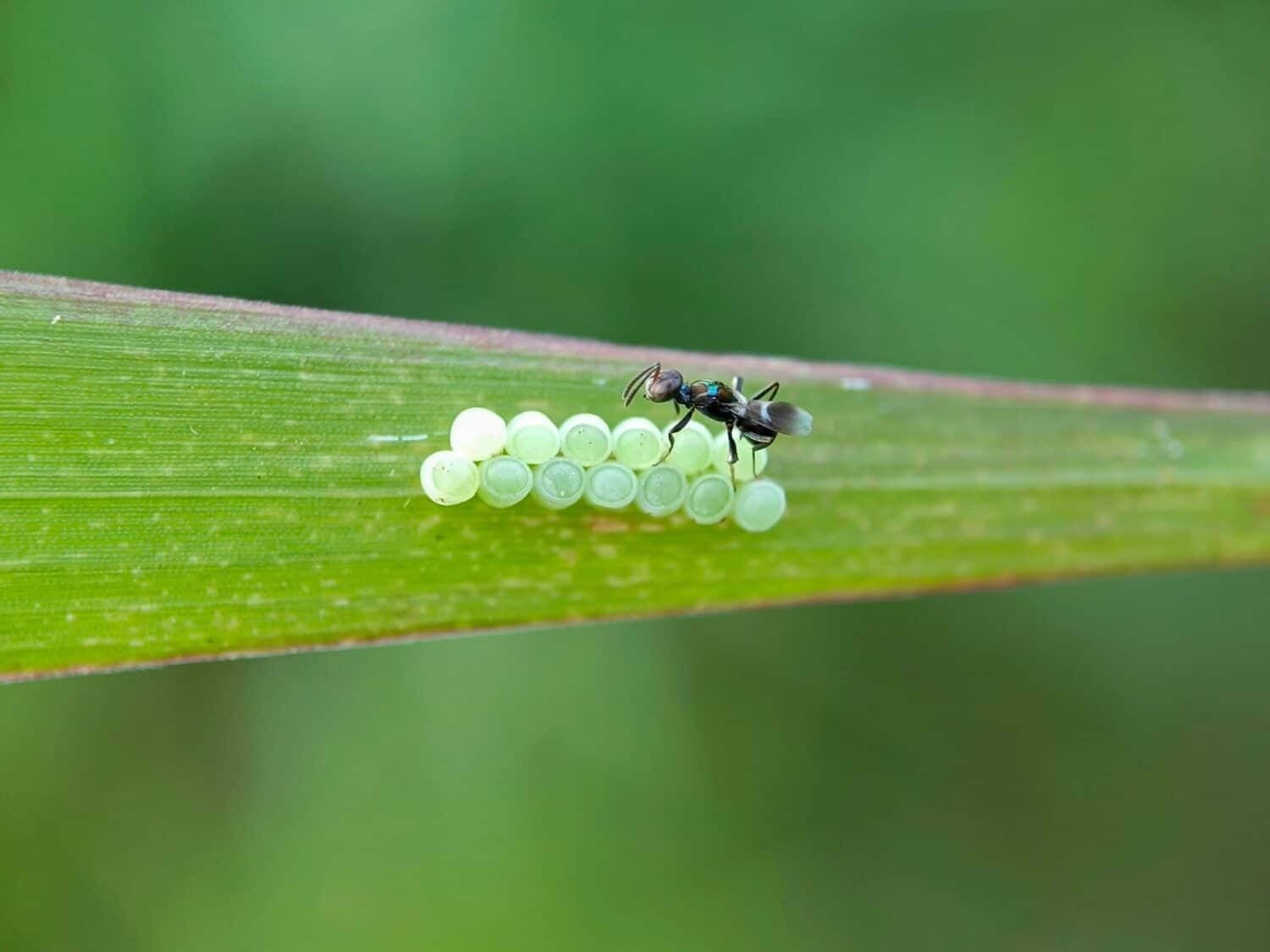
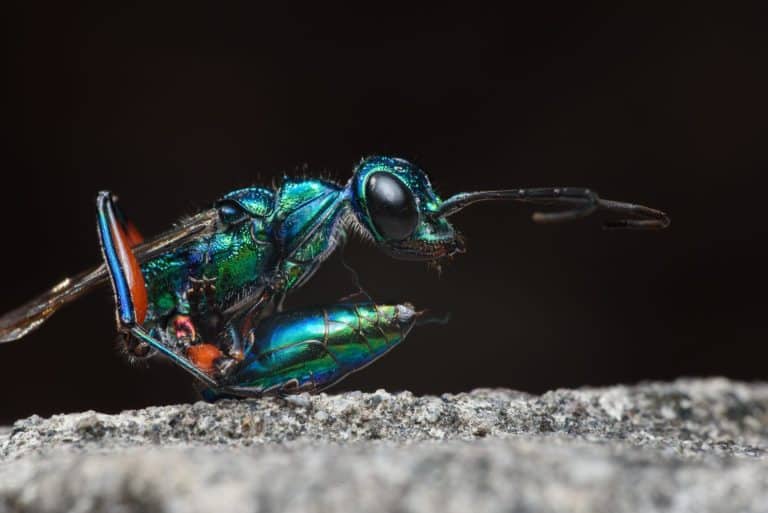
The caterpillar may die in the process, but the growth cycle of the parasitic wasps also requires self-sacrifice by several wasp larvae.
©Les.id/Shutterstock.com
In 2008, researchers Arne Janssen, Amir Grosman, and their colleagues published an eye-opening paper on the mechanics behind wasp-caterpillar parasitism. They performed experiments on this phenomenon, starting with tracking locomotion and predator interactions. The researchers found that parasitized caterpillars swung their heads ten times more when disturbed than healthy, uninfected caterpillars. They also removed bodyguard caterpillars from cocoon setups to measure survival rates.
Perhaps the most crucial aspect of their study hinged on the caterpillar hosts themselves. When the researchers dissected bodyguard caterpillars, they found one or two larvae still inside the host bodies. This led them to hypothesize that controlling the caterpillar required larval influence. While they weren’t sure of the exact mechanism, they posited that these left-behind larvae somehow continue controlling the host caterpillar. This might involve manipulating the host’s central nervous system or hormones, with the left-behind larvae effectively sacrificing themselves for the sake of the others.