
Quick Take
- A wasp lays its egg inside a living ladybug, but the real manipulation doesn't begin until after the larva has already left. See how the egg is laid →
- The wasp recruits a third organism as a biological weapon to control the ladybug's nervous system, and that organism is not another animal. Discover the viral weapon →
- Some ladybugs survive the entire ordeal and go on to live normal lives, though this outcome depends entirely on one specific thing happening inside their body. Learn which ladybugs survive →
Parasites are organisms that live on or inside another living thing (called a host). What’s not so well known is that some of these parasites can alter the behavior of the host to their own advantage. This astonishing ability can result in some truly bizarre behavior on the part of the host. Here, we describe how a parasitoid wasp, called Dinocampus coccinellae, changes a ladybug’s behavior to protect its offspring – and this may be with a little help from a virus!
Female-Only Asexual Reproduction
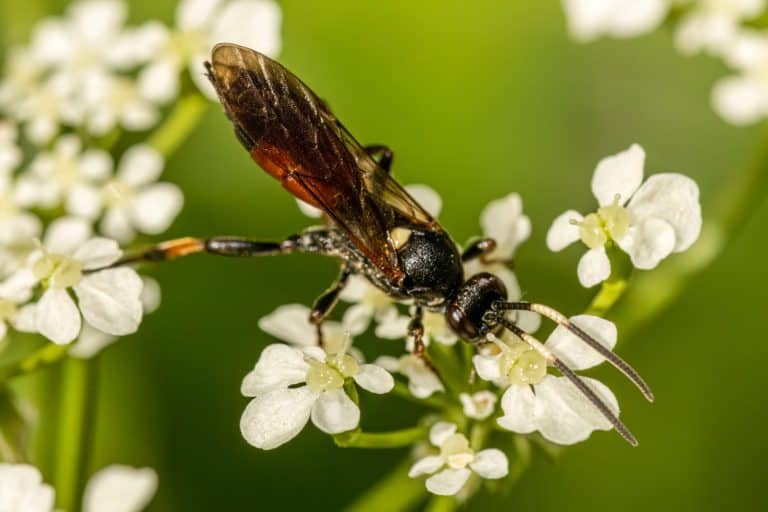
Dinocampus coccinellae is a tiny member of the Braconidae family of wasps. It has a wide range that likely covers most of the temperate, subtropical, and tropical climatic zones. These wasps are only around the size of a grain of rice, with deep green eyes and most of their body is brown. One of the most surprising things about them, however, is that most of them are female. Males have been recorded, but they are rare.
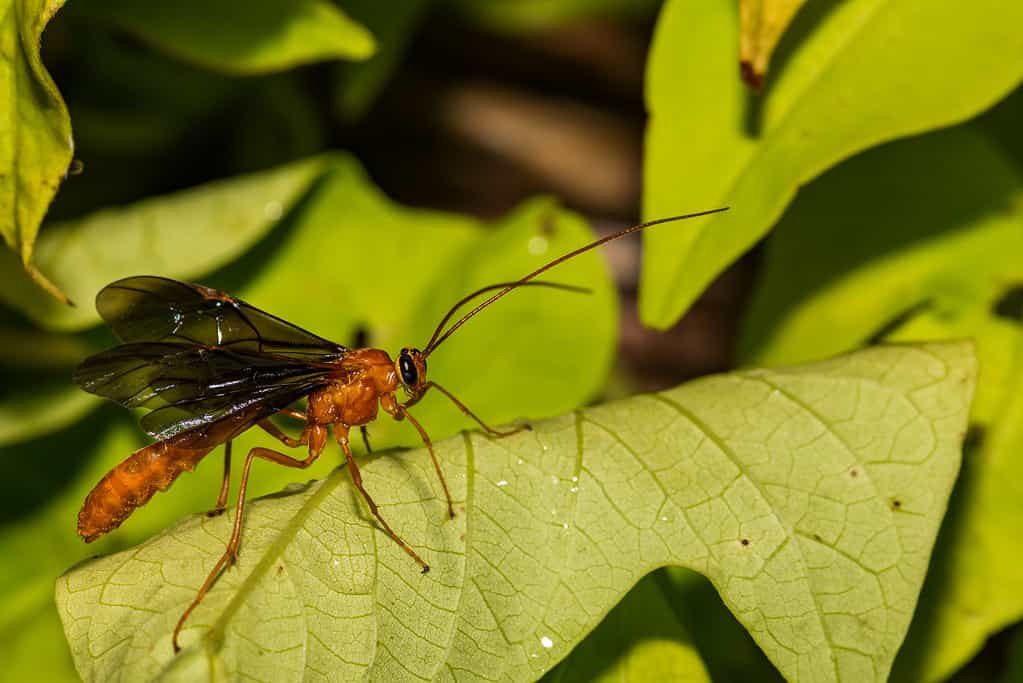
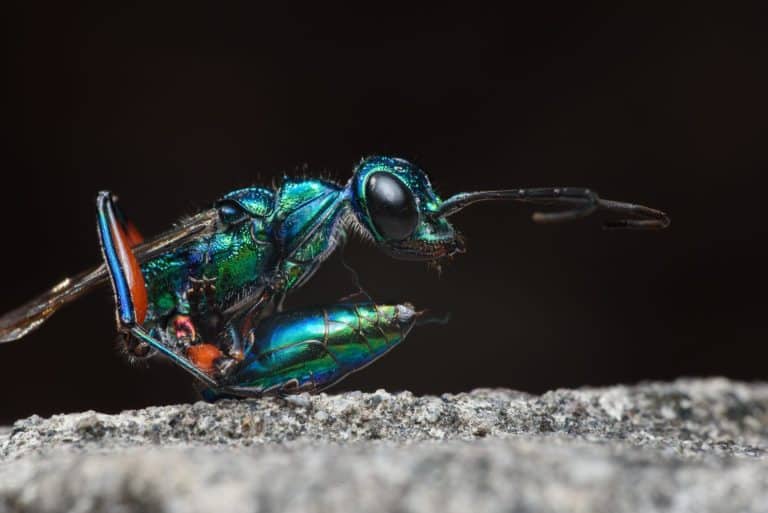
Dinocampus coccinellae wasps lay their eggs in hosts.
©JasonOndreicka/iStock via Getty Images
The females reproduce through a process called thelytokous parthenogenesis, which is a type of asexual reproduction. The new generation develops from unfertilized eggs into females. To do this successfully, they rely on an entirely different species – the spotted lady beetle (Coleomegilla maculata).
How Does a Wasp Use a Ladybug for Reproduction?
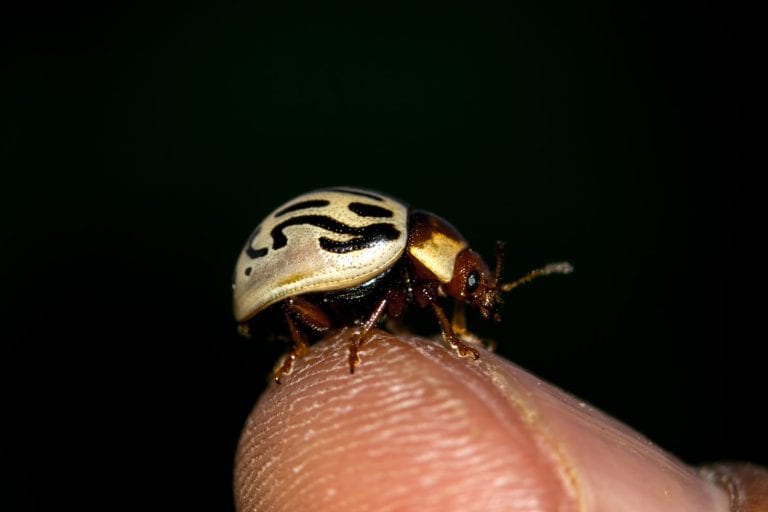
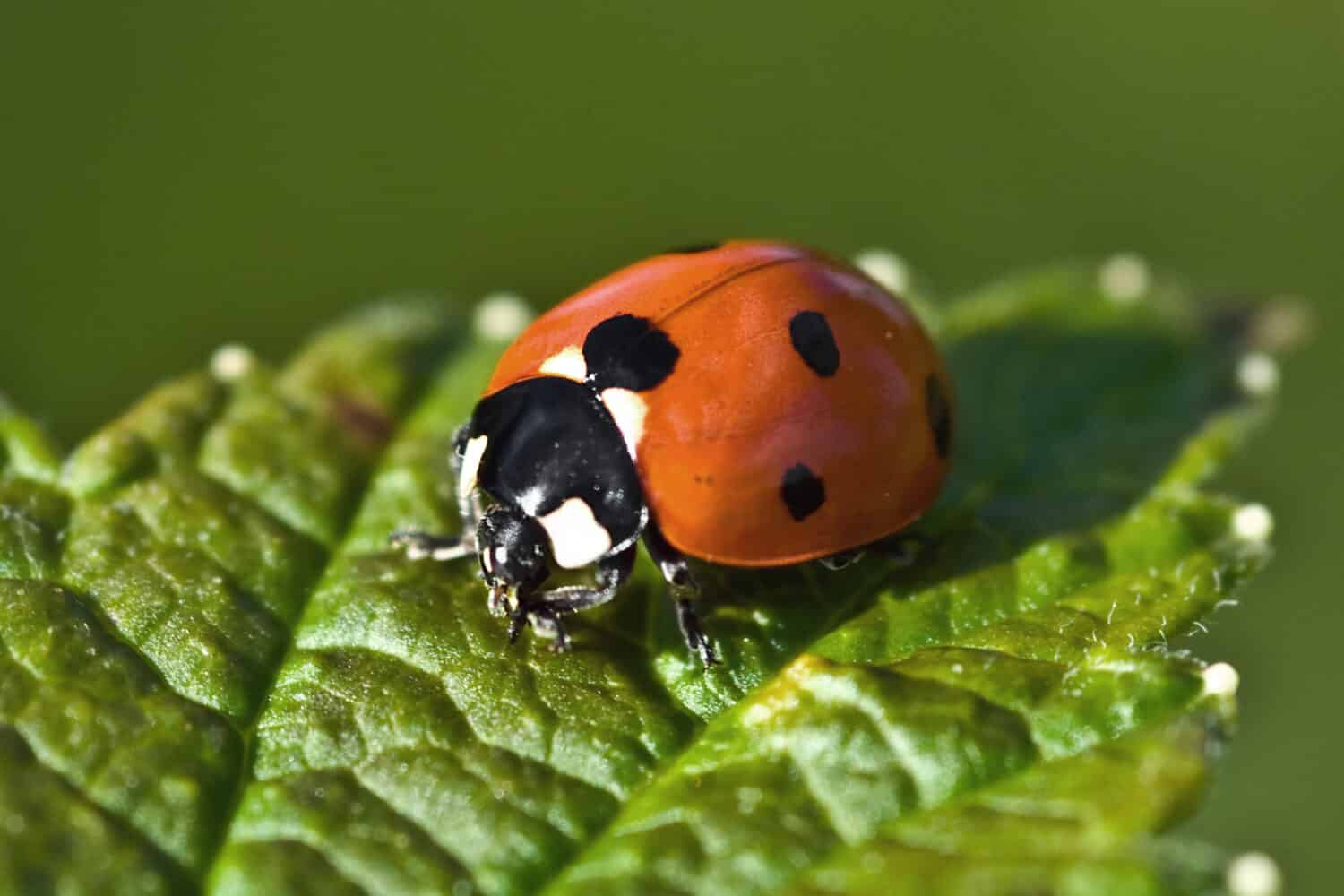
Coleomegilla maculata is commonly known as the spotted lady beetle or 12-spotted lady beetle. They are found throughout North, Central, and South America, living on their host plants, which include corn, cotton, and apples. They have an oval-shaped body that is red with six black spots on each wing.
The wasps view the ladybug as a living nursery. They locate the beetle using scents and vision and tend to target adult beetles. Once they have found a suitable host, they thrust their ovipositor through any weak point they can find in the beetle’s cuticle. Through this tube-like body part, the wasp lays a single egg into the beetle. Even if the ladybug is parasitized by several wasps, only a single larva will develop; the developing larva uses its mandibles (jaws) to kill off other eggs and larvae!
Inside the beetle’s abdomen, the larva moves through its life stages (instars). It feeds on the bug’s body fat and sexual organs (gonads). This means that the host beetle stays alive through the whole unpleasant process, which lasts around 20 days. Then, the prepupa (transitional stage between larva and true pupa) emerges from the beetle’s body. You’d think that this would mark the end of the beetle’s ordeal, but it’s just the start!
Beetle Behavior Control
The prepupa breaks out of the beetle’s body through the membrane between the fifth and sixth or sixth and seventh abdominal plates. It spins a cocoon between the ladybeetle’s legs and causes the beetle to become immobile. The parasite still has a use for the beleaguered host. It now has to stand guard while the wasp pupates.
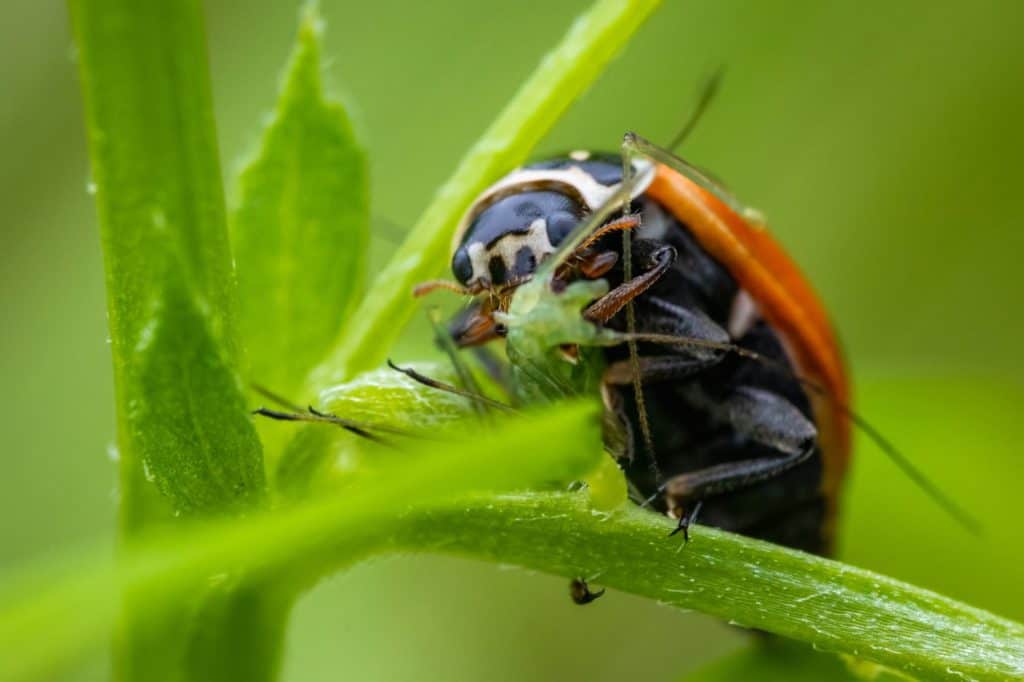
The ladybug behaves in a way that protects the pupa.
©Zmrzlinar/Shutterstock.com
Simply standing there is quite useful, as the ladybug’s bright colors serve as a deterrent. However, the wasp also alters the beetle’s behavior so that it scares off predators even more. The beetle remains static but displays tremors. When observed in laboratory settings, the beetle twitches at irregular intervals and makes grasping movements. This is even more off-putting for would-be predators. During this time, the ladybug does not eat. After around seven days, the young wasp emerges from the cocoon. Many host ladybugs succumb to starvation or fungal infection. Others recover from the paralysis, resume feeding, and some can even go on to reproduce!
How Do the Wasps Control Ladybug Behavior?
Scientists have been intrigued by how the wasp makes the ladybug behave in a way that protects the developing pupa. The adult wasp has left the scene, so they cannot exert any direct control. However, the changes may be caused by chemicals (venom), or it may be via a virus. Both of these are injected into the ladybug with the egg.
Studies have sequenced RNA (genetic material found in viruses) from the heads of parasitized ladybeetles. Scientists have called it the D. coccinellae paralysis virus, DcPV. It belongs to a family of picornavirus-like, (+) strand RNA viruses that infect insects. During larval development, virus load increased significantly inside the beetle.
Interestingly, the effects of the virus on glial cells (nerve cells) did not start until after the larva had emerged, even though they were packed with virus. Once the virus affects the nervous tissue, it creates swelling and vacuoles. Research has not yet established whether virus replication in glial cells directly or indirectly alters the behavior of the ladybeetle. There may be other indirect effects that cause the tremors.
This raises the fascinating prospect that the wasp parasite uses a third organism, namely a virus, as a biological weapon to control the ladybug host! What’s more, in ladybugs that recover and resume behaving normally, the virus has been cleared.