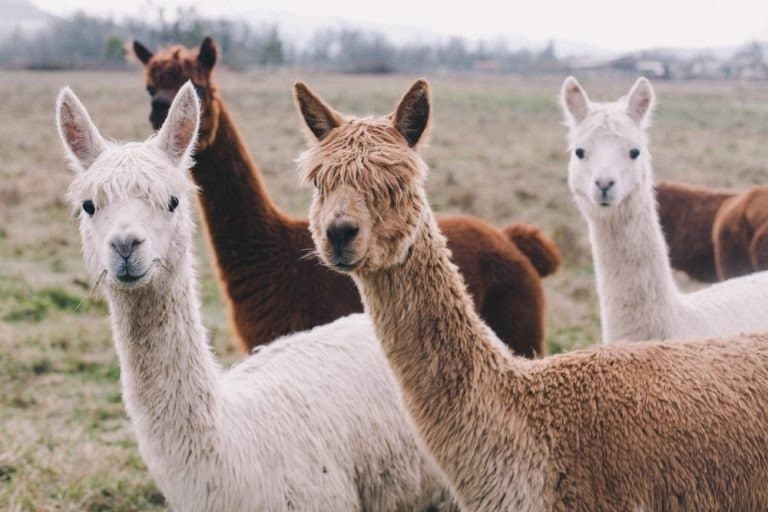

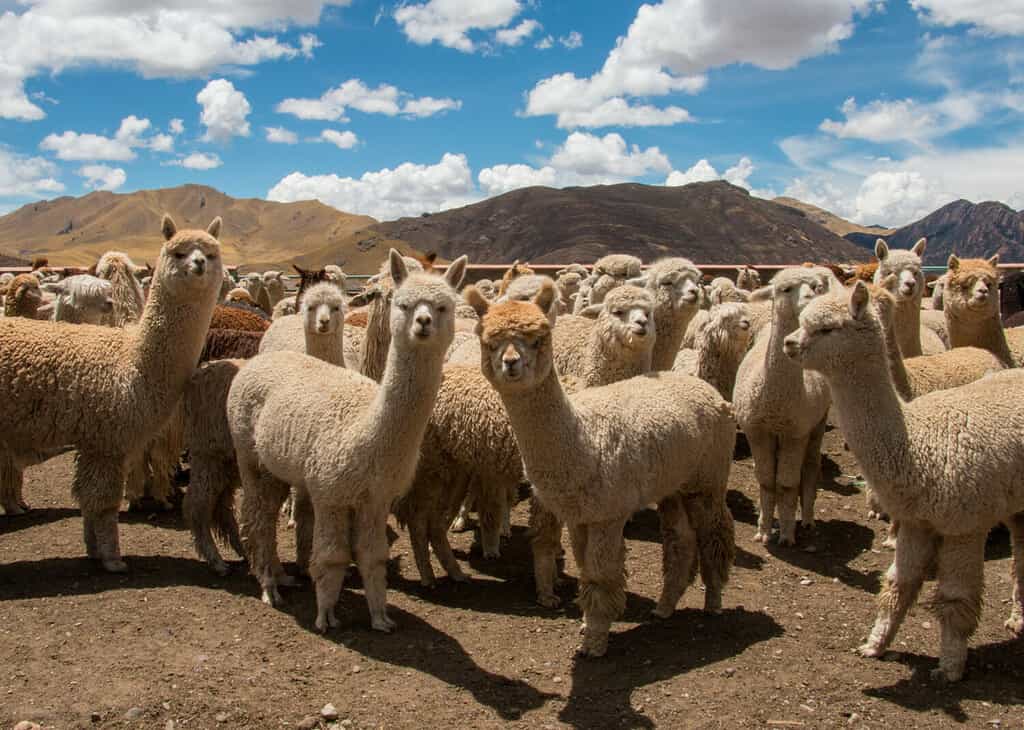
Alpacas are small camelid mammals raised by the ancient Incas in South America over 6000 years ago. Kept in herds, alpacas made their dainty way among the mountains of Peru, Chile, and Bolivia, where clothing made from their hair was reserved for Incan royalty. Although similar in several ways, the alpaca is a smaller animal than the llama. They are characterized by small heads, large eyes, and long necks. These animals can stand 32 to 39 inches from foot to withers and measure 5.5 feet in length on average.
These mammals have lived in domesticated herds in the Andes Mountains highlands since the Inca era and adapt well to other environments. They are friendly, intelligent, curious, and gentle animals that make wonderful pets. Let’s take a closer look at the top 10 incredible alpaca facts.

1. Alpacas Have a Therapeutic Effect
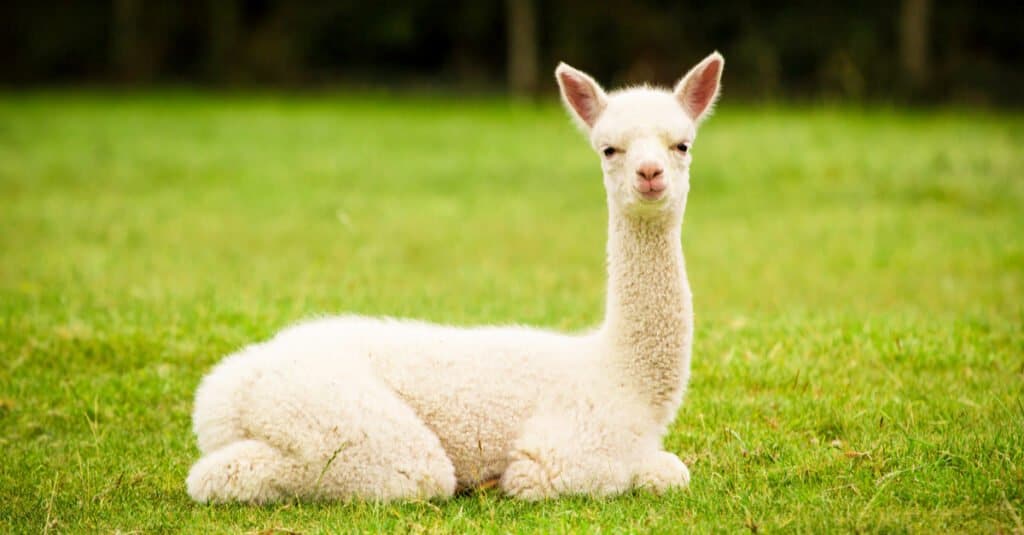
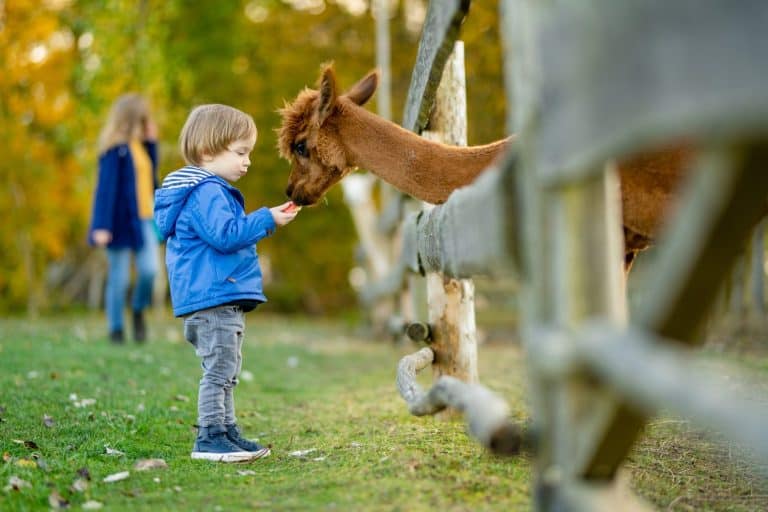
Alpacas are beautiful, friendly, and remarkably kind, making great company.
©murbansky/Shutterstock.com
Although most people are already familiar with therapy dogs, many hospitals and therapy institutes are introducing alpaca therapy. This is because most people become happier after cuddling with an alpaca, as it lifts their spirits. These animals are beautiful, friendly, and remarkably kind, making great company.
2. Alpacas Have Hypoallergenic Fleece
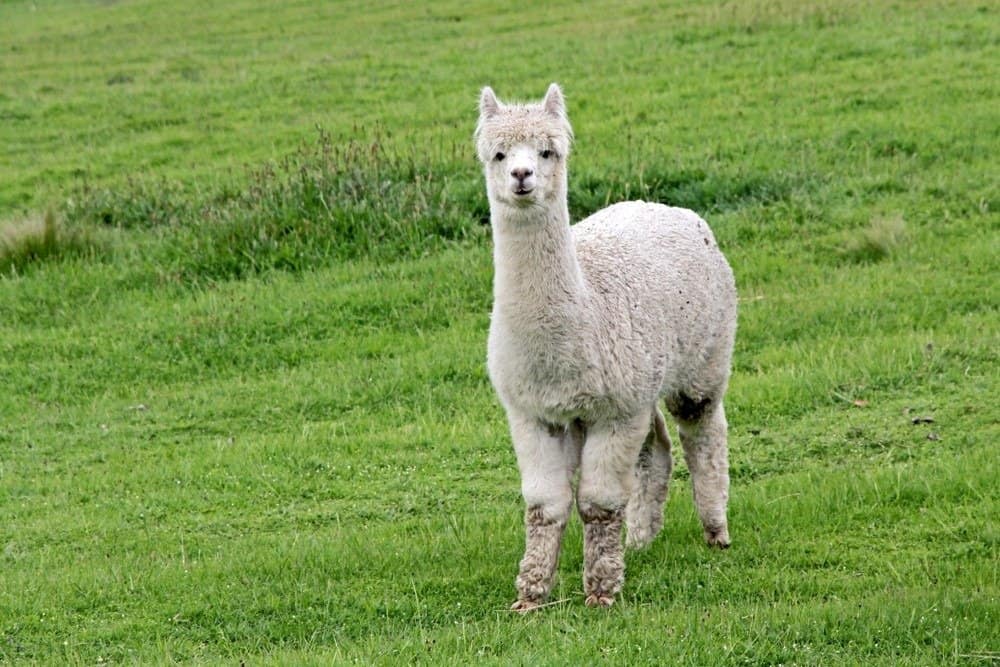
Like sheep, alpacas get sheared every year for their wool, which can be made into sweaters, scarves, and garments.
©Thomas Devenish/Shutterstock.com
Alpaca fleece is warm, and unlike sheep’s wool, it doesn’t itch, meaning people are less likely to develop allergies from it. Alpaca wool is hypoallergenic because it contains no lanolin and can be cleaned without requiring extremely high temperatures or harsh chemicals. Like sheep, alpacas get sheared for their wool, which can be made into sweaters, scarves, and garments.
3. Alpacas Come in Two Different Breeds
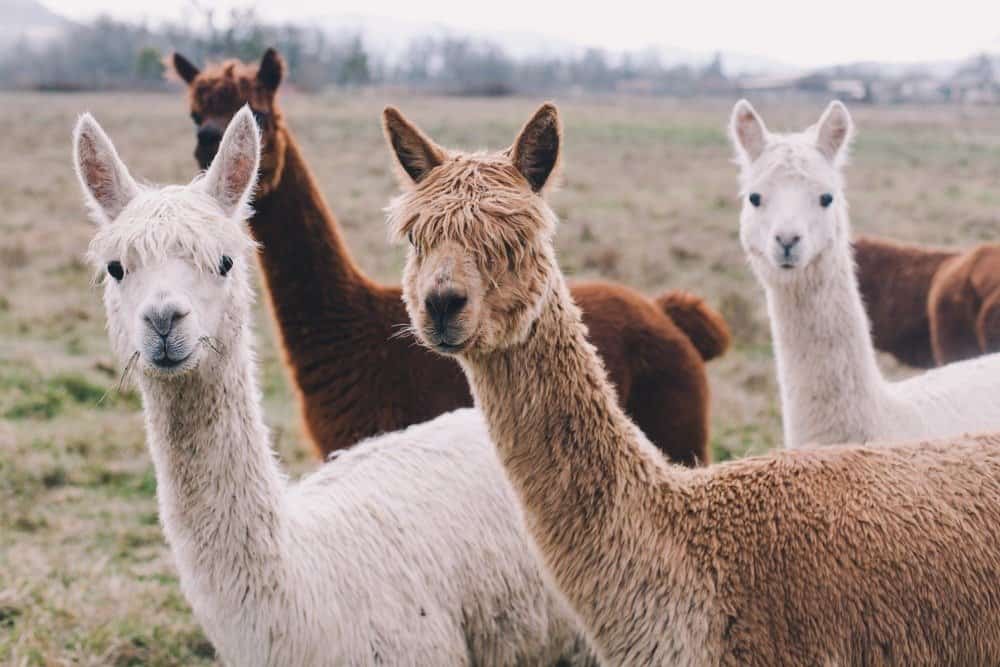
The Huacaya breed, which has a thick and fluffy fleece, comprises about 90% of the alpacas in the world.
©Canna Obscura/Shutterstock.com
Alpacas come in as many as 22 colors and hundreds of different shades, but there are only two breeds. The two breeds can be distinguished by their distinct fleeces. The Huacaya breed, which has a thick and fluffy fleece, comprises about 90% of the alpacas in the world. They are found predominantly in cool, high altitudes. Most alpacas you find in Canada are Huacayas. The Suri breed is defined by silkier fleece that grows into long locks of hair that hang from the body. It is thought that their silkier, longer, and less dense fleece is because they have adapted to living in lower, warmer places.
4. Alpaca Wool is Flame-Resistant and Water-Resistant
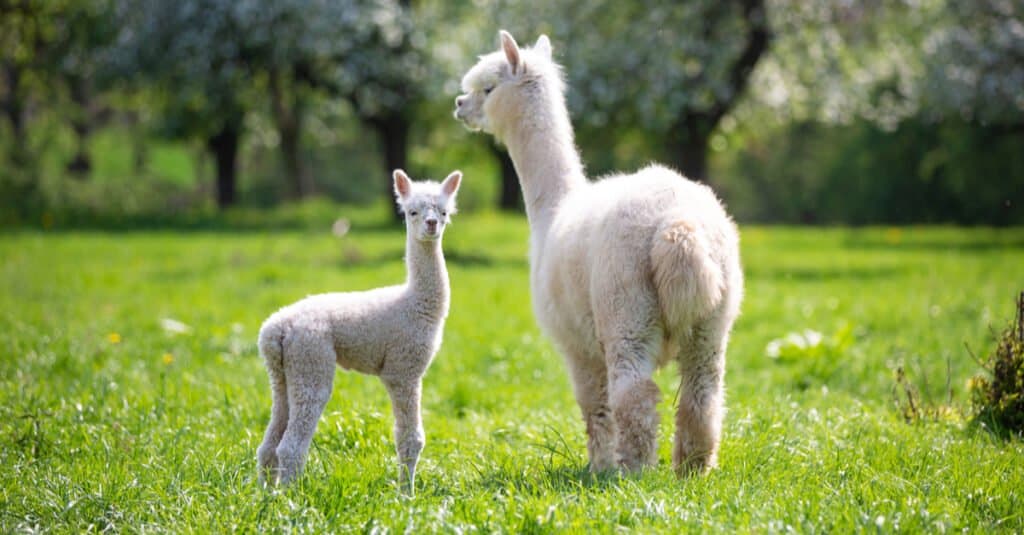
Alpaca fiber is water-resistant and flame-resistant.
©fotorince/Shutterstock.com
Similar to wool, alpaca fiber is water-resistant and flame-resistant. These qualities make alpaca fiber lighter than wool but much warmer than cotton in cold and humid climates. They are considered a Class 1 fiber for use in clothes and several furnishings because they pass the U.S. Consumer Product Safety Commission’s rigorous testing specifications.
5. Alpacas Almost Became Extinct
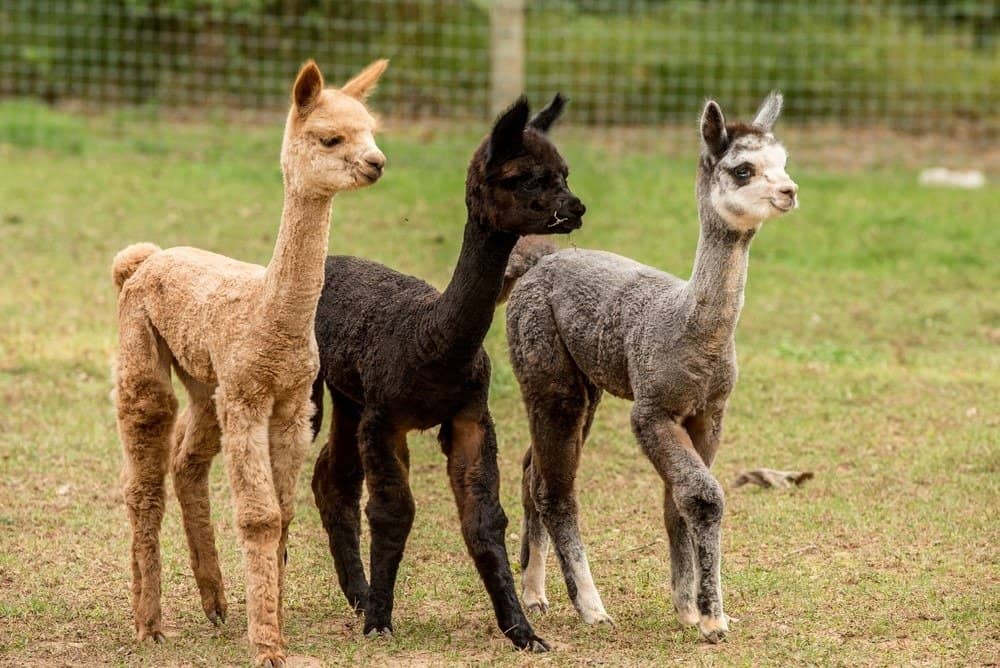
A deadly disease brought to South America by the Spanish invaders nearly wiped out 98% of the entire alpaca population.
©Karyl Miller/Shutterstock.com
The alpaca species almost became extinct in the 16th century. This was solely caused by a deadly disease brought to South America by the Spanish invaders, which nearly wiped out 98% of the entire alpaca population. The remaining animals had to migrate to higher ground, where they can still be found today, sharing habitat with llamas, mountain lions, and spectacled bears. However, European dwellers rediscovered the species during the 19th century and found the animal to be of great value.
In 1984, a small group of importers brought a carefully selected herd of alpacas into Canada and the U.S. This herd grew from a couple of alpacas in zoos and private farms to about three million alpacas in the world today.
6. Alpacas Predominantly Give Birth in the Morning
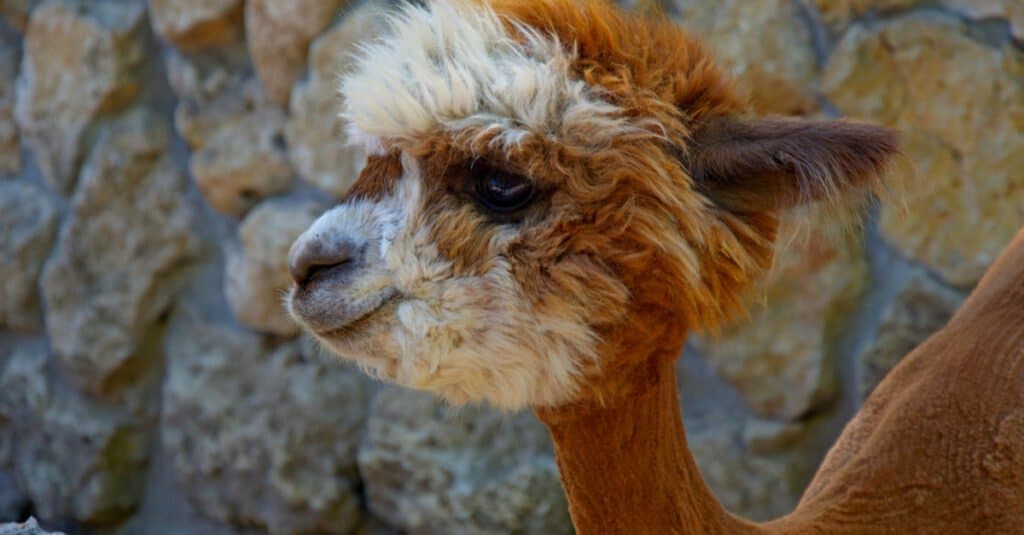
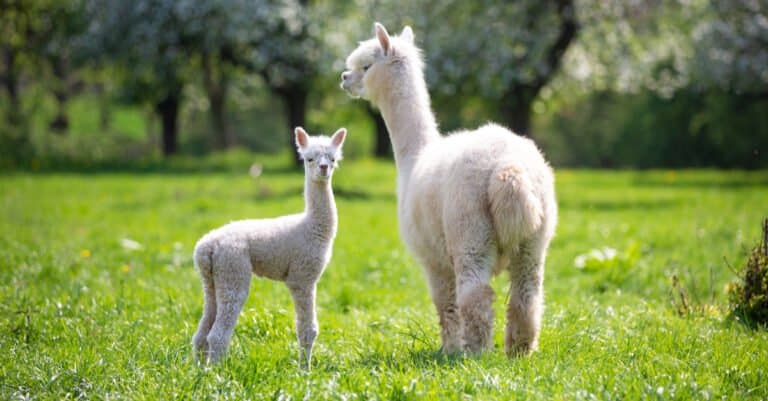
Birthing their young during the day allows them to get dry, start wandering around, and start nursing before the temperatures drop drastically.
©SakSa/Shutterstock.com
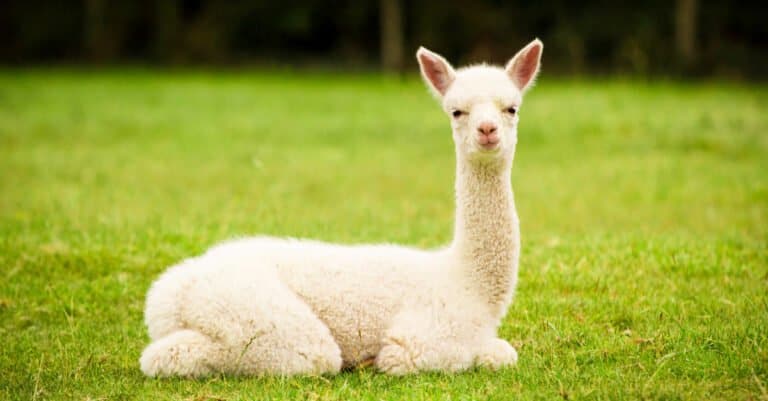
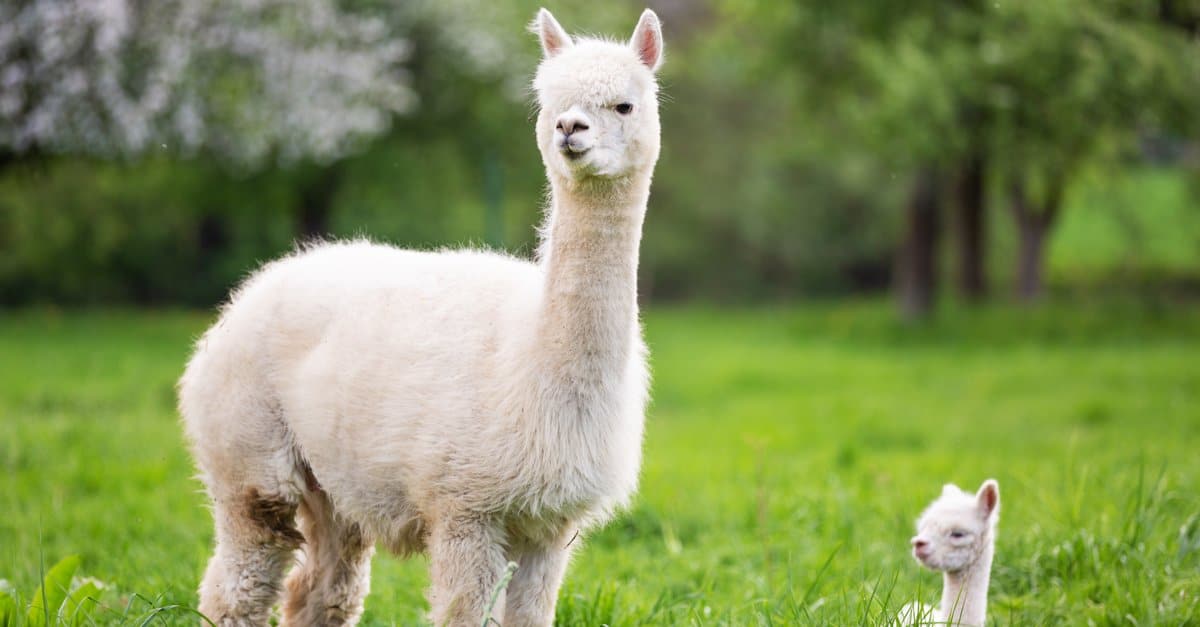
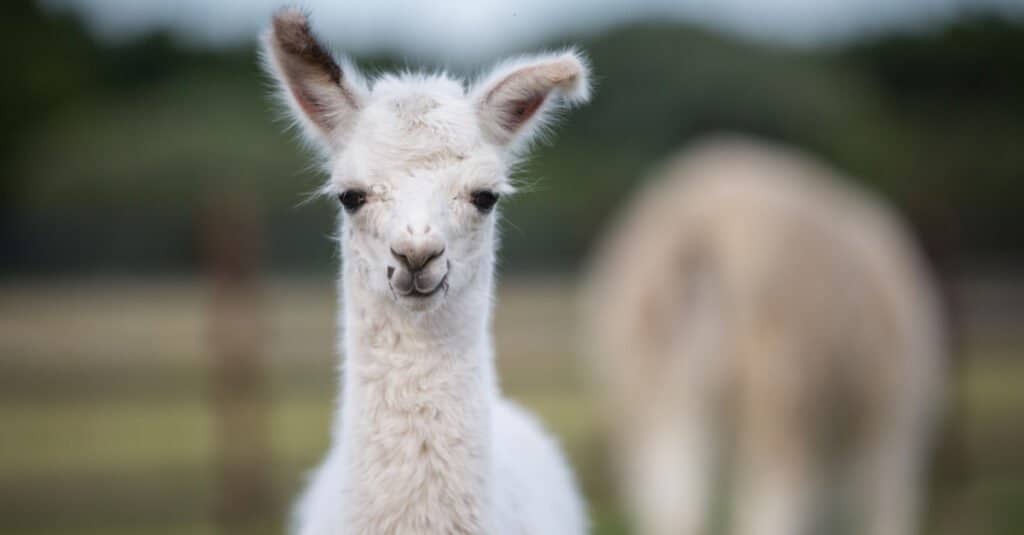
You may wonder, why in the morning? This intriguing fact is related to life in the high deserts of South America, where temperatures are at constant lows at night. Female alpacas often give birth to one baby cria after a pregnancy lasting between 342 and 345 days. Birthing their young during the day allows them to get dry, start wandering around, and start nursing before the temperatures drop drastically. In 90% of cases, human intervention is not needed.
7. Alpacas Can Die of Loneliness
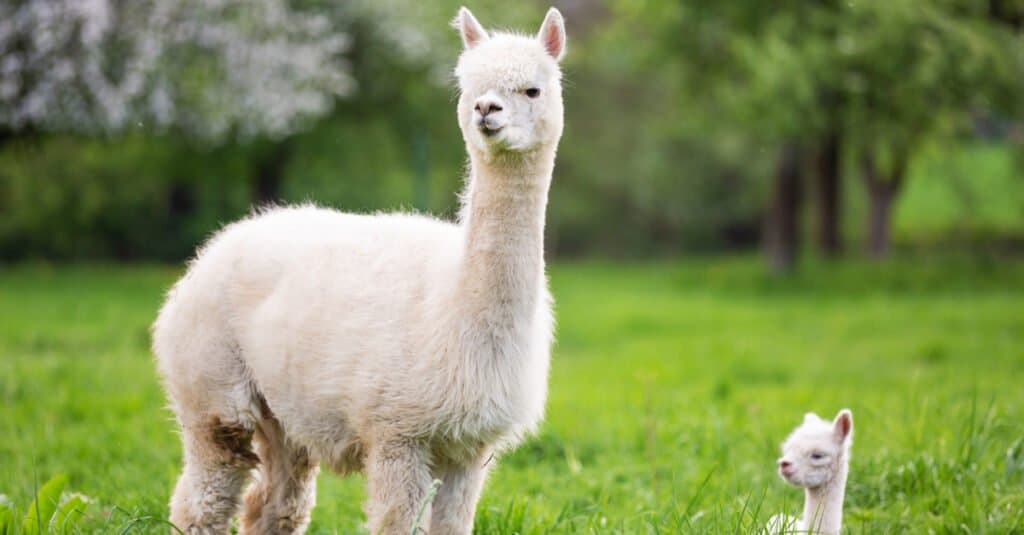
Alpacas always need to be bought in pairs to enable them to have contact with others.
©fotorince/Shutterstock.com
It is not advisable to own only one alpaca, as it may die of loneliness. They always need to be bought in pairs to enable them to have contact with others, as they enjoy living in a happy herd. They are known to have strong herd instincts and need the company of other alpacas to lead a happy and fulfilled life. An alpaca should live in a herd with at least two other alpacas. Crias should be left with the mother to nurse for a minimum of six months before being weaned.
8. Alpacas Communicate Using Non-Verbal Signs and Sounds
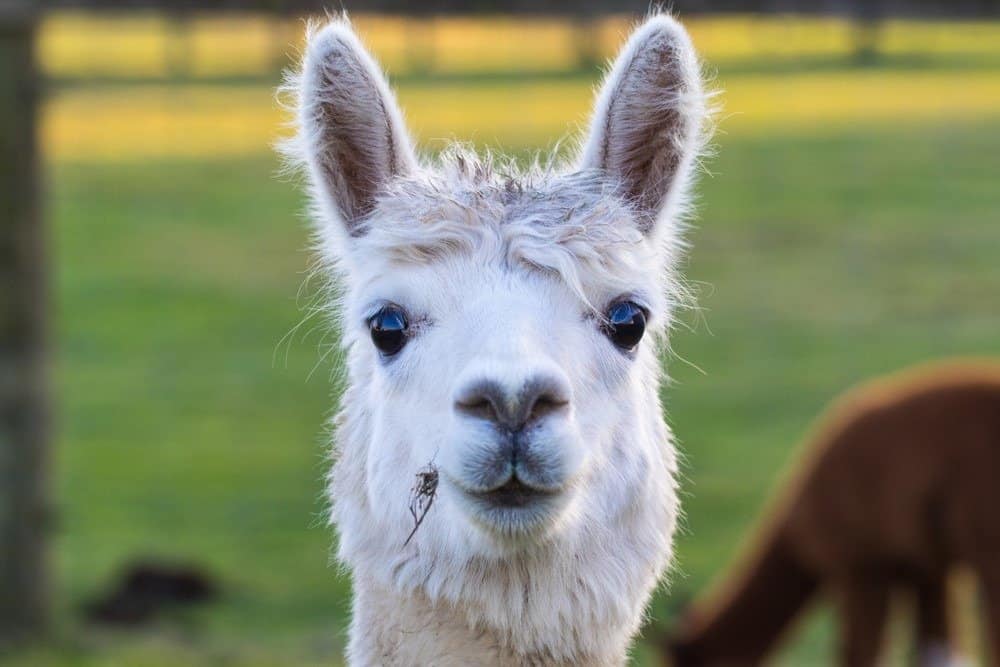
Incredibly, alpacas snort when they feel threatened by other alpacas and give a gurgling sound to warn others of incoming danger.
©1Roman Makedonsky/Shutterstock.com
Alpacas produce a few vocalizations to communicate. They also communicate through body language, using their tails to express their feelings when they are afraid or in trouble. Alpacas hum when they are happy, curious, worried, fearful, bored, distressed, or cautious. You may find a mother and baby humming together when bonding. A male tends to cluck as a way to welcome others. Alpacas snort when they feel threatened by other alpacas and give a gurgling sound to warn others of incoming danger.
9. Alpacas and Llamas can Cross-Breed
While both llamas and alpacas can be sheared for their fleece like sheep, they can also be differentiated by their hair.
©NewmanFilm/Shutterstock.com
Alpacas and llamas are closely related species and can have babies together. Llamas are bigger than alpacas and were groomed to be pack animals to enable them to carry a lot more on their backs. While both can be sheared for their fleece like sheep, they can also be differentiated by their hair. Llamas have shorter, coarser hair. When llamas crossbreed with alpacas, the baby is called a huarizo, which usually looks like a short llama.
10. Alpacas Spit When They Get Angry
Alpacas spit when they are very angry or annoyed.
©Inesmeierfotografie/Shutterstock.com
Finally, alpacas spit when they are very angry or annoyed. They spit as a form of defense mechanism against predators and also to ward off unwanted attention. For instance, they become possessive about their food and might express their displeasure by spitting at other alpacas they consider a threat to their food. Additionally, alpacas intentionally spit at humans from time to time. Therefore, studying their behaviors and learning to avoid such unpleasant situations is essential.