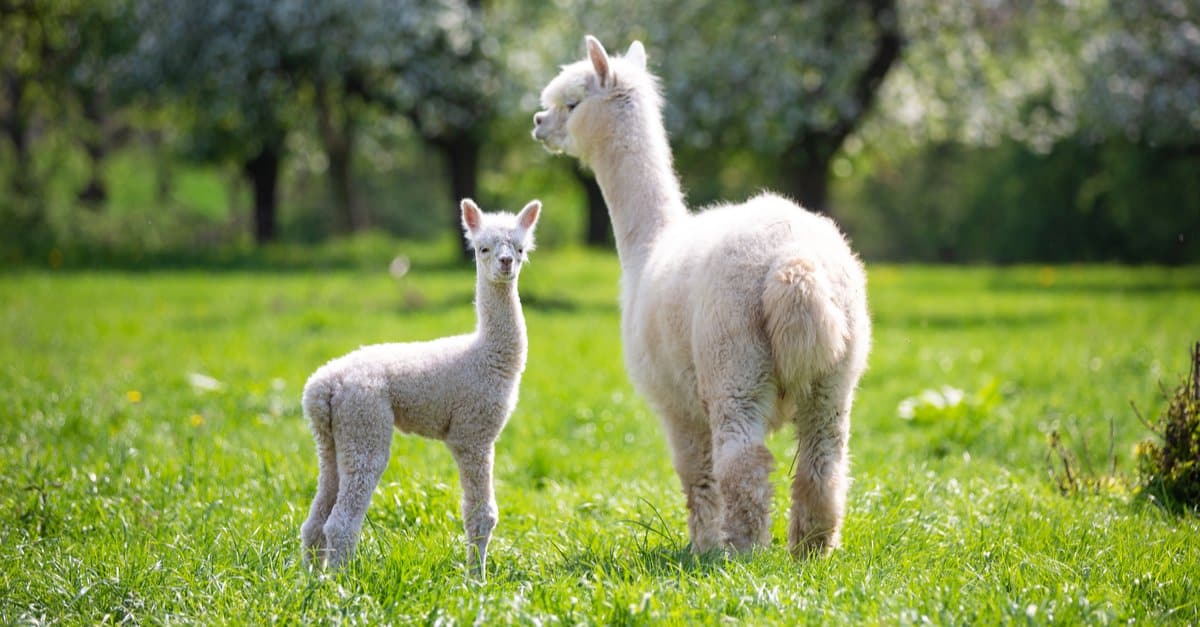

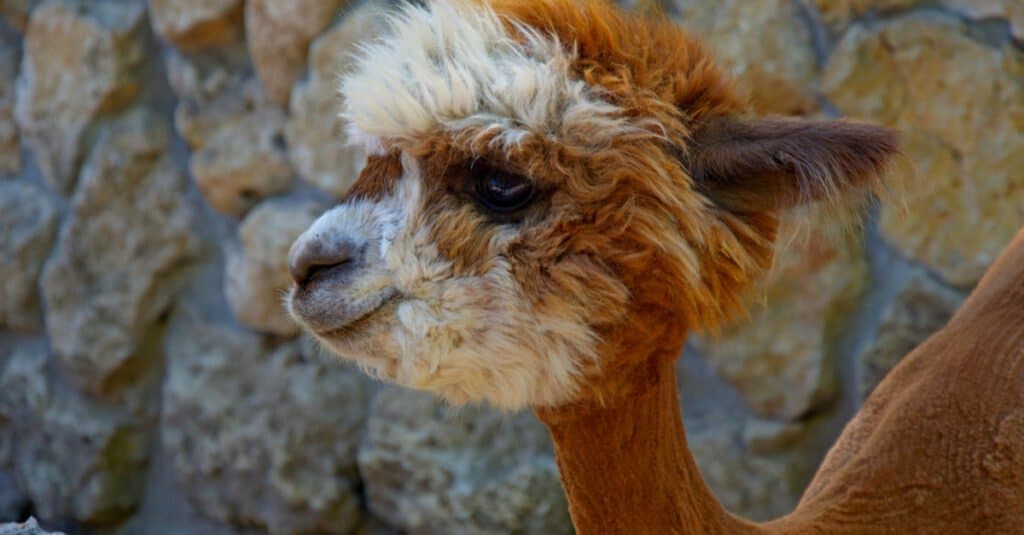
This newborn alpaca could win an award for the cutest fluffy animal of the year. With those big eyes, adorable smile, and tall, furry ears, it’s hard to imagine anything more precious. Baby alpacas are the kind of animals you want to hug like a teddy bear, and there’s a lot more to know about them beyond that squishable, cashmere-soft face. For one, they’re just as soft as they look, and their hypoallergenic wool retains this texture as they mature!
Additionally, baby alpacas don’t just look sweet—they are shy, curious, and grow to trust their humans. Is there anything cuter than that?
Are All Alpacas This Cute When They’re Born?
In short, the answer is yes! Baby alpacas, also called crias, are born with soft, fluffy coats. They weigh only 18 to 20 pounds at birth, but closely resemble their adult parents. The term “cria” comes from the Spanish word “cría,” meaning “baby.” As if they could get any cuter, each cria has unique features inherited from its parents. Alpacas typically give birth to only one offspring a year, which provides the baby with the best chance of survival. While twins are sometimes born, this is rare and can cause the mother significant stress during labor and delivery.
Alpaca babies are called “crias.”
©SakSa/Shutterstock.com
From conception, it can take up to a full year before an alpaca gives birth. During these 11 to 12 months, the cria grows slowly and remains close to its mother after birth. The bond between a mother alpaca and her cria is special, and this is how a young alpaca becomes comfortable as part of a herd. Crias and their mothers often hum together, a sound of contentment and reassurance. They also vocalize clicking noises to alert one another of danger, a testament to the protectiveness between mother and cria. However, don’t let this dependency fool you. Crias are strong and can stand on their own the same day they’re born!
Alpacas Are Prized For Their Wool
Interestingly enough, the term “baby alpaca” also refers to a type of ultra-soft wool. Its name refers to the small diameter of the fibers rather than the age at which it’s harvested from the alpaca. The fur of an alpaca remains soft and fluffy as it ages, but it is softest around its neck and chest areas. “Baby alpaca” wool refers to fur that’s trimmed from this part of the animal’s body. It’s a highly coveted material for products like yarn, which is used in blankets and clothing.
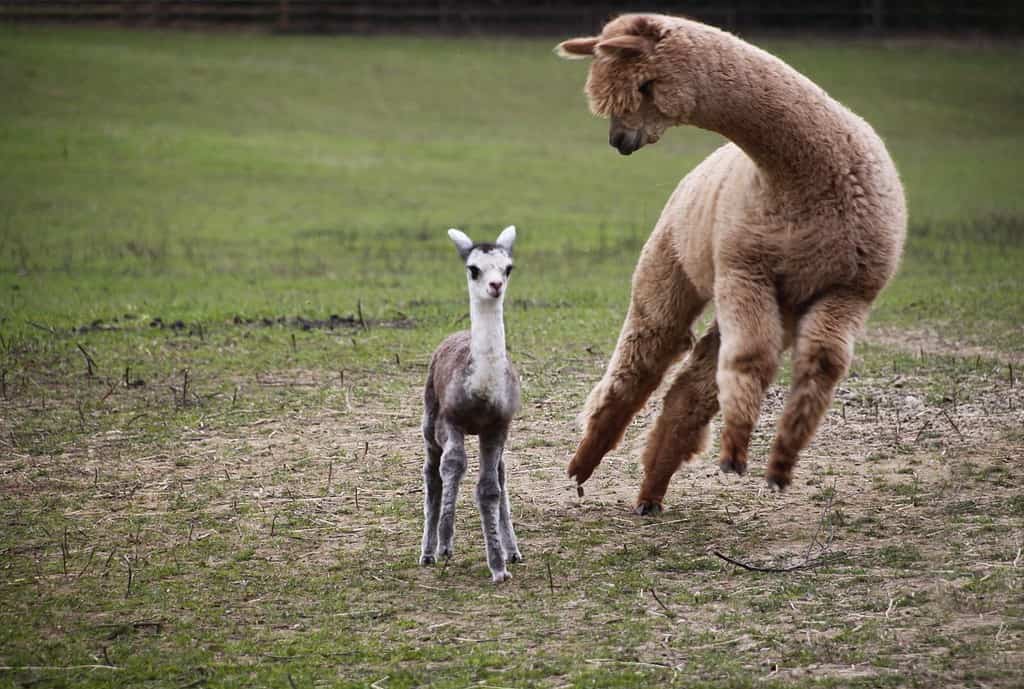
Alpacas are gentle, yet curious animals.
©Rolf Barbakken/Shutterstock.com
Crias become weanlings after 6 to 8 months of age. However, they are typically sheared for the first time between 1 and 3 months of age, sometimes as late as 6 to 8 months. This is highly dependent on the weather, as hot temperatures result in more frequent haircuts for young alpacas. This helps to regulate their body temperature and ensure the animals do not overheat. The sheared wool is typically sold as a byproduct, since most alpaca owners try to avoid shearing their animals unless necessary. The texture of a cria’s wool can only be described as luxurious. Its soft, fine fibers are both durable and warm. The alpaca in this Instagram post by @iheartalpaca is a huacaya, which means its fur is teddy-bear soft and equally as soft and cozy.